Former Marvel CEO Peter Cuneo on the ‘Superhero Leadership’ Podcast, IP Hits & the Art of the “Natural High”
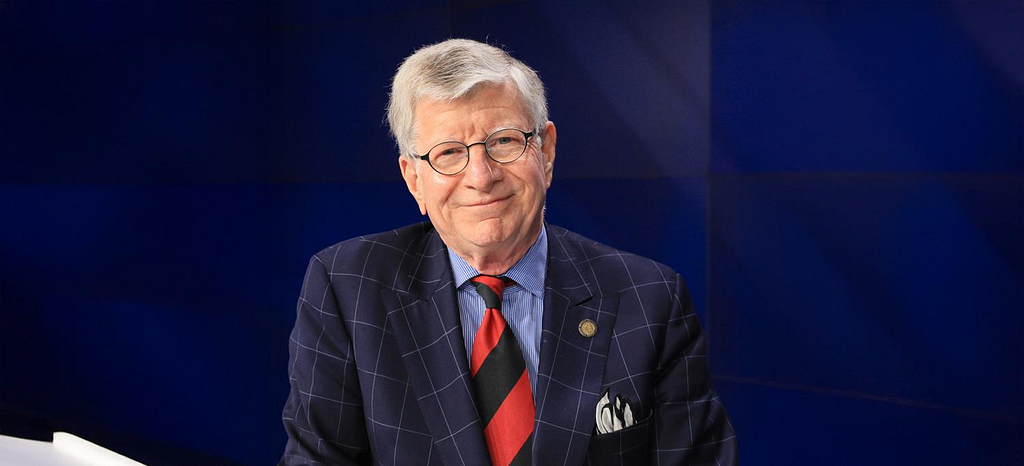
…I think, first of all, it starts with culture. The first thing I would look at is, okay, where is our culture today? Yes, we’re always going to have some diversity in culture. Of course. We’re not going to all agree on everything. Of course not. But what are the parts of the culture that are really damaging, damaging to our lives, to the way we work with each other, and so on? The culture matters, and leaders establish the culture.
If you ask me, how did you change the culture, it wasn’t by walking around giving a speech about “our new culture is this” or “our new culture is that.” I talk about how I think our culture would need to change, but I never expected anyone to actually change just because I, as the leader, say we have a new culture. You have to demonstrate as the leader that you’re backing up what you’re talking about…
I had the pleasure of talking with Peter Cuneo, and within minutes, it’s clear he’s not just another suit from the corner office. He speaks with the gravelly, rhythmic cadence of a man who has seen the inside of a sinking ship — several of them, actually — and knew exactly which valves to turn to keep the hull above water.
Cuneo is the ultimate corporate medic, a guy who specializes in “radical surgery” for companies that the rest of the world has already left for dead. He isn’t here to sell you a dream; he’s here to talk about the messy, unglamorous work of survival. Whether it’s navigating a guided-missile destroyer through the South Pacific or pulling Marvel Entertainment out of the gutter of bankruptcy, Cuneo operates on a frequency of calm, calculated risk.
Cuneo’s origin story doesn’t start in a boardroom. It starts on the road. The son of a Navy officer and an EMT, he was raised in a world where service was the family business and movement was the only constant. Between the ages of eight and nine, Cuneo lived in four different corners of America — from the humidity of Pensacola to the shipyards of Philadelphia.
“I had to make new friends, and I don’t remember it being hard at all,” Cuneo recalls. “What I learned early in life was that people are different… I learned to be comfortable going into an unfamiliar environment.” This early exposure to “local cultures” wasn’t just a childhood quirk; it became his greatest professional weapon. While other CEOs hide behind data, Cuneo walks into a failing company and reads the room. He views leadership not as a birthright, but as a craft honed by experience. “Great leaders, in my opinion, are not born. They’re made,” he says.
Before he was the architect of the modern cinematic universe, Cuneo was the “shaver guy,” having just steered Remington Products back to profitability. When the call came to lead Marvel in 1999, the company was a ghost of its former self. It had just crawled out of Chapter 11 with $3 million in the bank and a stock price hovering around a dismal 96 cents.
Cuneo was an outsider. He didn’t know a splash page from a storyboard. But where the comic book purists saw a dying industry, Cuneo saw a gold mine of intellectual property. “Marvel had 4,700 characters coming out of bankruptcy,” he says. “I knew that Spider-Man alone, if managed properly, could eventually be worth $500 million.”
The turnaround wasn’t about being a fanboy; it was about “changing the rules of the game.” He helped pivot Marvel from a struggling print house to a licensing juggernaut, eventually leading to the creation of Marvel Studios. He remembers the skepticism when they decided to bet the farm on Iron Man and a then-troubled actor named Robert Downey Jr. “His mugshot had been all over the news,” Cuneo admits. “He was considered toxic in Hollywood… But the screen test was phenomenal. When the lights came on, the board unanimously said yes.” It was a $550 million gamble that turned Marvel into a $4.5 billion Disney acquisition.
Cuneo describes his work as “triage.” When a company is wheeled into his emergency room, he doesn’t have time for corporate niceties. His philosophy, detailed in his upcoming book on “Superhero Leadership,” is built on 28 essentials — hard-won principles learned from “screwing up” and standing his ground.
His toughest rule? Essential number 16: Embrace true emotional maturity. “You can’t accomplish turnarounds fearing others’ opinions,” he explains bluntly. “You’re going to have people who don’t like you. The fact that I fired them probably made it worse… We all want to be loved by everyone. That’s human nature. But it’s really not possible, at least not for me.”
This lack of sentimentality is what allowed him to clean house. He tells a story of a warehouse where theft was rampant and the entire staff looked the other way. Cuneo didn’t give a speech; he hired a private eye, arrested the perpetrators, and told the remaining 50 employees they’d be out on the street if another dollar went missing. “The phones start ringing. ‘Do you know what Cuneo just did?’… That’s changing the culture.”
At 70-plus, Cuneo is still addicted to the “natural high” of problem-solving. But he looks at the modern world — and the current state of leadership — with a wary eye. He sees a generation of “over-parented” kids and “thin-skinned” executives who have traded real-world friction for the safety of a smartphone screen.
“Technology has moved us away from face-to-face experiences,” he laments. “We say things on the phone we would never say to someone’s face.” For Cuneo, leadership is still about showing up. He still rides the train from Connecticut to New York for meetings. He still flies across the Atlantic to record his podcast in person. He believes the “fog of war” can only be navigated by looking people in the eye and telling them the truth, even when the news is bad.
“Communication is a terribly lost art,” Cuneo says, sounding less like a retired executive and more like a veteran captain preparing for one more voyage. “You must communicate face-to-face as much as you can… and you have to tell them the truth.”
In an era of viral fame and “celebrity culture,” Peter Cuneo remains a devotee of the old school. He isn’t interested in being a hero; he’s interested in the mechanics of how heroes are built.
Yitzi: Peter Cuneo, it’s an honor to meet you. Before we dive in deep and talk about the superpowers of great leaders, our readers would love to learn about your origin story, your personal origin story. Can you share with us a bit about your childhood and the seeds for all the amazing things that have come since then?
Peter Cuneo: Sure. I have a podcast called Superhero Leadership with Peter Cuneo, and I’ve developed 28 essentials, what I call essentials for superhero leadership. I have a brand new book coming out February 3rd, and it’s about these 28 essentials. They’re really instincts, principles, attitudes, and mindsets about leadership. They’re things I’ve learned from others and, in some cases, learned on my own by screwing up. They’re all one-liners, and I recommend them to anyone who would like to take a look.
On the podcast, I also interview highly proven great leaders from all different walks of life, business, non-business, the military, politics, and more. It’s interesting you ask this question because I’m a firm believer that people start to learn leadership when they’re very young, even five years old. At that age, we don’t even know the word leadership, but I’ll explain what I mean. How people grow up is very important. How they’re raised is very important. The life experiences they have before they work, and also while they’re in school and working, all of this molds someone. Great leaders, in my opinion, are not born. They’re made.
One of the things I like to talk about is being greatly influenced by your grandparents and your parents. In my case, it’s important to start with my grandparents. They were immigrants, and they survived. It took courage to come from Italy, Scotland, and Sweden, in some cases alone, to a brand new world. They were not wealthy. They were middle class, they survived, and they did fine.
My parents were very much give-back people. My father was a Navy officer in World War II in the South Pacific and in the Korean War. Later on, I became a Navy officer and a Vietnam veteran, which I can talk about later if you want. That goes back to my father. My uncle landed at Leyte Gulf with MacArthur in 1944, so there was that influence growing up. My mother was an EMT for 30 years. She loved to help people. For the last 10 years, she was a dispatcher because she physically couldn’t do the work on the ambulance anymore. This is what I grew up with.
They were also adventurers, although I didn’t realize it at the time. I like to say I was born with an adventurer gene, but that’s because of who my models were. They loved to move around. When I was eight years old, we were living in Flushing, Queens, in New York City, and my father, who was a reserve Navy officer, was called up for the Korean War. Over the year before he deployed, we went from New York City to Pensacola, Florida, then a couple of months later to Bremerton, Washington, which is across the bay from Seattle and where mothballed Navy ships are kept. Then we went to San Diego, and then to Philadelphia, where my father was stationed for a year at the Philadelphia Naval Shipyard.
So between the ages of eight and nine, I lived in four completely different parts of the country. I did fourth and fifth grade on that trip. I had to make new friends, and I don’t remember it being hard at all. What I learned early in life was that people are different. Even as a young kid, I could tell that local cultures, even within America, were different. That was a very important start for me. I learned to be comfortable going into an unfamiliar environment.
This is something you see in very good leaders. They’re comfortable choosing to be in a new environment or being thrown unexpectedly into one. By unfamiliar, I mean different, not bad. You see it in all of them. They run at problems. They don’t wait. They’re problem solvers. That fits me too. I get a natural high from problem-solving and from turning around businesses. I’m addicted, honestly.
The principles my parents taught me were also important. I never heard a word from them, and neither did my siblings, about anyone’s religion, color, or ethnic background. We were told there are good people and bad people in the world, and you have to figure out who’s who. That was one of the greatest gifts they gave us. We never had those prejudices that unfortunately drag a lot of people down because they learn them young. We were wide open to the world.
Finally, my mother was a tremendous optimist. She told me every day, “Peter, you can be whatever you want to be in this world.” Even when I was young, I knew I probably couldn’t be anything I wanted to be because human beings aren’t great at everything, but it made me an optimist. That optimism carried me through a lot of adventures and some tough times. I hope that helps.
Yitzi: An amazing answer, and you’re an amazing storyteller. Speaking of stories, can you share with us how you were first introduced to Marvel and how you first became the CEO?
Peter Cuneo: Sure. Marvel was my seventh turnaround. The turnaround I did before that was a company in the electric shaver business called Remington. Sometimes people think of guns when I say Remington, but this was Remington men’s shavers and other grooming devices. That turnaround worked out very well. The two principal owners were Isaac Perlmutter and Victor Kiam, and they did very well. When I went in, the company was in dire straits.
When Marvel came out of bankruptcy, I got a call. Isaac Perlmutter wanted me to come in as CEO. One interesting thing about going to Marvel was that I had no background in motion pictures or comic books. I knew nothing about those businesses. But in many of my turnarounds, I was entering new industries, and I came to see that as a plus. Unless it’s something highly technical where you truly need deep expertise, being an outsider can help you quickly grasp what’s wrong in a business, what’s out of sync, and what’s wrong with the culture. The value system is just as important as how much cash you have in the bank.
That perspective helped me at Marvel. I started to see some of the crazy things the industry did that made no sense. I wasn’t afraid. I get asked to do a lot of turnarounds, and most of the time I say no because some companies simply can’t be fixed. But when I did my homework on Marvel, I saw it was a public company on the New York Stock Exchange, so all the information was available. Marvel had 4,700 characters coming out of bankruptcy. Of course, the top dozen were the big stars, and maybe another ten were well known, but still, 4,700 characters.
Through bankruptcy, Marvel regained ownership and control of virtually all those characters. In businesses dependent on intellectual property, in this case cultural IP, you want to own and control your brands. Those characters were our brands. Bankruptcy turned out to be a big positive because Marvel got control back of characters it had lost. Now you could really play the game again.
I also noticed that the entire treasure chest of characters was valued on the books at $500 million. I knew that Spider-Man alone, if managed properly, could eventually be worth $500 million. It would take hard work, but it was possible. I thought, I have to take my shot here. Plus, it could be a lot of fun.
Turnarounds are always stressful. There’s uncertainty and unhappy employees who are scared because the business isn’t doing well, sometimes on the verge of bankruptcy. It’s not a situation where you walk in and everything is great. That’s not how it works. But I did believe that if we were even mildly successful at Marvel, it would be fun. That’s how I got there. I had done a successful turnaround before Marvel, one of the owners had made a lot of money, and he said, “I need Peter for this.”
Yitzi: During your tenure at Marvel, you must have had some amazing experiences working with colorful and fascinating people. Can you share one or two stories that stand out most from your leadership there?
Peter Cuneo: I’ll never talk about negative experiences. One thing I’ve learned over decades dealing with the media is that if you say something highly controversial about someone else, good or bad, that becomes the storyline. It takes attention away from what you actually want the story to be, which in Marvel’s case was our new movies, our new characters, and starting our own movie studio. So I learned to stay away from that.
That said, I’ll share a couple of stories I think would be interesting to you and your audience. I’ve talked about culture, and when I came to Marvel, I had a great board. A truly great board. We added to it over time. Ike Perlmutter was on the board, of course, along with many others. I won’t list all the names, but it was a world-class board. Many of them were turnaround people or had a turnaround mindset like mine, so I had strong support for the radical changes I wanted to make.
Let me start with when I first came to Marvel in the summer of 1999. As I said earlier, I knew nothing about making movies. At the time, the film being shot was X Men. After about a month, I went to Toronto, where they were filming at the X Men mansion. I met some of the actors, watched filming, and saw how different the process was from what you might imagine if you’ve never been in the business. There’s a lot of downtime, and the pace is very different. I spent a full day just sitting around, talking to people. I didn’t pretend to know anything about it, and that was very eye opening for me.
One of the people there was Hugh Jackman. This casting decision was made before I arrived, so I can’t take any credit for it. Wolverine was, and probably still is, the most popular of all the X Men. He’s certainly my favorite Marvel character. Wolverine is based on a real animal that lives in northern parts of the US and Canada. It’s small, squat, angry, not particularly attractive, and it has long claws. So you might think you’d cast someone short and stocky to play Wolverine.
Instead, Hugh Jackman shows up. He’s six foot four, incredibly handsome, Australian, and a great guy. He looks nothing like Wolverine in the comic books, but he played the character brilliantly. Before that role, he had done maybe one or two small independent films in Australia and had been a song and dance man in London. The rest is history. He’s still playing Wolverine more than 25 years later, just appeared in another film last year, and he’s had an incredible career beyond Marvel, including three hit Broadway musicals. I think it just shows how important casting really is.
Here’s another casting story that’s fairly well known. Fast forward to 2006. Marvel was restarting Marvel Studios. We had tried to do our own studio in the early 1990s, and it failed badly. By 2006, I had been with the company seven years. I was no longer CEO, having served in that role for almost four years. I was now vice chairman of the board.
We raised $550 million in debt at low interest rates without giving away any equity. I don’t think a deal like that will ever be done again in entertainment. We were able to do it because over those seven years, Marvel had the best track record in the world as measured by average worldwide box office. No one was close. Even James Bond would have been number two. Nearly every film was a hit, and that gave us real clout.
The first film under Marvel Studios was going to be Iron Man. That first movie had to succeed. As vice chairman, I was responsible for investor relations, which meant meeting with major investors. When we announced we were launching our own studio, the investment community thought we were crazy. They couldn’t understand how Marvel could do this better than the major studios we had partnered with successfully. I told them not only would we make good movies, but we would make them for less money. Nobody believed it, and investor relations was extremely challenging at that time.
Then came the big decision. We needed the right actor to play Tony Stark. This could make or break Marvel Studios. At a board meeting in New York, the Marvel Studios team said they wanted to cast the best male actor in Hollywood. We asked who it was, and they said Robert Downey Jr. His mugshot had been all over the news not long before. He was considered toxic in Hollywood due to personal issues, and people didn’t think he was reliable. The board, including me, was stunned.
They told us Robert had done a screen test. We all knew he was a great actor, but the question was whether he was ready. The screen test was phenomenal. Part of it followed the script, and part of it was Robert doing what he does best, becoming the character. When the lights came on, the board unanimously said yes. It was a risk, no doubt, but it paid off. Robert was extraordinary. He went on to make many Marvel films and many outstanding films outside of Marvel. He truly turned his life around.
By that point, we had changed the culture at Marvel. The mindset was that we were going to change the rules of the game and compete differently from everyone else. That’s exactly what we did. I could tell you 20 more stories about things we did differently that worked. Some things didn’t work, of course. We didn’t get everything right. But we got most of it right, as the financial results showed.
When Iron Man came out, it was a massive hit. People were lined up around the block on opening night. Robert crushed it. Suddenly, when I went back into investor meetings, the mood had completely changed. Now we were all geniuses. I was far from a genius, but we believed in what we were doing and took the risk.
That’s the lesson I’d share with your audience. Go for your beliefs. Take risks. It’s hard, I know it’s hard, but if you want to be truly successful, you’re going to have to take risks in your life, both personal and professional.
Yitzi: Leading to the topic of your book, based on your experience and all the companies you’ve turned around, can you share the five superpowers of great leaders?
Peter Cuneo: No, I can’t. I get that question quite a bit. I’ll refer everyone to the 28 essentials for superhero leadership, which is what the book is about. There are 28 chapters, each discussing one essential. They’re all one-liners. You can read all 28 in about seven minutes. These are things I believe I’ve learned over time.
I could pick five at random, but I think they’re all important. I don’t think any one of them is more important than the others, although some are definitely harder to accomplish. I can’t give you the top five.
What I can tell you is which one is the hardest, because I get asked that as well. It’s number 16. I’ll read it to you. Embrace true emotional maturity, the realization and internalization that you can’t make everyone happy. You can’t accomplish turnarounds fearing others’ opinions.
This one is hard. Change scares human beings, even so called positive change, because it’s disruptive. If you’re really going to do turnarounds, and leadership is often synonymous with change, you have to accept that. Some organizations only need small, gentle change, and that’s great. What I do is the opposite. I’m doing radical surgery. I’m doing triage. An organization gets wheeled into my emergency room, and I’m doing triage.
You have to realize you’re going to make people unhappy, and some people will never get over being unhappy with you. I’m not kidding, I’ll get a call saying, “Peter, do you know so and so? I just met them, and they don’t like you very much.” This will be someone I worked with 20 years ago during a turnaround, and I’m not surprised. The fact that I fired them probably made it worse.
Sometimes you have to lay off people who are good people and do a good job. Even that has to happen sometimes. You’re going to have people who don’t like you. Most people don’t aspire to leadership because they know that if they become a leader, they’ll have to make people unhappy, and they don’t want that in their lives. They want to be loved. We all want to be loved by everyone. That’s human nature. But it’s really not possible, at least not for me.
Would you like me to pick a few more?
Yitzi: Maybe let’s just reframe the question. If the United States were a company in crisis and you were asked to be the turnaround CEO of the United States using your leadership principles, where would you focus?
Peter Cuneo: Oh God. I have to say, first of all, I never in my wildest dreams thought I would find our country where it is today. So it’s certainly a turnaround. I often get questions in my speeches, I still do speeches, where there might be a couple hundred people in the audience and someone will say, “What do you think of so-and-so?” And I tell them I’m going to duck, because it’s distracting for me to go and say something very good or very bad about an individual.
I think, first of all, it starts with culture. The first thing I would look at is, okay, where is our culture today? Yes, we’re always going to have some diversity in culture. Of course. We’re not going to all agree on everything. Of course not. But what are the parts of the culture that are really damaging, damaging to our lives, to the way we work with each other, and so on? The culture matters, and leaders establish the culture.
If you ask me, how did you change the culture, it wasn’t by walking around giving a speech about “our new culture is this” or “our new culture is that.” I talk about how I think our culture would need to change, but I never expected anyone to actually change just because I, as the leader, say we have a new culture. You have to demonstrate as the leader that you’re backing up what you’re talking about.
If you say sexual harassment is a problem in your organization and there’s clearly a case of it, what do you do? I know what I did. I fired people on the spot in some cases. When that happens, people say, “Oh, this leader isn’t kidding.”
You find someone stealing from the warehouse. It’s been going on for a long time. I sent in a private detective posing as a new employee. A week afterward, he comes to me and says, “Peter, I can tell you exactly who’s doing it and why. The most disturbing thing is everyone, all 50 employees on the two shifts, know that it’s going on and are just turning a blind eye. It’s three people.” So I had the three people arrested. I went to the warehouse and I said, “I know you all knew. If one more dollar goes out the door, you’re all out. You’re all out, and I’ll make sure there are no references.” Guess what? We never had another dollar go out the door. The perpetrators were gone, so it helped.
One thing I was counting on was that some of the others could have been perpetrators too, but chose not to be. That told me they might have been too scared to speak up, but their heads were in the right direction. But the minute I walk out the door from the warehouse, and this is a multinational company, the phones start ringing. “Do you know what Cuneo just did?” It’s everywhere. That’s changing the culture. You have to back up what you’re saying.
If you need to be more risk-oriented and your new products program has the worst people in it, and new products have to be 25 percent of your sales every year, you’ve got to get your best people in there. But then you find the culture is that nobody good wants to go there because there were a lot of failures and people got fired. But when you have a success and you call the seven people from the seven different functions who were responsible up to the stage, surprising them in front of a hundred people at a company meeting, and give them special checks and congratulate them for this new product we really needed, things change. The culture changes. Suddenly it’s, “Whoa, can I be in new products now?”
Before I did that, the head of HR came to me and said, “Peter, you can’t do that. You can’t give out checks.” These were tiny checks, by the way. This wasn’t about making people rich. This was about people getting adulation in front of their peers, an ovation. That’s really what this was about. But the head of HR said, “Peter, you can’t do this because there’ll be a lot of people who feel they did a great job and they didn’t get a check. Not on this particular project, but on other projects.” I knew immediately the head of HR wouldn’t last with me because he just didn’t get it. It was all the negatives with him, always thinking about the negatives, never coming up with a positive. HR should be all about positives.
We’re going to have a Christmas party. I want to invite the spouses. “They’ve never been invited before. That costs money to have two rather than one.” I said, our culture is changing. We want to be family-oriented. They’re coming. I don’t care what it costs. Another example. And the word got out fast. “What? The wives? The girlfriends? You can even bring a kid?” It didn’t matter. Talk about team building. Simple stuff. I’m not a rocket scientist. It’s more instinct on my part. And every time I had a turnaround, I learned more.
The first turnaround I was thrown into, I didn’t think I had any turnaround abilities. I was actually depressed for six months. Not clinically depressed, but really worried. I thought, I don’t know anything about doing a turnaround. Then after six months, we started to get results, and I realized it was leadership. My leadership was very different from the people who were there before me. The company said, “Wow, after a year and a half, that’s great. We’re really doing well.” Then they said, “Here’s another division to take. It’s a bigger turnaround.” At that point, I loved it. I was addicted, as I’ve said. I was kind of off to the races.
This is not rocket science. Today, I will say, and then I’ll shut up, leadership is harder than ever because the cultural differences between generations are radically different, as you know. I spend a lot of time talking to C-suite executives, and some of the stories I hear about young people are shocking to me. A lack of work ethic. A lack of social skills. No resistance to setbacks. They’re not thin-skinned, they have no skin. Part of what I hope to do with all the different things I’m doing, I’m also working on a summer program at various colleges and universities for high school students to start learning leadership, globally. So we’ll see.
Yitzi: That leads to our final aspirational question. Mr. Cuneo, because of your amazing work, you’re a person of enormous influence. If you could spread an idea or inspire a movement that would bring the most good to the most people, what would that be?
Peter Cuneo: I’ll come back to this leadership question, particularly for young people. Why are they not learning leadership? It’s largely cultural, and that’s why we have to change things. The way people my age, or even the generation after me, learned leadership was purely through face-to-face experiences with a diversity of other human beings, personal and professional. Remember when I talked about going to all those cities in two years? I had to make friends. That was the start of it for me.
The only way you can learn what I’ll call the instincts of leadership, of good leadership, is through experiences with other people, and the more diverse, the better. That’s very important.
I also have a list, by the way. PeterCuneo.com is my website. I have a list of 15 things I recommend for young people, and I’ll give you a couple that may surprise you. Another problem we have is over-parenting, tremendous over-parenting. I’m not sure where this came from, but parents today have decided their children should never have a negative thought about themselves. The way we survive in life is actually very simple, even though we make it complicated. We have to learn our strengths and our weaknesses. With our weaknesses, we have to decide, do I work to get better or do I avoid it? Either decision might be right in the right situation.
Kids today are not learning their strengths and weaknesses. They think they have nothing but strengths. The stories I hear about young people in their first jobs are incredible. As I mentioned earlier, a lot of people are seeing the same problems, even with highly educated people from prestigious schools. It’s not related to education. Over-parenting is another issue.
Culture is another factor. Part of our culture is what I call a celebrity, non-celebrity culture. You can be on YouTube or social media jumping around, throwing stuff, talking silly, or even making a sex tape, and you could become a billionaire. Something is terribly wrong. That’s what kids are into. There’s no value in any of that, yet kids spend a lot of time on it.
Another big problem is technology. Technology has moved us away from face-to-face experiences. We can’t survive without our phones. We say things on the phone we would never say to someone’s face. It’s easy to say something silly or stupid on a phone and make people unhappy. Kids don’t understand not just the good parts of the phone, but the bad parts.
In my case, I have about five Zoom calls a day on average. But when I can meet someone face-to-face, particularly someone new, I always do. I’m sitting here an hour on the train from New York City. I live in Connecticut, so I jump on the train. Sometimes people are surprised I’m willing to do that. They see themselves as young and junior to me and think they should be coming to me. But I like to go.
I still travel to meet people all the time. My podcast Season 2 ended a couple of months ago. I went to London to interview three people. I went to Los Angeles. Podcast Season 3 is coming up, and I’ll be running around again, finding studios where I can sit face-to-face with people.
I think communication is a terribly lost art in leadership today. Our young leaders, even budding leaders, don’t know how to communicate. You must communicate face-to-face as much as you can. You must communicate informally as well as formally. You must communicate with your organization on a regular basis, at a certain time and date every month or every week, whatever you think is right, so people know when to expect to hear from you. And you have to tell them the truth. Sometimes it’s bad news. Are we going to have layoffs? I haven’t decided yet, but we might. You don’t want to say that, but I’ve found that people would rather hear the truth than nothing at all. That’s human nature.
Communication is so important, and leaders have to do as much as they can face-to-face. If you’re running a multinational company with 5,000 employees, you’re going to use Zoom. Maybe you can visit every location once a year. People understand that it’s hard in a big organization.
You also have to celebrate your successes. You don’t dwell on your failures. Make the people who have done well into heroes. It’s okay. It’s nice. Be positive.
Culture has two definitions for me, and both are important. First, culture is simply how we treat each other, not just people in the organization, but also people we depend on outside. Maybe it’s a supplier, a retailer, an auditor, or a consultant. Whoever it is, we should treat them as well as we treat our own employees. I could tell you horror stories. When I describe some of the things I’ve found, people say, “Peter, you’re making it up.” I’m not.
The second part of culture relates to the first. You have to decide what you have to be good at. Maybe it’s new products. Maybe it’s customer service. Maybe it’s production efficiency. You have to be A-plus at the things that matter most to be successful. You can’t be A-plus at everything, and not everything carries the same weight. If you’re a new products company and new products are 25 percent of your success, you have to be great at them. If you’re not, and you don’t care to be, something is really wrong. Culture is also about understanding what you really need to be good at and focusing on those things.
I’ll give you an example. I had a very big retailer, one you would know. When I came into one of my turnarounds, the head of sales told me, “We have a big problem with them. They’re very mad at us. Our prices are too high. They’re running an ad, and we don’t have enough product to support it in their 500 stores. We screwed up inventory. Our quality isn’t good, and they’re getting returns on one product from women saying it doesn’t work.”
So in that case, even though I was CEO, I became the salesperson calling on the buyer. The buyer was 25 years old and buying hundreds of millions of dollars of product every year. We had largely been thrown out of the business. I went once a month to sit with him, talk about his business, and see how I could make him a hero.
My sales force was very mad at me. The CEO doesn’t call on a junior buyer, even if it’s your number one customer. They said I was making them look bad. I told them they could come with me if they wanted. There were no secrets. We needed all hands on deck to get back in that business.
After six months, the buyer called me and said, “Peter, I need help.” He had an ad and wasn’t getting enough product. He had spent a lot of money on in-store promotions. We didn’t have enough product in our warehouses. I called the vendor myself and told them to stop everything and make 5,000 units in the next week and ship them by plane, which was very expensive. We did it.
A year later, we had more business with them than we did before they threw us out. The sales force wasn’t complaining anymore because they were getting commissions based on what we were generating. The culture changed. They got on board, and they weren’t upset anymore. This is all part of cultural change. When you have a problem, you take care of it right away.
Sorry, Rabbi, you got me going.
Yitzi: That’s great. You’re such a great storyteller. I learned so much from our conversation, and I’m truly grateful to you. Final question, how can our readers purchase your book, and how can they support your work in any possible way?
Peter Cuneo: Thank you. The book will be out February 3rd. You can go to Amazon right now and pre-order it. The list price is $32.99, but I believe there’s an early pre-order discount, so it should be less. Later, the book will also be available in bookstores and through other outlets.
Please also listen to our podcast. You can go back and hear Seasons 1 and 2. Season 2 was video, so if you go to YouTube, you can watch me sit for 40 minutes talking to someone. We’re also on all the other podcast platforms like Spotify and Amazon.
We also have a new app with a company called Studio.com. Take a look at that. It’s AI-driven, and essentially you can talk to me, through AI, about leadership. You ask questions and fill out a fairly detailed questionnaire so the AI can customize the conversation to what’s of interest to you. I think the cost is $40 a month. It just launched a week or two ago, so it’s brand new, and we’ll see how it goes.
I would love to talk to everyone who asks to speak with me about leadership, but I just can’t. I like face-to-face interaction, but this is one solution. We’ve downloaded every piece of content I’ve created over 20 years, including the book, speeches, and other recorded material. The AI has learned from all of that, so we’ll see how it goes.
Yitzi: I wish you continued success, good health, and blessings. I hope we can do this again in the future.
Peter Cuneo: Don’t hesitate. I enjoyed it and would be happy to get together with you again. Thanks very much, Rabbi.
Yitzi: It’s been a pleasure. I look forward to sharing the article with our readers.
Former Marvel CEO Peter Cuneo on the ‘Superhero Leadership’ Podcast, IP Hits & the Art of the… was originally published in Authority Magazine on Medium, where people are continuing the conversation by highlighting and responding to this story.