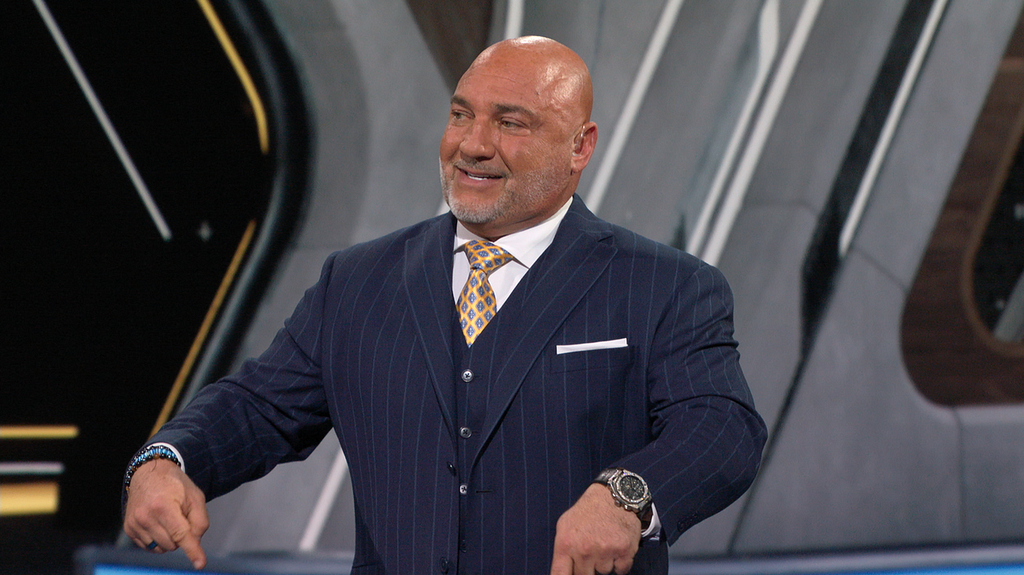
…Be proud of your scars and don’t hide from them. More than anything, connect and share. You never know how much somebody needs that connection, and you never know what lies behind someone’s eyes. I hid my struggles for a long time. Don’t get me wrong, I know my life is great, but between my ears can be a tough place. I didn’t sign up for it or ask for it, but now, thank God, I can use my pain to help others with theirs. My entire philosophy with my gym and training is focused on being “unbreakable.” If you go through a dark tunnel that should or could have broken you, but you make it to the other side, you are stronger forever. Those scars are your equity. Use them…
I had the pleasure of talking with Jay Glazer, the hyper-energetic Fox Sports NFL insider who has spent decades breaking some of the biggest news in professional football. On television, Glazer looks like the definition of a self-made sports media star, a guy who carved out a unique space by befriending the biggest names in the league. Yet, beneath the polished studio lights and the tailored suits lies a history of severe internal chaos and raw financial survival. Glazer does not hide from his past, preferring to lay bare the decades of challenges that shaped his journey.
Long before he was a television personality, Glazer was just a broke kid trying to survive in New York City. He grew up on the Jersey Shore, dealing with severe, undiagnosed mental health conditions that made traditional life nearly impossible. School was a constant struggle; he was kicked out of his first college and scraped by with a 2.3 GPA at his second due to ADHD. “I didn’t have the education or the experience, but I wondered how I could be different,” Glazer says. Without a traditional pedigree, he realized his only asset was sheer effort. While standard sports journalists put in normal forty-hour weeks, Glazer chose an entirely different pace. “These reporters worked 40 hours a week; I wasn’t going to outwork them by a little, I was going to outwork them by a lot — going 80 to 100 hours,” he recalls.
That grueling work ethic was born out of absolute necessity. For more than a decade, Glazer lived well below the poverty line while trying to break into the competitive world of New York sports reporting. He worked an array of odd jobs, including bartending and bouncing at the legendary Studio 54, just to keep food on the table. “For the first 11 years of my career, I was making $9,450 a year living in New York City,” Glazer says. “I couldn’t get a job, but I was just relentless. I told myself I was just going to be relentless and keep going.”
During those lean years, Glazer noticed a massive flaw in how traditional journalists covered the NFL, observing older writers using their pens as weapons. He chose to reject that distance and instead built genuine friendships with the players. Other reporters tried to sabotage his career by telling executives that he was too close to his subjects, but Glazer stayed the course. “I decided to build relationships, and now everything is relationship-based,” he states. The constant rejection took a heavy emotional toll. To keep from losing his mind during those eleven years of closed doors, Glazer turned to a strategy inspired by the Bible, utilizing a mandatory day of rest to reset his mental clock. “I would get turned down 40 times a week, and I would take one day of rest to say, ‘Okay, it’s over. Whatever happened, put it behind me,’” he says. He used that time to pray, viewing his struggle in small six-day blocks rather than an unending mountain of failure.
The persistence finally paid off in 1999 when he secured a full-time, off-camera job as an NFL insider for CBS Sports. The salary was 50,000 dollars, a massive leap from his previous earnings, but the validation mattered far more than the paycheck. “Dude, I don’t give a crap because this validates me,” Glazer remembers telling his agent. “When I said all those years ago that I’d be the last dude standing and that I was going to be different, this validated my way.” It proved he was a fighter who could absorb punishment and keep moving forward.
By 2004, Glazer had moved to Fox Sports, and three years later, he cemented his status as a journalistic heavyweight. During his second week in the studio in 2007, he obtained and broke the infamous Spygate video involving the New England Patriots, a scoop so massive that it drew an investigation from the United States Congress. The story transformed his standing among legendary studio broadcasters like Terry Bradshaw, who had initially been skeptical. “After that story, they realized, ‘Whoa, this dude has it. He’s good with us,’” Glazer says.
Glazer’s willingness to absorb punishment extends to actual physical combat. As one of the first NFL figures to step into professional mixed martial arts, his first fight ended in a swift defeat when he was choked out. Rather than quitting, he caught the attention of Renzo Gracie to learn the discipline properly, eventually winning a gold medal at the World Submission Fighting Championships. “Adversity is a gift, as long as you learn from everything,” Glazer explains. He believes that getting beaten down is an essential part of growth, a lesson he has passed down to his adopted son.
Today, Glazer has shifted his focus toward a different kind of battlefield: the human mind. He speaks openly about his own extensive mental health diagnoses, a list that includes clinical Attention-Deficit/Hyperactivity Disorder (ADHD), depression, anxiety, bipolar disorder, and obsessive-compulsive disorder. He argues that modern society, driven by the filtered, unrealistic highlights of social media, is facing a mental health crisis for which our brains are simply not wired.
To combat the isolation of these struggles, Glazer relies heavily on communication and community. He makes a regular habit of calling friends when he is hurting, while also checking in on others just to offer support. He firmly believes that the emotional wounds people suffer throughout life are not liabilities. “If you can share your scars, our scars become our equity, and that brings you so much closer,” Glazer says. For a man who built a career on knowing elite athletes’ secrets, his most impactful work now lies in sharing his own vulnerabilities, proving that true strength can come from emerging unbroken on the other side.
Yitzi: Jay, it’s so nice to meet you. How are you? Before we dive in, our readers would love to learn about Jay Glazer’s personal origin story. Can you share with us the story of your childhood, how you grew up, and particularly the seeds of the amazing work that has come since then?
Jay Glazer: Good, man. How’s it going? Happy Shavuot. I don’t know if it was the childhood, but it was what happened after — the struggle that I faced afterward. People see the unbreakable version of me now, but they don’t know the broke version. Original fans of mine do. For the first 11 years of my career, I was making $9,450 a year living in New York City. I couldn’t get a job, but I was just relentless. I told myself I was just going to be relentless and keep going.
Early on, I walked into the Giants locker room and realized I didn’t have the same education as everyone else. I got kicked out of my first college. In my second college, I had a wonderful 2.3 GPA because my ADHD prevented me from sitting in those classes. I didn’t have the education or the experience, but I wondered how I could be different. One thing I could do was outwork the world. These reporters worked 40 hours a week; I wasn’t going to outwork them by a little, I was going to outwork them by a lot — going 80 to 100 hours. I was really broke because I couldn’t get another job to subsidize myself, but I focused on how to differentiate myself.
Most people just want to be a face in the crowd. I decided I was going to beat the crowd and start my own damn crowd by building relationships. Back then, relationships were taboo. I thought the old-school writers were using their pens as weapons, so players didn’t talk to them. I decided to build relationships, and now everything is relationship-based.
It took me 11 years because I got killed by everyone else. Whenever an editor, producer, or executive would call, other reporters would say, “Tell me about this guy. No, he’s friends with the players and coaches, he has relationships, you don’t do that.” I couldn’t get a job until eventually, thank God Almighty, my best friend, in 1999, I got hooked up with CBS Sports and cbssportsline.com. Again, the way I did it proved that everything now is relationship-based.
Yitzi: Jay, you probably have some incredible stories from your successful career, and I’m sure it’s difficult to single out, but can you share with our readers two stories that stand out in your mind from your professional career?
Jay Glazer: Number one, the biggest moment that happened for me involved two things. It took me 11 years, just getting turned down every single week, over and over. It was exhausting. I actually used something in a prayer book to help me. In the Ten Commandments, God says in the fourth commandment, “I’m commanding you to take a day off.” I would get turned down 40 times a week, and I would take one day of rest to say, “Okay, it’s over. Whatever happened, put it behind me.” I had one day of rest to refresh my soul and build myself back up from the inside out. On that day of rest, I would literally talk to God and say, “All right, God, I’m not asking you to get me a job, just pick me up, brush me off, and let’s keep walking together.” I had to play these mind games with myself all those years so that it didn’t feel like I was getting turned down for 11 years straight, but rather for six-day periods throughout those 11 years. It kept me going.
My career started in 1989. By 1999, even when trying to get lines on agents, I was getting turned down by everybody. Finally, I got hooked up with a guy named Maury Gostfrand, whom I love dearly. Maury called me and asked, “What are you doing?” I told him I was at a driving range with Tiki Barber on Randall’s Island in New York. He said, “Okay, you can finally exhale. We finally got you a full-time job.” I asked, “With who?” He said, “CBS Sports. They got the NFL football back, and you’re going to be their NFL insider. It is off-camera.” I said, “I’ll take it!” He asked if I wanted to know how much it was for, and I said, “Dude, I don’t give a crap because this validates me.” When I said all those years ago that I’d be the last dude standing and that I was going to be different, this validated my way. That was my moment. When he told me it was 50 grand, I said, “Thank you, my best friend, God Almighty in heaven.” You only get caught a couple of times in life where you find out who you are, but I knew that day that I’m a fighter no matter what. I am relentless, and I can take a beating and just keep coming back.
The other big moment for me was my second week in the studio at Fox in 2007. I started in 2004, but I was on the road at first doing my insider hits and reporting from the sidelines. My second week in the studio, I broke the Spygate video, and that changed my life. It is the biggest story in the history of pro football, maybe sports, to the point where Congress called. Senator Arlen Specter, who investigated the Kennedy assassination, called for my copy of the Spygate tape. It also validated me to Terry Bradshaw, Howie Long, and Jimmy Johnson, who didn’t want me on the show before that. After that story, they realized, “Whoa, this dude has it. He’s good with us.” Those two moments are by far the biggest of my career.
Yitzi: There is a saying that sometimes our mistakes can be our greatest teachers. Can you share a story about a mistake that you made when you were first starting out and the lesson that you took from it?
Jay Glazer: Adversity is a gift, as long as you learn from everything. In my first MMA fight, I got choked out because I didn’t know any jiu-jitsu. It was the early days of MMA, so I decided I better go learn. I learned from the best. I went to Renzo Gracie and ended up winning a gold medal a couple of years later at the World Submission Fighting Championships for them. That loss allowed me to build a whole other side of myself. It eventually led to me training all these players and fighters. That loss led to all that greatness.
During my first MMA fight, back in the day, there were no unified rules. I think we got one headbutt a round. Nobody was doing this. I was one of the first few guys from the NFL circle to ever fight professionally in MMA. For that first fight, I think I made about 130 bucks right before the start of the season. I took my guy down — pop, pop, pop — and then the lights went out. I had no idea what happened because I was a boxer and a wrestler. Somebody told me I got caught in a guillotine choke. I didn’t even know what that was, but I decided I had better go learn it.
I went to learn from Renzo Gracie of the famous Gracie family, and those guys are my family now. I got my butt kicked for a long time there, but over time, I went out and won my next fight against a Jeet Kune Do instructor, which is Bruce Lee’s style. I did that during the football season, which was pretty wild. We went down to Atlantic City Boardwalk Hall, I tapped him out in the second round, got back in the car, and was on TV the next day without anybody knowing.
I ended up training closely with Renzo and the Gracies and did pretty well. Those losses taught me that adversity is a gift. Somebody once asked me what the biggest gift is I could give my son, and I said adversity. Adversity is a gift, especially nowadays when people can easily transfer schools or move elsewhere if they don’t like something. Sometimes getting your butt whipped really helps. Actually, it always does, if you choose to learn from it.
Even now, I talk a lot about mental health. I used to hide from it, but now I talk about it openly and try to turn my mental health into mental wealth. The way you do that is instead of hiding from my issues, I look at them and ask, “How are they my superpower? How have they helped me?” Since I have benefited from them, I’m not ashamed of them anymore.
Yitzi: What has been the most challenging project or role you’ve taken on so far, and why?
Jay Glazer: The most challenging role is probably fatherhood. My son just graduated from the University of Arizona this week. I adopted him; I met him when he was two years old. I had no idea what I was doing and became an instant dad, but the whole NFL and UFC communities helped raise him with me. It’s obviously challenging, and there is no guidebook, but he and I chose each other. That is by far the most challenging role because you want to do everything for your kid, but you can’t. You have to let them struggle with things, and that is a really difficult thing to do.
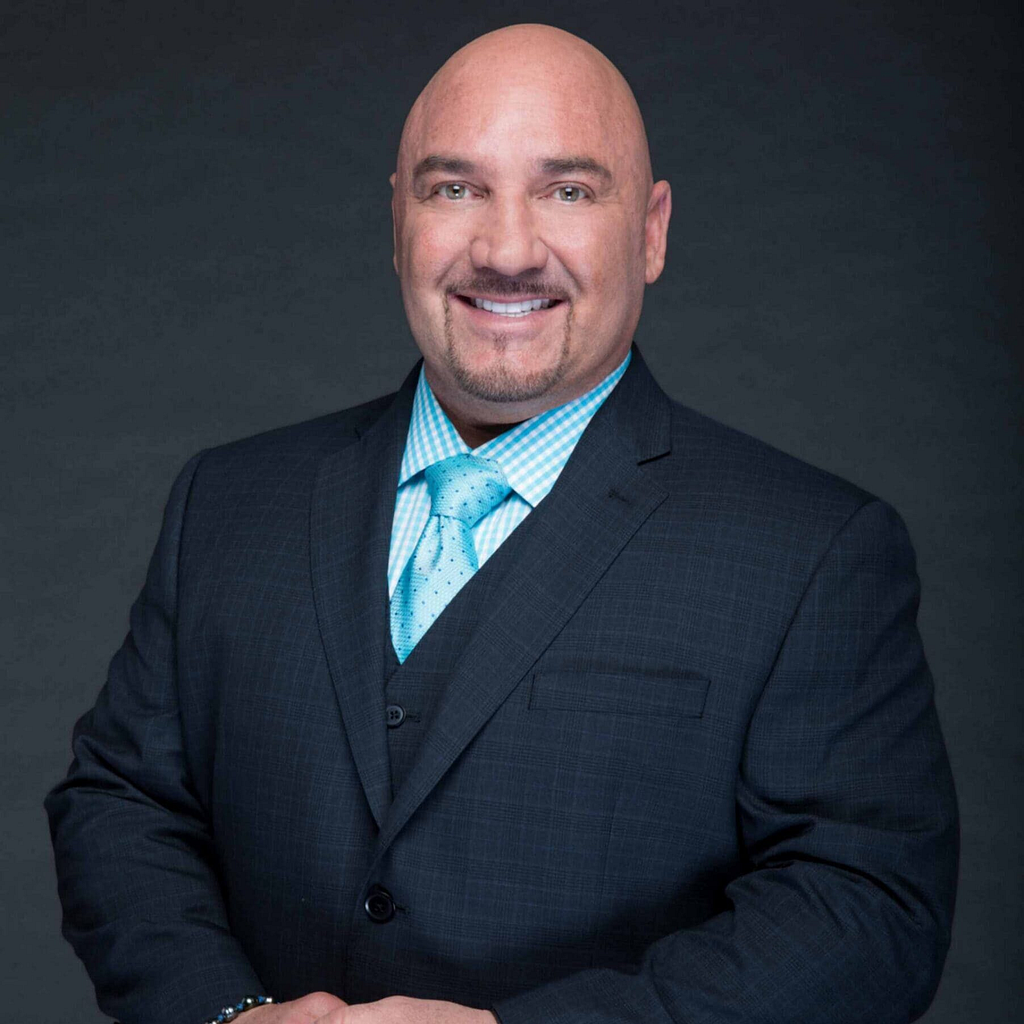
Yitzi: Amazing. Let’s now talk about mental health. Why do you think this topic is so important, especially nowadays more than ever?
Jay Glazer: It has freed me. I only started talking about it four or five years ago when I wrote a book on it. Opening up has turned friends into brothers and sisters and made my relationships so much stronger. I think it’s more prevalent now because of social media. Social media makes us all think our lives suck because we are comparing ourselves to everyone else’s filtered highlights, which represent a fraction of a second of one day. We constantly see these highlights or encounter hate on X. I grew up on the Jersey Shore; if you got your ass kicked on the Jersey Shore, it sucked for a month. Now, people are getting their asses kicked a hundred times a minute. Our brains are not equipped for this, so everyone is going through something.
Personally, I deal with clinical ADHD, depression, anxiety, bipolar disorder, and OCD. Other than that, I’m a model of stability! But you don’t have to have my level of diagnoses to be going through something nowadays, and social media is a huge part of that.
Yitzi: Would you recommend that people minimize social media, or would you recommend that parents keep their kids off it?
Jay Glazer: Of course, but I know it’s so hard. I tell people all the time, and I tell these teams as well, when coaches ask me why the players don’t just get off it, it’s because they are addicted. It’s not that easy. What I do recommend is opening up lines of communication. The best thing I’ve done is talk. I’ve opened up to so many people now. When I am struggling, which is usually a few times a week, I call two people to tell them, and they want to be there for me. Then I call two other people and don’t tell them I’m struggling; I just check up on them because that’s my way of being of service.
The two biggest things that have helped me with my mental health are being of service and leaning into my teams. If you can share your scars, our scars become our equity, and that brings you so much closer. When the roommates in my head are telling me terrible things about myself, being of service is my way of fighting back — it reminds me that I can’t be all that bad.
About 90% of the time, people tell me they are doing well and appreciate the call. But 10% of the time, someone will say, “Man, I really needed this today.” One of those times, an absolute warrior of a human called me back two weeks later and said, “Hey man, remember that day you called to check up on me? You saved my life that day because I was planning to end it.” It made me realize he just wasn’t thinking right, and thank God I called. Thank God is right.
Yitzi: You mentioned that we can look at our scars as our superpowers. You brought up ADHD; how do you think ADHD can actually be a superpower?
Jay Glazer: Because I can do six things at once. Growing up, I was told I had a learning disability. Now I know I don’t have a learning disability; I just don’t learn the way traditional systems teach. We all process information differently, and realizing this has helped me coach people individually and advise other coaches on how to do the same. With my ADHD, I can call 32 teams at the same time I’m setting up podcast guests, doing charity work, addressing mental health initiatives, and trying to break a story. I have a million things going on, and I thrive in chaos. I struggle in calm, but I am great in chaos.
On the flip side, I can’t sit through a three-hour lecture. When I speak to groups, businesses, or teams, I explain that if I’m sitting through something I’m not interested in, it literally feels like I’m drowning. The only way for me to get a breath of fresh air is to fidget, disrupt the class, or talk to someone. That always got me in trouble growing up, but we just aren’t capable of sitting still in that environment. I want people to have more sympathy for those of us who navigate this and to recognize that one size doesn’t fit all. If you teach me something and I can immediately turn around and teach it to someone else, I have a photographic memory. Otherwise, you could try a thousand times and it will never seep in.
I’ve tried many different medications across my life. I was one of the first adults diagnosed with ADHD on the East Coast back in 1989. They put me on stimulants initially, but those were not the right fit for me. Recently, I found a non-stimulant called Qelbree, which has been huge. I take it at night.
I can definitely tell a difference when I’m working at Fox. Without it, I might be speaking on my second topic while my brain is already halfway through the third. Qelbree allows me to be more present with my wife and everyone else. Where I used to constantly be on my phone, I can now put it down and truly engage. I wish I had Qelbree earlier in life to help manage my ADHD symptoms.
Yitzi: Jay, because of your incredible work and the platform you’ve built, you are truly a person of enormous influence. If you could spread an idea or inspire a movement that would bring the most amount of good to the most amount of people, what would that be? You never know how far an idea can spread.
Jay Glazer: Be proud of your scars and don’t hide from them. More than anything, connect and share. You never know how much somebody needs that connection, and you never know what lies behind someone’s eyes. I hid my struggles for a long time. Don’t get me wrong, I know my life is great, but between my ears can be a tough place. I didn’t sign up for it or ask for it, but now, thank God, I can use my pain to help others with theirs.
My entire philosophy with my gym and training is focused on being “unbreakable.” If you go through a dark tunnel that should or could have broken you, but you make it to the other side, you are stronger forever. Those scars are your equity. Use them.
Yitzi: I love it, Jay. It’s been an honor to meet you. I wish you continued success, blessings, and good health, and I hope we can do this again next year.
Jay Glazer: God bless, thank you, Yitzi. Absolutely.
Fox NFL Insider Jay Glazer Talks ADHD, Spygate and Why ‘Your Scars Become Your Equity’ was originally published in Authority Magazine on Medium, where people are continuing the conversation by highlighting and responding to this story.