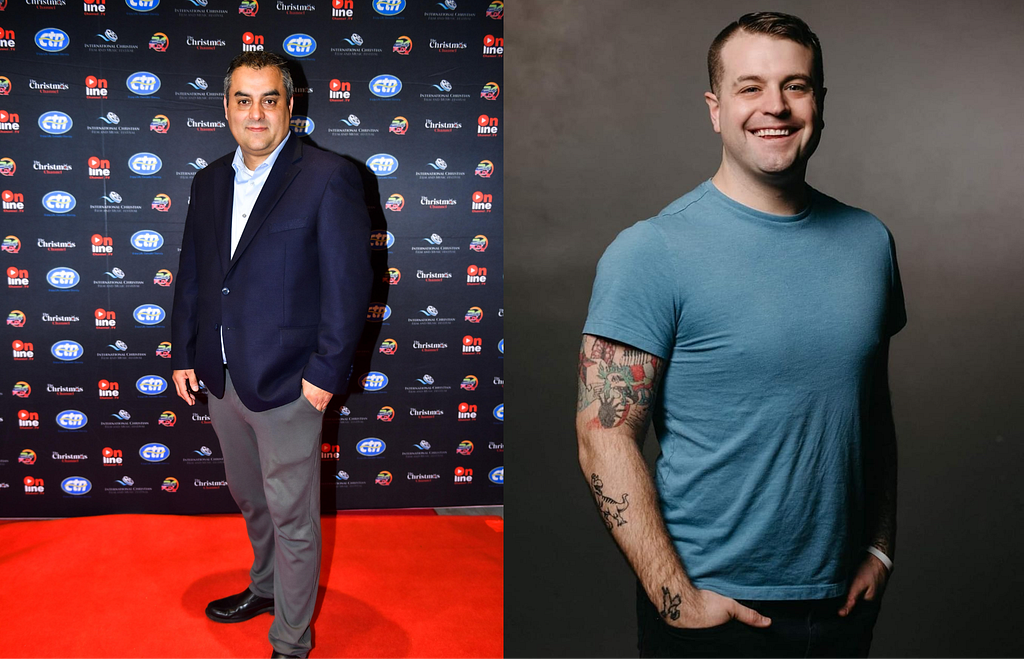
Tyler Sansom and Wally De La Fuente on Building a Faith-Based Indie Film Ecosystem Outside Hollywood
“Backlot is truly a revolutionary tool for independent filmmakers specifically. For many years, in order to get funding for films, you either had to know a bunch of rich people or work with a major studio. It’s not the easiest thing in the world to work for a major studio; Netflix is not just handing out job offers and movie contracts left and right. Wally and I really wanted to do something about that to bridge that gap.
With Rediscover Television, the parent company of the Backlot, it’s almost like a tithe for us — a way to give back. Ten percent of all subscriptions are going into a pool to help independent, unknown filmmakers get their projects off the ground.”
I had the pleasure of talking with Tyler Sansom and Wally De La Fuente. Tyler and Wally are two men who have spent years balancing the quiet responsibilities of pastoral ministry with the chaotic demands of independent filmmaking. Operating from different corners of the Midwest, they are attempting to rewrite the rules of how independent, faith-centered movies get funded and distributed outside the traditional Hollywood system. Tyler is preparing to step down from his lead pastor role in Indiana this August, while Wally balances his creative endeavors with an interim pastorship in Michigan. Together, they represent a pragmatic shift in a media genre that has historically valued religious messaging far above cinematic craft.
Wally’s journey began with an innate habit of asking questions that made his childhood teachers deeply uncomfortable. Raised Catholic in Texas, he quickly found himself at odds with the local nuns. “I asked too many questions they didn’t want to answer,” Wally recalls. “I’ve always had this yearning, a desire to know more of God.” His early attempts to explore other spiritual circles were met with immediate domestic resistance. His mother gave him a blunt ultimatum: “You’re Catholic, you’re going to die Catholic. You can’t do that, and you’re not going back.” The defining turning point occurred during a lonely graveyard shift at a highway truck stop when he was 19. Isolated with a copy of the Bible, he found his own calling. “I gave my life to Christ at a truck stop while working the graveyard shift, just reading the Bible by myself,” he says. “I got on my knees and did it then.”
Tyler’s path was defined by a completely different kind of sudden, physical detour. Growing up in Huntington, West Virginia, his early life was divided between playing professional football and making movies. He pursued athletics to the collegiate level, but a catastrophic neck injury abruptly shattered his sports dreams. Forced to find a new trajectory, he pivoted into full-time ministry. Yet, his childhood obsession with cinema, sparked inside a dark theater, never truly faded. “I watched a movie called Remember the Titans when I was a kid,” Tyler says. “I left that theater — I was five — thinking, ‘Man, whoever made that, that was the coolest thing ever.’ It really influenced my desire to make films after that.” Decades later, at the International Christian Film Festival, Tyler experienced a surreal full-circle moment when he found himself nominated for an award in the exact same category as one of the main actors from that childhood film.
Both filmmakers initially cut their teeth directing within the low-budget constraints of local church media departments. Wally began acting and studying media technology in the mid-to-late 1990s, eventually securing a position at a megachurch where he produced short videos on a weekly basis, aiming his content strictly at secular audiences. Tyler experienced a remarkably similar trajectory when he began utilizing film for his ministry in Indiana. What started as an effort to make small media projects quickly ballooned into nationwide theatrical releases like I Can and Learning You. “That exploded much more rapidly than I anticipated,” Tyler says. “It went from making small films for the church to making films that are in theaters all across the country.”
For a long time, faith-based cinema existed on the margins of the entertainment business, an insular ecosystem dominated by cheap, straight-to-DVD releases. The cultural landscape changed when crowd-funded projects like The Chosen proved that high production values could attract a massive, mainstream audience. Wally notes that the series fundamentally altered the scale of what independent creators could achieve. “They were breaking records by raising a million dollars through Kickstarter,” Wally explains, demonstrating to investors that a massive market existed for high-quality faith narratives.
To combat the financial barriers that routinely crush independent projects, Tyler and Wally launched ReDiscover Backlot, an online platform designed to act as an incubator for independent filmmakers. The system allows creators to upload their projects at any stage of production, building an audience and generating revenue while their movies are still being shot. “For many years, in order to get funding for films, you either had to know a bunch of rich people or work with a major studio,” Tyler says. “It’s not the easiest thing in the world to work for a major studio; Netflix is not just handing out job offers and movie contracts left and right.” Through their parent company, ReDiscover Television, they allocate ten percent of user subscription fees into a shared pool reserved for funding unknown directors. Tyler describes this economic model as “almost like a tithe for us — a way to give back.”
The platform’s upcoming slate of original projects hints at a deliberate effort to move past the pristine, simplistic tropes that have traditionally plagued religious cinema. Alongside lighthearted comedies like She’s Dating Jesus, they are actively developing Call Me Harlow, a heavy, coming-of-age drama that deals directly with teenage suicide. According to Tyler, the inclusion of such heavy subject matter “shows that what we’re trying to build isn’t afraid of speaking into issues that people are actually dealing with, rather than just the old cookie-cutter Christian films where everyone is happy at the end.”
Their practical view of the film industry extends to how they treat emerging technology like artificial intelligence. While many independent filmmakers view AI with deep professional anxiety, Tyler and Wally treat it as a necessary tool for financial survival on a low budget. Tyler recalls a recent production where he desperately needed a sweeping crane shot of a radio station isolated in a winter cornfield. Instead of spending millions on location, he purchased a 25-dollar miniature model on Amazon, constructed a fake micro-cornfield, and utilized AI software to animate the camera trajectory. “If you watch the shot, you cannot tell that it isn’t real,” Tyler says. Wally defends this integration by pointing to historical anxieties surrounding the advent of television and cable networks. “If we can consistently look at it as a tool — where we aim to do good rather than replace people or do evil — and manage ourselves that way, it’s going to be good,” Wally says.
As they look toward the immediate future, they are preparing an expansion into vertical cinema and short-form micro-dramas to capture younger audiences on mobile screens. Despite their heavy personal investment in the platform, they maintain an open-handed philosophy regarding the ultimate fate of the talent they discover. If a major Hollywood studio or a large distributor like Sony decides to develop a project originating on the Backlot, they welcome it without corporate jealousy. For these two filmmakers, the primary objective is simply constructing a sustainable, alternative ecosystem where independent stories can survive outside the traditional studio gates.
Yitzi: Tyler and Wally, it’s so good to meet you. Tyler, it’s good to meet you again. Wally, it’s good to meet you for the first time. Before you dive in and talk about your work, our readers would love to learn about your personal origin stories. Can you share with us the story of your childhood, how you grew up, and particularly the seeds and the genesis for all the amazing work that has come since then?
Wally: Sure. I actually grew up raised Catholic, but I was the kid who did the first communion and then started having a lot of questions. I would question things, much to the begrudging of the nuns at the time; I asked too many questions they didn’t want to answer. I’ve always had this yearning, a desire to know more of God.
When I was in middle school, I went to a Bible study and heard the gospel for the first time. I couldn’t accept it then. My mom told me, “You’re Catholic, you’re going to die Catholic. You can’t do that, and you’re not going back.”
Finally, after learning more about how to give your life to Christ, at 19, I gave my life to Christ at a truck stop while working the graveyard shift, just reading the Bible by myself. I got on my knees and did it then. That’s how I came to the Lord.
Yitzi: Tyler, let’s phrase it slightly differently. Is there a story from growing up that you think most influenced the direction you’ve taken now?
Tyler: Yeah, probably. This kind of comes full circle for me now. I watched a movie called Remember the Titans when I was a kid. I left that theater — I was five — thinking, “Man, whoever made that, that was the coolest thing ever.” It really influenced my desire to make films after that.
A couple of weeks ago at the International Christian Film Festival, I actually got to meet one of the main actors from Remember the Titans. I got to tell him that story, and he was very gracious to listen to it. It was a very cool full-circle moment to go from being a five-year-old kid to actually being nominated in the same category as one of the actors.
Yitzi: Wally, tell us how you first got involved in filmmaking.
Wally: I started acting in high school, did well there, and began going into media tech. I started to make little films back in the mid-to-late ’90s, and I just kept doing it. I started working for a big megachurch where we would basically make little films every week, which is what we loved to do. I did a lot of filmmaking then, and I always had a heart for movies that were more evangelistic — directed more toward people who were unsaved than saved. I’ve always had a heart to do those kinds of movies.
Yitzi: How about you, Tyler? What was the story that made you become a filmmaker? I know you’re also a pastor.
Tyler: I recently stepped down from the lead pastor role. I’m still at the church, but I will no longer be a lead pastor starting in August.
Very similar to Wally, I’ve always wanted to make films, but it ended up starting through the church. As I think I told you last time we talked, that exploded much more rapidly than I anticipated. It went from making small films for the church to making films that are in theaters all across the country.
Yitzi: Wally, please tell us about the exciting new projects you’re working on now and what we hope to be seeing in the near future.
Wally: There are two big projects, but one of the major ones we love is the Backlot, which comes from our hearts. I have also pastored. In fact, I am stepping back into that role for a couple of years at my church because the pastor left and they need an interim.
We are a couple of pastors who love filmmaking too, and we wanted to do something for filmmakers so they can make the films and tell the stories God wants them to tell. The Backlot is designed for that. People can come in, put their projects on there, meet others doing projects, gain an audience, gain momentum, and maybe even gain funding through people on the platform. Actual executives will also be able to look at their projects.
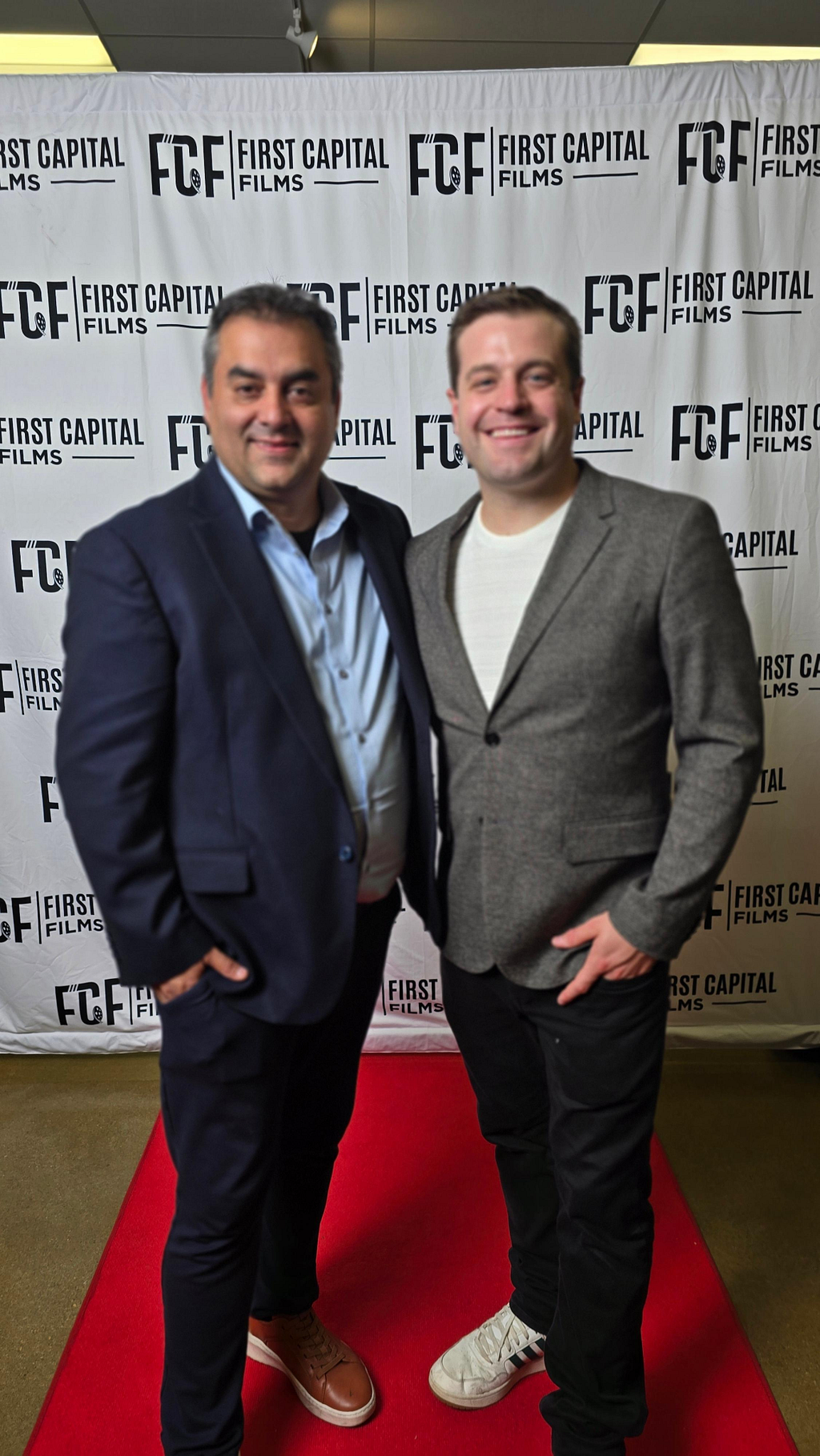
Yitzi: Tyler, do you want to tell us more about Backlot or other projects you’re working on?
Tyler: Backlot is truly a revolutionary tool for independent filmmakers specifically. For many years, in order to get funding for films, you either had to know a bunch of rich people or work with a major studio. It’s not the easiest thing in the world to work for a major studio; Netflix is not just handing out job offers and movie contracts left and right. Wally and I really wanted to do something about that to bridge that gap.
With Rediscover Television, the parent company of the Backlot, it’s almost like a tithe for us — a way to give back. Ten percent of all subscriptions are going into a pool to help independent, unknown filmmakers get their projects off the ground.
Beyond funding, the personal side of it for me is that myself, Wally, and other industry professionals are on there to help these filmmakers develop their projects as they go. It provides step-by-step support, which I don’t think exists anywhere else, not just within the Christian film industry, but in film period.
Yitzi: I think when Tyler and I were first talking, the only other game in town maybe was The Chosen. Now there are dozens and dozens of faith-based projects, like House of David. You probably know much more than me, but there’s a real audience for it. Wally, what do you think changed? Why all of a sudden now, and why do you think people are so thirsty for that?
Wally: To be honest, I think before it was more of a cool genre by Christians for Christians, and people were consuming it through DVDs and things like that. When The Chosen hit, it really upped the quality and the scale of what could be done. They were breaking records by raising a million dollars through Kickstarter or a similar platform, and they made a binge-worthy series. It made everyone else realize that this could be taken up a level.
I think that allowed Angel Studios to get into the movie game that way as well, since they were the first to have The Chosen. What has changed is the core possibility of what can be done. Of course, with technology now, you can do a lot more than you could in the mid-2000s.
Yitzi: Tyler, are there particular projects, films, or shows that you’re excited to be working on or releasing?
Tyler: When we wanted to launch the Backlot — which has been launched for about two and a half weeks now, so it’s very brand new — we knew we wanted to have a slate on there that was already going to be Rediscover Television originals. We have four projects in various stages of development.
One is called Broadcast, which is a completed film that’s now out on Rediscover Television. We have another called After, which is a post-apocalyptic television series that is really cool. That one is completed and comes out on the 27th of this month.
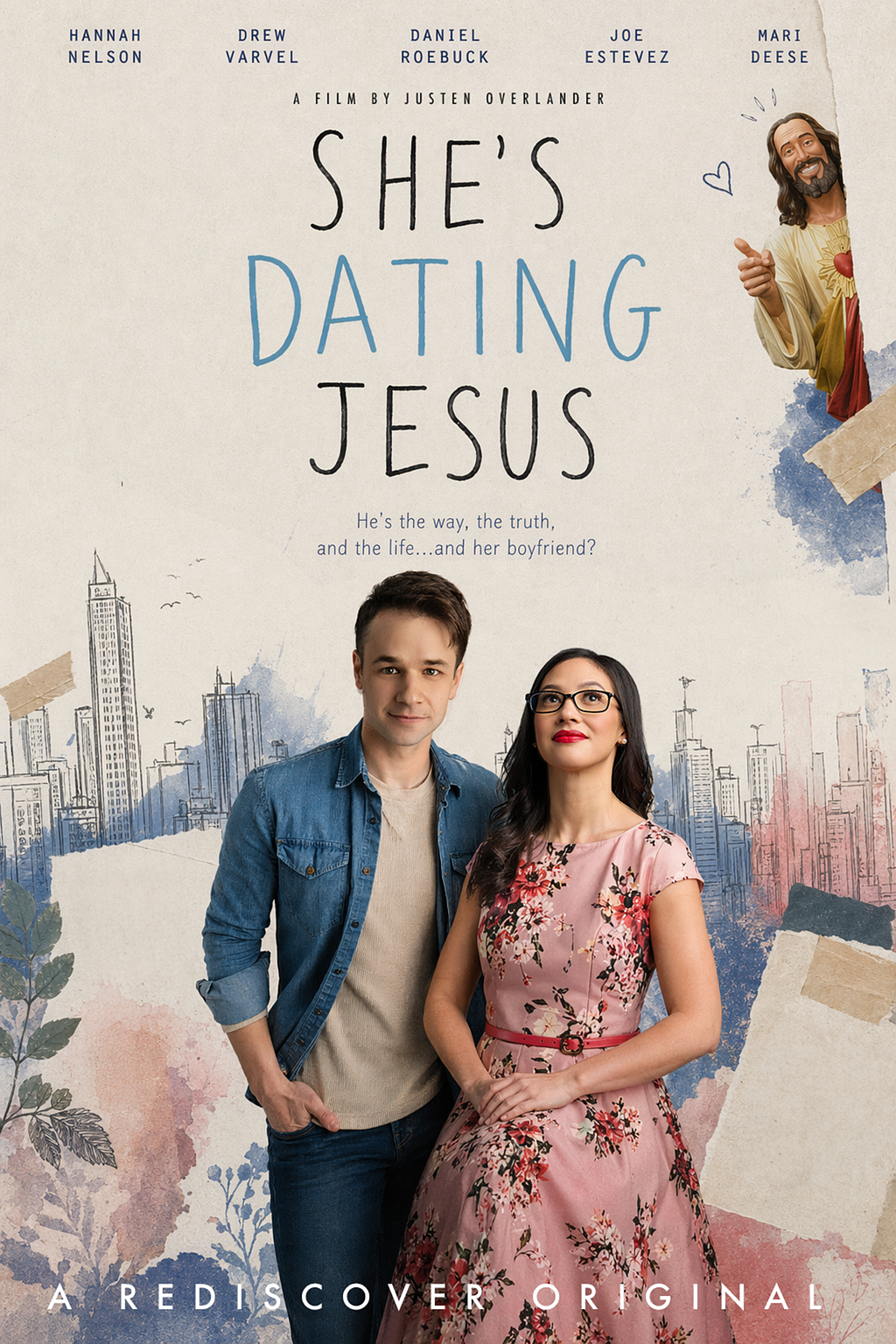
There are also two projects going through the Backlot process right now that aren’t finished. One is called She’s Dating Jesus, which is a hilarious title, and that starts filming in August. That’s actually the first fully funded film through this Backlot model, so we already have a proof of concept showing that it works.
The other project is called Call Me Harlow. It’s a coming-of-age drama that deals with teen suicide. It’s a really heavy-hitting project, which shows that what we’re trying to build isn’t afraid of speaking into issues that people are actually dealing with, rather than just the old cookie-cutter Christian films where everyone is happy at the end.
Yitzi: There are so many stories in the Bible that could be developed. Which story do you think has good potential to be developed into a blockbuster series?
Wally: One verse in the Bible talks about when the earth shook when Jesus died and the dead rose from the grave. Wouldn’t that be a crazy movie to watch? Just that alone, the implications are almost as crazy as the snap in Marvel.
Tyler: This one is a bit out there, so you have to bear with me, but I’ve been a little obsessed with a movie called Sinners that came out last year. It was such a genre-bending film. I have this idea of what it would look like to retell a Bible story set in a different timeframe to blend these genres.
The story I want to tell is Jael. There is this random woman who becomes a hero for the Israelite army in the Old Testament because she takes in an enemy trying to spy on the Israelites and ends up stabbing him in his sleep. It’s a really bleak story, but I wonder what that would look like set in the Civil War era of the United States, where it might be a KKK member coming into the home of a slave family. I think that would be really cool, though it might be a little far-fetched compared to things like House of David.
Yitzi: This is our signature question, and I’ll ask it to each of you. You’ve been blessed with a lot of success and you must have learned a lot from your experiences. Looking back to the beginning when you first started, can you share five things you’ve learned over the years that would be really helpful to somebody starting out in the filmmaking industry?
Wally: Sure.
- The first one for me would be to know that everything you’re going through and learning — whether the right way or the hard way — is part of the plan. Know that God can use all of it together for good. Even down to the smallest thing, like when I started a business for kids in the mall, knowing how to prepare a register from working at McDonald’s helped. All of this experience is what God is molding for you to use for His glory, His honor, and His power. That would be one of the main things.
- Others would be: don’t neglect the way God calls you to be generous with it, and always be humble. I say this a lot, and people think I’m being self-deprecating, but I truly mean it when I say I don’t deserve any of this. God is blessing me and giving this to me, and as a human sinner, I don’t deserve any of it. So, stay humble, be a good steward of what you have, and do what you can.
Tyler:
- The first one would be: don’t be afraid to be told no. Specifically in the film industry, you’re going to be told no a million times. Even if you’ve had some level of success, that doesn’t mean you’re always going to be told yes the next time.
- The second one is: just because one door doesn’t open doesn’t mean another won’t open, but you want to walk through the right door. A lot of times, young filmmakers will jump right into the very first opportunity they get, but it might be a horrible contract. Be patient with that.
- Number three: be as open-handed as possible. The people I’ve worked with who have really made it in the industry — we’re talking 30 or 40 years in Hollywood as a working actor or filmmaker — are typically the ones most willing to help others, share what they’ve learned, and be a resource. The ones who are still trying to prove themselves are the ones who tend to be close-fisted. Be open-handed with your information and resources.
- Number four: work harder than everyone else. Everyone is trying to make it. If you go to Los Angeles, your Uber driver and your restaurant waiter are trying to make it in the industry. You have to work every bit as hard or harder than everyone else.
- Number five: don’t be afraid to push limits with creativity, especially in today’s world. There are so many streaming platforms that you will find a home for whatever creativity you have.
Yitzi: What are your thoughts about all the new AI tools that can be used for filmmaking? Some filmmakers I talk to are very scared of them and don’t want to get near them with a 10-foot pole. Others are more ambitious about it. What are your thoughts? Wally, do you want to go first on that?
Wally: Sure. I think using it as a tool is the best thing. We have used it as a tool and have seen the remarkable things that can come from it and how it can be utilized. Tyler can tell you more about how we’ve done that.
I say to Christians who are afraid of this kind of thing: our earlier forefathers of Christianity were afraid of the TV, the telephone, and then cable. If we can consistently look at it as a tool — where we aim to do good rather than replace people or do evil — and manage ourselves that way, it’s going to be good.
Tyler: I will echo that because I’m not a fan of AI-generated acting and things like that. That’s not what I would want to use it for.
Here is a good example: I needed a radio station in the middle of a cornfield in the wintertime for a scene. Trying to find that location was very challenging. What I did was buy a miniature model of a radio station, built fake corn, made miniature models, and then used AI to animate the camera to make it look like a crane shot. If you watch the shot, you cannot tell that it isn’t real. For independent filmmakers, tools like that just raise the quality of what we can create. In the wrong hands it can be dangerous; in the right hands, it might cure cancer. I hope the industry swings toward using it as a tool in the right way rather than the wrong way.
Wally: He’s not joking about that shot. People are highly, insanely impressed by it.
Tyler: It’s wild. It really is.
Yitzi: That’s the first time I’ve ever heard of that. It’s such an ingenious way to use it.
Tyler: Yeah, a $2 million location and crane shot for about 25 bucks on Amazon.
Yitzi: We’re very blessed that prominent leaders read this column, and we love to connect you to people who can help you because I believe in what you’re doing. Is there a person in the US, let’s say a decision-maker at Netflix or Angel Studios, whom you’d like to sit down and talk to? We could tag them on social media and maybe make a connection.
Tyler: It’s a great question. What we are trying to build is definitely geared toward helping independent filmmakers. People at organizations like A24 or IndieWire would be the types of filmmakers who need to know about the Backlot.
One more thing before we move on: what’s really cool about this platform is that we’re not holding it close-fisted. Rediscover owns the platform, but if a film gets on there that Angel Studios wants to develop, great, they can have it. If Sony finds the next big film on there, that’s amazing. Praise God, we helped that filmmaker get to where they need to be. I don’t have a specific person who needs to see this, but any company or individual interested in having their films developed would find a place here.
Wally: Any executives or people looking to fund films should be on the Backlot so they can constantly look at projects.
Yitzi: Love it. I really love your attitude, your generosity, and your humility. I wish you both only blessings and success. How can our readers continue to follow and support your work?
Wally: You can find us on social media as Rediscover Television. You can also check out rediscoverbacklot.com and rediscovertelevision.com.
We will also be launching a vertical cinema platform sometime this year at rediscoververticalcinema.com.
Tyler: I think you just summed it up. If you type in Rediscover and put anything behind it, we’re trying to own it all. Rediscover Backlot and Rediscover TV are the two main ones, but this vertical cinema thing is coming. It’s one of the biggest ways people in places like China, Japan, and South Korea are consuming content, so it’s coming to us and we want to be on the forefront of that.
Yitzi: Is that short-form content, more than just vertical?
Wally: Yeah, they’re usually coined as micro-dramas, and they’re more on the soap-opera side. What we’re trying to do is find cinematic filmmakers to create series or movies for that viewing space.
Tyler: As a filmmaker, that’s not necessarily the prime way I prefer viewing things, but people are consuming massive amounts of content that way. We actually just had a feature film try to shoot both vertically and horizontally for that platform, so we’ll see how that goes.
Yitzi: Cool, that’s so interesting. I wish you both only success. Thanks so much for this, and I hope we can do this again next year.
Wally: Thank you.
Tyler: Thank you so much for having us.
Tyler Sansom and Wally De La Fuente on Building a Faith-Based Indie Film Ecosystem Outside… was originally published in Authority Magazine on Medium, where people are continuing the conversation by highlighting and responding to this story.