From Cairo to Cannes to Cowboys: Mohamed Karim Talks Medicine, Mentorship and Making It in Hollywood
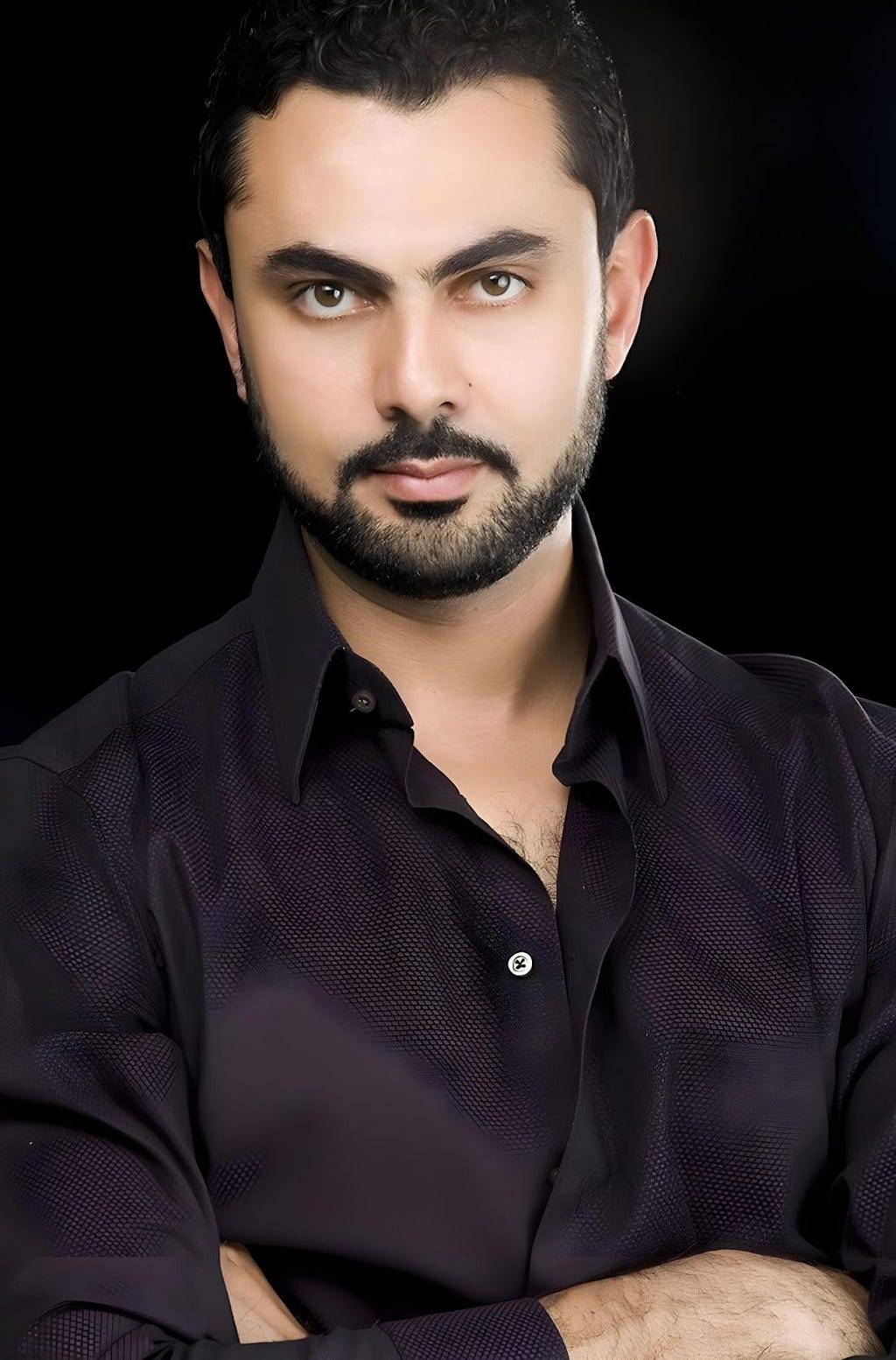
“Honestly, being a doctor really shaped who I am, both in life and in my career. It taught me patience, the importance of taking your time, and keeping your mind open… That’s why you see waves of people coming and going, because not everyone can wait five, ten, or even twenty years. Not everyone has the persistence to stick it out.”
I had the pleasure of talking with Mohamed Karim. Mohamed, an Egyptian actor, producer, and former television host, has steadily built an international profile that bridges Middle Eastern and Western entertainment industries. With a career that spans acting in Egyptian television dramas to starring alongside Hollywood veterans such as Nicolas Cage and Bruce Willis, Karim’s path reflects a deliberate and persistent effort to navigate and integrate two distinct cinematic worlds.
Born in Cairo, Egypt, Karim grew up between Cairo and Los Angeles, a bicultural upbringing that would later underpin his cross-continental career. Raised in a medical family, he followed in his parents’ professional footsteps, earning a master’s degree in Physical Medicine, Obesity and Weight Reduction from Ain Shams University. Yet, while Karim initially pursued medicine, a parallel passion for the performing arts continued to occupy his aspirations. From a young age, he was drawn to acting, a pursuit he nurtured by attending acting schools in Los Angeles during his university breaks.
Karim’s entry into the entertainment industry began in Egypt, where he garnered attention for his performance in the television drama Bent Afandina, a series chronicling Egypt’s political transformation from the era of King Farouk to President Anwar Sadat. The role, which earned him a Best Actor award in 2004, marked his arrival on the regional stage and helped establish his credibility in Egyptian media. He later toured international film festivals with projects like Shahata’s Store and Stolen Kisses, building a presence beyond Arab-language audiences.
Recognition abroad followed. His work in the British film Facebook Romance earned him a Best Actor award at the Monaco International Film Festival, and he received several honors from festivals in San Francisco and Alexandria, as well as the Arab Film Festival in California. In 2022, GQ Middle East named him Man of the Year, further solidifying his position in the cultural mainstream.
While his acting credentials expanded, Karim also ventured into hosting, most notably presenting the first two seasons of The Voice: Arabia on MBC between 2012 and 2014. “Karim has made history, by breaking a record, and becoming the first show host in Middle East history to reach 100 million viewers — a truly record-breaking achievement! and a feat never achieved before!”
The show, part of the globally franchised singing competition, exposed him to broader regional audiences and displayed his versatility as an on-screen presence.
Karim’s transition to Hollywood involved both persistence and strategic use of the international film festival circuit. Regular attendance at festivals like Cannes allowed him to network, explore co-productions, and gain visibility within global industry circles, even in years when his films were not being screened. Citing the late Omar Sharif as both mentor and inspiration, Karim set out to forge a career in Hollywood that, like Sharif’s, would transcend cultural and geographic boundaries.
Recent years have seen Karim take on increasingly prominent roles in American productions. In A Score to Settle (2019), he starred alongside Nicolas Cage and Benjamin Bratt, while in A Day to Die, he appeared opposite Bruce Willis. His latest project, Gunslingers, a Western action drama distributed by Lionsgate and scheduled for theatrical release in April 2025, features Karim alongside Cage again, as well as Heather Graham and Stephen Dorff. In the film, Karim plays Hoodo, a character grappling with a shadowy past in a lawless town — a role he regards as emblematic of the kind of complex, stereotype-defying parts he seeks.
Karim is also involved in several upcoming projects, including the American desert-race thriller Dead End, in which he stars and produces. The project was just announced at the Cannes Film Festival last week. He is also attached to the in-development film Judgment of the Dead. These ventures reflect his continued push for roles that resist typecasting and present characters with depth and narrative weight.
While acting is his central focus, Karim continues to draw on his medical background, which he credits with instilling patience and discipline, qualities he believes are essential for navigating the volatility of the film industry. He often speaks of the importance of perseverance in an environment where success can be delayed by years, if not decades.
In addition to acting, Karim has dabbled in modeling, winning Best Model of the Year in 1999 after graduating from En Vogue Modeling School. Yet his primary interest has remained film, and more broadly, storytelling, particularly stories that emphasize human connection, unity, and resilience.
Outside of his professional commitments, Karim has a wide range of interests. He is an avid traveler and sports enthusiast, enjoying activities such as karate, soccer, basketball, and hiking. Fluent in both Arabic and English, he has also expressed a love for music in multiple languages, including Spanish and French. He continues to split his time between Cairo and Los Angeles.
Looking back, Karim often cites the challenges he faced as formative experiences. Early missteps, such as auditioning in languages he didn’t speak or navigating unfamiliar casting environments, taught him to trust his instincts and adapt. He also emphasizes the importance of mentorship and freely offers guidance to emerging actors, particularly those from underrepresented backgrounds.
When asked what message he hopes to spread through his platform, Karim consistently returns to a single word: peace. It’s a theme he sees as central not only to global politics but to personal interactions, something he believes storytelling, at its best, can help cultivate.
Yitzi: Mohamed, it’s a delight and an honor to meet you. Before we dive in, our readers would love to learn about your personal origin story. Can you share the story of your childhood and how you grew up?
Mohamed: I was born and raised in Cairo, Egypt. I come from a medical background. My parents are doctors, and someone had to be a doctor, so that was me. I always had a dream of becoming a doctor, to be honest, but I also wanted to do something I was truly in love with, which is acting.
So, for quite some time, I was doing both. I finished medical school, got my master’s, worked as a doctor, and things were going really well. When I finished high school, I wanted to make my parents happy by getting into medical school, which I did. But I also made a deal with them. I told them, every year I am going to go to LA to explore my acting career and attend different acting schools, and I did. It was a great experience.
Yitzi: So you were a doctor and an actor. You started acting in Egypt. How did you get discovered? How did you start working in the United States?
Mohamed: Most of my films were touring around the world. Some of them were shown in New York, Brooklyn, LA, and at different film festivals. I was really eager to get my work distributed internationally through film festivals and screenings. That’s how it all started, by going to major film festivals like Cannes. Almost every year, I go there. Some years I go with my films, some years I don’t.
A lot of people think you need to have a film in the festival to attend, but that’s not true. Of course, it’s great when your film is featured, but even if it’s not, you should still go. The main point of film festivals is networking, meeting people, discussing co-productions, that kind of thing. That’s always been my approach.
I’ve always known that my vision and the things I love aren’t limited to just one region. I wanted to do something global. One of my mentors and a very respected actor worldwide, the late Omar Sharif, was a dear friend of mine. I look up to him as a hero. I had the vision that, one day, I wanted to be as respected and beloved as he was. I knew it would be a long road, but I was ready for it. I didn’t care how long it would take. And here we are.
Yitzi: Great. What was the first movie or television show that you worked on? Tell us the story behind that.
Mohamed: From my projects here in Hollywood, I really love my recent film, Gunslingers. Just the fact that I got to play a role like that, ( a cowboy ) it was a huge opportunity. You don’t often get chances like that in Hollywood, especially coming from where I’m originally from. Playing a role in a Western was a big success for me.
In all my projects, I try to stay away from stereotypical roles. But this one felt like a dream come true. I grew up watching Westerns, so being on set felt like I was living in the Wild West. I played a character named Hodoo, and we had a lot of funny moments. We did a lot of prep work and training, horse riding, shooting, all of that. It was an amazing experience.
It’s one of those projects I’ll always remember because I think it gives hope to others. If Mohamed Karim, an actor originally from Egypt, can play a role in a Western, that opens doors for people from all over the world, even right here, for actors of different ethnicities who haven’t had the chance to take on diverse roles.
Yitzi: That’s amazing. You’ve probably got some great stories from all the different projects you’ve worked on. Can you share one or two stories from your professional life that stand out the most?
Mohamed: Honestly, being a doctor really shaped who I am, both in life and in my career. It taught me patience, the importance of taking your time, and keeping your mind open. In medicine, you often deal with long-term, chronic cases that require a lot of perseverance before you finally reach success, curing the patient. I learned that throughout medical school, and it helped me a lot in this industry.
You know how tough it is in Hollywood. You never know when a project will happen or how long your career might take to reach a certain point. That’s why you see waves of people coming and going, because not everyone can wait five, ten, or even twenty years. Not everyone has the persistence to stick it out.
I think the ones who can hold their breath the longest, who keep waiting and pushing through, are the ones who eventually reach their goals. Maybe I was lucky, but I’ve always treated my career as a top priority. My work means everything to me.
Yitzi: It’s been said that sometimes our mistakes can be our greatest teachers. Do you have a story about a funny mistake you made when you were first starting acting and the lesson you learned from it?
Mohamed: A lot, actually. I remember I had an audition for a movie, and in the breakdown it said you needed to speak Pashto or something. I think it was an Indian or Pakistani role. I don’t speak any of those languages, but the feature looked really good and I was like, “Dude, I like this film. I know the actors, I know the filmmakers. I don’t care, I have to get in the room and prove I’m a great actor.”
The problem was, a lot of the lines weren’t in English or Arabic, which I do speak well. Still, I thought, “I’ll walk into the room and see how it goes.” I expected it to be a regular casting, just a casting director and a camera. But when I walked in, it turned out the producer, the director, and some of the cast, including some big names, were all sitting there.
I had the scene in my hand, and there were a few lines in this foreign language. I noticed a local guy in the room, I think he was Pakistani, this was maybe seven or eight years ago, and he was the only one who actually understood the language. I thought, “Look, all they care about is great acting. I know the character breakdown, I know what they’re looking for. I’m just going to be that character.”
So I started. There were a few lines in English, and then when it came to the foreign language, I spoke Arabic. It actually worked with the character, and I portrayed it really well. The director, producer, and everyone else in the room were super engaged. The only one who wasn’t thrilled was the local guy who understood the language. He kept looking at me like, “Dude, that’s not what it says.”
After the scene, everyone seemed happy. I shook hands with the director, everyone but that guy, who just stared at me from the corner. I looked at him like, “Hey, they liked it.” Later, I spoke with the director and he asked, “Was that Arabic?” I said, “Yeah,” and he said, “You nailed it, man.” That was one of the funniest moments for me. It taught me to never take no for an answer.
And then I had almost the opposite experience. I was in a project where the lines were in Arabic, but a lot of the cast didn’t speak Arabic. I was with a Mexican guy and others from different countries. They looked Middle Eastern, but they didn’t speak a word of Arabic.
Before we went in to audition, I was trying to rehearse, and I ended up helping almost everyone because most of them didn’t know the language. I had to write out the lines in English phonetics, like “Kif Halak,” which means “How are you”, I’d write it out like K-E-I-F, “Kif,” so they could say it properly. It was the opposite situation, and it taught me something too.
Sometimes you just have to help people, and that energy comes back to you in a good way. That’s one of the biggest lessons I’ve learned in life.
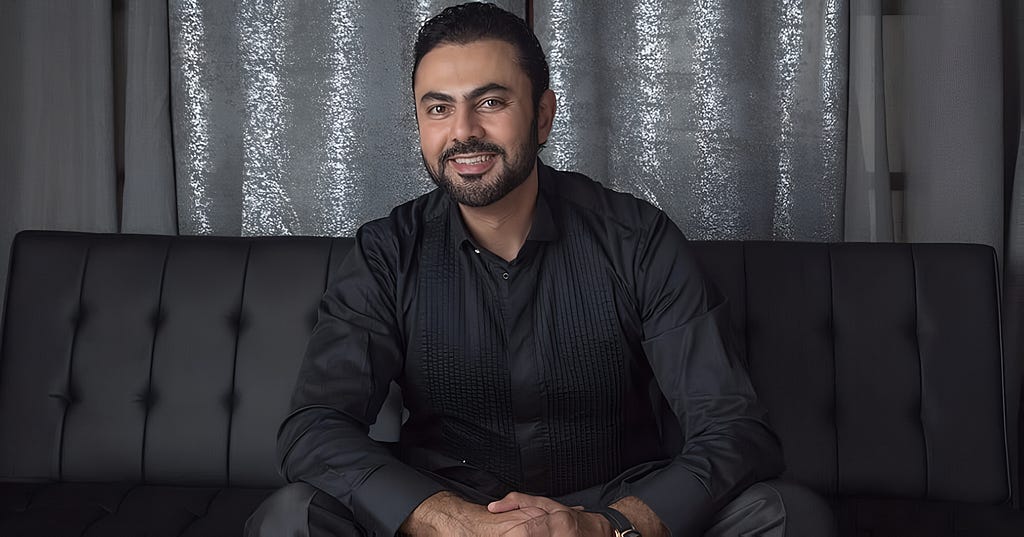
Yitzi: You have so much exciting work, so much great work. Tell us more about Gunslingers and why we have to watch it.
Mohamed: In Gunslingers, I play Hoodo. It’s set in a town where everyone is either running from their past or hiding something, and somehow, that past always catches up with them. What’s really cool is that there’s a message woven throughout the story. Everyone in the town comes from different parts of America. We haven’t grown up together or spent much time together, but once you’re in this town, you’re one of us. There’s a sense of solidarity, no matter if you arrived a year ago or just last month, you’re part of the community.
So when Stephen Dorff’s character comes into town and brings trouble with him, we still have to protect him. Everyone comes together as one. It’s about unity and looking out for each other. That’s the message I really love, standing together and protecting each other.
Hudo is just one of the Gunslingers with a past. He wants to blend in and start fresh, but every time someone new shows up, he thinks they might be after him, which isn’t always the case. It’s a powerful story about unity and second chances.
And I think it’s important to show that actors can break out of the stereotypes. I’m not against playing roles that reflect where you’re from, but I believe that if you’re a good actor, you can play any role. In the last five or six films I’ve done in Hollywood, I haven’t played a single Arab role, and I think that sends a powerful message to others from around the world. You can play any character, as long as you’re good at what you do.
Yitzi: How would you compare and contrast your personal character, Mohamed, with Hoodo, the character you play in Gunslingers? How are you similar, and how are you different?
Mohamed: There are definitely some similarities, especially when it comes to protecting others, standing in solidarity, and standing up for your friends. That’s part of who I am too.
But what really excited me about this film is that it reminded me of the movies I grew up watching with my dad. We loved watching Clint Eastwood, those classic Westerns. I never imagined I’d be one of those guys on screen, riding horses, shooting guns. It felt like I stepped back into that era. I was really living it, and honestly, I didn’t want it to end.
There are definitely differences between me and Hudo, but those core values of friendship and loyalty, those are things we share.
Yitzi: This is our signature question. Mohamed, you’ve been blessed with a lot of success. Looking back to when you first started, can you share five things you’ve learned that you wish you knew when you first started acting?
Mohamed: Oh, man. That’s a good question because it’s exactly why I keep helping people I don’t even know. Three weeks ago, I was honored by a film festival here in LA for my contribution to Hollywood, being from Egypt and making that crossover. I met so many people from different parts of the world, especially from the Middle East. They don’t know where to start. They don’t know if they’re going to make it or not.
One of the things I went through was that nobody ever showed me the way, because there really is no set way in this industry. You have to create your own path. I had to make my own way into it. I had to learn everything the hard way, from auditions to the people you know, networking, all of it.
That’s why I give free advice to a lot of people.
Number one: you need to take risks in life. If you don’t, you might live peacefully, but without achieving much. If that’s the life you want, that’s fine. But at some point, I think you need to take some risks.
Number two: you need to be educated. And I don’t mean just having a university degree. You can learn from everywhere, even from life. Being smart financially is crucial, because our industry is brutal. If you’re not smart about money, you might have to give up your dream. That’s what happens to a lot of people, they just can’t afford to keep going. So, figure out a smart way to support yourself financially, whether that’s through a second job or something else, so you can stay focused and persistent. Because this career can take years.
Number three: be helpful, even if you have nothing to offer. I really believe that what you give comes back to you. It’s happened to me many times. Helping others has always come back around in my life.
Next would be traveling. You have no idea how much you can learn from it. And you don’t need a lot of money to travel. I used to be one of those guys with just a backpack, hopping from one train to another bus across Europe. I was in medical school back then. I wasn’t doing anything fancy, just being myself. I stayed in hostels, even when I could afford more, because it helped me blend in and learn. Just going to Amsterdam and staying in a hostel where people from all over the world are hanging out, that taught me a lot. You meet people, make friends, and learn from their lives so you don’t always have to go through everything yourself. That’s why I think traveling is one of the most important things you can do, especially when you’re young. As we get older, we don’t always have the time for it.
Yitzi: This is our final aspirational question. Mohamed, because of your great work and the platform you’ve built, you’re a person of enormous influence. If you could put out an idea, spread an idea, or inspire a movement that would bring the most good to the most people, what would that be?
Mohamed: Peace. Definitely peace. We need peace in this world, way more than we realize. I think it starts with listening to each other. It’s time for everyone to just be kind and friendly. When we spread peace around the world, it really can make our world a better place.
Yitzi: Beautiful. Mohamed, it is so nice to meet you. We wish you continued blessings and good health.
Mohamed: My pleasure. Thank you so much for having me. Appreciate it. Thank you.
From Cairo to Cannes to Cowboys: Mohamed Karim Talks Medicine, Mentorship and Making It in… was originally published in Authority Magazine on Medium, where people are continuing the conversation by highlighting and responding to this story.