Jordan Thomas on Turning Tragedy Into Purpose, Building a Foundation for Kids With Limb Loss and Competing as a World-Ranked Golfer
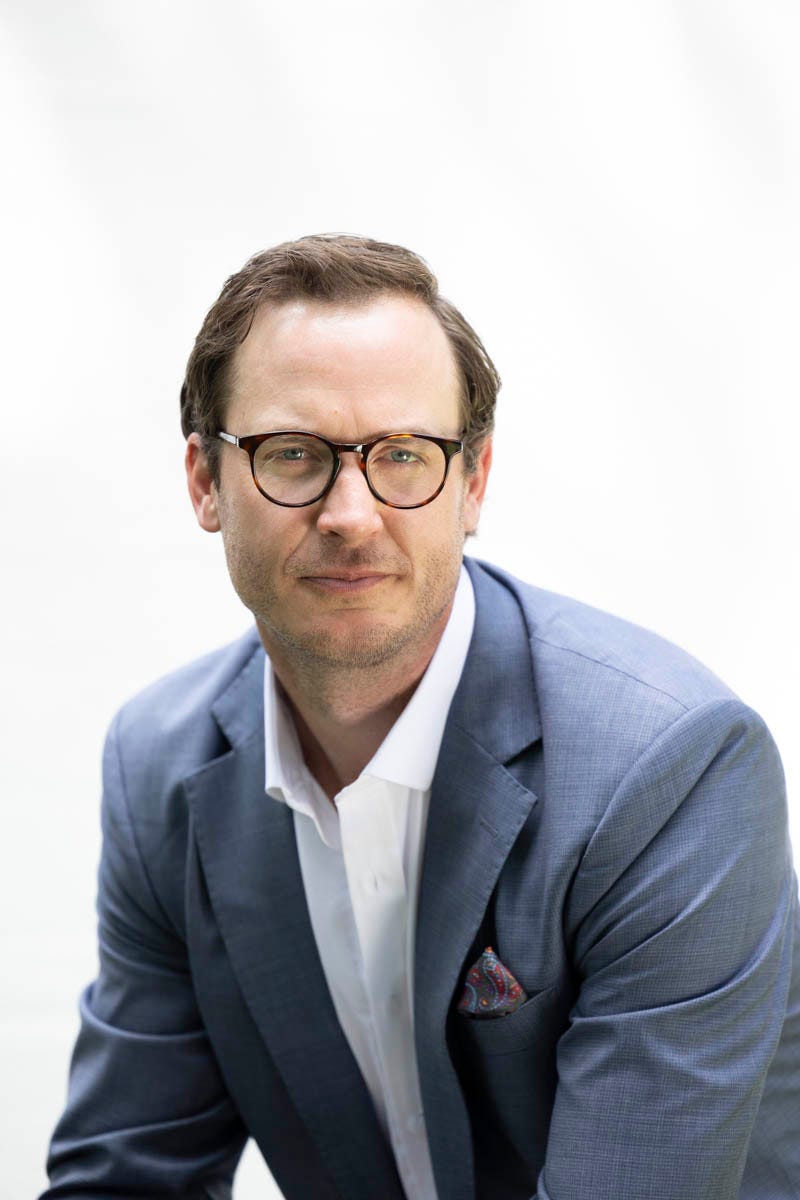
“I may have lost my legs, but I gained my purpose. That, to me, is the ultimate calling for those of us fortunate enough to manifest in this form — to find the thing you know, without question, you’re meant to do with your life. That purpose will drive you to wake up every day, put your legs on, and go attack life.”
I had the pleasure of speaking with Jordan Thomas. Jordan is the founder of the Jordan Thomas Foundation (JTF), a nonprofit organization that provides prosthetic devices and long-term support to children and adolescents living with limb loss. Established in 2005, the foundation has grown into a nationwide resource for young amputees, offering not only prostheses but also mentorship, community-building programs, and advocacy for more comprehensive insurance coverage. The organization’s inception was born from Thomas’s own experience: at age 16, he lost both legs below the knee in a boating accident while on vacation with his family in the Florida Keys. In the days following the accident, Thomas was struck by the financial disparity he observed among fellow patients in need of prosthetic care. Nine days after his accident, he launched the foundation that now bears his name.
Since its founding, the JTF has supported more than 180 children across 28 states and multiple countries. Its scope extends beyond the physical needs of prosthetic limbs, with services that include mental health resources, summer camps, peer mentorship, and scholarships. The foundation also campaigns for insurance reform to improve access to activity-specific prostheses, which are frequently denied coverage on the grounds that they are not “medically necessary.” According to Thomas, such limitations place an undue burden on families already navigating complex emotional and physical challenges.
Thomas’s advocacy and public service have drawn national recognition. He has received the National Courage Award and the Ellis Island Medal of Honor, and was named one of CNN’s Top Ten Heroes in 2009. A frequent public speaker, he shares his personal journey not only to promote the foundation’s mission but to encourage broader conversations around mental health, trauma recovery, and social responsibility.
In parallel to his philanthropic work, Thomas has made a name for himself in the world of adaptive sports. He is currently ranked the №2 double amputee golfer globally and sits within the top 10 among all adaptive golfers. Competing with a +3 handicap index, Thomas has earned accolades on some of golf’s largest stages, including a fifth-place finish at the 2022 U.S. Adaptive Open, where he won his impairment category by 15 strokes. After an injury sidelined him in 2023, he returned in 2024 to place second in his category. He is set to compete again in July.
Golf, Thomas says, has been an integral part of his healing and personal growth. More than a competitive outlet, it has served as a space for reflection, connection, and mentorship. He views the game as a metaphor for resilience — emphasizing the importance of patience, adaptability, and community.
Thomas is also outspoken about the need for public awareness and structural reform. Stories of families forced to make extreme financial sacrifices to afford prosthetic limbs for their children — such as selling homes or canceling vacations — have fueled his commitment to expanding the reach and sustainability of the Jordan Thomas Foundation. Nearly 90 percent of the organization’s funding goes directly toward services for children, and most of its financial support comes from individual donors.
Through a combination of personal narrative, athletic achievement, and nonprofit leadership, Jordan Thomas has become a prominent voice in disability advocacy and youth support. Yet he remains grounded in a philosophy of collective care, driven less by personal ambition than by a belief in community and the possibility of systemic change.
Yitzi: It is a delight to meet you. Before we dive in deep, our readers would love to learn about your personal origin story. Can you share with us the story of your childhood and how you grew up?
Jordan: Sure. I was very, very fortunate in terms of the family I was born into. I had the privilege of access to education. I grew up in Chattanooga, Tennessee, and I’m the youngest of three boys. To be honest, I grew up with a lot of privilege and was very lucky to have the kind of family I had. I was an athlete as a kid, and a lot changed in 2005 when I was 16 years old. That’s when my life shifted very drastically and very quickly. That’s kind of when the story got interesting for me.
Yitzi: For our readers who don’t know, do you feel comfortable sharing the story of your accident?
Jordan: Yeah, sure. I was in the Florida Keys on vacation with my family. We decided kind of late in the afternoon to go out and do some scuba diving. I got into the boat, and as a 16-year-old, I was just this rambunctious, impatient kid. We finally got to the spot where we were going to dive, about seven miles off the coast, a 45-minute boat ride. I jumped into the water, and the waves were massive that far out. I was suddenly pushed behind the boat.
My mom, in an instant, wanted to move the boat so it wouldn’t come down on my head since it was rocking from side to side. She put it into gear quickly to try to get out of the way, and the propeller pulled me in. I knew immediately that I’d been hurt badly. I looked down and saw the extent of the damage. My dad jumped into the water and asked, “Are you okay? Are you okay?” I just looked at him and said, “My feet are gone. We have to go.”
Then we had a 45-minute boat ride back to shore. Luckily, both my parents are physicians, so they did the best they could to reduce the bleeding. At the end of the day, I feel incredibly blessed and fortunate to be here today.
Yitzi: Wow. That’s an unbelievable story. I’m so sorry that happened to you.
Jordan: Don’t be, brother. Honestly, at this point in my life, I can say it was the greatest gift I’ve ever received. I know that may not make any sense, but people’s natural reaction is to say, “I’m so sorry.” My thought is, all of us have lost our legs at some point in our lives — mine’s just more visible.
Yitzi: Wow. Your attitude is unbelievable. It’s remarkable, and I’d like to say it’s common, but I don’t think it is. Did you have a mental shift that helped you reframe this tragedy into a blessing?
Jordan: I was really lucky to grow up in a family system where, because of the privilege I had, I was deeply aware and mindful of the idea that it’s our responsibility to be of service, to support our community, to love and nurture people. Our resources are temporary, so we have to give back and fight injustice wherever it exists.
When I was 16 and learned that kids are denied access to prosthetics simply because their families can’t afford them, I thought, in what world is that acceptable? It didn’t make sense to me. I had grown up watching my parents — not just hearing them talk, but seeing what they did. I always say, I’d rather see a sermon than hear one.
So for me, it wasn’t some radical idea like, “I’m going to change the world.” It was simply, this is an injustice, this isn’t acceptable, and I’m going to do something about it.
Yitzi: For the sake of inspiring our readers, can you share — now that you have two prosthetic legs — what you’ve been able to accomplish?
Jordan: Yeah, sure. I’ve been really lucky to get a lot of acknowledgement from folks — from CNN, People magazine — and I feel really blessed to have that kind of recognition. It ultimately helps our mission and what we’re trying to do.
I’m an avid golfer. I compete. I’m probably the best multiple-limb amputee golfer on the planet right now. That’s something I’m passionate about and work hard at. It’s a natural way to blend my love for golf with my love for the foundation.
I compete at a high level to expand the platform of JTF and raise awareness around what we do. At this point, there are times when I genuinely forget that I have two prostheses. I think we all have a deep level of resilience, of adapting and overcoming.
The real privilege of the accident for me was that I got the opportunity to uncover and express a depth of resilience I might never have been confronted with otherwise. Does that make sense?
Yitzi: That’s unbelievable. Has golf played a role in your healing process?
Jordan: Deeply. I play golf and I compete at a high level, which is great. It’s cool, it’s fun. But I play golf with people I love, respect, care about, and learn from. There’s really no other game where I can spend four and a half, five hours with someone and learn from them while being outside in nature, connected to something greater than myself. I do it for the community, for the relationships, for the people, rather than just to win. I’ve let go of that constant drive to win, win, win.

Yitzi: Amazing. What advice would you give to another young person who went through a terrible accident and lost the ability to use a limb? What could you say to them — not necessarily right away — but what encouragement would you offer?
Jordan: First and foremost, I encourage kids to put more emphasis on the invisible wounds than the physical ones. At the end of the day, learning how to walk again is difficult. It’s painful, there’s physical struggle, but I’d argue that my invisible wounds were more life-threatening than the physical ones.
I almost bled out — I was right at the edge of death — but for me, the invisible wounds, the grief, the sorrow, the emotional adjustment as a 16-year-old, were deeply painful. So I encourage them to seek support from the community. There are people like us who’ve been through it, and they don’t have to go through it alone. We’re here to care for them, love them, support them, answer questions, and share our experiences.
And ultimately, it’s okay to not be okay. It’s okay to feel angry, hurt, or sad. You have every right to those emotions. But know that this will pass. It’s very difficult to make sense out of nonsense. My boating accident was nonsense. But through the work we’ve done and the perspective we’ve gained, I may have lost my legs, but I gained my purpose.
That, to me, is the ultimate calling for those of us fortunate enough to manifest in this form — to find the thing you know, without question, you’re meant to do with your life. That purpose will drive you to wake up every day, put your legs on, and go attack life.
Yitzi: As you’re speaking, you sparked an idea that everyone has wounds — some visible, some not — that really struck me. It’s such a profound way to look at it. We’re all the same, really. The difference is just whether it’s inside or outside. What could be a way to make that idea more widespread? How can we help people understand that we shouldn’t look at those with disabilities differently, because in a way, we all have disabilities?
Jordan: Completely. I think a lot of it is a societal thing. We tend to otherize people so easily. You pray to a different god than I do, so you must be different. You look different, sound different, have a different orientation or gender identity. But at the end of the day, I think it really starts internally. It certainly did for me. I had to come to that awareness, to find who I truly am within, and then recognize that you are that too. You deserve the same things I do — the same things I think everyone wants: safety, belonging, meaning, purpose, love, connection, community.
The more I can do to reduce that impulse, that conditioned thought that says, “You are other, you are different, so you must be a threat,” the better. If we break it down to brass tacks, we’re not all that different. And if I can extend a bit of grace and compassion to myself first, then I can extend it to you.
Yitzi: Beautiful. You mentioned the Jordan Thomas Foundation and the work you’re doing, but let’s dive deeper into that. Can you share exactly how you’re helping other people with similar injuries?
Jordan: Yeah. This was something I was exposed to as a 16-year-old. I didn’t know anything about prosthetics before my accident. When I learned that insurance companies often deny kids access to the prosthetic devices they need, I just thought it was absurd.
I’ve had conversations with parents who said, “I sold my house to pay for my son’s arm,” or families who said, “We canceled five years of family vacations to get our daughter one leg.” And knowing they’ll have to replace that limb in eight months — the financial burden is just unreasonable.
At JTF, we provide prosthetic devices to kids as often as they need them until they turn 18. But what I’m most proud of is that this is only step one. We’ve built out so much more. Like I said before, the physical wounds are often far less damaging than the emotional ones. So we’ve added mental health resources, a mentorship program where families can connect and new families can learn from others who’ve been through it.
We’ve also created an ambassadorship program, offer scholarships, and give access to camps where families can come together and find community, humanity, and support. I’m proud that we’ve gone far beyond just restoring functionality. We look at it holistically. How can we not only help someone regain a functional level, but fully support them as the precious human being they are, so they can go on to truly thrive throughout their lives?
Yitzi: That’s unbelievable. How do you raise money for this? It seems amazing. How can people get involved and support what you’re doing?
Jordan: Surprisingly, it’s difficult, and it’s something I work on constantly. We rely on the kindness of strangers — on people who genuinely care and can see the impact we’re having on lives. Most of our donations come from individuals. I think we do a great job of being ultra-transparent with how we use those funds. We maximize spending on kids rather than on administrative stuff. I’m really proud of that. We’re lean, efficient, and around 90 cents of every dollar donated goes directly to kids and services, which is an incredible statistic.
So I encourage people to visit us at JordanThomasFoundation.org, find us on Instagram and other socials, and really get engaged. Learn about these kids. I dare you not to shed a tear or open your heart — and maybe your pocketbook — once you really get to know who these kids are and the impact this work has had on their lives.
Yitzi: That’s a powerful statement — challenging people like that. I love it. I want to go to our signature question. Can you share five things you wish more people understood about people with disabilities or limitations?
Jordan: Wow, five things. Okay. The first thing that comes to mind is that we’re not a monolith. My experience isn’t the same as another amputee’s, much less someone who’s paralyzed or visually impaired. Every person’s journey is unique.
Second, there’s often a bit of pity that people project. And I struggle with that. Like, I’m actually doing great. That doesn’t mean don’t have compassion — compassion is always kind and always welcome. Be aware that some struggles are real and unique to us, and sometimes accommodations or understanding are needed. Compassion never fails.
Third, I think people sometimes just don’t consider the day-to-day realities. Like able-bodied folks parking in handicapped spots. That’s not just inconvenient — it impacts our quality of life. A little more awareness and consideration go a long way.
Fourth, we’re incredibly resilient, and we can contribute tremendous value to the world. We’re valuable, essential, and unique. Anything that helps reduce the tendency to otherize people — things like curiosity, compassion, and care — makes a big difference. And honestly, that applies to everyone, not just people with disabilities.
Fifth, I truly believe that every person with a disability has something to teach. There’s almost always a thread of resilience in their story. And that same resilience is already within you too. Maybe their story helps awaken that in you. You don’t have to lose your legs in a boating accident to discover who you are or to realize that you’re more capable than you ever thought. We all have barriers, layers that hold us back. For me, not walking again wasn’t an option, so I did whatever it took to get back. And that’s exactly what I did.
Yitzi: That’s amazing. This is our final aspirational question. Jordan, because of your great work and the platform you’ve built, you’re a person of enormous influence. If you could put out an idea or inspire a movement that would bring the most good to the most people, what would that be?
Jordan: Give love. Spread love.
Yitzi: Beautiful. Jordan, thank you so much for your time. I wish you continued success, good health, and blessings. I hope we can do this again next year.
Jordan: I would love that. Yitzi, thank you so much. Bless you, brother. And thanks for all that you do and for your time. You’re having a tremendous impact. Interviews like this help us expand our platform, which brings in more dollars, which means we can help more kids and change more lives. So don’t underestimate the value you’ve had in impacting lives through this conversation. Thank you.
Yitzi: Appreciate it, Jordan. Thank you so much. It means a lot.
Jordan: Okay, brother. Be well.
Jordan Thomas on Turning Tragedy Into Purpose, Building a Foundation for Kids With Limb Loss and… was originally published in Authority Magazine on Medium, where people are continuing the conversation by highlighting and responding to this story.