From Paris Streets to ‘America’s Got Talent’: Jacques Heim on Founding Diavolo and Escaping Through Live Arts

“Be a decent human. Number one. Forget about everything else… Accept every human, whatever the color of their skin, their political belief, their religious belief… Find your calling. Find why you think you were born here on planet Earth… Do not look behind. Do not hesitate. The one thing you cannot have is regrets.”
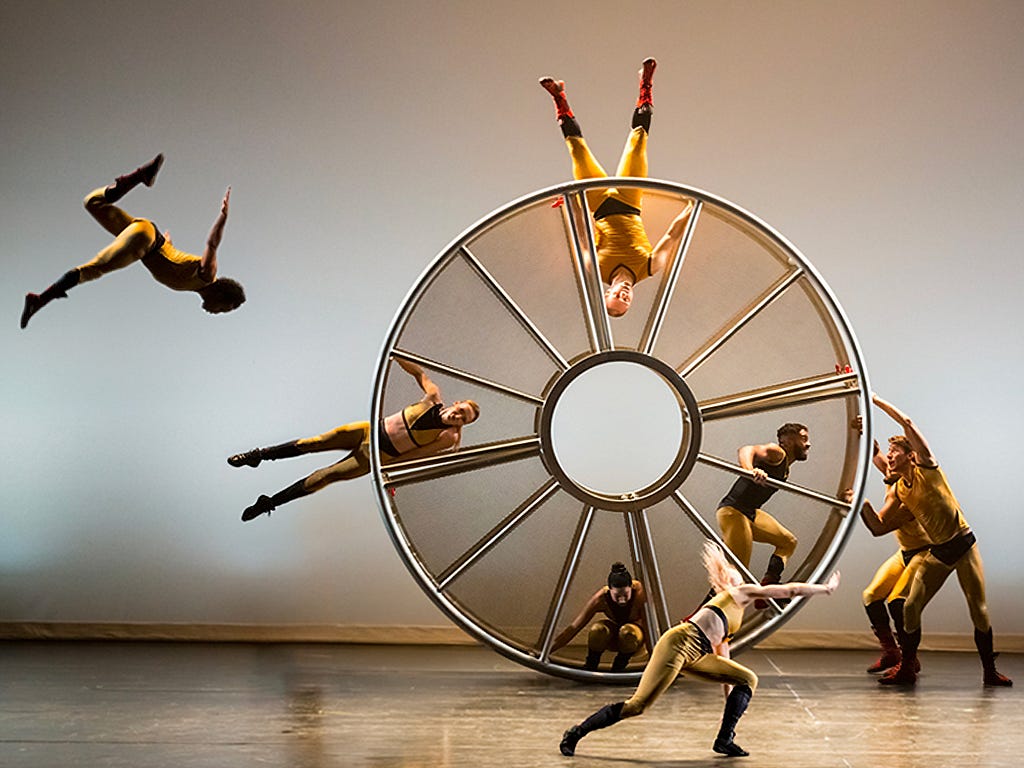
I had the pleasure of talking with Jacques Heim, a man whose life is a study in motion, rebellion, and the raw, kinetic power of the human body. He’s the founder and creative force behind DIAVOLO | Architecture in Motion, the dance company that stunned millions on “America’s Got Talent” and has been pushing the boundaries of performance for over three decades. But to understand the sweat, the risk, and the soul-baring vulnerability of his work, you have to go back to his beginning, to a childhood in Paris where the seeds of his life’s mission were planted in hostile ground.
“I was born in Paris, France, and I’m Jewish,” Heim tells me, his voice carrying the weight of that simple statement. “I have to tell you that I had to hide that I was Jewish during my childhood. I love Paris; it’s a beautiful city, but unfortunately, the people of Paris are some of the most anti-Semitic people in Europe.” This experience of being an outsider, combined with a fierce dislike for the rigid French school system, forged an identity he still wears with pride. “I wear this T-shirt that says ‘rebel,’” he says, “and I realized that hiding my roots… and also being kicked out of six different schools… I became a rebel.” He and his friends took to the streets, forming a theater group that performed on top of cars and in restaurants, a raw and public act of defiance.
Eventually, his family urged him to leave. “Jacques, you need to go to the land of opportunity,” they told him. He landed at Middlebury College in Vermont with dreams of becoming an actor, but his English was a barrier. A friend suggested dance. “Jacques, why don’t you come and take some dance classes? At least you don’t have to speak,” he recalls them saying. “And there, Yitzi, I fell in love with this beautiful, universal language called movement.”
That language would become the foundation of his life’s work. He fused it with a deep passion for architecture, quoting the great Louis Kahn: “Architecture is the great philosophy of our environment.” After earning his master’s at CalArts, he founded Diavolo | Architecture in Motion in 1992. The company became the ultimate expression of his rebellious spirit and his journey to reconnect with the identity he once had to hide. “In one sentence,” he explains, “I’m interested in pushing humans beyond their own mental, emotional, and physical limits so they can discover or rediscover who they are and what they’re made of.”
This mission has evolved into something far beyond a typical dance company. For the past seven years, Heim has focused on working with the military veteran community, a project that is clearly the heart of his current work. He calls it “restoration through movement.” Through intense, physically demanding workshops, he helps veterans process trauma and restore their well-being. “I operate like a drill sergeant or a football coach,” he says. “I don’t look at them with pity; I have no pity for them. I push them, but I do it with care and love.”
The process is profound. Veterans write and record their personal stories of service, which then become the soundtrack for the choreography they perform. It’s a way of facing their past head-on. “I am kind of an electrician; I recircuit them through the intense movement program. And Yitzi, it works.”
Now, Heim is channeling this energy into a new show called Escape, a project born from the chaos of the modern world. He renovated his 6,000-square-foot studio into an intimate black box performance space where only 90 people per show can sit just feet from the action. “You see the sweat, the bruises, the blood,” he insists. The idea is to create a shared human experience, a temporary bubble where artists and audience can “escape from the chaos of our everyday lives” together. Crucially, all proceeds from the show benefit The DIAVOLO Veterans Program, funding the work that gives his art its deepest purpose.
When asked what it takes to build a life in the arts, Heim’s first piece of advice has nothing to do with talent or ambition. “Be a decent human. Number one,” he states plainly. “Forget about everything else… Open your arms to all humans.” For him, everything else flows from that single, powerful idea: find your calling, find your team, and move forward without regret. “At the end of the day,” he reflects, “I do not have a dance company; it’s more than that. It’s a program.” It’s a program for healing, for discovery, and for celebrating the resilience of the human spirit in a world that constantly puts it to the test.
Yitzi: Jacques, it’s such a delight to meet you. Before we dive in, our readers would love to learn about your personal origin story. Can you share a story about your childhood, how you grew up, and what planted the seeds for all the amazing work that has come since then?
Jacques: Wow, Yitzi. Okay, that’s a big question. I was born in Paris, France, and I’m Jewish. I have to tell you that I had to hide that I was Jewish during my childhood. I didn’t really know what was happening when I was growing up. It was only after coming to America that I realized I had to reconnect to my Jewish roots.
I am telling you this because the seed started there. I wear this T-shirt that says “rebel,” and I realized that hiding my roots, not getting along with the people from Paris, and also being kicked out of six different schools because I didn’t like the French school system… I became a rebel. I decided to create a street theater group with my friends in Paris, and we were performing in the streets, on top of cars, and in restaurants as a way to rebel.
You have to see the connection. Eventually, after being kicked out of six different schools, my family told me, “Jacques, you need to go to the land of opportunity. You need to go to America.” So I was lucky to go to a small college in Vermont called Middlebury College. There I wanted to become an actor, but you can imagine that my English at that time was so bad nobody could understand me. Luckily, I had some friends in the dance department who told me, “Jacques, why don’t you come and take some dance classes? At least you don’t have to speak.” And there, Yitzi, I fell in love with this beautiful, universal language called movement.
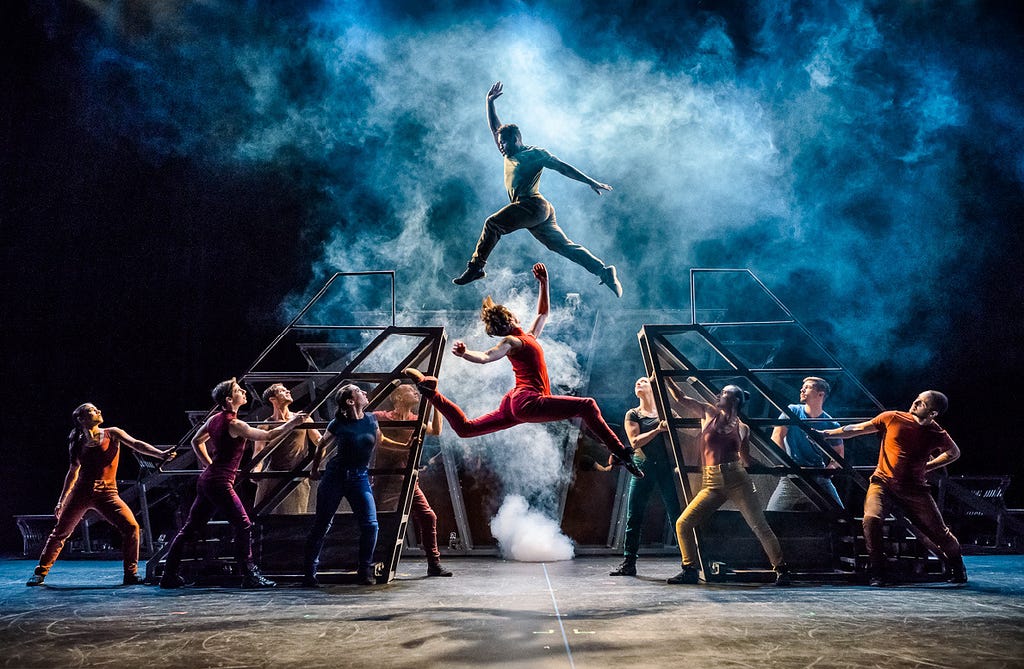
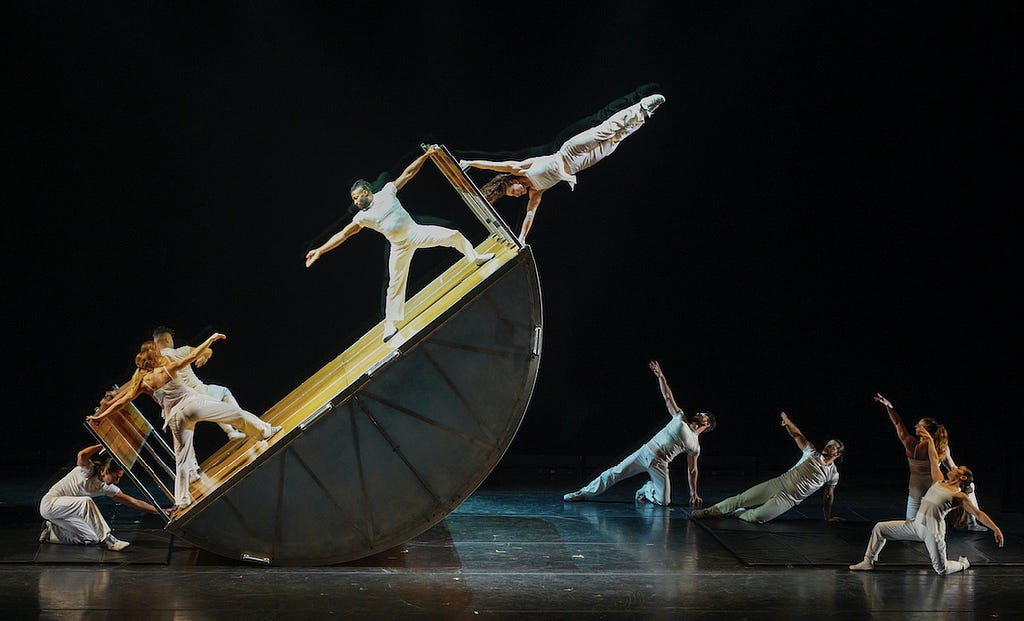
In a different life, I wish I could be an architect. I love the language of architecture. My inspiration comes from many different architects. Louis Kahn, the great architect, says that architecture is the great philosophy of our environment. It tells a little bit about how we behave, the mood of the city, how it manipulates the patterns of human movement. That was my interest: the interest of collaborating with great humans, the interest of movement, and of architecture. That slowly became this company called Diavolo | Architecture in Motion.
After four years at Middlebury College, I went back to Europe, to the University of Surrey in England, and studied analysis and criticism in dance — fancy words, but it was a way for me to see many dance companies and write about them. Then I went back to America, to California. Outside Los Angeles, there’s a school called the California Institute of the Arts, CalArts. There, I did my master’s in the dance department, and in 1992, I started my dance company, Diavolo | Architecture in Motion.
But there was always this aspect of the rebel inside me, and I didn’t know why, Yitzi. It was a combination of me not being connected to my roots in Paris and being pushed away so that I could not connect to it. I reconnected here. I am married to a wonderful Jewish woman whose family is from Israel. She grew up in Philadelphia. So I reconnected to my roots and really discovered the man and the artist that I was. My studies here helped me formulate the kind of art I wanted to create.
Basically, in one sentence, I’m interested in pushing humans beyond their own mental, emotional, and physical limits so they can discover or rediscover who they are and what they’re made of. You can understand why I’m doing this because of how I was brought up, my education, and my rebellious aspect. Because at the end of the day, Yitzi, having this dance company is not just about creating art; it’s about helping humans who want to discover who they are. That’s the mission of my work.
Yitzi: You probably have some amazing stories from the different projects you’ve been involved with and the different places you’ve been. Can you share with our readers one or two stories that stand out in your mind from your career?
Jacques: One great experience was collaborating with the Los Angeles Philharmonic, the LA Phil, where Diavolo was commissioned to do three pieces under the title L’espace du Temps (Space of Time). I used the music of the great American composer John Adams, Esa-Pekka Salonen (who was the conductor and artistic director of the LA Phil and, by the way, is coming back), and also the music of Philip Glass. I met John Adams and Esa-Pekka Salonen — amazing artists — and we were invited to perform at the Hollywood Bowl with the entire orchestra behind us. I tell you, that was a thrill. Esa-Pekka was conducting his own piece. I’m having a blank on the title, but it was an amazing experience for my dancers. That was an amazing learning experience.
Also, for the last seven years, we’ve been working with the military veteran community. As I told you, the mission of my work is pushing humans beyond their emotional, mental, and physical limits so they can rediscover who they are. I realized that the philosophy of Diavolo and the work that I do is actually perfect for veterans returning from their service. And that’s what I’ve been doing for seven years.
What am I doing with them? I’m doing what I call “restoration through movement.” Through week-long or month-long movement workshops, we try to restore their emotional, mental, and physical well-being. We have men and women from the armed forces, whether they can walk or are in a wheelchair. We do movement with some of the structures of Diavolo. I operate like a drill sergeant or a football coach. I don’t look at them with pity; I have no pity for them. I push them, but I do it with care and love. In a way, what I’m doing is pretty intense and crazy. I kind of bring them into the trenches of war without the intensity and the horror of war.
I push them so physically. We also work with a wonderful woman named France Nguyen Vincent, who is a dramaturg and writer. She asks the veterans to write stories of their deployment and service. It takes a long time to do this because most of them do not want to share, but we encourage them to share. We dig deep into their stories. Then, when France works with them and their story is complete, we ask them to record it in their own voice. Their story becomes the scene that we have to choreograph with them. So as they hear their story on the speaker, you see the movement. I also bring in civilians — dancers — so it creates a bridge between veterans and civilians, which is very important.
It’s very important that at the end of this workshop, we do a presentation in front of an audience, because it’s important to show the audience that military veterans are just like you and me — amazing human beings. And it’s intense, but it works. The method we have actually works, and we’ve taken data on it.
Through our program and methodology, we see progress. I am kind of an electrician; I re-circuit them through the intense movement program. And Yitzi, it works. I had men and women tell me, “Jacques, I wanted to kill myself. I wanted to get my gun. But after your program, you kind of reshaped me.” By hearing their stories over and over, at first, they go down emotionally, but eventually, they can hear it repeatedly without going into a depressive or suicidal mode, and they can feel themselves rise.
So that is a major program that I realize is really impactful. When you can help other human beings, `sometimes you ask yourself, “What is my purpose here on Earth? What do I want to leave behind?” It’s not about becoming rich. If I can pay my bills, great. But it’s about helping others, trying to make this very challenging life a better place for others and yourself. And that’s what I’m doing with my dance company. At the end of the day, I do not have a dance company; it’s more than that. It’s a program.
Even my young dancers, the men and women who come into Diavolo, I tell them that. At first, when they sign up to join the company, they don’t get it. After many weeks, they go, “Okay, now I get it.” Because you cannot hide behind the work of Diavolo. It shows everything about you. It shows your vulnerability, your weakness, your strength, what you’re made of. It builds you, it deconstructs you, it reconstructs you, and it makes you rise. And when I see the growth of those human beings working for weeks and months in Diavolo, that is priceless.
Yitzi: What’s been the most challenging project or role you’ve taken on so far, and why?
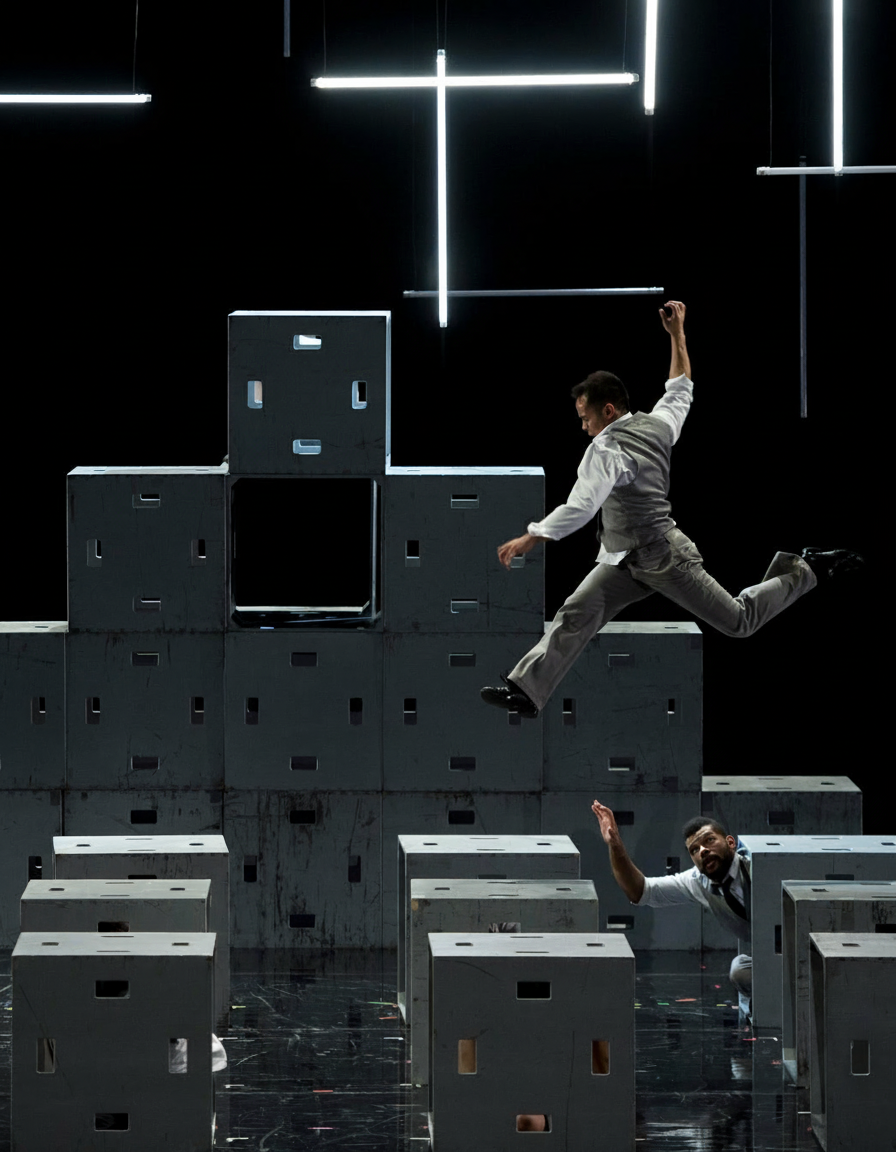
Jacques: This one. This project, Yitzi. It’s insane. This project is a show, a presentation that I call Escape. I have a 6,000-square-foot studio in downtown Los Angeles, and we decided to renovate it into a black box performance space while creating a show at the same time. Why create a show? Because it’s a way to fundraise for our military veteran programs and our education programs. We got a grant from an amazing foundation called the Ahmanson Foundation, which helped us renovate our studio, and individual backers helped create this show, Escape.
Why Escape? A very simple title. It was simply, Yitzi, that in this crazy world we live in — and it is a crazy world. I’m way older than you, but I remember when I grew up, aside from the issues with my roots, it was an easier life. Now, look at the world — the political, religious, intense world. The internet is going crazy, and with our phones, young people get absorbed into it and get more depressed. I just wanted to bring great artists and great humans together to escape from the chaos of our everyday lives. To go into this studio, collaborate, share ideas, create together — being in this kind of bubble, escaping together to create a show that will be physically intense and fun, using popular music with lyrics that are about breaking free, escaping, coming together, and creating a community, a family where we help each other. We do not care what your political belief or religious background is; we push that to the side because, at the end of the day, we are from the same family called humans.
We come together, and the reason the show is so intense and dangerous is because when you put people in a state of survival, they come closer and stronger together. That is the show Escape. And we invite our audience because it’s an up-close and personal experience. You are only a few feet away from the action. You see everything. So it’s not just a dance concert; it’s an event, an experience. You see the sweat, the bruises, the blood. You see their mistakes, their strengths, their vulnerability. You see them talking to each other.
In a way, this experience for the audience, our guests, is like you’re backstage and in front of the scene at the same time. You see them running away, changing costumes. You see them talking to each other, helping each other, falling down, and helping one another. And you also see the show developing in front of you. It’s an experience. It’s really celebrating humanity in front of you. That’s what Escape is. And let me tell you, even for people who don’t like traditional dance, they have to come because it’s not about dance. If you are a human, you will love the show because it will reflect on your own humanity, on your own self — how beautiful you are, how strong you are, how weak you are, how vulnerable you are. That’s what Escape is. So I tell everyone, please come escape with us for an hour and a half in this intense studio called L’espace Diavolo. No one will regret it because they will have a moment. It is an event; it’s an experience.

Yitzi: Jacques, you’ve been blessed with a lot of success. You must have learned a lot from your experiences. Can you share with our audience the five things you need to create a successful career in the live arts?
Jacques:
- I’m not so sure I can tell you five. But I can tell you this. My wife and I, we don’t have children. We married in 2014, not a long time ago. But we talk to each other about how we would raise our kids if we had them in this world. And I will say to you, first thing: be a decent human. Number one. Forget about everything else. A decent human. No prejudice. Accept every human, whatever the color of their skin, their political belief, their religious belief. Do not be a racist, do not have prejudice. Open your arms to all humans. Number one. Don’t even start your life if you think any differently than that. Before you do anything, don’t even dare. It’s shameful when humans are like that. It’s weakness, it’s insecurity, it’s ignorance. So that is my number one. And it’s challenging for humans to do. Humans are strong, but we are so weak, so easy to put people down. How dare we? Never. That’s my number one.
- My number two, find your calling. Find why you think you were born here on planet Earth. Whatever time you need, what is your calling? And right away, at a young age, think about the future. Eventually, when you leave planet Earth, what do you want to leave behind? You’re grateful that you were born on planet Earth, great. And eventually, when you can put thoughts together and you become a little more mature, think about it and maybe write this down: when you leave planet Earth, what do you want to leave behind? What is your impact on this Earth? And then follow the trajectory. Do not look behind. Do not hesitate. The one thing you cannot have is regrets. A lot of young people now, because of this crazy internet, look at what the world is doing and then automatically and unconsciously try to compete with the rest of the world. How can you compete with what everybody’s doing? When I was brought up in Paris, my neighbor was my world. So do not let yourself be absorbed into this labyrinth of the internet and go, “I want to do this, I want to do that. No, maybe I’ll do this.” Looking at what everybody’s doing. No, stop that. Just choose one direction, one trajectory, and go forward. Do not look back. Be committed and confident, not cocky. Find your goal, your future, what you want to do, and move forward.
- Then also, the reality of this world: money. Money talks. At the same time, try to find a plan for what you want to do that is financially stable. Be your own entrepreneur. Don’t automatically rely on a company you will work for to give you money. Find a way to be three-dimensional yourself, where you can work for a company but also find ways and ideas to create your own entrepreneurship. That is very important in this time, now more than ever.
- Also, create a resource system around you. Try to find connections with others that could be your resource system. At the end of the day, you’re not a one-human show. I’m not a one-man show. By the way, Yitzi, this is not about me. I have a whole group around me, a team that elevates me, and we move together. And I had to find those people. Try to find those collaborators, whatever you decide — whether you decide to create a family or a company — find others who want to support you in the same direction you want to go.
Yitzi: This is our final aspirational question. We touched on this a little bit. Jacques, because of your amazing work and the platform that you’ve built, you’re a person of great influence. If you could put out an idea or inspire a movement that would bring the most amount of good to the most amount of people, what would that be?
Jacques: Man, you have some big questions, Yitzi. Well, it may not be a revolutionary idea, and I think I’ve talked about it. We are on this planet called Earth. And on planet Earth, we have these things called humans. I realize that the advancement of technology is so rapid that it slowly eliminates humans and just relies on technology. Okay, technology has a great advantage, absolutely, no question about it. But eventually, where are we going? Is this world going to be made only of technology, and humans will be slowly pushed away? That is a giant mistake. We can advance technology, but we need humans to continue the health of this planet.
So I would say, find something that enhances others, that helps other humans to excel and grow. And make that a movement. So that is it, whether it’s someone who wants to develop science into medicine that helps people, whether it’s movement therapy, which is what I’m doing to help others — anything that can help others. Whether you want to be an inventor of a product that helps people in this country or other countries in need, it’s always about helping others and humans. It needs to be a must, and also protecting where we live, which is our planet. If we don’t do those things, let me tell you, the end is near. Not that near. I’m not panicking, I’m not the person going, “It’s going to be Armageddon,” and all that crazy stuff. But we humans are so strong on one hand and so freaking weak on the other. And we’re so greedy. My goodness, Yitzi. We’re so greedy that we want to quickly invent technology so we can fire everyone and make more money. Do people really need that much money? The answer is no. You do not need that much money. Money to pay the bills, to help support your family, to do a few little things, a little travel, fun stuff — that’s it. What else do you need? Do you need 20 boats, 20 cars? No, you do not need that. Come on, people.
And so that is a focus that needs to happen. Listen, if I won the lottery, I would help organizations in science. I love animals, so animal shelters, science, other organizations that help others, the homeless that need to be taken care of, poverty, water issues. And so, that’s what I tell people. Can you focus on this? Now, technology can advance many things that you want to do, but do not eliminate humans as you do this, and do not be greedy. Greed will kill.
I’m not sure if I said anything revolutionary, but this is just my way of thinking. I don’t have much money, Yitzi. The only thing I have is my art. And I’m using my art to help others, even if it’s one at a time, 20 at a time, hundreds, a few thousand. Even if no one knows me, I don’t care.
Yitzi: Amazing. Jacques, you’re so inspirational. How can our readers come to your studio? How can they watch the show and support your work in any possible way?
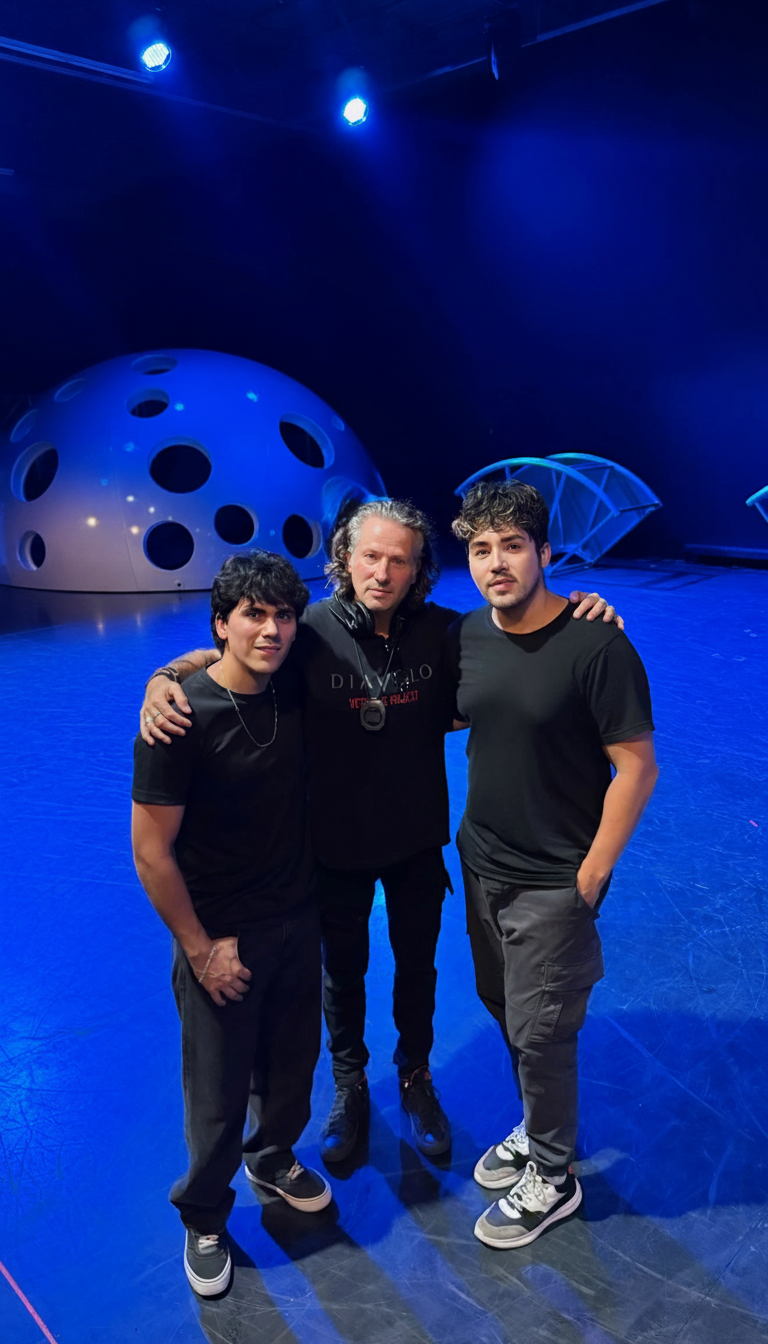
Jacques: The way to support us is to come to L’espace Diavolo. Maybe we can send you the link on how to get tickets. When you buy your tickets, all the proceeds go not only to pay my humans who contribute to creating the show, but also to supporting our military veteran program and our education program that we do with kids. That’s why we’re doing the show Escape. So not only are you coming to see a great experience and have a lot of fun, but you’re also supporting a great cause. Because unfortunately, as you and I know, as long as there are humans on planet Earth, there will still be war. Look at what is happening. And so there will be men and women coming back from wars who are going to need help, whether it’s medically or with organizations like us who support them. That’s why they need to come and see Escape.
So if you are great humans and you want to have fun and see something you’ve never quite seen before like this, up close and personal, come and see Escape. That is the way they can come and support us. They come and support us, they support others.
Yitzi: Jacques, it’s been such a delight to meet you. I wish you continued success, good health, and blessings. I hope to meet you in person one day.
Jacques: And I hope so. Thank you so much, Yitzi, for what you’re doing. Your work is great and important. Telling stories to others, sharing with others. So thank you so much, Yitzi.
Yitzi: Thank you so much. I appreciate you.
From Paris Streets to ‘America’s Got Talent’: Jacques Heim on Founding Diavolo and Escaping Through… was originally published in Authority Magazine on Medium, where people are continuing the conversation by highlighting and responding to this story.