James Patterson and Patrick Leddin on Why ‘Disrupt Everything’ Is the Survival Guide for a ‘Tornado-Era’ World
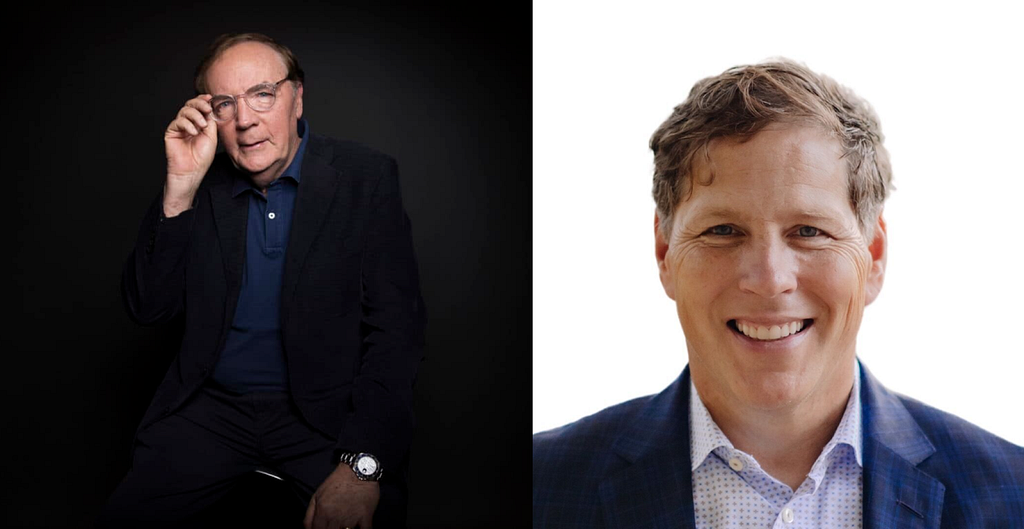
“You’re either going to manage disruption or it’s going to manage you. You’re either going to disrupt or be disrupted. That’s the hard truth people have to deal with — individuals, companies, teams, families.” — James Patterson
I had the pleasure of talking with James Patterson and Patrick Leddin, authors of Disrupt Everything .
James Patterson’s story begins in Newburgh, New York, a gritty town on the Hudson River that has never been mistaken for easy living. Once ranked among the most violent small cities in America, Newburgh is where Patterson grew up, attended Catholic school, and first absorbed the toughness and resourcefulness that would come to shape his career. His father was raised in the Newburgh Poorhouse, known locally as “the Pogie,” and his grandmother worked as a charwoman, cleaning bathrooms and kitchens to keep the family afloat. His grandparents built their restaurant and home with their own hands, without contractors, laying the foundation for a family ethos of invention and persistence.
That spirit of questioning, asking “Is this the best way to do it? Why are we doing it like this?”, stayed with Patterson. He describes it not as cynicism but curiosity, a habit of looking at structures and routines and wondering whether they could be reimagined. Over time, that impulse grew into a philosophy: disruption, sometimes uncomfortable, was often the surest path forward.
Patterson didn’t begin his professional life as a writer. He earned degrees in English at Manhattan College and Vanderbilt University, but his first career was in advertising. With no formal training in marketing, he set his sights on J. Walter Thompson, then the largest agency in the world. To get a foot in the door, he assembled a portfolio and submitted it once a week for three weeks straight until the company relented and gave him a job. That move, relentless, creative, and unusual, was his first disruption.
At JWT, Patterson made his mark by ignoring rules that kept entry-level staff confined to small newspaper ads. He stayed late into the night, drafting television commercials for major accounts, and when executives arrived the next morning, he was already at his desk. His persistence vaulted him through the ranks until he was one of the company’s senior figures. Even then, he bent tradition. When outside offers came in, JWT countered with three packages; Patterson, advised by his accountant, took pieces of all three. “Another disruption, positive for me, anyway,” he later recalled.
Parallel to his ad career, Patterson was building a second life as a novelist. His debut, The Thomas Berryman Number, won the Edgar Award for Best First Novel in 1976, a signal that writing might be more than a sideline. Over the next two decades, he balanced both worlds, but in 1996 he left advertising to focus solely on writing. That choice set the stage for one of the most prolific and commercially successful careers in modern publishing.
Patterson’s series, Alex Cross, Women’s Murder Club, Maximum Ride, became household names, his short, fast-paced chapters designed to hook readers and keep them turning pages. He holds the Guinness World Record for the most New York Times bestsellers by a single author, and his books have sold more than 425 million copies worldwide. But Patterson, even at the height of his literary fame, never abandoned the disruptive mindset he had cultivated since Newburgh.
That outlook has shaped his recent work with Patrick Leddin, a professor and former U.S. Army officer. Together, they co-wrote Disrupt Everything: Innovate for Impact, a book that argues disruption is not just inevitable but necessary, whether in business, government, or personal life. Patterson is blunt about the stakes: “You’re either going to manage disruption or it’s going to manage you. You’re either going to disrupt or be disrupted.”
For him, disruption is not only about markets or technology. It extends to culture, institutions, and relationships. He points to the education system as one example. Patterson has championed programs like the Posse Foundation, which recruits diverse cohorts of students and prepares them to succeed together at elite colleges. “It was a brilliant way to bring diverse students into these schools, help them feel comfortable, and help them succeed,” he explained. To Patterson, the idea worked not just because it was novel but because it rethought a problem and executed a practical solution.
He also stresses the human side of disruption. Relationships, he argues, are central to how people withstand upheaval. His collaboration with Leddin highlights this. What began with a guest lecture at Vanderbilt evolved into a writing partnership and a larger project with Franklin Covey, which will launch courses tied to the book.
The foundation of this work is a question Patterson often asks: “Are you living a good life?” For him, that’s not about money or recognition but about finding purpose and aligning work with joy. “If you can do that, and if you’re lucky, then hopefully you don’t work for a living, you play for a living. And that’s the ultimate goal.”
Patterson is candid about his own transitions. He didn’t love life in advertising, but he loves life as a novelist. He has learned to listen more, to be open to other people’s ideas, and to use his time deliberately. “My time here is short. What can I do most beautifully?” is a phrase he says guides him, whether helping a college reinvent itself or building stories that reach millions.
Even with global success, Patterson continues to see the world through the lens of Newburgh: tough, unpredictable, but also filled with possibility if you’re willing to do the hard work. He believes change today is less gradual than ever, “not slow, but like a tornado”, and he warns that everyone needs their storm cellar ready. In his view, disruption is no longer a choice but the environment in which we live.
And if there’s one thing Patterson wants to leave behind, it is the insistence on listening. In politics, in families, in companies, he says the simple act of hearing another person has become rare but vital. “People aren’t listening, and that’s not useful,” he says. For a writer who has built a career on stories that pull readers in, it makes sense that he sees listening as the beginning of real change.
Patrick Leddin grew up on the south side of Chicago, the youngest of five children in a working-class family. His grandparents had all emigrated from Ireland, though they had passed away before he was born. College wasn’t something anyone in his family had done before, and when he told his father he wanted to go, the advice was simply, join the Army. Leddin took that path, spending his twenties in uniform, running through the woods, jumping out of planes, and learning lessons about leadership that would shape the rest of his life.
As a U.S. Army officer, he joined the 82nd Airborne Division, where disruption wasn’t an abstract concept but part of the daily routine. His first real nighttime parachute jump, 1,500 paratroopers leaving 22 aircraft in two minutes at two o’clock in the morning, was far from controlled training. Dropped in the wrong place, he found himself tangled in the trees in total darkness. Following his checklist, he debated whether to wait or climb down. When he finally lowered himself, he realized he had been only a few feet off the ground. “That experience was incredibly disruptive,” he recalled, “but the key was that they had anticipated the disruption. They had trained us on how to handle it.”
That perspective carried with him when he left the Army. Transitioning into civilian life, Leddin moved into business, co-founding Wedgewood Consulting Group, which grew into an Inc. 5000 company. He later started Leddin Group and Disruptive Insights, ventures built on the idea of helping leaders and organizations navigate times of rapid change. Along the way, he pursued academic work, earning a PhD and eventually joining Vanderbilt University as an Associate Professor, teaching corporate strategy, negotiation, and crisis leadership.
At Vanderbilt, his career intersected with James Patterson’s, sparking a collaboration that became Disrupt Everything: Innovate for Impact. For Leddin, the book was more than another project. He believed in it strongly enough to leave his tenured faculty position, choosing to go “all in” because he saw the potential for it to change lives. “In my own way, my life has been a series of disruptions too,” he said. “One of the biggest was when we decided to really commit to this book project. I gave up my professorship at Vanderbilt because I wanted to be all in on it. I truly believe it has the potential to change many lives.”
What drew him to the project wasn’t only disruption itself, but the kind people can’t predict, the ones that don’t come with a checklist or training manual. “You can’t script everything,” he explained. “What you need is a process, a mindset, a way of thinking.” He and Patterson interviewed more than 350 people, collecting stories from those who had faced everything from workplace upheavals to life-altering tragedies. Some disruptions were small but telling; others, like the story of Jamie Andrew, the Scottish mountaineer who lost his hands and feet after being stranded in the Alps, were devastating. What fascinated Leddin was how people found a thread to pull through even in the worst moments.
For him, disruption isn’t always about chasing change. Sometimes, he argues, the smartest decision is to stand firm. The real power lies in realizing that no matter the circumstances, you can own your response. “We give people a lot of liberty to realize, ‘I can own what I do in this disruption.’ And I think that’s really powerful.”
One of the central lessons he says he’s learned is about relationships. Working with Patterson, he was pushed to examine not just business or leadership but also family, coworkers, and partners. “We live in a sea of relationships,” he said. “Sometimes those relationships are going really well, and the people around us lift us up and we lift them up. Other times, they don’t. At the same time, you might be the headwind slowing someone else down. Maybe you need to look in the mirror and reevaluate that.” For him, leadership is about how people interact, and whether they lift each other up or hold each other back.
That principle shapes the work he does with Franklin Covey, where he and Patterson are extending Disrupt Everything into a course for organizations. It’s also the foundation of his Leadership Lab Podcast and his hosting role with FranklinCovey’s C-Suite Conversations. “Ultimately, to me, the biggest lesson I’ve learned is that life is a team sport. If you’ve got great people around you, you need to lift them up, and they need to lift you up.”
Leddin is realistic about the pace of change. In his view, disruption is accelerating, reshaping institutions, industries, and lives at breakneck speed. Layoffs, technological shifts, political turmoil, none of it is slowing down. “Everything’s being disrupted right now,” he said. “The status quo isn’t going to last. It’s going to change, and it’s going to change rapidly.” The challenge, as he sees it, is figuring out how to hold onto timeless principles while also recognizing when the moment calls for bold adaptation.
Leddin’s vision is not just about survival but improvement, using disruption to create better lives, better teams, and better systems. “If you adopt the mindset that says, ‘Maybe there’s some fertile ground in this,’ you can use disruption in a way that improves your life and the lives of those around you.” It’s an idea he and Patterson summed up in a video for their project. Patterson closed with the phrase “Disrupt everything,” and Leddin added, “For good.” To him, that addendum is the key: disruption as a force not just of chaos, but of progress.
James Patterson and Patrick Leddin will serve as keynote speakers at the World Business Forum in New York City, taking place November 5–6, 2025, at the Javits Center. The event brings together more than 2,500 senior executives for two days of global thought leadership, featuring speakers such as Brené Brown, Adam Grant, Simone Biles, and Scott Galloway. More details are available at World Business Forum NYC.
Yitzi: James and Patrick, it’s an honor to meet you both, and thank you so much for joining us. Before we dive in and talk about your book, our readers would love to learn about your personal origin stories. Jim, can you share with us a story from your childhood, how you grew up, and the seeds of all the amazing things that have come into your life?
James Patterson: I don’t know what the seeds are. I grew up in a small town in upstate New York, on the Hudson River. Right now, as we’re speaking, I’m about 20 miles south of there. Newburgh, New York, a tough town. A few years ago, it was ranked the sixth most violent small town in America. It’s always been a bit tough, which was good. I went to a Catholic high school.
My father actually grew up in the Newburgh Poorhouse, which was called the Pogie, and his mother was a charwoman. She cleaned the bathrooms, the kitchen, all of that. My father was a tough guy, and he figured out a way to get into a good college anyway. So there was a lot of stimulation growing up.
My grandmother and grandfather started a restaurant, and they built it themselves. No construction company, they just built it. Same with their house. They just built it. I think that’s part of why I’ve always had it in me to disrupt things in a positive way, all through my career and life. I would look at something and think, and I believe this comes from my background, “Is this the best way to do it? Is this a good way? Why are we doing it like this?” Not in a cynical way, but with curiosity. That mindset has always stuck with me.
Patrick Leddin: I grew up on the south side of Chicago, not a great area, and I was the youngest of five kids. My grandparents all came from Ireland, but they had all passed away before I was born.
My dad told me that if I wanted to go to college, because no one in the generations before us had, I’d better join the Army. So I joined the Army to get some money for school and basically spent my 20s in the military, running around in the woods and jumping out of planes.
After that, I got into business, started a company, and eventually ended up teaching at Vanderbilt University as a professor. That’s where I ran into Jim.
I think, in my own way, my life has been a series of disruptions too. One of the biggest was when we decided to really commit to this book project. I gave up my professorship at Vanderbilt because I wanted to be all in on it. I truly believe it has the potential to change many lives.
Yitzi: James, you’ve written a lot of stories, and you’ve probably experienced some amazing ones from the different places you’ve been and the projects you’ve worked on. Can you share with our readers one or two stories from your professional life that really stand out in your mind?
James Patterson: I’ll stick with the idea of disruptions. I’ve had two really strong careers. The first was at J. Walter Thompson, which at that time was the largest advertising agency in the world.
From the beginning, it was all about disruption. I had no background in marketing or advertising, never took a single course, but I thought I could go in and be a copywriter. You had to put together a portfolio, and that’s how they decided whether to talk to you. I brought in a portfolio the first week, another the second week, and another the third week. Eventually, they hired me, because to my knowledge, nobody had ever done that before. That was my first disruption.
Throughout my time there, it was just one disruption after another. When I started, first-year people weren’t allowed to write television commercials. You were only allowed to write small newspaper ads. But every night, I stayed late and wrote TV commercials for all their clients. When the senior people left for the day, I’d still be there writing. When they came in early the next morning, I’d be there again. That got noticed, and I moved up the ranks very quickly.
At one point, I was getting a lot of outside offers, and the agency really wanted to keep me. They offered me three different packages. I went to see my accountant and said, “Which one should I take?” He looked at all of them and said, “All three. If they put them on the table, you should take them.” Not all three base salaries, of course, but all the extras. So, we took all the stuff. Another disruption, positive for me, anyway.
Patrick Leddin: That’s a good question. I was thinking about that while Jim was answering, and I’ll share one story from early on that I think carries a valuable disruptive lesson.
When I first showed up as a young officer in a unit called the 82nd Airborne Division, they told us we were going to do our first nighttime parachute jump. I’d technically done one in airborne school, but that was in a very controlled environment. It was “nighttime,” but not really dark.
This was different, 1,500 paratroopers jumping out of 22 airplanes at 2:00 in the morning. All of us in the air within two minutes. That’s a real nighttime jump.
What stood out to me was that they dropped us in the wrong place, we crashed into the trees. As chaotic as it was, they had trained us for that. I had a checklist to follow. I remember hanging in the trees, trying to decide whether to stay put or get down. I thought back to the training and followed the steps they gave us. Turned out, I was only a few feet off the ground the whole time, but it was pitch dark, so I couldn’t tell.
That experience was incredibly disruptive, but the key was that they had anticipated the disruption. They had trained us on how to handle it.
But that’s not the kind of disruption we’re talking about in the book. We’re focused on the disruptions you can’t anticipate, the ones you don’t see coming, the ones that don’t come with a clear checklist. You can’t script everything. What you need is a process, a mindset, a way of thinking.
That’s what really interests me about this project. There’s so much coming at people right now, both big and small, and you need a way to process it. That’s what we teach in the book: a way to deal with whatever hits you, expected or not.
Yitzi: So let’s talk about the book. Please tell us why we have to buy it.
James Patterson: I think Patrick already said a lot about it. We’re living in a time of both positive and negative disruptions, and I don’t want to pretend bad things don’t happen, because they do.
One of the key points is anticipating what can go wrong, because things will go wrong. There’s going to be another 2008. It’s inevitable. We need to understand that and be prepared. The same goes for artificial intelligence. There will be both positive and negative outcomes. We have to be ready for the negative and also be in a position to take advantage of the positive.
I honestly can’t think of any large corporation, small business, or industry that doesn’t need to be disrupted right now. Everybody does. The movie business needs it. Even our publisher, if they want the mission of this book to succeed, the editors have to disrupt the way they’ve been doing things. They have to change. Same with sales. The entire process has to shift.
If that disruption happens, the mission works. And that’s true whether you’re talking about a company, a team, or yourself.
It was also important in terms of understanding what this book brings to people. Change usually happens relatively slowly. This kind of change is a tornado. It’s very swift. It happens quickly.
You see it right now. Whether you’re positive or negative about the current government, every day there’s a disruption. That’s up to you. But it’s happening so fast now. Artificial intelligence is going to move that fast too.
As I said, there will be another 2008. Eventually, it’ll hit hard. These disruptions are tornadoes. You better have your storm cellar ready.
Patrick Leddin: One thing that Jim talked about is, we’re not trying to be Pollyanna here. We’re not saying that every disruption is going to be a wonderful thing or that something great always comes from it. In fact, we hit that head-on in the book.
There are some stories that are relatively small disruptions, and then there are others that are just horrific, you wouldn’t wish them on your worst enemy. But what’s interesting in every one of them is that the people involved were able to find a thread they could pull through, something that allowed them to live out a better life or a deeper purpose. It helped bring their purpose to life.
We’re also not saying you always have to chase change. There are plenty of times in the book where we talk about how the boldest thing you can do in the face of disruption is not to chase change. Sometimes, that’s the smartest choice.
I think we give people a lot of liberty to realize, “I can own what I do in this disruption.” And I think that’s really powerful.
Yitzi: Can you share one of the most interesting stories from the book? Can you share with us?
James Patterson: Yeah, sure. One of the ones that stands out to me, because I’ve been very involved with it, is the Posse, the formation of that. There are two things about it. First, it’s a good idea, and second, they figured out how to execute it.
The idea was, when Posse started, a lot of colleges and universities wanted a more diverse student population, but they didn’t know how to make it happen. It’s hard when you’ve got a school where, just for example, there aren’t many Black or Latino students. It can be intimidating, and that makes it tough to bring in more students from those backgrounds.
So what they did was figure out a way to bring in posses, a group of students, and prepare them the summer before. That way, they were ready, and they had people to lean on. It was a brilliant way to bring diverse students into these schools, help them feel comfortable, and help them succeed. Because there’s no point in doing any of this if the students aren’t going to succeed.
That’s one I particularly like. Patrick has ten others that he loves, but, which one do you want to play?
Patrick Leddin: I have a hard time picking just one, but one more thing about Posse, what’s incredible is that the woman who started it, Debbie, was only 23 at the time. She was working with youth in New York City and saw these really great kids go off to college, only to come back six months later saying they didn’t make it. One of the kids said, “I would’ve made it if I had my posse.” And that’s exactly where the idea came from.
Also, yes, they do provide diversity to these campuses by drawing from different student pools that haven’t historically had access to college. But it’s a merit-based scholarship, which is awesome. They’re looking for the best and brightest and giving them an opportunity.
If you’re asking which story really stands out to me, it’s hard to pick, there are probably 10 or 20 in the book that I really love. We interviewed over 350 people to get their stories, and then we had to narrow it down to the ones that best shaped the narrative of the book.
James Patterson: Talk about the hard things that can happen, the quad amputee. That’s a tough thing to recover from. Unbelievable. We talk about disruptions, wow. Patrick, do you want to talk about that one a bit?
Patrick: Yeah, he’s talking about a guy named Jamie Andrew. He’s from Scotland, and he and his long-time climbing partner, Jamie Fisher, got caught at the top of a razor’s edge in the Alps. The weather shifted, completely unexpected, and five days later, Jamie Fisher had passed away. Jamie Andrew came off the mountain, but his life was completely changed.
Over the next few days, he had his hands and feet amputated. You wouldn’t wish that on anyone. But what he did, from the smallest things to the biggest, was remarkable. He was lying in bed saying, “Today, someone brushed my teeth. Tomorrow, I’ll brush my own teeth.” And every day, he kept doing more.
When I first met him, he had traveled on his own from Scotland to speak at a conference. I was just in awe of how he managed to stack up one day after another like that.
In the book, we talk about how you don’t have to go through something as extreme as what Jamie Andrew did. We offer these really bite-sized tools, we call them “positive disruption moves.” Little things you can choose to do every day that, if you stick with them, will make a huge difference in your life.
Yitzi: There’s a saying, or a cliché, that something has withstood the test of time. In light of our discussion about disruption, when do you say an institution or a concept has truly withstood the test of time, and when do you say it’s ripe for disruption?
James Patterson: The test of time is going to come every day now. We’ve never seen anything like this. Whatever the reason, it’s just coming at us so hard and fast. You have people running the world whose way of thinking is: act fast, blow it up, repeat. These are powerful people who operate that way. So a lot of the rules are changing.
People need to, first, understand that the rules are changing, and second, decide what they need to do, whether that means changing or, as Patrick said, putting in an incredible amount of effort. That’s a difficult thing.
Part of it is also how you look at your company. I’ve always believed, and I think there’s truth to it, if you take care of your people, they’ll take care of you. If you take care of the people on your team, they’ll look out for you.
It’s important to be able to look at others and walk in their boots a bit. I actually wrote a book about the military called Walk in Your Combat Boots. So it’s always important to understand how other people operate if you want to get the most out of them. We get into things like that as well, common-sense stuff.
Patrick Leddin: I think, like James said, everything’s being disrupted right now. When we looked at it in the book, we tried to identify what’s timeless about how you do things. We studied people, their behaviors, and how they interacted. But we also looked at what’s timely, what needs to change now.
I think we were able to capture some timeless principles about how to be effective, but also recognize the reality that the status quo isn’t going to last. It’s going to change, and it’s going to change rapidly. I was on a call earlier today talking about a company that just announced 9,000 layoffs globally.
The question becomes, how do you survive a decision like that? It’s tough. But how do you keep your people, even in a moment of disruption, from standing around the water cooler, virtually or otherwise, and instead leaning into the purpose? Saying, “Okay, this happened. Now what am I going to do in this moment?” We’re trying to provide some helpful guidance for that.
James Patterson: When I was running J. Walter Thompson, they were the largest advertising agency. We also owned the largest PR company, and there was a lot of tradition and history. The line we used with them was, “The power of the old, the shock of the new.”
Even as the number one, the largest and most powerful, you still needed to keep moving forward if you wanted to hold on to that position. After I left, they didn’t. But that’s their problem.
Yitzi: So this is our signature question. Each of you has been blessed with a lot of success, and you must have learned a lot from your experiences. James and Patrick, looking back at when you first started your careers, can you share five things you’ve learned that would have been nice to know at the beginning?
Patrick Leddin: Five’s a big number. I think I’ll hone in on one, and we can go from there if needed. The one thing I’ve really learned is about relationships. When we started this project, Jim, you really pushed me to say, hey, we need to talk more about relationships, we need to talk about people’s families, their coworkers, their partners.
Jim and I have a partnership with Franklin Covey to help bring this into a course and out into the world. We live in a sea of relationships. Sometimes those relationships are going really well, and the people around us lift us up and we lift them up. Other times, they don’t.
In the book, we talk about tailwinds and headwinds. The reality is, if you’ve got a lot of headwinds blowing in your face, it’s going to be really hard to do great things. At the same time, you might be the headwind slowing someone else down. Maybe you need to look in the mirror and reevaluate that.
When Jim first talked to my class at Vanderbilt, he opened with the question, “Are you living a good life?” That’s the foundational question of this book. Are you living a good life? Let us give you some insights that can help you do that, build a great team, and build a great organization.
Ultimately, to me, the biggest lesson I’ve learned is that life is a team sport. If you’ve got great people around you, you need to lift them up, and they need to lift you up.
James Patterson: I think the question, “Are you living a good life?” is really important for me. I didn’t love the life I was living when I was running an ad agency, but I do love the life I lead now as the world’s best-selling author. I love it. That was a great transition.
I think learning to listen more has been hugely important. Being open to other people’s ideas, really listening and being open, is a big deal for me. It seems like that’s become a bit of a lost art these days.
There’s something that’s been guiding me for a few years now. It shaped how I approached this book and my work with Patrick. It’s a simple idea, and I think it’s even more important for people in their twenties than it is for me, but the phrase is: “My time here is short. What can I do most beautifully?” That really focuses you.
Right now, I’m working with a college I went to, before Vanderbilt, actually, trying to help them turn things around. That idea of doing something beautifully, figuring out your skill set and your passion, and really leaning into that, if you can do that, and if you’re lucky, then hopefully you don’t work for a living, you play for a living. And that’s the ultimate goal, if you can get there.
Yitzi: This is our final aspirational question. James and Patrick, because of your great work, the platforms you’ve built, and the books you’ve written, each of you are people with enormous influence. If you could put out and spread an idea or inspire a movement that would bring the most good to the most people, what would that be?
James Patterson: I have to go back to people being open to listening to others, just listen. We’ve had so many recent events where it’s clear that people aren’t listening, and that’s not useful. It used to be that in American Congress or the Senate, they would argue all day and then go out to dinner together. I don’t know if we can ever get back to that, but it’s really important that we try. There are so many situations now where people just won’t listen to the other side, and that’s not helpful.
There are a lot of small things we can do, and I think this book is really significant because it can help a lot of people. We’re living in the age of disruption now, that’s just the reality. You can’t hide from it. People like to hide, they’re afraid of change, and they’re even more afraid of disruption. But you can’t run from it. It’s coming, and you’re either going to manage disruption or it’s going to manage you. You’re either going to disrupt or be disrupted. That’s the hard truth people have to deal with, individuals, companies, teams, families.
One of the big things we’re trying to do with this book is to help you and your family navigate what’s happening in the world around you. Whether it’s grocery prices, the ability to buy a home, or the changes in the workplace that affect you or your spouse, this book is meant to help with all of that.
Patrick Leddin: He stole my thunder. I definitely agree. The importance of listening to others, our current state of discourse is just really sad. If I were to add something distinctive, I’d say I want people, when they read this book and start applying it, to realize that disruptions can’t be avoided. They can’t be ignored. They’re going to keep coming. But if you adopt the mindset that says, “Maybe there’s some fertile ground in this,” you can use disruption in a way that improves your life and the lives of those around you.
That’s exactly what we spell out, how people are doing just that. Life is tough, but it can also be great, and we want to help people live great lives. Jim and I did a video, I just saw the edit, you haven’t seen it yet, Jim, but at the very end, he says, “Disrupt everything,” and I say, “For good,” and then he repeats, “For good.” I love that, because it’s the idea of disrupting things for a positive purpose.
James Patterson: Yeah, and in a lot of ways, this book is like Tesla stock way back. If you don’t deal with it now, you’re going to regret it. You’ll look back and think, “I could’ve done something then,” but you waited, and now it’s a lot more painful than it needed to be.
Yitzi: How can our readers purchase your book? How can they follow your work? How can they support your work in any possible way?
James Patterson: The book will be on stands at the end of September, September 29th, I think. Franklin Covey will also have courses, and Patrick, you can speak more about that side.
Patrick Leddin: Yeah, the book will be in stores everywhere on September 29th, and you can pre-order it now from any outlet you prefer. Franklin Covey does have a course based on the book. We’re partnering with them on it. It’s called Disrupt Everything: Innovate for Impact, and that’ll be available on November 24th.
As far as staying connected with us, you can go to JamesPatterson.com or PatrickLeddin.com. Go to his, it’s more exciting than mine, but check them both out. We’d just love to stay connected.
James Patterson: This is great. Very good questions, terrific.
Yitzi: Thank you again. It’s been a delight and an honor to meet you. I wish you both continued success and good health, and I hope we can do this again next year.
James Patterson: Thank you. Same to you, and good luck with all those daughters.
Yitzi: Thank you so much.
James Patterson and Patrick Leddin on Why ‘Disrupt Everything’ Is the Survival Guide for a… was originally published in Authority Magazine on Medium, where people are continuing the conversation by highlighting and responding to this story.