Guardians of AI: Eyal Rond Of RealSense On How AI Leaders Are Keeping AI Safe, Ethical, Responsible, and True

Very strong Anti-Spoofing — one of the key elements that we MUST avoid is Identity theft. We must ensure that our customers fully trust our system to protect their identity from any type of spoof attack (2D, paper, video, 3D Mask and more). We have invested a lot of money and training algorithms to ensure that there is ZERO possibility to spoof our system with several AI algorithms and Vision modality running in parallel ensuring that the person standing Infront of our camera is a real person
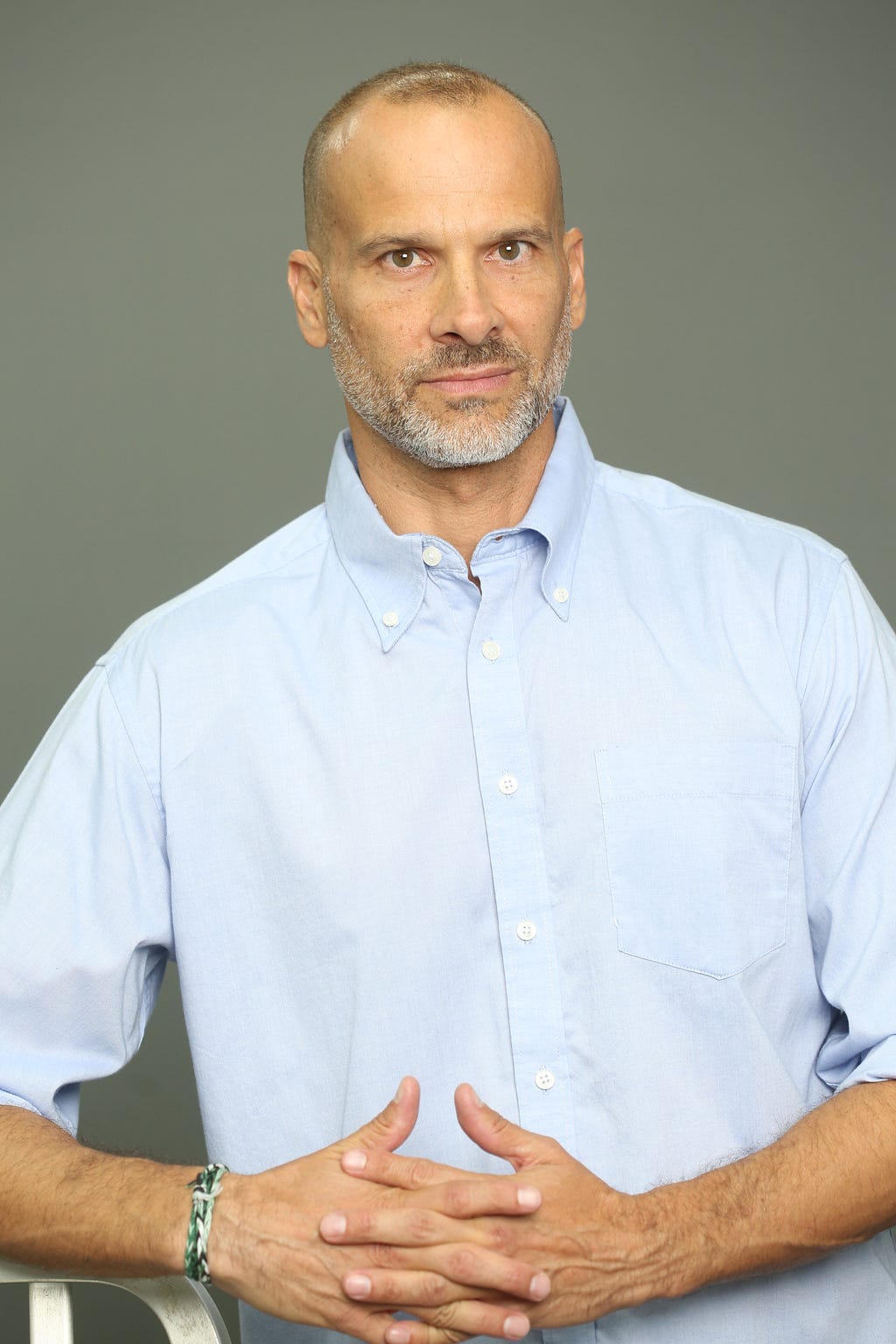
As AI technology rapidly advances, ensuring its responsible development and deployment has become more critical than ever. How are today’s AI leaders addressing safety, fairness, and accountability in AI systems? What practices are they implementing to maintain transparency and align AI with human values? To address these questions, we had the pleasure of interviewing Eyal Rond.
Eyal Rond serves as general manager and VP of R&D for the RealSense Biometrics and Access Control Solutions division. A product visionary and technology leader, Eyal is driving RealSense ID’s mission to become the platform of choice for biometric access control, delivering AI-powered solutions that are transparent, private and secure. Eyal leads a multidisciplinary R&D team across software, research, devices and systems while defining the product roadmap and scaling partnerships and go-to-market strategies. He spearheads initiatives to combat tailgating, enhance anti-spoofing and ensure biometric systems scale securely, cementing RealSense as a trusted name in global security.
Thank you so much for your time! I know that you are a very busy person. Before we dive in, our readers would love to “get to know you” a bit better. Can you tell us a bit about your ‘backstory’ and how you got started?
I’ve always been working in the industry of Computer Vision and AI, starting from Video encoding through classical computer vision and on the last decade focusing on AI in the Vision space. All my career I’ve focused on enhancing and improvement user experience and making sure our technology improves the day to day experience. On the biometrics side, I’ve envisioned the transition to face as your identity more then a decade ago and has been working very hard to make it happen looking at it from all possible angles.
None of us can achieve success without some help along the way. Is there a particular person who you are grateful for, who helped get you to where you are? Can you share a story?
[ER] I can say that on every step of the way I got help from my CTO and my direct managers, enabling me the time to explore and research the best technology that can get us where we want to be. I can say that it takes time and money to get to where we are today in each of our AI based technologies, especially the biometrics IP that cost us money and time to get the variety and diversity of the data we’ve collected as well as developing over a decade of aggregate training algorithms to reach to the state of the art solution we have today
You are a successful business leader. Which three character traits do you think were most instrumental to your success? Can you please share a story or example for each?
[ER] I would say that the top three characteristics that contributed to my success as an AI business leader are:
- Curiosity and continuous learning — I’ve always had an almost restless curiosity about the AI and Vision technology and the barriers customers face in adoption and the new market opportunities our technology can open and advance
- Resilience and adaptability — AI projects are high risk projects and disruptive, some may succeed and some may fail for various reasons, from the technology aspect to the business scalability. My thorough technology and business understanding and my ability to adapt quickly and learn helped me to stand out in such environment and bring the right products at the right time to market.
- Hard work — Getting AI engine such as Biometrics to reach 99.97% accuracy on 1:1M false positive rate is a tough work that requires continuous data acquisition and data cleaning.
It requires months and years of continuous training and adopting loss functions, integrating new technologies and shaving fraction of percentages every few weeks.
Thank you for all that. Let’s now turn to the main focus of our discussion about how AI leaders are keeping AI safe and responsible. To begin, can you list three things that most excite you about the current state of the AI industry?
[ER] When I look at the current AI industry, what’s excites me the most is the endless opportunities that are becoming available with the explosion of the data and the compute power. The industry today also made it very easy to start a new project by supplying open source models and data for almost any technology you seek to develop. I believe today the challenge is to better define the problem statement and the product definition in terms of power and compute that will be optimal for that segment.
Conversely, can you tell us three things that most concern you about the industry? What must be done to alleviate those concerns?
[ER] On the same note as above, especially in technologies like Biometrics, you need to understand the model you are using, what data have been used to train and test it, how the data was obtained and ensure there is no bias in terms of ethnicities, gender, age, skin tone and more. This applies to all AI and Vision technologies but is more relevant and strict in the Biometrics space.
As a CEO leading an AI-driven organization, how do you embed ethical principles into your company’s overall vision and long-term strategy? What specific executive-level decisions have you made to ensure your company stays ahead in developing safe, transparent, and responsible AI technologies?
[ER] in an industry like Access Control and Biometrics solutions, I am aware and the decision maker for any aspect of the technology from the data acquisition and cleaning as it impacts the potential bias of our solution, to the architecture of our solution both hardware and software as it impacts the privacy and security levels such product requires as we meet regulations such as GDPR.
Have you ever faced a challenging ethical dilemma related to AI development or deployment? How did you navigate the situation while balancing business goals and ethical responsibility?
[ER] As mentioned before, in AI and Computer Vision in general and on Biometrics in particular, data is everything. Typically, the more and better data you have, the better your algorithms will predict the right results, hence it a day to day job to increase our data set and clean it in advanced techniques.
Data costs money and in some occasions I had been offered data that did not comply to our privacy and legal requirements, such as consent form from every subject, not keeping subject meta data and so on, such data would be cheaper and easier to achieve, though I never took that shortcut as I know our privacy and legal comes first.
Many people are worried about the potential for AI to harm humans. What must be done to ensure that AI stays safe?
[ER] I think every company that brings AI based solution to the market must introduce the test cases it have passed prior to launch. Must comply to safety, security and privacy regulation and needs to show sustainability of the technology over time as well as predictability and consistency of its scores.
Despite huge advances, AIs still confidently hallucinate, giving incorrect answers. In addition, AIs will produce incorrect results if they are trained on untrue or biased information. What can be done to ensure that AI produces accurate and transparent results?
[ER] I believe I covered this topic on the above by explaining the importance of data cleaning, ensuring data is well balanced and making sure the AI model has predictable and consistent results.
Here is the primary question of our discussion. Based on your experience and success, what are your “Five Things Needed to Keep AI Safe, Ethical, Responsible, and True”? Please share a story or an example for each.
[ER]
1. Balanced and diverse data — The data that is being used MUST be well balanced across ethnicities, gender and age
2. Dat Cleanup — Every dataset we’ve acquired in the last decade has errors, either it is same subject appears twice, mixed of different subject in the same subject folder, bad quality or animation images and so on. The above impacts the quality and accuracy of our model and must be handled carefully and as mentioned above this is a multi-year effort
3. Software Architecture must preserve the safety and security of the face prints, the models and any type of tamper attack
4. Hardware Architecture must support the above software by keeping the keys for the encryption and sign safe, by providing strong enough encryption functionality and by keeping the video pipeline secured
5. Very strong Anti-Spoofing — one of the key elements that we MUST avoid is Identity theft. We must ensure that our customers fully trust our system to protect their identity from any type of spoof attack (2D, paper, video, 3D Mask and more). We have invested a lot of money and training algorithms to ensure that there is ZERO possibility to spoof our system with several AI algorithms and Vision modality running in parallel ensuring that the person standing Infront of our camera is a real person
Looking ahead, what changes do you hope to see in industry-wide AI governance over the next decade?
[ER] I believe that while AI will penetrate more and more aspects of our day to day life, regulations that will ensure our privacy and the accuracy of the AI prediction will need to be updated and advanced as well to catch up with the AI paste.
What do you think will be the biggest challenge for AI over the next decade, and how should the industry prepare?
[ER] On the same note, the biggest challenge will be to build a trustworthy scaled solution, as our models become capable and used by more and more people the tolerance for errors will be the biggest challenge that will impact adoptability
You are a person of great influence. If you could inspire a movement that would bring the most good to the most people, what would that be? You never know what your idea can trigger. 🙂
[ER] I believe that what I’m doing for the last few years and the vision I have for your face become your identity will change the way people behave in the future. Think about a world where you cannot forget your credit card at home or drop your employee badge or have the overall onboarding for your next flight to be seamless and 10X faster and more secure and many more day to day things that requires a different identity plastic card. On the other end think about a world where no one can use your credit card, your employee badge or anything else that might still your identity just because he got your plastic card or he got your 16 digit card or your PIN code.
How can our readers follow your work online?
[ER] I highly recommend following my on LinkedIn
Thank you so much for joining us. This was very inspirational.
Guardians of AI: Eyal Rond Of RealSense On How AI Leaders Are Keeping AI Safe, Ethical… was originally published in Authority Magazine on Medium, where people are continuing the conversation by highlighting and responding to this story.