Mark Divine on Reinventing Himself From CPA to SEAL Commander and Why Stillness Is the Real Path to Strength
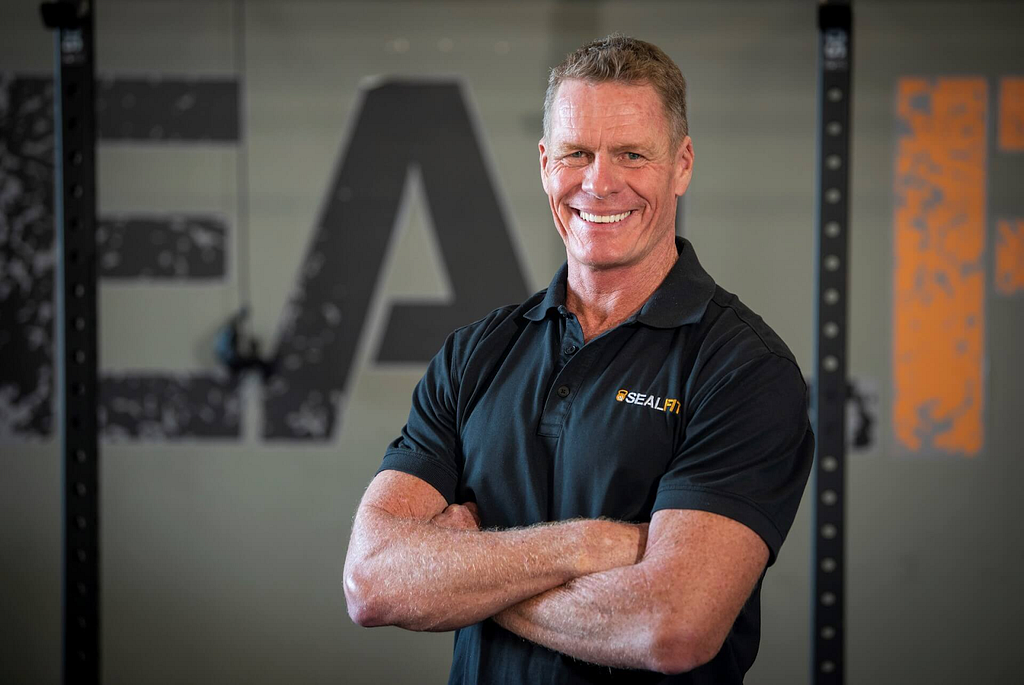
“The brotherhood is a tighter bond than even a marriage because you’re willing to lay down your life for your teammates… Elite teams have a process for radical clarity, transparency, and honesty. We debrief everything… It’s non-personal. What went well? What didn’t? What did we learn? What will we do differently? Trust is the glue for an elite team; it is hard-earned but easily lost.”
I had the pleasure of talking with Mark Divine, a man whose resume reads like two completely different lives stitched together by sheer willpower. To the casual observer, Divine is the quintessential American warrior: a retired Navy SEAL Commander, a towering figure of physical fitness, and the architect of grueling training programs designed to break you down and build you back up. But beneath the camouflage and the “semper fi” grit lies a backstory that begins not in a trench, but in a cubicle.
Divine grew up in upstate New York, in a tiny town of roughly 400 people. While the setting sounds pastoral, the reality was anything but. He describes a childhood marred by “drama, alcoholism, and emotional abuse,” a chaotic environment that forced him to seek solace in the woods and the water. This early need for escape turned him into an endurance athlete at Colgate University, but the societal current pulled him toward a very different shore: Wall Street.
By his early-20s, Divine was a CPA with Coopers & Lybrand and an MBA student at NYU. He was ascending the corporate ladder, yet he looked around at his colleagues and saw “disembodied souls walking around in a body that wasn’t serving them.” He realized he didn’t want to become one of them — a “pasty” figure in a suit, disconnected from his own physical reality.
The pivot point came from an unlikely source. While his peers were hitting happy hour, Divine was spending his evenings in a dojo with a Grandmaster martial artist who also happened to be a Zen master. At 21, Divine began practicing Zen meditation. It wasn’t just about relaxation; it was a deconstruction of the self. “I could see the entire story of my life up to that point as a self-contained, self-supporting set of beliefs,” Divine told me. He realized the corporate climber wasn’t who he was.
Then, providence intervened. Walking home from work, Divine passed a Navy recruiting office. A poster in the window featuring SEALs in action read simply: Be someone special.
“I was transfixed,” Divine recalls. “This was a complete 180-degree turn in my life.”
At 25, he traded his suit for fatigues, becoming one of only two civilians selected for Officer Candidate School that year to take a shot at the SEALs. He entered BUD/S Class 170, a meat grinder that began with 185 hopefuls. Nine months later, only 19 remained. Divine stood tall as the class “Honor Man.”
The attrition rate in SEAL training is legendary, but hearing Divine describe the mechanics of it is chilling. It isn’t just the physical toll of “Hell Week” — six days with no sleep — it is the psychological warfare. The instructors, Divine explains, are “absolute masters at finding your weakness and rubbing salt into it.”
He recounted a particularly harrowing ordeal during “Pool Competency,” a test designed to weed out those who panic underwater. Divine was at the bottom of a pool, breathing through a double-hose regulator, when an instructor nicknamed “Dr. Evil” attacked. The instructor ripped off Divine’s mask and fins, then tied the air hose into a complex knot.
“I had to jam my foot into the hose and pull,” Divine says. “Finally, I saw a couple of bubbles come out. I put my mouth over it, swallowed the bubbles, and kept working.” It took him two full minutes to restore his air supply, all while holding his breath at the bottom of a pool. Most men would panic. Divine relied on the mental discipline he learned on the meditation bench.
This fusion of Eastern mindfulness and Western military rigor became Divine’s signature. After retiring as a Commander in 2011, having served in deployments to the Middle East and Asia, he turned his attention to training others. Through his company, SEALFIT, and his “Unbeatable Mind” philosophy, he claims to have raised the success rate of SEAL candidates he trains to 90%.
His approach, which he calls “Vertical Development,” moves beyond simple skill-building. It is about expanding consciousness. He teaches corporate leaders and athletes to check their egos and embrace a level of “radical clarity” that can be uncomfortable for civilians. In the SEAL teams, he notes, “one ‘aw-shit’ wipes out a thousand ‘attaboys.’” Trust is the only currency that matters.
Today, Divine’s mission has shifted from the battlefield to the collective consciousness. He isn’t interested in just training soldiers anymore; he wants to train the world. His goal is to influence 100 million people to tap into their potential through breathwork and self-awareness.
“People think technology is going to solve their issues. It’s not,” Divine says. “It’s about slowing down, learning to be still.”
It is a strange and compelling message coming from a man who spent decades training for war. But perhaps that is exactly the point. Mark Divine has seen the extremes of human conflict and the extremes of human potential, and he has concluded that the only way out is in.
Yitzi: Mark Divine, it’s so nice to meet you. Before we dive in deep, our readers would love to learn about Mark Divine’s personal origin story. Can you share with us the story of your childhood, how you grew up, and the seeds for all the amazing work that has come since then?
Mark Divine: It’s nice to meet you. Thanks for having me. I appreciate it. I’ll try to tell it with some brevity, but that might be a challenge. I’m from upstate New York, a small town of roughly 400 people. Like a lot of people, I had an interesting childhood with challenges in the house — drama, alcoholism, and abuse. I spent a lot of time trying not to engage in that. I spent time out in nature and became comfortable being alone. That led me to endurance sports, and I found myself as a competitive athlete at Colgate University, an excellent small liberal arts college. There I was a competitive swimmer and an average student.
Upon graduation, I ended up following the herd down to New York City, entering the corporate, white-collar rat race to ascend the corporate ladder. This was the inflection point for me. Here I was in New York City, and I already had this feeling that I was a lifetime athlete. Not necessarily competitive, but I felt there was something about the human body and mind that needed to move, and that it could be healthy and fit for as long as it needed to be. Yet, what I saw around me were unhealthy, pasty people in suits — disembodied souls walking around in a body that wasn’t serving them. I committed to myself not to be that person.
I trained hard. Every morning I’d go for a six or seven-mile run. At lunchtime, working for Coopers and Lybrand (PricewaterhouseCoopers), I would go into the gym for a high-intensity workout. I was looking for something to do in the evening because I was going to NYU Business School at night to get my MBA, and I had a couple-hour window. I found a Grandmaster martial artist who was also a Zen master. I was looking for the martial art, but Zen found me. At 21, I started practicing Zen meditation.
It completely transformed me. We know now from neuroscience and neuroplasticity that the male brain isn’t fully developed until the late 20s. If you can bring a mental discipline to your brain and mind at that ripe age, it can have positive, transformative effects. It did for me. First, I became less distractible and was able to concentrate much more. Second, I developed a witnessing capacity where I could separate from my thoughts and emotions and see them in real-time. I could see that there was an aspect of myself that was not those thoughts and emotions. Prior to this — and this is the default mode for most human beings — I thought, “I am this thought.” Like, “I am angry.” You are completely merged in the thinking and emotional process as if that’s what you are. Disciplined meditation opened me up to the experience that anger was happening, but that’s not who I am.
I could see the entire story of my life up to that point as a self-contained, self-supporting set of beliefs, ideas, and constructs that was also not who I was. It was trained into me, and I was unaware of it. I started to become a problem seeker rather than a problem solver. I asked better questions. “If that set of ideas and beliefs, which I used to take as Mark, is not Mark, then who is Mark?” That’s question number one: Who am I? Question number two was, “If those beliefs are not me, do they make sense for me?” I saw clearly that they did not.
Who was I pretending to be, and did that serve me? I deconstructed that and said, “That doesn’t serve me. I’m not built for corporate America or for climbing the corporate ladder. I’m not motivated by money.” I had to ask: What are my values? What do I stand for? What are my likes and dislikes? These were things I never learned as a kid.
While doing this, I kept meditating. Every time I went deeper, even beyond mindfulness into non-dual states, I would come back with certain “gems.” One of them was a sense that I was a warrior. Yet, I didn’t feel I was experiencing being a warrior as a budding CPA. I asked, “If I’m meant to be a warrior, how is that supposed to show up?” That’s when I was shown the Navy SEALs. Literally — this is providence or serendipity — I was walking home from work one day, walked past a Navy recruiting office, and saw a poster in the window. It said, “Be someone special,” and had pictures of Navy SEALs doing cool shit. I was transfixed.
This was another complete 180-degree turn in my life. I decided that was how I was supposed to be a warrior. I set my sights on becoming a Navy SEAL and got in at 25 years old through Officer Candidate School. I was one of two people selected that year to go through SEAL training from the civilian world as an officer. In November of 1989, I got my MBA from Stern, my CPA from New York State, my black belt from Seido Karate, and I left it all behind to go to SEAL training, BUD/S class 170.
In BUD/S 170, we had 185 hardcore guys. I was put into a small team as a leader with six others. Nine months later, there were only 19 graduates out of that class. I was the Honor Man, and the six guys I started with were standing with me that day. There was something about the leadership I was able to bring to this small team, my class, and myself that was unique. I attribute all of it to what I learned on the meditation bench and through my four-year relationship with Grandmaster Nakamura.
To close off this soliloquy, I continued my training and practice through the SEALs, honing skills regarding what worked and what didn’t. When I left active duty, I wanted to bring this training to other SEAL trainees and military special operators. I started a company called SEALFIT after I was hired to do a nationwide mentoring program for the SEALs. Through SEALFIT and a later program called Unbeatable Mind, I was able to dramatically enhance the success rate of the SEALs I was training. The candidates I trained saw a 90% success rate getting through training, compared to a 90% fail rate for everyone else.
So, the origin story is: Mark leaves a small town in upstate New York, from an alcoholic, abusive family, and ends up Number One in his Navy SEAL training class. What made the difference was skillful meditation. It’s an incredibly invaluable tool. People have no idea how important this is in our technology-filled world. People think technology is going to solve their issues. It’s not. It’s about slowing down, learning to be still, turning your attention inward, and developing the first pillar of resiliency: self-awareness.
Yitzi: Could you tell us a bit more about the training, like Hell Week? Whatever you’re allowed to share.
Mark Divine: Sure. One thing TV shows and movies don’t capture well is the depth of the suffering in any given moment. It happens multi-dimensionally. You’re freaking freezing all the time. You experience bone cold like you’ve never experienced before — you know that from Baltimore. You are extraordinarily uncomfortable physically, mentally, and emotionally. You’re always out of control, in a state of anxiety and fear, unless you know how to control that. That was my secret weapon.
The instructors are absolute masters at finding your weakness and rubbing salt into it. What many people don’t realize is that SEAL instructors are on temporary duty, 18 months to three years. Their primary job is to select their next batch of teammates. They are looking for individuals who will be on their team when they rotate back to a SEAL team, side by side slinging rounds down range. They want to know they can trust this new guy.
SEAL training is all about how good of a teammate you are. It tests your ability to serve your team and the mission, but not at the expense of your needs, fitness, mental toughness, or resiliency. They test that relentlessly. If you don’t have the capacity to be an exceptional teammate and remain resilient and disciplined through nine months of rigorous training — and the one week of simulated combat, Hell Week (six days around the clock with no sleep) — they will find a way to get you to quit or get you out of the program.
Hell Week is relentless. In my class, we had 185 start. Hell Week was the seventh week for me. By the time we went into Hell Week, we were down to about 85 people. We exited Hell Week with about 45. That was only the first phase. Six months later, we were down to 18.
Yitzi: I can only imagine the mental anguish of somebody who made it to the eighth month and then dropped out.
Mark Divine: It’s crazy. It’s pretty rare because once you get through Hell Week, you’re usually committed. However, in Second Phase, there’s another evolution called Pool Competency, or Pool Comp, that catches a lot of people. You know the stories about dropping you off five miles out at sea or swimming crazy distances at night? The one that really scares the people who didn’t grow up in the water is Pool Comp. I grew up in Lake Placid spending summers on the lake, so I was comfortable in the water. Not all SEAL trainees have that. It’s one thing to swim 500 meters; it’s another to handle your emotions and mind when you’re underwater under stress.
They take you down in an old double-hose regulator tank to the bottom of the pool. Two people go at a time. Two instructors come down and attack you. They rip your face mask off, rip the regulator out of your mouth, and rip the tanks, weight belt, and fins off you. Then they take the double-hose regulator and tie it into an intense knot so no oxygen comes out.
As the trainee, you have to stay down there and wait to be signaled. When they tap you, you have to find your fins, belt, and mask, clear the mask, find the tank, and release the oxygen from the knot. When you get oxygen out, you put the tanks back on perfectly and ask for permission to come to the surface.
A lot of people don’t pass that. I remember the instructor who attacked me was nicknamed Dr. Evil. He tied a nasty knot. I had been holding my breath for well over a minute. I literally had to jam my foot into the hose and pull. Finally, I saw a couple of bubbles come out. I put my mouth over it, swallowed the bubbles, and kept working. It took me a full two minutes to get the oxygen flowing freely.
Once you’re done with Second Phase, maybe another 10% of the class will egress, usually from injury. Occasionally, someone gets toward the end and wakes up to the fact that they just don’t want to do the job. I actually appreciate those people for leaving before they get the Trident. When I was at SEAL Team 3 in 1990, just before Desert Storm, we were loading pallets to go. A new guy on our platoon came into the office and said, “Listen, guys, I’m not going to Iraq. I’m a Conscientious Objector.” We asked why he wasted taxpayer dollars and put us at risk. He said, “I just wanted to prove that I could do it.”
There is a small percentage of guys who go through training just to see if they can do it or to call themselves Navy SEALs. Those are the worst kind of operators because their heart might not be in it when it comes to warfare. That’s the job: taking out the bad guy. If you don’t want to do that, don’t go to SEAL training just to prove how bad you are.
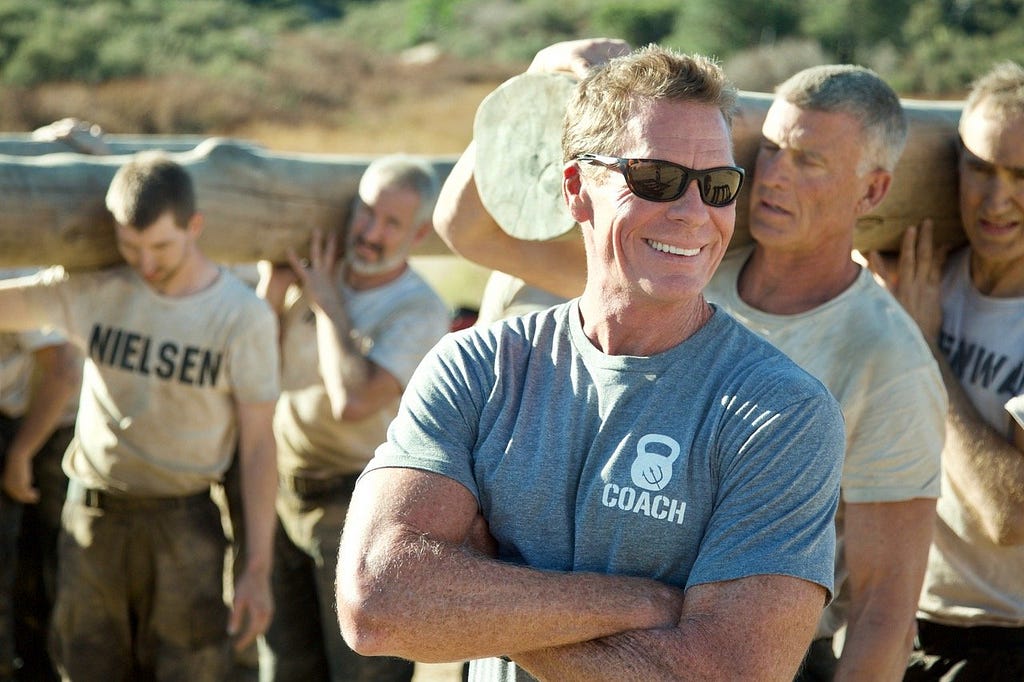
Yitzi: Can you talk about the brotherhood and comradery developed under those conditions? And maybe how other teams outside of that context could develop an analogue of that comradery?
Mark Divine: A close facsimile. That’s what I try to do with Unbeatable Mind and SEALFIT when working with corporate teams. It’s challenging. What the SEALs have is singularly unique. “LLTB” — Long Live the Brotherhood. Guys get it tattooed on them. The brotherhood is a tighter bond than even a marriage because you’re willing to lay down your life for your teammates.
It begins with a shared identity. The identity of a Navy SEAL is powerful, built on a foundation of mental toughness, resiliency, physical fortitude, and a shared Ethos. The SEAL Ethos has statements like “Earn your Trident every day.” Some people think you get the Trident when you graduate. That’s true, but when you go to a SEAL team, that Trident essentially has a temporary sign on it. You have to earn it every single day. You have a culture where teammates are putting out every day to be their best physically, mentally, emotionally, technically, and in leadership.
Another ethos is “Ready to lead, ready to follow, never quit.” You might be fourth or fifth in line, but if you get ambushed and the leader is injured, you’re leading. You are always acting as if you’re leading the show without getting in the way. “Ready to follow” is about humility and checking your ego at the door. If a Senior Chief tells an officer to sit down and shut up, you own that. Elite teams have great humility.
Corporate teams that operate remotely close to this level have a shared sense of purpose higher than just making money. They have a clear mission and an ethos built upon high standards. If a corporate team can develop an ethos where everyone works together to meet those standards — to earn their Trident every day — that’s money.
You also need humility, where no one person is better than anyone else, including the leader. The leader’s job is to unlock the team’s greatest potential. We don’t like the term “vulnerable” in the SEALs because vulnerability equals death, but we like “authenticity.” Elite teams have a process for radical clarity, transparency, and honesty. We debrief everything: every training evolution and every real-world mission. It’s non-personal. What went well? What didn’t? What did we learn? What will we do differently?
Through that process, individual flaws are highlighted so others can learn. At an early stage, all your mistakes are highlighted. You learn it’s not personal. Trust is the glue for an elite team; it is hard-earned but easily lost. We say one “aw-shit” wipes out a thousand “attaboys.” Make the same mistake twice, shame on you. Three times? You’re off the team. That’s extreme accountability.
These lessons can be transported to the corporate environment, but it takes courage. It takes about 18 months to two years to transform a team to that level, but the impact is extraordinary. In the coming age of AI, this is essential. The potential of a team operating with self-awareness, intuition, and deep creativity will outpace AI because of the quality of decisions, not the quantity.
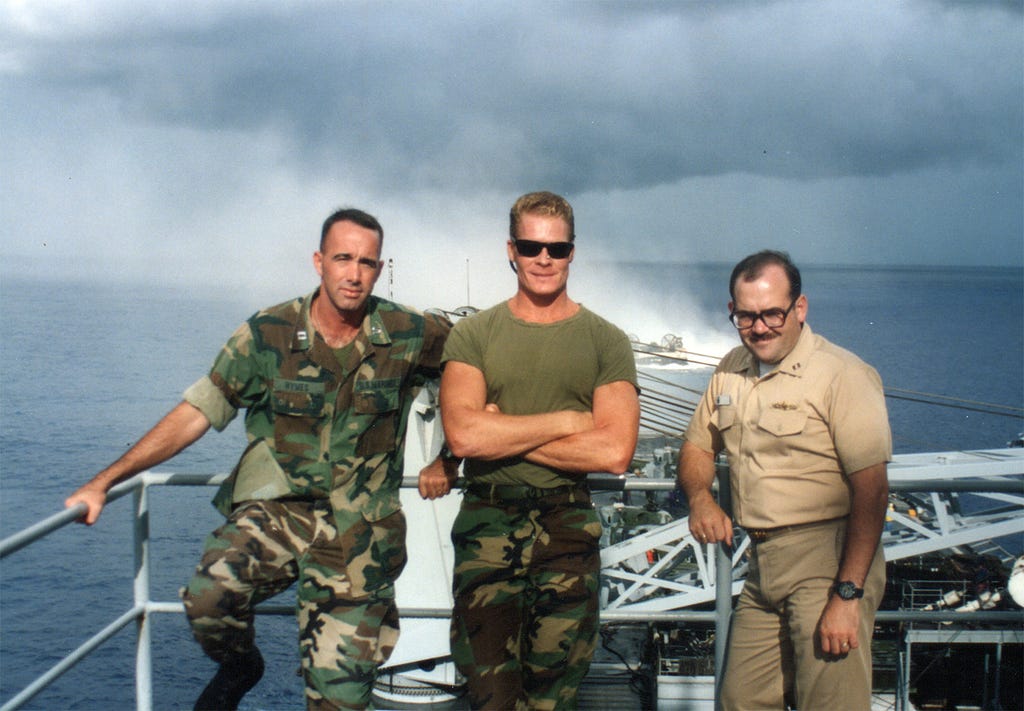
Yitzi: That’s a really important insight. The power of teamwork and creative thinking as a group is what will make us stand out or beat AI.
Mark Divine: That’s right. With Unbeatable Mind, I talk about developing ourselves in an integrated, holistic manner to tap our fullest potential. We call it Vertical Development. Traditional personal development is Horizontal — improving your range of skills like communication or strategic planning. Vertical Development radically shifts your entire sense of self, like what happened to me through meditation.
Vertical Development changes who you are, elevates your perspective, deepens self-awareness and compassion, and opens your aperture to experience more. The term comes from developmental theory pioneers such as Robert Kegan and Ken Wilber.
I help leaders understand that through training in an integrated fashion — I call it the Five Mountains: physical, mental, emotional, intuitional, and spiritual — you can access accelerated growth. Imagine an entire team engaging in Vertical Development. The team will evolve vertically. If individuals experience greater compassion, perspective, and intuitive awareness, the team will experience the same things multiplied. You get a fundamentally new level of thinking. My mission is to bring this training where Navy SEAL plus Vertical Development meets the corporate team.
Yitzi: Mark, because of your amazing work, you’re a person of enormous influence. If you could spread an idea or inspire a movement that would bring the most amount of good to the most amount of people, what would that be?
Mark Divine: My mission is to train and inspire 100 million people through the message that you’re capable of 20 times more than you think you are, but the answer lies within. Stop searching for it out there. What’s out there is just a reflection of what’s in here.
I begin by getting people to slow down, breathe, and take on a practice I call Box Breathing. The breath is the link between the body, mind, and spirit. It regulates your nervous system and leads to the capacity to sit in stillness, which leads to mindfulness and deeper states of awareness.
I believe there’s a tipping point. When a certain level of humanity operates at a high enough conscious level, they can create an entirely new world. Imagine 100 million people reflecting nothing but goodness. We can do that at scale now with technology. It’s a ripple effect. We transform this world not by fighting against what we don’t like — violence, war, political divisiveness — but by creating an entirely new reality.
Yitzi: Mark, how can our readers learn more about your work? How could they engage your services? How do they support your work in any possible way?
Mark Divine: Reading your magazine is one way. Markdivine.com is my personal website. I can be found on Instagram and Facebook at Mark Divine Official, as well as LinkedIn and YouTube. My books are on Amazon.
Yitzi: Amazing. Mark, I want to thank you so much for your time, amazing stories, and insights. I wish you continued success, good health, and blessings. I hope we can do this again next year.
Mark Divine: That would be a lot of fun. Keep me in your Rolodex if you still have one.
Mark Divine on Reinventing Himself From CPA to SEAL Commander and Why Stillness Is the Real Path to… was originally published in Authority Magazine on Medium, where people are continuing the conversation by highlighting and responding to this story.