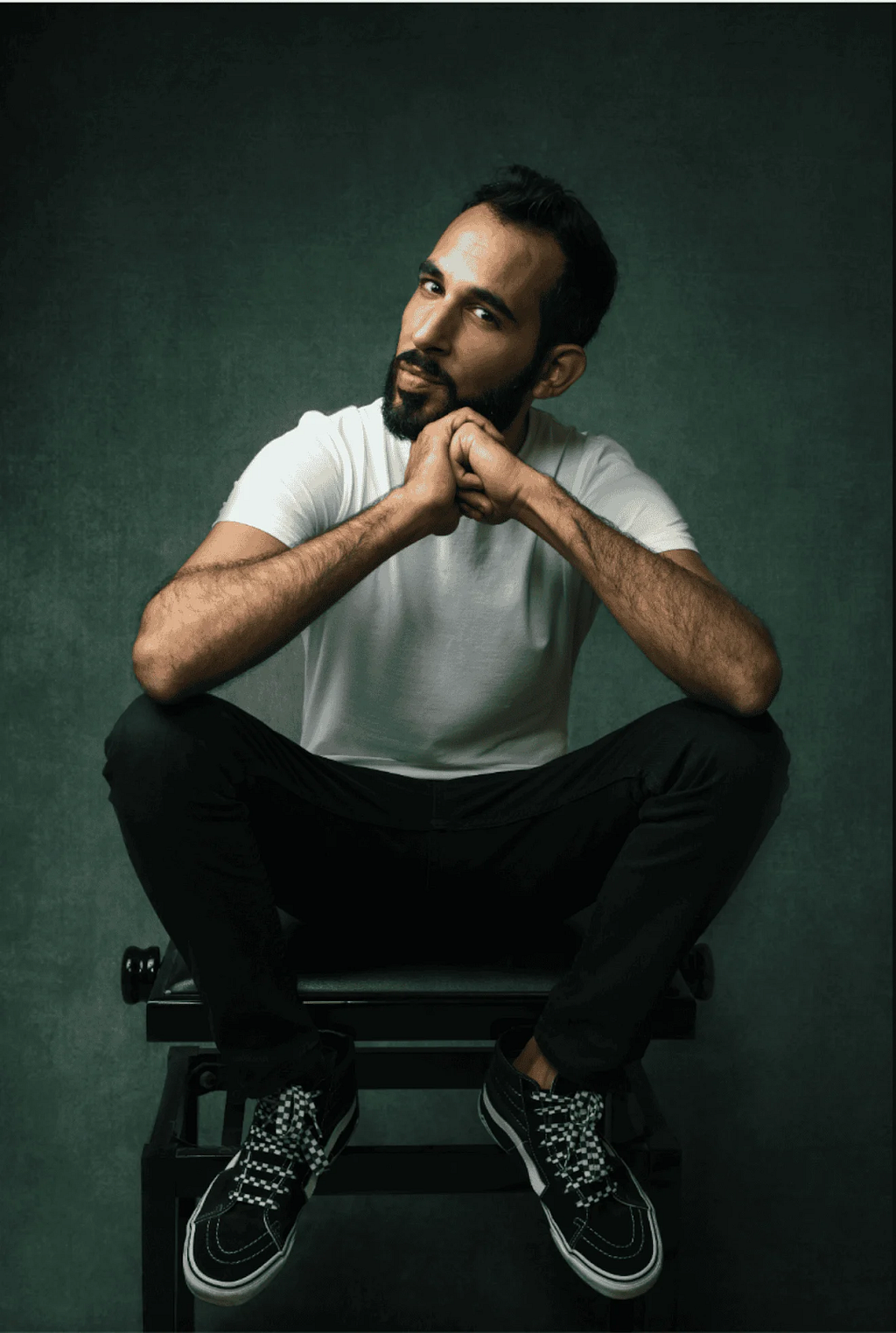
“People react to truth. If somebody writes from a truthful place or creates meaning, it’s still better than what AI can do. AI is randomized; we are not. We are cognitive. That’s why it doesn’t sound fully authentic. Even if AI can make something sound better sonically, it still can’t replace meaning.”
I had the pleasure of talking with Itay Shimoni, a man who has lived a dozen musical lives across three continents, though he carries himself with the quiet ease of someone who just stepped off a porch in East Nashville.
Shimoni’s story doesn’t start in the neon glow of Broadway or the high-rise glass of Los Angeles, but in the Northern District of Israel, in the Krayot. Growing up just five miles north of Haifa, he was a theater kid who eventually found himself wearing a uniform, playing guitar and piano in the IDF army band. It was a formative period where the stakes were high and the audience was captive. “I loved every second of it,” he recalls.
After the army, Shimoni briefly dipped his toes into the academic world at the Jerusalem Academy, studying composition. But the professional world came knocking almost immediately. He spent nearly eight years as a pianist and musical director in the theater, working on some 20 productions at venues like the Cameri and Festival Yisrael. He was also the touring keyboardist and guitarist for Ilanit, one of Israel’s most iconic voices.
“People go to school and get a degree to work in these jobs,” Shimoni says, reflecting on his decision to leave school after just one year. “Maybe don’t feel like a failure; maybe it’s a good thing. Just continue working since this is what you want to do.”
In 2015, the pull of the West became too strong to ignore. Shimoni packed his bags for Los Angeles, diving headfirst into the world of commercials and TV music. He was a studio rat, grinding away in relative isolation. But the American dream hit a snag in 2018 when his visa renewal was denied. It was an abrupt, jarring halt to a life he thought was permanent.
The exit was cinematic in its chaos. He had just accepted a five-week blues tour in Europe. Two hours before his flight to Poland, the visa rejection arrived. He had to choose: stay and pack his life, or go on tour and leave his belongings to the wind. He chose the music. “It was a very hard decision, but I decided to go,” he says. “My best friend in LA helped me ‘lesader tabayit’ [organizing the house] and breaking the lease.”
Returning to Israel in 2018, Shimoni felt adrift. He didn’t know what his next move was until his childhood friend, the producer Jordi, suggested they write a song. That session produced “Im Ata Gever” for pop sensation Noa Kirel. When Kirel heard it, she was sold. “When I saw a famous artist in Israel record my first written song, I knew this was what I wanted to do for the rest of my life,” Shimoni says.
The floodgates opened. Their next release, “Pouch,” became a national phenomenon, eventually winning “Song of the Year” in three different categories. Over the next five years, Shimoni racked up six “Song of the Year” titles in Israel, cementing his status as a hitmaker for the A-list.
But Shimoni is a man who thrives on the challenge of the new. After a stint in Florida, he moved to Nashville, the undisputed capital of the songwriting world. He wasn’t chasing the traditional “honky-tonk” sound, but rather the burgeoning Country Pop scene. “I’m bringing Pop to the situation because Country Pop is basically Pop with a Country flair,” he explains. “It feels like I belong, and I love every second of it.”
Nashville has offered him a different pace of life than the frantic energy of LA or the high-pressure industry in Israel. He describes a community of around 400 Israelis and 14,000 Jews who operate like a tight-knit village. “In LA, you see a beautiful mansion with four Lamborghinis,” he observes. “In Nashville, you see an amazing mansion with a 10-year-old pickup truck. They’re very humble and understand that life is about your art.”
Despite his success, Shimoni remains behind the scenes by choice. While he sings to demonstrate melodies — what the industry calls “top lines” — he rarely records the final demos himself. “I don’t have the accent, and I feel like I’m disrespecting the demo,” he admits with a laugh. “I’m kind of shy in that way… I’m totally secure with the fact that I’m not trying to be an upfront, on-stage performer.”
His current slate is busy. He’s back in Israel briefly for a writing camp with Noa Kirel, working on her upcoming projects. In the States, he’s collaborating with James Maslow of Big Time Rush and social media star Gabriela Bee.
When asked about the message behind his body of work, Shimoni doesn’t point to a grand manifesto. Instead, he points to a feeling. “The overall energy would be fun, escapism, and authenticity,” he says. For him, the ultimate victory isn’t a chart position, but a message from a stranger. He remembers a girl who messaged him about his first song, telling him it helped her through a brutal breakup. “That kind of text is one of the most emotional things for me,” he says. “It makes me feel I’m in the right place.”
In an industry often obsessed with the “next big thing,” Shimoni’s philosophy is refreshingly grounded. “Talent will get you through the door, but character will keep you there,” he says. “Be kind, be nice, and just be good because nothing else matters.”
Yitzi: Itay Shimoni, it’s such a delight to meet you. Before we dive in deep, our readers would love to learn about your personal origin story. Can you share the story of your childhood, how you grew up, and the seeds for all the amazing work that has come since then?
Itay: Definitely. I was born and raised in the Northern District in the Krayot, just five miles north of Haifa. I was there until I left for the army. I was in the army band. I’ve played guitar since age 13 and piano since age 19. I was always around entertainment. I was in the theater in school and in the Lehakat Noar [Youth Band] of Kiryat Bialik. So, I was surrounded by art and entertainment. In the IDF army band, I was first in the Pikud Tzafon, the Northern Command, and then I was in Modiin, in Intelligence. I loved every second of it.
After that, I spent one year at the Jerusalem Academy studying composition. I started working, which is part of the reason I only stayed for one year. I began working in the theater as a pianist and musical director. I didn’t have time to go to school, and I thought to myself, “People go to school and get a degree to work in these jobs. Maybe don’t feel like a failure; maybe it’s a good thing. Just continue working since this is what you want to do.”
For around seven or eight years, I played in musical theater at Beit Zvi, the Cameri, and Festival Yisrael in around 20 productions. I also played with Ilanit, the Israeli singer — she has a duo, Ilan and Ilanit. I played the guitar and keys with her for seven or eight years, and it was amazing.
In 2015, I moved to America, specifically LA. Basically, I did a lot of music for commercials and TV, but I didn’t go out much. I was just making music all day. Three years later, when I wanted to have my visa renewed, they declined it because I didn’t have enough to show, so I found myself abruptly going back to Israel.
Fun story: I was supposed to play — and I did play — with a blues band on a tour in Europe for five weeks. I had already accepted the offer and practiced all the songs. Two hours before we flew to Poland, which was the first stop, I got the decline for the visa. It was either go now and not be able to go back to pack my things — my house, rental, car, everything — or stay, miss the tour, leave them hanging, and figure it out. It was a very hard decision, but I decided to go. My best friend in LA helped me with “lesader tabayit” [organizing the house] and breaking the lease. I moved back to Israel in 2018 not knowing what I wanted to do with myself.
My best friend is Jordi, a very famous musical producer in Israel. He is my best friend from childhood; we’re both from the Krayot. He told me, “Listen, if you are here, let’s try to write a song. What do you think?” I said, “Yeah, that should be fun.” We wrote a song called “Im Ata Gever” by Noa Kirel. Back then, he was a judge on Israel Got Talent, and Noa was a judge there too. He asked her, “Do you like this song? Do you want to sing it?” She said, “Oh my God, I love this song, I want to come and record it.” When I saw a famous artist in Israel record my first written song, I knew this was what I wanted to do for the rest of my life.
Our first released song was “Pouch” by Noa Kirel, and that was a very big hit. Once it exploded, I found myself working with a lot of the industry, the A-lists, producers, and writers.
Yeah. That was in Israel. Then I decided to move to America. After five years of being in Israel — I had six “Songs of the Year,” and I believe “Pouch” was Song of the Year in three different places — I decided to move. After a year in Boca Raton next to my dad and my sister, I decided to move to Nashville because my passion is Country Pop. That was the time for me to move to Nashville and start doing my own thing. I’m bringing Pop to the situation because Country Pop is basically Pop with a Country flair. I feel very at home. It feels like I belong, and I love every second of it. And now I’m talking to you.
Yitzi: Nashville is the music capital of the world now.
Itay: Yes, it’s amazing. Country was in a big place in the last 10 years, but it really exploded in the last year or two. A lot of famous pop artists, like Post Malone, decided to do Country. A lot of Country sounds like trap right now and very hip hop. It’s amazing to see how everything has new life and a new vibe, and I’m all for it.
Yitzi: Maybe this is hard to single out, and you already shared so many amazing stories, but can you share one or two stories that stand out most in your mind from your professional life?
Itay: Let me think. I have two different experiences, and they are opposites. One is hearing my song sung by 35,000 people for the first time. Noa Kirel has performed about four times in Park HaYarkon in front of 35,000 people. I was invited — she always invites me, but sometimes I’m in America. By that time, I think we had around eight songs together. Hearing all those songs being sung by 35,000 people was one of the most powerful things I ever experienced.
The second experience, which is equally amazing to me, happened when a girl sent me a message asking, “Did you write ‘Im Ata Gever’?” She didn’t know it was my first song. I said, “Yeah, I wrote ‘Im Ata Gever’.” She replied, “Oh my God, listen, it feels like it was written about me. It helped me a lot through my breakup. Thank you for that song.” That kind of text is one of the most emotional things for me. It makes me feel I’m in the right place, doing good, and that people can go through stuff with my “two cents” or my entertainment.
Yitzi: There’s a saying that “No is not rejection, but redirection.” Do you have a story where that was true, where you got a no, but it led to an unexpected success, discovery, opportunity, or blessing?
Itay: Yes. I don’t want to repeat myself, but I don’t think there is anything so “otzmati” in my life as when America told me no. My entire life was there. I was thinking about living there forever. I had good times and made good money — commercials back then were good money. They didn’t care about how much money I made; they wanted to see that I had cultural influence, so they told me no. Their no led me — despite the fact that I couldn’t even take my clothes or anything from my house — to Israel. It put me in such a hard spot that I never wanted to feel like that again. It made me ask myself what I really wanted to do, and that led me to the conclusion that I want to make music and write songs.
Yitzi: There’s a saying that sometimes our mistakes are our greatest teachers. Do you have a story about a funny, silly mistake that you made when you were first starting and the lesson that you took away from it?
Itay: That goes back to my time in the theater. We were doing a production with about 70 people. As time goes by closer to the deadline of the first show, everybody gets anxious. It’s a hierarchy: some people have the privilege to be angry, and some don’t. When I was in my first show, a week or two before we started, everybody became nervous. The director started saying into the microphone, “Why does the music sound like my child from kindergarten is playing? That sounds like shit.” I was offended. I thought, Be respectful. I’m working my ass off here. I want to be respected. Then he apologized.
In another production, a very nice director suddenly started yelling a week before, “It’s not the way it’s being played! Why are you playing that way?” and started cursing me. At one point, I figured out that people are going to be very anxious and nervous around you sometimes, and you cannot take it personally. It won’t be healthy for you. So, I started to be in a “Vipassana mode.” I’m just happy. I’m not talking. Everybody can do whatever they want. The show will go on, everybody will apologize, and everybody will have fun. That’s something I remember: not to take things too seriously, even if they are being thrown in your face.
Yitzi: Great. Amazing. What’s been the most challenging project you’ve taken on so far and why?
Itay: The most challenging project is everything I’m doing right now. I have a lot of “Yehadut” [credentials/approvals] regarding what I did in Israel, so I have a certain amount of pride and confidence that I have something to bring to the table. But coming to a very conservative city out of nowhere and saying, “Hi, I’m here now. Let’s make music,” is difficult. It always surprises me how much I love country. I’ve listened to country since 2009. Every day I make a country song with a local artist, they teach me something new I never thought of.
The challenge is being local in the way they think, write, and even their state of mind. As an Israeli, you are in this mode of, “Today we’re gonna bring a hit.” They are in a mode of, “I’m thankful to get to do what I love. This is what drives me. Let’s just make music that we love.” To take that in, absorb the positivity, and infiltrate a new industry where you want to be in the highest rankings — that’s the biggest challenge I’ve taken so far.
Yitzi: Is there an Israeli community in Nashville that you feel part of? Do you have a family there?
Itay: Yes, amazing. I lived in LA, Boca Raton, and now Nashville. This is not a half-million Israeli city; this is hundreds of Israelis — maybe 400 — and around 14,000 Jews. It’s a very small community, but it’s so close. When they say “it takes a village,” it feels like a village. We help each other. I’ve never felt more at home and welcomed. It’s special to find yourself in mid-America, not in the metropolitan areas like LA, Miami, or New York where people are defined by being “city people.” To be in Nashville, with winter snow, a place of music, lumber, countryside, and farmers, you have a very special reason to be there. I love all the people there. I lived three years in LA and a year in Miami, but in one year in Nashville, I have more friends combined than I had in both those places.
Yitzi: Even from the outside I always have a warm spot for Nashville artists. Like you said, there’s a certain kindness, humility, and sweetness that’s very special.
Itay: Yes, I love it. Also, it’s very Israeli because of the way I grew up — humility, being humble, and not showing off. You don’t really know how much a person has in his pocket, but nobody here is trying to show you. In LA, you see a beautiful mansion with four Lamborghinis. In Nashville, you see an amazing mansion with a 10-year-old pickup truck. They’re very humble and understand that life is about your art, your craft, and your day-to-day routines. It’s about what you bring to it, not what you can tell people you did. I love Nashville for that.
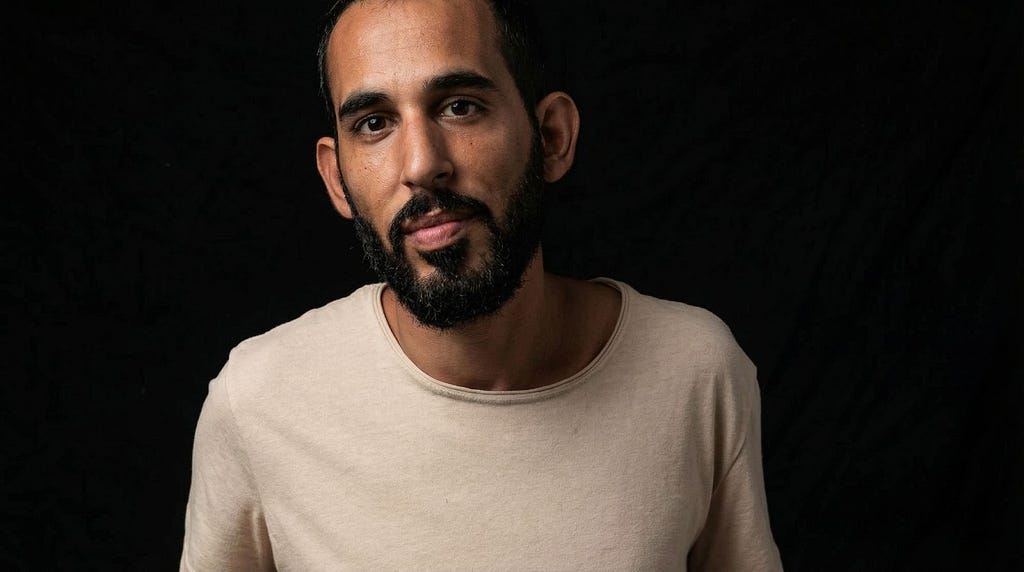
Yitzi: So Itay, tell us about the exciting new projects you’re working on now and what you hope to be working on in the near future.
Itay: Amazing. So, the reason I’m in Israel right now is because Noa Kirel flew me over to do a writing camp with her. We’re starting next week on December 14th for a full week. We’ll be in three rooms with three different teams making songs all day. I’m very excited because whether it’s a big EP, an album, or a few singles, as long as we make something great, I’m happy.
In America, I’m working with James Maslow from Big Time Rush. He’s also from Nashville, Jewish, and a big advocate. We did a song together and have very good chemistry. Every time he’s in Nashville — he is on tour constantly — we find a day or two to make songs. We’re working on his new EP for his solo career.
I’m also working with Gabriela Bee, a very famous 20-year-old who tours a lot. We find time here and there, and we already have two songs being released together and are working on a third.
Regardless of that, the nature of my career is to wake up, work with another writer, singer, or producer, and try to make a good song. That happens a few times a week. I produce it, make a great demo, and send it to our managers and companies.
Yitzi: Do you ever sing, or do you mostly do the lyrics and the production?
Itay: It’s always changing. It depends on the situation and how much “muse” I have. But mainly, people bring me into the room for my melodies and top lines. I grew up on Pop, so I’m always trying to think of melodies that stick in your head. That’s where my curiosity is. After that, I’m a lyricist, then a producer.
I sing to demonstrate the top line. In America, I will rarely do my own demo because I don’t have the accent, and I feel like I’m disrespecting the demo. Even in Hebrew, I was always kind of embarrassed to be the one recording the demo. I can tell you what to sing by singing it to you, but you will be the one recording it, not me. I’m kind of shy in that way.
Yitzi: You’re humble. That’s a beautiful trait we have to preserve. Being a “bayshan” [shy person] is very healthy in the sense that it gives you discernment and restraint. It’s a good thing.
Itay: True. I don’t take it to areas of insecurity. I’m totally secure with the fact that I’m not trying to be an upfront, on-stage performer. I’m at peace with that.
Yitzi: If you could take all your lyrics, melodies, and album covers, put them in a blender, and mix them up, what would be the overall message that comes out of the mixture?
Itay: That is an interesting question. My head goes toward the general energy of that blend. Since I talk about love, lifestyle, and many other situations, I don’t feel there would be one coherent message. But I feel the overall energy would be fun, escapism, and authenticity. The most important thing for me is that it feels tailor-made — if only you can sing those words, more people will feel like it’s written about them because it sounds like you speak the truth. People react to truth.
Yitzi: Such a profound point. Do you feel that point will be the saving grace for artists in the wake of AI music? That if it comes from a place of truthfulness, it’ll be more resonant than an AI song?
Itay: Definitely. AI is still randomized, so it’s hit or miss. I work with AI a lot, and I’m pressing until it makes sense, but it often doesn’t. If you find an AI that has a lot of emotion and meaning… it doesn’t make AI a scary tool; it remains random. We are not that random; we are very cognitive. That’s the main reason it sounds different — it doesn’t sound all the way authentic. When somebody writes from a truthful place or creates meaning, it’s still better than what AI can do, even if AI can make it sound better sonically.
Yitzi: Okay, this is our signature question. Looking back to when you first started making music, can you share five things you’ve learned over the years that would have been nice to know when you first started?
Itay:
- Don’t be hard on yourself. The only person whose opinion counts is yours.
- Have fun and do what you love. Don’t decide to do things you don’t love. Music is a vast genre — you can write, play, compose. Find what you love and do that, because then you never work hard.
- Practice your weak points. If there are things you aren’t as good at, work on those first. Then work on the stuff you’re already good at.
- There is only one you. I know it’s a huge cliché, but in a music industry with no rules, there are people better than you and worse than you, but only one you.
- People want to see you. The most unforgiving conclusion is that people want to see you, and nothing else is as interesting. Never try to be someone you are not.
Yitzi: This is our final aspirational question. Itay, because of your amazing work and the platform you’ve built, you’re a person of enormous influence. If you could spread an idea or inspire a movement that would bring the most amount of good to the most amount of people, what would that be?
Itay: Honestly? Be good. Be kind. It’s as simple as that. It is amazing how that’s the only thing that counts. Even in my industry, we say talent will get you through the door, but character will keep you there. It doesn’t matter how talented you are. Be kind, be nice, and just be good because nothing else matters.
Yitzi: Itay, how can our readers continue to follow your work? How could they purchase your music or support you?
Itay: I have an Instagram called Itay Shimoni. Since I’m not a performer per se, I don’t have music for purchase, but you can find all my songs on Spotify. If you search “Itay Shimoni’s music” on Spotify, you’ll find an updated playlist. You can always DM me on Instagram to ask me anything; I answer everybody.
Yitzi: Amazing. Itay, it’s so good to talk to you. I hope you have an amazing Chanukah, Chag Urim Sameach.
Itay: Thank you. Chag Chanukah Sameach.
Yitzi: You’re lucky you’ll be in Israel for Chanukah.
Itay: Yeah. We’re going to light candles with Noa Kirel at the writing camp every night.
Hitmaker Itay Shimoni on Authenticity, Escapism, and Why Character Matters More Than Charts was originally published in Authority Magazine on Medium, where people are continuing the conversation by highlighting and responding to this story.