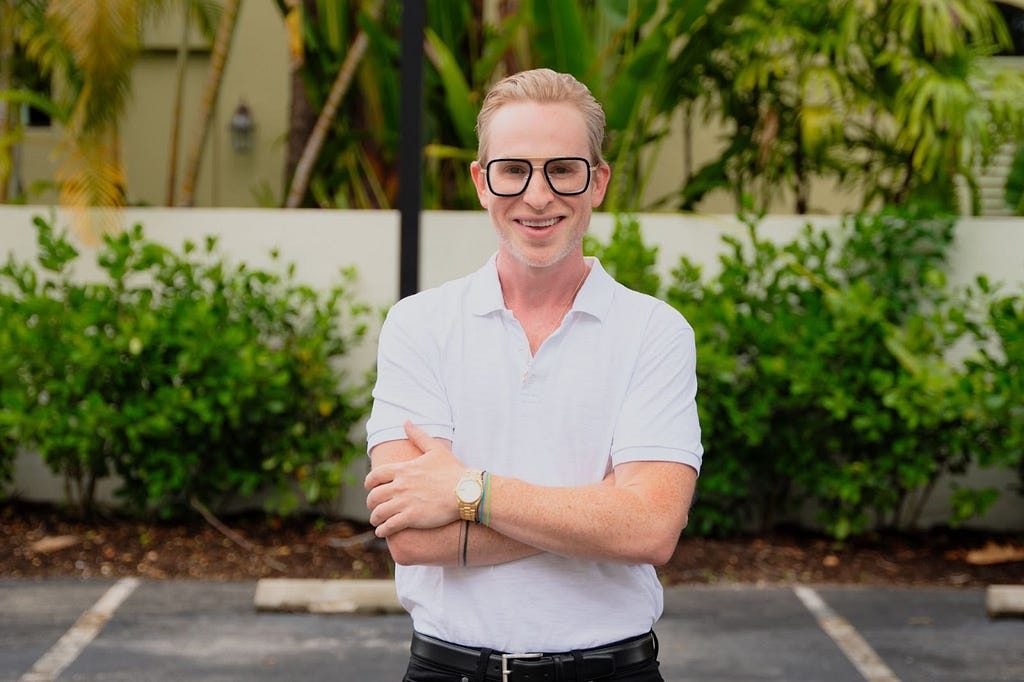
“You can’t outsmart time… Time doesn’t negotiate; it’s the ultimate equalizer… Focus is a superpower, and it often hurts to use it… Leadership has nothing to do with titles and everything to do with energy. People don’t follow plans or hierarchy; they follow energy — specifically how you show up when things are messy.”
I had the pleasure of talking with Adam Gillman, a man who seems to have lived three or four different lifetimes before most people have settled into their first mortgage. In the world of modern entrepreneurship, where “founders” are often minted in incubators and polished by public relations firms, Gillman cuts a different figure. He is a serial operator who learned the game not from textbooks, but from the messy, chaotic reality of doing it himself. From selling t-shirts at USC to navigating the regulatory minefields of the California cannabis industry, and finally to disrupting children’s health with HIYA Health, his career reads less like a corporate ladder climb and more like a road trip without a map.
Gillman’s origin story begins in the Northeast, split between New Jersey and New York. Born to entrepreneurial parents who ran a chain of baby product stores, business was the background noise of his childhood. After his parents divorced, he moved in with his father, who was busy building a replacement window company. “I’ve been around entrepreneurship pretty much my entire life,” Gillman says. By the time he hit college at USC in Los Angeles, he was already running party planning businesses and selling t-shirts, driven by a distinct realization: “I knew at a young age that I would much rather live life on my own terms. I preferred not to make much money rather than always be capped at what I can do working for somebody else.”
His early career took him through the mobile technology boom, where he served as a Chief Marketing Officer during the “Wild West” days of the early iPhone and Android. But the narrative takes a sharp, fascinating turn in his thirties. Gillman found himself deep in the California cannabis industry, running a brand called F/ELD. It was here, in a sector plagued by banking restrictions and shifting regulations, that he faced his hardest lessons. “That was a really challenging time in my career and life,” he admits. It was a trial by fire that taught him that he “never really learned how to lead or manage.”
After exiting the cannabis space, Gillman collided with a problem that every parent recognizes but few do anything about. He and his business partner, Darren, were frustrated fathers. They were feeding their kids doctor-recommended gummy vitamins, only to realize they were essentially handing out sugar cubes. “We saw very clearly that it didn’t make sense that something oriented around health and wellness came in the vessel of candy with tons of synthetic dyes, fillers, and sugar,” Gillman explains. That frustration birthed HIYA.
The story of HIYA is about the unglamorous grit required to bootstrap a company to $100 million in revenue without venture capital safety nets. There is one story that perfectly encapsulates Gillman’s approach. In the early days, HIYA’s third-party shipping provider was failing. Instead of holding meetings, Gillman rented a U-Haul.
“I drove a U-Haul to the location of our 3PL, which was about four hours away,” he recalls. He didn’t tell them he was coming to terminate the contract; he just showed up. “Obviously, they did not help me load the truck. I loaded the truck by myself.” He drove the inventory back to a commercial building near his house and set up a makeshift fulfillment center at 9:00 PM on a Friday. “I remember… unloading all the boxes and thinking to myself that I really hope one day this is all going to be worth it.”
It was. But the journey wasn’t without public stumbles. During the height of the COVID-19 supply chain crisis, HIYA ran out of their signature reusable bottles. Gillman made the call to ship temporary bottles to keep the vitamins flowing, a move that resulted in immediate customer backlash. Rather than hide, he leaned into radical transparency, promising free replacements as soon as stock arrived. “The big learning experience was that in business, honesty and integrity are very important,” he says. “It validated the importance of just being transparent and honest with the people you work with.”
Today, Gillman operates with a philosophy honed by these scars. He doesn’t believe in hacking success. “Time doesn’t negotiate; it’s the ultimate equalizer,” he says, noting that real success is just “compound interest” earned by those who don’t quit. He views focus as a superpower that “hurts to use” because it requires saying no to good opportunities to preserve the great ones. Perhaps most importantly, in an era of growth-at-all-costs, he views cash not as a metric, but as “oxygen.”
Despite the nine-figure exit and the industry accolades, Gillman remains grounded in a purpose that transcends the balance sheet. He speaks of his two sons, West and Lev, and the values he tries to instill in them: Brave, Disciplined, Strong, and Kind. “Purpose beats passion,” he tells me. “Passion will get you started, but purpose is what gets you through the hell necessary to build a successful business.” For Adam Gillman, the business is just the vehicle; the destination is a life lived on his own terms, fueled by the quiet confidence of a man who knows exactly how to drive the truck himself.
Yitzi: Adam, it is a delight and an honor to meet you. Before we dive in deeper, our readers would love to learn about Adam’s personal origin story. Can you share the story of your childhood, how you grew up, and the seeds for the amazing things that have come since then?
Adam: Yes, I can. I was raised in the Northeast, specifically in the New Jersey and New York area, and I lived there until I was about 13. My parents were both entrepreneurs; they owned a chain of retail stores that sold baby products — cribs, strollers, and things of that sort. Unfortunately, my parents got divorced when I was pretty young. My dad moved to a different city, and as I got older and entered my early teen years, I moved in with him. He was in the middle of building another business in the replacement window industry. So, I’ve been around entrepreneurship pretty much my entire life.
My journey really started in college where I had several businesses that sold t-shirts and planned parties. I went to USC in Los Angeles, so that was a pretty popular thing for university kids to do in that area. As I graduated, I took an entrepreneurial path very quickly because I knew at a young age that I would much rather live life on my own terms. I preferred not to make much money rather than always be capped at what I can do working for somebody else.
Initially, my career focused on the mobile technology industry. I was in that industry with two different companies over the span of about eight years. My second company, where I was the Chief Marketing Officer, was extremely successful. It was in the early days of iPhone and Android, and we ran a very large consulting firm that helped content companies, brands, and celebrities develop mobile strategies. It was not too dissimilar to what you see going on today with the world of AI; everybody feels like they need to have a strategy, but nobody really knows how much this stuff is worth. There are a lot of people offering services to help people figure that out, and that’s basically what we did.
In parallel to that, I launched a chain of fitness studios in Southern California with my wife called Cycle House. That was also a very successful business which we held all the way up until COVID. Unfortunately, once COVID occurred, the business went under relatively quickly because there was no way for us to operate in any capacity in the Southern California market.
Towards the later years of running that business — in my early 30s — I was in the cannabis industry, specifically in the California market. That was a really challenging time in my career and life. I was coming to learn a really important step on the entrepreneurial journey regarding leadership and being able to build and manage a team effectively. Up until that point, most of what I did was dependent upon me. As I grew in my career and took larger swings that required strong people on my team, I realized I never really learned how to lead or manage. This happened in the context of an extremely highly regulated industry dealing with challenges as simple as banking, which we didn’t have access to.
We ended up having a moderately successful outcome with that business and sold it to a publicly traded company. It was right around that time that I came up with the idea for HIYA alongside my co-founder and business partner, Darren. Our vision for HIYA was really built out of frustration. We both had young children at the time — his were a little older than mine — and we were both giving our kids multivitamin supplements. Most people have at least one kid that is a problem eater, and you’re always concerned they aren’t getting the right sustenance and nutrition. Both of my kids fell into that category. We were giving them gummy supplements because that’s what their pediatrician recommended. We saw very clearly that it didn’t make sense that something oriented around health and wellness came in the vessel of candy with tons of synthetic dyes, fillers, and sugar. That started our journey to develop a clean-label kids’ supplement brand.
Our first product was a multivitamin. It took us nearly two years to get to market. We had no experience in the industry but became experts relatively quickly. We grew that business to over $100 million in revenue over the course of about four years and sold a controlling stake to Usana, a publicly traded company on the NASDAQ, about a year ago.
Yitzi: Was there a story behind the name HIYA?
Adam: Not anything that interesting. The URL was available, it had a cute name, and we knew we could trademark it.
Yitzi: You probably have some amazing stories from your career and from the experience of growing HIYA. Maybe this is hard to nail down, but can you share one or two stories that stand out most in your mind from your experience in building the company?
Adam: Sure. One story that comes to mind is from the early days of HIYA. When you sell a product online, you have to warehouse and ship that product. We started off working with a 3PL (third-party logistics) provider. That 3PL housed all our inventory and shipped it out when we got an order. There were a lot of problems in the early days. On top of that, we were an entirely bootstrapped company; we never raised outside financing. Whereas a lot of companies in our industry typically go the route of venture capital or angel investors to support marketing and growth, we did not have that.
I did an analysis and realized quickly that if we could insource this function, we could save a lot of money for the company — money that we could spend on marketing and growth. So, I made the decision that we were going to start doing this all ourselves. This was another area where I had zero experience regarding managing a warehouse, fulfillment services, or negotiating shipping rates. But I decided to figure it out. Over the course of a few days, I drove a U-Haul to the location of our 3PL, which was about four hours away. I was nervous they would do something wrong if I told them I wasn’t going to work with them anymore. They ended up being wonderful about the whole thing, but I didn’t want to tell them in advance that we were terminating the relationship. My plan was to show up at their door and say, “I’m here to take my product.”
I drove all the way up, and obviously, they did not help me load the truck. I loaded the truck by myself, drove back, and set up a very basic fulfillment center in a commercial building about 15 minutes away from my house with no employees and very little understanding of what I was doing. In today’s day and age, you plug it into ChatGPT and get a step-by-step playbook. That did not exist at the time.
I remember that night arriving at this warehouse — it was a Friday at 9:00 PM — unloading all the boxes and thinking to myself that I really hope one day this is all going to be worth it. I clearly made the right decision. I made a hard decision and took action on it, regardless of how daunting the task was. At the time, that move made a sizable impact on our business. We no longer do this aspect of our business internally. It’s funny; in the very early days, it’s not cost-efficient to outsource versus doing it yourself. But as you get larger and deal with companies that have expertise in warehousing and shipping, they are actually way cheaper than doing it yourself. We shifted back to a third-party company a few years ago for the cost savings and to remove the operational headache. But that’s one story I always think of pretty fondly.
Yitzi: It’s been said that sometimes our mistakes can be our greatest teachers. Do you have a story about a funny mistake that you made when you first started and the lesson that you learned from it?
Adam: I don’t know if it’s necessarily a funny mistake, but I can certainly tell a story about a mistake that was made and what we learned from it. With HIYA, we were very concerned about cash management. As a result, a lot of your cash can end up being tied up in inventory. We ran things pretty tight; we knew it took eight weeks to get a new product, so once we had about nine or ten weeks of runway, we would order more and operate with that slim two-week margin of error.
A lot of businesses were able to do that successfully, but this was during COVID. We launched in March 2020, so we were dealing with extraordinary shipping and supply chain delays that nobody knew how to navigate. HIYA is known for our signature bottle; it’s a bright color with HIYA branding and comes with a sticker pack so the child can decorate it. We ran out of bottles. I made the decision that we couldn’t stop shipping products, so we had to get some temporary bottles. I found some readily available bottles that would get the job done, ordered a bunch, and started filling orders. People were very upset immediately, and there was a large blowback.
Ultimately, we decided that we would continue to ship orders but be completely honest and transparent about what happened. We promised that as soon as we got bottles in stock, we would send them their bottle free of charge. Once we did that, we never received a single complaint throughout the life of the issue. The big learning experience was that in business, honesty and integrity are very important. I think a lot of people think it isn’t, or that it’s sometimes necessary to be dishonest with supply partners or customers. This was an instance of that lesson being thrown in my face. It validated the importance of just being transparent and honest with the people you work with.

Yitzi: Can you share any exciting new initiatives, new products, or new announcements that you guys are working on?
Adam: We have a lot. We are expanding what we do as a company. When we launched, we were the HIYA Multivitamin, and now we are HIYA Wellness. Wellness for children spans a lot of different things. We are extending existing products into new form factors and entering entirely new categories such as sunscreen and oral care. We’re starting to sell in retail; Amazon launched a few months ago, and we’re going to be launching in Target in 2026. We are also starting to expand internationally with Canada and the UK launching in Q1 of 2026. We have a very long product pipeline of things we plan to make where we know there isn’t a good option on the market. We’ve worked hard to build trust with parents, and we want to continue to meet their needs as their children grow.
Yitzi: This is our signature question, the centerpiece of our interview. Adam, you’ve been blessed with a lot of success now, and you must have learned a lot from your experiences. Looking back to when you first started HIYA, can you share five things that you’ve learned over the years that would have been really nice to know when you first started?
Adam: I can. These are in no particular order, but this is something I think about a lot.
- The first is that you can’t outsmart time. You can do a lot of things to hack tactics, but time is something none of us have control over. I always thought that if I worked harder, faster, and smarter, I could force the result. But time doesn’t negotiate; it’s the ultimate equalizer. Particularly in the early days of HIYA, I expected immediate traction. Instead, it felt like pushing a boulder up a hill. In hindsight, those months were just compound interest. Things were being built slowly and quietly, and there is no shortcut for compounding. You just have to stay alive long enough for time to start working for you. Time rewards those who stay consistent when everyone else gets bored.
- The second is the importance of focus. I always say focus is a superpower, and it often hurts to use it. Especially today, being focused can feel like a sacrifice because it requires saying no to perfectly good opportunities. At HIYA, we were a one-product company for nearly three years. We were relentless about saying no to anything that didn’t align with our mission: baby food, snacks, adult versions of the product. We received advice that this was a mistake, but we felt strongly that it wasn’t, and our story proves that out. Business is not about how much you can do; it’s about how focused you can be and how much you can ignore.
- The third is regarding leadership. I’ve learned that leadership has nothing to do with titles and everything to do with energy. People don’t follow plans or hierarchy; they follow energy. Specifically, it is how you show up when things are messy. We dealt with production crises where people were panicking, and I realized that if I let that energy spread, we would spiral. As a leader, I worked hard to slow down, reset the tone, and be a source of optimism. Attitude reflects leadership. If you want a team with a good attitude, you should have one as well.
- The fourth is around cash. A lot of startups today raise venture capital and aren’t worried about making money or building healthy businesses; they just worry about growing at all costs. Cash ends up being looked at as a metric, but I look at it as oxygen. It is the biggest reason founders don’t find success. When you’re scaling, it’s easy to get addicted to the dopamine hit of top-line growth sales, but if the cash isn’t flowing, you become one or two wrong months away from suffocating. We built our entire model around working capital efficiency and disciplined spending. Every decision still runs through that lens.
- The fifth is the importance of purpose. Purpose beats passion. Passion will get you started, but purpose is what gets you through the hell necessary to build a successful business. Our purpose has always been clear at HIYA: helping parents raise healthier kids. When you’re anchored to that, the bad days don’t knock you off course. All the nights I was stressed and thought about quitting, I’d get a message from a parent saying their kid was finally taking the supplementation they needed. That inspires you and keeps you going even when you’re not necessarily passionate about the task at hand.

Yitzi: This is our final aspirational question. Adam, because of your great work and the platform you’ve built, you’re a person of enormous influence. If you could spread an idea or inspire a movement that would bring the most amount of good to the most amount of people, what would that be?
Adam: What a great question. I have two sons, seven and nine. When I drive them to school, I talk to them about our family values and what Ghilmans stand for. The four values we stand for are: Brave, Disciplined, Strong, and Kind.
I am a firm believer that the mixture of those values creates exceptionally wonderful people. We need to be brave to do the right thing even when we’re scared. We need to be disciplined to do the right thing even when we don’t feel like it. Strength is standing up for others, and kindness is as simple as the golden rule: do unto others as you would have them do unto you. If I could spread a movement, it would be for people to focus on living their lives in a way where they improve in those four areas.
Yitzi: Adam, how can our readers continue to follow your work, purchase HIYA products, or support you?
Adam: Thank you. I’m not terribly public; every once in a while, I’ll make a social media post. The best way to show support is to check out HIYA at www.hiyahealth.com. Continue to support us in creating a healthier younger generation.
Yitzi: Adam, it’s so delightful to meet you. I wish you continued success and good health. I hope we can do this again.
Adam: Thank you so much, Yitzi. Likewise.
HIYA Health’s Adam Gillman Talks Grit, Focus, and the U-Haul Moment That Transformed His Company was originally published in Authority Magazine on Medium, where people are continuing the conversation by highlighting and responding to this story.