How Relief Society President Camille Johnson Is Helping To Address The Growing Challenge Of Food Insecurity
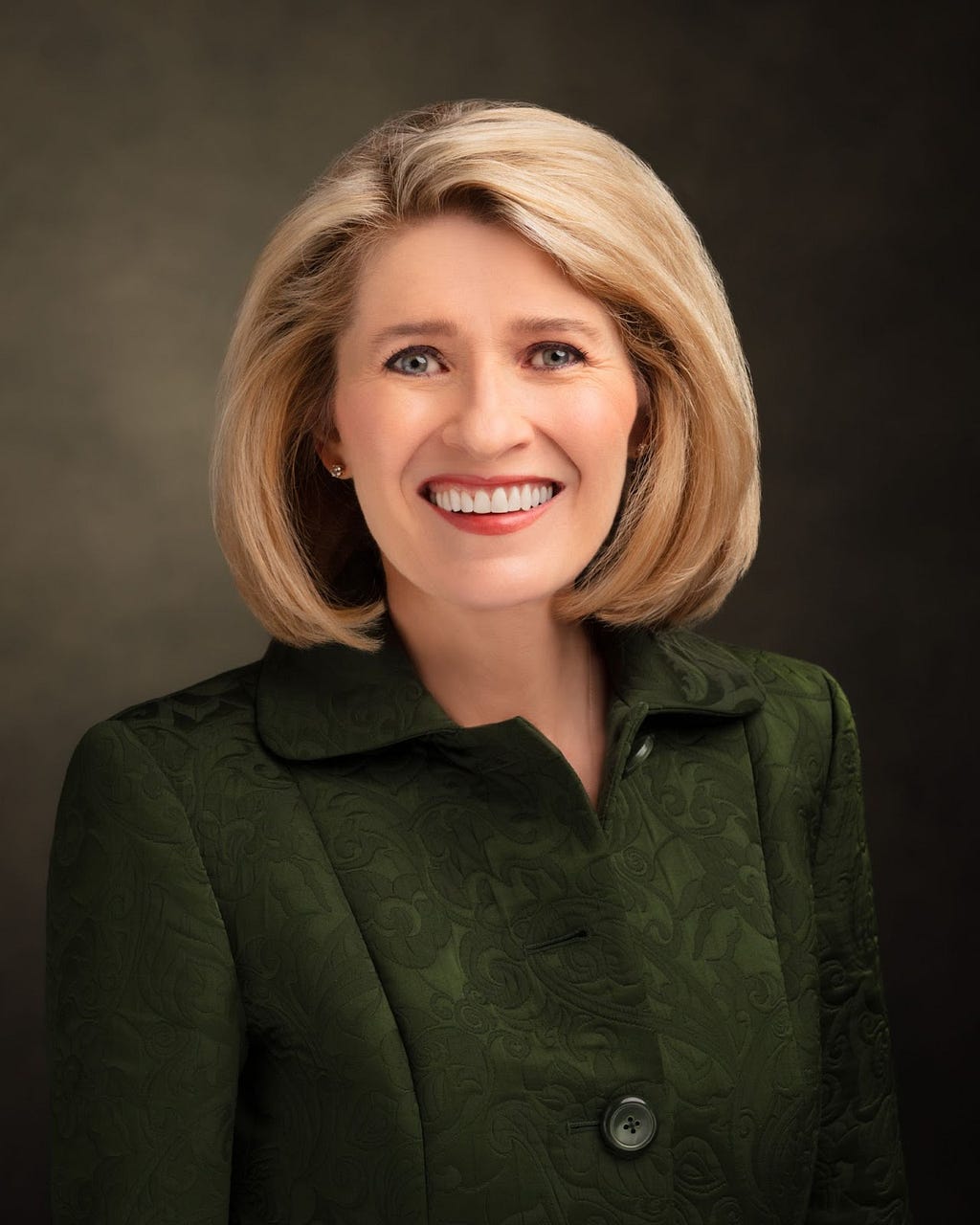
“Imagine what would happen if we, as women in leadership roles, could unleash the full power of women to transform their personal inspiration into organized action. What could happen in homes, schools, congregations, communities, and nations? How would this influence efforts to end poverty, eliminate malnutrition and hunger, support public health, provide education, and improve mental well-being?”
I had the pleasure of talking with Camille N. Johnson. Camille is the 18th General President of the Relief Society, the women’s organization of The Church of Jesus Christ of Latter-day Saints, one of the largest and oldest such organizations in the world. Appointed to the role in April 2022, Johnson assumed leadership of an organization that counts more than eight million members in over 30,000 congregations globally. Before this assignment, she served as the Primary General President, overseeing the Church’s efforts to support children from infancy to age 11.
Johnson was born and raised in a close-knit family where she was the eldest of three children. For nearly a decade, she was an only child, an experience she credits with fostering early maturity and a strong sense of responsibility, particularly in her relationships with her younger siblings. Her upbringing was shaped by engaged, community-oriented parents. Her father, remembered for his innate ability to connect with strangers, and her mother, a nurturing and encouraging figure, instilled in her a deep interest in people and a lifelong desire to serve.
A graduate of the University of Utah, Johnson practiced law for nearly 30 years, specializing in litigation and ultimately serving in leadership roles within her firm. Her approach to the legal profession was guided by a commitment to problem solving and measured advocacy. Rather than pursuing aggressive confrontation, she emphasized collaboration, negotiation, and strategic thinking, believing her clients were best served through calm and competent counsel.
Johnson and her husband, Douglas R. Johnson, have three sons and eight grandchildren. The couple spent three years as volunteer mission leaders for the Church in Arequipa, Peru, where they coordinated missionary work and community outreach in the region. Her time in Peru, she has reflected, deepened her understanding of both the material and spiritual needs of families around the world.
Since becoming Relief Society General President, Johnson has played a key role in guiding the Church’s global humanitarian initiative focused on improving the well-being of women and children. Under her leadership, the Relief Society has emphasized a four-pillar strategy: child nutrition, maternal and newborn care, immunizations, and education. In 2024, the Church launched a $55.8 million initiative in partnership with eight NGOs, including CARE International, and The Hunger Project, to implement programs across 12 countries. These programs aim to reach an estimated 12 million children and nearly 3 million mothers.
Johnson has consistently articulated a belief that global progress begins with nourishing children and empowering women. She has highlighted how education and access to local resources, ranging from nutrition screenings to sustainable agriculture training, can promote long-term self-reliance and resilience. In her view, humanitarian work must balance immediate relief with sustainable development.
Her approach also reflects a broader commitment to collaboration. Under her direction, multiple humanitarian organizations have worked together in consortia, rather than operating independently. The aim is to reduce duplication, share best practices, and increase the impact of aid efforts. Early reports, Johnson has noted, show that coordinated action is reaching more women and children than anticipated.
In addition to global initiatives, Johnson continues to emphasize the importance of localized and individual acts of service. She sees the Relief Society not only as a humanitarian organization but also as a grassroots network capable of addressing loneliness, food insecurity, and other social issues at the community level. Drawing on the Church’s tradition of ministering, an assignment-based system of peer support within congregations, she encourages members to look for simple ways to serve their neighbors.
Johnson often points to her legal background as preparation for her leadership responsibilities in the Church. Lawyers, she notes, are often called counselors, a title that resonates with the Relief Society’s mission to offer comfort and guidance. Her ability to navigate complex systems, analyze problems, and build consensus has proven useful in her current role, where she balances administrative duties with pastoral care.
Her tenure has also been marked by a public emphasis on humility, faith, and stewardship. She has spoken frequently about the idea that spiritual strength and global leadership are not mutually exclusive. Rather, she views them as complementary forces, with leadership guided by faith and faith expressed through service. Johnson often draws from scriptural teachings, including the parable of the loaves and fishes, to illustrate how small acts, magnified by divine partnership, can yield outsized results.
Throughout her leadership, Johnson has maintained that the most profound humanitarian work often happens quietly in daily acts of compassion, in attentive listening, and in helping a single family in need. She has called for greater recognition of the influence of women as moral and spiritual leaders, especially within families and communities.
In interviews and public remarks, Johnson has frequently returned to the concept of divine partnership. She attributes much of her own success not only in law and Church service, but in family life, to the belief that she is not meant to work alone. This perspective, she argues, not only grounds her leadership but also provides a counterpoint to contemporary cultural narratives that prioritize individualism over community.
As her term continues through 2027, Johnson remains focused on the Relief Society’s mission to bring relief, both physical and spiritual, to those in need. Whether through high-level partnerships with global NGOs or grassroots efforts within congregations, she continues to advocate for a model of leadership rooted in compassion, practical service, and a faith in collaborative action.
Yitzi: President Johnson, it’s an honor to meet you. Our readers would love to learn about your origin story. We’d love to hear about your childhood and how you grew up.
President Johnson: I was the only child of Helen Dorothy Neddo for nine, almost ten years before my brother and then my sister were born. I think I grew up with a lot of adults. I yearned for a brother or sister, and when they finally came, I was old enough to take on that role as mom number two. So my brother always had two women, his mother and his older sister, telling him what to do. Then my sister too. I had the opportunity to spend a lot of time with adults in those early years. My parents took me everywhere.
My parents are both very gregarious by nature. My dad, who we lost in 2008 to Parkinson’s disease, loved people. It didn’t matter if it was the barber, the bank teller, the person helping him at a restaurant, or the person sitting next to him on a plane, he just loved people and their stories. He traveled back in the days before AirPods or movie screens in the seatbacks. He could have read a book or a newspaper, but he always chose to learn more about the person next to him. I trust that person left the flight feeling known, seen, and appreciated. My dad really had a gift for that.
And my mother is a beautiful nurturer and my number one top cheerleader. I was blessed with parents who taught me to love people, to be interested in others. They taught me to nurture relationships. I feel really blessed. I was blessed by goodly parents.
Yitzi: Do you have a story you could share from your childhood that gives us a picture of what life was like growing up?
President Johnson: It’s interesting. All these years later, I still remember the day my mother brought my sister home from the hospital. We had moved to Texas by then, and I distinctly remember the magnolias blooming. I could smell them. Isn’t it interesting how our senses tune us into those memories? I can’t smell magnolias without thinking about that day my sister was born.
That was such a significant moment for me, both when my brother was born and when my sister came. Like I said, I’d waited all those years to be a big sister. My siblings have been such a blessing in my life. Now as adults, our relationship is different. I don’t try to boss them around anymore. But I loved them and felt a responsibility for them, and I think that nurturing spirit came out in me early on as a big sister.
Of course, I longed for the opportunity in this life to bear children of my own. I know many women and men in the world long to be parents and aren’t afforded that opportunity, either because they haven’t married or have struggled with infertility. For all my friends who wish for that and haven’t had the chance, I just want to say thank you for blessing the children around you, the nieces, nephews, the young people they serve in their church.
All of us have an opportunity to influence the rising generation for good. Whether we’re given the blessing of bringing children into the world or we love and nurture other people’s children, I believe those efforts are meaningful and that our Father in Heaven is grateful we’re doing our best to care for His children.
Yitzi: Do you have a story you could share of a great experience you had growing up as a participant in Relief Society?
President Johnson: It’s really an accumulation of stories rather than just one. What I remember most are the opportunities I had to serve. I was involved in helping women or families in need. Not because I was a professional counselor, but because I had a responsibility to minister to my neighbor, to help someone work through a challenge or a problem.
That’s what really colors my experience in Relief Society. The objective of Relief Society is to lift and serve, we bring relief. Sometimes that’s temporal, like delivering a meal to someone who’s had a baby, suffered a loss, or is facing a health challenge. But sometimes the relief is spiritual. That can simply mean listening to someone work through a difficult time. Not because I have particular training, but to help someone feel heard, to know their concerns are valid. That’s a form of spiritual relief.
All of that has really come full circle for me. My professional life was about problem solving. Lawyers are often called counselors at law, not because we have counseling degrees, but because we help people navigate problems. That was always the role I saw myself in professionally.
Sometimes clients would come in and say they wanted someone who would be tenacious, someone who would get in the face of their opponent. I’d tell them, I’ll be tenacious, but if you want someone who’s going to get in someone’s face, I’m not your person. I always believed my clients were best served when I drew upon my natural capacities for problem solving. When I did that, I think it helped me professionally.
So, drawing on those natural strengths really helped me. It’s interesting how all of these experiences have come together in my role now as General Relief Society President. While I think on a more global level now, I still have opportunities to minister to the one, to just listen, validate their concerns. Those one-on-one moments are some of my most cherished memories.
Yitzi: What led you to this particular career path?
President Johnson: I am a lawyer by education and profession. In April 2022, I was called to serve as the 18th Relief Society General President for The Church of Jesus Christ of Latter-day Saints. In that capacity, I will serve as a volunteer until 2027. A calling to serve is not something to which one aspires. But it is a privilege to serve.
I believe my professional life as a lawyer, including the leadership positions I held in my law firm, prepared me for my present service. As a lawyer and litigator, I always viewed myself as a problem solver. My objective was to advocate on behalf of my clients in the most persuasive way I could and to help them solve a problem. That problem-solving skillset has helped me to address the needs of women and children and lead the Church’s global women’s organization.
Yitzi: Can you share the most interesting story that happened to you since you began your career?
President Johnson: I had the opportunity to travel to the northeast corner of Uganda in February 2023. We visited an area known as Karamoja, which is part of the broader Horn of Africa and has been stricken by years of drought. There, women build their homes of manure and mud. Every day, they venture to a well, typically a thirty-minute walk each way, to collect the water their family will need for the day. They are also constantly gathering firewood and charcoal and tending to chickens, if they are fortunate enough to have them. These women birth and nurse babies and daily work to find or trade for food to feed their families. The labor required to live another day is monumental.
It was the first time I had personally seen such dire physical circumstances, and yet, I felt hope. I was grateful to be representing The Church of Jesus Christ of Latter-day Saints, which had collaborated with UNICEF to provide outreach, education, food, and RUTFs (Ready to Use Therapeutic Food) for children facing severe malnutrition.
Much of the outreach and education happened under a tree, where women came together to learn what to eat during pregnancy, how to screen children for malnutrition, and how to safely prepare nutritious food. They were tested for malaria and provided with mosquito nets. They loved being together and providing mutual support. Some of these women became designated health teachers and shared what they had learned with others.
We danced and sang together. Through an interpreter, I had the opportunity to talk with them. “You must wonder why we are here,” I said. “We are here because we are sisters, children of God who love each other and want to learn from each other.” They all cheered.
The Relief Society leads The Church of Jesus Christ of Latter-day Saints’ global humanitarian initiative to address the basic needs of women and children. In the last two years, the Church has donated approximately $100 million to this effort to improve the health and well-being of women and children around the world.
We want to empower women and families with greater understanding and resources so that they are better equipped to make changes that can have a lasting impact in their homes, communities, and nations.
Yitzi: You are a successful leader. Which three character traits do you think were most instrumental to your success? Can you please share a story or example for each?
President Johnson: I believe the epitome of leadership is Jesus Christ, who led by example through charity, integrity, and humility.
I’m reminded of the Last Supper, when Jesus washed each of the disciples’ feet. Although He was their leader, He took time to serve them in this humble way and invited them to do likewise: “If I then, your Lord and Master, have washed your feet, ye also ought to wash one another’s feet… For I have given you an example, that ye should do as I have done to you” (John 13:14–15).
The world would have us believe that successful leaders must always be assertive and competitive. While there is a place for these attributes, I’ve found that the most effective leadership is driven by love and a desire to uplift and teach others, just as our Savior did.
Yitzi: None of us are able to achieve success without some help along the way. Is there a particular person to whom you are grateful who helped get you to where you are? Can you share a story about that?
President Johnson: I have been blessed by the influence of intelligent, courageous, virtuous, and faithful women. These associations have polished, lifted, enlightened, and strengthened me in all aspects of my life.
I believe that women are blessed with a unique moral compass, and they possess special spiritual gifts and propensities to sense human needs, to comfort, teach, and strengthen. Women possess an extraordinary power to influence others for good.
Each of our communities depends upon ordinary women as they perform their unique roles as leaders, teachers, nurturers, healers, mothers, daughters, sisters, and peacemakers.
Yitzi: Can you please give us your favorite “Life Lesson Quote”? Can you share how that was relevant to you in your life?
President Johnson: What I have discovered in managing my responsibilities as a wife, mother, grandmother, daughter, sister, community member, lawyer, and now global Relief Society President is that establishing priorities is critical to success and happiness.
In Matthew 22, Jesus said, “Thou shalt love the Lord thy God with all thy heart… This is the first and great commandment. And the second is like unto it, Thou shalt love thy neighbour as thyself.”
Love of God and love of His children are my first and second priorities. When we prioritize love of God and love of our neighbor and family, the things that don’t have eternal significance drop off the list.
I also trust God. Jesus Christ is the author and finisher of my faith and my story. Because He knows our potential perfectly, He can take us to places we never imagined ourselves.
Yitzi: Are you able to identify a “tipping point” in your career when you started to see success? Did you start doing anything different? Are there takeaways or lessons that others can learn from that?
President Johnson: A significant tipping point in my professional life was receiving the call to serve as the President of The Church of Jesus Christ of Latter-day Saints’ Primary organization in 2021. As a volunteer, I served as the leader of that organization, which has responsibility for all the children in the Church, ages 18 months to 11 years old. There are approximately 1 million Primary children around the world. The Primary organization supports them and all those who seek to teach, lead, and love them.
The calling to serve as Primary General President required my full-time commitment, so I gave up my law practice and my role as law firm president to fulfill that responsibility.
Only one year into that calling to serve the children, I was asked to serve as the Relief Society General President of The Church of Jesus Christ of Latter-day Saints. In this role, I have responsibility to lead the Church’s global organization for women. As one of the oldest and largest women’s organizations in the world, there are more than 8 million members of the Relief Society, which is organized throughout more than 30,000 congregations globally. Since its organization in 1842, the objective of the Relief Society has not changed. Members of the Relief Society strive to provide relief, both temporal and spiritual, to all of God’s children.
My one year serving as the Primary General President helped me identify and focus on the needs of children and shaped my aspirations for them. As the leader of the Relief Society, my vision is broader. The Relief Society now leads a churchwide humanitarian initiative to address the basic needs of women and children. As part of this initiative, we collaborate with other global organizations to prioritize maternal and newborn care, child nutrition, immunizations, and education throughout the world.
Global progress starts with nourishing children and strengthening women. When you bless a child, you invest in the future. When you strengthen a woman, you enrich a family, a community, and a nation.
I am inspired by noble women all over the world who, motivated by love of God, are bringing relief to their neighbor. Their successful efforts to lift, love, and bless others come from a place of humility. They manifest charity, which is the pure love of God.
Yitzi: Can you describe to our readers how your work is helping to address the challenge of food insecurity?
President Johnson: One of the core initiatives for the Church is helping those in need through global humanitarian projects. Providing nutrition and other critical resources for women and children is a primary focus of these efforts. We’re working with organizations around the world to devise new approaches that improve collaboration, reduce duplication, and strengthen the connection between the administration of aid and the creation of actionable and long-term impacts.
Led by the Relief Society General Presidency, in 2024 the Church launched a $55.8 million global initiative in collaboration with eight nongovernmental organizations, CARE International, Catholic Relief Services, Helen Keller International, iDE, MAP International, Save the Children, The Hunger Project, and Vitamin Angels, to address maternal and childhood nutrition in 12 countries with highly vulnerable populations.
Collaborating with these groups extends our reach and enhances our capacity to assist those in need. These organizations are involved in numerous incredible projects that empower communities. One of the many exemplary initiatives is The Hunger Project’s Epicenter strategy. This nonprofit focuses on sustainable, grassroots, women-centered strategies, and involves grouping multiple villages to establish a centralized hub of community activity. This center not only provides a physical location for meetings but also facilitates elected committees that oversee programs offering training and resources. For instance, in Ghana, communities are leveraging this model to forge their own paths toward development and self-sufficiency through support in farming, baking, and other nutrition-related activities.
With a goal of impacting 12 million children and 2.7 million expectant and new mothers, the program spans Bangladesh, Cambodia, Democratic Republic of Congo, Ghana, Kenya, Mali, Nepal, Nigeria, Philippines, Senegal, Sierra Leone, and Zambia.
We are committed to addressing the root causes of humanitarian challenges such as food insecurity and malnutrition through a holistic co-creation model. We work closely with organizations on the ground to ensure support and program implementation are aligned with local needs. We remain steadfast in caring for those in need, providing a stable and consistent source of support for women and children, individuals impacted by natural disasters and disease outbreaks, and regions in need of critical food and other resources.
Yitzi: In your opinion, what should other business and civic leaders do to further address these problems? Can you please share a few things that can be done to further address the problem of food insecurity?
President Johnson: The Church of Jesus Christ of Latter-day Saints and the Relief Society use their global reach to scale these efforts, both through global humanitarian projects and congregation-based strategies. I believe the most important and impactful work of women continues to be done one by one, when we build emotional resilience in our own children, help a woman find a safe and well-paid job, teach a child to read, patiently address the needs of an elderly neighbor, prepare a meal for the sick, or sit with someone who is grieving.
We strive to be disciples of Jesus Christ. I believe He came to Earth to save humanity from sin and death and to lift us in our sorrow and distress.
His daily discipline was always to reach out to those in anguish one by one: in private conversation with the socially outcast Samaritan woman at the well (John 4:7–10), pausing to comfort the woman in the crowd with the issue of blood (Luke 8:44–48), and privately healing the young daughter of Jairus (Mark 5:38–41).
I recognize that while my current work involves efforts to improve conditions for women and children around the world, Christ’s most important requirement for me as His disciple is to recognize immediate individual needs around me and respond with patience and love.
My call to action today is simple and personal. While we must act justly and responsibly in our roles as leaders, let us not neglect the individuals within our immediate circle of care. I urge you to pause with me for a moment and connect, however you do that, with your highest source of inspiration, and then wait quietly for guidance about whose life you can meaningfully improve today with an act of compassion. Write it down. And do it.
Yitzi: Are there other leaders or organizations who have done good work to address the challenge of food scarcity? Can you tell us what they have done? What specifically impresses you about their work?
President Johnson: In addition to these organizations, the Church has had a longstanding collaboration with the World Food Programme (WFP), UNICEF, and others to help feed and nourish millions in need.
Recent projects with WFP include school feeding programs in Haiti, which help to feed 500,000 schoolchildren, and self-reliance food programs to reduce food insecurity in Liberia. This work provides food and other critical assistance to many of the world’s most vulnerable people, including mothers and young children.
Another organization the Church has collaborated with in recent years is Edesia. They help nourish children and mothers with ready-to-use therapeutic foods (RUFs) that prevent and treat acute malnutrition. A recent donation will help provide lifesaving nutrition to children and mothers through local food producers.
Yitzi: Can you share something about your work that makes you most proud? Is there a particular story or incident that you found most uplifting?
President Johnson: Imagine what would happen if we, as women in leadership roles, could unleash the full power of women to transform their personal inspiration into organized action. What could happen in homes, schools, congregations, communities, and nations? How would this influence efforts to end poverty, eliminate malnutrition and hunger, support public health, provide education, and improve mental well-being?
As women, we are part of a global sisterhood. Our biology and the universality of how we bear and nurture humanity connect us across cultural divides, language barriers, and political differences, creating a common experience when no other obvious bridges may exist.
From our Latter-day Saint scriptural tradition, we are commanded to have our “hearts knit together in unity and love.”
I know that when the hearts of women are knit together in unity and love, we can change the world, one life at a time. I make that bold claim not out of wishful thinking, but from my lived experience as the current Relief Society General President of The Church of Jesus Christ of Latter-day Saints.
I’ve seen how the Relief Society inspires women to provide consistent acts of service within their homes and communities, elevating one another amid poverty, caring for, feeding, and nurturing children who are not their own, protecting others from the ravages of war, mourning with those who mourn and comforting those who stand in need of comfort, cultivating mental and emotional resilience, and patiently attending to the physical, spiritual, and mental well-being of their sisters and neighbors around the world.
In the Philippines, Latter-day Saint women, concerned about the high prevalence of malnutrition in their communities and how it was affecting their families, learned more about the devastating lifelong consequences of malnutrition. Motivated by love and united by faith, leaders of local congregations moved to action.
With strong engagement from the women of the Relief Society, leaders learned about the most common causes of malnutrition. Congregations hosted nutritional screenings in Church buildings for member families and neighbors, taught parents about good nutrition, and referred those in need to local medical and community services for treatment. These local efforts have been combined with the Church’s humanitarian support for organizations that treat malnutrition and promote good nutrition throughout the Philippines.
What started as a local Church-led project to help member children has rippled far beyond those Filipino congregations. This effort is currently being implemented in over a thousand congregations in 20 countries, with plans to launch in 18 additional countries in 2025. To date, more than 14,000 children have been screened for malnutrition.
Yitzi: Looking ahead, are there unaddressed needs or new models of service you think could be explored by the Relief Society in the near future?
President Johnson: Yes. The needs are great. Our global initiative is focused on four pillars: child nutrition, specifically for children under five, because that’s when brain development is so critical, maternal and newborn care, immunizations, and education. There’s so much work to be done even within just those four areas.
One thing I’m really pleased with is how we’ve encouraged the NGOs we work with to collaborate. The results have been so heartwarming. For 2024, we tried a new model. Most of these NGOs are used to working independently. One might be good at immunizations, another at vitamins, another at access in Nepal. Everyone was working in their own lane and competing for funding.
But with the contribution made by the Church of Jesus Christ of Latter-day Saints last year, we organized eight NGOs into four consortia. Each consortium included multiple NGOs working together. The Church helped orchestrate it, kind of leading the orchestra, asking, “What can we do to help in Nepal?” or “How do we get nutritious food to children in Ghana?” These NGOs started collaborating, bringing their best resources and information to address specific challenges.
And what we’re already seeing is that the outcomes are better than expected. More women and children’s lives have been impacted than we initially projected. That’s the exponential effect we’ve talked about. Instead of working in isolation, we’re combining our expertise, getting more done, doing it faster, and reaching more people.
This is an exciting new model, and I hope it shows what we can do differently, and better, to tackle these big, broad issues. There’s still so much work to be done, but I think we’re setting an example that shows real promise in how this work can move forward.
Yitzi: You’ve spoken before about how everyday acts of love can be world-changing, small acts. Do you have a story where you’ve seen that happen, where an act of love created an extraordinary ripple effect?
President Johnson: Oh, dozens of stories, but one comes to mind quickly because I shared it on my social media for Mother’s Day. I had a little grandbaby born in February, nearly seven weeks early, just three pounds five ounces. He stayed in the NICU for a whole month. The nurses were fabulous. My son and daughter-in-law were there as much as they could be, but they also have two older daughters. They were trying to run a household and be there for the baby.
There was a particular NICU nurse who, at night, would write a little note and put it in the bassinet. It was from Frank, my little grandson, for his sisters. The note would say something like, “I’m here at the hospital a little longer, trying to grow strong so I can come home and play with you.” She’d place the note in the bassinet, and in the morning, since there was a camera on the bassinet, the girls could see what was happening even when they couldn’t be at the hospital. They’d see that little note from Frank.
It seems like such a tiny thing, it probably took her one minute to write, but what a blessing it was for my granddaughters, for my son and daughter-in-law. Just knowing someone was watching over their baby, showing such compassion and care, meant everything. It was such a beautiful example of kindness, professionalism, and genuine love.
And how do you pay that forward? My kids will be a little more compassionate, a little more tender. They’ll think about the small opportunities they have to show love. It wasn’t a big thing, and the nurse would probably say she was just doing her job. But it was more than that. And when you’re the recipient of kindness like that, it makes you want to do something nice for someone else, doesn’t it?
That’s the story I shared for Mother’s Day, with the message: thank you to all the women who care for other women’s children. Circling back to where we started, I feel so blessed to have had the opportunity to give birth and be a mother and grandmother. I know I have many sisters, and brothers too, who long for that blessing and haven’t received it in this life. Thank you for nurturing other people’s children.
Yitzi: On a personal level, can you share with the readers what you do to help your body, mind, and heart thrive? What self-care routines do you follow to support your overall well-being?
President Johnson: Well, I love a good walk. And I would say prayer is really important. I have the habit of praying on my knees in the morning, first thing when I get up, and again at night before I get into bed. Candidly, those aren’t my brightest moments of the day because I’m a little weary in the evening and just waking up in the morning. Nonetheless, it’s a good habit to have established.
I try to pray during the day as well. Sometimes that means I turn off the music and pray while I’m driving. I pray multiple times throughout the day. Sometimes they’re quick little prayers like, “I really need your help with this.” But I think staying in constant communication with Him is important.
I also spend time every day reading scripture. I talk to the Lord through prayer, and He talks to me through scripture. For me personally, I also spend time every day listening to the words of President Russell M. Nelson, who is the president of our church and our prophet. He’s an optimistic man. I know he has my best interests, and those of all of Heavenly Father’s children, in mind. His counsel lifts my spirits and gives me confidence to tackle the challenges of the day. So daily acts of devotion help me stay connected to that divine source we’re working with and working through.
Yitzi: This is our final aspirational question. Because of your great work and the platform you’re leading, you’re a person of enormous influence. If you could put out an idea or inspire a movement that would bring the most good to the most people, what would that be?
President Johnson: I keep coming back to the Savior’s counsel in Matthew 25. He gives a series of parables, and at the end, He says, “I was hungry and you gave me meat. I was thirsty and you gave me drink. I was a stranger and you took me in.” I think it’s about recognizing the needs of those around us and looking for opportunities to help, lift, and serve. For me, that would be my invitation, to love. Look for ways to express love to those around us.
I am grateful to serve as an instrument in God’s hands and contribute to His work by bringing relief, hope, and love to His children. We follow Him, serving in His name. When our hearts are united in love and purpose, we are strengthening families, communities, and the world.
I hope to inspire others to serve as the Savior would. True humanitarian outreach does not always require grand gestures or distant missions; often, the most profound impact is found in simple, everyday acts of kindness.
You are part of a global humanitarian effort whenever you nourish a child or strengthen a woman. The Church’s Global Initiative to Improve the Well-Being of Women and Children is not limited by borders or circumstances, it thrives in the quiet moments of service.
Will you reach across the room, reach across the fence, and join us in this global initiative to nourish children and strengthen women? Acts of love, however small they may seem, are the threads that weave a stronger, more compassionate world.
Yitzi: How can our readers further follow your work online?
President Johnson: You can learn more about how The Church of Jesus Christ of Latter-day Saints cares for those in need around the world via the Caring for Those in Need Summary, and more about the Relief Society on our website.
Yitzi: President Johnson, it’s truly been a delight and an honor to talk to you. This was very meaningful, thank you so much, and we wish you only continued success.
President Johnson: Well, I have a new friend in Baltimore. (Laughs)
How Relief Society President Camille Johnson Is Helping To Address The Growing Challenge Of Food… was originally published in Authority Magazine on Medium, where people are continuing the conversation by highlighting and responding to this story.