Luyanda Lewis-Nyawo Is Just Getting Started: ‘Wednesday’ Star on Embracing Rejection, Reimagining Shakespeare, and the Joy of Being Silly
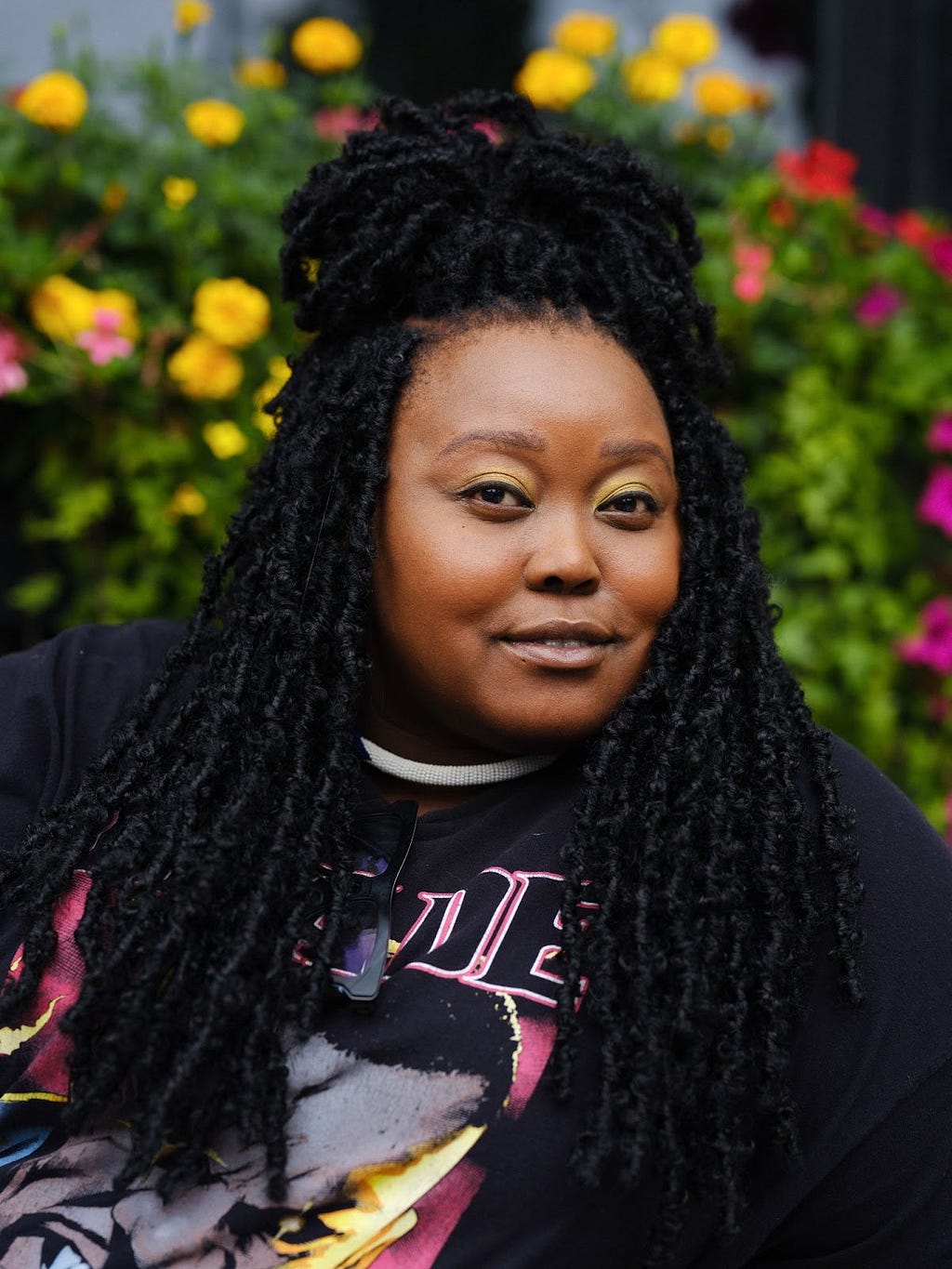
“First things first, make sure you have a life outside of the craft. It’s not your whole life, it’s not your whole existence. Whatever that is, whether it’s something you find in your community, a hobby, or another creative outlet that you don’t monetize, find that thing. That’s what’s going to keep you alive and fresh during the fallow periods… The business goes through feast and fallow, and it’s easy to ride the highs. But it’s the fallow that tests your connection to the craft.”
I had the pleasure of talking with Luyanda Unati Lewis-Nyawo. Luyanda’s ascent in contemporary screen and stage performance has been anything but linear. The UK-based, South African-born actor returns to the spotlight this August as a newly minted series regular in Netflix’s gothic phenomenon Wednesday, portraying Sheriff Ritchie Santiago. It’s a quiet but meaningful elevation for a character once in the margins of Jericho’s supernatural drama, a promotion that reflects both the show’s shifting dynamics and Lewis-Nyawo’s growing presence in the screen world.
Born in Johannesburg during the waning years of apartheid and raised primarily by their grandmother in Port Elizabeth (now Gqeberha), Lewis-Nyawo’s early life was shaped by movement, education, and the inheritance of blunt familial honesty. Their parents had relocated north in search of work, while their grandmother sought stability and opportunity for her grandchild. After Nelson Mandela’s election, she made the decisive choice to send Lewis-Nyawo to schools in the suburbs, outside the segregated townships, a gamble that would ultimately give them access to the kinds of extracurricular activities where a young artist might first discover their voice.
It was in those school plays, where Lewis-Nyawo took on roles like Baloo in The Jungle Book and characters in Robin Hood and the Babes in the Wood, that acting took root. The commitment stuck. Encouraged by family but grounded in realism, “You don’t have the maths for that,” their grandmother once said when Lewis-Nyawo flirted with the idea of becoming a scientist, they pursued performance with a sense of inevitability.
That trajectory was neither immediate nor uninterrupted. After attending Johannesburg’s National School of the Arts, an incubator that counts Charlize Theron among its alumni, Lewis-Nyawo temporarily stepped away from acting. Film school, advertising school, other creative pursuits, they explored them all, seeking structure but finding few satisfying answers. It wasn’t until they joined a local acting troupe led by South African theater veteran Dorothy Ann Gould that they reconnected with the craft. Weekend sessions in a community center in Westdene rekindled something vital. Soon after, they secured a place at the Royal Central School of Speech and Drama in London, a formative three-year experience that tested and affirmed their creative commitment.
The years that followed included appearances in British television staples and cult hits, including Top Boy and Doctor Who, as well as streaming features like Back in Action and How to Date Billy Walsh. These roles gradually paved the way to more prominent work, culminating in their breakout role on Wednesday, a show that blends horror, fantasy, and teen drama in an idiosyncratic genre stew. In the second season, which premieres in two parts, part 1 currently streaming and part 2 on September 3, Lewis-Nyawo’s Sheriff Santiago plays an expanded role alongside Jenna Ortega’s Wednesday Addams and Emma Myers’ Enid Sinclair, navigating the tensions between normies and outcasts, law and chaos.
Offscreen, Lewis-Nyawo’s world is marked by a similar blend of rigor and imagination. Outside of acting, they cultivate their own food, spend time with their cat Garlic Bread, and maintain deep connections with the queer and cabaret communities. Their personal interests feed into ongoing projects: a short film currently in development and a stage adaptation of Shakespeare’s Coriolanus, reimagined through the eyes of Volumnia and set in an imagined African antiquity. Collaborating on the latter with Pamela Nomvete, an actor Lewis-Nyawo once idolized growing up in South Africa, has added an emotional weight to the endeavor. “It’s definitely a pinch-me moment,” they’ve said.
There’s also a parallel track that connects Lewis-Nyawo with the gaming world. A self-professed nerd, they’ve lent their voice to characters like Sula in Eternal Strands and Illaoi in Ruined King, with additional roles still under wraps. In that realm, as in acting, they value the capacity to build character and story in unconventional spaces.
Despite the steady rise, Lewis-Nyawo remains clear-eyed about the nature of the industry. “You have to develop a relationship with uncertainty,” they’ve said, noting that rejection is baked into the business. Their advice to younger artists reflects a philosophy of sustainability: build a life outside your craft, embrace the fallow seasons, don’t overthink, and don’t forget to be silly.
Their lived philosophy leans heavily into intentional self-care. Weekly contact with water, solitary reflection, Buddhist practice, meditation, and gratitude journaling all form part of a steady internal regimen. These aren’t just wellness trends, they’re survival tools, especially after a difficult start to the year that included a bad fall in Dublin while filming Wednesday, followed by a long period of physiotherapy and rehabilitation.
What threads through all of Lewis-Nyawo’s reflections is an insistence on authenticity, of being oneself, fully and without apology. This extends to their view of character work: that one cannot play a person convincingly if one begins from a place of judgment. It’s a principle they believe the world might benefit from more broadly. “If I’m already judging you, we’re never going to understand each other,” they’ve said. “So, I would encourage more listening, less judgment, more grace, more compassion, more patience. Move slower.”
Their voice, whether performing Shakespeare or bringing to life a video game protagonist, is anchored by this quiet but persistent ethic. Luyanda Lewis-Nyawo is an artist whose path, crossing continents, disciplines, and forms, continues to unfold with care, clarity, and a determination to create from a place of both strength and softness.
Yitzi: Luyanda, it’s an honor to meet you. Before we dive in deep, our readers would love to learn about your personal origin story. Share with us the story of your childhood, how you grew up, and the seeds for all that happened afterward.
Luyanda: Thank you, likewise. I grew up in Gqeberha, well, it was called Port Elizabeth then, in South Africa with my gran, my grandmother. My parents sent me there while they were establishing themselves further north in South Africa. It was a really interesting childhood. My grandmother really wanted me to have a solid education, so when Nelson Mandela became president, she sent me to schools in the suburbs, beyond the townships.
I was educated there for a long time, and that’s where I fell in love with drama and acting in general. I remember we auditioned for Robin Hood and the Babes in the Wood, the Roald Dahl adaptation, and I was hooked from that point. Then we did The Jungle Book, and I played the Big Bad Wolf in something else, I just always wanted to do it.
My parents were always supportive from a young age because it was something I was really good at. I distinctly remember being in the car with my grandmother, rattling off things I thought I could become when I was older. I said, “Oh, what if I became a scientist?” and they said, “Yeah, you don’t have the maths for that.” So, artist it is. And that’s okay. That level of honesty runs deep in my family. It kind of felt like a done deal from that point.
Later on, fast forwarding a bit, I was lucky enough to go to a performing arts high school in Johannesburg called the National School of the Arts. Charlize Theron went there too, she did dance. Apparently, she still owes my principal 20 rand. He hasn’t let it go.
I studied drama there for four years. When I left art school, I thought, “How am I going to sustain my life?” So I walked away from acting for a bit. I tried film school for a while, that wasn’t the right fit. I tried advertising school, that wasn’t right either. I was always looking for something creative, but I was a bit too afraid to take the leap and fully bet on myself.
Eventually, I met Dorothy Ann Gould and started taking drama classes with a troupe every Saturday in a rec center in Westdene, Johannesburg. From then on, I really committed to acting again. I fell back in love with it. I eventually got into the Royal Central School of Speech and Drama, trained there for three years, and it was incredible. It was a difficult experience but also incredibly fulfilling and nurturing as an artist.
Then I started working, booking gigs, finding the next project. I’ve been so privileged to work with amazing, incredible people, just keeping my head down and staying as positive as possible in this business. It can be really taxing. Rejection is part and parcel of it. You have to get really familiar with “no,” because the “yeses” do come, but only after a lot of “no.” You have to develop a relationship with uncertainty.
But I’ve been really fortunate, and I’m truly grateful for that. To have it all culminate in what happened last night, one of the most prestigious events of the year, part of one of the most incredible shows right now, Netflix’s biggest show of all time, it’s just been a real honor and a gift, and I’m really grateful.
Yitzi: Amazing. Please tell us about the exciting new projects you’re working on now. Tell us about Wednesday, tell us everything you’re currently working on.
Luyanda: Right now, I’ve been focusing a lot on my writing. When I was shooting, when I wasn’t on set, I had a pretty bad fall at my apartment in Dublin. That happened about a week and a half into filming. Luckily, I didn’t have to shoot for another four weeks, so I was able to go home, recover, and then come back and finish the job. But I’ve spent most of the beginning of this year in physio, rebuilding strength in my knee and ankles, because they were really hurt.
I’ve been writing a lot, and that’s been really exciting. I’ve also been working on some video games, projects I can’t talk about yet because they’re under NDA. I’m a massive nerd, so I do a lot of work in the video game world too. There’s definitely stuff in the pipeline, but unfortunately, I can’t say much about it. Lips are sealed, hands are tied.
I actually enjoy this time between projects because it gives me space to explore art for art’s sake. It’s been great to work on my horror pilot, as well as a stage adaptation of Coriolanus by William Shakespeare, reimagined through Volumnia’s perspective and set in African antiquity. There’s been a lot of research going into building that world, alongside a friend of mine, Pamela Nomvete. She was an idol of mine growing up in South Africa, and now I get to work with her. It’s definitely a pinch-me moment. So it’s been a really exciting time, and I’m looking forward to what’s next.
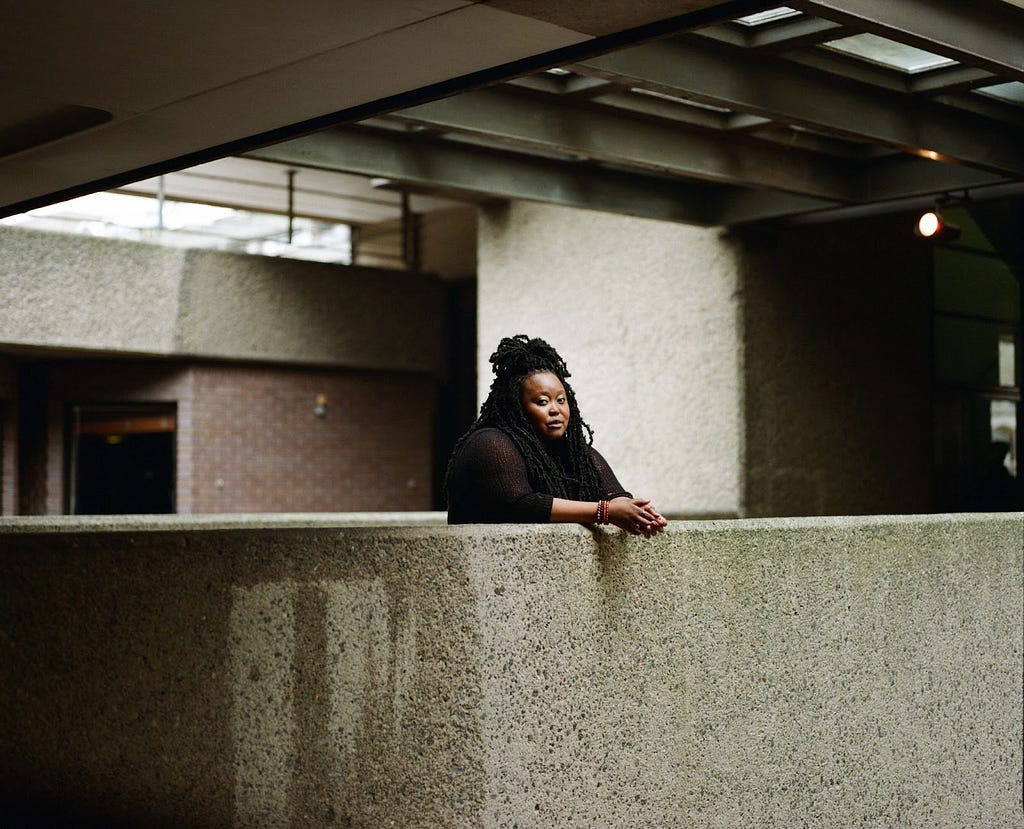
Yitzi: How would you compare and contrast your personal character with the character you play in Wednesday? How are you similar, and how are you different?
Luyanda: How are we similar, and how are we different? I think Santiago is really capable and quick on her feet. In that way, we’re similar. We both go after something and commit to it fully, seeing it through to the end.
Where we differ is that sometimes I’m just teeny-tiny. I think Santiago does have a soft side, absolutely, but she has to navigate a male-dominated world and present herself from a position of strength. She’s responsible for taking care of everyone, both normie and outcast, and that’s a heavy burden. She doesn’t always have the privilege of softness, which is a shame. I, on the other hand, seek that softness out as often as I can. I don’t kick down as many doors as Santiago does, and I’m okay with that.
Yitzi: Great. This is our signature question. You’ve been blessed with a lot of success. Looking back to when you first started, can you share five things you’ve learned that you wish you knew when you first started acting?
Luyanda: Oh, five things. Okay.
- First things first, make sure you have a life outside of the craft. It’s not your whole life, it’s not your whole existence. Whatever that is, whether it’s something you find in your community, a hobby, or another creative outlet that you don’t monetize, find that thing. That’s what’s going to keep you alive and fresh during the fallow periods. The business goes through feast and fallow, and it’s easy to ride the highs. But it’s the fallow that tests your connection to the craft and your ability to stay excited by it, even when all you’re hearing is “no.”
- Number two: don’t overthink it. Sometimes the simplest answer is the right one. Yes, we’re all complex and relationships and circumstances can be complex, but that first instinct you have is often worth trusting. Give it a green light.
- Number three: don’t give up. I know it’s a luxury to say that when it seems like I’m on the other side of the struggle, but really, don’t. You have no idea what your fellow artists are going through. The industry can feel quiet, even isolating, but you have to keep finding ways to reignite your love for the craft. You started doing this for a reason. Hold onto that and keep going.
- Number four: it’s okay to be silly. You don’t have to take yourself seriously all the time. That’s been really helpful for me. We get to tell incredible stories, ones that can shift minds and have real impact, but at the end of the day, it’s still make-believe. Especially in theater, it’s called a “play” for a reason. Let yourself play.
- And number five, which is something I constantly work on: you are valuable exactly as you are. You don’t have to change yourself or minimize yourself or stretch into a mold that doesn’t fit. It’s okay to be authentically you. This industry needs fresh, authentic voices to keep storytelling alive and relevant. The very thing you might think makes you unworthy or imperfect could be exactly what sets you apart and allows you to shine. So do the work to embrace all of who you are.
Yitzi: Can you share the self-care routines that help your body, mind, and heart thrive?
Luyanda: I have to meditate. Sometimes I fall off the wagon and forget, but meditation is really important for me. If I’m not doing it, I get really fizzy. That’s one.
I also need to touch a body of water at least once a week. I find that incredibly soothing.
Something I’ve been practicing more this year is spending time in solitude. Not filling every moment with activity or people, but just getting to know myself in the quieter parts of life, the bits in between the excitement, like falling in love or all the chaos. There’s something really grounding in learning to be present in those “boring” or quieter moments, and finding gratitude in them.
I keep a gratitude journal as often as I can, especially when things are tough. I try to find five things I’m grateful for each day. Even doing that for three or four days in a row, I already feel the mental shift.
I also practice Buddhism, so I try to come back to my center and remember everyone’s Buddhahood as much as I can. That’s not always easy, we’re all human, and it’s okay to feel the more shadowy emotions too, but I try to see the good in everything, even when it’s really hard to find.
Yitzi: This is our final aspirational question. Because of your great work and the platform you’ve built, you’re a person of enormous influence. If you could spread an idea or inspire a movement that would bring the most good to the most people, what would that be?
Luyanda: I think I’d want people to slow down more and really listen to each other. Even if we don’t agree, I believe listening can lead to better understanding. And from understanding, we can start having conversations where we meet each other as equals. From that position, I think we’re much more capable of making things better for each other in a collaborative way.
That might sound a little utopian or far-fetched, but I do think a little more listening, a little more grace, and a little more compassion can go a long way.
In this craft, especially as an actor, you have to find a way to understand the person you’re playing, even if they’re difficult, even if you think you have nothing in common or your values are completely different. If you’re judging them from the outside, you can’t get inside. You can’t play them honestly.
So I try to carry that lesson into life: if I’m already judging you, we’re never going to understand each other. So, I would encourage more listening, less judgment, more grace, more compassion, more patience. Move slower. I think that could make a real difference.

Yitzi: So beautiful. How can our readers continue to follow your work? How can they support you in any way?
Luyanda: You can find me over on Instagram, my full name, @luyandanati.lewis.niawo.
You can also find me in a couple of video games. You can play Eternal Strands, where I voice Sula, and Ruined King, where I voice Illaoi. I’ve also done a few audiobooks, they pop up every now and then, so keep an eye out.
And if you’re ever looking to relax or meditate, I think I have a little story on the Calm app as well. So if you want to wind down, the soothing voice will help you out. That’s where you can find me and keep up with what I’m doing.
Yitzi: It’s such a delight to meet you. Wishing you continued success, blessings, and good health. I hope we can do this again next year.
Luyanda: Yes, thank you so much. Have a beautiful day.
Luyanda Lewis-Nyawo Is Just Getting Started: ‘Wednesday’ Star on Embracing Rejection, Reimagining… was originally published in Authority Magazine on Medium, where people are continuing the conversation by highlighting and responding to this story.