
Inside Roberta Grossman’s Mission to Build a 21st-Century Archive of Jewish Stories, and the Power of Film to Keep History Alive
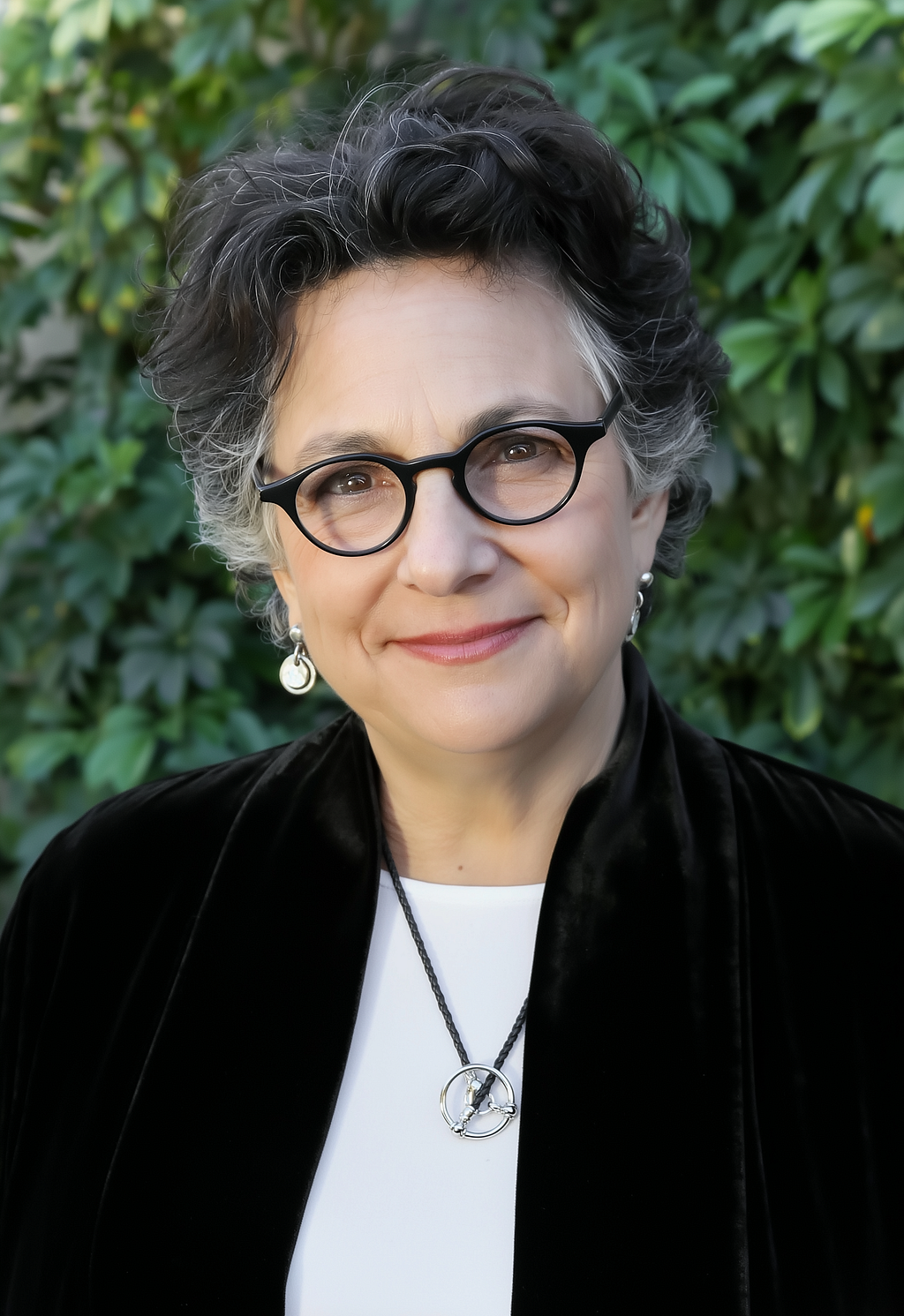
“When I finished Who Will Write Our History, which came out in 2018, Nancy Spielberg and I began talking with the Righteous Persons Foundation, Steven Spielberg’s foundation, about creating a new fund for Jewish documentary film. From my experience, it’s very hard to raise money for these films, yet film is the medium of our time. As Ringelblum created a Jewish archive on paper, our goal with Jewish Story Partners was to create a 21st-century archive of Jewish stories, broadly and diversely defined.”
I had the pleasure of talking with Roberta Grossman of Jewish Story Partners. In a world saturated with fleeting digital content, Roberta stands as a chronicler of memory, a filmmaker who digs into the bedrock of history to unearth stories that demand to be told. Long before she was an award-winning director and the co-founder of Jewish Story Partners, a crucial funding lifeline for documentary filmmakers, she was a kid in Los Angeles finding her way, not in a synagogue, but in a youth movement that would ignite the fire for her life’s work.
“I grew up in Los Angeles, and we did not belong to a temple,” Grossman recalls. “When I was in high school, I was introduced to and became a member of Hashomer Hatzair. That was very formative for me in terms of my Jewish identity and connection to Israel.” It wasn’t just a social club; it was an education in ideology and history. “I was very moved by the story of Hashomer Hatzair in Europe in the 20th century, their role in the Warsaw Ghetto… their sense of independence, their sense of Jewish identity and Jewish pride. I think many of the films I’ve made have come out, in some way, from that.”
After studying history at UC Berkeley, Grossman began chasing the ghosts of the past, not in dusty archives, but through the lens of a camera. She carved out a reputation for making history breathe, directing a slate of powerful, feature-length documentaries: Hava Nagila: The Movie; Above and Beyond, about the birth of the Israeli Air Force; and Blessed Is the Match, the story of poet and paratrooper Hannah Senesh.
Her work culminated in 2018 with Who Will Write Our History, an acclaimed film about the secret archive of the Warsaw Ghetto. But with success came a stark realization. “It’s very hard to raise money for these films,” she says, “yet film is the medium of our time.” That understanding became the seed for her next chapter. Teaming up with Nancy Spielberg and Steven Spielberg’s Righteous Persons Foundation, she co-founded Jewish Story Partners. The mission was clear and urgent: “As [historian Emanuel] Ringelblum created a Jewish archive on paper, our goal with Jewish Story Partners was to create a 21st-century archive of Jewish stories, broadly and diversely defined.” In just a few years, the organization has granted $4 million to 118 films, becoming an indispensable force in independent filmmaking.
For Grossman, the work is deeply personal. The impact of her films isn’t measured in box office numbers, but in moments of profound human connection. She recounts a private screening for Blessed Is the Match, the film about Hannah Senesh. Hannah’s nephew, Eitan, who had been a close and exacting collaborator, was in the audience. When the film ended, the theater was shrouded in an unnerving quiet. “I thought, ‘Oh my God, it was terrible,’” Grossman admits. “But it was just that people needed a moment, it was so powerful.” Then came the standing ovation. “Eitan walked down the aisle toward me with tears streaming down his face. I went to meet him, and he said, ‘You did it, you did it.’ I still get chills thinking about that moment… Every film has multiple audiences, and sometimes the most important one is just one person.”
Even while steering Jewish Story Partners, Grossman hasn’t put her own camera down. Her latest short, Extinguished Lives, tells a harrowing story of the Holocaust in Lithuania, where Jews were murdered not by invading Nazis, but by their own neighbors. The film is based on the testimony of Frida Iskovitz, one of the only survivors from her town. Grossman sees a direct line from these historical horrors to our present day. She hopes that “by examining the roots of conspiracy theories — which breed hate, then fascism, and ultimately destruction, we sound a warning, a flashing red light for our own time.”
Decades of navigating the brutal landscape of independent film production have taught Grossman a few things. She’s learned that fundraising isn’t begging; it’s “an exchange of money and meaning.” It’s about finding partners who want to help tell a story that matters. She’s also learned to trust her own unique vision. “Don’t be afraid of how nerdy or unpopular your passion is. That’s your gold,” she advises. This philosophy is about prioritizing what will be said about you after you’re gone over what’s written on your resume. As author Arthur Brooks puts it, “Do you want to live by résumé values or eulogy values? Eulogy values are the way to go.”
For a woman who has dedicated her career to documenting the epic sweep of history, it all comes down to the smallest, most intimate unit. “At the end of the day,” Grossman says with quiet certainty, “it’s all about family. That’s what matters.”
Yitzi: Roberta, it’s so nice to meet you. Before we dive in, our readers would love to learn about your personal origin story. Can you share with us a story of your childhood, how you grew up, and the seeds for the amazing things that have come since then?
Roberta: I grew up in Los Angeles, and we did not belong to a temple. I was not bat mitzvahed. When I was in high school, I was introduced to and became a member of Hashomer Hatzair. That was very formative for me in terms of my Jewish identity and connection to Israel, and a certain kind of connection. As you know, Hashomer is a left-liberal organization, and I think a lot of what I’ve done in my filmmaking career came out of that. I was very moved by the story of Hashomer Hatzair in Europe in the 20th century, their role in the Warsaw Ghetto and the attitudes of the young people in Hashomer Hatzair, their sense of independence, their sense of Jewish identity and Jewish pride. I think many of the films I’ve made have come out, in some way, from that.

Yitzi: Amazing. Tell us a bit about the work that you do and the story behind how you started it.
Roberta: I went to school at UC Berkeley and studied history. When I graduated, I started making documentary films, primarily historical ones. I ended up making five feature-length documentaries about Jewish history: Hava Nagila: The Movie, Blessed Is the Match about Hannah Senesh, Above and Beyond with Nancy Spielberg about the Israeli Air Force, and Who Will Write Our History about the secret archive of the Warsaw Ghetto during World War II.
When I finished Who Will Write Our History, which came out in 2018, Nancy Spielberg and I began talking with the Righteous Persons Foundation, Steven Spielberg’s foundation, lead by Rachel Levin and Shaina Rose Treebuesser, about creating a new fund for Jewish documentary film. From my experience, it’s very hard to raise money for these films, yet film is the medium of our time. As Ringelblum created a Jewish archive on paper, our goal with Jewish Story Partners was to create a 21st-century archive of Jewish stories, broadly and diversely defined.
Once we launched Jewish Story Partners in 2021, I was co-executive director with long-time Sundance programmer and producer Caroline LIbresco.. Around the same time, I was asked to make films for a museum in Lithuania called the Lost Shtetl Museum. It was an incredible opportunity to take everything I’d learned about combining the techniques of feature filmmaking with documentary storytelling and historical accuracy to create films for a museum, where precision is even more critical. These films told the story of the shtetls of Eastern Europe, particularly one in Lithuania called Šeduva.
I spent three years making the films for that very special museum, which recently opened. During that time, we were also getting Jewish Story Partners off the ground. I co-founded it and have now been the sole executive director for about a year. In our four and a half years as a nonprofit, we’ve given away $4 million to 118 documentary films with Jewish content, and we’re going strong.
As for Extinguished Lives, it’s a recut of the films I made for the Lost Shtetl Museum. There are eight films in the museum’s different galleries, and I received permission to combine footage from some of them into a short film called Extinguished Lives, which tells the story of one family’s experience during the Lithuanian Holocaust. It’s based on survivor testimony collected by the museum from a woman named Frida Iskowitz, the only member of her family to survive. In fact, she was one of just two or three people from Šeduva who survived the Lithuanian Holocaust. Her testimony became the basis for the museum films and for the short that will premiere at DOC NYC.
Yitzi: Can you share one or two stories from your work that stand out most in your memory?
Roberta: I made a film that came out in 2008 about Hannah Senesh and worked very closely with her nephew, Eitan Senesh, who lived in Israel and just passed away a few weeks ago. He was deeply involved in the film, very exacting, sometimes challenging, but always supportive and helpful in ensuring accuracy and moral complexity. We wanted to show Hannah not as a one-dimensional heroine, but as a complex young woman.
We had a private screening in Los Angeles before the film was released. The theater was full, about 200 people, and it was the first time we saw it with an audience. When it ended, there was total silence. I thought, “Oh my God, it was terrible.” But it was just that people needed a moment, it was so powerful. Then came a standing ovation. Eitan walked down the aisle toward me with tears streaming down his face. I went to meet him, and he said, “You did it, you did it.” I still get chills thinking about that moment. Every film has multiple audiences, and sometimes the most important one is just one person. For that film, it was Eitan Senesh. Seeing him moved meant everything.
Yitzi: Unbelievable. You’ve accomplished so much, Roberta. Can you share with our readers any exciting projects coming up?
Roberta: Right now, I’m working full-time on Jewish Story Partners. That’s my full-time endeavor . I’m focused on supporting other filmmakers because I know how hard it is to raise money for films with Jewish content. We say that we’re partners to both filmmakers and funders. Funders understand the power of film, but don’t always know which projects to support. We help make those decisions and help filmmakers finish their work.
I think of the 118 films we’ve funded as 118 stories told, stories that might otherwise never have been made, especially now with the shuttering of the NEA and NEH. Most of my historical projects received significant NEH funding, and that doesn’t exist anymore. In Israel, the government funds films, but it’s taking a much more heavy-handed, censoring approach now, and that’s not healthy for artists. We try to stay on the side of artistic freedom, believing that it benefits our community. The more new ideas, challenges, and fresh air we invite in, argument for the sake of heaven, the stronger we are.
Yitzi: This is our signature question. You’ve been blessed with a lot of success and must have learned so much along the way. Looking back to when you first started, can you share five things you’ve learned that would have been helpful to know early on?
Roberta:
- First, fundraising, whether for a film or a foundation, is an exchange. You’re not begging; you’re creating an exchange of money and meaning. You’re helping someone use their resources to support something that matters to them. It’s a partnership.
- Second, your greatest asset is your passion. Someone once told me, this is a bit of an aside, that every child brings their own luck. I found that to be true, and I think the same applies to films. They come fully out of you. If you truly believe in something and have the skills to deliver, it will happen. Your passion and your confidence, whether earned or not, are unstoppable together.
- Third, there’s very little we’re in control of. We can set our course and work hard toward what we believe is the best use of our time on Earth. If you’re serious, sincere, and committed, the right companions and path will appear. But sometimes, it’s not what you expected, and you need to be humble enough to take a left turn when it’s time.
- Fourth, don’t be afraid of how nerdy or unpopular your passion is. That’s your gold. My films were niche within a niche, but I’m proud of what I’ve accomplished. As Arthur Brooks says, do you want to live by résumé values or eulogy values? Eulogy values are the way to go.
- At the end of the day, it’s all about family. That’s what matters.
Yitzi: Beautiful. This is our final aspirational question. Roberta, because of your amazing work and platform, you’re a person of enormous influence. If you could put out an idea or inspire a movement that would bring the most good to the most people, what would it be?
Roberta: Democracy. Whether we’re talking about artists, the Jewish people, immigrants, refugees, education, or the arts, everything flourishes with democracy.
Yitzi: Roberta, how can our readers continue to follow your work or support it?
Roberta: I’d love for people to visit JewishStoryPartners.org, sign up for our newsletter, and, if they feel moved, support the organization financially.
Yitzi: So beautiful. I really appreciate your time, Roberta. It’s truly been an honor to meet you.
Roberta: I loved talking with you.
Inside Roberta Grossman’s Mission to Build a 21st-Century Archive of Jewish Stories, and the Power… was originally published in Authority Magazine on Medium, where people are continuing the conversation by highlighting and responding to this story.