Beth Caulfield on “Conceivable,” Faith in Filmmaking, and Turning a Whistleblower’s Journey Into Art
…I constantly come back to — we all have our own journeys. When you make yours included as a journey of faith, and particularly if you make that the focus of your journey, there’s abundant life in it. I really believe that God knows every hair on our head, he knows how he made us, he knows what our passions are, and abundant life, which we talk about, comes through following that path. Mine has been very diverse in many ways, although I can look back and see how each experience has grown on it. But I think the story is that I was made a storyteller, and I have had diverse experiences to make me a better storyteller…
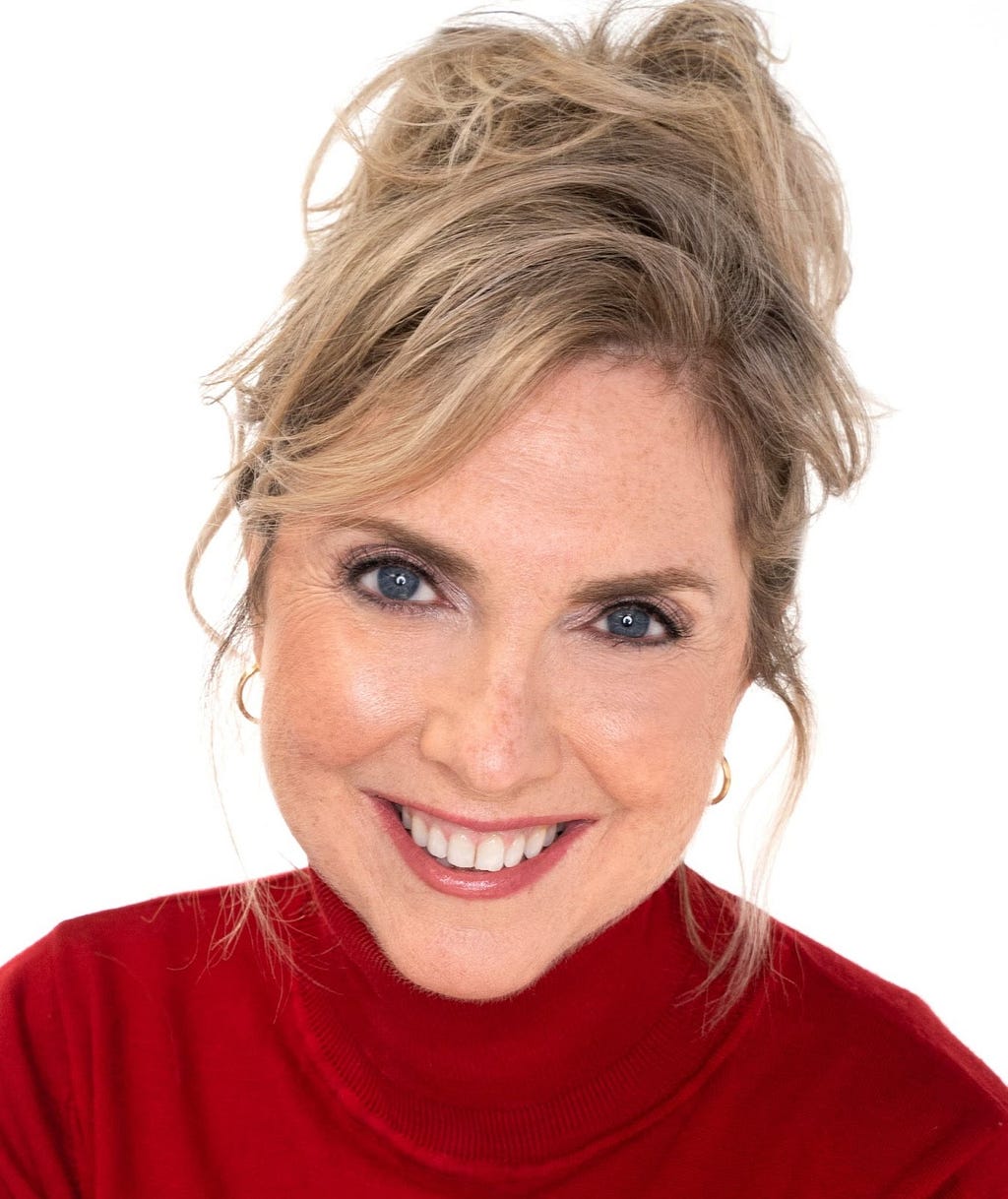
I had the pleasure of talking with Beth Caulfield, and it quickly became clear that her path wasn’t just unconventional; it was a series of sharp, unexpected turns guided by a force she simply calls “a God thing.” From a Fortune 500 executive’s chair to a church pulpit, and now to a director’s seat on a film set, Caulfield’s journey is a testament to reinvention. She’s not just a filmmaker; she’s a former corporate storyteller, an ordained minister, and a self-described “whistleblower” who helped split a major religious denomination. Now, she’s channeling all of it into her debut film, “Conceivable,” a story born from one of the most personal and surprising moments of her own life.
Her story begins in the Deep South, a childhood steeped in the unique spiritual landscape of Alabama. “I come from a humble background,” she explains. “My parents grew up in northern Alabama, and they raised me in the church.” But it wasn’t just one church or just churches in Alabama. The family moved around the country and between Methodist, Pentecostal, and Baptist congregations, creating a dynamic spiritual education right at home. “I grew up with theological things happening at the dinner table all the time,” she recalls, “which was a little head-spinning for a kid. But at the same time, it was good because it got me thinking about how important are these things and what does it mean to me?”
That curiosity didn’t initially lead to the pulpit. She headed to the University of Pennsylvania, an Ivy League athlete on the track team with dreams of becoming a newscaster. But a “vivid experience with God” in her junior year changed her trajectory. She pivoted, adding business to her communications degree and heading into the corporate world, with stints at giants like Honeywell and Lockheed Martin. She didn’t see it as a detour. “I believe that God was using that experience to hone my storytelling skills,” she says, “and just deepen relationships with people as I listened to the stories of others.”
She enjoyed the work but felt a persistent pull toward something else. After a terrifying health crisis with her husband, the couple reconnected deeply with their faith. They moved to France, and Beth began leading international Bible studies, creating a safe space where people from different backgrounds, curious about Christianity, could connect. She found power in seeing people from different walks of life “connecting through God… understanding the same small still voice.”
The call to ministry became undeniable. Back in the States, while raising her children and starting bible studies in prisons, she had a “vivid dream that called me to seminary.” She was in her early 40s. “I kind of went kicking and screaming, to tell you the truth,” she admits. “I was afraid of it and also afraid of dedicating more of my life to. But I can say that it was one of the richest experiences I’ve had.”
That experience led her into ordained ministry within the United Methodist Church, but it was far from a peaceful chapter. She spent over a decade witnessing what she describes as theological conflict, mismanagement, and abuses of power. This pushed her into an activist role, becoming a leader in a reform movement that ultimately fractured the denomination, leading to the creation of the Global Methodist Church. The ordeal was exhausting, and she processed it by writing a book called People Throw Rocks At Things That Shine: A Clergy Whistleblower’s Journey. “That is my ministry memoirs,” she says, “which is really in many ways a whistleblower book.”
After the denominational split, she planned to plant a new church, but another story was waiting to be told. “For fun I started writing,” she says. The story that emerged was her own: an unplanned pregnancy in her mid-40s while she was in seminary. “I started out thinking I would write a book about it, but it just kept coming to me as a movie.”
So, in another surprising pivot, she went back to the University of Pennsylvania, this time for a screenwriting course. The class, filled with students young enough to be her children, took place just months after the overturning of Roe v. Wade. Yet, they embraced her and her controversial topic, helping her shape the script that would become “Conceivable.” The experience itself felt like a ministry.
The film’s message is twofold. “The main faith message of the film is seek God and he will make your path straight,” she explains. Beyond that, the goal is “to raise awareness and compassion for women in unplanned pregnancies.” She insists the film isn’t meant to “inflame people on any side of any debate,” but to start a more enlightened conversation.
For Caulfield, all these disparate roles, mother, executive, minister, filmmaker, are interwoven threads of a single identity. Directing, she says, is “like being a mom on steroids,” a whirlwind of multitasking and decision-making. Her entire life has been a training ground. “I was made a storyteller,” she reflects, “and I have had diverse experiences to make me a better storyteller.” Now, with several more film ideas in the works, from a women’s sports story to a prison ministry drama, she is leaning into that identity, proving it’s never too late to find your voice, even if it takes a few lifetimes to get there.
You can sign up for showings and learn more about “Conceivable” at https://www.conceivablethemovie.com/ and follow the film on Facebook, Instagram and TikTok.
Yitzi: Beth, it’s a delight and an honor to meet you. Before we dive in deep, our readers would love to learn about your personal origin story. Can you share with us the story of your childhood, how you grew up, and the seeds for all the amazing things that have come since then?
Beth: Thank you so much. First of all, thank you for interviewing me and including this in the story. I come from a humble background. I’m from Alabama. My parents grew up in northern Alabama, and they raised me in the church. The church included different denominations: Methodist, Pentecostal, and a little Baptist in there, but with an emphasis on Christianity. That was important in their lives. I grew up with theological things happening at the dinner table all the time, especially with what they saw as major differences in those denominations’ theologies and doctrine and so forth, which was a little head-spinning for a kid. But at the same time, it was good because it got me thinking about how important are these things and what does it mean to me?
Yitzi: Please tell us the next chapter. Tell us how you became a reverend.
Beth: Well, it was not a direct story and not something that I ever thought I would be doing, which is usually the case. I was a student that was moved all over the place with my dad’s career. I went to the University of Pennsylvania, planning on becoming at first a newscaster or someone doing that kind of work. I had a vivid experience with God my junior year that caused me to change my major and go into business. I switched. I was in the Annenberg school of communications. I kept that degree but I added marketing and economics and went into the corporate world. There I believe that God was using that experience to hone my storytelling skills and just deepen relationships with people as I listened to the- stories of others. I enjoyed that work but always felt I was supposed to be doing something else. After a life-changing experience with a health issue with my husband, we reconnected with our faith. It was something we had put on the back burner; we reconnected with it and raised our children in the church. We moved to France in the early 2000s, and I began joining first just bible studies to learn a little bit more on my own about the faith. Then eventually, I became a leader in them and began becoming very involved in ministry. As I did that, and we moved back to the states, I was teaching men and women in bible studies through parachurch ministries, and we had folks from all different backgrounds. Including when I was in Europe, we had Jewish folks come to hear a Christian perspective. We were a safe place for people to come and explore and listen. We were always international and always connected interdenominationally, mostly 99% through the Christian faith. But what I found and was powerful for me was that people were connecting through God even though they had very different backgrounds, understanding the same small still voice. That was powerful for me. When we moved back to the states, I continued doing that, also beginning bible studies in men’s and women’s prisons. As my kids were growing, I thought, “Okay, now I can go back to work.” But as I was praying about it and coming up with all different ideas of what that would mean, I had a vivid dream that called me to seminary. I was in my early 40s when I did that. I kind of went kicking and screaming, to tell you the truth. Although I loved the idea of education, I was afraid of it and also afraid of dedicating more of my life to the world of vocational ministry. But I can say that it was one of the richest experiences I’ve had. That led me into ordained ministry.
Yitzi: So far we covered that you were a corporate executive, then an ordained minister. Tell us the next chapter of your story.
Beth: I spent over 10 years in the United Methodist Church. Part of that was focused not only in local church ministry but also working on a Bishop’s staff as an administrator. As I went through that journey, I became involved with a recognition of a split within our denomination, within the church. There were some theological issues that were going on. There were some concerns about mismanagement within the church, as well as some power abuses. I became a leader in reform in that. We ended up, and I don’t know how much detail of that you want, I’ll be happy to tell you more, but we ended up splitting the denomination, forming a new denomination called the Global Methodist Church. That was about three years ago. I’m one of the leaders in forming and setting up the doctrines and disciplines of that denomination. We have about 6,000 churches that have come out of the United Methodist Church as a result of that. So it’s a pretty significant split. It was an exhausting experience, and part of what was cathartic for me was writing a book about it and all that I had experienced and seen. That is my ministry memoirs, which is really in many ways a whistleblower book, and I call it that. It got a good bit of attention when it came out in May of 2022. It continues to get attention. But I’ve been very focused on church work. After that, I really thought that I would be called to just plant a new church for the new denomination. As I prepared for that, for fun I started writing. Just writing something fun. The story that really was important to me was one that is based on my own story. One that I had known that someday I would return to, which was an unplanned pregnancy when I was in my mid-40s with two almost-grown kids and in seminary. I started out thinking I would write a book about it, but it just kept coming to me as a movie. I decided to go back to the University of Pennsylvania and take a screenwriting course, which was very interesting because it’s a very secular school. I did that just a couple of months after Roe versus Wade was overturned. So it’s a heated topic, an unplanned pregnancy. But I wound up in just an amazing experience with all these kids in the school, who embraced me and really helped me in writing the script. I’ve felt that that experience alone was an amazing ministry. They learned a respect and an understanding of me and my faith, especially as a female minister, and the topic itself. From there, writing the screenplay, fast forwarding, I won a screenwriting contest, I met a studio head, I wound up making the movie, we completed the movie, and we are in the middle of launching it. As I have really gotten more involved with this topic… I never wanted to get into anything controversial. I just wanted to… I shouldn’t say it like that. I knew it was controversial, but I didn’t want to stay in an escalated state of it. But I believe I’m where I’m supposed to be in putting out a movie that is a conversation starter, that is not something that is intended to inflame people on any side of any debate, but to really help people consider something, especially through a faith lens.
Yitzi: What’s the message you hope viewers will take away after watching the film?
Beth: The main faith message of the film is seek God and he will make your path straight. No matter where you are if things aren’t your plan, right? Seek God and he’ll make your path straight. That is the faith message. The other goal of it really is to raise awareness and compassion for women in unplanned pregnancies, women, men, and entire families, actually. To raise the conversation around these topics to a more enlightened level as people really think about what it means. And to hopefully encourage others to want to invest in future stories like this, not necessarily about unplanned pregnancy, but ones that really take a critical theological eye to issues that may be controversial, but maybe it’s just we need to have more conversation around.
Yitzi: The film’s title is a very rich double entendre. What did you have in mind? What else do you want audiences to find in the word Conceivable?
Beth: So many things. When it first came to me, it was just simply that it is conceivable that an older woman can be conceivable and have a healthy baby. That’s part of it. And then that it’s just conceivable that a movie like this could be made. I have no filmmaking experience from the past, and it is really just a God thing that doors have opened the ways they have in this. My denomination is supportive of the ministry that I’m in. They have appointed me to this. It is amazing to me that we have, and this has not necessarily been the case for a while with particularly Protestant denominations, such support of the arts and recognizing the importance of the arts in cultivating faith and expressing it. So the opportunity to bring a team together to do this and the ministry that’s been within filmmaking itself, and the opportunities to enlighten others through it, as well as to help those with artistic gifts for filmmaking, whether that’s an actress or someone behind the camera or someone who does hair and makeup, to have the opportunity to encourage them and help them get into this work safely, which is another whole thing, is conceivable. And it’s conceivable because I’m doing it.
Yitzi: What can you share with us a story that most stands out in your mind from the whole process of writing the book or making the movie? What’s an amazing story that stands out in your mind from the process?
Beth: I constantly come back to, we all have our own journeys. When you make yours included as a journey of faith, and particularly if you make that the focus of your journey, there’s abundant life in it. I really believe that God knows, he knows every hair on our head, he knows how he made us, he knows what our passions are, and abundant life, which we talk about, comes through following that path. Mine has been very diverse in many ways, although I can look back and see how each experience has grown on it. But I think the story is that I was made a storyteller, and I have had diverse experiences to make me a better storyteller.
Yitzi: Amazing. Do you have other stories to tell? Other films that are in your bank ready to share?
Beth: I do. I don’t know how much I can share. I can tell you ideas. They’re definitely faith-based. They definitely… I’m drawn to topics that you can go a lot deeper with and not be afraid to do that, or to think that an audience can’t do that and it still can be entertaining. I have a women in sports movie that I am excited to write about. I have a prison ministry movie that is very much so based on my experience. I’m very excited about a period piece about the camp meetings, the Protestant, particularly Methodist camp meetings that happened back in the late 19th century, and again, some of the female leadership in it. Those are three that I just can’t wait to finish.
Yitzi: Do you see yourself as a filmmaker, as a director of films, or as a director of people?
Beth: That’s a good question. I see myself called to disciple-making, like many people. I feel joy in the filmmaking part of it, and people ask me which part of it do you like best. I’ve always been a writer. I like writing. The directing and producing parts have been newer for me, but the directing has been very satisfying, also very humbling. There’s a lot that goes into it. They’re very different experiences. Then the producing part is just tough. That’s the business side of the whole thing, and that’s probably my least favorite. On the other hand, there are a lot of incredible things that happen with that, and then there are God stories with all of it. I’ve shared a little bit about the writing of the script with the university class. But on set filming, being able to minister to people, give them their first bibles, have communion, pray with people, has really been just as wonderful as being the director making all the decisions as fast as possible all day long, which is very different than sitting in my office, just me and the computer writing. I’ve enjoyed both of those experiences. One of the things I should mention is as the movie comes out, I also am releasing a book that is about the ministry within and behind the scenes of the making of the movie, which will be out as well with Abundance books. I’m excited about just sharing some of the things you and I are talking about, but more in-depth. Of just all the amazing things that go on in it. The focus of the book is both to share with those who want to know a little bit more. In fact, I’m including the director’s cut of the script, which has more to it than the movie itself. But I’m also including kind of walking someone through that, “Hey, if you want to do this, if I could do it, you could do it. If God is in it, here’s all the things you have to do.”
Yitzi: I think you know that you’re unique being a minister, a woman, a mother and a filmmaker. How do you think they uniquely shape your perspective as a storyteller and as a filmmaker?
Beth: Yeah. Thank you. I see them all related. Sometimes I think of being a director, I’ve said this before, is like being a mom on steroids. It’s because you’re making all these decisions at once and coordinating and multitasking. But it’s definitely… I definitely see how those mothering skills have helped me in this piece. The storytelling part as well, when I think about from being a mom, raising kids and teaching them something, to being in the corporate world and, telling, listening to the stories of others and making sure I get the story straight and then being able to represent the corporation with stories. Those were important experiences for listening and then building upon. Next I spent years in the pulpit telling what we refer to as the greatest story ever told (of Jesus Christ). Refining telling that story has all built into the filmmaking part.
Yitzi: What’s been the most challenging project or role you’ve taken on so far and why?
Beth: Yeah, I think it’s at this point, it is the distribution of the film. It is a challenging time for movies out there, particularly for independent films. That’s for a number of reasons. Part of it’s the economy. Part of it is the world changed with Covid as far as viewing habits. Part of it is the technology that has changed so much. The other part is just being a female. It’s still a very male-dominated industry, and when you look at faith-based in particular, while we have gotten better at telling women’s stories, most of them are still told by men. That is probably the most challenging. There is a lot, as you’ll hear anyone involved in the arts talk about, a lot of rejection. A lot of it. I can look back at previous rejections in my life and I can thank God for them now because they have been very preparatory for this. This is a whole new level of it.
Yitzi: Which part of your story do people never ask you about but you wish they would?
Beth: Well, you just asked a good question about that. I think it’s probably more about the support of my family, how on board they are with this, and whether there are times when it doesn’t work for our family. There’s a lot of that that comes through ministry as well, as you know, Rabbi. But the importance of how that plays into everything is something people don’t often ask about. The other thing is how you maintain faith and what your spiritual disciplines are. Those are still the most important things that I’m involved with.
Yitzi: This is our signature question. You’ve been blessed with a lot of success now. Looking back when you first started your career, can you share five things that you’ve learned now that would have been so nice to know when you first started?
Beth: As you have pointed out, we’re all made uniquely. Having the courage to live into who you are. So probably the first would be figuring out who that is, right? I think that I don’t know that I really understood that for a number of years. The second, rather than trying to fit into a mold, is embracing myself. Those are the two biggest. The third would be patience and a recognition of waiting on God. Waiting on God on that. I think I could have saved myself a lot of worry. Don’t get me wrong, I still need that patience and I still have those issues. But at least I can recognize them and recognize the importance of it. If I could go back and tell myself, “Look, you are going to go on a journey and it’s not going to be easy, but it’s going to broaden and strengthen you,” and hang in there.
Yitzi: Can you share some of the self-care routines that you use that help your body, mind, and heart to thrive?
Beth: Oh, that’s a good one. I’m a kinetic person. I don’t know if you could tell, but I’m moving around. I was always an athlete and I continue to work out. I play tennis. There’s tennis in the movie, actually. I played tennis this morning. I love it as a… I think it’s a lifelong sport, and I do think that it’s important that our bodies are our temples and we should take care of them. That is very important. The spiritual disciplines: praying, worshiping both by yourself and in community, reading your bible, fasting, praying (if I didn’t say that already), but all the spiritual disciplines are so important, as well as what I will refer to as a Methodist, social holiness. Social holiness means staying in community with people, and as more of an introvert, sometimes that’s hard for me, but staying in community. That includes being aware and a force for social justice, standing up when it’s important. I do think that that is an important part of our health as well. The community piece, I think particularly in the environment we’re in now where everybody is so polarized and divided, it is an important part of our health to fight against that.
Yitzi: Because of your amazing work and the platform that you’ve built, you’re a person of enormous influence. If you could put out and spread an idea or inspire a movement that would bring the most amount of good to the most amount of people, what would that be?
Beth: As a person of faith, I think that that movement would be one of people coming together in discussion. We don’t all have to agree. There’s richness in not agreeing. I love the midrash and everything about your faith on those things. We need to get back to that as people beyond the faith world. I do believe people of faith are the ones who are supposed to lead that.
Yitzi: I think there’s a crisis of a lack of purpose, a lack of meaning today. So many people are so thirsty, for meaning and purpose and direction. People are so confused. What could we do to bring more a sense of purpose and meaning to humanity?
Beth: Yeah. I really do think that it comes back, and here I get very Christian on you, I do believe that there is an answer in Jesus Christ and learning not only about his teachings which are so important, but really embracing and believing that we’re loved and that God has not left us alone. That to me is the ultimate solution. I think there are many ways that the Holy Spirit leads us to God to understand those things, and we shouldn’t focus so much on the path, but in the recognition of if we have faith, he will take us to the truth. There is peace and joy. When I went back to… I use abundant life because that comes out of a scripture verse, John 10:10, that that’s what we were created for, and God has not given up on any of us. No matter how much we’ve messed up this world, there is hope.
Yitzi: It’s been such a delight to meet you. How can our readers watch the film? How could they support your work in any possible way? How could they support you in any possible way?
Beth: Sure. Thank you. Well, the first is, follow us on social media. It’s Conceivable the movie. Also on our website, Conceivablethemovie.com, you can sign up to follow for when the film is released. You can also… we are doing pre-release showings right now with pregnancy centers, churches, other ministries, and so forth, that are special releases for communities to use as educational tools, fundraisers, and entertainment nights. Those also are very helpful for me as we are shaping the marketing and raising funds for the marketing of the film itself. As we prepare for theatrical release, the only thing really that is not in place completely are all the funds to make sure that we do the marketing the right way.
Yitzi: Wonderful. Beth, I wish you continued success with good health and blessings. You as well. Hopefully we can do this again next year.
Beth: Sounds good. Thank you, Yitzi.
Beth Caulfield on “Conceivable,” Faith in Filmmaking, and Turning a Whistleblower’s Journey Into… was originally published in Authority Magazine on Medium, where people are continuing the conversation by highlighting and responding to this story.