Jaclyn Tracy on Building Sistain, the World’s First Non-Toxic Home Goods Marketplace and the Power of Conscious Consumerism

“Sistain stands for Sisters in Sistainability. A lot of people think I founded it with my sister. I’m actually the solo founder. I do have two sisters, but I named it Sistain because women hold 80% of all consumer buying power. To me, that means we have the power to be the decision-makers… We can create change by demanding it, by using our purchasing power, and by voting with our dollar.”
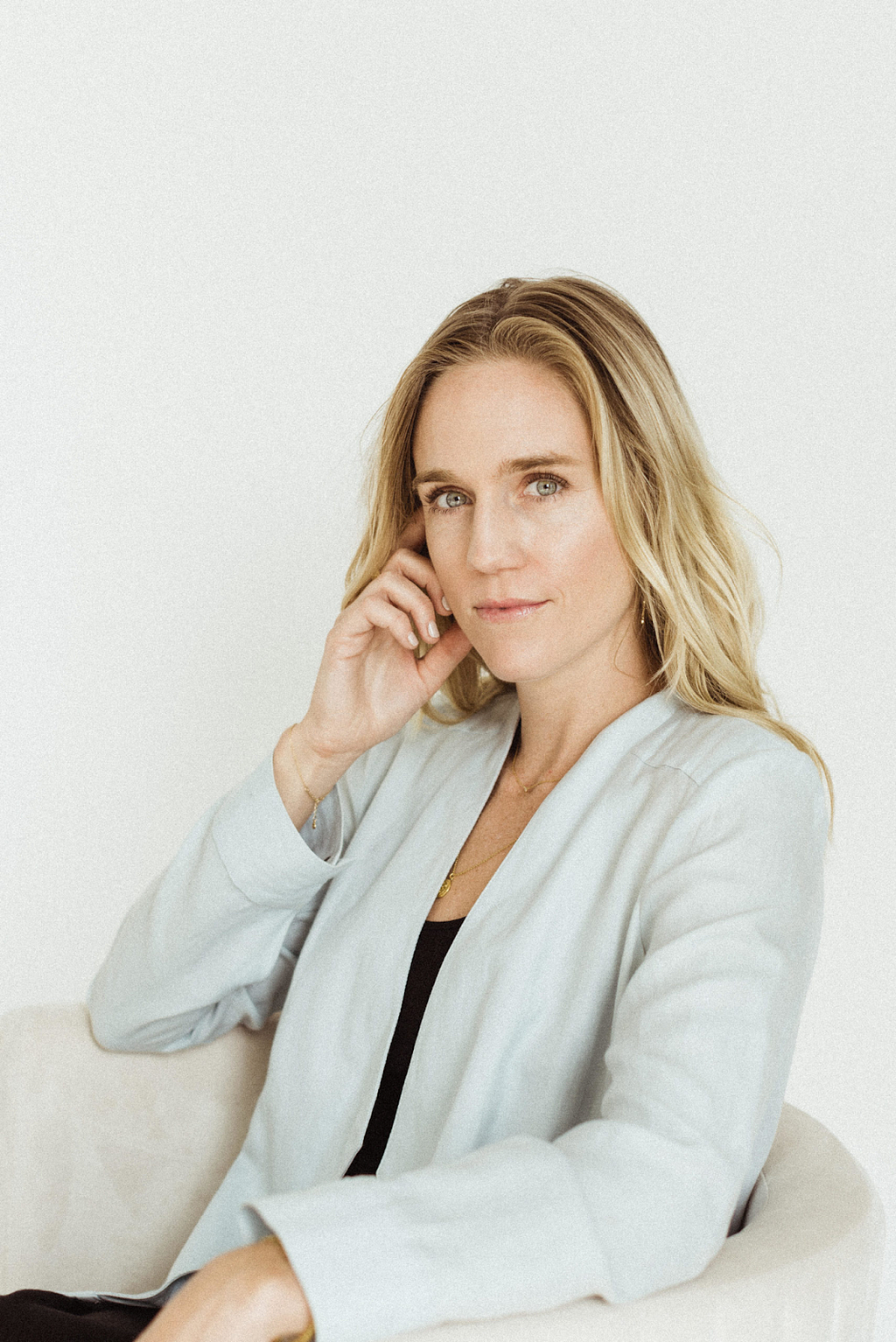
I had the pleasure of talking with Jaclyn Tracy. Jaclyn grew up in Illinois in what she calls a “pretty average American household,” but the path her older brother chose would push her to look at the world differently. While she was moving through high school and later studying sociology in college, her brother was hopping trains, living under bridges, and immersing himself in the Back-to-the-Land movement. He eventually settled with his family in a one-room cabin, living off-grid with permaculture gardens, an outhouse, and no running water.
His choices made her question her own surroundings. “He was the one who pushed me to start questioning things,” she recalled. “He made me think about all the plastic we used on campus and challenged the broader American culture and how disposable everything had become.”
Those conversations planted the seeds for Sistain, the company Tracy went on to found years later. Her professional path began elsewhere, in advertising and politics, where she built experience at agencies like Leo Burnett and Epsilon and worked with brands such as Clif Bar. But the moment that crystallized her business idea was far more personal: while creating her wedding registry.
As she researched household goods, Tracy said she was struck by how opaque the industry was. “Why is it so difficult to figure out what these products are truly made of?” she asked. Studies she encountered showed that 10 chemicals known to harm human health contaminate more than 90% of household dust samples, and that indoor air can be many times more polluted than outdoor air. “We’re bringing these products into our homes, and they’re actually toxic,” she said.
From that realization came Sistain, which she describes as the world’s first non-toxic home goods marketplace. Launched as both an e-commerce site and an educational hub, it operates on what she calls the “Sistain-approved” verification process. Brands are vetted through thousands of chemical reviews, materials analysis, and direct confirmation to ensure that harmful substances are not present. Tracy sees transparency as central to the company’s mission. “I love when customers ask hard questions it helps us to further refine our verification process,” she said.
Sistain’s name, she explains, is shorthand for “Sisters in Sistainability,” a nod to the fact that women hold the majority of consumer buying power. “We have the power to be the decision-makers,” she said. “That’s where real influence lies. We can create change by demanding it, by using our purchasing power, and by voting with our dollar.”
Tracy’s approach is as much about design as it is about health. Her brother’s way of living, she notes, leaned into a rugged, secondhand aesthetic, which she respects but doesn’t see as widely accessible. “Most Americans aren’t going to live like that. I don’t want to live like that either,” she said. Sistain aims to offer products that are safe but also visually appealing, modern, high in quality and suited to a range of homes.
The company’s reach has extended beyond digital platforms. It has hosted collaborations with vintage curators and tested retail strategies via pop-up storefront in Denver. Tracy has also expanded Sistain’s offerings to include categories like non-toxic rugs, cookware, cleaning products and most recently the non-toxic baby category, while producing guides that highlight safer options even when they are not sold directly on the site.
Tracy is quick to point out the areas where she believes stronger regulation is needed. She cites three categories in particular: plastics, cookware, and cleaning products. Each, she argues, has daily contact with families yet often contains materials that can harm health. From microplastics shed by sponges and cutting boards, to chemicals leaching from nonstick pans, to hormone disruptors in conventional cleaning supplies, she sees gaps in oversight that she believes government agencies should address. “These are things you interact with every day, and they can be truly harmful to your family if you don’t start making changes,” she said.
Her views on regulation extend beyond the home. She notes that toxic materials do not remain confined to individual households. Forever chemicals, or PFAS, end up in soil and waterways, creating broader community impacts. “It’s not just an individual choice,” she said. “It doesn’t just affect you or your family. It has a much broader impact on the whole community.”
Europe, she argues, offers a model worth looking at. The region restricts thousands of chemicals not regulated in the United States, setting higher standards in textiles, hair care, and household goods. Tracy said her own verification process incorporates European benchmarks.
Tracy balances her advocacy with pragmatism. She rejects the notion of “zero waste” as unrealistic, instead urging incremental progress. She often uses the phrase “imperfect progress” to describe both her personal philosophy and the way Sistain approaches consumer education. “Just asking, is there a better option?” she said, is a meaningful step.
Now based in Colorado and recently a new mother, Tracy continues to expand Sistain’s reach. She has set her sights on scaling category offerings, pursuing B Corporation certification, and building give-back programs. Asked what movement she hopes to inspire, she returned to the simple act of consumer questioning. “If we all started asking ‘Is there a healthier, better option?’, then the market will shift.”
For Tracy, the work remains both personal and practical: creating a marketplace that allows people to live in healthier homes without feeling overwhelmed, while proving that sustainability can be woven into modern life without losing comfort or design.
Yitzi: Jaclyn Tracy, it’s a delight and an honor to meet you. Before we dive in deep, our readers would love to learn about Jaclyn Tracy’s personal origin story. Can you share with us the story of your childhood, how you grew up, and then the seeds for all the great things that have come since then?
Jaclyn: It’s so great to meet you. I grew up in the Midwest, in Illinois. The inspiration behind Sistain really started with my brother. He lives off-grid, and while I grew up in a pretty average American household, my brother took a very different path.
He explored a lot, he hopped trains for a while, lived under bridges, and eventually started studying the Back-to-the-Land movement, which ties into the Native American roots of this country. He ended up living off-grid with four children in a one-bedroom cabin for a long time. I mean, it had only a stovetop, an outhouse, permaculture gardens, all of that.
When I was in high school and college, he was the one who pushed me to start questioning things. He made me think about all the plastic we used on campus and challenged the broader American culture and how disposable everything had become. He really inspired me.
After that, I worked in advertising and politics. The idea for Sistain came when I was building my wedding registry. I had already been thinking about how to shop secondhand, waste less, focus more on the planet, and live a healthier lifestyle. But as I was doing all this research for my own registry, I realized the home goods space had been completely overlooked from a non-toxic and sustainability perspective.
I thought, “Why is this so hard? Why is it so difficult to figure out what these products are truly made of?” Even today, if you’re shopping for furniture, it’s hard to know what materials or chemicals are used unless you contact the company directly. That really became the mission.
As I dug deeper into the household goods space, I learned that ten chemicals known to harm human health contaminate more than 90% of household dust samples. That blew my mind. I found out the air inside your home can be up to 100 times more polluted than the air outside. It was shocking. We’re bringing these products into our homes, and they’re actually toxic.
From furniture to cookware to cleaning products, it’s kind of the wild west. The household goods industry isn’t regulated like other categories. So when I thought about building this company, I knew I wanted it to be transparent.
Even now, I love when customers ask questions. Sometimes they’ll ask something and we’ll realize we haven’t asked the brand that question yet. So we’re always updating our methods. We created the Sistain-approved verification process, where we review thousands of chemicals, analyze materials, and get direct confirmation from brands to ensure none of those toxic chemicals or ingredients are used in the products we sell.
I think it’s incredibly important. I just had a baby four weeks ago.
Yitzi: Congratulations!
Jaclyn: Thank you. We live in a world that’s more toxic than ever, because of pesticides, chemicals in household products, all of it. For the health of our families and our homes, it’s so important to understand what things are made of.
So that’s really the story. It started with my brother being the inspiration, and then my own curiosity. I studied sociology, and I’ve always believed it’s important to ask questions rather than just accept the products, brands, and habits passed down from our parents’ generation.
Yitzi: It’s such an amazing story, and you’re an amazing storyteller. First of all, the name Sistain, the way it’s spelled, is unique. What was the idea behind that spelling?
Jaclyn: Sistain stands for Sisters in Sistainability. A lot of people think I founded it with my sister. I’m actually the solo founder. I do have two sisters, but I named it Sistain because women hold 80% of all consumer buying power.
To me, that means we have the power to be the decision-makers. I share that with people all the time, never forget how much power you have as a consumer. That’s where real influence lies. We can create change by demanding it, by using our purchasing power, and by voting with our dollar.
Yitzi: Love it. So tell us about the unique features of Sistain. How are you different from other relatively similar organizations?
Jaclyn: I’d say number one, we’re the world’s first non-toxic home goods marketplace.
There are a lot of other marketplaces that tackle things from a sustainability perspective, but they don’t cover the same range of categories we do. For example, think of Grove Collaborative, it doesn’t include things like non-toxic rugs, which we just added. That’s really important to me, especially as a mom. My baby’s crawling on that rug, and I want to know it hasn’t been treated with toxic chemicals.
That was the big “aha” moment for me, realizing this didn’t exist and needed to.
Another thing that sets us apart is our Sistain-approved verification process. We do a massive amount of research. We’ve built out extensive databases and ask brands very specific questions before we add them to the marketplace to ensure their products are healthy and safe for families. That’s the most important piece for me and what makes me so excited about what I do every day.
The second unique element is our focus on curation and design. When I think about my brother living off-grid in the woods, he really only shops secondhand. They have that more rugged, hippie lifestyle that a lot of people associate with sustainable living.
But that’s extreme, and most Americans aren’t going to live like that. I don’t want to live like that either. I love the comfort of my home, and I want it to feel good from a design perspective. That’s really important to me.
So with Sistain, our curation has always focused on offering high-quality, beautiful home goods that don’t have that stereotypical “hippie granola” look. If you browse our site, you’ll see modern, well-designed products that fit into different interior design styles.
We also have a strict feedback policy. If a product receives more than two complaints, we investigate and usually remove it. So quality, design, and the desire to actually bring these items into your home are all core to what makes Sistain different.
Yitzi: You mentioned resale and secondhand. Do you also focus on that?
Jaclyn: I personally do. I’ve done collaborations with vintage curators. We had a couple of pop-up retail stores last year in Denver, and we did two or three collaborations with vintage curators. It’s a whole other beast, so I haven’t tried to dabble in that myself. I’m such a proponent of mixing new and old, I think that’s so fun. But we don’t carry vintage ourselves. I highly recommend secondhand clothing, and even furniture. Facebook Marketplace is great, and there are tons of really cool vintage curators out there. For babies, there’s a site called GoodBuy Gear that my friend Kristen runs. That’s a secondhand store for baby items. I highly recommend all of that, but we mostly try to do collaborations with other brands in that space because it’s a whole other beast from a business model perspective.
Yitzi: Is your brother at all involved in what you do? Is he proud of what you’re doing?
Jaclyn: Yeah, he and his wife are definitely very proud of what we’re doing. They’ve ordered some of our sustainable swaps like the beeswax wrap and things like that. But I think what means the most is that they’re the inspiration behind it. They’ve talked about how cool that is. But he’s not involved from a business perspective or anything like that.
Yitzi: As an insider, you understand all that goes into household products. You also know what you’re trying to avoid. If you had the power to create something like an FDA or USDA for household products, what would you want to control or regulate? If you had the power to make a change, where would you focus your energy?
Jaclyn: There are really three categories that come to mind right away. It’s actually what I recommend everyone think about and consider removing from their home. The first is plastic. You want to interact with it as little as possible. It’s not going to be removed entirely because we’re a very plastic-reliant culture, and there are certain things that just aren’t going away. So it’s not realistic to aim for zero plastic.
Even the whole “zero waste” phrase has always felt off to me. It’s just not realistic. But I would say remove as much plastic from your daily life as you can. There are lots of replacements out there, we sell many of them, like dishwashing products made from plant-based materials, bamboo, and natural sponges.
Think about it. You’re cleaning your dishes, and if you’re using a plastic sponge, it sheds microplastics onto your clean dishes, and then you’re eating off of those. The same goes for plastic cutting boards. When you cut on them, they shed microplastics, and your family ends up consuming them.
We already have a spoonful of plastic in our bodies, according to scientists. That has all kinds of health impacts, cardiovascular issues, gut health, fertility. The science is very clear now. So I would say eliminate as much plastic as you possibly can in terms of daily use.
The second category is cookware. It’s really important to have healthy, safe cookware. We sell cast iron, which is amazing. It’s healthy, and people have been cooking on it for hundreds of years.
I always recommend getting rid of all nonstick cookware, any kind. Even the newer brands that claim to have healthy nonstick coatings won’t disclose what’s actually in those coatings. They’ll say “ceramic coating,” but if you ask what materials are used, they won’t tell you.
So I don’t think any nonstick is safe. As soon as it gets scratched or damaged, it can leach chemicals, aluminum, or other harmful substances. Instead, go for stainless steel, 100% ceramic (not ceramic-coated), brands like Xtrema, glass cookware, and carbon steel. It’s about going back to the basics.
I had to teach myself how to cook on stainless steel, how to cook eggs without nonstick, and it’s actually really easy. There are tons of short YouTube videos that show you how.
The third category is cleaning products. That’s another really important area to evaluate. Start with the basics, like hand soap and whatever you’re using to wipe down your counters, spray in your bathtub, or clean your home in general.
Most of the brands our parents used, Windex, Clorox, and others, are very toxic. They’re not good for your health. If you look at the ingredients, it’s overwhelming. You need a science degree just to understand them.
So I recommend looking at ingredients and choosing products where you actually understand what’s in them. We sell Koala Eco, which has every certification you’d want in a cleaning product brand. I use it for my baby’s laundry, in our shower, it’s really safe. Another brand I recommend is Branch Basics. It’s fragrance-free, and we use that all over the house too.
Those three things, plastic, cookware, and cleaning products, are what I wish the government had stricter regulations on. These are things you interact with every day, and they can be truly harmful to your family if you don’t start making changes.
Yitzi: Can you articulate what kind of harm we’re talking about?
Jaclyn: With nonstick cookware, like I mentioned, there’s the leaching of different chemicals. Some nonstick still contains forever chemicals, especially if it’s older. These are called PFAS, and they’re really dangerous. They don’t break down in your body, that’s why they’re called “forever chemicals”, and they’re just incredibly unhealthy.
With cleaning products, there are a lot of hormone disruptors in many conventional brands. These have been linked to fertility issues, respiratory problems, and other health concerns.
Then with plastic, if you look at the data, it’s very clear. Like I said earlier, plastic is linked to cardiovascular issues, fertility problems, and gut health disruption. Now, there are studies correlating plastic found in the brain with higher rates of dementia. The more plastic found in the brain, the more likely someone is to develop dementia. And studies on this are coming out every single day. I wouldn’t be surprised if, soon, we see links between plastic exposure and Parkinson’s, more types of cancer, and other major health conditions.
That’s why I focus on those three categories, plastic, cookware, and cleaning products. And I’m happy to send you a few scientific papers if that would be helpful.
It’s just wild what we’re allowed to put into household products. There’s almost no regulation around it. Another thing that comes to mind is candles. Many contain paraffin, which is derived from crude oil, and then you’re burning that inside your home. I hear from customers all the time who used to buy candles from places like Anthropologie, Nordstrom, or Target, and they experienced headaches or respiratory issues.
It’s just not safe, especially not for newborns. It blows my mind that these kinds of ingredients are allowed in everyday products. That’s why we ask the questions we do and dig into this information.
Take a brand like Soapply, for example. We sell their hand soap, and if you read the ingredient list, they’re all things you could literally eat. I wouldn’t recommend it, it wouldn’t taste good, but it’s that clean.
Someone recently asked me what I hope for the next generation from a consumer perspective. And honestly, I just hope our entire culture moves back toward using natural materials and natural ingredients. Instead of relying on all these synthetic chemicals, which might make household goods last longer, like how plastic doesn’t break down for 450 years, we need to think about our health.
I really hope we can all start prioritizing products made from natural ingredients, where we can actually understand what’s in them. We need to trust what’s in our household goods, for the safety of our families and ourselves.
Yitzi: Is there another country in the world where you think there’s a better model for how they regulate? What do they limit?
Jaclyn: I would say Europe in general. I wouldn’t point to one specific country, but Europe overall regulates thousands and thousands of chemicals. That’s actually part of our verification process, we use European standards. We also look at products made in Europe, like textiles, and I already know they’re going to be safer because of how many chemicals are regulated there. They restrict chemicals that are still allowed in other parts of the world.
Europe just has a higher standard when it comes to regulating toxins. For example, I go to a hair studio called the Organic Salon. They use European hair color specifically because of the restrictions on chemicals. The chemicals used in American or Asian products just don’t have the same standards. They tend to have much higher levels of toxins.
So yeah, Europe is definitely safer from a product perspective.
Yitzi: So let’s say a cynic argues, “We’re a land of freedom. People should be free to choose whatever they want, even if it might be harmful.” How do you respond to that?
Jaclyn: I think that, from a political perspective, the products you buy for your home have a communal impact too. When we throw them away, take PFAS, for example, the so-called “forever chemicals”, they don’t just disappear. Colorado actually has higher levels of them in the water. That’s why the state has started regulating them. California has too, along with one other state.
I’m really thankful to be in Colorado because they’re taking action on this. But PFAS are still on a lot of consumer products, hiking shoes, raincoats, things like that. When you buy those items and eventually throw them out, or even just wear them, they release PFAS into the environment around you.
That’s really the core of my argument for regulation. It’s similar to pesticides, you might spray them in your yard, but they end up in your neighbor’s yard too. It’s not just an individual choice. It doesn’t just affect you or your family. It has a much broader impact on the whole community.
Yitzi: It’s a great answer. I could talk to you for hours, but I want to respect your time. Jaclyn, because of your amazing work and the platform you’ve built, you’re a person of enormous influence. If you could put out and spread an idea or inspire a movement that would bring the most good to the most people, what would that be?
Jaclyn: It would be what we’re doing. I’ve been asked what our measure of success is, and I often think about how I get messages all the time saying, “You’re in my head now. I’m asking, is there a better option?” I think that’s such a great place to start, just asking, is there a better option? Is there a healthier option for me, my family, and my community that I can choose from a consumer perspective? Because it comes back to the idea that we have so much consumer power. We control the market, especially women. And if we all started asking that, “Is there a healthier option?”, then the market will shift. That, I think, will be the greatest impact we can have.
Yitzi: Wonderful. Jaclyn, how can our readers continue to follow your work? How can they purchase from Sistain? How can they support your work in any possible way?
Jaclyn: Follow us on Instagram, that’s where we’re the most active. Our handle is just @sistain, spelled S-I-S-T-A-I-N. Our website is thesistain.com, so check that out. We have tons of resources and guides. We sell thousands of non-toxic home goods, but we also write guides about products we don’t even sell, ones we just highly recommend. So yeah, check out our guides, check out our marketplace. And I have a podcast as well, The Sistain Podcast, on Spotify, Apple Podcasts, or wherever you get your podcasts.
Yitzi: Jaclyn, it’s been such a joy to meet you. I wish you continued success, good health, and blessings, especially to your new baby. More power to you. You’re doing amazing work, and I’m so impressed. I hope we can do this again next year.
Jaclyn: Yeah, that would be wonderful. Thank you so much, Yitzi.
Jaclyn Tracy on Building Sistain, the World’s First Non-Toxic Home Goods Marketplace and the Power… was originally published in Authority Magazine on Medium, where people are continuing the conversation by highlighting and responding to this story.