

…Being a loud introvert is okay. So often, we hear that introverts have to be quiet. I’ve seen so many books with the word “quiet” in the title, and I want to say not all introverts have to be quiet. In fact, when introverts are incredibly passionate about what they like and what they do, which is something I feel very strongly about, you can absolutely be a loud introvert. … So I want to encourage you, if you care about something, you don’t need to fall into the stereotype of being quiet. And if you’re loud about what you like, that doesn’t automatically make you an extrovert. You can still be an introvert, just a passionate one…
I had the pleasure of talking with Goldie Chan. Goldie grew up in the Bay Area at a time when Silicon Valley was only beginning to stretch its influence beyond the tech world. Raised between Oakland’s Chinatown and the wider city, she remembers the neighborhood as a place where cultures mixed as easily as flavors at a soul food joint. “I spent a lot of time in Oakland Chinatown, eating great Chinese food, but I also spent time in Oakland itself, which has its own vibrant culture, lots of soul food and a really diverse, interesting community,” she said in our interview.
That mix of tradition and experimentation shaped her perspective. The Bay Area was a place where technology crept in almost quietly, influencing daily life before anyone realized its global impact. “Growing up there, it was amazing to see how technology and what we now know as Silicon Valley started to come into existence,” she recalls.
Her path, though, didn’t begin with social media strategy or keynote speeches. After earning a biology degree from Stanford, Chan was faced with choices that didn’t neatly fit the mold. She had an offer from a prestigious HIV lab, an internship with a music label in New York, and the chance to design for a startup. Instead, she took a leap in an entirely different direction: launching her own fashion company. The venture lasted a few years before closing, leaving her at 22 convinced her career might already be over.
Friends staged what she calls a “friendvention,” pushing her to take any job that got her out of the house. That job ended up being as a marketing assistant at a startup. “It wasn’t strategic at all. I hadn’t studied it, I just did it because it was the first in-house job with health insurance that would hire me,” she says. What began as survival work turned into a decade-long career in marketing and branding.
The real turning point came when Chan started posting daily videos on LinkedIn. What began as an experiment transformed into a defining moment. She recorded over 800 consecutive videos, carving out space in a professional network that wasn’t known for personality-driven content. Recognition came quickly. A Huffington Post profile I wrote dubbed her the “Oprah of LinkedIn,” a title she initially resisted but that stuck. “At the time, I honestly was a little embarrassed. I thought, ‘Oh my gosh, people are going to think I’m trying to make this happen.’ And then the funniest thing happened, it stuck,” she says.
Her visibility led to the founding of Warm Robots, a social media strategy agency that has worked with brands including Adobe, Microsoft, and Lego. She also began speaking at conferences around the world, sometimes in unexpected places. She remembers standing on stage in Romania and realizing she had crossed into new territory. “I thought, ‘Oh my goodness, I can now say I’m an international speaker.’ Because I was, quite literally, speaking outside the U.S. That was such a special moment for me.”
Forbes became another platform where she expanded her reach. What began with mentorship opportunities turned into a senior contributor role, where she wrote about branding and storytelling in the digital age. Along the way, she picked up awards and found herself increasingly called upon for on-camera commentary.
Her public story hasn’t been defined by work alone. In 2022, Chan was diagnosed with cancer, a diagnosis she shared openly with her audience. Now cancer-free, she says the decision to be public about her health journey was intentional. “So many people have reached out privately to tell me about the shame they feel or their fears about how it might impact their careers if they speak up,” she says. Her openness was meant to show that survival and success aren’t mutually exclusive.
Her first book, Personal Branding for Introverts, set for release in October 2025, brings together much of what she’s learned over years of creating content, building strategy, and navigating the world as someone who identifies as both introverted and anxious. It’s a book meant less as a checklist and more as a conversation. One early reader described it as “a friend sitting her down and gently saying, ‘Why don’t you try this? Have you thought about trying that?’” Chan says that reaction was exactly what she hoped for.
The book is also accompanied by details that reflect her approach. She hired an Asian American narrator with what she describes as “the most soothing, calming voice,” opting not to record it herself. She also partnered with Epidemic Sound to produce a lo-fi soundtrack designed for introverts, something to play in the background while reading or studying.
When she talks about introversion, Chan says introverts are more internally focused, often recharged by solitude rather than social gatherings. She laughs at the stereotype that introverts are always quiet. “When introverts are incredibly passionate about what they like and what they do, you can absolutely be a loud introvert,” she says. It’s part of the guidance she gives in her book. Together with taking micro-breaks, stacking opportunities, finding online communities, and partnering with extroverts, Chan encourages introverts to embrace the possibility of speaking up when it matters.
Not all of her stories are glossy. She remembers hiding in the garden at the British Prime Minister’s residence during a business meeting because she was overwhelmed, and later finding comfort from a stranger on the London Tube when she was on the edge of a panic attack. These moments, she says, are reminders that introverts can thrive but also need space to recharge.
Today, Chan continues to divide her time between client strategy, writing, and speaking. She has booked events as far ahead as 2026. Looking forward, she often returns to a simple mantra: “create with courage.” For her, it’s less about originality and more about the willingness to share. “So many people are afraid to put themselves out there. They don’t feel like they have permission,” she says. “What makes an idea original is your story, your personal journey and expertise.”
Chan makes her home in Los Angeles, where she splits her time between running her agency, speaking on global stages, and writing. Across formats — videos, talks, or even a lo-fi soundtrack for introverts — she returns to the same idea: that stories have power, and that courage in telling them can unlock new paths.
Yitzi: Goldie Chan, it’s such a delight to talk to you again. Before we dive in deep, our readers would love to learn about Goldie Chan’s personal origin story. Can you share with us a story of your childhood, how you grew up, and the seeds for all the amazing things that have come since then?
Goldie: I want to say that one of the things that really shaped who I am as a person is that I grew up in the Bay Area, in Northern California. And now I live in Southern California, so I haven’t moved too far.
When I was growing up in Northern California, one of the things that really moved me was spending so much time living between cultures and different spaces. I spent a lot of time in Oakland Chinatown, but I also spent time in Oakland itself, which has its own vibrant culture, lots of soul food and a really diverse, interesting community.
The Bay Area in general is such a wonderful melting pot of people. Growing up there, it was amazing to see how technology and what we now know as Silicon Valley started to come into existence. You’d see it in all these subtle ways, in how technology was integrated earlier on, how social networks got their start and gained traction there.
I have so many fond memories of wandering around Oakland, Chinatown, eating great Chinese food, and just spending time with loved ones..
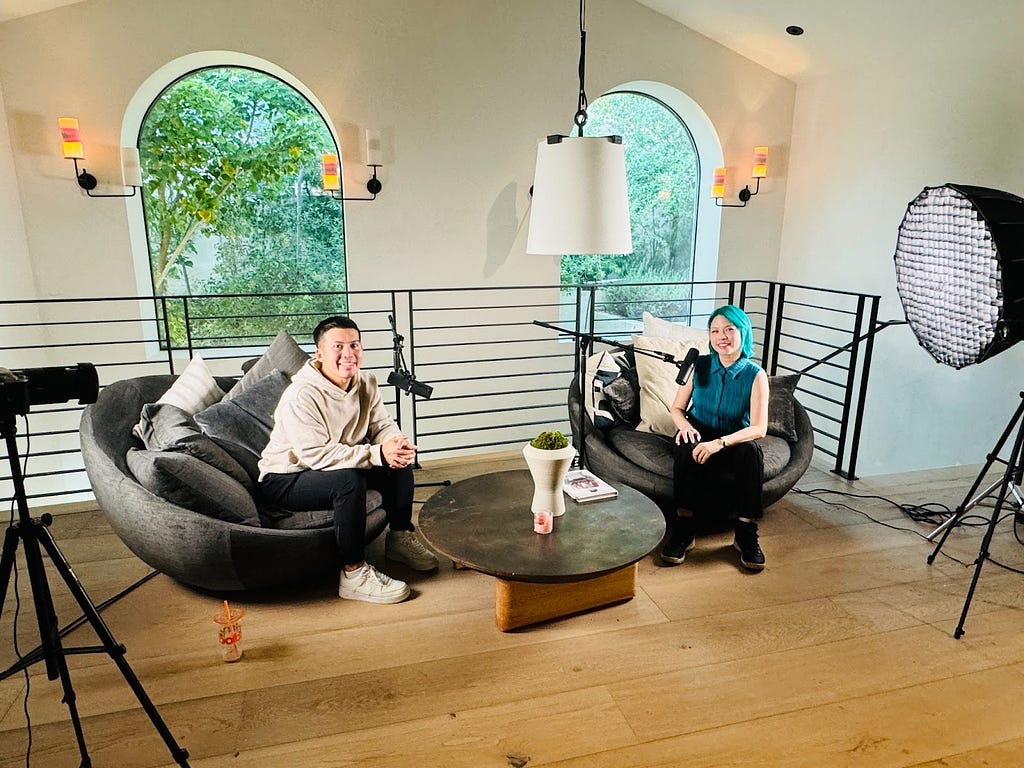
Yitzi: Unbelievable. Tell us the story of how you started your career. You have a fascinating career, and we’d love to hear how that developed.
Goldie: I also hope we can fold into this article how you directly impacted my career too, so I’m going to get into that in a little bit.
How I started my career, it’s so funny. I graduated from Stanford with a degree in biology, and I remember I got a couple of offers. One was to work at this really prestigious HIV lab, which was very cool. Another was to take an internship with a music recording company in New York, because I had been designing album covers on the side in college. Then there was another offer to do graphic design at a startup.
Ironically, none of them had much to do with my biology degree. I ended up doing the alternate option, which was running my own fashion company for a couple of years. It was fascinating to run my own business at such a young age, but it just didn’t work out, as so many things in life don’t. I remember being pretty depressed and thinking, “Well, that’s the end of my career. I’ll never work again.” I was 22, and everything feels so dramatic at 22.
Then my friends staged what I like to call a “friendvention.” They said, “You need to get out of the house. You need to get a job. Any job.” That job for me ended up being a marketing assistant role at a startup. And that’s how I started my marketing career. It wasn’t strategic at all. I hadn’t studied it, I just did it because it was the first in-house job with health insurance that would hire me.
I’m thankful they took a chance on me. Since then, I’ve been doing marketing and branding work. I did it for over a decade in-house.
Then a really interesting inflection point happened: I started creating videos on LinkedIn. And that’s how you and I got connected, because you discovered me. I remember you said, “Everybody has been talking about you in my circle, Goldie.” And I was like, “Have they? I hope it’s good!”
It was the wildest time because I had never really been a personality or someone with a presence online. I blew up in that moment. I did over 800 daily consecutive videos.
Then you very generously did an article with me for the Huffington Post where you called me the “Oprah of LinkedIn.” I remember thinking that title was so silly, not because you’re not brilliant, of course. You have such a gift for titling things and for how you phrase things as a writer, which is really wonderful.
But at the time, I honestly was a little embarrassed. I thought, “Oh my gosh, people are going to think I’m trying to make this happen.” And then the funniest thing happened, it stuck. To this day, years later, people still refer to me as the Oprah of LinkedIn.
So that’s directly how you’ve impacted my career. It’s amazing how PR and press can impact your career in one go. That’s still a name people call me, and in a positive light. I’m still blown away by that.
Since then, I’ve been running my agency, Warm Robots, doing a lot of social media strategy work and working with brands like Adobe, Microsoft, Lego, and others. I’ve been speaking all over the world, doing a lot of that kind of work.
In my personal life, something I’ve been very public about is that in 2022, I was diagnosed with cancer. Thankfully, I’m now cancer-free. I’m very grateful to be a cancer survivor. I shared that journey very publicly because so many people have reached out privately to tell me about the shame they feel or their fears about how it might impact their careers if they speak up.
So part of why I share my story is to encourage others. If they want to, they absolutely can. I want people to see that it’s possible to continue working and thriving in your career while going through a health journey.
That brings us to today, which is a very exciting time because my first book, Personal Branding for Introverts, is out through a major publisher, an imprint of Hachette.
It’s such a full-circle moment for me to be talking with you.
Yitzi: You probably have some amazing stories from the different places you’ve been and the projects you’ve worked on. We’d love to hear, if you could, one or two stories that really stand out in your mind from your professional life.
Goldie: Yeah, I know, it’s hard to narrow it down to just one, but one story that really stands out is about the power of asking. I think that’s so important.
I’ll share a smaller story tied to it too, but I remember especially when I started being more present on LinkedIn, people would reach out to me and say they liked my videos. And 99.99% of the time, I’d just say thank you and leave it at that.
But every once in a while, I’d take it a step further. I remember getting a message from someone at Microsoft, and I thought, “Okay, I’m going to be in Seattle for a speaking event, maybe I could visit Microsoft.” So I asked if I could.
It ended up being this really amazing experience. My video team and I got a full tour. We saw part of the Microsoft Garage, which is where they work on experimental tech. I also got to see the Microsoft treehouses, which are these beautiful, literal treehouses you walk around in.
And all of that happened just because I asked. To this day, it reminds me how important it is to ask.
I was recently in an indie bookstore in Las Vegas. I asked if they carried my book, and they said no. So I asked if I could speak with the person who makes that decision, no pressure, just a simple ask. They gave me his email, and I sent a photo of me in the store saying I’d love to be part of it. He replied, “I think our bookstore would love this,” and they ended up stocking my book.
So the power of asking is something I always come back to.
Another moment that made me feel like I’d really made it was when I was on stage in Romania. A foreign country, not the U.S., and I remember being on this massive stage with all these people who, in my mind, had way more followers, reach, and impact than I did.
But I was there too. I was on that stage, and I thought, “Oh my goodness, I can now say I’m an international speaker.” Because I was, quite literally, speaking outside the U.S. That was such a special moment for me.
More recently, I’ve also come to really believe in the power of offering help and saying yes to opportunities, even if they don’t look huge at first, because they might grow into something bigger.
For example, I wrote for Forbes for a few years, but I actually started out as a Forbes mentor. They asked if I’d be interested, and I love mentorship, so I said yes. I didn’t expect it to turn into anything more, but I hoped it might.
After about six months, they asked if I’d be interested in writing for them. And I thought, “Oh, that would be really interesting. Yes, please.”
So I started writing for them, and I eventually became a senior contributor, focusing on personal branding and storytelling in the digital age. I even won a couple of awards for it.
I worked more with the team at Forbes Leadership, who were great, and also with the PR team.
They kept putting me on camera for various things because they told me that I, and a couple of other Forbes contributors, were getting a lot of requests from people asking for sound bites from us.
Of course, it’s always their decision who they put on camera, especially when representing the brand, but eventually, they just started putting me and this other person on more regularly because of those incoming requests.
I thought that was really interesting. That whole journey gave me the confidence to believe I could write a book.

Yitzi: So let’s talk about some of the exciting new things you’re working on. You’ve already done so much impressive work, and we’d love to hear about your book and any other new initiatives you’re involved in.
Goldie: Yeah, right now I’m getting back into it. I’m starting to do quite a bit more speaking, and hopefully next year I’ll be traveling more again. I’ve already booked a few conferences for 2026, which is wild to say since we’re not even done with 2025 yet. That’s something I’m really looking forward to in the new year.
But backing up to this year, the big thing happening for me is the release of my first book. Personal Branding for Introverts is coming out at the end of October. This book is my version of a cozy fireside chat with fellow introverts.
I’ve already received a couple of early reviews on Goodreads, which is a platform I’ve recently learned a lot more about. It’s basically the go-to book review site. One person, someone I don’t know, who doesn’t follow me on any other platform and hadn’t heard of me before, found my book, read an early copy, and wrote the kindest review.
She said she usually doesn’t like self-help books because they feel like lectures or like someone yelling at you, telling you what to do. But she said she loved my book because it felt like a friend sitting her down and gently saying, “Why don’t you try this? Have you thought about trying that?”
She said it was so nice to read a book that felt like a conversation, not a list of 50 things you have to do tomorrow. She found it much less stressful. That meant so much to me because the book really is a mix of personal stories and stories from amazing people I’ve met throughout my life and career. It’s much more of a storytelling book than a tactical how-to.
And I love that, especially for a book aimed at introverts.
Even the person who voiced the audiobook wasn’t me. I had the option, but I love hiring and amplifying other voices whenever I can. I interviewed a ton of Asian women to voice the book, and after reviewing clips, I chose Ferdelle, who has the most soothing, calming voice.
Some people on my team wanted a narrator with high energy, someone very dynamic, and that person was a great narrator. But I loved Ferdelle’s calming tone, it felt perfect for an introvert-focused book.
I want people to feel like they’re having a calm, grounded experience, whether they’re reading the physical book or listening to the audio version.
I also partnered with a brand called Epidemic Sound to create a lo-fi soundtrack. It’s all tracks made by real artists, and it’s something you can listen to while reading the book, studying, or just relaxing.
It’s a soundtrack for introverts, very calm, very chill.
Yitzi: So creative. I have to know, how do you define an introvert?
Goldie: Introverts are defined in so many different ways, but I think of introverts as people who are more internally focused. They’re deep thinkers, more strategic in how they move through the world, and they’re usually recharged by being alone rather than being in a room full of people.
Of course, introverts come in many varieties, but in general, I think they tend to work really well independently, even within a team. That’s my longer version of how I define introverts.
Yitzi: I ask because the stereotype of an introvert is someone who’s shy or reserved. And from the outside, you seem very gregarious and public-facing, you do a lot of speaking. So my question is, has the way the world sees you now always been who you are? Or have you evolved into that? Or is this still you as an introvert?
Goldie: I think introverts are commonly misunderstood. There’s a wonderful book, it’s kind of the introvert classic, called Quiet by Susan Cain.
But I think since that book came out, so much has changed. The internet has changed, the way we show up in the world has changed. I’m sure you feel this too, in another universe, you and I would probably be writers at a newspaper, right? I like to think that.
But in this universe, we have to be present. Even now, we’re doing this over video. That’s just part of how the world works now, and it’s changed how introverts have to show up.
For me personally, I’m an introvert with anxiety, and I think a lot of people don’t realize that, because as you said, I’m very public online. I’m definitely out there, doing a lot of different things.
But I had to train myself to become more comfortable around people. I remember in my mid-20s, I would go to this coffee shop in San Francisco every day and just standing in line would make me feel so anxious. I didn’t want to be around strangers, didn’t want to interact.
So I made myself do this little challenge, 30 days of starting a conversation with a stranger. Even if it was just a “Hi” and then immediately turning away, which isn’t really a conversation, but it was an attempt at one. I did that for 30 days, and honestly, it was life-changing.
It helped me start breaking out of my bubble. It made it a little easier to talk to people.
That said, if I’m at a large conference or any big group setting, I still need time alone to recharge. If the hotel is nearby, I’ll go hide in my room. If I’m speaking at an event, I make sure I’m not there for 10 hours, I’ll aim for four.
I try to be really thoughtful about my “introvert battery” and not drain it in a way that’s hard to recover from. Introvert burnout is very real.
We don’t talk enough about it, about introvert hangovers. You can have an energy hangover, where you’ve spent so much energy being “on” that the next day you just feel groggy, off, like your system is overloaded.
That definitely happens to me. And when it does, I rest.
I remember I did a keynote in Canada, and I spent the next two days in bed. It had been during a very stressful time for me, and I just needed that extra time to recover.
So if you’re an introvert out there, please give yourself some grace.
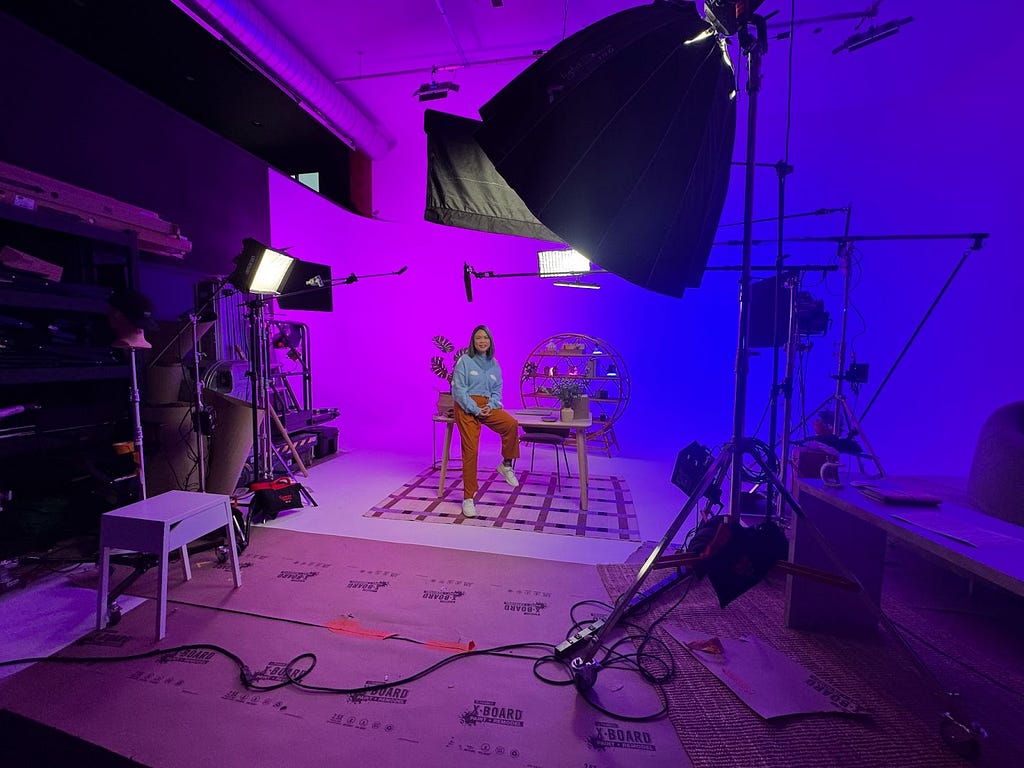
Yitzi: Have you found that, according to that definition of introvert, that introverts need quiet time to recharge, the opposite is true for extroverts? That extroverts don’t need that kind of quiet time? Like when they’re at a conference, those 10 hours could easily turn into 20?
Goldie: Yeah, I think everyone’s on a spectrum, of course. I’ve met extroverts who are probably closer to ambiverts, and introverts who are maybe closer to extroverts than they think they are.
But yes, I think a classic definition of an extrovert is someone who’s at a conference for five hours and wishes it were 20. The more they talk to people, the more energized, excited, and full of life they become.
Whereas for so many introverts I know, myself included, I can sustain that kind of energy and I love meeting people, but I will hit a point where I’m just done. My battery goes to zero, and at that point, I need to hide away from everyone and rest. I need silence, space, and no interaction.
That’s the main difference, I think. Extroverts may not hit that same expiration point, or at least not in the same way. Introverts definitely do.
Yitzi: Can you share one or two stories from your book that you found the most interesting?
Goldie: Yes, absolutely. One of the stories I think is really funny is that I’ve been to the Prime Minister’s residence in London. And that’s not even the most interesting part, the interesting part is that I now know exactly where to hide in the Prime Minister’s garden where no one can find me.
There’s a little spot tucked all the way in the back, hidden right behind this large wooden chair. I know this because I was there for a business meeting with a few American entrepreneurs and quite a few British entrepreneurs, and I was just feeling incredibly overwhelmed.
So I found that hidden spot in the garden and stayed there for a while. And quite frankly, after that, I went and hid in the bathroom for a bit. Only after doing that did I finally feel like I could re-enter the world and come back out.
And part of the reason I didn’t just leave, which is usually the advice I give people when they’re overwhelmed, is because I couldn’t leave. The security is so intense at the Prime Minister’s residence, it’s not the kind of place you can just step out of and come back into.
So I had to find a physical place to retreat to. And now I know exactly where to hide in the Prime Minister’s garden.
Another story from the book, this might’ve even been on the same trip or maybe a different one, I was riding the Tube in London and I got super lost and overwhelmed. I was probably on the edge of a panic attack.
Then this kind woman tapped me on the shoulder and said, “Goldie Chan?”
I turned around, probably teary-eyed and mid-panic, and she said, “You’re Goldie Chan from LinkedIn.”
I just thought that was so surreal. First, that she recognized me. Second, that it was happening while I was basically crying in public. I apologized and tried to be professional, even though I was very visibly struggling.
And she was so kind. She said, “It’s not a big deal. I get stressed out too.”
She took my hand, this total stranger, and walked me out of the station. She gave me a pep talk the whole way up the escalator, and by the time we reached the top, I just turned to her and said, “Thank you so much.”
That was all she needed, just that thank you.
To me, that moment really illustrates something about being an introvert, especially one with anxiety. We often get overwhelmed at the most inconvenient times, but those are the moments when extroverts, or even other introverts, can really step in and help.
That was definitely an extreme example, but there are so many small moments too, where just being kind and aware can make a big difference.
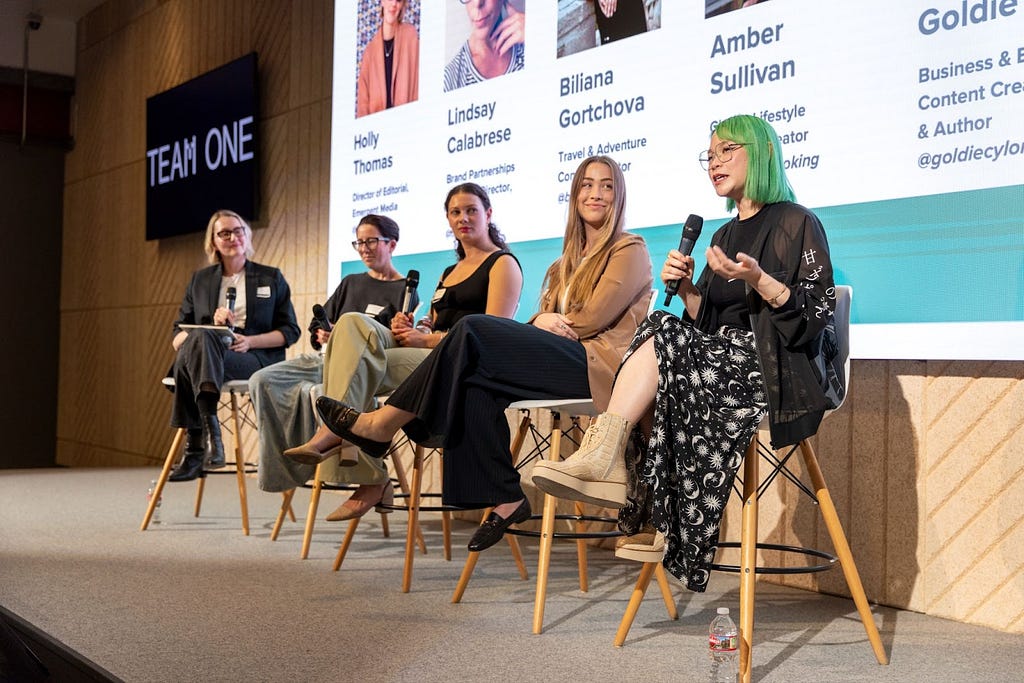
Yitzi: As you know, our signature is that we always ask for five things. So let’s talk about our core subject. Can you share five things that introverts can do to thrive and succeed in a society that seems to favor extroverts?
Goldie: Yes. So, five things, let’s start.
- One is to take micro breaks during the day. If you’re working in a corporate office, make sure you’re literally going outside. Like I said, I wanted to do that at the prime minister’s guard, but I couldn’t leave. But if you’re in an office or working from home, as so many of us do now, taking ten minutes to go outside and go for a little walk helps your heart and your mind. It’s definitely a really helpful thing.
- The next thing is to find your communities online. If you’re someone who feels uncomfortable making connections or meeting colleagues in person, it’s helpful to find your communities online. And these don’t even have to be business-related communities. My partner runs an amazing cat Facebook group, and people have gotten jobs through that group. People have rescued cats, and some have even made romantic connections. And it’s just a group focused on cats! So to me, that’s incredibly powerful, finding your community, especially online if you’re uncomfortable doing it in person.
- The next thing, we touched on this lightly, is partnering with extroverts. If there are extroverts in your life or at work who can be your advocates, that’s incredibly helpful. You can be in a meeting and, if you don’t feel comfortable suggesting something, you can ask your extrovert colleague to nudge you and say, “Oh, Brian has a thought he wants to share.” It’s great to have extroverts in your corner who can support you.
- The next thing is something small I mentioned in the book, but I’m a firm believer in: stacking opportunities. If you can stack small opportunities, they become bigger ones over time. For example, if you’re a writer and want to write more, both of us can probably speak to this, start with small things. Guest writing, offering to write little blurbs here and there. These small things can eventually lead to writing professionally or publishing your own work. Stacking and creating those opportunities for yourself is so helpful.
- And the final thing is this: being a loud introvert is okay. So often, we hear, especially because of classic books like Quiet, that introverts have to be quiet. I’ve seen so many books with the word “quiet” in the title, and I want to say not all introverts have to be quiet. In fact, when introverts are incredibly passionate about what they like and what they do, which is something I feel very strongly about, you can absolutely be a loud introvert. There’s someone I know named Chris Do. He runs The Futur, which has millions, maybe even billions, of views for his podcast and content. But Chris is still an introvert. What’s powerful is that he gets really loud when he’s helping people or when he’s deeply engaged in something he cares about. He’s also a fan of the idea that being a loud introvert is possible. So I want to encourage you, if you care about something, you don’t need to fall into the stereotype of being quiet. And if you’re loud about what you like, that doesn’t automatically make you an extrovert. You can still be an introvert, just a passionate one.
So those are five hopefully helpful things for introverts.
Yitzi: This is our aspirational question. Goldie, because of your amazing work and the platform you’ve built, you’re a person of enormous influence. If you could put out and spread an idea or inspire a movement that would bring the most good to the most people, what would that be?
Goldie: I actually have two that I’ve been thinking about a lot. One is “create with courage” and the other is “build with purpose.” I think either of these are great, but I’ll pick one for this, and that is… I was going to say “create with courage,” then I thought “build with purpose,” but no, I’ll say “create with courage.” That’s the one I’ll choose here.
The reason I say that is because so many people are afraid to put themselves out there. They don’t feel like they have permission to build their personal brand or to stand out, because people around them have told them it doesn’t matter, or it’s too noisy, or what they have to say isn’t original. I was recently speaking to another author about how so many of our ideas aren’t necessarily the most original. What makes them original is our story, our personal journey and expertise.
So if you’re thinking about creating content, building something, starting a business, or collaborating with others, I want you to create with courage. Find that piece of courage inside of you. Know that what you have to say and what you have to offer is valid. It’s interesting. People want to know what you’re working on, and they want to hear your contribution. It’s not always about having the most original idea, it’s about having your idea.
Yitzi: Goldie, how can our readers purchase your book? How can they support your work in any way? How can they follow your work and connect with you on LinkedIn?
Goldie: You can buy my book “Personal Branding for Introverts” wherever books are sold. You can also go to goldiechan.com/book, where there’s a list of different places to purchase. And yes, please do grab a copy. Everyone who purchases a copy gets a free workbook, so I’m really excited to share that. It would be incredibly helpful to help amplify the book. And of course, whenever you see any of my posts, like, comment, share, that always helps.
Yitzi: Goldie, it’s been an honor to do this with you. We wish you continued success, good health, and blessings. I hope we can do this again soon.
Goldie: Thank you and yes!
The Loud Introvert: Author Goldie Chan on Thriving in an Extrovert’s World was originally published in Authority Magazine on Medium, where people are continuing the conversation by highlighting and responding to this story.