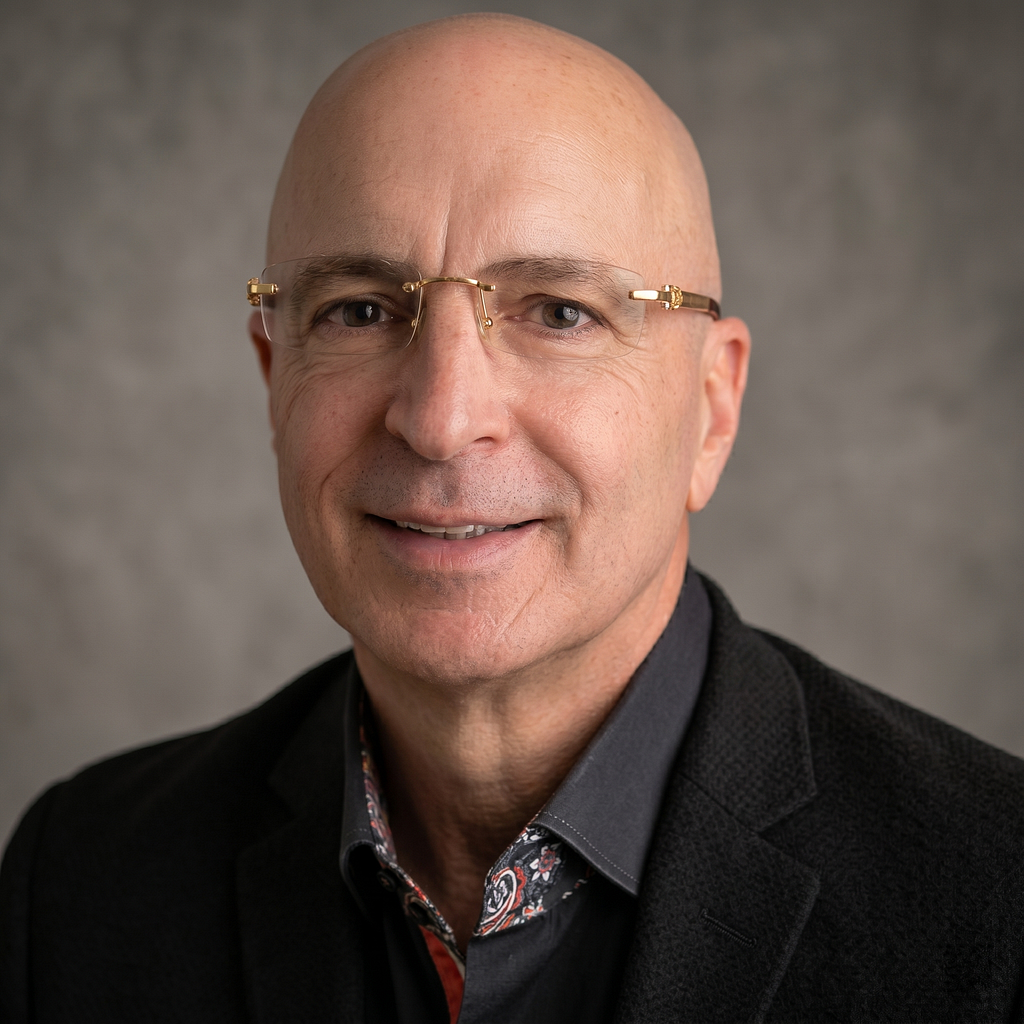
Joe Tomarchio Jr Of Mr. Tire On The Four Pillars Of Hiring, Building A Tire Empire, And Why Moral Compass Matters
“You have to be consistent, persistent, relentless, and redundant with perseverance. Each time, every time, all the time. To beat me, you have to eat me. If I haven’t won, the war isn’t over. Winners find a way; losers find an excuse or hire a lawyer to find one for them. Be a winner.”
I had the pleasure of talking with Joe Tomarchio Jr. In the great American automotive landscape, Joe is a true heavyweight, the original tire king who built an empire out of sheer grit, sharp instincts, and a pair of customized 1970s Corvettes. Growing up full-blooded Sicilian in a semi-tough Baltimore neighborhood, he learned early on how to navigate a complicated world. Alongside his brother Fred, he turned a single garage at Liberty Road and Northern Parkway into a sprawling, multi-million dollar business.
The story of Mr. Tire officially begins in 1970. Joe was just fourteen years old, a young kid with gasoline in his veins and a relentless work ethic forged by his immigrant grandparents. He learned quickly that survival and success required a firm hand, business savvy, and a very clear moral code. “You treat people with dignity and respect until they show you differently,” he told me during our conversation. “That is what we did.”
Operating in a valley bordered by gas stations and drugstores, the brothers faced a gritty reality. While other local business owners frequently complained about armed robberies, Joe and Fred ran a tight, exceptionally safe shop. When asked how they managed to avoid the local crime wave, Joe offered a straightforward explanation. Treating everyone with dignity was the primary rule. The second rule was a bit more intense: “We’re every bit as crazy as they are. You want to leave horizontal coming in here trying to steal from me? You will leave that way.”
That fierce determination clearly paid off. By 1977, the brothers were ready to expand, though the local banking establishment was less than eager to help out. Joe vividly remembers walking into Maryland National Bank with a rock-solid business plan, only to be dismissed by executives as too young and too risky. Joe has very little patience for typical banking bureaucracy. He views traditional bankers as fair-weather friends who will gladly hand you an umbrella when the sun is shining, only to beat you over the head with it if the first rain cloud appears.
Denied a standard business loan, the brothers hatched a brilliant, rebellious plan. They sold their fully paid-off Corvettes to completely fund the new store. Then, they simply leased two brand new 1977 Corvettes from a leasing company that, ironically, was owned by the very same bank that had just rejected their loan application. “They wouldn’t loan us the money to open the store, however, they would lease us two brand new cars,” Joe recalled with a laugh. The second location completely blew the numbers away, cementing their status as serious players in the regional automotive aftermarket.
By 2004, Mr. Tire had twenty-six full-service stores generating massive annual revenue. The brothers eventually sold the business to Monro, Inc., a publicly traded corporate giant out of Rochester, New York. When the executives at Monro asked how they could bring Joe onto their corporate team, he laid his cards directly on the table. “I’ll give you six months to see whether you can tolerate me and I can tolerate you,” he told them during negotiations. “I’ve never worked for anybody, and I’m a black-and-white, yes-or-no, right-or-wrong kind of guy. I’m not a sycophant.”
Monro tolerated him just fine. Joe stayed there for nineteen years. He served as Executive Vice President, managed roughly seven thousand employees, and orchestrated dozens of major acquisitions. He helped take the company from 550 locations to an astonishing 1,300 stores across the nation. He traveled the world, touring tire shops from China to South Africa, always taking copious notes on customer service and operational efficiency.
Today, Joe is stepping back into his entrepreneurial roots. In a surprise move, he and his brother are launching a brand-new retail venture called Tires Only! in Finksburg, Maryland. Joe realized that most conventional shops offer lousy customer service and uncomfortably dirty facilities. With Tires Only!, he is changing the game entirely. The new facility features Formula 1-inspired speed lanes, air-conditioned service bays for the technicians, and a massive nineteen-foot viewing window where customers can comfortably watch the touchless, robotic tire changes. They have dialed the entire process down to an exact science. “We can change four tires — mounted, balanced, and TPMS serviced — and get you in and out in 18 minutes,” Joe noted, though he plans to advertise a conservative fifty-nine minutes to consistently over-deliver on those expectations.
For Joe, the secret to a long career is incredibly simple. It always comes down to two core assets: the customer and the employee. He firmly believes in paying his technicians top dollar. He expects total excellence in return and completely refuses to accept mediocrity. His hiring philosophy relies heavily on enthusiasm, a good attitude, a strong work ethic, and a rock-solid moral compass. “No lying, no cheating, no stealing. Tell the truth even if it hurts,” he said.
Reflecting on his massive journey, Joe remains deeply grounded in his old-school roots. He proudly acknowledges the people who helped him along the way, noting that his closest guides came from a specific community. “Every mentor I have ever had in my life was Jewish,” he said, mentioning that one of those mentors, an 89-year-old man named Howard Schofer, is making a special point to attend his new store’s grand opening. Joe’s business philosophy also still circles back to the practical advice of his immigrant grandfather. “Grandson, in business, you have to raise the shirt and raise the pants, or lower the pants and lower the shirt. One way or another, you have to cover your posterior.” As he gears up for his next big chapter, Joe continues to live by his relentless personal mantra. “If I haven’t won, the war isn’t over. Winners find a way; losers find an excuse or hire a lawyer to find one for them. Be a winner.”
Yitzi: It’s so great to meet you, Joe. Before we dive in and talk about your great work, our readers would love to learn about Mr. Tire’s personal origin story, or Joe’s origin story. Can you share with us the story of your childhood, how you grew up, and the seeds and genesis for all the amazing work that has come since then?
Joe: Well, you’re a Baltimore guy, right? My brother and I started Mr. Tire at Liberty Road and Northern Parkway, if you’re familiar with that area. It was a semi-tough neighborhood, but I learned from my immigrant grandparents — I’m full-blooded Sicilian — that you treat people with dignity and respect until they show you differently. That is what we did.
We grew that business, and I’ll give you the Cliff Notes version. We grew the business from one store with humble beginnings in 1970 and opened our second store in 1977. When we sold out 100% in 2004, we had 26 full-service stores doing $51 million in revenue in 2004 dollars, which would be like $80 to $100 million today if you calculate the time value of money. Prior to selling out, we actually merged for five and a half years with some people you probably know. Do you know Steve and Scott Fader? They’re Pikesville boys. They own Mile One, Atlantic Automotive, and the Heritage Automotive Group. We were with them for about five and a half years. We were the only entity that didn’t sell automobiles, but we were one of their more profitable entities as a percentage of sales. We officially sold to a company called Monroe out of Rochester, New York, which had 550 stores.
After the deal was consummated, the gentleman negotiating the deal said, “Now how do I get you?” Meaning me. I said, “Well, I didn’t know I was for sale, but I’ll listen.” After negotiations went back and forth, I told him, “Look, I’ve never worked for a publicly traded company, because that’s what they were, traded on the NASDAQ. But I’ll give you six months to see whether you can tolerate me and I can tolerate you, because I’ve never worked for anybody, and I’m a black-and-white, yes-or-no, right-or-wrong kind of guy. I’m not a sycophant. My deal is I’ll come there, but the only person I ever want to report to is you or another CEO that might take your place. I’ll give it a ride.”
Well, I spent 19 years there, and I took that company along with our team from 550 stores to 1,300 stores in 32 states, with Mr. Tire being one of the many brands that Monroe had. They had Ken Towery’s Tire, Tire Barn, Tire Warehouse, and Tire Choice down here in Florida. We did 65 acquisitions, of which I was the point man. A lot of those people were my friends and business associates. When I called them, they picked the phone up because they knew me. It’s not like somebody cold calling asking, “Who the hell is he?”
I spent my tenure there and retired three years ago. I’ve done a lot of work since then for private equity firms regarding acquisitions. When my brother and I sold our company, we owned ten of the locations, so we migrated into commercial real estate and shopping centers. We own three of them in Maryland: the Mount Airy Center where the Food Lion is, one in Walkersville, and one in Finksburg, Maryland, which is where we’re putting our Tires Only store. Of course, we also have one in Seaford, Delaware, and three in Florida. We went from retailers to commercial real estate guys, but I have been in the tire business the whole time. That’s the thumbnail sketch. I’m happy to answer any questions and tell you why we’re into this next venture if you’d like.
Yitzi: We’ll get to that in a moment. You probably have some amazing stories from your very successful career. I’m sure this is difficult to single out, but can you share with our readers two stories that stand out in your mind from your career?
Joe: Oh, yeah. My brother and I, two young fellas in 1977, went to open our second store. There was a prominent bank in Maryland at the time called Maryland National Bank. You’re a young guy, but you may recall it. We went to the bank — we had been doing business with them — and we put our business plan together. We said we’d like to borrow some money. I forget exactly how much it was; it wasn’t a lot in today’s terms, but back then it was a fair chunk of change.
We probably spent an hour with them. Finally, the banker said, “Look, I’ve reviewed all your information. You guys are doing great, but you’re young. You only have the one location. This is a big risk going to a second location.” It was the typical banker nonsense, excuse my language. I have some good bankers, but normally they aren’t my favorite people. They usually hand you an umbrella when the sun is shining and then beat you over the head with it if the first rain cloud appears.
We went back to our store at Liberty Road and Northern Parkway. That bank branch was right there in Woodmoor, if you’re familiar with that area. This was about 50 years ago. Long story short, my brother and I went back to the counter. I’m a salesman, he’s a salesman, and we’re selling. My brother says to me, “Joe, I have this great idea.” I asked what it was because I love my brother dearly, but he’s an idea-a-minute guy. Of course, the only ideas that are worth a crap are the ones that you can actually implement.
He says, “There’s an ad here where this company will lease us two cars.” At the time, I had a customized ’73 Corvette, and he had a ’74 Corvette convertible. Remember, this is 1977, and both cars were fully paid for; we didn’t owe any money on them. He says, “You know what we’re going to do? We’re going to sell our two cars, take that money, and open up our second store. Then we’re going to lease two brand new Corvettes from this leasing company.” I told him to get out of here, but back then, if your breath fogged a mirror, they would lease you a car.
Sure enough, the leasing company comes in and shows us a book. We ordered two brand new ’77 Corvettes. The cars come in, and I put my car up for sale, and my brother puts his car up for sale. We’re car guys, so the cars were gorgeous and sold immediately. We took the money, opened the second store, and blew the numbers away. Our second store was in Glen Burnie, about two miles south of the MVA, if you’re familiar with that area. We just knocked it dead.
About a month or two later, the banker calls us up. As I said, the branch was right there in Woodmoor. He says, “I’d like to take you guys to lunch.” We agreed and asked where he wanted to go. We decided on Sid Mandel’s. It doesn’t exist anymore, but it was a great Jewish deli in the Woodmoor Shopping Center with fantastic corned beef sandwiches. We met him for lunch, and after some small talk, he says to us, “I see that you opened your second store. I have to ask, where did you get the funding? Did you get it from family or friends?”
My brother looks at him and says, “No, I got the money from you.” The banker asks, “You got it from me? What are you talking about?” Guess who owned the leasing company? Maryland National Bank. They wouldn’t loan us the money to open the store, but they would lease us two brand new cars, which, by the way, cost more money than we were asking for to open the store. That is one of my many banking stories. I have so many stories — some I can’t tell the general public — but we have some interesting ones.
I’ll tell you this other story that might give you some flavor. Our first store was at Liberty Road and Northern Parkway. It sits down in a valley. If you come down Liberty Road and Liberty Heights Avenue, right where Northern Parkway dead-ends is a little valley. There was an Exxon station at the time, an Amoco station, a Gulf station, and Price’s Dairy, which is now a McDonald’s. There were all these drugstores and businesses, including a post office.
Every once in a while, the business owners would get together and network. These other owners said to us, “You guys have never been held up in an armed robbery.” We said, “No, we haven’t.” They asked, “How come? Every one of us has been held up.” I said, “Well, it’s simple.” They asked what it was. I said, “We treat everybody with dignity and respect. That’s number one.” They asked, “Well, what’s the second one?” I told them, “We’re every bit as crazy as they are. You want to leave horizontal coming in here trying to steal from me? You will leave that way.”
But I have to tell you, that area taught me a valuable lesson because it was very mixed. We obviously had an African-American community, and we had a lot of Russian Jews there, as I’m sure you’re well aware. The deaf community had a training center back there in Seton Park, and we had all their business. My brother and I would take the time with them — there were no computers back then — to write out what they wanted. We did anything we could to take care of our customers, and we did the same thing with our people, which I think is important.
This is one of the things I discuss in my motivational speaking when I hear companies say they can’t find good people. When I’m doing consulting, the first thing I ask them is, “Do you have a turnover report? How many people did you hire versus how many you still have?” Most companies do. I ask to see it, and it’s usually fairly thick. I tell them, “It appears to me you don’t have a problem hiring; you have a problem retaining.”
There is a reason for that. First, you’re not treating your people properly. Second, if you pay peanuts, you get monkeys. Monkeys don’t deliver superior customer service, and monkeys don’t care. All they care about is eating, sleeping, and defecating. I don’t want monkeys working for me. If you pay more, you will get better people. With that being said, you will have to charge more because it’s a balancing act.
My grandfather used to have a saying. He was a businessman, and he spoke broken English. He said, “Grandson, in business, you have to raise the shirt and raise the pants, or lower the pants and lower the shirt. One way or another, you have to cover your posterior.” Except he didn’t use the word posterior.
I could go on forever, but I felt those might be some of the more amusing ones.
Yitzi: Amazing. Please tell us about this next venture. Tell us why you are coming back to Baltimore.
Joe: I’ll tell you how that occurred. When I was at Monroe, I was the executive vice president. I was in charge of all the retail stores, procurement, buying — we used to buy 4.5 million tires a year. I was in charge of marketing for the tires, and I had just about 7,000 employees reporting up to me. I traveled in the tire business all over the world because we were a Pirelli dealer, Continental, Michelin, Goodyear, and we carried all the other brands, including some you may have never heard of from the Pacific Basin.
Every time I traveled around the world, I always made it a point to visit tire stores. I know that sounds crazy, but I wanted to see how they did it. I wanted to see how they operated in China, South Africa, throughout Europe, the Caribbean, North America, and South America. The only continent I haven’t been to is Australia, and I don’t think there are any tire stores in Antarctica. I used to take copious notes when I saw something unique or something that was truly customer-focused and separated them from everybody else.
About 15 years ago, I roughly started putting together a business plan for Tires Only based on all the different concepts I saw. Plus, I was involved in 65 acquisitions during my tenure with Monroe. I saw countless balance sheets and financial statements — more than 65, because there were many companies where we either didn’t win the bidding contest or we didn’t want them because they weren’t worth buying. I saw a lot of really good ideas, and I also saw a lot of really dumb things.
I put together a business model that I think is going to be a potential game-changer. If you really think about it, it’s common sense. My whole platform is focused on two core assets that all companies have but often don’t even realize are assets. Number one: the customer. Number two: the employees. Number two takes care of number one, and number one helps take care of number two. If you don’t take care of those two assets, you can write a check for anything else, but eventually, that check will come back with non-sufficient funds because you didn’t take care of your core assets.
Staying with tires, if I had a magic wand and took all the signs off all the tire stores in Baltimore and Washington — and I could do this anywhere — mixed them up in a giant mixing bowl, and threw them back onto the various buildings, do you know what the difference would be? Zero. They are all the same. They all give lousy service, have dirty facilities, show indifference to the customer, and treat their employees with indifference. There is no compelling reason to recommend them or to return. Now, when I make this broad statement, are there exceptions to the rule? There is always an exception to the rule.
I said to myself, “We need to be unique.” First of all, our place is going to be spotless. If you get a chance, I’d love for you to stop by. What if I told you that 67% of all tires sold are bought by women? That doesn’t mean they haven’t consulted their father, husband, brother, or boyfriend, but physically going into the facility and buying them is done by women. Let me get this straight: Do you want a filthy, dirty place that you wouldn’t send your daughter, mother, sister, aunt, or niece to? Or do you want to go to a place that is pristine and 100% transparent?
Let me give you an idea of what I mean by that. We have 28 high-definition cameras in the store. We have a 19-foot window where the consumer can sit at a bar and look out into the shop. If they don’t want to sit there, they can sit in one of two massage chairs, one of three barber chairs, on a sofa, or in another comfortable chair, and watch their cars being worked on via closed-circuit television. If your car is being aligned, you can see it happening and watch the specs on a closed-circuit TV. If someone claims we didn’t do the alignment, you will see transparently that we did it, because green is good and red is bad.
We have tested this. Listen to this: We can change four tires — mounted, balanced, and TPMS serviced (tire pressure monitoring system) — and get you in and out in 18 minutes. I’m not going to advertise 18 minutes. We’re going to advertise 59 minutes or less. Once I perfect that 100%, we will drop it to 49 minutes, 39 minutes, and maybe eventually 29 minutes or less. You know very well that if you take your car to a dealership, they hold it hostage the entire day. If you go to any of these other tire stores, you are not getting out of there in an hour or an hour and a half.
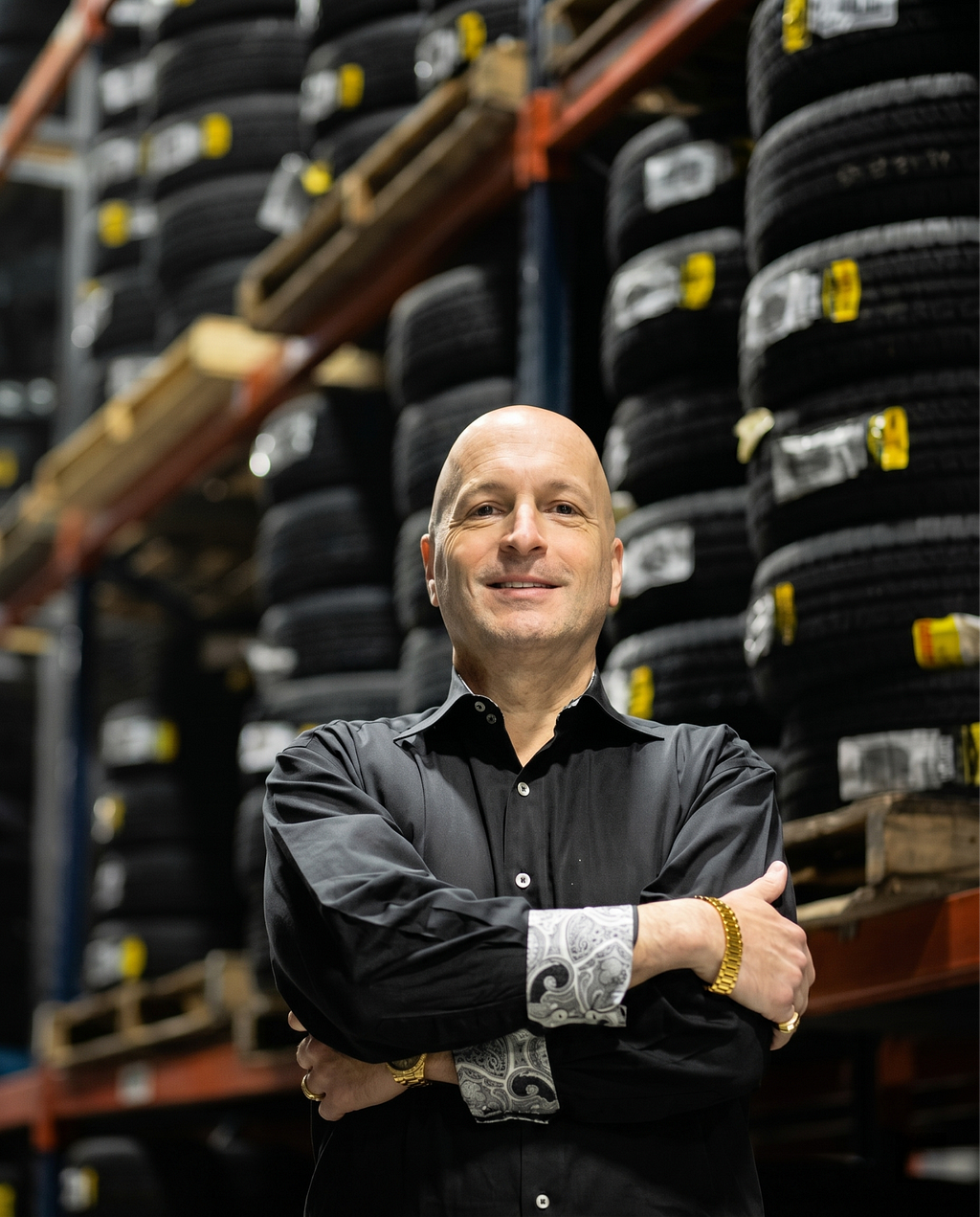
The average tire store today only stocks 600 to 700 tires. This store was originally supposed to stock 5,000, but the fire marshals made sure we didn’t do that. So it will only stock about 2,300 to 2,400 tires, which is still three to four times more than an average tire store. The other thing we did was design the hours of operation to suit the consumer, not us. We are open from 8:00 AM to 7:00 PM, Monday through Saturday. Most places close for half a day on Saturday, and car dealerships usually close at noon. We are also open Sunday from 9:00 AM to 5:00 PM, and we are open 360 days a year.
We are going to give you unbelievable service, convenience, cleanliness, transparency, and a highly competitive price, or as I like to call it, an “intelligent price.” Will we be the lowest? Most of the time, probably, but we will always be extremely competitive and convenient.
I’ll also give you an idea of what I’m doing for our technicians. The service bays are air-conditioned, which is unheard of in a tire store. I spent $250,000 on a system that changes the air six times an hour.
We have a digital wall when you come into the store showing our semi-autonomous, robotic, computerized tire-changing machines. They can change any tire and wheel assembly in two minutes and eighteen seconds. It doesn’t care whether you have a Ferrari, a Yugo, an Audi, or a Porsche. It doesn’t care if it’s a steel wheel, an alloy wheel, a magnesium wheel, or even the new carbon fiber wheels coming out on high-end vehicles. It is touchless; it never touches your wheel, ensuring damage-free tire and wheel mounting.
Here is another thing: How many times have you gone into a tire store for tires, watched your car sitting out in the service bays, and wondered why they aren’t putting the tires on? That happens because there is some guy out there for 45 minutes inspecting your car, only to come back in with a litany of things you need that you didn’t ask for, probably don’t want, and maybe don’t even need. We are not doing that. We are focusing purely on tires, alignments, and related services, and nothing else.
Yitzi: This is our signature question. Joe, you’ve been blessed with a lot of success, and you must have learned a lot from your experiences. Looking back to the very beginning when you first started, can you share five things you’ve learned over the years that someone starting out as an executive today would really benefit from?
Joe: There are a lot of things. I could give you more than five, but if you recall earlier in our conversation, I said my number two asset is my employees. You have to hire right.
I have four pillars of hiring success, which is why my turnover rate was extraordinarily low. Two of these things I can pick up in an interview. First, do you have enthusiasm? Second, do you have a good attitude? People think attitude and enthusiasm are the same, but they aren’t. You can be an enthusiastic idiot. Are you enthusiastic about what you do, and do you have a great attitude?
The third pillar is work ethic. Are you a clock watcher? Are you one of those people who says, “That’s not my job”? If you are, you’re not working with me. I need people who want to go the extra mile — not for me, but for my customer.
Last, but certainly most important, is a strong moral compass. No lying, no cheating, no stealing. Tell the truth even if it hurts. You don’t steal from an employee, a customer, the company, or a vendor. If you can’t live with that, you can’t work for us. It really is that simple.
Do you have the aptitude to learn? Now, I will tell you something about these four pillars of hiring. You and I may disagree, but from my 50-plus years of being in business and dealing with people, I’ve learned that you cannot teach these things. People are born with them. I can put guardrails in place to stop you from stealing or a supervisor to make sure you’re not smoking on the job, but ultimately, you either have these traits or you don’t. With that being said, your environment will either dial up or dial down the attributes you were born with. I believe that strongly, and it has worked for me.
That applies to any business, whether you’re selling tires, Tupperware, or anything else. My recommendation to any entrepreneur is to ensure you hire right. Follow those four pillars of hiring and don’t compromise.
By the way, when you catch somebody stealing from you — because that is not a good idea, maybe it’s my Sicilian heritage — they will always say, “It’s the first time I did it.” No, it’s just the first time you got caught. I don’t buy into that.
My brother and I at Mr. Tire paid our people more money than they could make with any of our competitors in the industry. Because of that, I expected more out of them. I wanted them to know they had the best job in the industry, making the most money, with the greatest potential. We used to tease that technicians have wheels on their toolboxes so they can roll them across the street to a competitor. You can do that, but you will make less money, and you won’t be treated as fairly. That would be my recommendation to anyone entering any business.
Yitzi: This is our final aspirational question. Joe, because of your amazing work and the platform you’ve built, you are honestly a person of enormous influence. If you could spread an idea or inspire a movement that would bring the most good to the most people, what would that be? You never know how far your idea can spread.
Joe: I have always lived by the moral compass, as I mentioned earlier. Treat people the way you want to be treated. You don’t lie, cheat, or steal, and you tell the truth even if it hurts. If we as a society all did that, just think about how good things would be.
When I did motivational speaking and hosted national sales meetings, I would often speak in front of 300 to 500 people. I would tell them, “If you can’t treat people the way you want to be treated, treat people the way you want your mother to be treated.” Notice I didn’t say your spouse, because I know how some people treat their partners! I said your mother. I don’t know anyone who doesn’t want their mother treated like a saint. I have a lot more to say about that, but without a doubt, I would say it all comes back to a strong moral compass.
Yitzi: Joe, how can our readers visit the new location? How can they continue to follow your work, get involved, or support your work in any way?
Joe: We have the first store opening with a soft launch this coming Friday. Our huge grand opening is on the 13th. My daughter is great at this; we have a petting zoo, a face painter, a snowball truck, a coffee truck, pizzas, sliders, and all kinds of things. We are basically having a free carnival. No purchase is necessary; we just want to get to know our neighbors.
My daughter has been insisting that I set up a website, but I don’t have one right now. All the work I do comes from word of mouth. I primarily consult for private equity firms, and I do motivational speaking for groups that usually own tire stores. But a lot of what I talk about applies to any industry, like the four pillars of hiring and the moral compass. Tell me an industry that doesn’t need to fix employee turnover.
And this is the main thing: when all else fails, common sense prevails. I have a mantra, and though I am probably taking up too much of your time, I’ll share it with you. When you hear this mantra, you will see that I’ve not only said it thousands of times, but I’ve lived it and still do.
“You have to be consistent, persistent, relentless, and redundant with perseverance. Each time, every time, all the time. To beat me, you have to eat me. If I haven’t won, the war isn’t over. Winners find a way; losers find an excuse or hire a lawyer to find one for them. Be a winner.”
All my people knew it. I would say it to them all the time. I wasn’t the kind of guy who wanted to hear “I can’t do it” or “I’ll try.” I would say to them, “If I dropped a $20 bill on the ground and said it was yours if you picked it up, would you try to pick it up, or would you just pick it up?” They would say, “I’d pick it up.” I’d reply, “Then don’t try, do it.” I think you get my mentality.
Yitzi: Joe, it has been an honor to meet you. I hope we can stay in touch. I wish you continued success and good health. Thank you, sir. I look forward to sharing the draft with you and the article with our readers, and I look forward to meeting you in person.
Joe: Super fantastic. If you can make it on the 13th, please come by.
You’ll get a kick out of this one. I grew up two blocks from Milford Mill High School. I was the Shabbos Goy that turned the lights on and off in the Orthodox synagogue behind my house on Coronado Road. You know where I’m talking about? I had to adjust the thermostats and turn the lights on and off. I’ll tell you one other thing, and this is an absolute fact. Every mentor I have ever had in my life was Jewish. In fact, one of my mentors, Howard Schofer, is 89 years old, and he is coming to the opening. Yes, it has been great. Again, it goes back to treating people the way you want to be treated. Imagine that novel concept.
Yitzi: Amazing. I wish you an amazing week, and I hope to see you soon.
Joe: Thank you very much. Bless you too.
Yitzi: You too, Joe. Bye-bye.
Joe: Bye.
Joe Tomarchio Jr Of Mr Tire On The Four Pillars Of Hiring, Building A Tire Empire, And Why Moral Co was originally published in Authority Magazine on Medium, where people are continuing the conversation by highlighting and responding to this story.