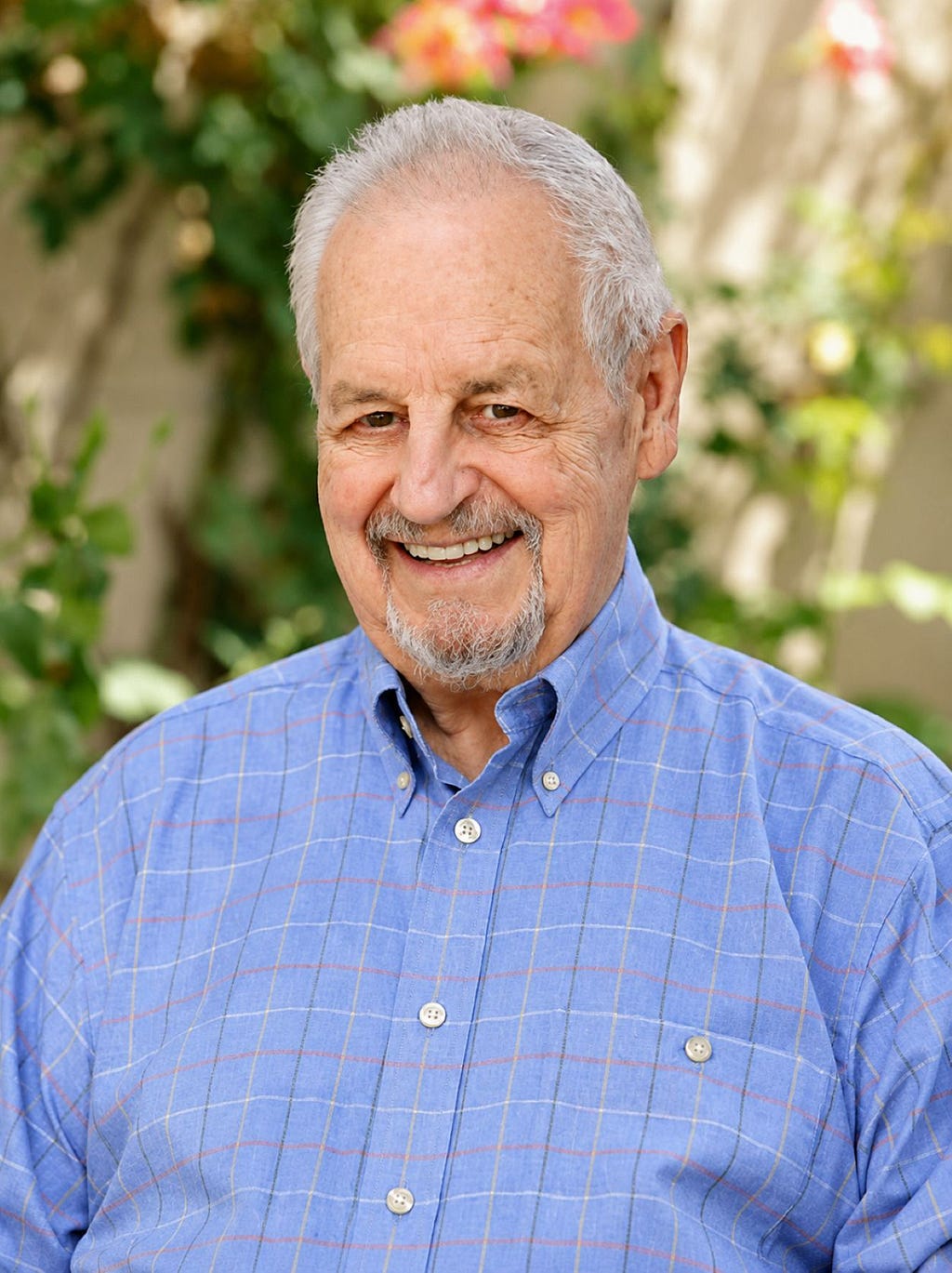
Veteran Actor Paul Dooley on Becoming Hollywood’s Ultimate Movie Dad, Rewriting Sixteen Candles, and the Confidence Behind Nearly 800 Screen Credits
“Trust your own talent. I’ve never had stage fright. I never doubted my talent. For some reason, I had a lot of faith in everything I did, in the way I did it, and the way I wanted to do it.”
I had the pleasure of talking with Paul Dooley. For over half a century, his face has been a steady fixture of the American screen. He is widely recognized for playing warm, agreeably rumpled father figures in classic films like “Breaking Away” and “Sixteen Candles.” Yet the man who became Hollywood’s ultimate dad had a surprisingly cold template for the role. Born Paul Dooley Brown in Parkersburg, West Virginia, he grew up under the roof of a profoundly stoic factory worker. “My father was a big influence, but not in a nice way,” Dooley recalled. “He never smiled, as far as I know, ever in his life.” His father was a man of silent labor who built their six-room house by hand, taking three months to finish a single room. “I never saw him hug my mother or say, ‘I love you,’” Dooley explained. “He felt his job was to provide food for the family, and that was his main job, but he wasn’t affectionate or anything.” It was only decades later in therapy that Dooley realized the sheer genius required to build a house from scratch with poor eyesight.
Instead of turning to his father for warmth, the young Dooley turned to the radio. He found solace in the voices of Red Skelton, Jimmy Durante, and Jack Benny. He began analyzing the architecture of a joke, trying to figure out who made them up and how they worked. At the same time, he was an avid cartoonist. The real artistic earthquake hit when a friend showed him an 8mm film of Buster Keaton. “I wanted to be like him. I wanted to be Buster Keaton. I was 15,” Dooley said. Thirty years later, he met his idol on the set of a commercial. “It was like meeting your God,” he said, recalling how the frail, low-voiced legend signed a book for him. Keaton remains his ultimate comedy hero.
After a stint in the Navy and graduating from college, Dooley moved to New York City. He hustled as a magician, a clown named Dooley, and a stand-up comedian. His sharp comedic timing eventually landed him a role in the original 1965 Broadway production of Neil Simon’s “The Odd Couple.” The play originally starred Walter Matthau and Art Carney. Carney struggled with alcohol and frequently missed performances, leading Dooley to step in as his understudy. “With ten minutes’ notice, I’d go on stage and play his part,” Dooley remembered. “The audience was going, ‘What? Who’s he?’ Some people began asking for their money back because if it’s The Odd Couple, it means a couple.” Despite the chaos, Dooley thrived under the pressure and played the iconic role of Felix Ungar around thirty times.
True cinematic recognition arrived later in life. Director Robert Altman spotted him and cast him in “A Wedding,” kicking off a fertile creative partnership. Dooley soon landed the role of the exasperated father in “Breaking Away,” which earned him serious critical acclaim. Behind the scenes during this era, he also co-created and served as head writer for the groundbreaking PBS children’s series “The Electric Company.”
Then came “Sixteen Candles.” Initially, Dooley and his agent turned down the role, holding out for a better offer. The studio assumed he wanted more money and doubled his salary. He only agreed after director John Hughes wrote a specific scene to win him over. However, the famous moment where Dooley comforts Molly Ringwald on the couch almost took a tasteless turn. Hughes had originally written a stage direction for the father to pat his daughter on the behind and ask about her missing underwear. “I said, ‘What? If you can detect missing panties that easily, he’s just copping a feel on his own kid,’” Dooley recalled. Trusting his improvisational roots, Dooley rewrote the ending on the spot. “I made up the last line… ‘When you meet your Mr. Right, just make sure he knows you wear the pants in the family.’” It was a clever pivot that saved the emotional core of the scene.
Dooley’s career is filled with encounters with other complex minds. While playing Wimpy in “Popeye,” he worked closely with Robin Williams. Dooley viewed Williams as a brilliant but restless spirit who treated comedy like a crusade. “I analyzed him in my mind as manic-depressive,” Dooley noted, recalling a lunch where Williams spaced out completely. “I figured he was so full of energy, so driven, that he had to go back to re-energize his mind.” Dooley advised the young comedian to slow down, telling him, “Hey, take it easy, Robin, you already have the job. Where are you going?” He also had high praise for his other co-star, Shelley Duvall. “I think in a funny way, Shelley Duvall stole that show. She was exactly what Olive Oyl should be,” he noted.
Even in recent years, Dooley’s distinctive voice has kept him firmly in the pop culture landscape, most notably as Sarge in Pixar’s “Cars” franchise. When asked about the character, he took a highly pragmatic approach. “I decided to give him a gravelly voice,” he said. “Now that I’m older, I actually have a gravelly voice. Who am I kidding?”
In addition to “Cars,” he recently appeared on HBO’s “The Comeback” with Lisa Kudrow and filmed an upcoming episode of “Ballard” with Maggie Q, which will air on Amazon as part of the series’ second season. He also appeared on stage alongside his wife, Winnie Holzman, the acclaimed writer of “Wicked,” in “Assisted Living,” a play they co-wrote.
Looking back on a career spanning nearly eight hundred credits across stage, screen, and television, Dooley remains remarkably unpretentious about his craft. He has no complicated theories about acting or survival in Hollywood. “I basically just say, be yourself; be your best self,” he advised. “Trust your own talent. I’ve never had stage fright. I never doubted my talent.” In an industry built on insecurity, that quiet, steady confidence is exactly what makes Paul Dooley such a lasting presence.
Yitzi: Paul, it’s so wonderful to meet you. Before we dive in and talk about your amazing work and your career, our readers would love to learn about Paul Dooley’s personal origin story. Can you share with us the story of your childhood, how you grew up, and the seeds and the genesis for all the amazing work that has come since then?
Paul: Great to be met. I was born in Parkersburg, West Virginia, a town then of about 50,000 people, so it wasn’t tiny. My father was a big influence, but not in a nice way. He never smiled, as far as I know, ever in his life. He was a very hard-working man who worked in a factory. Then he would come home, go out to his workshop, and work there more, and then he’d be called for dinner.
I never saw him hug my mother or say, “I love you.” He just wasn’t that kind of guy. He was all work. However, he built the house we lived in by hand, personally, by himself, with no friends, ending up with about six rooms. He’d take three months to build one room, another three months to build another room. He was a very hard-working guy, but he wasn’t affectionate or anything like that. He wasn’t a businessman, just a hard-working guy. He felt his job was to provide food for the family, and that was his main job, but he wasn’t affectionate or anything. I never saw him pay attention to my mother in any loving way.
As a kid, I thought everybody’s father was like that. That’s how we feel when we’re kids. I thought everybody’s father built his own house by hand. But years later, when I was in therapy, my analyst said to me, “He may have been a man with no formal education, but he had to be some kind of genius and highly intelligent to do all those things. He had poor eyesight. How do you put hinges together? How do you put all that stuff together and make it work?”
He did it. I don’t know how he did it, but I only appreciated that achievement years later when I was talking to my therapist about it.
Yitzi: Tell us the next chapter. Tell us how you entered the entertainment industry.
Paul: Well, my first love was listening to the radio and several comics. In particular, one was Red Skelton, one was Jimmy Durante, and the third one was Jack Benny. I wasn’t interested in acting. I never thought at that time, being 15 or something, that I would be an actor. But I was interested in their jokes. I began to have an ear for jokes. I would say to myself, what is a joke? Who makes it up? How do they do it? I was just an admirer of humor.
Privately, I was doing cartooning. That was kind of my first love, and I did a lot of that. The first thing that influenced me artistically was when a friend of mine showed me a Buster Keaton film on an 8mm projector and 8mm screen. I thought he was a genius, which, of course, he is and turned out to be. I wanted to be like him. I wanted to be Buster Keaton. I was 15.
Thirty years later, I met him, and it was like meeting your God. I did a commercial with him that lasted for two days. At the end of the first day, I said, “I have a book at home that you wrote. If I bring it tomorrow, would you sign it for me?” He said, “Sure.” That’s Buster Keaton. He spoke one word, one syllable to me. He was a very thin, frail-looking guy, very skinny, really, but his voice was down here. His voice was kind of low. He was my first big hero, and still, there’s nobody funnier than him, not even Chaplin.
Yitzi: You probably have some amazing stories from your very long and storied career. Can you share two stories that stand out in your mind from your successful career? Do you have a Robin Williams story from Popeye?
Paul: Robin was great in that movie, and he had a handicap because it came from a comic strip by Jules Feiffer, who was the screenplay writer for Popeye. The Popeye character in the comic strip from way back in the ’30s always spoke in a really odd way. He asked for an apology from some ruffians, and he said, “I insist on apology.” It had lines like that. That was not the easy part to do because how does the audience relate to a guy who has that odd way of speaking?
He was great to work with. I analyzed him in my mind as manic-depressive because the way Robin is in his nightclub act is a guy who just races through the material. He never stops to give the audience a chance to laugh at the jokes; it’s just a crusade. One day we were having lunch, and I said to him, “Do you think we’ll go late tonight?” Five minutes later he said, “What?” I figured he was so full of energy, so driven, that he had to go back to re-energize his mind. He had to get away from that focus of doing things too fast. That was his depressive part.
I used to see him on The Tonight Show talking to Johnny Carson. He was very soft-spoken and wasn’t trying to be a comedian at all in some of those appearances. He would often just talk about his family and didn’t sound like Robin Williams, although sometimes he’d jump out of the Paul chair, run down to the camera, and put his eye on the lens. I found later in life he became tremendously skillful. Good Will Hunting was one of the first, and he really became a good, serious actor and did a lot of great parts. But in his act as another comedian, I never admired his speed. I said, “Hey, take it easy, Robin, you already have the job. Where are you going?” He was a great guy.
I think in a funny way, Shelley Duvall stole that show. She was exactly what Olive Oyl should be. She told me in middle school they called her Olive Oyl. Can you imagine? I thought she was beautiful. She was beautiful and funny. She had high cheekbones, prominent teeth, and a long, graceful neck. In some light, I thought she was homely and kind of goofy-looking, and in another light, I thought she was beautiful.
Yitzi: You were in Sixteen Candles, which is a classic. Can you share any stories about that?
Paul: I do have a story of how it happened to even have that scene. I had finished this film, which was my first big success. It was called Breaking Away, and they offered me a part in a film called Sixteen Candles. My agent and I were talking. He said, “Well, you got such great reviews from Breaking Away, I don’t think we should take the first thing that comes along. Wait for a better offer for a better part.” We told them no on Sixteen Candles.
Automatically, as Hollywood likes to think, they raised the price. They doubled the price because they thought I was only interested in money, but that wasn’t it at all. After turning it down two or three times, I kind of just forgot about it. Then I got a call from the director, John Hughes, who said to me, “We really want you to be in this, and I’ve written another scene where you’re tucking your daughter into bed on the couch. I hope it’ll convince you to be part of our show.” I read the scene, it was a nice scene, and I thought, “Yeah, okay.” I changed my mind and said I would do it, but only because turning them down twice made them come after me harder.
Yitzi: Do you want to tell us about a portion of that script where you made some changes and suggestions to make that moment even more special?
Paul: John Hughes’ appeal was always from the Lampoon. He had the Lampoon at Harvard, and then he became another Lampoon after college. When I saw the script for the scene that became the iconic scene with Molly Ringwald, it actually said these words: he gives his daughter a friendly pat on the behind and says, “Where the hell are your panties?”
I said, “What? If you can detect missing panties that easily, he’s just copping a feel on his own kid.” I told him, “I’m not sure I want to do that scene the way you wrote it.” He said, “Don’t worry about it. In pre-production, the day before we shoot, we’ll have conversations about things, and together we’ll work it out so that you’re not offended or anything.” I couldn’t believe he had written it that way.
I made up the last line. It was, “Don’t you worry about your sister getting married to that bohunk,” which is also tasteless because it’s a derogatory word for a Hungarian. “When you meet your Mr. Right, just make sure he knows you wear the pants in the family.” Suddenly, you hear the words that you needed to hear, because the very next shot was Anthony Michael Hall holding up a pair of panties. That was my way out of doing that very tasteless idea he had for a scene.
Yitzi: So you ad-libbed that, and he was fine with it?
Paul: I didn’t write it down. I knew what I wanted to say. I just wanted to end with the word ‘pants’ because the next scene required Anthony Michael Hall to hold up pants. I’m an improviser, so I’m always ad-libbing if I need to.
Yitzi: What has been the most challenging project or role you’ve taken on so far and why?
Paul: I don’t remember any that were hard for me. I know my lines; I learn them early. I’m also an improviser, so I can change them a little here and there. I’ve never had something that threw me or that I had to work exceptionally hard to make happen. I’m pretty good with my lines, and I can enhance them by improvising and turning them sideways or upside down. It’s never been hard for me to learn lines or to retain them.
Yitzi: What do you think it was about the Cars franchise that made it so beloved?
Paul: Well, somebody said they would like me to do the voice of Sarge, and I asked myself, “What does he sound like?” I didn’t ask them. I realized it’s an Army Jeep. He’s not on freeways or highways. If anything, he’s in an open field where war would be happening. He was probably near open country, dirt roads, maybe gravel.
I decided to give him a gravelly voice. Now that I’m older, I actually have a gravelly voice. Who am I kidding? But I made him sound like a gravel road because I used a gravelly voice down in my throat. It’s fun to do, and I talk like that half the time anyway.
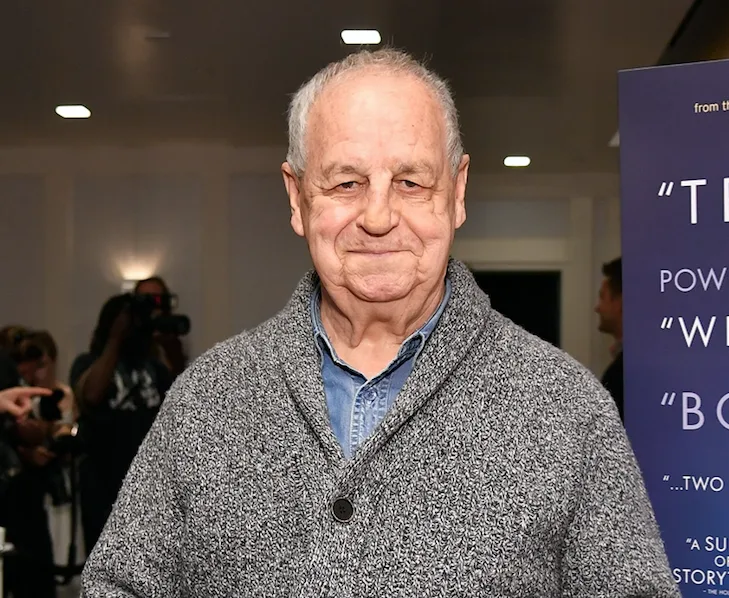
Yitzi: Amazing. This is our signature question. You’ve been blessed with a lot of success, and you must have learned a lot from your experiences. Looking back all the way to the beginning, Paul, when you first started, can you share five things that you’ve learned over the years that somebody starting out today would really benefit from?
Paul: That’s a good question. I may only have four things. No, three. I’m not good at giving advice, but I just say to trust your own talent. I’ve never had stage fright. I never doubted my talent. For some reason, I had a lot of faith in everything I did, in the way I did it, and the way I wanted to do it. It’s hard for me to give people advice because every one of us is different. I basically just say, be yourself; be your best self.
Yitzi: Great, beautiful. Paul, because of your amazing work and the platform that you’ve built, you are honestly a person of enormous influence. If you could spread an idea or inspire a movement that would bring the most amount of good to the most amount of people, what would that be? You never know what your idea can inspire.
Paul: Wow, what an assignment. As I said a moment ago, I say be honest about your talents and don’t doubt yourself if you think you have talent. You’re an example to other actors if you do that. You show that you’re comfortable with your own talent, and you don’t mind ad-libbing or improvising to show other performers what your talent is. I am really not a guy to give advice, except to say be yourself, enjoy yourself, and realize that your ideas are just as good as any a writer might have written for you. It’s not always true, but I had a lot of faith in my own writing and acting ability, so I was my own inspiration, except for Buster Keaton.
Yitzi: That’s amazing. Paul, how can our readers continue to follow your work? How could they watch your many films and TV shows? How could they support your work in any possible way?
Paul: Well, I’ll share a number of opportunities with you. Since we’re talking about Father’s Day, I wrote a book a few years back called Movie Dad. There’s that book, which is still available for sale on Amazon. Every show, I would think, is available between HBO and all the streamers. Sixteen Candles is always on. There’s always a Paul Dooley film available to stream screen, at least one.
I didn’t really keep track of my films numerically, but a fan once sent an IMDb page to me telling me that I have 775 credits. Either television shows or movies, which surprised me. I said, “I don’t remember doing that many -I knew I kept busy, but that shocked me.”
I did The Odd Couple with Walter Matthau, and Art Carney was his co-star. Art turned out to be a drinker, and he began to miss a lot of shows. In the theater, if you’re not there at half-hour, that’s a big emergency. If you’re not there at half-hour, there’s a feeling you may not get there by fifteen minutes to curtain.
I became his understudy. If he didn’t show up, or was late and couldn’t be reached by phone, they’d say, “Get into his costume,” because his costumes and my costumes fit each other. With ten minutes’ notice, I’d go on stage and play his part. They did that quite a bit. Because it’s called The Odd Couple, there can’t just be Walter Matthau and another person. He had to be a star of sorts, and he was a star from The Jackie Gleason Show.
When I showed up as an understudy, the part of Art Carney would be played by Paul Dooley. The audience was going, “What? Who’s he?” Some people began asking for their money back because if it’s The Odd Couple, it means a couple. It became a thing where the management was sorry that he missed so many shows by being drunk. Over time, I probably played his part about 30 times. Then I was offered another job to be in a film which was shooting in Hollywood. I forget the film, but I had to go to Hollywood and be in something. I loved doing it because Neil Simon wrote the play. He was the best comedy writer on all of Broadway.
Yitzi: Well, Paul, it’s been an honor to meet you. I wish you continued success, good health, and blessings. I hope we do this again next year.
Paul: If you need me, just call.
Yitzi: It’s been a delight to meet you, Paul. Thank you so much.
Veteran Actor Paul Dooley on Becoming Hollywood’s Ultimate Movie Dad, Rewriting Sixteen Candles… was originally published in Authority Magazine on Medium, where people are continuing the conversation by highlighting and responding to this story.