…We can’t control too much of the big world, but we do all have our own little worlds. We have our mother, father, sister, pet, husband, or wife. It starts in your little world, and you can spread it out from there…
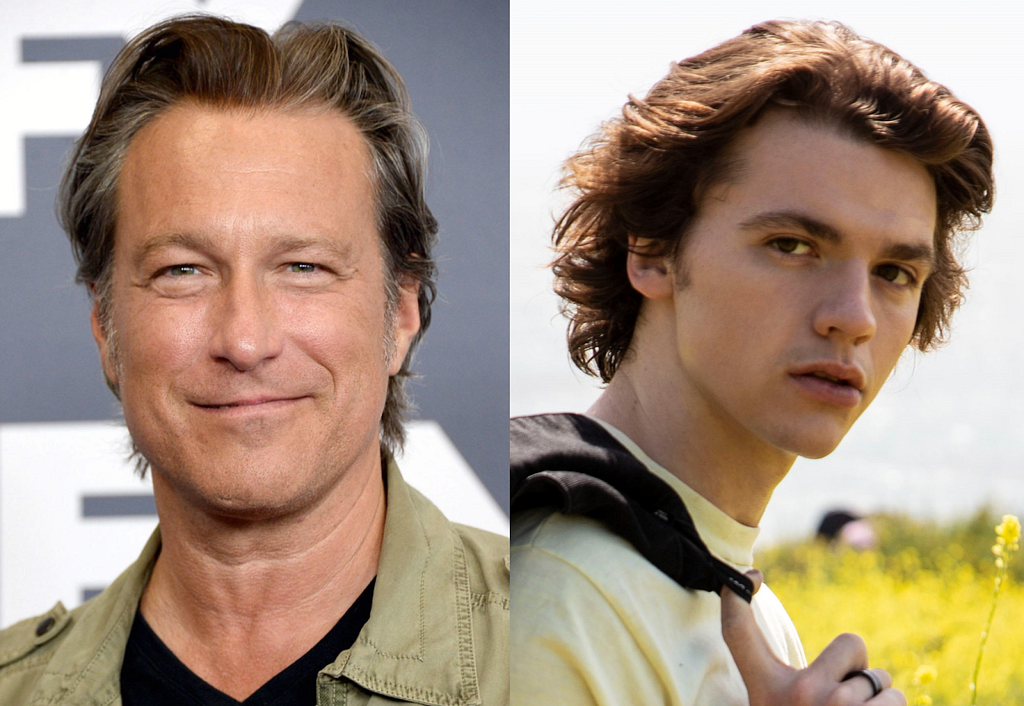
I had the pleasure of talking with John Corbett and Joel Courtney, two actors from vastly different generations who found themselves sharing a screen, a hotel, and a heavy emotional workload in their recent biographical drama, Soul on Fire. The film, which centers on the life of burn survivor and author John O’Leary, brought the pair to St. Louis, where the lines between movie magic and reality often blurred.
On the surface, they are an odd couple. Corbett, the 6-foot-5 veteran with the West Virginia drawl, has been a fixture of American pop culture for thirty years, charming audiences in Northern Exposure and Sex and the City. Courtney, the fresh-faced Idaho native, stumbled into fame as a child star in J.J. Abrams’ Super 8 and cemented it with Netflix’s The Kissing Booth. Yet, sitting down to discuss their work, the chemistry is evident — a mix of mentorship and mutual respect.
For Corbett, the production was less about the Hollywood gloss and more about the texture of the real locations. They didn’t just build sets; they inhabited the actual spaces of the O’Leary family history. “We shot in John O’Leary’s house, the church he was married in, and the hospital,” Corbett recalled, noting the surreal authenticity of the experience. “His real nurses were extras in the scene, so that was just great.”
The shoot wasn’t all heavy drama, though. Corbett, a man who has drifted from steelworker to hairdresser to country musician over his eclectic life, appreciates the quiet moments on set. He painted a picture of the downtime that feels distinctly human: “You’ll have 15 or 20 minutes while they set the cameras up somewhere else, and William H. Macy would get his ukulele out and sing funny little songs. I just remember those kinds of nice things.”
For Courtney, the highlight was a bit grander. Filming at Busch Stadium, the home of the St. Louis Cardinals, left a mark on the young actor. “That day lives rent-free in my head,” Courtney said. He described the “sacred” nature of the stadium grass, which required tarps to walk on. “We got to run the bases. Busch Stadium was phenomenal.”
Corbett, ever the grounded realist, was quick to bring the majesty of the stadium back down to earth, noting with a laugh that their current view was less romantic. “If we got a chainsaw right now and cut a five-foot hole in the back wall, Busch Stadium is right there,” he joked.
In the film, Corbett plays Denny O’Leary, the family patriarch — a role that required him to stretch beyond his own life experience. Born in Wheeling, West Virginia, and raised Catholic, Corbett has lived a life of independence. He didn’t marry his longtime partner, Bo Derek, until 2020, and he never had children. Playing a father of six required observation, not memory. “I had to draw on all my friends who have children and what it is like being around them to convey that feeling,” he admitted.
There is a poignancy to Corbett’s portrayal. The real Denny O’Leary lived with Parkinson’s disease for decades and passed away shortly before the film’s release. “He got to see the movie,” Corbett noted, calling it a “tip of the hat” to a man who watched his son survive the impossible.
Courtney, playing the younger John O’Leary, found himself reflecting on the differences between his own sunny disposition and the deep, resonant joy of the man he portrayed. While Courtney describes himself and Corbett as “faith and family” oriented, he was struck by O’Leary’s spirit. “I’m a pretty happy guy and an optimist… but John has a joy in his heart that is unmatched,” Courtney said. “I just want to be joyful like John.”
When the conversation turned to the potential impact of the film, the generational divide between the two actors became fascinatingly clear. Asked about what kind of “movement” the film might spark, Corbett seemed momentarily stumped, a man who has seen enough of the world to be wary of grand statements. “Help me out on this,” he said to his co-star.
Courtney stepped in with the idealism of youth, suggesting a movement of “loving the person in front of you,” whether it’s a limo driver or a father. “Just put out love and joy. The world can always use more of that.”
Corbett liked the answer, but when pressed on the state of a divided America, his “happy-go-lucky” persona gave way to a grittier, blue-collar realism. This is a man who spent six years in a Kaiser Steel factory before a back injury pushed him toward acting; he doesn’t view the world through rose-colored glasses.
“I feel like my whole life the United States has never really been united,” Corbett said bluntly, referencing the JFK assassination which happened when he was a toddler. “The glass is half empty for me on that one. I don’t know how we’re even going to fill that glass with milk at this point.”
It was a stark, honest moment — the kind you don’t often get in promotional interviews. Courtney, perhaps wisely, steered clear of the politics, pivoting back to grace and shared trauma. “Everyone is hurting from something,” Courtney offered. “We can all support each other… and unite around common good and decency.”
In the end, Corbett offered a compromise between his cynicism and Courtney’s hope, a philosophy that feels true to his roots. You can’t fix the whole country, he argued, but you can fix your living room. “It all starts with you… in our little world,” Corbett concluded. “We can’t control too much of the big world, but we do all have our own little worlds.”
It’s a simple sentiment from a man who has lived many lives — from the steel mills of the seventies to the red carpets of today. And as they wrapped up, it was clear that while they might see the world differently, both actors are just trying to tell a story that matters.
Yitzi Weiner: It’s such a delight to meet both of you. John, there probably have been so many amazing stories from producing and making this film. Is there a story you could share that stands out from the production?
John Corbett: Okay, for me. I just remember we shot in so many great locations. We shot in John O’Leary’s house, the church he was married in, and the hospital. His real nurses were extras in the scene, so that was just great. There is always some downtime between shooting a movie; you’ll have 15 or 20 minutes while they set the cameras up somewhere else, and William H. Macy would get his ukulele out and sing funny little songs. I just remember those kinds of nice things. How about you?
Joel Courtney: One thing that stands out is the day we were filming in Busch Stadium. That day lives rent-free in my head. I remember that entire day; it was incredible. We had the stadium all to ourselves. The grass is very spirited; if you walk on it too soon after it’s planted, it will die. They were putting out tarps for us to walk on, and we weren’t allowed to walk on it unless we were given specific instructions. We got to run the bases. Busch Stadium was phenomenal.
John Corbett: If we got a chainsaw right now and cut a five-foot hole in the back wall, Busch Stadium is right there. It’s right out at this hotel we’re in. It’s cool. Our hotel looks right at it. It’s neat.
Yitzi Weiner: John, you played Denny O’Leary. How would you compare and contrast your personal character with the character you play? How are you similar, and how are you different?
John Corbett: Well, there’s a big difference in that I’ve never had children, and Denny had six kids. I had to draw on all my friends who have children and what it is like being around them to convey that feeling. I’m a happy-go-lucky guy. Denny had Parkinson’s for the last 30 years and sadly passed away a few months ago. He got to see the movie, which is good because it was a tip of the hat to his son making it through life, and then they made a movie about him. Who doesn’t want that to happen?
Joel Courtney: And Denny is in the film, too, which is really great.
John Corbett: He is. He’s in the film when John O’Leary is getting married. The parents are there, and John’s real parents are behind us in the church, which is really cool. However, if you’ve ever loved anything or anyone in your life, it is easy to play a man who loves his family.
Yitzi Weiner: How about you, Joel? How are you similar or different from John, the character you play?
Joel Courtney: John and I are similar and different in so many ways. Faith and family are important to both of us. We both married beautiful brunettes; our wives are out of both of our leagues. regarding differences, John is more joyful than almost anyone I’ve ever met. I’m a pretty happy guy and an optimist; things kind of roll off me. I don’t take things too seriously. But John has a joy in his heart that is unmatched. That was one of the things I really took away from this film: I just want to be joyful like John.
Yitzi Weiner: That’s great. “Be joyful like John.” Beautiful. John Corbett, if a movement were to be sparked by this film, what do you hope that movement would look like?
John Corbett: A movement. Wow. That’s a question I haven’t thought of. Help me out on this. What kind of movement could we create with this movie?
Joel Courtney: I think it’s just a movement of everyone loving the person in front of them. That’s what John always says: “Love the person right in front of you.” If they’re your limousine driver, your waiter, your father, your sibling, or a good friend in a moment of need, just support and love everybody right in front of you. What goes around comes around — Karma, if you believe in that. Just put out love and joy. The world can always use more of that. A movement of love and joy? I don’t know.
John Corbett: Thank you. That’s my answer. I love that. A movement of love, that’s fantastic.
Yitzi Weiner: As you know, the United States is going through a bit of stratification right now. How do you think the message of this movie can put the “United” back into the United States?
John Corbett: Hmm. I don’t know. I’m almost 65, so since I was a young boy — I was maybe four when John F. Kennedy was assassinated — I feel like my whole life the United States has never really been united. The glass is half empty for me on that one. I don’t know how we’re even going to fill that glass with milk at this point. Do you?
Joel Courtney: Politically, the divide is so wide, and that’s not really my spot to talk about. I’m not completely informed on all of that. That’s a lot bigger than me. I think we could focus on the things that we are united around. Everyone is going through something. Everyone is hurting from something in their childhood or something that happened to a family member. We can all support each other, have a lot of grace for each other, and unite around common good and decency.
John Corbett: I like that. I will say this: it all starts with you, Yitzi, me, and him, in our little world. We can’t control too much of the big world, but we do all have our own little worlds. We have our mother, father, sister, pet, husband, or wife. It starts in your little world, and you can spread it out from there.
Yitzi Weiner: I love that. Thank you so much for your time. I wish you continued success, good health, and blessings, and I hope we’ll do this again.
Joel Courtney: Yeah, thank you, Yitzi. It was great to meet you.
John Corbett: This was a great one. Thank you.
Yitzi Weiner: Thank you so much. Thanks a lot. I appreciate it.
John Corbett & Joel Courtney on William H. Macy’s Ukulele, ‘Sacred’ Stadiums & The Mechanics of Joy was originally published in Authority Magazine on Medium, where people are continuing the conversation by highlighting and responding to this story.