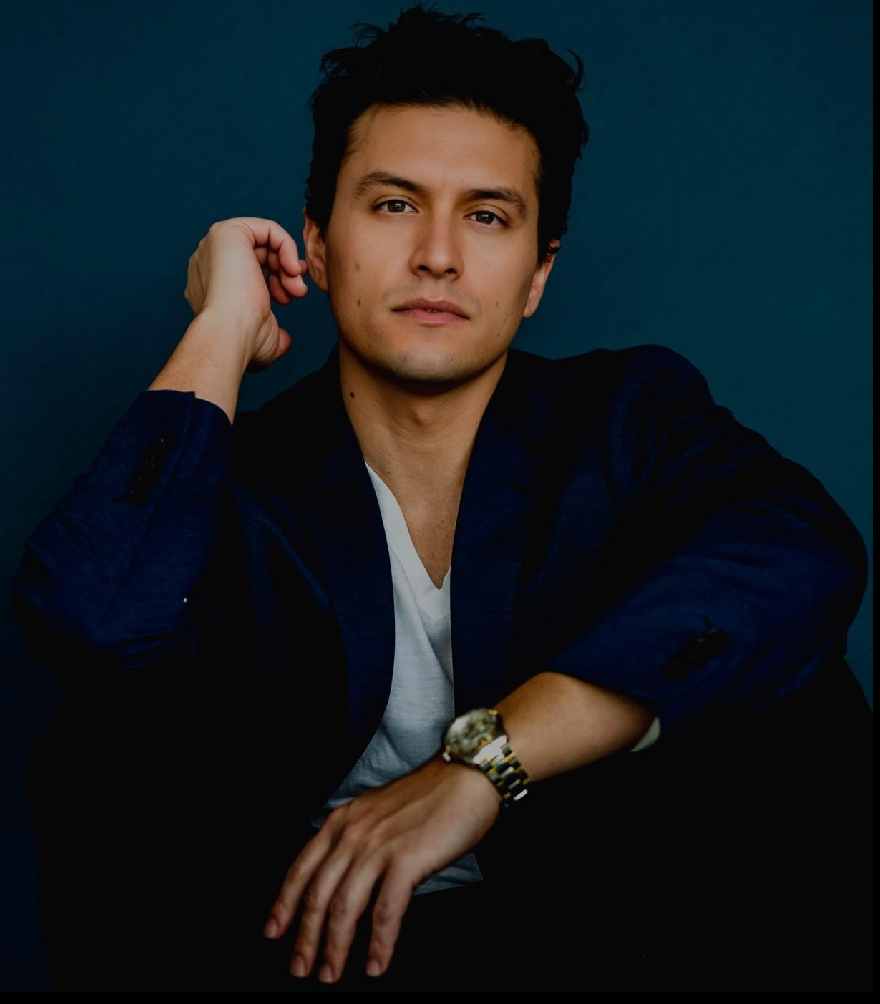
I feel a lot of the dissonance in our society is because people don’t feel like they have a voice. Art reflects life, which reflects art. If I can utilize art in the fashion of Fabian Verdugo, who imprinted his soul upon mine, and bring stories back to little pockets of the country, then I can really use art for what it’s meant to do: bring people together. That’s to make them in touch with their humanity and good emotions, impacting them so they can live a better, healthier, and more productive life.
I had the pleasure of talking with Matt Drago, an actor who carries himself with the sort of quiet, focused intensity you might expect from a fourth-degree black belt. But beneath that discipline lies a storyteller deeply rooted in the foothills of the Appalachian Valley in Virginia. Drago isn’t interested in the superficial glitz of the industry; he is chasing something far more elusive: the human connection found in the space between two people.
Drago’s journey began long before he found himself on sets in Los Angeles or Montana. Growing up in Virginia, he used his imagination as both a playground and a shield. Dealing with a complicated family situation marked by divorce, acting became his sanctuary.
“Honestly, it was something I was instantly taken by, creating characters and stories with my own imagination,” Drago told me. “I didn’t need a lot of toys to do it; I just needed myself and my innermost thoughts. I also felt like it was a way to connect me to my own humanity, and it was an escape at the same time.”
While a childhood trip to see Cats, where he sat on stage, first sparked his interest, it was a middle school production of Tom Sawyer that cemented his path. In a moment of unscripted chaos, a janitor accidentally locked a door, preventing another actor from entering for a pivotal scene. Stranded on stage with the kid playing Huck Finn, Drago was forced to improvise.
“We were literally left stranded on stage for what felt like 10 minutes,” he recalled, laughing at the memory. “We just started to improv in character… I remember getting off the stage at that performance, having gone completely off script, and just marveling at how fun that was.”
That thrill of living in the moment eventually led him to New York City, where the realities of the business quickly set in. Like many young actors, Drago initially fell into the trap of trying to be what others wanted. He spent his early days obsessing over representation and trying to please agents, a mindset he now views as a “humorous mistake.” It took the advice of mentors to snap him out of it. They told him, “Matt, you got to do this for yourself… You have to not think about booking the job; you have to think about the joy of bringing yourself to the work.”
Despite honing his craft at prestigious spots like Marymount Manhattan College and T. Schreiber Studios, the “no’s” piled up. He reached the final callbacks for Broadway productions, only to come up short every time. It was a crushing period, but it led to a pivotal conversation with his mentor, Terry Schreiber. Schreiber saw Drago’s potential on screen rather than the stage and suggested a move to the West Coast.
Leaving New York was difficult. It meant leaving his grandmother, who had been his anchor. Yet, Drago and his girlfriend, now his wife, packed up and drove west, crashing with a friend’s grandfather in Studio City. It was a gamble that paid off, leading to a creative rebirth in Los Angeles.
That rebirth culminated in his recent role as Fabian Verdugo in Somewhere in Montana. The film, which stars Drago alongside Graham McTavish and Michelle Hurd, tackles the deep divides in modern America. For Drago, the role required total immersion. Adopting a method acting approach, he lost 30 pounds and lived with the character for nearly a year and a half before filming began.
“You hear a lot of negative things about method acting, but those are just the horror stories,” Drago explained. “The reality of method acting is you ground yourself as yourself and as the character, allowing them to blend into each other.”
The film was shot on location on an active cattle ranch in Polson, Montana. The production mirrored the plot: a film crew invading a working ranch. Drago recalled a profound moment with David, the real-life rancher, that crystallized the movie’s themes. When Drago asked him about the sacrifice required to raise cattle, the rancher teared up, looked at the sun, and said simply, “Oh, it’s still hard.”
“I thought, ‘Damn, if that is not the story we are telling, I don’t know what is,’” Drago said. “Even though this man is completely different from me, we need each other.”
Today, Drago balances the intensity of his work with a grounded personal life. He practices martial arts, and watches sports to decompress. He is driven by a desire to bring cinema to the “little pockets” of the country that often feel unseen.
“It’s not things. It’s not ideologies. It’s people,” Drago said, quoting his director. It is a philosophy he lives by. Whether he is improvising on a middle school stage or navigating the complexities of a feature film, Matt Drago remains focused on the people in front of him, believing that if you listen closely enough, art can still bridge the divide.
Yitzi: It is so nice to meet you. Before we dive in deep, our readers would love to learn about your personal origin story. Can you share with us a story of your childhood, how you grew up, and the seeds for all the amazing things that have come since then?
Matt: First of all, thank you so much for having me today. I really feel like acting was something born inside of me as a child. I grew up in the foothills of the Appalachian Valley in Virginia. Honestly, it was something I was instantly taken by, creating characters and stories with my own imagination. I didn’t need a lot of toys to do it; I just needed myself and my innermost thoughts. I also felt like it was a way to connect me to my own humanity, and it was an escape at the same time. I grew up in a tricky family situation, a lot of people deal with divorce, but it was a place that I felt was a safe space for me growing up.
But the best part was when I started to meet the people involved in the arts, and I just fell in love with them. It brought me a lot of joy just to be around people that were likeminded, empathetic human beings who felt like they were telling stories that could impact the world. I say this all the time, but I think actors and creatives are some of the most selfless people you’ll ever meet because they’re really in touch with themselves. They’ve done that work, that emotional journey, and they keep doing it over and over again.
A story for me, let’s see, one that maybe I haven’t told in a while. I played Tom Sawyer in middle school. It was at a time when I was fully in on acting. I was in community theater shows and regional theater shows, but this was a really interesting middle school production of Tom Sawyer. The kid playing Huck Finn opposite me was also great at improv. I remember this one day where the janitor accidentally locked the downstairs door. Basically, the person who needed to come in for the scene couldn’t enter. It was the graveyard scene for Tom Sawyer and Huckleberry Finn, and we were literally left stranded on stage for what felt like 10 minutes past when the scene was supposed to end. We just started to improv in character, coming up with stuff, being scared, being excited at the same time, we were two boys, you know? I remember getting off the stage at that performance, having gone completely off script, and just marveling at how fun that was. It was so exciting to be deeply entrenched in a world and a character unlike my own. It sparked so much joy in my life that, at that point, I couldn’t get enough of it.
Yitzi: It’s been said that sometimes our mistakes can be our greatest teachers. Would you have a story about a humorous mistake that you made when you were first starting and the lesson that you learned from it?
Matt: A humorous mistake? Oh man, I have to really think back on that. That’s a really good question, so I’m going to take my time to think about it. I don’t know if it’s a humorous mistake necessarily, but when I moved to New York City and really started to hone in on my craft, I was very set on who my representation was. I felt like that was the way I got to the next level, who’s my representation, and more importantly, how do I make them happy? It wasn’t even about me, my art, or my storytelling; it was about making them happy. I guess it is humorous to me now because of how silly that sounds, but it was an evolutionary process.
I had conversations with some of my acting teachers and people who were working actors. In many ways, many different people, from Broadway performers to well-known acting teachers, at some point said, “Matt, you got to do this for yourself. This is your art, this is your journey. People are going to come and go, but you are the person bringing life to these characters. You have to not think about booking the job; you have to think about the joy of bringing yourself to the work.” When I started to take that mindset, it really propelled me to adopt strategies that brought much more joy. There is a lot of stress and unknowns in the acting world; you’re basically out of work until you get the next job. But for me, it gave me that joy where, when I got an audition, I could just take it, run with it, and have fun with it, almost like I did when I was playing Tom Sawyer in my middle school production.
Yitzi: There is a saying that “no” is not rejection but redirection. Do you have a story like that where a “no” led to an unexpected success, discovery, or blessing?
Matt: Absolutely. It was a multitude of “no’s,” actually; I can’t really just pick one. I was up for quite a few leads in Broadway productions. It was getting that close, tasting it, feeling like I really was prepared, and I just came up short. I mean final callbacks for five major Broadway productions. I think it was those “no’s” that led me to have a conversation with a mentor.
I’ve always been a big proponent of mentorship. Both of my parents are teachers. My dad is a martial artist and lifelong sensei; my mom is a choreographer and dance teacher. So, I’m always about asking the people I feel have been through more life and can see my journey outside of myself. I remember going to Terry Schreiber, who has trained incredible actors including Edward Norton and many others. We had sort of a grandfather-grandson relationship. He brought me into his office one day. Even though I only saw him once a week for studio, there was a real connection. I felt so safe with him that I could explore anything artistically in his space at T. Schreiber Studios in Chelsea, New York. I could also have a tough conversation with him, and he would give me words of wisdom and incredible feedback.
I went to him, and I was down on myself. It wasn’t that I was going to quit, but I felt maybe I actually wasn’t good enough to succeed despite all the work I’d done. At that point, I’d gotten the degree, I was studying with the best voice teacher, the best audition coach, and Terry, the best acting coach in town. I said, “I feel like I’m doing everything I can to learn, grow, and hone in my craft, but I keep coming up just short.” He looked at me and said, “In many ways, art exists in many different facets. There are so many different ways to tell a good story. Maybe you should give LA a shot.”
Because he was more into TV and film, he said, “I’ve seen your work in so many ways over these two years, and I feel like that could be a great vessel for you. The stage will always be here.” He gave me the freedom to leave New York, which to this day is probably one of the most difficult decisions I’ve ever made. I was living with my grandmother, who was my person growing up. She gave me a safe space in one of the most complicated cities in the world while I was going to college.
At the time, I had met a girl at T. Schreiber Studios. We found out we grew up three blocks away from each other. My girlfriend then, now my wife, and I just got into a car and traveled west. We didn’t know if we were going to stay, but we gave it three months. We really felt at home. We didn’t have a place to stay, but my wife, Laura, had a friend at NYU, so we got to stay with her grandfather in Studio City. In a way, I felt like I found another grandparent in him because I was really missing my grandmother. Being in LA and auditioning felt like a rebirth for my creative process. I was meeting cool people, and I felt like I had the best of both worlds because I could always go back to New York. We looked at each other one day and just knew. We said, “This is home now.” And that’s where the next chapter began for me in LA.
Yitzi: What’s been the most challenging project or role you’ve taken on so far and why?
Matt: Definitely Fabian Verdugo in Somewhere in Montana. As a kid, I really felt the power in storytelling from a very young age. I believe that you can change the world with a good story. Maybe that’s an idealistic point of view for some, but we all have stories to tell. Whether it’s from a parent to a child or a grandmother to a grandson, these stories impact us. They imprint things in our lives that we can grow from and use to get better and be in touch with our humanity.
Going to New York and honing in on the craft really prepared me for Fabian Verdugo. It was a role I felt I had a lot of alignment with. Because of the teachings I’ve had with Terry Schreiber, who was friends with Lee Strasberg, I took the method approach. I lost 30 pounds for the role. I hired a nutritionist. I really got into the body of the character. You hear a lot of negative things about method acting, but those are just the horror stories. The reality of method acting is you ground yourself as yourself and as the character, allowing them to blend into each other. You find things about the character that are in you and things in you that are in the character, letting your behavior inform that.
It was the first time I went a full method approach for a character. I started journaling as the character and investigating him. Specifically, because this film was pushed back an entire year, I lived with this character for almost a year and a half before I went to set. In some ways, it was a blessing; in some ways, a curse because I just kept doing the work. I’d create playlists for the character, things I felt he would listen to, and really investigate where he was in his life. Fabian Verdugo, much like me, is a storyteller and a director who feels his legacy is built in the tapestry of leaving a couple of good stories behind that can impact humanity. I felt like there was so much alignment between Fabian and me that it became this wonderful dance. It taught me so much about myself, and that is something I’ll carry forward within me for the rest of my life.

Yitzi: You have so much impressive work, Matt. Please tell us about the exciting new projects you’re working on now. Please tell us more about Somewhere in Montana and tell us why we have to watch it.
Matt: Somewhere in Montana is a story of the times. It’s a story of a lot of the things that we are going through as a society, and it’s a story that we all need, including myself. It is about two alpha men from two different facets of life. In the words of Brandon Smith, the writer and director, they are thrust into an impossible situation that they need to get themselves out of.
In my life, respect has been one of the truest forms of love I’ve ever felt. This is a story about two people who innately don’t respect each other because they don’t know each other. We have our trials and tribulations, but when we start to listen to each other, things change. There is an incredible 10-page scene with just Graham and me that made me fall in love with this role. Getting to know Graham and becoming friends through this process, we found a way to make this a real conversation. We didn’t want to make it precious. We wanted to be responsible to the fact that anybody could have this conversation. A lot of people need to make this phone call or meet up for coffee to have this conversation, but we’re just not doing it. I feel like this is the type of movie that can propel you to make that action, to make that call, and to understand the reality that you’re never going to agree on everything. But if you can truly let that person in and see what they do for you, it can impact your life in a way that’s more profound than you could ever imagine.
I’ll share an aside because, for me as Matt, it was the moment I realized how powerful this story was. We shot everything on location in Polson, Montana, on a real, active cattle ranch. Ironically, the owners of the ranch weren’t sure if they wanted a movie production to shoot there. That is the exact same scenario that exists in the movie with Fabian Verdugo shooting his movie on John’s (Graham McTavish) ranch. It was a meta experience. Getting to know the owners, David and his family, was incredible. They’d have us over for breakfast, and we would hang out with their grandkids. They are different people than me in many ways, from a different part of the country, probably thinking much differently than me.
We were on set shooting at the cattle ranch one bright, sunny day, and David came out. I asked him a simple question, and he knew exactly what I was asking. You have to remember, a real active cattle ranch means they are raising these cows from calves. They are making a sacrifice so that people in town can eat. It’s a human sacrifice because it’s a lot of work, but you could tell his ranch is his legacy. That’s built into the tapestry of the film. I asked him, “How do you do this?” I just let that set into him. I had never seen him get emotional up until that point, but I could see a tear in his eye. He looked up at the sun and said, “Oh, it’s still hard.”
I thought, “Damn, if that is not the story we are telling, I don’t know what is.” Even though this man is completely different from me, we need each other. I need him, he needs me. We forget that. That’s the tricky thing with social media and a more technologically driven world: we are more separated. We don’t go to the theater as much, so we’re not around people as much. Even just sitting next to each other can be inspiring because we are all energy. But when we hide behind a computer, we can lose sight of our own humanity.
This film was inspiring for everyone on the cast and crew. Being an indie film, I knew every single person on set, the gaffer, sound design, the people loading trucks. We were so tight; we’d go to dinners and hikes together. We couldn’t get enough of each other because we understood the story we were telling was bigger than all of us. We were going to tell it proudly and with as much humility as possible. It’s one of those things you dream of as an actor.
Moving on to the future, it’s right back to the grind: auditioning and getting my message out with people like you who are sharing my voice. As an actor, I love not just being a collaborator, but getting my voice out there as a person. Who is Matt? What does he want to say in his life as a performer? What does he stand for? Getting to be written up in articles like yours or doing podcasts is a way for me to share what I’m about off the screen. I go back to that childhood Matt growing up; these are the types of stories I’ve always dreamed of being a part of.
Yitzi: This is our signature question. You’ve been blessed with a lot of success now, and you must have learned a lot from your experiences. Looking back to when you first started acting, can you share five things that you’ve learned now over the years that would have been really nice to know when you first started?
Matt: Five things?
- Do your art for yourself. That would be number one. A lot of people will try to put you in that bubble or give you advice that doesn’t feel right. You have to run your own ship as an artist and be willing to make your own choices. Once you do that, the people who are supposed to come into your life will find you because you’re more open to the process. The journey is the destination. If you’re doing your own art, you become a vessel, a beacon of light for people to be attracted to.
- Find ways to keep enjoying it. When you love something, you need to find an escape from it. I love sports; it’s my escape. I grew up watching baseball with my dad, I’m a big football fan, and I follow all the LA sports. It’s my way to escape myself from something I love so much. You have to find things in your life, like martial arts for me, doing katas in a park, to stop thinking.
- Don’t be “all in” all the time. I know that sounds like bad advice, but you actually become better at your craft by having other things around you that bring joy. It could be as easy as Sunday mornings on the couch with your dog and your wife, watching seven hours of football.
- It’s people that matter in life, not things. I’m going to quote Somewhere in Montana for this one. “It’s not things. It’s not ideologies. It’s people.” That is a direct quote from Brandon Smith, and it’s such a beautiful line. We get so entranced in what we own and the ideologies we read online, feeling like that is who we are. We have to remember it’s actually the people in front of us.
- Harness your relationships. Your relationships are everything in life. Look at them as a garden. Ask yourself, “Gosh, I haven’t connected with my best friend recently.” Invite them to things. Harness those relationships because, at the end of the day, those are the people who give you a foundation at your lowest lows and lift you up to keep fighting. My friends have become my family.
I’ll add an asterisk sixth one: The more you can give back in life, the more you’ll receive. I’m doing a screening in my hometown of Front Royal, Virginia, in less than a month. Some of my best friends, Dwayne, Tyler, Alissa, Katie, will be there. It is so gratifying to have family from the dojo or people I went to school with coming together for a night. It’s not just for me; it’s for all of them, and hopefully for the next generation who sees that this kid grew up in this theater watching movies and is now bringing a movie back to it. It’s a full-circle moment and a way to give back.
Yitzi: This is our final aspirational question. Matt, because of your amazing work and the platform that you’ve built, you’re a person of great influence. If you could spread an idea or inspire a movement that would bring the most amount of good to the most amount of people, what would that be?
Matt: I’m going to use an example of the last day I was in Polson, right after our screening. I was shopping for gifts for my wife, and I started talking to locals. A lot of them said the same thing about Somewhere in Montana because they had just seen it: it was so important for them to see a story about their little corner of the world. It meant so much to them. We have our movies about New York, LA, and Chicago, and they’re all great. But if I could do something, it would be to bring more movies to little pockets of my country that feel like they don’t always get seen or heard.
I feel a lot of the dissonance in our society is because people don’t feel like they have a voice. Art reflects life, which reflects art. If I can utilize art in the fashion of Fabian Verdugo, who imprinted his soul upon mine, and bring stories back to little pockets of the country, then I can really use art for what it’s meant to do: bring people together. That’s to make them in touch with their humanity and good emotions, impacting them so they can live a better, healthier, and more productive life.
Yitzi: How can our readers continue to follow your work? How can they watch this film? How can they support your work in any possible way?
Matt: The easiest way to connect with me is on Instagram at @mattdrago. From there, you’ve got my Linktree, which has my IMDb for past and future projects. It also has my website for my acting (mattdrago.com) and the production company I run with my wife. I share things going on in my life and career because they are one and the same journey for me. Please give me a follow and be a part of my journey. I am so grateful for all the support I’ve received on this film, and I hope to make many others that make people proud of my work and help better their own humanity.
Yitzi: Amazing, Matt, it’s so good to meet you. I wish you continued success and good health. And I hope we can do this again next year.
Matt: Let’s do it. I would really love that. Anytime, just give me a ring.
Yitzi: Amazing. Have an amazing night.
Matt Drago Talks ‘Somewhere in Montana’, Method Acting and Filming on an Active Ranch was originally published in Authority Magazine on Medium, where people are continuing the conversation by highlighting and responding to this story.