Marissa Chanel Hampton on Manifesting Her “Scandal” Dream, Finding Strength in Rejection, and Why She Says “Give Me All the Chalant”
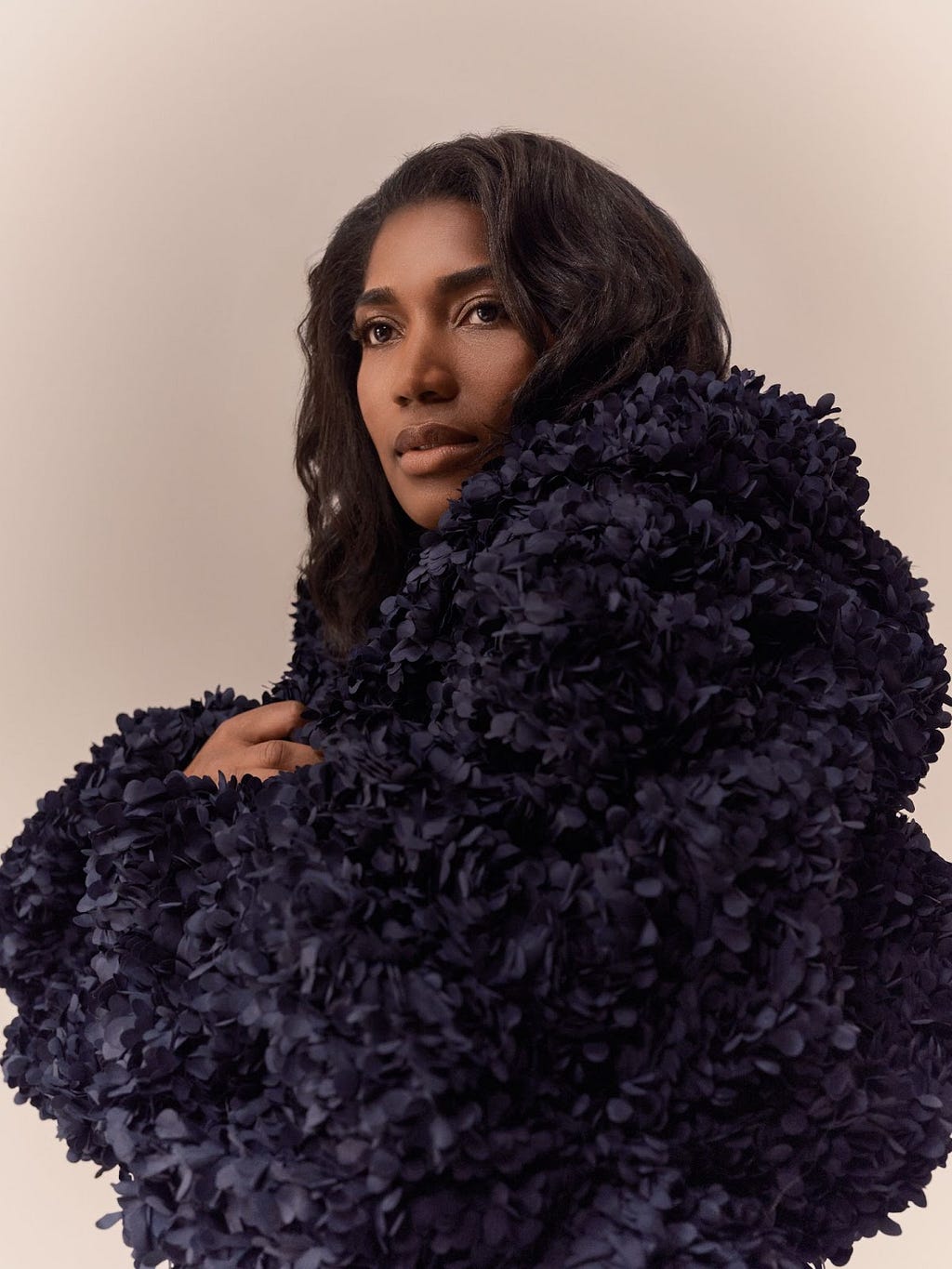
“The least attractive thing to me in this world is a nonchalant person. Give me all the chalant. I want you to care about something. I want you to give a crap. I think if more of us woke up and realized that the coolest thing you can do is give a crap, it would change the entire world.”
I had the pleasure of talking with Marissa Chanel Hampton. There’s a duality to her, a blend of sun-soaked California dreamer and grounded Midwestern pragmatist that defines not just her personality, but her entire approach to a notoriously difficult career. She calls herself “50% Hoosier, 50% Californian,” and it’s this mix that fuels her. “The open, freewheeling, fun, and effervescence of California and the dreamer aspect,” she explains, paired with “the great down-to-earth, rooted Midwestern values have really influenced how I approach work.”
Growing up, her family life was centered around arts and education, with one simple, powerful rule: “If you do it, you do it well. Give it 100% from the get-go.” This wasn’t just a suggestion; it was the foundation. While her parents were supportive of her artistic ambitions, they were firm: “Pursue that education if you’re going to go into the arts.” It’s a philosophy that has become her North Star in an industry where passion often burns out without discipline. “It’s always been education, arts, and then putting 110% in that has been the difference-maker,” she says. “I always tell people if there is something else that you love and this isn’t the thing that you wake up and dream about, then it might not be for you.”
After finishing her undergrad, Hampton set a goal so specific, so audacious, it bordered on fantasy. Shonda Rhimes’s TGIT block was dominating television, a cultural phenomenon, and Hampton decided she didn’t just want to be an actor; she wanted to be a Shonda Rhimes actor. “I’m going to pursue acting, and I want my first job to be on a Shonda Rhimes show. I want to be in that Thursday night block,” she recalls thinking. She pursued it relentlessly. In a twist of fate, she and her mother met Rhimes at a book signing for Year of Yes. As mothers often do, hers provided a moment of loving embarrassment, telling the mega-producer, “My daughter was on your show.”
The universe, it seems, was listening. Soon after, Hampton got the email. Her first professional credit would be on Scandal. “It was the first job, the first email I’d ever gotten saying you had booked the job, and it was my first co-star role,” she says. “To have that moment of meeting your goals you’ve set, what you’ve wanted, and to have it happen… it was truly the Hollywood dream come true.” That dream role, a part of the very television block that inspired her, became the launchpad for a career that would pivot from high-stakes drama to comedy and back again.
But the Hollywood dream isn’t just about landing the perfect first role. It’s about surviving what comes next. For Hampton, a small part on HBO’s Watchmen became what she calls an “expedited Actor MBA.” The journey to set was a masterclass in the unglamorous, investigative work of acting. It started with cryptic audition sides with no context. “You’re guessing. ‘Is this a comic book movie? Who is this?’ You’re trying to piece it together,” she remembers. The process taught her about the brutal realities of the business: the long waits, the uncertainty, and the need to trust her own instincts. “That show in particular was so critical in developing my taste as an actor, how I approach auditioning, and being able to say, ‘I’m enough. The choices I make are enough.’”
It also forced her to become a businesswoman, weighing one opportunity against another, a constant risk assessment that is the invisible labor of a working actor. The experience was transformative, an education from start to finish that she still cherishes.
One of the hardest lessons came early on, a self-described “kick in the seat of the pants.” Fresh out of a fantastic undergrad program, she hit the ground running, feeling prepared. “I foolishly went into rooms thinking not that I knew it all, but that I knew enough,” she admits. The reality check was swift. She learned that in an industry rife with what she calls “imposter syndrome or faking it till you make it,” the most powerful tool is admitting you don’t have all the answers. The key, she realized, is that “constantly learning, staying educated, and never giving up the role of a student is critical to your continued growth.”
This understanding reframed her view of rejection. A phrase she kept on her mirror for years became a mantra: “It’s never rejection, it’s redirection.” The belief was put to the test when she booked Watchmen but had to turn down another job she also wanted. The “no” felt like a “door being slammed,” a scary leap of faith in a business where every credit matters. But that closed door led directly to one of her most formative professional experiences. “At least in my journey,” she says, “rejection has been protection and a redirection.”
As for what’s next, Hampton is excited for audiences to see her in the two-part Lifetime movie Friends and Lovers and the upcoming series It’s Not Like That. After checking off a “dance party scene” from her bucket list, her sights are now set on a new goal. “I really want to do a horror film,” she says with a laugh. “I feel like some people are like, ‘I want an Academy Award.’ I’m like, ‘I want to make it to the end of a horror movie.’”
When asked what she wants her influence to be, Hampton’s focus shifts from the craft of acting to the core of human interaction. She speaks passionately about a perceived “lack of empathy” in the world. “The least attractive thing to me in this world is a nonchalant person. Give me all the chalant. I want you to care about something. I want you to give a crap,” she insists. “I think if more of us woke up and realized that the coolest thing you can do is give a crap, it would change the entire world.”
Yitzi: Marissa, it’s such a delight to meet you. Before we dive in, our readers would love to learn about your personal origin story. Can you share a story of your childhood, how you grew up, and the seeds for all the amazing things that have come since then?
Marissa: I am a West Coast baby originally. I was born in Newport Beach, California, and I grew up in Laguna Beach for a very long time, and then we moved to Indiana. I’ve always felt I had the best of both worlds. I often talk about being 50% Hoosier, 50% Californian, and just the best blend of culture within the US. The open, freewheeling, fun, and effervescence of California and the dreamer aspect from California. And then the great down-to-earth, rooted Midwestern values have really influenced how I approach work and constantly investing in myself. That earnestness that is so Midwestern and charming comes from being a teen in the Midwest and getting to enjoy that midsize town culture. It was always centered around the arts and education, and my family has always been heavily invested in making sure if you do it, you do it well. Give it 100% from the get-go. That’s always been infused in all that I’ve done, and that’s what has propelled me forward. My parents are supportive, but they were very much, “Pursue that education if you’re going to go into the arts.” It’s always been education, arts, and then putting 110% in that has been the difference-maker, at least for me, in pursuing an industry that is not an easy road by any means. I always tell people if there is something else that you love and this isn’t the thing that you wake up and dream about, then it might not be for you. It definitely is something that you have to love what you do.
Yitzi: So beautiful. Please tell us the next chapter. Tell us how you first got into the entertainment industry. Tell us about your first big breaks, your first opportunities.
Marissa: I did theater as a kid because it has always been an interest of mine. I did theater my whole life and then I became very academically focused. I finished my undergrad, and this was right when Shonda Rhimes had her TGIT block of television on Thursday nights, and I was such a huge fan. I finished my undergraduate degree and I thought, “I know what I want to do.” I’m going to pursue acting, and I want my first job to be on a Shonda Rhimes show. I want to be in that Thursday night block. I actively pursued that in every single way that I could — networking. At the time, Shonda’s book, Year of Yes, came out. My mom and I got to meet her, and your mother loves to embarrass you. She said to Shonda Rhimes, “My daughter was on your show.” And poor Shonda Rhimes was like, “Huh?” but was so lovely. It’s funny to see that was such a funny moment because my first credit was Scandal. It was the first job, the first email I’d ever gotten saying you had booked the job, and it was my first co-star role. To have that moment of meeting your goals you’ve set, what you’ve wanted, and to have it happen, get the big email, the phone call — it was truly the Hollywood dream come true. To have it be that show in particular was so special to me. That’s where I started, and from there I pivoted a little bit more to comedy for several years. From then on, it’s just been a constant progression of staying in the game, and I’ve been really blessed with the opportunities that have come my way.
Yitzi: You probably have some amazing stories from the different parts of your career. This might be a hard question, but can you share with our readers one or two stories that most stand out in your mind from your professional life so far?
Marissa: One of the most important journeys for me as an actor was understanding how much of the business is a business while also an art form. I worked on the show Watchmen in a small capacity, and I loved it so much, not only from the beautiful storytelling of the show overall, but my journey to being on that show was such a mix of the actor having to do a ton of investigative work that became more research scientist than artist. They love to give us sides that have no context. You don’t know what it is. You’re guessing. “Is this a comic book movie? Who is this?” You’re trying to piece it together from the first round of auditions, just praying to God that you maybe have the idea of this mysterious thing in front of you. Then there is going through that part of the business, having to deal with the realities of, “Oh, I think I killed it,” to realizing there’s a whole lot that goes into it. There’s going to be a long wait period; it may not be the job for you. Then finding out there’s a whole other step and having to traverse the full journey: a director session, working with our director and one of our executive producers on Watchmen, Stephen Williams, and then finally booking the job, fittings, and spending that day on set. I was still so new to the business even after being an actor for years; it felt like going back to school. That show in particular was so critical in developing my taste as an actor, how I approach auditioning, and being able to say, “I’m enough. The choices I make are enough.” And myself as a businesswoman — is this the job I want to take if there’s a scheduling conflict? Do I want to take this job versus that job? Because it’s always a risk. It’s not the stock market, but saying this show versus that show or this opportunity versus that opportunity always becomes this moment of, “Oh my gosh.” It became a very expedited Actor MBA just from booking that job start to finish, filming it, seeing the reception from audiences — it was an entire education. It was just such a formative experience. I cherish that whole job 110%.
Yitzi: It’s been said that sometimes our mistakes can be our greatest teachers. Do you have a story about a funny mistake that you made when you were first starting acting and the lesson that you learned from it?
Marissa: Yes. I remember in the very early days, I had finished an undergraduate program at the University of California Irvine that was fantastic. I felt prepared to take on the business. I knew what television was. I felt I understood LA and everything, and I hit the ground running. I foolishly went into rooms thinking not that I knew it all, but that I knew enough. The reality was, going into some of these very big opportunities, there were things I still didn’t know. There was still professional training that I hadn’t even seen the tip of the iceberg of at that point. It was a kick in the seat of the pants. One of the best things you can do as an actor, and I think for any career path, is to realize that constantly learning, staying educated, and never giving up the role of a student is critical to your continued growth and always being able to meet the moment. For me as an actor, it doesn’t always necessarily mean a class, but it does mean I have an excellent dialect coach. There’s never going to be a day where I’m like, “Yes, I can do that in my sleep,” and I don’t need her. No, her support is invaluable. Paula is incredible. I have an acting coach who’s great, several in fact. There’s always someone who I can reach out to and continuously tap into their knowledge, information, and experience, and that’s truly invaluable, as is mentorship. It’s almost like when you’re a teenager and you’re like, “I’m an adult. I’ve hit the world. I know what I’m doing.” No, we always have room to learn and grow. A lot of the entertainment industry is people talking about imposter syndrome or faking it till you make it, and it can cause you to have this attitude of, “I got this,” when the reality is we all need support. We all need a village to help us keep pushing forward in the business. My one foolish thing was being a little cocky out of the gate and then realizing those resources are what you need in your back pocket.
Yitzi: Beautiful. It’s been said that “no” is redirection, not rejection. Can you share a time where a rejection led to an unexpected win, success, or discovery?
Marissa: I firmly believe that. I always believe it’s never rejection, it’s redirection. I had that on my mirror for years, so it’s very funny you say that. At one point, I had booked a job and I had booked Watchmen, which is funny we’re circling back to it. We were convinced we could do both. I was going to have my cake and eat it too. And it was a big old “no.” It just was not possible. Things happen; both of those projects could not have Marissa Hampton at the same time. Fine. But having that “no” felt so scary. It felt incredibly difficult to say, “Is this the job I want to take? Is this the road I want to go?” There’s the constant worry, “Will people be mad at me?” And having to step into my own power and say, “This is what I want to do.” That rejection of the other job, that “no” — and as an actor, every single job matters. Work begets work, and every credit can lead to the next thing, and you never know who you’re going to meet. So that “no” felt like a door being slammed, but it turned into the job that we just spoke about, which is one of my favorites of all time, and I will hold it near and dear to my heart. So, at least in my journey, rejection has been protection and a redirection.
Yitzi: Amazing. What’s been the most challenging project or role you’ve taken on so far, and why?
Marissa: I have been very blessed, lucky, and grateful. Every job I’ve had has been something that I felt I could do. But there have been several times where there’s a small part of a role where I feel my goose is cooked. I am not a great driver, and I will go on the record saying that till the end of time. I will never forget I showed up to do NCIS: New Orleans and they said, “You’re going to drive the patrol car.” And I was like, “Are you sure it’s me? Of all people, are other people going to be in the vehicle? I’m actually driving the vehicle, are we sure? I don’t see that in the script.” If you want to talk about actor nerves, I think that’s the one time where I was scared. I’m scared. Don’t put the lead of the show in the vehicle with me behind the wheel. I’m scared. Are we insured? That was traumatizing. That is the one thing. If I show up to set and the first words out of someone’s mouth are, “By the way, you’re driving,” and there’s another actor in the car, that’s always a challenge for me. It’s very funny because acting is a whole-body experience to me; it’s not just this talking head, which I feel some people think is just spitting out words. As soon as you add another element beyond relating to a person, it always takes me a beat to get comfortable. That’s the one for me. The moment you get there and someone is like, “Okay, let’s talk about the safety today. You’re going to be driving,” I’m always like, “It’s going to be a day for me. Let me just take a beat.” Nothing is insurmountable, but that’s always the one that does give me pause. If in the future someone is like, “Can you be a race car driver?” I would probably need a bootcamp. I could do it, but I’d need a bootcamp.
Yitzi: Which part of your story do people rarely ask about, but you wish they would?
Marissa: I’m just starting to have people ask about this and actually want to hear the frankness: the “nos.” I do think people ask about it, but I don’t know if they actually want the truth of it. And the truth is the “nos” can be devastating. I try to approach it like, “All right, you’ve done it, you loved the job. What’s for you won’t pass you by.” But some stuff just breaks your heart because as an actor, part of the job is the vulnerability and accessing that and being willing to take risks and show yourself in front of the camera. And some of those jobs, you are just sure, “It could be no one else but me. I love this. No one loves this as much as me.” No one read the book it’s based on or researched for hours. The truth is it just doesn’t always go your way. Learning how to walk through those “nos,” learning how to let yourself feel it — because I don’t think it’s fair to ever say to yourself, “That’s it, moving on, we’re out of here.” The truth of the matter is there’s a whole process; it’s almost a grief that you have to put to bed as you keep moving. It’s easy when auditions are coming through the door or you’re on set and there’s enough to distract you, but in the actor downtimes, in the slow times when the field is fallow, it can really do a lot to your mindset and how you approach things. It affects your game, because so much of acting to me is the athlete’s mindset. I had a wonderful coach who always said that as well. You just have to keep training that brain, and there’s a whole part where you have to allow that grief, figure out how you move through it, and put it to bed. Otherwise, it becomes a little roadblock that you don’t deal with, and I think you have to deal with it to be able to successfully move through the industry.
Yitzi: Marissa, you have so much impressive work. Please tell our readers about the exciting things that are coming up now and what you hope to be working on in the near future.
Marissa: Next, this coming November, on the 15th and 16th, there will be a two-part premiere of Friends and Lovers on Lifetime TV. It’s a part of their fall slate. I’m so excited. It’s a book adaptation, and I’m a book nerd, so I can’t wait. That was a joy to work on. I love a good dance party scene, and that was one of the things on my actor bucket list. I won’t go any further, but that was high on my list, so I got to check that off. I got to work with some folks who I very much deeply enjoyed meeting, working with, watching them do their thing, and being welcomed onto their playground. So I can’t wait for folks to see that. And again, as a book nerd, a book adaptation in a movie, marrying every world that I’m a part of is just a blessing. And soon, I can’t wait for people to see It’s Not Like That, which will come out hopefully next year. That show came into my life during a year of feeling like, “What do I want to do next as an actor?” and blessed me in so many ways. Getting to be the no-nonsense friend who everyone needs, who tells you like it is and gets to push the show forward in different ways that I’ve never gotten to experience. As someone who did a ton of comedy at the start of my career and then did several years of weeping on camera, it was so fun to just add some levity and a little bit of laughter and joy. I appreciated going to work every day on It’s Not Like That. I can’t wait for folks to see that show because it’s heartwarming, and there are some incredibly talented people on that show who showed me parts of themselves. I was like, “Wow.” I can’t wait for other people to enjoy this as well. 2025 has been a year for me as an actor that’s been very revelatory about what I want to do and where I want to go. I’ve knocked off my dance party bucket list; I’ve knocked off bringing a little laughter and sass to the party. Next, I’m trying to speak it into existence: I really want to do a horror film. I love horror movies. Halloween is my favorite time of year. If I could be that final girl who makes it to the end of the movie, that would be it. I feel like some people are like, “I want an Academy Award.” I’m like, “I want to make it to the end of a horror movie.” Unscathed, you know? But I want to make it. That for me would be the top of the Empire State Building.
Yitzi: It’s great. You’ve been in so many iconic properties; I was looking at your filmography, and it’s unbelievable. You’ve been in Captain America, Outer Banks, Scandal, and Watchmen. Let’s start with Scandal, because that’s where everything started. What was it about that series that captured people’s hearts and minds?
Marissa: Oh my gosh. I could wax poetic on this for about a hundred hours. Scandal, at least for me, at that time… storytelling has had a whole boom of diversity that has been wonderful, but at that time, Kerry Washington was the only woman of color — the first time in years, since the ’60s I believe — that a Black woman had been the lead of a primetime network show. As someone who had been in theater and knew I wanted to be in film and TV, I couldn’t see myself in the landscape. I didn’t know where I fit. I knew I could do it, I knew I wanted to do it, but I didn’t know where I fit. Getting to see her on television every week and see her do it with this poise and grace, and the dialogue… when I went to college, I was a Shakespeare person, not musical theater. And then you see Kerry Washington handling these monologues so deftly and beautifully and just holding her own. And mind you, Lyn Paolo is wardrobing her in some of the most beautiful stuff I’ve ever seen. Then you get Joe Morton on the show, and he has the monologue that’s “the hell or high water” and “we get half for twice as much,” and just the words and what was brought to the table for a network show was delicious and smart and fun. I remember an episode would end, and they had the camera clicks after the main titles, and you’d get dumped into these scenarios weekly that were so engaging. I was like, “I can do this. This is what I want to do. This is exciting.” It made the business feel very different from going to the movies. It felt so personal. It felt like I knew these people; they were in my living room every week, and I was like, “This is achievable.” I think that is what drew me to it as a fan, but I know for other people, that experience of watching it, whether it was live-tweeting, that day being dedicated to that block of Shonda Rhimes shows — that viewership experience doesn’t exist in the same way. I don’t even know how you replicate that in today’s environment with streaming. I love watching people watch Scandal for the first time. The other day I caught a guy on TikTok recording his experience, and it’s fun to see because he’s having the same reactions that we did weekly, but he’s binging it. I’m like, “You gotta stop. It’s too much. There’s so much drama. At this point, they’ve toppled the government. Slow down. This was a weekly show.” But that excitement and engagement was wild to experience in real time. I can remember going into my retail job as a working actor in LA and people talking about that whole block of television, watching all three shows. What power, what influence over the industry and the television landscape, and all of the imitation shows that came out from that — from Grey’s, from Scandal, from How to Get Away with Murder. It was great. That was my golden age right there. Particularly, that was why being the first job is so important to me, because all of that was a very interesting period of history for this business.
Yitzi: Beautiful. How about Watchmen? Personally, when I first watched it, I didn’t get it. But then I understood that it was more of a parable, and I watched it again. I watched the original comic and then the series, and then I fell in love with it. It became something I was deeply into. From your perspective, why do you think people are so into Watchmen?
Marissa: Well, that’s exactly it: because you engage with it. To me, in terms of comic book properties, I’m a Marvel girl — Captain America was a very big deal to me — but there’s a very interesting difference when you look at Watchmen and the universe of how many times it’s been interpreted. To me, it’s so cerebral; it can be so deeply dark, but it also has an acerbic wit. It’s really enjoyable, but it’s also something you had to revisit. And I did too, because it’s a lot. It’s a very think-heavy show with superheroes, or the hero mythology, the hero’s journey, right? And the Watchmen show was social commentary done very well, so tastefully and artfully, in a way that people who may not have ever bought in, did. People who might have just seen superhero shows, or people who were like, “I don’t really want a history lesson,” they bought in. Meeting both of those groups in one place is also why when people poo-poo comic book movies, I’m like, “Okay, let’s understand here.” Comic books are basically, like you said, a parable. They are. It’s the hero’s journey more often than not; they are a morality play, very often. Watchmen to me bridged a lot of different audience groups. You get the hardcore nerds and you get the casual watchers, then you get the prestige television watchers who are like, “What’s the next hoity-toity thing?” And I loved seeing how many people were like, “I’ve never heard of the Tulsa massacre. Never.” A fictional show being the entry point to having people research or develop that intellectual curiosity is absolutely intelligent. I love art that inspires conversation, and to me, Watchmen did that every single episode because there was something in every episode that I was like, “Wait, where is that coming from? What?” I needed to go back, and I was curious and wanted to watch it, and I love listening to people talk about it. That for me was again, just “Let me nerd out over this.” It was a show that’s also an experience, but in a different way. It was one where I still watch that show episode by episode. I don’t know that I will ever sit and binge that one.
Yitzi: Great. You mentioned Captain America, so let’s talk about that. How would you compare and contrast Marissa Hampton with the character you play, the reporter in Captain America? How are you similar and how are you different?
Marissa: You know, we’re very similar. I like to be relevant. It’s so funny. I love being a reporter in the most insane environments, whether it’s a show like I’m a Virgo with Boots Riley, which is visually stunning with a lot going on, or Captain America, where you come to such a huge moment in the film. Getting to deliver information is so expositional, and I love it. The whole thing for me is loud voice, clarity, diction, reporter, being on the scene, at the heart of the information, the pulse of it. I can firmly relate. For 10 minutes of my life, I thought I wanted to be a broadcast journalist, but more on the sports side of things. So every time someone’s like, “Do you want to be a reporter?” I’m like, “Yes. Let me live out that dream, but just fictionally.” For me, doing that feels like a very comfortable jacket to put on. Absolutely. And like I said, I love Marvel. That’s another viewing experience. I will never forget watching Endgame in the theater and the sound of every person in the audience just freaking out with “It’s on your left,” and everyone was like, “Come on!” I feel like that is why I wanted to be an actor, because that communal experience is so cool. There’s nothing cooler than that, both as the actor who’s getting to portray that, but then as a fan, I love it.
Yitzi: This is our signature question. Marissa, you’ve been blessed with a lot of success, and you must have learned a lot from your experiences. Looking back to when you first started acting, can you share five things you’ve learned over the years that would have been nice to know when you first started?
Marissa: Yes, for sure. Some of them are very basic.
- You can always ask. The worst they’re going to say is no. There have been opportunities where I’ve seen a role or something I wanted to do, like, “Could I hang around while you guys do this stunt? I’d love to learn.” The worst thing they’re going to say is no. More often than not, people enjoy what we do, and they just say yes. I’ve gotten to audition for stuff because I’ve taken a risk and said, “Hey, if they’ll see me, I would love to be seen.” The worst they can say is no. If you ask politely and respectfully, the worst they can say is no. That is something that I wish I would have learned earlier, but that takes courage, so I developed the skill.
- Work begets work. As actors, it definitely does. Those relationships matter. So often, a lot of your job is auditioning; it’s not always on set. If you get the chance to take a job and you’re on set and getting to learn on your feet, it is the best classroom. I firmly believe that. Some people have a certain taste level and they’re like, “I don’t like this or that, so I only want to do X and Y, so I won’t do Z.” Unless I have some big moral objection — and we all have our standards and boundaries — I love to be on set. It’s a classroom. So often when it’s been a no-name part, it’s turned into multiple episodes and the character becomes important.
- There is no need to be a hero. This is so silly. For the ladies out there or anybody else who has to wear a heel — sometimes the guys have to join us — the comfort shoe is your friend. I have stood around for hours and told people I didn’t need anything and I was a soldier. No. We’re all human beings. It is okay to say you can wear a slipper or a comfort shoe. You don’t have to be a hero; accept the comfort shoe. I wish I would have learned that one earlier. I’ve stood around for many an hour in high heels that I didn’t need to.
- It is absolutely a marathon, not a sprint. This career has never been, “I would like to be a doctor, so I will go to school, I will do this, I will pass my boards, I will do my residency…” No. This is just not that kind of career. I’ve always been a gold-star, raise-your-hand, extra-credit kind of girl who always knew how to do A to B to C. This business has repeatedly taught me that that is not how it goes. You just have to be in it for the long haul, living your life and doing your marathon training to stay in the race. People envision all of these finish lines that aren’t real. This business is constantly shifting the goalpost, or what the brass ring is changes as I change. What could have been the be-all and end-all suddenly isn’t. It is absolutely a marathon and not a sprint.
- It’s absolutely okay to have fun. You should have fun. It is so serious sometimes. We have to make the day. Sometimes a project costs a heck of a lot of money, and certain jobs you really feel that, but it is so okay to have fun. I constantly need to be reminded that I do this because it’s joyous. To me, there is no better synergy than when you are on set and all the engines are firing, and suddenly you’re connecting with another actor and we’re rolling and sound is speeding and… it’s like you suddenly have this out-of-body experience where this is exactly what you said you wanted to do. It’s absolutely okay to have fun. And it’s absolutely okay to take a step back and go, “Holy crap, this is everything I’ve ever wanted, begged, and prayed for.” I think that permission is so important because it can also have a heck of a lot of pressure.

Yitzi: It’s amazing. This is our final aspirational question. Marissa, because of your amazing work and the platform that you’ve built, you’re a person of enormous influence. If you could spread an idea or inspire a movement that would bring the most amount of good to the most amount of people, what would that be?
Marissa: That’s such a good question. I have a lot of things that I care about, but I will say this. One of the things that I’ve noticed the most, especially of late, is a lack of empathy, a lack of general caring for those around you or willingness to take a beat and listen to people and hear and see them in their humanity. I’ve said this before: the least attractive thing to me in this world is a nonchalant person. Give me all the chalant. I want you to care about something. I want you to give a crap. I think if more of us woke up and realized that the coolest thing you can do is give a crap, it would change the entire world. This sort of weird, “back on our heels, I’m too cool to care about this, it’s not that deep,” rush to judge is incredibly toxic to me. So if there is one thing that I could continuously model for people, it is a willingness to hold space for others, their walk through this life, their journey. A really healthy and hard-fought-for sense of empathy, because let’s be real, nobody is a saint. I am not always the kindest, most perfect person 24/7, but I would like to say that if I could leave something for this world, it is that I gave a crap and I was always working to be the best version of myself, and that’s the person that I shared. If you interacted with me on the street, that’s what you got.
Yitzi: It’s been so amazing meeting you. How can our readers continue to follow your work? How can they watch any of your movies and films? How can they support you?
Marissa: You can follow me on Instagram @MarissaChanelHampton, everywhere. You can also find me talking about books on Ink and Paper Soul, both the website inkandpapersoul.com and on Instagram as Ink and Paper Soul. I talk about my narration work there too. And then you can catch me later this year on Lifetime and soon on Amazon as well.
Yitzi: Marissa, it’s truly been a joy to do this with you. I wish you continued success, good health, and blessings, and I hope we can do this again next year when you’re nominated for an Emmy.
Marissa: Oh my God. Again, from your lips to God’s ears. Thank you so much.
Marissa Chanel Hampton on Manifesting Her “Scandal” Dream, Finding Strength in Rejection, and Why… was originally published in Authority Magazine on Medium, where people are continuing the conversation by highlighting and responding to this story.