Matthew Jaeh, Emily McLanahan and Christine Lu Hong Talk Techstars’ Vertical Strategy, AI Integration and the Future of Accelerators
…When I was younger, I was very obsessed with how I could have an impact on the world and with socioeconomic equality. That was one of the main reasons I joined Techstars. We’re really focused on ecosystems throughout the world. I truly believe that entrepreneurship and founding startups will build up the economies of a system. It’s such a natural flywheel effect. If you fund folks there, you find good entrepreneurs, they build there, they give back, and you just see these systems grow. Watching all the flywheel effects that happen from these initiatives is really amazing…
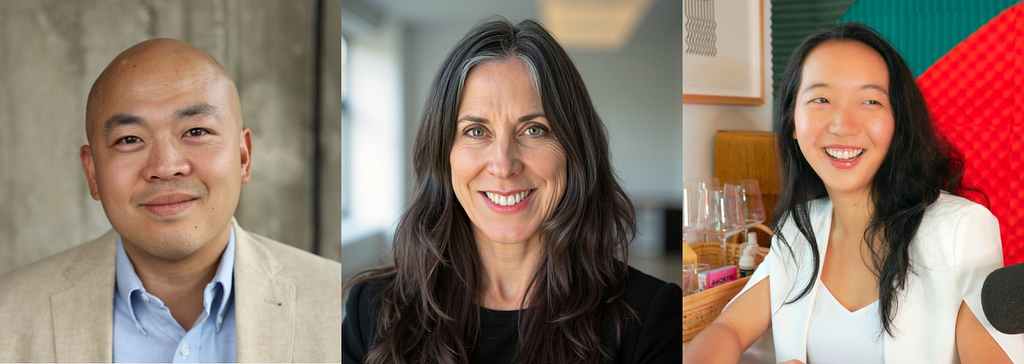
I had the pleasure of talking with Techstars’ Matthew Jaeh, Emily McLanahan, and Christine Lu Hong. When Matthew, Emily, and Christine talk about founders, they don’t sound like executives. They sound like people who have been in the trenches and still remember the sleepless nights, the near-misses, and the moments when belief alone kept the lights on. All three now lead accelerator programs within Techstars, the global startup network that has become one of the most recognized engines of early-stage entrepreneurship. Each came to the role from different corners of the business world, but all share a conviction that mentoring founders is not only good business but a calling.
Matthew Jaeh, Managing Director of the Techstars Alabama EnergyTech Accelerator, likes to tell people that he “retired” once, but only briefly. “I had a half-a-billion-dollar exit in 2020 and retired,” he said, recalling his years building ProctorU, an edtech company that monitored online exams through webcams and microphones. “But I was so enamored and in love with Techstars’ “give first, founder first” mission that it drove me to see what Techstars was all about.”
Jaeh’s story begins in Birmingham, Alabama, a city with a growing reputation for technology and energy innovation. After selling his company, he joined Techstars as an entrepreneur in residence, drawn by what he calls its “give first” ethos, a principle that encourages leaders and mentors to help others without expecting immediate return. His early mentors at Techstars, including Nate Schmidt and Brooke Gillis, helped shape his view of the organization. When Schmidt was promoted to General Manager and Gillis became CEO of Innovation Depot, they asked Jaeh to take over the Alabama program. “It has been an incredible experience working with so many incredible founders,” he said. “It took me a while to learn about energy technology and sustainability. I’m still learning it, and I find it extremely fascinating.”
If Jaeh came to Techstars after an entrepreneurial exit, Emily McLanahan arrived from a different path, two decades of operational work inside some of the most complex sales environments in technology. A veteran of revenue operations in both public companies and startups, McLanahan built a career on the connective tissue behind growth: forecasting, customer discovery, and pipeline management. “I’ve been in San Francisco for pretty much the last 20 years,” she said. “I worked in revenue operations with public companies and startups on all the machinations behind sales and forecasting.”
She moved back to Baltimore a few years ago, expecting to slow down, but instead discovered a “robust ecosystem” of local startups she hadn’t known existed. Through that network, she met Nick Culbertson, who would go on to lead the Techstars AI Health Accelerator in Baltimore. McLanahan joined the program in 2025, just as it launched. “He asked me if I would join to help run the program and sourcing,” she said. “It puts me in a fascinating position to translate my revenue ops skills to very early-stage startups, and there’s a lot of fit there.”
Like Jaeh, she was entering a new industry. “It’s a new industry for me, so I get to learn healthcare and drive the sourcing for our program,” she said. “It’s been really fun so far.” Her focus on operational precision and revenue strategy has already shaped the accelerator’s structure, especially its emphasis on commercial traction and investor readiness. “We have a weekly KPI meeting run like a sales meeting where the founders talk about their activities, and others chime in to offer their perspective,” McLanahan said. “We even have a sales gong founders ring when they close a new deal.”
Christine Lu Hong is a Senior Investment Manager on the Techstars NYC program and also leads Techstars’ AI/ML Vertical Network, a global community supporting founders building everything from foundational models to applied AI. Her path to venture began as a founder and engineer. After studying computer science at Yale, she worked as a software engineer at LinkedIn and Yahoo, then moved into product leadership at companies like Tinder before founding multiple startups including Auby and Senpai.
Beyond Techstars, she built and runs two technical founder communities — Engineer Village and FemBuild Collective — serving over 1,000 founders across New York and San Francisco. “My favorite people in the world are founders,” she said. “I love how they’re trying to make an impact on the world, and I want to be working with as many founders as possible, as early as possible.”
After her second company, she returned to Techstars, where she’d first connected through the Comcast accelerator program. She joined the New York team and has since built what she calls a “horizontal network that touches everything,” focusing on applied AI in what she terms “real economy” sectors — healthcare, climate, manufacturing, and supply chain — rather than consumer AI or generic SaaS.”
What ties their work together is a shared belief in mentorship as both method and mission. Jaeh calls the Techstars network “crazy powerful.” “I can go into our systems, type in a company, and be connected with just about anybody,” he said. “If I need to talk to an investor or a corporate partner, I can just do it, and they’re willing to talk to you.” The organization’s systems, he added, can reveal unexpected pathways. “I could ask, ‘Hey, Christine, Emily, can you get me an intro?’ And it just happens.”
McLanahan has seen that network in action during difficult moments. One of her cohort’s companies, she said, was rendered obsolete by a market announcement only weeks after joining the program. “They spent a weekend, completely pivoted, came up with a new idea, and they’re already getting traction,” she said. “That speaks to the tenacity and grit of these founders.” The program’s mentors and advisors quickly rallied to support the team’s new direction, helping them line up design partners and pilots. “It’s that determination to make this happen,” McLanahan said. “They just have that drive.”
For Hong, the thrill lies in what she calls “accelerating serendipity.” In her experience, mentorship often begins as a small act, a conversation, a quick piece of advice, but can grow into something transformative. “There are countless cases of people who volunteer to be mentors, maybe for just two and a half hours of office hours a week, who end up writing an angel check or joining as a co-founder,” she said. “It feels really good to be able to help out so many companies like this.”
Techstars, founded in 2006, has grown into a global accelerator network operating dozens of programs across industries and continents. What sets it apart, the three leaders agree, is its emphasis on mentorship, locality, and community building. “We are truly mentor-driven and mentor-led,” Jaeh said. “We understand that not one person is the end-all-be-all when it comes to helping a founder.” He also stresses Techstars’ commitment to place-based entrepreneurship. “We truly believe that founders can be found, grown, and cultivated in any location. Prosperity and success are not just limited to the coasts.”
McLanahan points to the organization’s vertical depth as another differentiator. “We have programs that are in space, manufacturing, or healthcare,” she said. “At the same time, we cultivate the ecosystems around those different industries. Between the mentors, investors, and customers we line up, we develop deep expertise so we can surround our founders with the ecosystem that best supports them.”
Hong adds that Techstars’ model is also highly personal. “It’s really not plug-and-play,” she said. “We have three team members for about eight companies, so you get the intimacy of that batch.” That allows each cohort to tailor its mentor pool to the companies’ specific needs. “Some accelerators are pure B2B SaaS,” she explained. “We’re giving founders feedback upfront from enterprise folks on exactly what they want to buy, so they can have that early customer validation.”
The collaborative spirit extends to how the directors themselves operate. Jaeh’s Alabama program partners directly with Southern Company and Alabama Power, which he says helps bridge his background in education technology with his current focus on energy. “They’re with me in this office side-by-side, helping our founders on a daily basis,” he said. McLanahan, meanwhile, works closely with healthcare experts to vet potential startups. “Even someone deep in one vertical can’t know its whole breadth,” she said. “There are so many people who want to help, it’s really inspiring.”
Their perspectives on leadership and learning also reflect years of trial, error, and recalibration. “There’s so much I didn’t know that I would have absolutely loved to have known about fundraising,” Jaeh said. “Instead of taking me more than 12 years to exit, it would have probably taken me half the amount of time.” McLanahan says her own lesson came later in life. “Earlier in my career, I wish I had known there’s no single path,” she said. “The sky is the limit; just go out there and do what you want to do and get that inspiration from within.”
For Hong, the insights came from failure. “When you’re a founder… oh my god, I did all the wrong things,” she said with a laugh. “I wish I had read The Mom Test sooner.” She quotes a common saying in the startup world: “First-time founders are focused on product, and second-time founders are focused on go-to-market.” Understanding the difference, she said, “saves you years of time in the beginning.”
Beyond their operational focus, each carries a broader sense of mission. Jaeh’s is rooted in Techstars’ “give first” philosophy. “What can I do to help people and make a mark on the world?” he asked. “At my stage of life, the most impact I could have is if I can help the right person become successful, who can then help others become successful or go on to change the world.” McLanahan, echoing that sentiment, describes her approach as “kindness first.” “All you can do in this life is bring joy,” she said. “If we don’t have joy, what’s the point?”
Hong’s motivation ties back to economic equity. “When I was younger, I was very obsessed with how I could have an impact on the world and with socioeconomic equality,” she said. “I truly believe that entrepreneurship and founding startups will build up the economies of a system. If you fund folks there, you find good entrepreneurs, they build there, they give back, and you just see these systems grow.”
Each of them sees Techstars as a vehicle for that kind of long-term change, a global network that empowers local action. Whether it’s Jaeh helping energy startups in Alabama, McLanahan guiding AI health companies in Baltimore, or Hong connecting founders across industries in New York, their collective mission comes back to a simple premise: helping founders, wherever they are, to succeed.
“Any founder can reach out to us,” Jaeh said. “Because of our ‘give first’ mentality, I’ll talk to anybody who is looking for advice or just wants to bounce something off of us.” McLanahan agrees. “There’s a lot of content on our website and LinkedIn,” she said. “We’re all accessible.” And Hong keeps the invitation open: “If you’re looking to start a business, check out our website and apply.”
All three of their stories converge on a single idea: success is not measured by exits or valuations, but by how much one gives back. “We’re here to help,” Jaeh said simply. It’s a modest statement, but it captures what drives all three of them, and what has made Techstars, in their hands, not simply an accelerator, but a movement built on generosity, connection, and the belief that one founder’s success can spark another’s.
Yitzi: Matthew, Emily, and Christine, it’s a delight and an honor to meet you. Before we dive in, our readers would love to learn about each of your origin stories. Can you share with us the story of your childhood and how you grew up?
Matthew: Of course. My name is Matthew. I am the Managing Director of Techstars Alabama EnergyTech Accelerator here in beautiful Birmingham, Alabama. I’ve been with Techstars for a little over four years now, starting as an entrepreneur in residence. Prior to that, I was the founder of an edutech company called ProctorU, a company that watches people take exams over the internet using webcams and microphones, much like how we’re conversing right now. I had a half-a-billion-dollar exit in 2020 and retired, but I was so enamored and in love with Techstars’ “give first, founder first” mission that it drove me to see what Techstars was all about. As I said, I became an EIR. The person running this program, Nate Schmidt, and the PM, Brooke, at the conclusion of that EIR stint, Brooke was promoted to become the CEO of this location called Innovation Depot, which is where I am right now. Nate was promoted to become the general manager and head of product of Techstars. He asked, “Hey Matt, would you want to take over the program?” And I said, “Yes, definitely.” It has been an incredible experience working with so many incredible founders. It took me a while to learn about energy technology and sustainability. I’m still learning it, and I find it extremely fascinating.
Emily: I was born in Baltimore but moved around a lot. I went to business school and ended up in San Francisco. For pretty much the last 20 years, I’ve been in San Francisco and worked in revenue operations with public companies and startups on all the machinations behind sales, forecasting, customer discovery, lead generation, and all the connective tissue to drive sales. I moved to Baltimore a couple of years ago and got involved with the local startup community. Like Matt, I found it super fascinating. I didn’t know this robust ecosystem existed in Baltimore. I connected with Nick through that, and then he became the managing director of this new program in Baltimore, the Techstars AI Health, which started in March of 2025. I joined in April. He asked me if I would join to help run the program and sourcing. It puts me in a fascinating position to translate my revenue op skills to very early-stage startups, and there’s a lot of fit there. Also, like Matt, it’s a new industry for me, so I get to learn healthcare and drive the sourcing for our program. It’s been really fun so far.
Christine: I started my career as a software engineer. I studied computer science at Yale and worked at companies like LinkedIn and Yahoo; I was the first engineer for several startups. I ended up working in product at companies like Tinder and then became a founder. My first company, Auby, is how I first got connected with Techstars. I met KJ, the managing director of the Techstars Comcast program at the time. When I wound down my second company, Senpai, I thought about what I wanted to do next with my life. My favorite people in the world are founders. I love how they’re trying to make an impact on the world, and I want to be working with as many founders as possible, as early as possible. I came back to the idea that I wanted to work for a very early-stage startup accelerator like Techstars. I reached back out, and KJ ended up hiring me for Techstars New York. I’ve been here the last 3 years and am now leading the AI/ML Vertical Network. I also run Engineer Village and FemBuild Collective, communities serving over 1,000 technical founders across NYC and SF.”
Yitzi: Amazing. Let’s talk about Techstars. I’m sure each of you has amazing anecdotes. Can you share one or two stories that most stand out in your mind from your Techstars experience?
Matthew: Well, early on when I was first an EIR, I was just blown away by the talent of the founders selected through the Techstars process. At the time, I didn’t even know how that worked, but getting to know them, I realized this was another level of founder. I was absolutely blown away. The next thing from this experience that has blown me away is the power of our network. That’s something people talk about, but I can go into our systems, type in a company, and be connected with just about anybody. It’s crazy. If I need to talk to an investor from a particular location or a corporate partner, I can just do it, and they’re willing to talk to you, which is crazy. Our systems can also tell us who is connected to someone famous I might feel intimidated to reach out to. I could ask, “Hey, by the way, Christine, Emily, can you get me an intro?” And it just happens. Then I can introduce the founders to them or talk to them myself. I think that is just incredible. The third thing is seeing how these founders respond to the programming we provide. It delights me to no end when I’ve delivered one of the core competency workshops and they say, “Oh, that thing you talked about last week, I used that and it worked. It was so awesome.” The same thing goes for my own experiences. I can say, “Hey, by the way, you’re thinking about doing that one thing. I tried that as a founder and it didn’t work so well, but you could try it if you want.” And they’ll say, “You know what, I didn’t do that thing we talked about, and I’m so glad I didn’t.”
Emily: I’ll tell you a couple of stories from our current cohort. AI is a big focus everywhere, but our program is specifically around AI in healthcare, and the market is moving so fast that we find that some company ideas actually become obsolete during the application process. This even happened to one of the companies in our current cohort about three weeks into the program. This talented group of founders had done an IRB study and had strong momentum, but some announcements in the market rendered their idea obsolete. It’s the tenacity and the grit of these founders, a team of four or five, they spent a weekend, completely pivoted, came up with a new idea, and they’re already getting traction. That was just within weeks. Between the support of the program and the mentors we have around them, they just have that determination to make this happen. They came up with what is actually a very good idea and quickly pulled in all the mentors and advisors they had, and they already have a design partner and a couple of pilots they’re lining up. That speaks to what Christine was saying about how dynamic and fun it is to work with founders.
One other story: we focus very much on commercial traction. In healthcare, it’s difficult to get funding, and investors really like to see that you have willingness-to-pay validation, that the value prop resonates, and that you have a deep pipeline justified by significant pilots or LOIs. We have a weekly KPI meeting run like a sales meeting where everyone talks about their activities, and others chime in and help. We even have a sales gong founders ring when they close a new deal. One of the founders got up to ring the gong because he signed a pilot agreement where the terms stated that when the pilot’s done and they hit the KPIs, it converts to a five-year, multi-million-dollar contract. That’s baked in, so they don’t have to mess around with going through the MSA or signing terms later. Everyone is very clear on the trajectory. That’s a perfect example of what we teach the founders and see them execute during the program.
Christine: For me, a lot of the wild moments come from a lot of little things that happen and then compound. We’re really good at what I like to call “accelerating serendipity” with our mentorship-driven program. There are countless cases of people who volunteer to be mentors, maybe for just two and a half hours of office hours a week, who end up writing an angel check or joining as a co-founder, things that change a company big time. We had business associates who would help out the founders, and one joined as a co-founder, and now they’re a unicorn. It’s also about seeing how much impact you can have on a company’s trajectory at this stage. The product might be completely different, or there might be zero traction before they meet us. They’re on the verge of running out of money, and then within a couple of years, they’re thriving or are the hottest company around. It feels really good to be able to help out so many companies like this.
Yitzi: For those who aren’t fully familiar with Techstars, Can you share what’s unique about it and what makes it different from other similar platforms? How is Techstars different or better than, let’s say, Y Combinator?
Matthew: We’ve alluded to some of it, but we are truly mentor-driven and mentor-led. We understand that not one person is the end-all-be-all when it comes to helping a founder. We truly depend on the goodwill of our mentor network to provide a lot of that information, talent, and experience. That is one differentiator. Another one is that we truly believe that founders can be found, grown, and cultivated in any location. Prosperity and success are not just limited to the coasts of the United States or any particular locale. We can create startup communities and foster these entrepreneurial ecosystems wherever they may be. And the other thing is, we truly do believe in the power of “give first.” It’s not just a hashtag on my wall; we and our mentors truly believe that. A lot of the incredible programming we get is delivered out of the kindness of individuals and corporations because they believe in the power of “give first” as well.
Emily: Everything Matthew said, of course, but I’d also add the depth of our vertical focus. We have some programs that are in space, manufacturing, or healthcare, and others, like New York, that are industry-agnostic. At the same time, we cultivate the ecosystems around those different industries. We have mentors with healthcare expertise, payer expertise, or provider expertise. You can even bifurcate within an industry. I’m sure Matthew has people in wind, solar, etc. We try to really understand our mentors and make sure that between the mentors, investors, and customers we line up, we develop deep expertise so we can surround our founders with the ecosystem that best supports them. I think that helps differentiate us and accelerate each founder even more than if they just had someone who was good at business in general.
Christine: I’ll add on top of Matt and Emily’s answers. The amount of personalization we have is next level. It’s not school with cookie cutter workshops. We have three team members for about eight companies, so you get the intimacy of that batch. We’re not just throwing the same mentors at every program. We look at the companies accepted, what they need help in, and recruit more mentors for them if needed. The managing director they’re working with was a founder in their space before. Some accelerators are well-known names but are pure B2B SaaS. If you don’t know how to sell into hospital systems or credit unions as a fintech company, it’s pretty rough. We’re giving them feedback upfront from the enterprise folks on exactly what they want to buy, so they can have that early customer validation and understand the unique go-to-market strategies. That’s why we have these vertical networks now. Matt’s leading the sustainability network, Emily’s leading the health network, and I am leading AI/ML, which is a horizontal network that touches everything. We’re really good at AI for the real economy and how it applies to each of these verticals. For example, I’m hosting an AI/ML BD fair next month where folks can meet product leaders at companies like Clay and Supabase and learn what they actually want to buy before building the wrong thing for six months. I feel like you get the intimacy of the small eight-company batch with a three-person team and personalization, but then you also get the truly international network that’s been around for 15 years. It’s the best of both worlds.
Matthew: What Christine was also talking about, which is awesome, is that the MDs have deep background knowledge in these vertical networks. And the great thing is, as you heard from me, I have an edtech background, but we have partnerships with large corporations. My partner is Alabama Power and Southern Company, one of the largest energy providers in the United States. They’re the ones that help get me up to speed and backstop me if I don’t know something. They are with me in this office side-by-side, helping our founders on a daily basis, even when the program isn’t running.
Emily: Even in the sourcing, we reach out to experts. There’s no way even someone deep in one vertical can know its whole breadth. I had one today with somebody who could help me vet a few prospective companies. There are so many people who want to help; it’s really inspiring.
Christine: Diligencing is so much easier with our truly international network. All the verticals are covered. I feel like we can just post in our Slack, and someone will be a subject matter expert for diligencing a company. It’s the same with investors. Biotech has a very special group of investors, very different from generalist investors. We know how to treat biotech companies differently. We don’t do a generic demo day where we just invite everyone. We are really hands-on with building the investor pipeline for each company because we’re more selective with each batch.
Yitzi: This is our signature question. Each of you has been blessed with a lot of success. Can you share two things that you’ve learned now that would have been really nice to know when you first started?
Matthew: If I talk about my entrepreneurial journey, there’s so much I didn’t know that I would have absolutely loved to have known about fundraising. The general knowledge of how to run a business that we encapsulate in a tight 13-week time period would have been insane to have as an entrepreneur. Instead of taking me more than 12 years to exit, it would have probably taken me half the amount of time. As a managing director, I knew a lot about running a business but nothing about being an MD. I leaned on so many of our team members to get to where I am. The person that hired me into this role set an incredible foundational bar for this program that I witnessed as an EIR. I copied that formula for success and have used the same playbook for the past three years, adding my personal flavor over the years, but the Techstars way has worked and continues to work.
Emily: Our founders are all ages, from right out of school to this being their second or third company. But they all share this grit and this “sky’s the limit” attitude. Earlier in my career, I wish I had known there’s no single path. The sky is the limit; just go out there and do what you want to do and get that inspiration from within. Also, to ask for help. The inspiration I get from working with the founders is something that anybody at any stage of life should remember: they can chart their own course, there’s always a way around any obstacle, there’s always potential for success, and people are willing to help you. Just ask.
Christine: So many. When you’re a founder… oh my god, I did all the wrong things. The Mom Test, asking open-ended questions properly instead of leading with the solution. I wish I had read that book sooner. They always say first-time founders are focused on product, and second-time founders are focused on go-to-market. Understanding how to really do that, how to prove traction before a product is built, and what is actual interest from a customer versus something you’re projecting onto them, that is what saves you years of time in the beginning.
Yitzi: This is our final aspirational question. Matthew, Emily, and Christine, because of the success you’ve built and the platform you lead, you are people of enormous influence. If you could inspire a movement that would bring the most amount of good to the most amount of people, what would that be?
Matthew: The reason I joined Techstars was “give first.” That’s the mode of life I’m in. I’m good, financially, forever. So, what can I do to help people and make a mark on the world? When I saw Techstars’ mission to help founders anywhere, I thought about my personal mission. At my stage of life, the most impact I could have is if I can help the right person become successful, who can then either help other people become successful or go on to change the world in some way. Then I’ve fulfilled my life’s purpose.
Emily: For me, it’s “kindness first.” I think we need more of that in the world. It’s piggybacking off of Matthew, and that’s also what attracted me to Techstars. All you can do in this life is bring joy. If we don’t have joy, what’s the point? We can all add a little joy during the day to someone else, whether it’s complimenting someone in the elevator or helping a founder make big, important decisions that will change the trajectory of their company and become a platform to do good in the future. Just lead with kindness.
Christine: When I was younger, I was very obsessed with how I could have an impact on the world and with socioeconomic equality. That was one of the main reasons I joined Techstars. We’re really focused on ecosystems throughout the world. I truly believe that entrepreneurship and founding startups will build up the economies of a system. It’s such a natural flywheel effect. If you fund folks there, you find good entrepreneurs, they build there, they give back, and you just see these systems grow. Watching all the flywheel effects that happen from these initiatives is really amazing.
Yitzi: How can our readers learn more about Techstars, apply to be considered, and support your work?
Matthew: We put a lot out there on the normal social channels like LinkedIn, and we have a lot of great content on our website. We have vertical network channels on our website that talk specifically about the different areas we focus on. Any founder can reach out to us, to me, to Emily, to Christine. Because of our “give first” mentality, I’ll talk to anybody who is looking for advice or just wants to bounce something off of us. We’re here to help.
Emily: I’d say the same. Just Google Techstars and you’ll find a wealth of links. We’re all accessible, and there’s a lot of content on LinkedIn as well.
Christine: If you’re looking to start a business, check out our website and apply to some programs.
Yitzi: It’s been so delightful meeting you. I wish you all continued success and good health. I hope we can do this again next year. I’m also happy to interview and feature any companies that you think are deserving of being highlighted if it helps you.
Matthew: That would be wonderful. Thank you.
Matthew Jaeh, Emily McLanahan and Christine Lu Hong Talk Techstars’ Vertical Strategy, AI… was originally published in Authority Magazine on Medium, where people are continuing the conversation by highlighting and responding to this story.