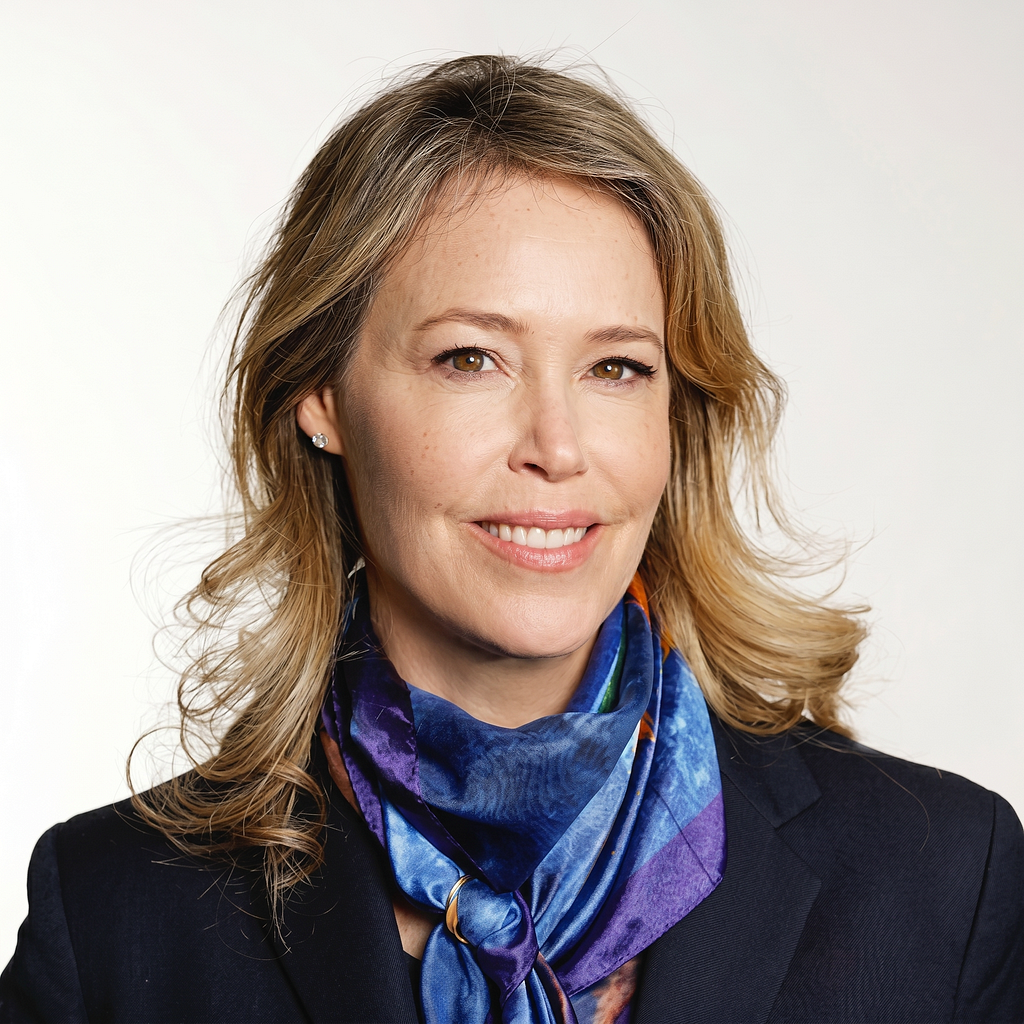
Netta Ness on ‘Chance Management,’ Reinventing Risk and Why “It’s Not Over Until There’s a Happy Ending”
…If I could teach everyone one thing, it would be the positive concept of chance management. It asks you to be deliberate about the choices you make, keep your eyes open, stay alert for opportunities, and be ready to act in the moment. I would love to share this concept with the many people who feel hopeless. If I could shift how they perceive their role in the world and help them understand that they are active participants in their own lives, it would be transformative. You have the power to correct things, fix your circumstances, and create an amazing future because you have multiple futures available to you. Practicing the idea that you are actively shaping your life is incredibly powerful. I have worked with underprivileged families and at-risk adolescents, and by changing how they see their role in their own lives, I have helped change how they see the world. It is always possible to make a change. It is not over until there is a happier ending. There is always something you can do and act upon. I would love to help shift people around the world from feeling hopeless to becoming hopeful…
I had the pleasure of talking with Netta Ness. “That is always where we want to start, where our parents come from, because that is how we come into the world,” she says, reflecting on a life that began in the middle of a war. She was delivered on a military base in Tel Aviv on one of the worst days of the 1973 Yom Kippur War. Her parents — a Russian-born father and a feminist New Yorker mother — separated shortly after. Ness split her childhood between Israel and summers in Chicago, a fittingly chaotic start for a woman who would build a career teaching people how to navigate disruption.
Ness spent her early professional years quietly building foundations for others. After earning a master’s degree in Boston, she climbed the ranks of a Cambridge tech startup, opened the Israeli branch of a global communications firm, and eventually landed as a rainmaker for a major hedge fund. She was closing massive deals, yet something felt hollow. “My dad always said that if you do not have your own dream; you work to make other people’s dreams come true,” she recalls.
The turning point arrived during a high-stakes board meeting with Japanese executives. While discussing financial exposure, a new phrase slipped out of her mouth: chance management. She realized that corporate culture was obsessed with surviving uncertainty, yet almost no one was talking about the upside of risk. “Chance can be a terrific way to change the course of life and events,” she explains. The phrase echoed in her mind, prompting her to leave the hedge fund and build a practice entirely from scratch.
Her approach treats human potential like a financial portfolio. Everyone has a unique identity architecture made of skills and assets, a portfolio, and best practice, but she insists the defining factor is action. “Timing ends with ‘ing’ because it functions as an active verb,” she notes. Opportunities are easily missed if you do not act in the moment. Ness wants people to embrace what she calls “unexpected relevance,” those seemingly random moments that suddenly make perfect sense and allow you to shift from a hopeless state to actively governing your own reality.
Ness admits her path is paved with missteps, though she views them differently than most. “I learned so much from my mistakes that I continue making them,” she jokes. Once, grounded by a broken plane engine, she struck up a conversation with a depressed stranger in a quiet corner of the airport. He was a professor who felt trapped grading papers for spoiled students. Instead of resting, Ness pulled out her laptop and gave him an impromptu coaching session. She urged him to pursue his abandoned dream of working for the United Nations. Months later, that random conversation turned into a three-day university workshop.
She believes strongly that chance often comes down to simply saying yes. During a trip to India with a delegation, she was the only woman who agreed to a last-minute request to visit a local school. The simple courtesy spiraled into a surreal morning where she was driven to a film studio, pushed onto a stage with a massive bouquet, and interviewed on live television. “This was the bonus of agreeing to a small, simple courtesy,” she says. “It is a story about giving without expecting anything in return.”
Despite her high-profile corporate work, Ness remains grounded by strict personal routines. Since age 36, she has kept a journal called “To Be Netta” to constantly redefine her identity. She navigates the modern era of “overchoice” by forcing tough choices. “The suffix of the word ‘decide’ is similar to suicide, genocide, or homicide; you essentially have to eliminate your other options in order to make a decision,” she observes.
Whether she is advising a global executive or working with at-risk youth, her fundamental message remains identical. Life is not designed to harm us; it is designed to make us work hard. She wakes up every morning and counts her blessings, a habit she maintained through a divorce and the loss of her second husband. She refuses to accept defeat, urging everyone to take control of the things they can change and ignore what they cannot. As Ness puts it, “It is not truly over until there is a happy ending.”
Yitzi: Netta Ness, it is such an honor to meet you. Before we dive deeper and talk about your amazing work, our readers would love to learn about your personal origin story. Can you share the story of your childhood, how you grew up, and particularly the seeds of the genesis for all the amazing work that has come since then?
Netta: That is always where we want to start, where our parents come from, because that is how we come into the world. My father, Vladimir, was the seventh child out of eight. He grew up in a small village in Moscow, Klyazma, and eventually ended up in Kfar Habad, Israel. From there, he decided to join the army. He later started coming to the States as a spokesperson to raise funds, was offered a position in Florida, and worked for the Joint for some time.
Meanwhile, my mother, Phyllis, an only child, was born to Rose Ash, a very feminist lady in New York who had her at the age of 41. My mother went to college in Florida, and that is how my parents met. They got married in New York and traveled to visit my father’s youngest brother, who was the rabbi of the Buenos Aires community in Argentina. I was conceived there, and they found out during the trip. They ended up visiting Israel, which was my mom’s first time there. They stayed for a while, and she met my father’s family. I was delivered in Tel Aviv on an army base in October 1973 during the war, on one of the worst days. That is when it hit my mom that she truly felt connected to Israel and wanted to move there. It worked for her, but it did not really work for my father. He was offered a position to open the Israel Bonds office in the Midwest, so he flew over, and they separated.
My brother David and I stayed in Israel, and my father lived in Chicago. My childhood consisted of summers in Chicago, seeing my father every time he came to Israel to visit with delegations, and growing up in Tel Aviv. I later earned my master’s degree in global marketing, communication, and advertising in Boston. That is when I had two of my three children. I moved back to Tel Aviv after a decade in the States. Before returning, I joined a startup company in Cambridge as their sixth employee and left when they had grown to 80 people. The company focused on fiber optics and medical devices. I then worked as an advisor and consultant through my own firm.
When we moved back to Israel, I joined APCO Worldwide. They had just opened an office there, and I was their associate director. I worked closely with governments and presidents, representing various agendas. Eventually, I ended up in the financial market at a hedge firm, specializing as their rainmaker to close large deals. I was not a finance person, and certainly not the typical risk management person. However, that is where I learned to speak the language of risk. This continued until I ended up in a Japanese board meeting.
I spoke to the board about what we could do for them regarding hedging their risk and how it could allow them to enjoy “chance management.” The phrase slipped out of my mouth. I had already been working there for four years and was trying to understand what I truly wanted to do. My dad always said that if you do not have your own dream; you work to make other people’s dreams come true . I realized I needed my own dream and my own company. Being a rainmaker for a group making millions, while just watching from the side and creating success without fully participating in the rewards, made me want to own my own practice.
When the phrase “chance management” came out of my mouth that day, it started echoing in my mind. I began researching and realized there was no field that focused on the upside of risk — rather than merely surviving uncertainty, the goal is to thrive and capitalize on chance. Chance can be a terrific way to change the course of life and events; it can be a way to leverage and elevate. Yet, there was very little literature that discussed this. Chance management chose me, and I chose it. It took me a year to leave the hedge firm, and I negotiated another year of a fully paid salary. That allowed me to spend time learning, researching, and trying to establish the initial language, vocabulary, and principles of chance management.
It was not easy. It is hard when you are about to build something that does not exist. You know it is going to come together, but you are not quite sure how. I was always very good at what I did, so failure was not an option. It had to be phenomenal, original, and meaningful. Sure enough, I was invited to speak about it and asked to give a lecture at a business school. That was my debut. Having previously worked with foreign administrations, governments, and serious business people in Israel, they all started coming to me.
I built a signature process. If I had to sum it up back in those early days, it focused on the idea that people come first. We all have a profile. If there were a stock market for people, investors would look at our profile, evaluate our portfolio, and seek best practices. That is exactly what my signature process addresses. We all have an identity architecture, which serves as our unique human profile. We have mechanical skills that help us articulate and manifest who we can be and what we do. We also have our portfolio, consisting of underlying assets that come together. These assets can be degrees, incredible accomplishments, and many other things. Finally, we have best practices, which are usually applied at a specific time. When I speak about time, I prefer to say “timing.” Timing ends with “ing” because it functions as an active verb. Many things that come together for us in life must happen at the right time, but we also have to act in the moment. Otherwise, opportunities come and go unnoticed, skipped, or missed.
After practicing chance management in various forums, lectures, workshops, and private sessions, I started working internationally and traveling, mainly to the States where I joined the MITRE Corporation as a senior advisor to the CEO and President. MITRE, an American corporation manages federally funded research and development centers supporting various U.S. government agencies.
Introducing chance management to a national security agency focused on risk management offered a completely new, disruptive way to move forward. Encouraging CEOs, entrepreneurs, and leaders to step into the intersection of new possibilities, stakeholders, and growth is significant for individuals who are typically very reactive. I ask them to be proactive. In short, I believe I have created a practice and a vocabulary that are very much needed in today’s chaotic, unpredictable, and unscripted world. Anything can happen, and many things can unfold in a positive way. If you understand how to remain alert, identify what your chances look like, act in the moment, and combine the essence of who you are with external circumstances, that is true chance management. It is the art of optimizing and capitalizing on chance.
Yitzi: Netta, you are an amazing storyteller. Truly captivating. Do you have any exciting new projects or initiatives you are currently working on that you can share with our readers?
Netta: I am currently working on a couple of things. One is with an intelligence group undertaking something quite remarkable that has truly never been done before. I serve as a bridge to the global business community for them. Additionally, the way I help shape their offering and envision their contribution to the world is unique. We are collaborating closely.
I also work privately with individuals I cannot speak about publicly. They are typically entrepreneurs or highly successful people looking to define their next chapter. It always comes down to a question of alignment between who you are, your human and mechanical skills, and your preferences. When you are fortunate enough to be in a position to choose, a successful person has countless options. However, to move forward, CEOs, leaders, and entrepreneurs must decide. Deciding is different from choosing. The suffix of the word “decide” is similar to suicide, genocide, or homicide; you essentially have to eliminate your other options in order to make a decision.
The only way a leader can progress is by making these decisions, and it becomes increasingly complicated when you have an abundance of options. In fact, we are living in an era of what I call “overchoice.” Whether you are a teenager deciding where to go to school, a recent college graduate looking for your first job, or an established professional, we exist in a saturated world full of choices. Because there are so many options, deciding becomes a highly complex mission.
I help people narrow down their choices, always starting with an understanding of who they are as the primary position for moving forward. In the past, strategic planning in large corporations involved forecasting where you wanted to be in five or ten years and working backward. We know better today. We do not know what tomorrow holds. The only valid data we have is where we are right now, who we are today, why we are moving in a certain direction, and what we are looking for. As time unfolds, this foundation acts almost like a compass, helping us navigate a highly complex world.
Think about using a GPS in your car. You plug in the destination, but you do not need to input your current location because the system already knows it. When strategizing, people typically skip the crucial step of analyzing where they are, or their organization and jump straight to the destination. However, most successful entrepreneurs will tell you they envisioned one end game but ended up in a completely different place they could not have predicted. Starting with the end in mind can be very limiting. Instead, I teach people to open themselves up to more possibilities rather than immediately narrowing things down. We have multiple futures and multiple happy endings.
Yitzi: There is a saying that our mistakes can sometimes be our greatest teachers. Do you have a story about a humorous or small mistake you made when you were first starting out, and the lesson you took away from it?
Netta: I have made so many. There is a saying: “I learned so much from my mistakes that I continue making them.” Let me try to think of a telling story. As a framework for answering this question, I would say I am defined by the mistakes I make because I am very bold and courageous. I typically make decisions in unfamiliar spaces and places, and with people, without necessarily knowing the full circumstances.
One story takes place when I was on my way to Boston to meet with two business associates. The plane’s engine broke down, meaning I could not fly out that night. We were not even sure the engine could be fixed before dawn. We were sent back into the airport, and I did not want to wait with all the other passengers. I walked the other way, all the way to a quiet corner. There, I met a man who looked incredibly tired and depressed. He mentioned that all he wanted to do was go home. When I asked him where home was, he replied, “Boston.”
Realizing we had three or four hours to kill before knowing if the plane would take off, I pulled out my laptop and gave him an impromptu chance management lecture. I did not know if bothering him was a mistake, but I wanted to pass the time. He told me he was a professor, but he did not sound very happy about it. I immediately sensed there was a deeper story. It turned out he came from an uneducated background. Initially, all he wanted was to finish high school. Then, he wanted to go to college, then get a master’s degree, and eventually, his ultimate dream was to become a professor. Once he achieved that dream, however, he found himself grading papers for spoiled students, and he sarcastically remarked, “This is my dream come true.”
I asked him what his original dream was when he first started his journey. He told me he had wanted to work for the United Nations. I asked, “Why don’t you approach them now? You are a professor of social media at Boston University. Who would not want to work with someone like you?” Sure enough, he eventually did. That crazy impulse to pull out my computer just to kill time while waiting for a flight ended up turning into a three-day workshop at Boston University with him three months later.
Yitzi: That does not sound like a mistake at all.
Netta: The mistake might have been the problems with the engine and the flight itself. Instead of just going somewhere to take a nap, I did what I felt was the best way to utilize that time with the person who happened to be there.
Yitzi: It sounds like a perfect example of what you were talking about earlier regarding catalyzing opportunities.
Netta: It is true. I have made a lot of different mistakes, and they have all led me to some of my best achievements, from my days in the army to my business career. Sometimes, a mistake could simply be getting on the wrong train, but you still end up at the right station. That is my underlying message regarding making mistakes. You do not always know in the moment, but events have a way of either protecting you or preventing you from going down the wrong path. Later on, your thoughts come together, and you understand why a certain thing happened.
It comes down to attitude. Many people view themselves as victims of circumstance. It is much braver and more courageous to understand that life does not happen to us just to make us victims. It is our interpretation and how we choose to respond that truly counts. To me, that is a highly creative way of understanding life and recognizing our role in actively participating to create a great life, no matter the circumstances. There is only one past, but there are multiple futures, and that is a very important concept to understand.
Yitzi: There is a related saying that “no” represents redirection and protection, rather than rejection.
Netta: I agree. I will sometimes add to it that the “no” simply means “not now.” As time goes by, you are able to see through different events and understand the rationale and reasoning behind why a certain thing did not happen. At a different time, it might have been a different story. Timing plays a very significant role
Yitzi: Do you have a story where you received a “no” to an opportunity, which ultimately led to an unexpectedly better opportunity, success, or blessing?
Netta: Yes, I do have a telling story about my character regarding a time when I moved in one direction, and something completely different opened up. I was part of a delegation to India, where I presented chance management at the WEF — which stands for the Women Economic Forum, This took place in Delhi about ten years ago.
There were 22 women in the delegation. Towards the end of our stay, around day six, we received a request from an ambassador asking if someone was willing to visit a local school. The other women in the delegation wanted to shop since it was our last day, and they wanted to rest before the flight. However, I said yes. Chance sometimes comes down to simply saying yes.
I went to the school and was told a driver would pick me up. Sure enough, a large car arrived at our hotel in Delhi, and we started driving toward a place called Film City. I asked the driver what Film City was, and he informed me I would be meeting with the founder. I agreed, and we arrived about 45 minutes later. They walked me into an office where I sat with four or five different people. They were speaking to me in an unusual manner, and I felt like we were being watched. At one point, I asked if we were being recorded on video. They confirmed we were and mentioned that a huge audience was waiting for me right outside the room; they just wanted to get to know me before we went on stage.
The doors opened, and we walked onto the stage. There were bouquets of flowers, and I was presented with an award from Film City, followed by an interview. All of this unfolded on the very day I had simply agreed to visit a school. I had no idea what was going to take place, yet this entire opportunity opened up. That was not the end of it, though. After being on stage and receiving the award — which was completely exaggerated but a lot of fun — we woke up the next morning to find it all over the press. The news highlighted that I had won an award at Film City. Everyone was asking how I managed to achieve that. I told them I had merely said yes to visiting a school. This was the bonus of agreeing to a small, simple courtesy for the Indian delegation and the ambassador. It is a story about giving without expecting anything in return, and receiving all the rest simply because you did the right thing.

Yitzi: Let us shift to our main focus on leading during disruptive times. When the future seems so uncertain, what is the best way to boost morale?
Netta: For oneself and for your team or organization, it is crucial to agree with yourself that you are not willing to be defeated. It is not truly over until there is a happy ending. In the toughest times, you have to talk to yourself and acknowledge that you are being tested. The world is testing you, and you are going to pass that test. This moment does not define you, and you must refuse to be defeated.
That statement and agreement with yourself is critical because people come first, and everything in the outside world comes second. The moment you align with your core values and expect yourself to move forward with the conviction that you are going to correct the situation and emerge from the dark, that becomes your first step. From there, things will start to happen. You will create new opportunities by moving from a space that is hopeful, rather than hopeless.
You become optimistic, searching for hooks, openings, and unexpected relevance. “Unexpected relevance” is an amazing concept; it refers to those moments that supposedly happen out of nowhere, and suddenly, they make sense. You use them to shift from a hopeless state of mind to actively governing your life as someone who creates their own reality, rather than someone who is led by it.
When you decide that you are not willing to give up or be defeated, you also begin to understand the principles of life. There are things entirely in our control, which is where we need to focus our energy. There are also things completely out of our control; there is no point in wasting energy trying to figure out why they happen to you. Finally, there are things partially in your control. That is when you wait for signals. It is almost like a dance where you remain alert, understand what needs to happen, and act the moment an opportunity presents itself.
This process becomes a new way of moving forward. Eventually, you look back and realize you have moved out of your previous situation and into a completely new space. You have to participate. Life is not designed to harm us; it is designed to make us work hard. We must participate in helping ourselves. Hope is significant, and it stems from having faith in ourselves, the universe, and God. Everyone has their own way of boosting their morale, but building the confidence that things will improve is essential. Trusting ourselves is a big deal.
It is a collaborative effort. We have to want to participate. Even back in India, when I discussed chance management, I was often asked about karma and karma management, as it is a significant concept for many people. However, I explain that you cannot be defined solely by what is out of your control. If you want to move forward, advance, or improve your life, do not just wait for things to happen to you. You must initiate and move forward. Life is not designed for us to passively wait and see what happens. We have to actively engage.
Yitzi: Can you share some of the self-care routines you practice to help your body, mind, and heart thrive?
Netta: Certainly. I will categorize this into physical, mental, and spiritual routines. Let us start with the mental aspect, as that is the easiest for most people. I maintain a journal called “To Be Netta,” which I started a long time ago. The more we know about who we are and capture the essence of our spirit and soul, the more we can create a personal manual for ourselves. This helps us understand our design, how we function, and what makes us feel truly in our element.
I was 36 years old when I started “To Be Netta,” and I am 52 now. This is an exercise I encourage all my clients to do. I ask them to write down what defines them, almost as if they were writing a dictionary entry for their life. Believe it or not, when you start writing and asking yourself these questions, you discover the unique traits that define you. It requires you to investigate your design and abandon the things that no longer serve you.
For instance, I am a fighter and do not mind working hard. I do not care if I lose sleep, as long as I am doing something exciting, extraordinary, and creatively challenging. I will happily stay awake because the work fulfills me. For me, “To Be Netta” means living an exciting life, being constantly challenged, and learning new things. My way of being is centered around evolution and trying new things, rather than staying the same. I still believe in and practice this philosophy because it allows me to continually evolve and transform.
I also ask the question: what is a life worth living? Life is a complex and saturated term, making it hard to define. I use the abbreviation L-I-F-E to establish four core principles. For me, “L” stands for living well in every possible dimension. “I” stands for inventing and constantly creating renewal. “F” represents freedom in any form, as freedom is a crucial part of a life worth living for me. Finally, “E” stands for elevating others. Over the years, I have heard incredible definitions from others — such as “L” for love or legacy, “I” for independence, “F” for family or friends, and “E” for excellence or entrepreneurship. Creating a short formula for a life worth living helps connect you to who you truly are.
Moving on to the physical aspect, I try to respect my body as I age. I no longer run hurdles; I used to be a runner, though I never ran a marathon. Self-care involves being mindful of the food I eat and the hours I sleep, which is a major part of overall well-being. It also involves exercising in ways that make me happy. Movement should never be a burden. Whether it is walking, swimming, or stretching, the key is to stay active, preferably with people you love. Our body is our temple.
The third aspect is spiritual. Every morning, I wake up, and count my blessings. I do not follow the exact same routine every single day, but I always start by connecting with myself and expressing gratitude for what I have. I know I should never take it for granted. Even during the most challenging periods of my life — including family illnesses, going through a divorce, and losing my second husband — I would wake up and express thanks for the blessings I still had. Saying “thank you,” is an incredibly powerful and empowering tool.
Yitzi: This is our final aspirational question. Because of your amazing work and the platform you have built, you are honestly a person of enormous influence. If you could spread an idea or inspire a movement that would bring the most amount of good to the greatest number of people, what would that be? You never know how far your idea can spread.
Netta: As humans, we are built to protect ourselves, mitigate risks, and avoid dangerous situations. From an early age, we are trained to prioritize safety, sometimes to the point where we forget that much of our development and our ability to fix our lives rests in our own hands. Reclaiming that power requires us to be bold and courageous. It requires us to do things we have never done before, step into the intersection of new opportunities, and be willing to confront whatever comes our way.
In my work with at-risk populations, I have seen people with terrible pasts and broken homes. Yet, even within those harsh stories, there is incredible strength. If you had to survive on the streets, you were probably a leader, a warrior, and someone very courageous. If you want to create a better future, it is in your hands. You have to participate, as nobody else is going to fix your life for you.
If I could teach everyone one thing, it would be the positive concept of chance management. It asks you to be deliberate about the choices you make, keep your eyes open, stay alert for opportunities, and be ready to act in the moment. I would love to share this concept with the many people who feel hopeless. If I could shift how they perceive their role in the world and help them understand that they are active participants in their own lives, it would be transformative. You have the power to correct things, fix your circumstances, and create an amazing future because you have multiple futures available to you.
Practicing the idea that you are actively shaping your life is incredibly powerful. I have worked with underprivileged families and at-risk adolescents, and by changing how they see their role in their own lives, I have helped change how they see the world. It is always possible to make a change. It is not over until there is a happier ending. There is always something you can do and act upon. I would love to help shift people around the world from feeling hopeless to becoming hopeful.
Yitzi: How can our readers continue to follow your work? How could they engage your services or support your work in any way?
Netta: I have historically prided myself on being somewhat anonymous and staying under the radar without a lot of public activities or webinars. For years, it was nearly impossible to follow my work because it was highly discreet. However, I do have a website where I can be reached. I consider this interview to be part of a new public step I am taking. Stay tuned; perhaps you and I will come up with a new avenue that I feel comfortable participating in.
Yitzi: It has been an absolute joy to meet you. I wish you continued success, good health, and many blessings. I hope we can do this again next year.
Netta: Amen. Thank you so much, Yitzi. Take care.
Netta Ness on ‘Chance Management,’ Reinventing Risk and Why “It’s Not Over Until There’s a Happy… was originally published in Authority Magazine on Medium, where people are continuing the conversation by highlighting and responding to this story.