Rachel Radway Of RER Coaching On Five Things You Need To Be A Highly Effective Leader During Uncertain & Turbulent Times

Lead with compassion — for yourself as well as your team and organization. Try to put yourself in an employee’s shoes, or remember a time earlier in your career when you worked for someone else and that company (or the world) was going through a tough time. What kind of support would have been most helpful or reassuring to you then? What do you wish your leaders at the time had done or said differently? You can also look ahead and ask yourself another question: One year or five or ten years from now, how do you want people to remember you as a leader today?
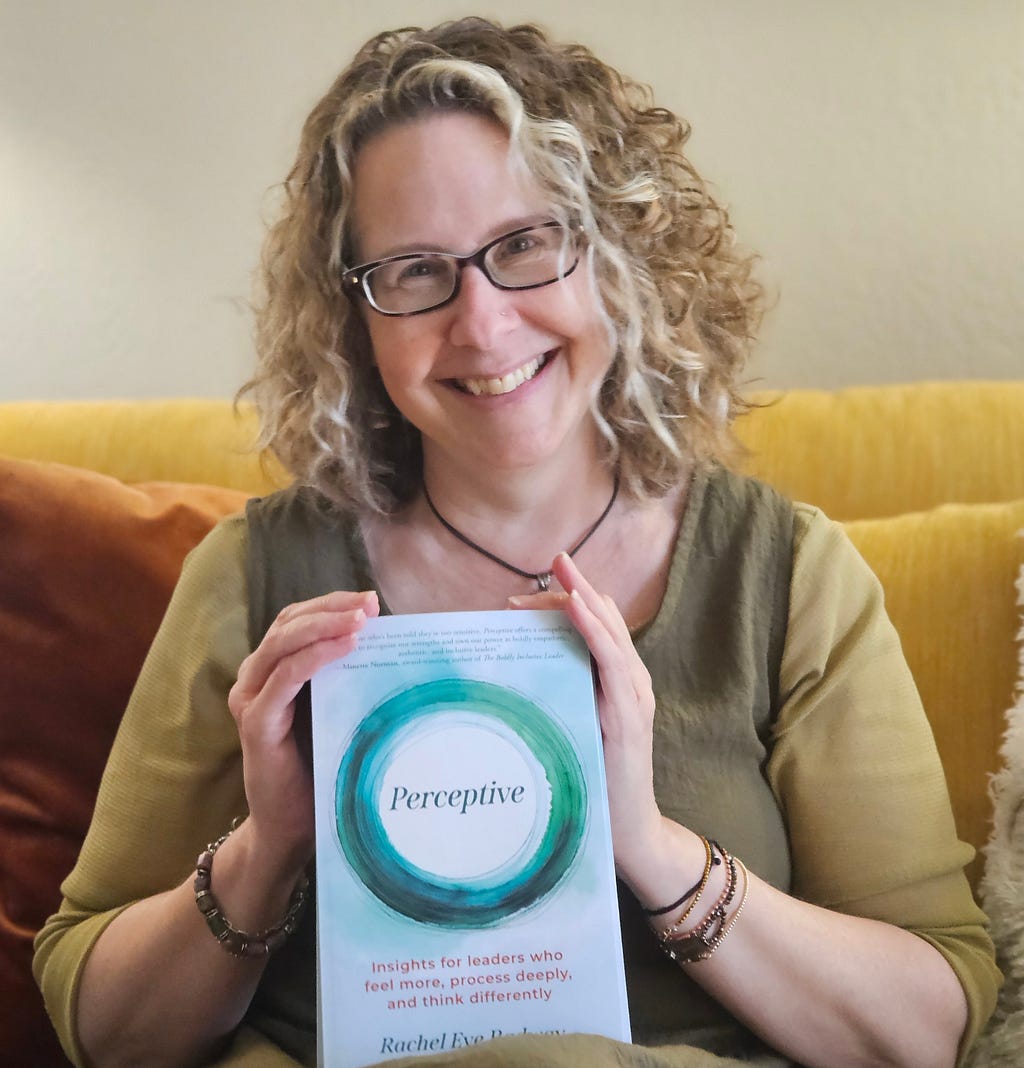
As part of our series about the “Five Things You Need To Be A Highly Effective Leader During Turbulent Times”, we had the pleasure of interviewing Rachel Radway. Rachel is the founder of RER Coaching, where she works with perceptive and often neurodivergent high achievers to lead with clarity and confidence without burning out. After nearly three decades in corporate roles across content strategy, communications, and operations, she says she reached a breaking point, noting that she once became so exhausted that she “had to quit my job, sell my home and move to rural Peru” to recover. Her experience with repeated layoffs, shifting cultures, and what she describes as toxic environments led her to invest her severance in coach training and launch her own practice. Radway’s approach to leadership is shaped by lessons she learned during those years, including the importance of honest communication, compassion, and the courage to act even when afraid. Her work now includes coaching, speaking, and writing, and she recently published an award-winning book, Perceptive, which explores how leaders who “feel more, process deeply, and think differently” can thrive.
Thank you so much for your time! I know that you are a very busy person. Our readers would love to “get to know you” a bit better. Can you tell us a bit about your ‘backstory’ and how you got started?
I spent almost 30 years in the corporate world, in a range of roles and functions, including content strategy, communications, and operations. I also worked across industries, and spent a lot of time in tech or within the tech division of larger companies. I’ve always been very driven and ended up burning myself out multiple times — including once so severely that I had to quit my job, sell my home and move to rural Peru for the time and space I needed to recover. When I returned to corporate and then was impacted by another round of layoffs (I’d been through many since the 1990s), I decided it was time to do something I’d wanted to do for more than 10 years. I invested my severance package into a coach training program and got my certification. I did get another contract job at the time and planned to work with clients on the side as I built the business, but that job was so toxic in so many ways that I ended up cutting down my hours. When it ended, I formally launched my coaching business full-time, and for maybe the first time in my career I can say that I truly love my work.
It has been said that our mistakes can be our greatest teachers. Can you share a story about the funniest mistake you made when you were first starting? Can you tell us what lesson you learned from that?
Oof — I’ve made so many mistakes. I’m still making them! But I’m much more attuned to my intuition now, so when I make a mistake, I course-correct more quickly. None stand out as particularly funny, but I’m happy to share one that I learned a great lesson from. I was building a new team and had two people in place with another four to hire. My two team members were feeling overwhelmed by a large task with a looming deadline, and I asked how I could help. One replied that it would be great if I jumped in and started doing some of the work. I’d expected him to ask if I could get the deadline extended or the scope adjusted, either of which I would’ve tried to do immediately. But I had no idea how to use the tool they were using on this very manual task, and it wouldn’t have been a good use of my time to learn it (or of theirs to teach me). Instead of just being honest, though, and saying that, I focused on how busy I was vetting resumes and interviewing candidates to get them more support. My team member took this as my “putting him in his place,” which wasn’t at all my intention — but I absolutely understand how it came across that way. I reacted out of fear instead of responding with compassion. And looking back, every major mistake I’ve made has been about reacting out of fear. So now I’m mindful of this and try to assess where my reactions and responses are coming from.
None of us are able to achieve success without some help along the way. Is there a particular person who you are grateful towards who helped get you to where you are? Can you share a story?
I grew up believing that strong, smart, capable people didn’t ask for help. We figured things out ourselves and did whatever it took. It took me decades to even begin to understand how misguided this attitude is, and longer to start asking for help. There were a few people who helped me (or tried to) along the way — despite myself! — but I can’t think of any great stories about them.
Extensive research suggests that “purpose-driven businesses” are more successful in many areas. When your organization started, what was its vision, what was its purpose?
When I started RER Coaching, my vision — which hasn’t really changed — was a world of work where everyone is welcomed, valued, and included, regardless of the way they’re wired. My purpose is to help perceptive and often neurodivergent high achievers lead with clarity, confidence, and authenticity — and without burning themselves out — so both they and their organizations can thrive.
Thank you for all that. Let’s now turn to the main focus of our discussion. Can you share with our readers a story from your own experience about how you lead your team during uncertain or difficult times?
I don’t currently have a team, but I can certainly think of past examples. At one company, there were constant changes in the executive team and the overall strategy, and the leader I reported to was pretty tone-deaf — couldn’t read a room in terms of what employees needed to know or how they felt about all the uncertainty. I’ve never had a poker face — I’m not very good at hiding my emotions — and I don’t play politics. So I shared as much as I could (sometimes more than I probably should have) about what was happening, and I answered questions honestly. My boss gave me a hard time for this, but I stood up for my beliefs. More importantly, my team trusted me and knew I had their backs.
Did you ever consider giving up? Where did you get the motivation to continue through your challenges? What sustains your drive?
This scenario has come up more than once, and at times, I did give up. It’s incredibly hard to change a culture. I’m also stubborn, though, and when I believe strongly in something, I want to be part of making it happen.
What would you say is the most critical role of a leader during challenging times?
I think the most critical role of a leader during challenging times — and when aren’t they, these days? — is maintaining balance. Hearing and supporting their team, keeping operations going to support business/client/customer needs, and taking care of themselves are all priorities, and all take time, energy, and intention. The last one is often deprioritized or forgotten completely in turbulent times, which ultimately leads to burnout or other circumstances that ultimately don’t serve the leader, their team, the organization, or their customers.
When the future seems so uncertain, what is the best way to boost morale? What can a leader do to inspire, motivate and engage their team?
Truly listen. Get to know each individual on the team — their goals, their values, their fears, what motivates them. Answer their questions and concerns to the best of your ability. And be authentic yourself; share some of your fears and concerns. Use your judgment: Your team probably doesn’t want to know that you’re afraid everyone will be let go. But be human and show them they can bring their whole selves to work. And celebrate wins. Recognize achievements. Show them that the day-to-day stuff continues even during hard times — and some of it can still be positive, and even fun.
What is the best way to communicate difficult news to one’s team and customers?
As honestly and openly as possible, and with a communication plan in mind. Think about the questions and concerns they’re likely to have about the news, and be proactive. Where possible, provide answers — even if they don’t immediately ask. If you don’t know the answer, tell them you’re working on it — and figure out how to get it — or that there is no immediate answer but you’ll let them know when there is. Stay calm and stick to the facts as much as you can. Everything about your communication, verbal and nonverbal, will have impact; the way you carry yourself, the fact that you’ve thought in advance about their questions and concerns, how you respond to questions or reactions you hadn’t anticipated — all of these will affect the way they hear and process the news.
How can a leader make plans when the future is so unpredictable?
There’s a Yiddish saying, “Man plans, God laughs.” Regardless of your religious or spiritual beliefs, the point is that life is unpredictable. Look at the last five and a half years alone! But we have to keep planning. It’s the only way to get everyone on the same page and move forward. At the same time, we have to be able to adapt, quickly and with some equanimity. Risk assessment and backup plans are important and should be built in.
Is there a “number one principle” that can help guide a company through the ups and downs of turbulent times?
Treat your people well, with respect, care, and honest communication. With an engaged team that believes in the company, you can make it through just about anything. Without them, you have little chance of long-term success.
Can you share 3 or 4 of the most common mistakes you have seen other businesses make during difficult times? What should one keep in mind to avoid that?
A huge one is laying off everyone out of fear. I was at a company that got rid of an entire organization — along with all their institutional knowledge. It was a poor operations decision that was never explained, and those of us who remained and had worked closely with those people had to reinvent the wheel. Later, they ended up hiring new people and we had to start all over again.
On the topic of layoffs, another common mistake is making all kinds of promises you don’t know you’ll be able to keep. I’ve seen executives swear up and down that there wouldn’t be any layoffs — but when it came down to it, they had no other solutions. This erodes trust very quickly with the employees who remain — who not only often have survivors’ guilt, but may also start looking for jobs themselves.
Another is to make drastic changes to business strategy or daily operations out of fear and not strategic planning. This is more likely to happen at startups or small companies. When not carefully thought out, this can be even more disruptive than the challenges that caused the abrupt changes. There are times when it makes sense to change course, but it should be done strategically and, again, with change management and communication plans in place first.
All of these can be avoided if the executive team is collaborative and communicative rather than competitive and territorial. If they listen to each other and keep the best interests of the organization ahead of any personal agendas, even when they disagree. If each has strengths and areas of expertise that complement the others’, and they know how to leverage them both individually and as a team.
Here is the primary question of our discussion. Based on your experience and success, what are the five most important things a business leader should do to lead effectively during uncertain and turbulent times? Please share a story or an example for each.
1 . Listen. Employees who aren’t being told what’s going on will still sense something. Nature abhors a vacuum; when they don’t have solid information, they’ll start imagining all kinds of things, including the worst possible case scenario. They’ll make guesses, talk about them with each other, and be distracted from their work. Listen to your communications team; these folks typically have a good sense of what’s being said when leaders aren’t around. And offer opportunities for people to ask questions and share their concerns in ways and spaces that feel safe.
2 . Communicate — honestly, early, and often. This is really just part 2 of listening. Once you know or have anticipated their questions and concerns, address them. Proactively if possible. Show your employees that you value them as much as the work they’re producing for your company by taking their questions and concerns seriously, even if you don’t have or can’t give definitive answers yet.
3 . Lead with authenticity. People can tell when their leaders are hiding something. And the days of a homogeneous employee population looking up to a stoic executive to tell them everything’s just fine are long gone. They want you to respect them enough to be real with them — which is a lot healthier for you, too.
4 . Lead with compassion — for yourself as well as your team and organization. Try to put yourself in an employee’s shoes, or remember a time earlier in your career when you worked for someone else and that company (or the world) was going through a tough time. What kind of support would have been most helpful or reassuring to you then? What do you wish your leaders at the time had done or said differently? You can also look ahead and ask yourself another question: One year or five or ten years from now, how do you want people to remember you as a leader today?
5 . Ask for help. This has come up a lot recently in conversations with friends, clients and colleagues. If the last several years have shown us anything, it’s that none of us has all the answers and no one can do this life thing alone. People generally like to be helpful when and if they can be, and trying to tough it out and power through on your own will get you nowhere quickly — personally and professionally. More importantly, though, we are all connected, and community can bring comfort when nothing else can.
Can you please give us your favorite “Life Lesson Quote”? Can you share how that was relevant to you in your life?
“Courage is fear walking.” I’ve mentioned fear a couple of times, in the context of my own mistakes and mistakes I’ve seen other leaders and companies make. The antithesis of making mistakes out of fear is doing what you know or feel is right despite the fear. I first heard this quote only a few years ago, but it describes several times in my life when I took big risks, not knowing what might happen or how things would work out, in spite of the fear. One example is moving across the world, which I’ve done multiple times. I’ve lived in eight countries outside the US. I had a very basic plan in place for a few of those moves — where I’d sleep for a while, at the very least — but more often than not, I had very little idea what I was heading into, how long I’d be there, or what I’d do if things didn’t work out. I was afraid, but I went anyway, because it felt like the right thing to do. (Ok, in one case I went even though it didn’t feel like the right thing to do! A fantastic example of when I didn’t trust my intuition and really should have.)
How can our readers further follow your work?
Readers can find me on LinkedIn or at www.rercoaching.com. And my book, Perceptive: Insights for leaders who feel more, process deeply, and think differently, which I’m thrilled to share has recently won a couple of awards, is available at Amazon, Barnesandnoble.com, and Bookshop.org.
Thank you so much for sharing these important insights. We wish you continued success and good health!
Many thanks!
Rachel Radway Of RER Coaching On Five Things You Need To Be A Highly Effective Leader During… was originally published in Authority Magazine on Medium, where people are continuing the conversation by highlighting and responding to this story.