Cook more. Buy locally grown and seasonal food. Purchase only minimally processed foods, like milk, cheese, yogurt, tofu. Join a CSA. Eschew packaging. Compost food scraps. I know: I take this to an extreme, and that it’s a privilege to do so. I also know that schools, hospitals, food pantries, and soup kitchens — at least where I live — are making efforts to support local farmers to feed their communities. Sharing food with family, friends, and those in need is a form of direct community action.
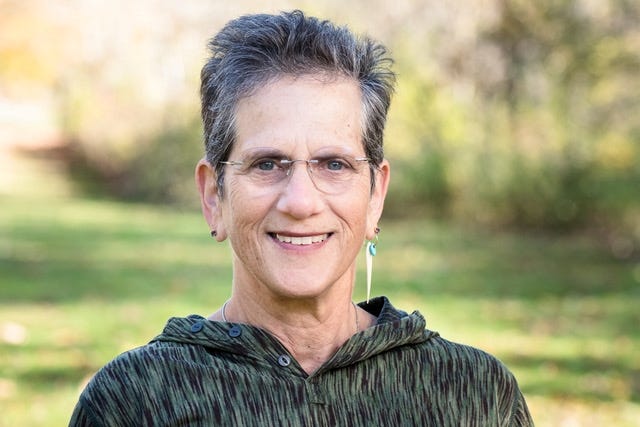
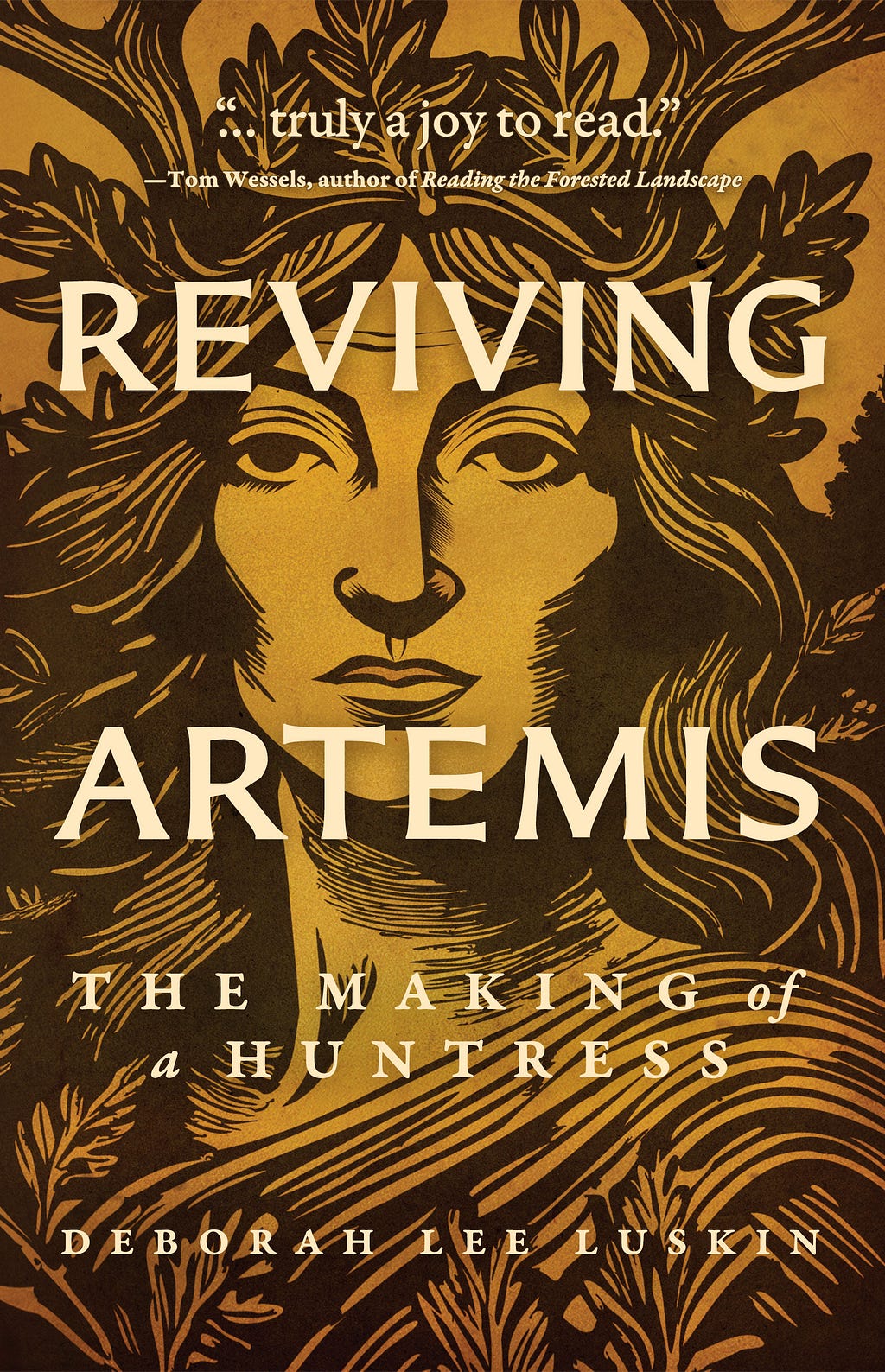
As part of my series about “authors who are making an important social impact”, I had the pleasure of interviewing Deborah Lee Luskin. Deborah is the author of the new memoir, Reviving Artemis: The Making of a Huntress, She has also been an editorial columnist, radio commentator, pen-for hire, and blogger. Her first novel, Into the Wilderness, won the Independent Publishers Gold Medal for Regional Fiction. She holds a PhD in English Literature. She lives in Vermont with her husband, their dog, a cat, and a variable number of chickens.
Thank you so much for joining us in this interview series! Before we dive into the main focus of our interview, our readers would love to “get to know you” a bit better. Can you tell us a bit about your childhood backstory?
I’m the third of four children and only girl in my family of origin. My brothers and I were all born in the 1950’s and raised in a New Jersey suburb of New York City. There were twenty-two kids on our block and few cars. We played stick ball in the street, hopscotch on the sidewalk, and running bases in the driveway. We walked to school, walked home for lunch, and rode our bikes to the public library, the local parks, and to Ruth’s Candy Store, where a quarter could purchase a Nestle’s Crunch, a box of Chicklets, Wrigley’s Juicy Fruit, lavender nonpareils that came in a pill bottle, and candy cigarettes. We climbed a cedar tree that grew next to our neighbor’s garage to access the roof just so we could jump off onto the lawn.
Indoors, we had a phone on the wall in the kitchen and another upstairs in my parents’ bedroom. We had one black and white TV in the basement playroom. On weeknights, we were allowed to watch after dinner once we completed thirty minutes of reading. Once we were engaged in our books, we forgot about watching TV. But on Saturday mornings we were encouraged to watch cartoons while my parents slept in. On Sunday evenings we watched Get Smart, Man From U.N.C.L.E. or Mission Impossible, except on February 9, 1964, when we watched The Beatles on Ed Sullivan.
Summer vacations were special. For the first ten years of my life, we spent two weeks in Hampton Bays, Long Island, where we clammed, fished, swam in the ocean and sailed in the bay. When I was ten, we moved to the exurbs of Fairfield County, Connecticut, to a house on two acres with a lake, and spent summer vacations in Vermont.
When you were younger, was there a book that you read that inspired you to take action or changed your life? Can you share a story about that?
As the only girl among boys, all I wanted was a sister. Instead, I found friends and role models in books. From Elizabeth Bennet in Pride & Prejudice, I learned to speak up and say, “No!” and from Jo March, in Little Women, I learned that it took courage to become a writer. Because I was told I was equal to my brothers (though not treated equally) I also learned I could be the hero of my own life, like David Copperfield. I’m also a big fan of Leon Leoni’s Frederick, a fable about the sustaining capability of poetry — and by extrapolation, the humanities.
It has been said that our mistakes can be our greatest teachers. Can you share a story about the funniest mistake you made when you were first starting? Can you tell us what lesson you learned from that?
When I was twenty-eight, I bought a car and left Manhattan to spend the summer in a two-room cottage smaller than a New York apartment. I wrote my first unpublished novel there. I loved my Vermont life, kept the car and the cottage, and arranged my New York obligations to fit into three days of the week; I’d write in rural solitude the other four. I was lonely, but dating was turning into a waste of time. I decided never to get married. Two months later, I went on my last-ever date. Reader, I married him.
Can you describe how you aim to make a significant social impact with your book?
Humans are a narrative species. We tell stories to educate and entertain. My goal as a writer is to tell stories to create change, one reader at a time.
I once had a therapist who told me I tell stories that make people uncomfortable. That may be true. I don’t want to change people’s minds so much as help them be aware of what they believe and even question it. Reviving Artemis will challenge readers to think about the environmental impact of what they eat, about their relationship to nature, and about what older women are capable of achieving. I know it’s possible for a person to change their thoughts, opinions, and what they believe. I once disdained hunting — and now I’m a hunter.
I want the stories in Reviving Artemis to make readers think about the carbon footprint of their food; about their relationship to nature; about our country’s deathly obsession with guns, about the long half-life of even a brief episode of childhood sexual abuse. By telling stories about internalizing sexual oppression without ever naming it, I hope readers recognize how they have either experienced it or perhaps perpetuated it. And I hope that the stories of Artemis will help people see that strong women have a long history of caring for children, other women, and wild nature. Whether or not I succeed with these ambitious goals remains to be seen.
Can you share with us the most interesting story that you shared in your book?
It’s readers who will decide what story is most interesting. Here’s the story of the genesis of my deep fear of getting lost in the woods, the fear that I wanted to overcome by learning to hunt. It starts, “The first time I was lost in the woods was in the back seat of a ’56 Chevy.” I was in the car with my family: Dad driving, Mom navigating. We made a wrong turn and came to a stop in a dark wood on a grass lane too narrow to turn around. My father became angry at my mother in a way, even as a six- or seven-year old, I knew was demeaning. I felt my mother’s humiliation. I started to cry, and one of my brothers called me a cry-baby, humiliating me. This is such a clear example to me that it’s parents’ behavior that children learn from. But this is just one small story in the overall narrative of how I embarked on what seemed like an impossible task: to learn how to go into the forest before dawn, carrying a rifle. I’d never held a firearm until after I heard the call from the universe that the deer would teach me to read the forested landscape. Nor could I have ever anticipated the unintended consequence of finding freedom in aging nor finding my place in the natural world. All this from stepping off-trail.
What was the “aha moment” or series of events that made you decide to bring your message to the greater world? Can you share a story about that?
The “Aha” moment came to me in the vegetable garden, where we fenced out the wildlife. On the other side of the fence, across a field, I saw the forest that dominates the Vermont landscape. I’d always been a hiker, comfortable following a marked trail, usually hiking to a summit for a view and returning the way I came. I’d also followed my husband into the woods. He’s a confident woodsman, able to bushwhack through the forest with a map and compass, a skill I’ve tried to learn since I was sixteen and went on a twenty-eight day Outward Bound course in Minnesota. But I suffered a profound fear of getting lost in the woods, a fear that prevented me from daring to go
into the woods without a worn path. But that day in the garden, I looked up and I heard a voice say, “Follow the deer. They will teach you.” To this day, I don’t know if it was my own writer’s voice or a voice from the universe. But I listened. And I knew the best way to follow the deer was to become a deer hunter.
Without sharing specific names, can you tell us a story about a particular individual who was impacted or helped by your cause?
From 2006–2018, I was a Commentator on Vermont Public Radio, so I never saw my audience, but they heard me tell stories about shaking the hand of the farmer that feeds me, about lessening my carbon footprint by eating locally produced food in season, and about civic engagement. Ironically, one of the first pieces I broadcast was “I’m not a Hunter,” where I explained how I liked to stay out of the woods not so much for safety, but so those who answer the ancient call to hunt can have the woods to themselves.
While I don’t know how my broadcasts impacted listeners, I do know who inadvertently started me on this journey: Ralph Nader. I heard him speak at Oberlin College in 1976, the spring of my sophomore year. He was recruiting volunteers for the Ohio Public Interest Group, which didn’t interest me. While I no longer remember the context, I’ve never forgotten him saying that the food we buy at the grocery store travels 1,500 miles to our plate. He pointed out how fresh, unprocessed or minimally processed food — fruits, vegetables, meat, dairy — was shrinking to the periphery of the supermarket, and how the aisles were burgeoning with highly processed items with added sugar, fat, and packaging. This was before the terms “climate change” and “locavore” were part of the language, and thirty years before publication of Michael Pollan’s Omnivore’s Dilemma. One of the reasons I moved to Vermont in 1984 was to plant a vegetable garden — which has turned into raising fruit and poultry as well.
Are there three things the community/society/politicians can do to help you address the root of the problem you are trying to solve?
I believe that change happens at the individual level. Thinking about changing society at large is daunting. Even when we have a functioning government, legislative change is slow, and political will is currently lacking. This doesn’t mean we shouldn’t try to change how corporations put profit over planetary survival, but not all of us have the capacity to take on that Herculean challenge. Kudos to the activists and policy people who do. But for us ordinary folk, there are three small but meaningful measures we can engage in to improve both human and planetary health. These include, but are not limited to: 1) drive less; 2) cook more; and 3) spend time in nature.
1. Drive less. Walk more. Or bike, carpool, take public transportation if available, and/or work from home when possible. For this to become practical, we need safer bike lanes and sidewalks as well as public transportation. In the meantime, we can choose vehicles with high mph and low emissions. Reduce weekly mileage by combining trips. Driving less also includes shopping locally, in person. (This also keeps money close to home.) Sadly, many small towns have lost their small stores. I’ve written about this often in my blog, Living in Place (now on Substack). Also, buy less. Every item has a carbon price tag, and often the cheaper it is, the further it’s traveled.
2. Cook more. Buy locally grown and seasonal food. Purchase only minimally processed foods, like milk, cheese, yogurt, tofu. Join a CSA. Eschew packaging. Compost food scraps. I know: I take this to an extreme, and that it’s a privilege to do so. I also know that schools, hospitals, food pantries, and soup kitchens — at least where I live — are making efforts to support local farmers to feed their communities. Sharing food with family, friends, and those in need is a form of direct community action.
3. Spend time outdoors. The statistics about how much time people spend indoors looking at screens, and how little time people spend outdoors, is horrifying. Studies demonstrate that not only is nature good for humans, but also that the lack of it is deleterious. People deprived of nature are prone to Nature Deficit Disorder. Research into the Japanese practice of shinrin-yoku has confirmed the healing properties of forest bathing, a bio- and psychodynamic practice developed as an antidote to high-tech life. Shinrin-yoku is a form of sensory meditation where a person mindfully immerses herself in the healing atmosphere of the forest to lessen and even prevent the chronic stress responsible for so many of the ailments of modern life, including but not limited to anxiety, depression, distraction, and insomnia. In Japan, doctors prescribe forest bathing for improved health, and people get better. An unexpected consequence and equally important benefit of shinrin-yoku has been a greater appreciation for forests. As people find health among the trees, they’ve become more aware of the need to protect individual trees from felling and entire forests from development. Forest bathing may prove as important in protecting the natural environment as the natural environment is critical to supporting human well-being.
How do you define “Leadership”? Can you explain what you mean or give an example?
My teacher for Advanced Placement English Literature in high school was named Alan Chalk. At the beginning of term, he said his goal for us was “to erase Chalk.” As an educator, I can’t teach students to learn; I can create an environment where they can learn. As a writer, I can tell stories that make people question their beliefs without telling them what to believe.
For a long time, I was the elected moderator at my town’s annual Town Meeting. My job was to guide the legislative body to conduct its business according to the legal standard. I thought of the position as one of a facilitator rather than a leader, especially since I conducted the debate with neutrality. The only opinions I could voice at the meeting were about Roberts Rules of Order, of which I was an enforcer. I think of leadership as something more nuanced, like Mr. Chalk’s.
What are your “5 things I wish someone told me when I first started” and why? Please share a story or example for each.
I’m sure many people told me these five things repeatedly along the way. I only wish I’d listened better. As Hamlet says, “The readiness is all.”
1. That a hand written rejection on a standard rejection slip was encouragement. I know this dates me to the Postal Era, when there were rejection slips. Now, silence is rejection, which is worse. It’s still not personal.
2. That money is not the only measure of value.
3. That you never lose by giving.
4. Kindness matters.
5. We are not promised tomorrow.
Can you please give us your favorite “Life Lesson Quote”? Can you share how that was relevant to you in your life?
My mentor told me, “Hunting is total freedom.” Hunting has taught me, “Aging is total freedom.” Reviving Artemis is my story of aging joyfully as I found my place in the natural world.
Is there a person in the world, or in the US with whom you would like to have a private breakfast or lunch with, and why? He or she might just see this, especially if we tag them. 🙂
One of the freedoms that comes with aging is knowing what I want and don’t want to do. One of the things I don’t want to do is chase celebrity. I’m dedicated to my life in the slow lane and telling stories to create change.
I don’t think I could eat in the presence of the Dalai Lama, but I’d love to walk and talk with him.
How can our readers further follow your work online?
Your readers can visit my website: https://www.deborahleeluskin.com/, and follow me on socials and substack:FB: @Deborah-Lee-Luskin; IG: @deborahleeluskin; Substack: @DeborahLeeLuskin
Thank you for these great insights!
Social Impact Authors: Why & How Deborah Lee Luskin Is Helping To Change Our World was originally published in Authority Magazine on Medium, where people are continuing the conversation by highlighting and responding to this story.