Robin Bronk on Leading Hollywood’s Nonprofit Voice, Going Into Labor in the Oval Office and Why Public Service Is Still ‘Cool’
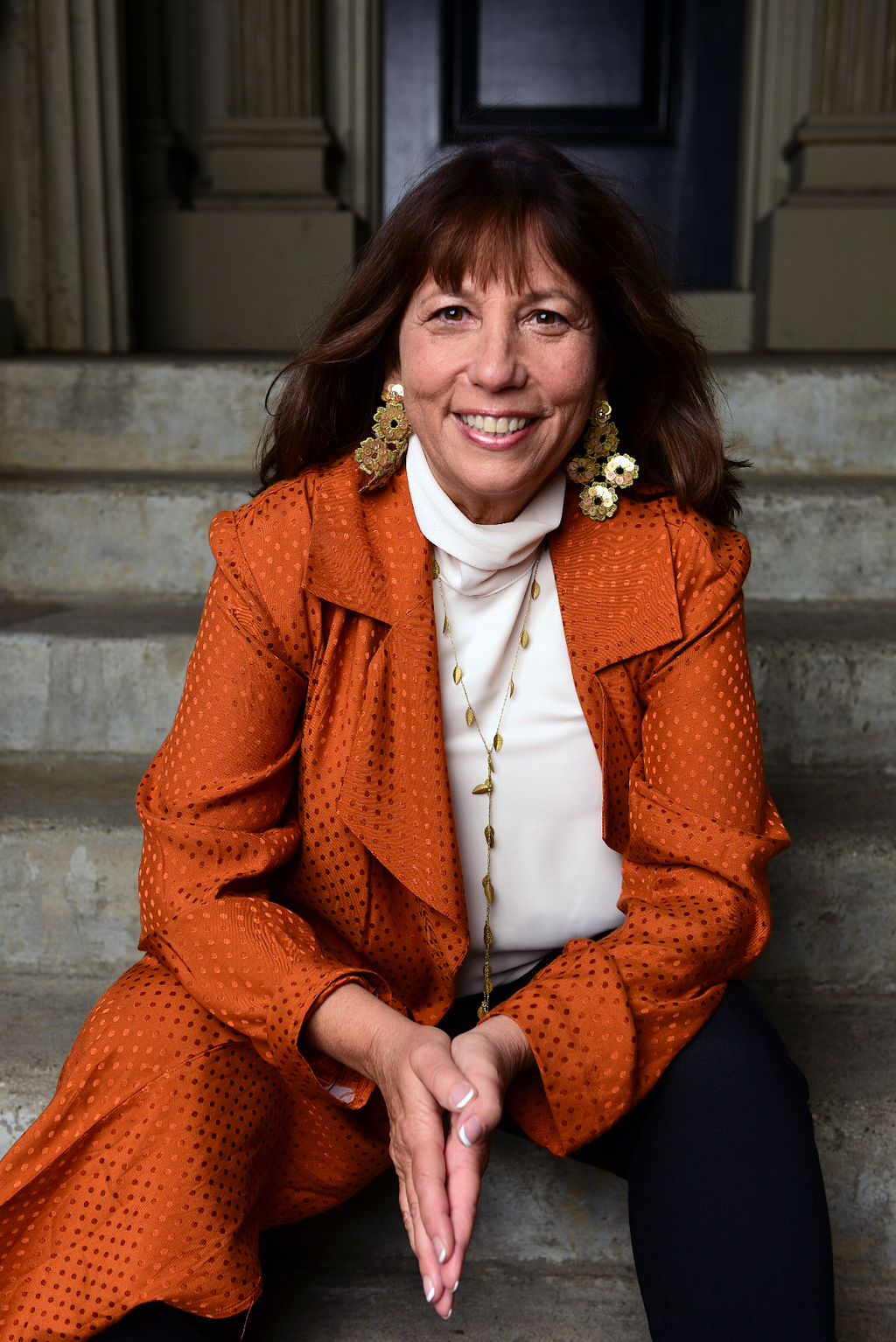
“We knew that President Clinton really loved [Lieber and Stoller’s] music. He played music himself, so we arranged a meeting at the White House. When you schedule those kinds of appointments, it’s way in advance. By the time the meeting rolled around, I was due the next day, with my first baby… I think I’m probably one of the only people in history who was literally going into labor in the Oval Office.”
I had the pleasure of talking with Robin Bronk. Robin grew up in Clemson, South Carolina, a town that felt more like a snapshot from an earlier America than a place poised to shape the future head of Hollywood’s most visible nonprofit arts lobby. With one movie theater, one high school, and a general store that doubled as the town’s cultural hub, Bronk remembers the community theater as the place where Broadway came alive in the rural South. “It gave us these amazing cultural touchstones,” she said in our interview. “It was a really fun place to grow up.”
Her path from a small-town stage to the Oval Office wasn’t mapped out in advance. At Penn State, she thrived in what she describes as “Happy Valley’s bubble,” a college experience unburdened by the relentless career-planning common among students today. Instead, she worked summers in the heart of the Blue Ridge Mountains at North Carolina’s Camp Blue Star as a counselor, an experience she credits with teaching her leadership skills in what she called “a sink-or-swim environment, literally and figuratively.”
After graduation, her best friend suggested they move to Washington, D.C., and Bronk went along, admitting she had no plan and little political knowledge beyond the Schoolhouse Rock jingle about Capitol Hill. “It was like showing up in Hollywood never having seen a movie,” she said. “But I guess that’s one of the traits I’ve always had, you just figure it out. You fake it till you make it.”
Her first break came on a sweltering DC summer day of 110-degree heat, dressed in a polyester suit and the cheap shoes being the best that a recent college graduate could afford, going door to door with typed resumes. When she reached the office of Pennsylvania Senator John Heinz, she landed a job handling constituent mail. “That was the big thing, learning how to write ‘rest assured,’ in answer to constituent mail” she recalled. The entry-level gig introduced her to the machinery of politics, and she was hooked.
From Capitol Hill, Bronk moved to the public affairs firm APCO Worldwide, where she was one of the company’s earliest employees. She discovered a fascination with policy and the mechanics of civic life. “It made civics come alive for me,” she said. “It showed me why we, as citizens, need to be informed and have a seat at the table.” Her work eventually brought her to the Motion Picture Association and the Recording Industry Association of America, where she became, in her words, the “Hollywood girl on the Hill,” working on intellectual property and creative rights.
The intersection of politics, entertainment, and personal life sometimes blurred in surreal ways. While organizing a Capitol Hill day for the recording industry with songwriting legends Jerry Leiber and Mike Stoller, she found herself doubled over in pain during a meeting with President Bill Clinton. She was going into labor, with her now eldest daughter, inside the Oval Office. “I think I’m probably one of the only people in history who was literally going into labor in the Oval Office,” she said.
Years later, in labor with her third child, Bronk answered a call from Billy Baldwin, then President of The Creative Coalition. The organization, founded in 1989 by Alec Baldwin, Susan Sarandon, Christopher Reeve, and Ron Silver, was searching for a new executive director. Bronk listened to Baldwin’s pitch for what would become her dream job without mentioning she was en route to deliver her baby. She took the role, and today she leads the nonprofit as its CEO.
The Creative Coalition exists at the nexus of Hollywood and Washington, amplifying the voices of artists on issues that stretch far beyond red carpets. Born in the late ’80s in response to President Reagan’s attempts to cut funding for the National Endowment for the Arts (NEA), the group carved out a space where celebrity clout could be wielded for social welfare and positive policy impact. “They realized their celebrity gave them access, but they also understood how politics worked,” Bronk explained of the founders. “They became these early advocates, the godparents of Hollywood’s engagement in public advocacy.”
Under her leadership, the Coalition continues to fight for arts funding and broader cultural policy. She has overseen PSA campaigns that highlight the role of the efficacy of the arts in promoting public education, mental health, and economic development. Most recently, Bronk has turned her attention to family caregiving, launching an Entertainment Industry Commission with AARP to normalize conversations around caring for aging parents. “It’s this big secret that no one really talks about,” she said. “Our goal is to let people know they’re not alone, and that there are resources available.”
The Creative Coalition’s membership is a roll call of Hollywood names. Its President is the actor Tim Daly (Madam Secretary, Sopranos, Wings) and the board includes actors Rob Lowe, Hector Elizondo and Marlon Wayans. Advisory members range from Michael J. Fox and Connie Britton to Stockard Channing and Alec Baldwin. Each September, during Emmy week, the organization hosts its Humanitarian Awards, honoring actors and creators who use their platforms for public good. “Two of the biggest lessons I share with young people at the start of their careers is that you really deserve to love what you’re doing and always be learning,” Bronk said.
For Bronk, mistakes along the way have been less about failure and more about refinement. “Everyone makes mistakes, and that’s okay. But what do you take from it?” she said. “For me, it’s always about asking: What did I learn? How do I not just do it better next time, but how do I internalize it as a lesson?”
Her mantra is simple: surround yourself with people smarter than you, listen carefully, and never be afraid to admit what you don’t know. In an era where public trust in institutions is thin, she’s convinced that artists can still cut through the noise. “I want to bring public service back, that public service is cool,” she told me. “It’s about making sure your community thrives.”
For Robin Bronk, that mission began in a community theater in South Carolina. Decades later, she’s still advocating for the same idea that lit up her childhood stage: the arts aren’t a luxury. They’re a necessity.
Yitzi: Robin Bronk, it’s such a delight to meet you. Before we dive in deep, our readers would love to learn about your personal origin story. Can you share a story from your childhood, how you grew up and the seeds for all the great things that have come since then?
Robin: It’s great to meet you! I bet you’ll never guess. I did most of my growing up in a little town in South Carolina, Clemson. I loved it. It was great. We had a general store, and I just loved small-town living. There was one high school, two movie theaters and — one of the most special places of my childhood — the community theater.
It was back in the day, and we were pretty remote in South Carolina, but the community theater brought Broadway to us. We did Broadway shows, and it gave us these amazing cultural touchstones. That was a big part of my life. It was a really fun place to grow up.
I went to Penn State, and it’s interesting because, especially for your readers to hear, when I graduated college, there wasn’t all this planning that kids do today. You know, now it’s all internships and very calculated roadmaps. But my summers were spent at sleepaway camp. That’s where I made many of the lifelong friends I still work with today, and where I learned so many leadership skills. It was very much a sink-or-swim environment, literally and figuratively.
After college, my best friend from sleepaway camp was graduating from Northwestern, and I was graduating from Penn State. She had a boyfriend in D.C.and the best spirit of adventure. When she said, “Let’s go to D.C,” I said, “Okay!” And I had zero plans to support that intention.. I just went with it.
Penn State is known as Happy Valley, and it really is in the middle of nowhere. It’s kind of nirvana for students because you’re in this bubble and don’t really have to deal with the real world. So there I was, leaving Penn State and heading to Washington, D.C. Honestly, I didn’t know the difference between a Democrat and a Republican. My knowledge of how a bill became a law came from that Schoolhouse Rock song about Capitol Hill.
It was like showing up in Hollywood never having seen a movie. But I guess that’s one of the traits I’ve always had, you just figure it out. You fake it till you make it.
I went door to door on Capitol Hill. It was a pivotal time. Back then, you had to type your resume, and if you made a mistake, you had to start over because we couldn’t afford the fancy correcting typewriters. I printed my resume (at a print shop!) and went out in the D.C. summer heat, it was around 110 degrees. I couldn’t afford anything fancy, so I was in a polyester suit and naugahyde shoes. Not vegan leather, just the cheapest thing I could afford.
Sweating, I went door to door, and when I got to the H’s, I landed at Senator Heinz’s office from Pennsylvania. They had an opening. The job was to handle constituent mail. People would actually write letters to their elected officials, and the team would weigh the pros and cons, literally weigh them. The role was to write responses with phrases like “Rest assured, we’re dealing with that.” That was the big thing, learning how to write “rest assured.”
From there, I just fell in love with politics, policy, and legislation. It was fascinating to me, our history, our future. I ended up working at a public affairs firm in D.C., APCO Worldwide. I was the seventh employee, and now I think they have around 1,200 in 80 markets. I really fell in love with policy — the chess game of it, and the intrigue. It made civics come alive for me. It showed me why we, as citizens, need to be informed and have a seat at the table.
Later, I did lobbying for the Motion Picture Association (MPA) and for the Recording Industry Association of America (RIAA). I worked a lot on intellectual property issues and became sort of the “Hollywood girl on the Hill.”
This is another story entirely, but when I had my first daughter (who now is an executive in the entertainment industry) I actually went into labor in the Oval Office. That was during President Clinton’s administration.
When I had my third daughter (who’s also in entertainment now and living in Tel Aviv) I was in labor and delivery when The Creative Coalition called. They were looking for an Executive Director and had heard about me because of my background in entertainment, intellectual property, and Capitol Hill. I answered the phone, and here we are.
I love my job. I love coming to work every day.
Yitzi: You’re an amazing storyteller.
Robin: Well, I learned from the best. I have a constituency of the best storytellers.
Yitzi: Understood. (Laughs) You alluded to a couple of amazing stories, and we’d be remiss if I didn’t ask about them. I’d love to hear the story about going into labor in the Oval Office, and any others you’d like to share.
Robin: I was working with the Recording Industry Association of America, the RIAA. It’s the trade association for the record industry. We were on Capitol Hill for a Hill Day, and I had these incredible songwriters scheduled to come, Lieber and Stoller. They wrote “Jailhouse Rock,” “Stand by Me,” and so many other iconic songs.
We knew that President Clinton really loved their music. He played music himself, so we arranged a meeting at the White House. When you schedule those kinds of appointments, it’s way in advance. By the time the meeting rolled around, I was due the next day, with my first baby.
I was in the Oval Office, a little doubled over in pain, but it was so exciting. President Clinton was fantastic. He was leading us all in “let’s guess the flip side” of various Lieber and Stoller hits, and I think I’m probably one of the only people in history who was literally going into labor in the Oval Office.
Eventually, I had to cut the meeting short. It was my first baby, and everything was feeling surreal as first labors tend to be. So I cut the meeting short (again, probably a first in the Oval to cut a meeting short with the President), and quickly bid “good bye Mr. President” so I could go and have a baby.
Then with my third baby, I was on my way to the hospital and the phone rang — an early version of a cell phone. It was the actor Billy Baldwin, who was President of The Creative Coalition at the time. He started talking to me about the job, and it was my dream job. I was like, “Uh huh, okay, uh huh,” the whole time, never mentioning that I was literally on my way to give birth. By the way, my middle daughter was born without the celebrity and politico surround-sound, which is likely why she’s the calm, cool and collected one in the family!
It’s been a wild ride. It’s great to live this life and be part of this world. One of the biggest lessons I always share with young people is that you really deserve to love what you’re doing. People talk a lot about unplugging, but for me, this is the great adventure. I love being plugged in. Every day, I’m learning, and that’s so important. You should always be learning.
And my motto? Surround yourself with people who are smarter than you.
Yitzi: It’s been said that sometimes our mistakes can be our greatest teachers. Do you have a story about a funny mistake you made when you were first starting your career, and the lesson you learned from it?
Robin: You know, one of the things I learned, not even early on, probably midday in my career, is about being penny wise and pound foolish. I don’t love clichés, but sometimes there’s a reason these exist. It is about learning to be a diplomat, choosing your battles, choosing when to stand on a soapbox, and understanding how to be part of a team; so you can ultimately be a leader.
I’m trying to think of a specific moment. I know I’ve made so many errors and mistakes over the years, but the key thing is the learning. What’s the takeaway? Everyone makes mistakes, and that’s okay. But what do you take from it?
For me, it’s always about asking: What did I learn? How do I not just do it better next time, but how do I internalize it as a lesson? That’s what I hold on to. Every day, there’s not a day that goes by that I don’t reflect on something and think, “Okay, that could’ve been different and even better.”
Quite often with my staff, I’ll say, “There’s a reason I’m telling you this. There’s a reason we’re focusing on this detail.” Then I’ll share whatever the story is, because I think it’s important to be illustrative. You have to remember those moments. What matters most is the takeaway.
Yitzi: Beautiful. Tell us about the exciting new work you’re doing now. What are some of the projects you’re currently working on?
Robin: Well, as background, The Creative Coalition is the nonprofit arm of the entertainment industry. We’re also a membership organization. Our members include actors, writers, producers, directors, executives, leaders across the entertainment world. We also have C-suite leaders from many other industries, because in today’s world, the connective tissue cannot be underestimated.
The Creative Coalition was formed in the late 1980s in response to President Reagan’s plan to zero out funding for the National Endowment for the Arts. A lot of people don’t really know what the NEA is or what it does, but quite simply, it allocates a portion of federal funds to every state to support the arts.
The origin story of The Creative Coalition (before my time) is that it was founded by the actors Alec Baldwin, Susan Sarandon, Christopher Reeve, and Ron Silver. They wanted to use the power of the entertainment industry to help restore arts funding. In 1987, they literally went door-to-door on Capitol Hill to get the votes needed to save the NEA from extinction. They realized their celebrity gave them access, but they also understood how politics worked. They became these early advocates, the godparents of Hollywood’s engagement in public advocacy.
Today, we continue that work. Every year, we go back to Capitol Hill and meet with the White House and Congressional leadership to help ensure continued funding for the NEA. We recently ran a PSA campaign with the actor Ian Armitage (Young Sheldon) and grew up in Arlington, Virginia. Emmy Award-winning actor/director Michael Chiklis (The Senior, The Shield, The Commish) directed it. The campaign focused on explaining what the NEA is and why it matters.
The Creative Coalition has a history of producing and spearheading some of the most effective PSA campaigns. Today, in the United States, the arts are often treated like a dessert, something extra. So we work hard to show the efficacy of the arts, how they intersect with and improve other areas of life.
We also realize that not everyone understands why it’s important to support the arts. That is why — about a dozen years ago, we began focusing on other issues where art/entertainment could make a difference in perception of an issue and the zeitgeist of an issue. That underscored the tenant that arts are critical to the well-being of our society. In this particular case, we worked to help create environments where it was okay to prioritize mental well-being. We worked with writers, showrunners, and other creatives to include mental health storylines in sitcoms and dramas. Today, we’ve made huge progress in destigmatizing the idea of getting help, and I’m really proud of that.
After that, we turned to destigmatizing obesity. We wanted to make sure it wasn’t just the punchline anymore. Again, we used PSAs, script integrations, and storytelling to educate and raise awareness.
Then, when the COVID vaccines were developed, we were asked to partner with the Yale School of Medicine. We created a public service campaign using our best storytellers, writers, directors, producers, to help address this national health crisis.
Most recently, we’ve taken on an issue that’s very personal to me: supporting family caregiving. As our population ages, more and more of us are taking care of our parents or other loved ones. I’m doing that myself now, along with my siblings. It’s this big secret that no one really talks about. Our partner in this work is AARP, and together we started the Entertainment Industry Commission on Family Caregiving. Our goal is to normalize the conversation and let people know they’re not alone, and that there are resources available.
We’re about to launch a PSA campaign on family caregiving, and I’m really excited about it.
Also, I’m not sure when this will be published, but this Saturday we have a great event, our Humanitarian Awards. We do it every year during Emmy weekend, and we honor industry leaders, talent, executives, creators, who use their platform for the common good. This year, we’re honoring John Turturro for his advocacy in family caregiving, Jason Isaacs for his work in arts education, and several others. Laurie can get you the full list.
So yes, we’re busy!

Yitzi: This is our signature question. You’ve been blessed with a lot of success. Looking back to when you first started, you must have learned a lot from your experiences. Can you share the things that are essential to creating a highly successful social impact organization?
Robin:
- Read a lot.
- Write a lot.
- Surround yourself with people who are smarter than you.
- Know where your strengths are, and then partner where your weaknesses are.
- Be collaborative.
- Listen, it’s so important to really listen.
- Never stop educating yourself.
- And don’t be afraid to say you don’t know. That’s okay. That’s why you go to the people who do know.
Yitzi: This is our aspirational question. Robin, because of your great work and the platform you’ve built, you’re a person of enormous influence. If you could put out and spread an idea or inspire a movement that would bring the most good to the most people, what would that be?
Robin: I want to bring public service back, that public service is cool. It’s about making sure your community thrives.
Yitzi: Robin, how can our readers continue to follow your work? How can they support your work in any possible way?
Robin: We’re a nonprofit, so we love a donation. We’re a 501(c)(3). Just go to our website, thecreativecoalition.org.
Yitzi: Robin, it’s been such a delight to meet you. Wishing you continued success and good health. And Shana Tova.
Robin: It’s great to meet you and Shana Tova!
Robin Bronk on Leading Hollywood’s Nonprofit Voice, Going Into Labor in the Oval Office and Why… was originally published in Authority Magazine on Medium, where people are continuing the conversation by highlighting and responding to this story.