‘The Expanse’ Star Cas Anvar Talks Doin’ It, His Shakespearean Origins, and the High-Stakes Humanity Behind Sci-Fi Roles
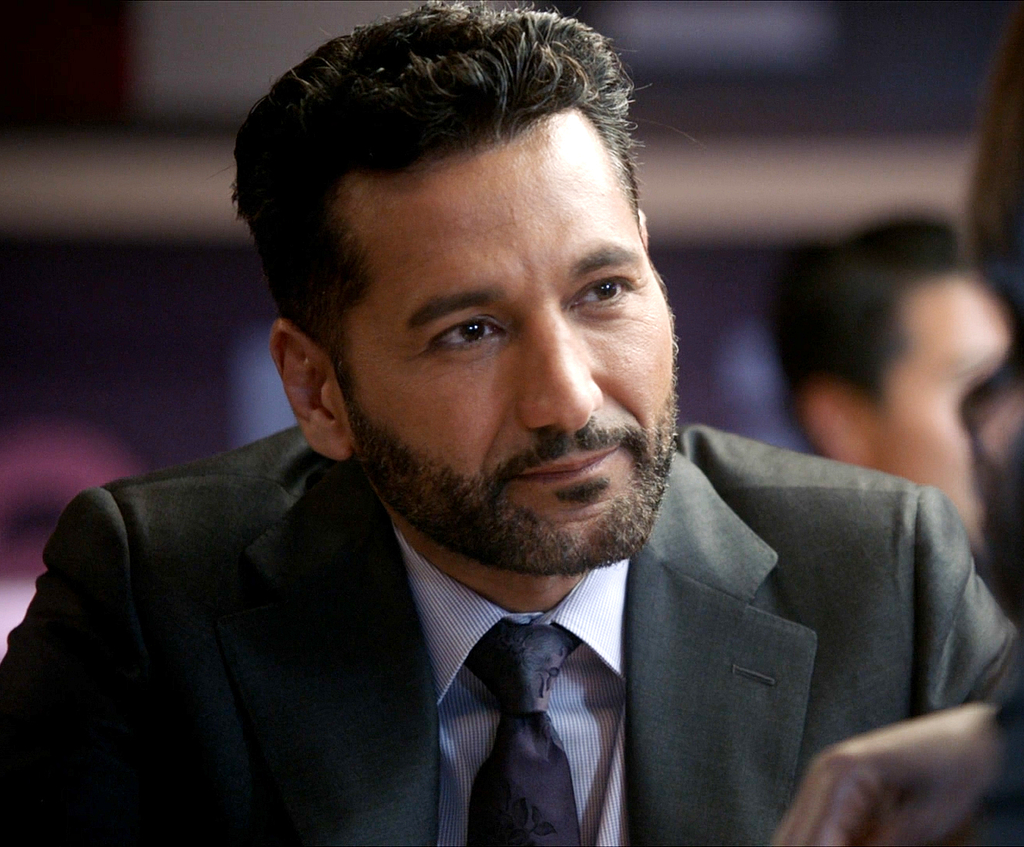
“We are citizens of one community… We cannot put any group — whether it is a different country, culture, gender, or race — as worse than us. We’re all part of one race… Our DNA is 99.99% identical… Our world is an organism that needs to be taken care of, and we as a species have to take care of each other. There’s so much hate, animosity, competition, consumerism, and disrespect… It has to stop. We have to treat each other the way we want to be treated, including the planet.”
I had the pleasure of talking with Cas Anvar, a man whose face is instantly recognizable to sci-fi fans as the charming, wisecracking pilot Alex Kamal from the critically acclaimed series The Expanse. But the man behind the Martian accent is more than just a starship jockey. He’s a classically trained actor with a resume that reads like a who’s who of Hollywood, and an origin story that feels ripped from a movie script itself.
Anvar was born in Montreal, an English-speaking kid in French Canada with two science-minded parents pushing him toward a more practical career. He was, by his own admission, a nerd. “I was very shy and introverted,” he recalls. “I was into D&D, comic books, computer games, and all that, and I had all the nerdy friends.” The pivot point, his own “radioactive spider” moment, came from the most unlikely of sources: a high school English teacher. “This very intimidating guy with an ascot, a big booming voice… points his finger at me and goes, ‘Anvar, I want you to audition for the play.’”
Terrified, but more afraid of failing the class, he did it. The play was Hamlet, and the audition was the famous “to be or not to be” speech. Anvar, ever the intense student, went to the library and studied cassette tapes of the greats — Richard Burton, Peter O’Toole, Derek Jacobi. He showed up to the audition and gave it his all, only to have the teacher stop him mid-soliloquy. “He says, ‘You just performed an entire monologue of Shakespeare’s in perfect iambic pentameter, while chewing gum!’” Anvar remembers. He demanded , ‘Spit it out and continue.’” Cas got the part, a role with 1,500 lines, and at 16 years old, he was hooked. “Once you get bitten like that, there’s no going back. You’re done. You’re toast.”
That early baptism by Shakespearean fire launched a career that has seen him work alongside Steven Spielberg, Tom Hanks, Ben Affleck, and Viola Davis. One of his fondest memories comes from shooting the BBC miniseries Neverland in Italy and Ireland. He played a swashbuckling pirate, working with legends like Bob Hoskins and Charles Dance. The writer-director, Nick Willing, was a character himself. “He’d say, with his little British accent, ‘Let me talk to the writer.’ Then he’d say, ‘Well, the writer thinks that you should really respect the words, but the director says go ahead and have some fun.’” It was a rewarding experience that forged a lasting friendship.
But for all the fun, Anvar is brutally honest about the realities of the business. When aspiring actors ask him for advice, his first response is always the same: “Don’t.” He clarifies, “Do not become an actor unless you eat, live, breathe, sleep, and shit acting. You have to wake up in the morning and go to sleep thinking about this, or you won’t be able to survive the 950 auditions you’ll get rejected on.” He knows the slog firsthand, especially as an actor of color. He notes a strange irony: after the tragedy of 9/11, he worried about opportunities drying up, but instead found that Hollywood began writing more complex, multi-layered characters with Middle Eastern backgrounds. “All the stereotyped terrorists and villains started to disappear, and new, rich, multi-layered, textured characters emerged… Even if the role was a terrorist… it wasn’t a mustache-twirling villain; it was a real person with real trauma and reasons.”
Of course, for many, he will always be Alex Kamal. The Expanse became a cultural touchstone, a rare piece of hard sci-fi that got the science right. Anvar credits the show’s success to an obsessive devotion to realism and a unique, collaborative rehearsal process. “The whole cast decided to continue… We would get together on the weekends… and rehearse lines on our days off.” Soon, the writers and producers joined in, ironing out plot holes and developing creative ideas weeks before stepping on set. “I think that added a huge element of depth and richness because the whole company worked creatively together.”
He sees a lot of himself in Alex. “Both of us were kind of introverted and super hyper-focused on the things we’re most passionate about. Both of us are a little bit awkward in social environments.” And while his character was a proud Martian, Anvar isn’t packing his bags for the red planet anytime soon. After learning the brutal realities of space travel for the show, he’s happy to stay on Earth. “The joke that exists in the space world is ‘space is hard.’ And it’s not just hard; space is trying to kill you 24/7.”
Now, with several new films on the horizon, including the comedy Doin’ It with Lilly Singh, Anvar continues to build his diverse filmography. But beyond the roles and the accolades, he operates from a place of deep principle, informed by his Baha’i faith. When asked what movement he’d want to inspire, his answer is immediate and clear. “We are citizens of one community… We cannot put any group — whether it is a different country, culture, gender, or race — as worse than us. We’re all part of one race… Our DNA is 99.99% identical… We have to treat each other the way we want to be treated, including the planet.” It’s a simple, powerful idea from an actor whose journey has been anything but.
Yitzi: Cas, it’s so nice to meet you. Before we dive in, our readers would love to learn about your origin story.
Cas: It’s my pleasure, Yitzi. I’m very happy to be here. My origin story. I’m an X-Man, so it always involves radioactivity and some kind of mutant gene. It’s interesting in the sense that I was born and raised in Canada — Montreal, actually. An English person in French Canada. I had two science-minded parents wanting me to go into the sciences, and I was very much attracted to them, studying. But I always had this weird pull towards fantastical stories and storytelling.
I guess the big, unusual pivot point in my life came in high school. I was a bit of a nerd — very shy and introverted. I was into D&D, comic books, computer games, and all that, and I had all the nerdy friends. We were walking down the hallway once, probably in grade 10 or 11, and my English teacher — this very intimidating guy with an ascot, a big booming voice, and very theatrical, who goes to Broadway and watches plays all the time — points his finger at me and goes, “Anvar, I want you to audition for the play.” I thought, “Me? I’ve never spoken in public in my life.” My friend looked at me and said, “You better do it or he’s going to fail you.” So I said, “Okay, sir.”
They were putting on a performance of Hamlet, and everyone had to do an audition of the “to be or not to be” speech. I studied. This is the very earliest memory I have of working on anything. I realized back then that I was intense. I went into the library and pulled out all the audio tapes — they were all cassettes back then — of the great British actors: Richard Burton, Peter O’Toole, Derek Jacobi, all the greats. I was listening to these auditions, trying to memorize and emulate them.
I realize, thinking back on it, I must have copied them because a couple of weeks later, in the middle of my audition, my teacher goes, “Anvar, stop.” I’m up on stage, trembling, and I say, “Yes, sir.” He asks, “Do you realize what you’ve done?” I replied, “No, sir, what did I do?” I thought I had really screwed it up. He says, “You just performed an entire monologue of Shakespeare’s in perfect Iambic pentameter…., while chewing gum!!!” He roared at me because I had forgotten to take the gum out of my mouth. He goes, “Spit it out and continue.” I was trembling.
So, I finished the monologue and got the role. Apparently, the gum chewing didn’t hurt me. That launched me. If you know anything about Shakespeare, Hamlet has the most lines of any role ever, like 1,500 lines. It’s a very demanding role, and I was 16. I just dove in, so hyper-focused and intense about it. I’d never experienced anything like it. I can probably speak for a lot of people: once you get bitten like that, there’s no going back. You’re done. You’re toast. You are marked for life as a performer. That’s what started it all. If we’re going to do my radioactive spider story, that’s probably it.
Yitzi: That’s great. You probably have some amazing stories from all the different projects you’ve been on, the different planets you’ve visited.
Cas: Yeah. I’m actually kind of proud of my resume. I was just looking over it in the last few months and realized I’ve worked with some really cool people over the years. I’ve been very fortunate. I worked with Spielberg, Tom Hanks, Catherine Zeta-Jones, Stanley Tucci, Rhys Ifans, Oliver Reed, and Bob Hoskins. Ben Affleck, Matthew , Neil McDonough, Jonathan Reese Myers, Peter Facinelli, Doug Jones, Angus McFadden, Brie Larson, Naomi Watts, Viola Davis, Kiefer Sutherland, William Shatner, James Spader, Candice Bergen and the list goes on . It’s just a great list of people. I didn’t realize it when it was happening, but when I go back and look at it, every time my friends see a movie, I’m like, “Oh, I worked with that person. I worked with that person.” It’s fun to feel that.
Yitzi: It’s probably hard to boil down, but can you share one or two stories that most stand out in your mind from your career?
Cas: One of the most fun experiences I had was on a BBC four-part miniseries called Neverland. That was the one with Rhys Ifans, Bob Hoskins, Anna Friel, and Charles Dance. I played this Italian swashbuckling pirate — a very quirky, annoying foil to the protagonist. We shot for three months in Italy and Ireland. I have to say, I just fell in love with everyone I met in Ireland and Italy.
The creator, Nick Willing, was the writer-director, and I worked with him on several projects after that. I worked with him on Olympus and on a really dark drama called Babysellers. He also won a bunch of awards for a series called Tin Man, which was a remake of The Wizard of Oz with Zooey Deschanel. He was just a phenomenal artist and creator. And a terrific leader. He was kind of kooky. Since he wrote and directed it, when we would go on set, I’d be like, “Nick, I’m just wondering about this part. Do you think we could change this?” And he’d say, with his little British accent, “Let me talk to the writer.” Then he’d say, “Well, the writer thinks that you should really respect the words, but the director says go ahead and have some fun.” So I was dealing with this multiple personality, quirky elf of a man. He’s hilarious.
I had an absolute blast. He became a very close friend of mine, and we still see each other whenever I go to London. That has to be one of the most rewarding and fun experiences. It was a great show, it looked beautiful, and I worked with all these wonderful British actors. I learned so much. Bob Hoskins kind of took me under his wing; I don’t know why, he just liked me. It was a great deal of fun, and being in Dublin for three months was amazing. I don’t know if you’ve ever visited Ireland, but that is a wonderfully fun place to be. The people are absolutely embracing and know how to party.
Yitzi: We love hearing stories where somebody who’s a bit further ahead opens up a door or creates an opportunity that changes a career trajectory. Do you have a story where you did that for somebody else?
Cas: Honestly, as an actor in this business, particularly as an actor of color, I am extremely aware of how challenging things are. This is not a vocation for the weak of heart. You cannot become an artist or a performer if you have thin skin. All those stories you hear about being discovered, that’s 0.0001 percent. That is not the norm. Those Cinderella stories might have worked in the ’20s and ’30s, but now you slog. You do a thousand auditions, and if you’re good and you’re lucky — because luck is a huge part of it — you will book maybe 50 of those thousand. For the other 950, you get rejected. You have to have a thick skin.
Being aware of how challenging, difficult, and demoralizing it can be, I really do my best. Anytime I meet someone young, talented, eager, and passionate, and I can see that little fire in their eyes, I will do anything I can to help them move forward. I will introduce them to people. When I was working on The Expanse, these weren’t necessarily young people, but contemporaries and colleagues — good friends of mine who I respected as artists. I would always push for them. I would talk to my bosses and say, “Hey, there’s this guy, you got to see this guy. He’s amazing.” Or, “This person is an amazing voice actor, and I think he would be incredible for this role.” There were half a dozen times in my career where people listened to me. These guys got hired. They didn’t get hired because I gave them a good word; they got a shot and a little extra attention because I gave them a good recommendation, but they got there on their own talent.
I’ll give you an example. A friend of mine, a really talented actor named who is kind of like the next Idris Elba in London, auditioned for a role on The Boys. He asked me to look at it, and I was so impressed with what he did. He’s British and he did an American accent perfectly. I was like, “Dude, you killed it.” He sent it in, and his manager told him they wanted a video conference. He went through the whole thing and got down to the last two or three auditions, right down to the wire. Then he was just waiting to hear. His manager called and said, “Just to put things in perspective, we investigated, and 10,000 actors have auditioned for this one role. The fact that you have gotten down to the last session, just know you are one of 10,000 who got down to the top three.” It doesn’t even mean that the best person gets picked because maybe the guy who gets picked is someone the director has worked with, or maybe the producer owes a favor to someone. There are so many different factors. It’s really hard to get that big shot. So I will do everything I can for the people that I know, love, and respect. I’m not Spielberg, but everyone has influence because everyone in this industry wants to work with good people. Nobody wants to take a risk. If they hear someone talking someone up, they’re going to say, “Tell me about him. I want to work with that guy.”
I will go out of my way to help people because I appreciate it when people do that for me. However, when newbies come up to me and say, “I want to become an actor, what do I do?” my initial answer is always, “Don’t.” I say, “Do not become an actor unless you’re a masochist. Do not become an actor unless you eat, live, breathe, sleep, and shit acting.” You have to wake up in the morning and go to sleep thinking about this, or you won’t be able to survive the 950 auditions you’ll get rejected on. You won’t be able to survive the business part of show business. The show part is fun — the acting, the art, the creation — but that’s only 50% if you’re lucky. The other 50% to 60% is business. It’s what type of person they’re looking for, who they know, who they owe favors to. Am I too tall for this? Am I too short? And as an actor of color, you quickly realize there’s a whole bunch of roles that I should be allowed to go for that are blocked off for no logical reason.
It’s only very recently that you are actually able to access these types of characters. It’s strangely ironic, but after the tragedy of 9/11, which was a horrible thing, the world changed. As we started to recover, I was worried as an actor with a Middle Eastern background about what was going to happen to us being represented in stories. Strangely enough, tons of amazing roles started to come out. All the stereotyped terrorists and villains started to disappear, and new, rich, multi-layered, textured characters emerged. If you remember shows like 24 or Lost, a number of very intellectual shows started infusing rich, multi-dimensional characters with backstories, history, emotionality, and compassion into these stories that used to be two-dimensional, stereotypical clichés. I was shocked and pleasantly surprised that what happened in the world knocked the whole industry into a gear that started paying attention and telling real, good stories. I started getting all these cool, amazing, sympathetic roles. Even if the role was a terrorist, a radical, or a revolutionary, he wasn’t hateful. It wasn’t a mustache-twirling villain; it was a real person with real trauma and reasons, who believed in what he was doing. They showed that side of it, and I was like, “Okay, good on you, Hollywood. Congrats.”
So, all that to say, I try to help people as much as I can because it’s tough. It’s tough for any actor, it’s tough for actors of color, and it’s exceptionally tough for women. I would say they have the toughest job. I respect the women in this industry the most because they have to deal with way more challenges than any of us.
Yitzi: What’s been the most challenging project or role you’ve taken on so far and why?
Cas: A recent one. I’ve got four films coming out in the next year. One of them, Doing It, starts this week. That wasn’t the hardest; that was a lot of fun. But one of the movies coming out, I think this year, is called Viper. It’s directed and written by Mark Firmie, who’s an amazing up-and-coming director — a very talented, spiritual, and driven guy. Keep your eye open for this guy.
This was a science fiction, futuristic, post-apocalyptic, dystopian military action flick. It was put together very last minute because they finally got the budget for it, and they hired an amazing cast: Jonathan Rhys Meyers, Peter Facinelli, Neil McDonough, and myself. We became this military strike force.
The basic premise is that corporations run the world. We are hired by one of the corporations to go destroy a biological weapons factory in the jungle. The lead guy, codenamed Viper — my character’s codename was Razor — has a little daughter dying of cancer and needs the money for this job for her treatment because there’s no healthcare. So he takes this job, coming out of retirement. We go into the jungle to destroy this factory, and as we’re about to push the button, Viper discovers they’re not making biological weapons. They are, in fact, making a cure for cancer, which is what his daughter is dying of. He realizes we have all been duped because we were hired by a pharmaceutical company to eliminate a potential profit loss. We make an ethical decision, swipe some of the cure, save all the scientists and patients, and then spend the entire movie running for our lives because the pharmaceutical company sends their dogs after us.
We had no training time to work on the military stuff. We did everything on camera. I’m a fit guy, and I’m pretty good at the action and physical stuff. I’m trained in fight combat. I had to do a number of action scenes, one of which was in a neoprene wetsuit. I don’t know if you’ve ever worn one, but they are unbelievably restrictive, tight, and hot. Then I had my military gear on top of that. As part of the scene, I had to sprint for 50 yards in combat, hide behind trees, run, jump down a hill, go into ice-cold water, slog through it, and then throw a grenade with an explosion — all in this 20-pound wetsuit with 40 pounds of gear, sprinting, take after take. I have to tell you, man, that wasn’t easy. They had to bring ice packs because I was overheating; it doesn’t breathe. I’d say, “Okay guys, give me five minutes to cool down because I’m at 104 right now.”
It was physically very challenging. I’d go to the hotel, take a sauna, a steam bath, go for a swim because I was aching and in so much pain, just to come back to normal. Then I’d get my six hours of sleep, wake up at dawn, and do it all over again. But it was a blast. It was hard, but it was fun. Learning military stuff on the fly, on camera, while we’re shooting — that’s got to be one of the toughest things I’ve had to do.
Yitzi: So you mentioned Doing It. Tell us about the other exciting projects you’re working on now.
Cas: Doin’ It is coming out in a few days, Friday, September 19th. I don’t know if you’re familiar with Lilly Singh. She’s a Canadian woman of East Indian background from the Toronto area who started doing comedy on YouTube. She became hugely popular, got her own talk show in LA, and now I think she’s doing endorsements and brands in addition to everything else. She’s a very talented young woman who wrote her first feature, Doing It.
I have to say it was really good. I just saw the screener a couple of weeks ago and didn’t know what to expect. She wrote it, is producing it, and is starring in it. That is a lot for anybody, let alone someone who has come up in the ranks in the last few years. I’m really impressed; she did an amazing job. It’s a rollicking, raunchy comedy, like The 40-Year-Old Virgin, but with a 30-year-old East Indian woman going through that storyline.
She’s a tech guru with an app she’s trying to publish, a super-smart scientist who can’t find a job or get funding for her app. So she takes on a substitute teacher role and ends up teaching sex ed, but she’s never had sex. She’s navigating her life, trying to figure out how she feels and what she wants. Condry d soul searching ensures. I play a very sweet, innocent neighbor who gets an Amazon delivery on his doorstep that belongs to her family. His name is Farhad, a sweet little engineer, and he and her mom have sparks. It’s a secondary B-plot romance while Lily’s character is going through this tumultuous self-discovery.
It’s a very funny movie, very well done, and very well directed by talented director Sara Zandieh. One thing I will say about this film is that I have never seen anything quite like the first 10 minutes of this movie. It had my eyes wide open. I was like, “Oh my god.” This woman was as bold as bold can get. So I applaud her. I sent her my kudos, and it was funny as hell. I will not give away what happens, but just know you’re in for it.
Yitzi: I would be remiss if I didn’t ask you about The Expanse. On a personal level, during COVID, it was one of my comfort blankets. I’ve read all 10 books. I’m so sad that the series couldn’t follow the exact story arc of the books, at least the final book. But whenever I read the books, I would see you in my mind.
Cas: You know what, the creators actually said the same thing. The two guys who form James S. A. Corey said that when they started writing the new books — I think they had written four or five books when the show started — they could not get us out of their heads. They told us, “We didn’t start with these images of you guys, but you have invaded our psyche, and we are now writing with you in our minds.” It was kind of funny.
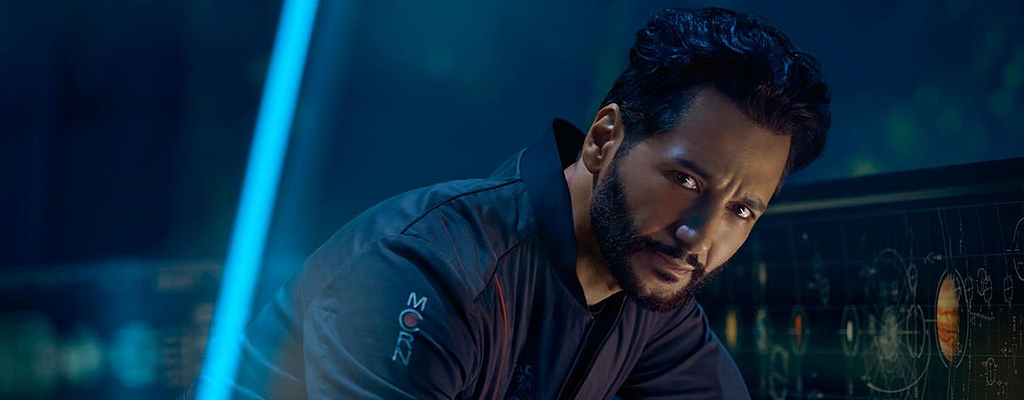
Yitzi: First of all, why do you think The Expanse has become among the most popular science fiction series of all time?
Cas: I have an interesting answer to that. You’re probably going to laugh as the nerd you seem to be, but I just started watching Battlestar Galactica with Edward James Olmos and Katee Sackhoff. Everyone told me to watch it, just like everyone told me to watch Breaking Bad, and I just said I don’t want to watch it because you’re telling me to. So I never got around to Battlestar Galactica. Because there’s some weird battle for the rights, you can’t stream it anywhere. So I had to find someone who has it on hard copy.
I started watching it, and this show was done 20 years ago. My jaw dropped. Eddie Olmos is a god. I love Katee Sackhoff, the actor who plays Baltar, and the actress who plays Six. All of these characters are so well portrayed. The cinematography is like a feature film every episode. The VFX are amazing and they hold up now. What I noticed was it’s so reminiscent of our show, or rather, our show is very reminiscent of it. I can see where the inspiration came from. It’s very gritty, grimy, and realistic. Everyone on our show, all the creators, were huge fans of Battlestar, so I know that had some influence.
That being said, the creators and showrunners of The Expanse are incredibly, meticulously devoted to producing an absolutely pristine product. They’re all science gurus. Our lead showrunner was a scientist before becoming a writer and cut his teeth on Star Trek: The Next Generation. He and the team wanted this to be as realistic as possible. This is probably one of the first science fiction shows that has done this. They wanted to do real science and have as few sci-fi conventions as possible. Obviously, there were some supernatural aspects, but we did the entire series in zero-G wherever it would be in reality. I can tell you why nobody has done that in the past: it’s very expensive and very difficult.
But they were determined. They trained the hell out of us. We had astronauts from NASA come in and show us how zero-G works. We had an amazing stunt crew teach us wirework. We were hyper-fixated on making everything as real as possible.
The second thing that I think really helps the show is that the very first director, Terry McDonough, who is a theater director from London, instilled in us a theater-like etiquette of rehearsal. For the first two episodes he directed, we rehearsed for two or three weeks before we even shot. That’s a luxury you might get on Lord of the Rings or some hundred-million-dollar project, but on a TV show, never. The most you’ll get is a read-through at lunchtime.
After he wrapped his two episodes, the whole cast decided to continue that procedure. We would get together on the weekends. If we were shooting episode four, we’d get the scripts for five and six and rehearse them on our days off. We’d spend anywhere from two to six hours. At first, it was just the actors, but then the showrunners, writers, directors and producers heard about it and asked if they could come and watch. We said, “Yeah, come.”
Eventually, we were rehearsing a script or two ahead with the entire creative team watching. While rehearsing, we’re not just working things out; we’re noticing contradictions. For example, “In this scene I do this, but in this other scene this is happening, how do we get there?” They’d be like, “Oh, we didn’t catch that,” and the writers would rework things. The actors, who are very creative — people like Shohreh Aghdashloo, Thomas Jane, and Jared Harris — are very experienced and talented. They’re always asking to try things, and the writers are eating it up and writing. By the time we get to the set, every possible loophole, plot hole, or inconsistency has been ironed out. On top of that, creative ideas that might have been too complicated to implement on set were known about a week in advance, so they could come up with a way to make them happen.
I think that added a huge element of depth and richness because the whole company worked creatively together. And it doesn’t hurt that our creative team was amazing. The writing and the source material were top-notch. We weren’t starting from scratch.
Yitzi: How would you compare and contrast your personal character with Alex from the show? How are you similar, and how are you different?
Cas: I think we’re very similar. Of all the characters I’ve ever played, I love Alex the most. Both of us were kind of introverted and super hyper-focused on the things we’re most passionate about. Both of us are a little bit awkward in social environments. I’m the kind of person in a group who doesn’t take charge. I can, but I don’t like to be the guy in charge. I’m much more the guy who likes to organize fun parties or meals. I’m more about everybody getting along and having fun. I’ve got a quirky, oddball sense of humor that a lot of people don’t get. I’m cracking jokes, and everyone’s kind of like, “What? You’re weird.”
He’s a family man, attached to his family but pulled in two different directions by his work, and that’s all stuff I recognize. Growing up, when I first started my career, being in relationships while running a Shakespeare company, I was torn in two different directions, working 80 hours a week. I can totally understand the challenges he was going through.
Yitzi: Alex was from Mars. Would you one day want to go to Mars?
Cas: You know, before I did the show, I would have said, “Hell yeah.” But once I did the show, I found out the realities of space travel. The joke that exists in the space world is “space is hard.” And it’s not just hard; space is trying to kill you 24/7. You are in danger of zero gravity screwing up your body, radiation, high-G injuries, and all sorts of psychological stuff when you are contained. Not to mention a micrometeorite zipping through at 30,000 miles an hour, puncturing your hull and blowing you to pieces. There are so many things: asphyxiation, hypoxia, a small fire in your ship that could kill you.
And once you get to Mars, there’s no atmosphere. You are dependent on creating your own habitat, probably underground, because you don’t have an atmosphere to protect you from radiation. You’re never going to see a plant, a tree, a blue sky, or a lake again, at least not in our lifetime. So I don’t know if I’d take that one-way trip, bro. I know people who would. I would go to the moon, 100%, because I can come back. But I don’t know if I’d give it all up just to be on a different planet.
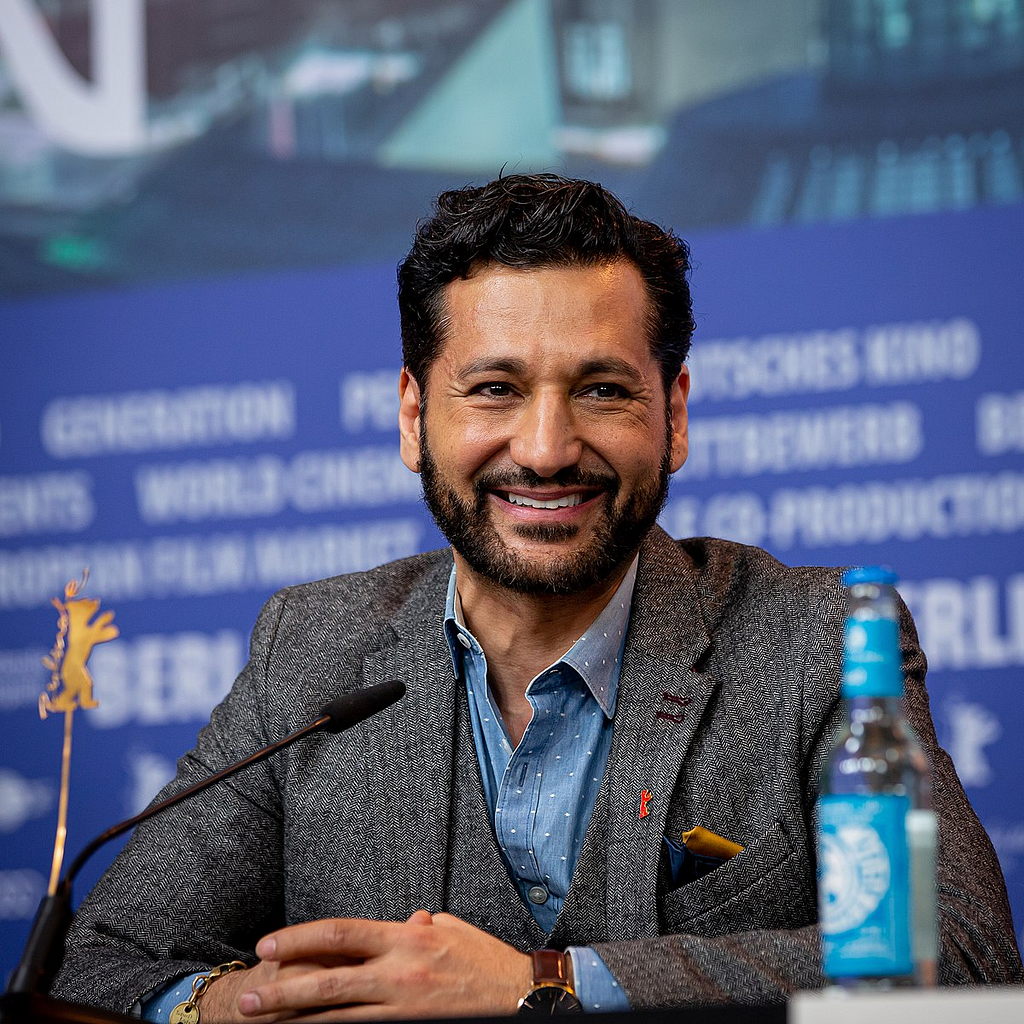
Yitzi: I love that honest answer. So this is our final aspirational question. Cas, because of your amazing work and the platform that you’ve built, you’re a person of enormous influence. If you could spread an idea or inspire a movement that would bring the most amount of good to the most amount of people, what would that be?
Cas: Wow, that’s a good question. I like to live my life where I try to treat everyone as equal. I like to give time, attention, and focus to everyone equally. I try not to break people into categories or classes. I find classism extremely offensive. My spiritual background is Baha’i, and as a Baha’i, we believe the world is one country and mankind its citizens — world unity, diversity, and equality of men and women. I believe passionately in those tenets.
To say it succinctly, we are citizens of one community. In the past 150–200 years, we have accelerated our technological evolution so fast that we’ve outstripped our spiritual growth. Our technology has outstripped us, and we are on a collision path to self-destruction. It’s depressing and demoralizing, and I’m trying as an artist to change things. Hopefully, we have enough time. But we have to have a paradigm shift in our thinking. We can’t just be consuming and devouring, and we cannot set ourselves up in camps and “us and them” each other to death, literally. We cannot put any group — whether it is a different country, culture, gender, or race — as worse than us. We’re all part of one race, and race is a construct that human beings invented. Our DNA is 99.99% identical, no matter where you are on the planet. We’re all basically the same.
That paradigm shift has to happen. Our world is an organism that needs to be taken care of, and we as a species have to take care of each other. We’re not doing it right now. There’s so much hate, animosity, competition, consumerism, and disrespect for our world and for each other. It has to stop. We have to treat each other the way we want to be treated, including the planet. That’s my soapbox statement. Thank you for asking.
Yitzi: How can our readers continue to follow your work? How can they watch Doing It and your movies? How can they support you?
Cas: You can find me on Instagram, just my name, Cas Anvar, or on my YouTube channel. I post videos on YouTube of any project I’ve ever done. I usually create a little demo reel for professional reasons, but I thought fans and people who want to see what I do can enjoy it too. You can see 10 or 15-minute compilations of my work from different projects. That’s the best way to do it.
And if you want to do things that will make me happy, support each other, love each other, treat each other like family. Treat everyone as equal, no matter if they’re the CEO or the person on the street having a rough time. They’re all human beings and are all worthy of respect and compassion.
Yitzi: I love it. Cas, it’s been such an honor and a delight to meet you. I wish you continued success, good health, and prosperity. I hope we do this again next year.
Cas: Thank you so much. That’s incredibly kind of you. I would love to. It’ll be my pleasure.
‘The Expanse’ Star Cas Anvar Talks Doin’ It, His Shakespearean Origins, and the High-Stakes… was originally published in Authority Magazine on Medium, where people are continuing the conversation by highlighting and responding to this story.