Roxanne Messina Captor Talks ‘Dream Moms,’ Mentors Like Coppola, and Finding Balance in an Unpredictable Industry

“What I always tell my students is this is not a business where you start off, build your career, and then retire. This is a business where you’re at the top, then you drop to the bottom, and back to the top — it’s a rollercoaster. It took me a long time to understand that and feel comfortable with it, and to know that when you’re at the bottom, you just have to ride it out because eventually, you’ll be at the top again.”
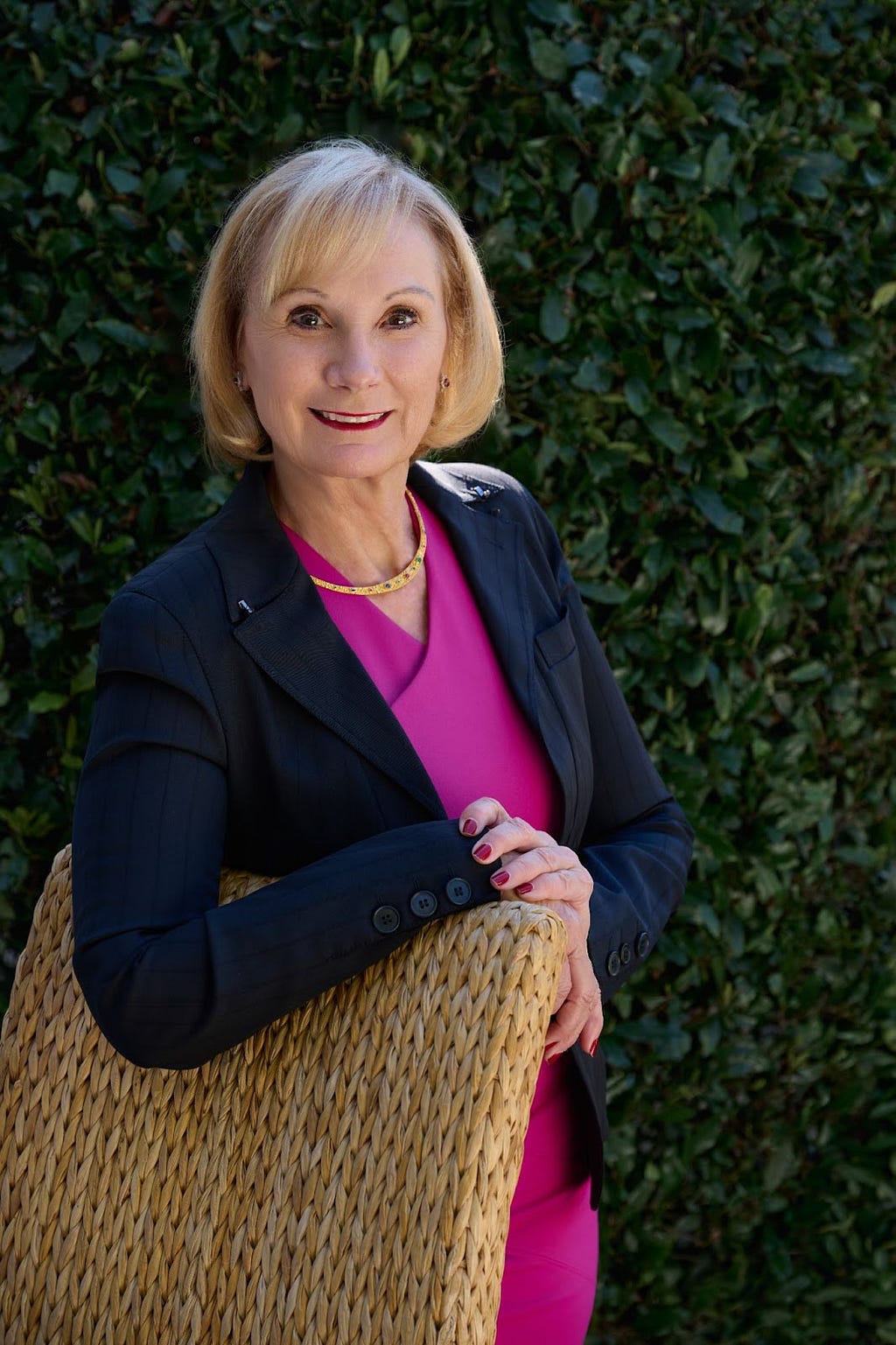
I had the pleasure of talking with Roxanne Messina Captor. From the stages of Chicago to the soundstages of Hollywood, Roxanne Messina Captor’s career has been a whirlwind of artistic expression. A dancer, choreographer, director, and producer, she has navigated the unpredictable currents of show business with a resilience forged in the demanding world of professional ballet. Her story is a dynamic journey of reinvention, a testament to her belief that in the arts, “you’re at the top, then you drop to the bottom, and back to the top, it’s a rollercoaster.”
Messina Captor’s journey began as a child performer in Chicago, where she had her own television show on the local CBS station and graced the stages of the Goodman Theatre. By the age of 12, she was accepted into the prestigious Chicago Lyric Opera Ballet, a path that seemed to chart her destiny. “That was decided for me; that was going to be my direction,” she recalls. She accelerated her education, finishing high school with honors in just three years, ready to conquer the dance world in New York. However, her father insisted on college. A chance encounter with the legendary ballerina Violette Verdy changed everything. Verdy’s assessment was blunt: “Well, you’re 17 and a half, you’re too old for Balanchine, but I think you can get into another company.” This pivotal moment led her to the Harkness Ballet, and from there, her career took flight, taking her to Europe to dance with the renowned Béjart Ballet.
Upon her return to the United States, she guested at the Metropolitan Opera and shared the stage with the iconic Rudolf Nureyev in Boston. Broadway beckoned, and she found herself in the world of Bob Fosse, an experience that would shape her artistic sensibilities.
Upon her return to the United States, she guested at the Metropolitan Opera and shared the stage with the iconic Rudolf Nureyev in Boston. Broadway beckoned, and she found herself in the world of Bob Fosse, an experience that would shape her artistic sensibilities. But Messina Captor was not content to remain in the chorus line. She began choreographing and directing in the smaller, experimental theaters of New York City, honing her storytelling skills. It was during this period that a connection with Gene Kelly led to a life-altering opportunity. Kelly, who was working with Francis Ford Coppola on the film One from the Heart, hired her as Teri Garr’s dance-in and his choreographic assistant. “That was my entrance into film and TV,” she says. Coppola’s set was an open university of filmmaking. “Francis had an open-door policy. You could go to scriptwriting sessions, casting sessions, editing sessions, whatever.” This immersive experience ignited a new passion and set her on a new trajectory. Coppola has since remained a lifelong friend and mentor.
Her career in film and television has been as varied as it has been successful. She earned an Emmy nomination for the CBS movie Home Sweet Homeless, a poignant story about a family’s descent into homelessness. More recently, she wrote the story for and produced the Hallmark movie Dream Moms, a project she describes as “slightly autobiographical because it’s about musical theater and two women who think it’s too late to have their dreams come true but find out that it’s never too late.” She also directed a documentary on the legendary jazz bassist Stanley Clarke, which was featured in the Newport Beach Film Festival.
She was awarded the Chevalier de L’Ordre des Arts et des Lettres by the Republic of France and the Visionary Award from the ARPA Film Festival and Humanitas Award.
Beyond her creative endeavors, Messina Captor has been a force in the industry’s infrastructure. She was one of the founding executives of Turner Network Television (TNT) and served as the executive director for the San Francisco International Film Festival. Her influence extends to public policy; appointed by Governor Gavin Newsom, she now serves as the chair of the California Arts Council, advocating for tax incentives and supporting the state’s creative economy.
Throughout her multifaceted career, Messina Captor has learned to embrace the industry’s inherent instability. She speaks of a time when a film project she had poured her heart into, Pearl Buck, fell apart at the last minute. “I was devastated,” she admits. A friend and prominent actor gave her a choice: “You can go to bed for a month and cry, or you can go out and do a different project.” She chose the latter, and the result was the film A Couple of White Chicks at the Hairdresser, starring Shelley Long and Harry Shearer. This ability to pivot, to find a new path when one is blocked, is a recurring theme in her life. “I always tell this story,” she says. “I think I’m on this path and I’m going this way, and then whatever comes in from over here just sort of, boom, here I am.”
At the heart of her work is a deep understanding of the human condition and the power of storytelling. “As I tell my students, this is a storytelling business,” she emphasizes. She sees her role not just as a creator but as a mentor, a gift she has given back throughout her life. From teaching dance as a teenager to nurturing her university students today, she is dedicated to empowering the next generation of artists. Her advice to them is born from experience: build your network, develop interpersonal skills, and, most importantly, be true to yourself. “Take the time to analyze yourself and be true to yourself,” she advises. “Find that path that works for you, that’s going to motivate you in whatever you want to do.” For Roxanne Messina Captor, the dance continues, a beautiful, unpredictable choreography of art, advocacy, and a life lived with passion and purpose.
Yitzi: Roxanne, it’s so nice to meet you. Before we dive in, our readers would love to learn about your personal origin story. Tell us the story of how you grew up and the seeds for all the amazing things that have come since then.
Roxanne: Thank you so much. I was a child performer in Chicago. I had my own television show on the local CBS station. I did a lot of musical theater and also at the Goodman Theatre. At 12, I got into the Chicago Lyric Opera Ballet, and that was decided for me; that was going to be my direction. For ballet, I finished high school with all honors at a prep school in three years, and I was ready to go off to New York and dance. My dad said, “No, you’re going to college.” But Violette Verdy came to guest in Nutcracker, and she said, “Well, you’re 17 and a half, you’re too old for Balanchine, but I think you can get into another company.” I went and got into the Harkness Ballet. Then, I was in Béjart in Europe, came back and guested at the Met, guested up in Boston with Nureyev, and then started doing a lot of Broadway shows. I was fortunate to get into some Fosse shows and various other shows. Then I started choreographing and directing in theater and the smaller theaters around New York City. Through various sources, I had met Gene Kelly, he remembered me, and he was doing One from the Heart with Francis [Ford Coppola], and they hired me to be Teri Garr’s dance-in and assist Gene on the choreography. That was my entrance into film and TV. Francis had an open-door policy. You could go to scriptwriting sessions, casting sessions, editing sessions, whatever. He has remained a friend and a mentor. I’ve been Emmy nominated for a movie about a family who became homeless on CBS called Home Sweet Homeless. I’ve done a lot of television movies and independent films. I recently wrote the story for and produced a movie for Hallmark called Dream Moms. It was slightly autobiographical because it’s about musical theater and two women who think it’s too late to have their dreams come true but find out that it’s never too late. I wrote the story and then produced it. I just recently did a documentary on Stanley Clarke for Broad Stage, where he’s doing a three-year residency. That film was in the Newport Beach Film Festival. Also, Dickens of a Christmas, which was a film I did independently in Calgary last year, is now on Prime. That was also in the festival, and both films sold out. During my career, I’ve shifted. I was one of the founding executives for Turner Network Television; we started that network. I was also the executive director for the San Francisco International Film Festival, which is where I met our governor, who was mayor then. I was on the policy committee for runaway production and for higher education because I teach at universities. I’m now the chair of the California Arts Council, appointed by our governor. I’ve been instrumental in giving my personal views on tax incentives, having worked in Canada on a number of movies, and what is necessary, especially for independents. That’s me in a nutshell.
Yitzi: That’s amazing. Roxanne, you’re an amazing storyteller.
Roxanne: Thank you. That’s the key. As I tell my students, this is a storytelling business.
Yitzi: On that note, I know this will be a very hard question to answer, but can you share one or two of the most interesting stories that stand out in your mind from your amazing career?
Roxanne: When I was a child, I’d be in ballet class with Fonteyn and Antoinette Sibley and Anthony Dowell. Because I was very advanced in my talent, they would be there fixing my feet and lifting my leg up. That was always a very special time. Then, Gene Kelly said to me, “Always balance your personal life with your career.” I’ve never forgotten that. It was great advice, and I always remember it.
Yitzi: That’s great; it’s amazing. It’s been said that sometimes our mistakes can be our greatest teachers. Do you have a story about a funny, humorous mistake you made when you first started and the lesson you learned from it?
Roxanne: I’m thinking for a second. There’s probably a gazillion of them, but I’m not thinking of one right now. When you’re young, passionate, and energetic, you tend to, at least I did. I’m one of these people who jumps into the pool and paddles. I don’t know how to swim, but I just jump in and go. Fortunately, I have a skill where whatever I conceive, I can implement. Not a lot of people have that skill, but I can conceive something and then implement it. With a script, if I read it, I see it, I’ve already seen it. With music, I don’t hear it; I see it. I see it choreographed already. With those kinds of things, I didn’t think; I just jumped in the pool and paddled. I don’t know that I always made it to the end of the pool doing that because it might have been better if I had learned to swim first, but that was the way I did things. Sometimes it worked, and sometimes it didn’t. What I always tell my students is this is not a business where you start off, build your career, and then retire. This is a business where you’re at the top, then you drop to the bottom, and back to the top, it’s a rollercoaster. It took me a long time to understand that and feel comfortable with it, and to know that when you’re at the bottom, you just have to ride it out because eventually, you’ll be at the top again.
Yitzi: That’s great. We love hearing stories where somebody who is a bit further ahead creates an opportunity, opens up a door, and that changes somebody’s career trajectory. I know you mentioned that a little bit with Francis. Can you share a story where you did that for somebody else?
Roxanne: I’ve been teaching my whole life. When I was in prep school, I taught all day Saturday. That’s how I made extra money. Teaching has always been my gift to give back, and it’s always been a place where I am happy and comfortable. I’m always mentoring new people and finding places for them. I have one of my former students from last semester who’s been helping me administratively in the office. It’s that kind of thing, I think.
Yitzi: It’s amazing. There’s a saying, “No is redirection, not rejection.” Can you share a time when a rejection, when someone said no to an opportunity, led to an unexpected win or discovery?
Roxanne: My whole life. I always tell this story. I think I’m on this path and I’m going this way, and then whatever comes in from over here just sort of, boom, here I am. That is the thing that is where I’m supposed to be and probably one of the better things for my career. But it’s always coming from weird directions. I have a film that I’m working on that I wrote called Pearl Buck, and it’s a piece of the authoress’s life. We had everything in place: a major piece of talent, a very prominent executive producer, and the money. It was in December, three years ago, I guess. The company that was going to fund it, their funding didn’t come through. So they said, “We can’t do it because our funding didn’t come through.” After all this time of rewriting it and working on it, and I was going to direct it and everything was there, I was devastated. Then I was having lunch with a very prominent actor who’s an old friend of mine, and I was going on and on. He said, “Well, you can do one of two things. You can go to bed for a month and cry, or you can go out and do a different project.” And that’s how A Couple of White Chicks at the Hairdresser came about with Shelley Long and Harry Shearer. I had written that little project and someone I know said, “I like this. I’ll give you some money.” I put in some money, and we made that movie. So it was go to bed and cry for a month or go make another movie.
Yitzi: What’s been the most challenging project or role you’ve taken on so far and why?
Roxanne: Challenging. I think this Pearl project because it’s been up and down. We have the money; we don’t have the money. We have the cast. It’s a beautiful piece because this was a woman who won the Nobel Prize and the Pulitzer Prize, and yet I’m always interested in what’s underneath. You see the stuff on the surface, the Oscars and the Emmys, but what’s underneath? This was a woman, and it’s a scene in the script where she says to her sister, “I would give all of this up, including the fact she changed the laws so people could adopt interracially, as long as I could have one more natural child.” And she was not able to do that. So that kind of what’s underneath, this woman who felt unfulfilled as a woman, but the world saw her as this force.
Yitzi: Is there a part of your story that people rarely or never ask about but you wish they would?
Roxanne: Ooh, that’s a very good question. Thank you. This is silly, just silly, but it’s what comes to mind. I had taken 10 golf lessons and COVID hit. I have a girlfriend who’s a pretty good golfer and she calls me and goes, “We’re going to the golf course.” I said, “I’ve had 10 lessons and you’re good.” She goes, “No, everything’s closed, the parks, the beaches, we can’t go to the gym. We can go to the golf course, we have to wear a mask, and I don’t care. It’ll be like we can connect, we can see each other, we’ll be outside.” We went three times a week to this little nine-hole. I got better and I got hooked. I am now completely hooked on golf. If I could just say, okay, I’m not going to do anything, this is what I’m going to do. I have a great story about this. I directed Hal Linden in a play many years ago, and Hal said, “You have to take up golf because golf is just like dance and you would really enjoy it.” And I was like, “Yeah, right. I’m not going to chase some little white ball around on grass. No, I’m not interested.” Well, now I understand exactly what he means. It is just like dance because he said to me, “It’s just you and the ball.” Dance is the same way. I had one coach who also coached Gelsey Kirkland, and we would stand at the bar in a pas de deux for an hour trying to make it perfect. I thought, he’s so right. So I called him and said, “You’re not going to believe I’m hooked,” and he was thrilled. He said, “It’s about time.”
Yitzi: Roxanne, you have so much impressive work, and you already touched on some of your new projects. Can you share more about the exciting projects you’re working on now?
Roxanne: Yes, absolutely. I’d be happy to. I definitely want to work with Hallmark again. It was a great experience, so I’m talking to them about a couple of different projects. The one I did with them was not Christmas, and some of the projects I’m talking to them about are not necessarily Christmas, and some are. One project I’m really proud of is called CIA Mom. It’s a true story of a woman who was a CIA operative as well as a single mom. We have some talent that wants to be involved, so we’re just starting to take that out. I did a project that I wrote about what is now called The Legacy Robe; it used to be called the Gypsy Robe. It’s about New Yorkers and young hopefuls trying to make it in New York on Broadway. The 30-year-old dancer is starting to realize, “I was the star,”, she’s the Ann Reinking, “but now things are changing.” And of course, there’s her choreographer who’s trying to map it all together. That’s a project that’s very close to me, obviously, that I’m working on. I have another series of books that I optioned called Murder in First Position and Murder in Second, Third, Fourth, Fifth. It is about a prima ballerina who’s accused of murdering the head of the ballet company. In the course of her trying to prove she’s innocent, she of course connects with the detective, and that leads to their relationship, and she now becomes sort of his unofficial partner in solving crimes and murders. Those are the main ones at the top of the list that we’re working on.
Yitzi: You are so prolific. It’s unbelievable. You mentioned Home Sweet Homeless, which you’ve won so many awards for. What do you think it was that just captured people’s hearts and minds about that film?
Roxanne: Very simple. This was a period of time when we were in a recession, almost a depression. People were out of work, didn’t have money to get food, and couldn’t afford gas, which was skyrocketing. That was when we had the lines to wait to get gas. This was a true story. It was a single mom; she had three boys. She was a working mom, but she got walking pneumonia and couldn’t work for a while. She lost her job. She was not somebody who knew how to get on assistance programs because she always worked. What do you do with your dog? The teenage boy tells his girlfriend he doesn’t like her anymore because he can’t afford to take her to prom. They’re in the park having a “picnic” when it’s cold, and the middle son says, “Oh, my kid brother wanted to have a picnic. We know it’s too cold.” The spiral that happens very quickly when that check stops, that’s what it was about. When we premiered it, we went to a very special shelter at the time in San Pedro. You had to be a family, and you couldn’t have had drugs or alcohol issues. They put you on an assistance program for three months and gave you a place to live. In her case, she needed medical attention, and she got new job skills as well. It was a transition piece to get people off assistance. When we did the premiere there, one lady came up to me with a check and said, “You told our story so truthfully. It’s so truthful.” The lady whose story we told said, “I’ll get another apartment.” But what do you do when you don’t have first and last month’s rent? She had enough for one month; she didn’t have first and last. It’s a spiral. Many years later, when I was heading up the film festival in San Francisco, because of the internet and how people can find you, the middle son called me. He said, “I don’t know if you remember me, but I was the middle son in that story, and we’ve been wanting for many years to thank you.” I said, “Well, I’m glad that money helped.” He said, “No, it wasn’t the money. It was that we were embarrassed. We couldn’t tell our story. We didn’t want anybody to know. And you told our story so truthfully, we were able to then come out and tell other people, family members, and whatever.” That was a very special piece. And it was CBS, a TV movie.
Yitzi: You started your career in dance, but then you went on to so many amazing things. Does your experience in dance inform your directing?
Roxanne: Oh, absolutely. Because you’re visual. As I said, I don’t hear music, I see it. I read a script, I see it right away, the visual of that. The other thing is I was on board for Actors’ Equity and we started the Career Transition for Dancers because dancers’ careers are over by their late 20s or early 30s when other people’s careers are starting. That still exists; it’s being operated by the entertainment industry fund, which used to be the Actors Fund. Many dancers have transitioned into arts administration, into law, and other fields because we start so early that we don’t realize the skills we’re learning. This taught people that we have the skills of discipline, persistence, perseverance, and passion, all of those skills that we get so young that we take for granted. This program was able to target dancers and say, “Hey, all of these skills apply to being a lawyer. They apply to being an arts administrator. They apply to being a CEO of a company.” And producing. We’re very organized. I would be in rehearsals at the Chicago Lyric while other people were knitting, I was in the corner with a flashlight doing my homework because I had to keep up my grades. There was no way my parents were not going to allow anything less than top grades. You learn a lot of things.
Yitzi: You’ve been blessed by having such great mentors. Young people today find it hard to find mentors. Do you have any tips on how someone can find their own version of Francis Coppola to be their mentor?
Roxanne: I think you have to take classes, number one. I always tell students, this is the group you’re going to work with. Francis, Ron Howard, Spielberg, Lucas, they have their group that they’ve built up probably from when they first started in film school, and it expanded from there. That’s the group they work with. You need to take this group that you have and continue to work with them. One of them will go off and do something, they meet more people, and then you meet more people. I think one of the issues with the generations that have come up recently is they’re always on their devices, so they have very poor interpersonal skills. When you don’t have interpersonal skills, how do you network? How do you get somebody to say, “Wow, you’re interesting. I want to mentor you”? I see with my students, there are some people who, as soon as that semester’s over, are gone. But there are others I kind of nurture and I say, “If you want to do this or that…” We did a project for women vets called Homecoming Veterans, Wives, and Mothers. It was about what women vets are facing when they come back from a war where they were on the front lines. I used a lot of my more advanced students to work on the production. That’s what happened with the Stanley Clarke piece. The mentorship of professionals working with students is a good pathway for both.
Yitzi: This is our signature question. You’ve been blessed with a lot of success and must have learned a lot from your experiences. Looking back to when you first started as a filmmaker, director, and writer, can you share five things you’ve learned over the years that would have been nice to know when you first started?
Roxanne: Very good question. Okay, I think the first thing was that all the arts are a roller coaster. In the beginning, when you’re in the down parts, you just want to stay down there; you don’t think you’re ever going to come out of it. So that’s one thing. Giving back is another thing, which I do through being on the Arts Council. Always looking at things creatively. If what’s in front of you isn’t working, what’s the creative way you can go around that and build on it to make something happen? You have to make your own things happen. You can’t just sit back and say, “I’m going to sit back here and everything’s going to come to me,” because it won’t. You have to make things happen. When you have this little pile in front of you and if that pile’s not growing, you need to say, “Alright, I’m supposedly an artist, I’m supposedly creative. How can I creatively find another way around it?” I think that was a good learning experience. I was always making my own thing. I remember as a kid performing, my dance teacher said, “Well, she did a brilliant job up there, but I don’t know what the choreography was because she did her own choreography. She was not doing the one I gave her.” That just shows I was always creating. I think those are the main things. I don’t know if that’s five, but those are the main things.
Yitzi: You are so active and vibrant. Can you share with our readers the self-care routines you do to help your body, mind, and heart to thrive?
Roxanne: There is no day that goes by that I’m not doing either yoga, Pilates, or a dance class. I have to. Dance is the ultimate mind-body experience. People today are actually aware of that. In the old days, people weren’t, but dancers were because we had that mind-body experience; we knew it. We were used to flying too, which is an amazing feeling. Also, having great friends and family and trying to stay away from people who are negative. It’s not easy staying away because negativity is all around us. I’m not saying I don’t get into it. I can get into a very negative space, but I try to then say, “Stop, go in the other direction, look at this from a positive way. What’s positive about this?” You don’t have to be Pollyanna, you have to look at the reality of things, but find a positive path to go down. If one is completely negative, let it go. Let those people go, move on, and go to something that’s going to support you. You have to have that support. You have to have your soul supported. People knew that. The old master painters always had their muse. We don’t talk about muses anymore, but as an artist, you need a muse. So whatever that is, maybe it’s golf. Definitely, I have to exercise every day, and it’s got to be something that gives a whole spiritual experience. When I’m in a bad mood, I go to a yoga class. I’ve got certain teachers that teach with both the spiritual and the physical elements, so it’s really excellent.
Yitzi: This is our final aspirational question. Roxanne, because of your amazing work and the platform that you’ve built, you’re a person of enormous influence. If you could spread an idea or inspire a movement that would bring the most amount of good to the most amount of people, what would that be?
Roxanne: You’re asking at the right time. I think it would be to be true to yourself. Take the time to analyze yourself and be true to yourself. We don’t do that. We get on a little train, especially if we’re in the cities, and we’re just going. So if it means taking a couple of days at a spa, if it means hiking in the woods, whatever works for you, get back into who you are and what your soul is. Really get in touch with what your soul is telling you that you need to be doing or not doing. Maybe you need to just rest for a while. Find that path that works for you, that’s going to motivate you in whatever you want to do. Maybe it’s not an artistic endeavor; maybe it’s building bridges. I don’t know, whatever it is, working with the Girl Scouts or the Boy Scouts, whatever feeds you where you feel, “This is feeding my soul and this is the path I need to be on.” And it changes. That’s the other thing. Your path is not always the same. Like I said, it can come from over here and all of a sudden it’s a new path. So be open to that. Be open to what is coming in. You have to do the work, but things do come in.
Yitzi: Roxanne, how can our readers continue to follow your work? How can they watch any of your movies or support your work in any possible way?
Roxanne: Some are on Prime, some are on Tubi, some are on Apple. Those are the main platforms that the projects are on right now.
Yitzi: Amazing. Roxanne, thank you so much for your time and for all your wise insights. It’s truly been a delight to meet you. I wish you continued success and good health, and I hope we can do this again next year.
Roxanne: Yes, I would love to. This was a great interview. Thank you very much.
Yitzi: Thank you. It means a lot to me. Thank you so much, Roxanne.
Roxanne Messina Captor Talks ‘Dream Moms,’ Mentors Like Coppola, and Finding Balance in an… was originally published in Authority Magazine on Medium, where people are continuing the conversation by highlighting and responding to this story.