Stephanie Garvin Talks “Maserati: The Brothers,” Balancing Art and Finance, and the Power of Reinvention

The most important component of any decision I make now is, who am I going to be working with? You spend a lot of time with the people you’re working alongside, and I like to pick and choose. A lot of projects come my way, and you encounter all kinds of personalities in this industry. I prefer to work with people who are humble and, like me, just trying to bring something to life.
I don’t do well with egotistical people. If someone comes to me with a project and they’re too full of themselves, I’ll probably politely decline. It’s just a personality thing. I know you sometimes have to be rough and tough to get ahead in entertainment, but that’s not my approach.
I really enjoy collaborating. I love strategizing, and I like open communication — where someone will actually listen to an idea I have and work with me on it. Seeing how we can make the project better together is very important to me. Actually, it’s the most important thing.
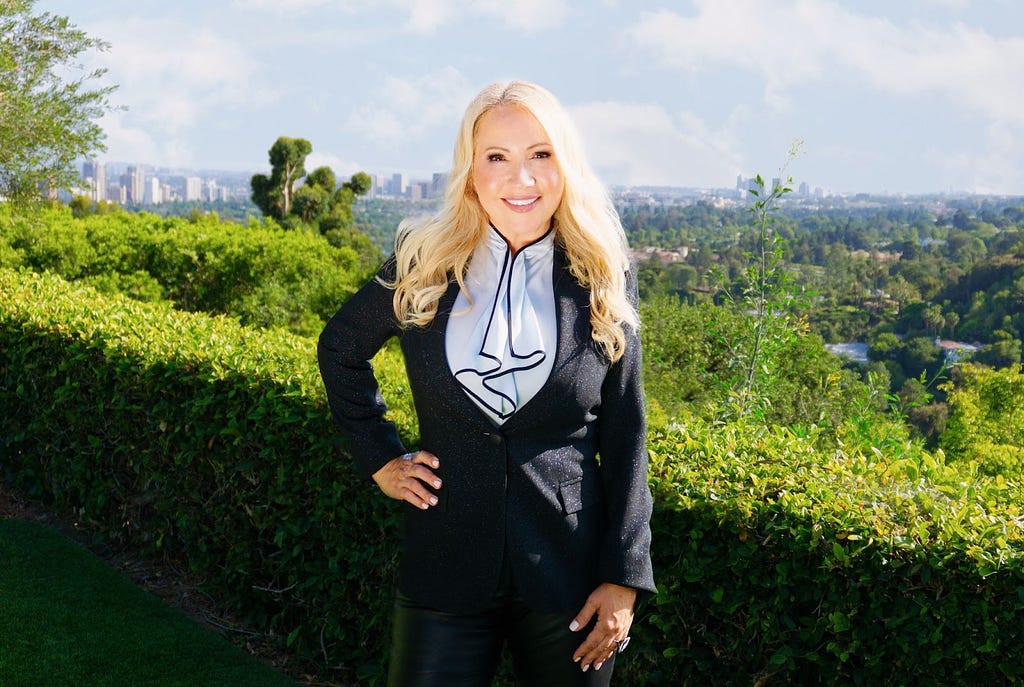
I had the pleasure of talking with Stephanie Garvin. Stephanie describes herself as “a woman from many places,” a child of moves and reinvention who learned early to make her own lane. She was born in Louisiana and spent her first years there, calling herself a Southern belle until age 12. Money was tight, and her single mother’s practicality often clashed with her own love for “nice things.” That’s where her entrepreneurial spirit kicked in. “I taught piano, mowed lawns, pulled weeds, washed cars — pretty much anything a nine-year-old could do to earn money,” she recalls.
Her family migrated to Utah, where the landscape and pace reset her sense of the world. New schools, new friends, long days outside. She found hiking, skiing, and camping, and she learned how to adapt. Arizona followed, and she finished high school in Yuma, building friendships she still keeps. The moving, she says, made her empathize and respect with kids who grow up in transient homes. It also fed a creative habit that had started when she was small. With a nurse for a mom working nights, she often kept herself company by inventing stories. She staged dramas with toys, photographed them, and mailed short pieces to contests. “I got a lot of letters back that said, ‘You’re too young… but please keep going,’” she says. Acting arrived next. In Utah she found an agent, booked commercials, and fell for the rhythm of a set. The buzz of crews and the problem solving stuck with her.
Adulthood brought marriage and children, then a sharp pivot. After a divorce, Garvin sat for brokerage tests, hoping for an assistant role. The call back surprised her. “I can’t hire you for the position you came in for,” a manager told her, then added, “but I can hire you as a stockbroker.” She studied at home for months, earned a high score on the Series 7 exam, and became the only woman among 22 brokers in her office. She liked the math and the markets, but chafed at the limits of compliance. “I’m very creative,” she told me, and the strict guardrails of brokerage work did not fit. She eventually stepped away.
She went on to found a home furnishings studio, expanding it into four locations and establishing a national interior design presence with clients across the country. Around the same time, she also owned an upscale clothing boutique another reflection of her eye for style and business sense. But it was through creating commercials for her companies that she discovered her true passion: the creative process behind bringing stories and visuals to life.
Garvin returned to the path that first pulled at her. She studied at UCLA, UCB, and the Margie Haber Studio, gathered on-set experience, and launched ETM Pictures Inc. and ETM Distribution LLC. She worked across roles, including co-executive producer on Aaron Sorkin’s The Trial of the Chicago 7 and co-producer on the documentary Mr. Nelson on the North Side. During the pandemic, she wrote a screenplay that arrived in a rush of vivid dreams. That project became Holiday Twist, which she wrote, directed, and executive produced, with a theatrical release in December 2023. “I felt like I was living with all those characters,” she says of the isolation of 2020 that pushed her back to writing for the first time since childhood.
The business side never left. Garvin is the founder and CEO of Hollywood Expansion Corporation, a company she says is built to incorporate sound finance with creative ambition. She describes HEC as a home for filmmakers who want investors aligned with a project’s mission and a structure that can hold both vision and budget. “There has to be a blend of business and creativity,” she says, and she argues that smaller, focused teams can often do this with less friction.
HEC’s current slate includes Maserati: The Brothers, directed by Bobby Moresco and featuring Anthony Hopkins, Al Pacino, Jessica Alba, Andy Garcia, and Michele Morrone. Garvin joined the production midstream and calls the experience a study in craft. “Sometimes I’ll be on set watching them perform and feel like I’m living that life with them,” she says. “The actors performances are so good — you get goosebumps” She also notes work underway on Bugatti: The Genius, another period drama tied to iconic auto history.
Her priorities on any project start with people. “Who am I going to be working with,” she says, is her first filter. She prefers teams that are humble, collaborative, and open to ideas. The lesson came with bumps. Early as a director, she assumed colleagues could intuit her vision. “People cannot read your mind,” she says. Clear, concrete communication with a technical crew became a skill she had to build. She tells emerging filmmakers to try as many jobs as possible, even entry level. The exposure to different departments, personalities, and weather days matters when you later call the shots.
Family life is a steady theme. Garvin raised her children with weekly date nights built around dinners cooked together and homemade games. One favorite memory came during a move when the power was not yet on. They lit candles and told round-robin stories, adding paragraphs in turn. Years later her son found an old sketchbook from those nights. “All the gifts, the toys, the cool clothes,” she says, “they don’t even remember them,” but the shared time stuck.
Garvin talks about Los Angeles with the frankness of someone who learned by doing. Traffic and distance blindsided her at first. She also rejects the idea that work only happens in coastal hubs. She splits time between Los Angeles, Chicago, and Scottsdale, and works wherever the set is. Her advice is simple: trust your instincts, since “people can be full of baloney,” and keep going if the first tries do not land.
Off set, she supports the Tim Tebow Foundation and the therapeutic riding nonprofit Ahead With Horses. She gardens, writes, swims, and spends time with her dogs, Ziggy, and Teddy. She cites Greta Gerwig and Steven Spielberg as artists she hopes to meet, praising their clarity and command. As for what she wants her work to do, she points to young audiences. “I strongly believe in the power of uplifting film,” she says, arguing that stories can widen perspective and cool the extremes of an angry moment. “I want them to see that they can do anything,” she says, and to know that the person next door can choose a different dream, and that is fine too because we are all unique
You can follow Stephanie Garvin’s work and upcoming projects on Instagram, explore her filmography on IMDB, connect with her on Facebook, and read more about her company through the Hollywood Expansion Corporation.
Yitzi: Stephanie Garvin, it’s such a pleasure to meet you. Before we dive in, our readers would love to learn about Stephanie Garvin’s personal origin story. Can you share the story of your childhood, how you grew up, and the seeds for all the amazing things that have come since then?
Stephanie: Likewise. Thank you for inviting me on. Gosh, well, I have to say I’m a woman from many places. When I talk about my childhood, it’s always a question of what year we’re talking about because my parents moved around quite a bit due to different circumstances. I got to experience a lot as a child.
I started my life in Louisiana, so I suppose I was considered a Southern belle until I was about 12. That’s really when I discovered my entrepreneurial side. My mom was a single mom, and when I wanted something, I had to find a way to get it myself. She was very practical with money, and I was… not so practical. I liked nice things and wanted the best of everything, so I taught piano, mowed lawns, pulled weeds, washed cars — pretty much anything a nine-year-old could do to earn money.
At 12, we moved to Utah, and I actually loved it. Coming from Louisiana, it was completely different. I had to adapt to a new culture, make new friends — it was like night and day. It’s funny, as a child, you only know what you know, and then when you’re placed in an entirely new environment, it’s like learning the world all over again. I really sympathize with kids from transient households because of that.
I went to junior high and started high school in Utah. I made great friends and really connected with nature there. We did a lot of hiking, skiing, and camping — those were all firsts for me.
Then we moved again, this time to Arizona. I lived in Yuma and finished high school there. It was, again, completely different from both Louisiana and Utah. I had to reinvent myself once more, but I ended up making a wonderful group of friends, and I’m still close with them today.
Yitzi: Can you tell us the story of how you first got involved in the entertainment industry?
Stephanie: The entertainment industry? Gosh, well, I started very young, always wanting to be some kind of entertainer. I didn’t know exactly what I wanted to do, but I knew I was fascinated by it. I wrote a lot as a child, especially in my younger years. I think it started when I was around seven or eight.
I would write stories and make up little dramas with my toys. I’d photograph them and create these imaginative scenarios. I spent a lot of time alone because my mom was a nurse and worked night shifts, so I had to entertain myself. That’s how I did it — by imagining and creating stories. I would even send some of them off to contests, just to see if anyone was interested.
I remember getting a lot of mail back saying, “You’re too young, we can’t accept your story, but we think you have talent. Please keep going.” I got a lot of rejection letters based on my age, but they always encouraged me not to give up. So at that point, I thought, okay, maybe I’ll try again later — maybe doing something else.
That’s when I got into acting. When I was in Utah, I figured, if I’m too young to write, maybe I can act. I got an agent and started doing a few commercials. I absolutely loved being on set. There was something about the pulse, the energy, the chaos, and the way everyone behaved so differently — it was all very exciting to me.
I continued acting through junior high, high school, and into my early twenties before I got married and had children. What I really loved was seeing something created from nothing. I used to take mental notes, wondering if those stories I used to come up with could ever become something real. That idea always stuck with me, but I ended up putting it on hold for a while because of family life.
Yitzi: Amazing. Can you tell us about the exciting projects you’re working on now?
Stephanie: Yes! Right now, I’m working on Maserati: The Brothers with Anthony Hopkins, Al Pacino, Jessica Alba, Andy Garcia, and Michele Morrone — along with many other great actors. It’s being directed by Bobby Moresco, and it’s such an exciting project to be part of.
I came in about halfway through the production, so I got to see how far it had already come. Now we’re wrapping up, and it’s been fascinating to work with such a skilled and talented team. The level of talent on this set is unbelievable. I can’t even describe how convincing and powerful their performances are.
Sometimes I’ll be on set watching them perform and feel like I’m living that life with them, because they’re just that good. You get goosebumps watching them. It’s been a real pleasure.
Yitzi: Amazing. That’s an incredible story. We’d love to hear more. You probably have some other great stories from your work. Can you share one or two that really stand out in your mind from your professional life?
Stephanie: From my entertainment life, yes. My movie Holiday Twist was actually based on a dream I had. I have very vivid dreams that feel like full movies when I’m sleeping. They’ll wake me up in the middle of the night, and over the years, I’ve written down little notes as I wake up.
Holiday Twist was a screenplay I wrote based on several dreams that all came together to form that story. I wrote it during COVID because I was really bored and finally had the time to sit down and write. That was actually the first time I picked up writing again since I was a child.
2020 was a hard year for the world, but I know a lot of people — like me — used that time to really dive into creative efforts. That’s when my first big solo project began. I felt like I was living with all those characters during COVID because I was isolated and alone. Then in 2021, I launched the project with several other producers. In 2022 and 2023, we shot the film, and to my surprise, it came out in theaters in December 2023.
Yitzi: It’s been said that sometimes our mistakes can be our greatest teachers. Do you have a story about a funny mistake you made when you were first starting out, and the lesson you learned from it?
Stephanie: Gosh, let’s see. I’ve definitely been through the school of hard knocks, so choosing just one mistake is tough because I’ve made a lot. But I own up to them, and honestly, I’m proud of some of them.
One of the biggest lessons I had to learn as a director was that people cannot read your mind. I’m a very intuitive person, and I tend to assume that everyone else is too. I often think, “Don’t you get it? Can’t you pick up on what I’m thinking?” Not that I’m a mind reader myself, but I usually pick up on people’s intentions pretty quickly.
But when you’re working with a large crew — especially a very technical crew — you have to be incredibly clear. I had to learn how to communicate my vision in a way they could understand, because they were the ones who had to bring it to life. Not everyone is a creative visionary, and that’s okay.
So, I’d say my biggest mistake was not preparing myself for the different roles and perspectives of my crew. But it ended up being one of the best lessons I’ve ever learned — about communication, leadership, and collaboration.
Yitzi: I’ve read that a family date night was a formative ritual for you. Can you tell us a little more about that? Tell us what that entailed and how that impacted you.
Stephanie: My children… I was adamant that we would have a life filled with togetherness as much as possible. I did go overboard with it a little bit sometimes, but being a child who spent so much time alone, I didn’t want that for my children. I wanted us to be together as a family, and it was kind of forced on everyone. But it’s interesting — those times we had doing the silly things I came up with… I used to make up games for us.
We would have meetings as a family and decide what night would be our family night. Everyone got to be included in picking our date night. That night would always include a family dinner that we made together. I’d make up games, and I’d let my kids make up games too. We got the biggest laughs out of creating the silliest things.
Now, we really cherish those moments. All the gifts, the toys, the cool clothes I gave my kids — they don’t even remember them. But my son, who’s visiting me now, was going through a box and found a sketchbook. He saw something from one of the games we played and remembered it. I couldn’t believe it. He said, “Oh my God,” and wanted to take the sketchbook home with him. He’s married now and hopefully getting ready to have children — I’m waiting patiently.
One time, we moved into a home, and the electricity wasn’t on yet. It ended up being one of my kids’ favorite memories. We moved in anyway, lit a bunch of candles in the living room, and sat there making up one story after another. One person would start with the beginning, then Kyle would add a paragraph, then Brittany, and then I’d jump in again. We just went around and around. The stories we made up were incredible and so funny.
We each had our own twist on it. My kids are seven years apart, so they had really different perspectives on life at the time. It was a really cool thing to do.
Yitzi: What’s been the most challenging project or role you’ve taken on so far and why?
Stephanie: Gosh, let’s see. I tend to choose challenging things, so… wow, that’s a great question.
I think one of the most challenging things I took on was right after my divorce. I went to apply for a position at a brokerage firm. I was hoping to be an assistant to a broker I knew. I went in and took all the testing — profile tests, 30 pages of paperwork.
Then I got a call from my future manager. He said, “I have good news and bad news, Stephanie. I don’t know how you’re going to feel about this, but I can’t hire you for the position you came in for.” I was ready to cry. I desperately needed that job. I had to support my children. It was a dire situation, and I was really counting on it.
Then he said, “But I can hire you as a stockbroker.”
And I thought, What are you talking about? I don’t want to be a stockbroker. I don’t think I said that out loud, but I was thinking it. I didn’t feel qualified.
He told me I had scored higher than most of the brokers in the entire country. I was shocked. But I said, “Okay, if you believe in me, I’m in. I’ll do it.”
So I studied for four months to become a broker. I didn’t go to school because I was a single mom and the school was in another state. I did it all from home, about 12 hours a day. I studied all day for my Series 7 license, then my kids came home from school and I studied with them. By the time I went to bed, I was so bug-eyed I couldn’t see straight.
The material was insanely difficult, but I loved it. The manager was right. I really enjoyed being a stockbroker and learning about the financial world. I ended up getting one of the highest scores on the test in my firm.
That gave me a few bragging rights with the 22 guys in my office — I was the only female. They all had bets against me, thinking I’d fail. That part was kind of fun.
And now, being in the entertainment business, I bring that financial background with me. It helps create more structure in the projects I work on. As complicated as it was at the time, I use what I learned every day in my job now.
Yitzi: So why did you leave the world of finance?
Stephanie: Well, it’s not very creative. I’m very creative. I like to strategize, and my imagination runs wild sometimes with ideas. I’m very entrepreneurial. When you’re a stockbroker, your main priority — and your fiduciary responsibility — is to live and breathe by what your analysts are telling you to do for your clients. You can’t really bring in your creativity. You can’t advise on things outside the specific realm they give you permission to advise on. I found that challenging.
My clients were primarily word of mouth. My client base grew from one client, who would bring me two more, then they’d bring five more, and that’s how I built up my business. But I would see so many things in the financial world and think, “Oh, I should recommend this,” or “They should talk to their CPA about that.” And those things were kind of frowned upon because there’s so much compliance. You can’t do anything that isn’t completely permissible by your firm. That started to wear on me — I felt stifled.
I also loved having businesses, and they were very against brokers having any side businesses. I wanted to open a clothing store — an online clothing store. I love fashion, and I wanted to do it. But I had to fill out so much paperwork and get so many approvals just to make it happen. I thought, this is crazy. I don’t want to be a broker anymore. I want to do what I want to do. So I did.
Yitzi: You’ve been involved with some really high-profile, amazing projects. I loved The Trial of the Chicago Seven. It’s one of the funniest and most thought-provoking films I’ve seen. And you just mentioned another very high-profile project. How do you decide what kind of project to get involved with? What are the criteria you use to make that decision?
Stephanie: The most important component of any decision I make now is, who am I going to be working with? You spend a lot of time with the people you’re working alongside, and I like to pick and choose. A lot of projects come my way, and you encounter all kinds of personalities in this industry. I prefer to work with people who are humble and, like me, just trying to bring something to life.
I don’t do well with egotistical people. If someone comes to me with a project and they’re too full of themselves, I’ll probably politely decline. It’s just a personality thing. I know you sometimes have to be rough and tough to get ahead in entertainment, but that’s not my approach.
I really enjoy collaborating. I love strategizing, and I like open communication — where someone will actually listen to an idea I have and work with me on it. Seeing how we can make the project better together is very important to me. Actually, it’s the most important thing.
Yitzi: You’re a leader in independent filmmaking. What do you think the indie world gets right that the studio system sometimes overlooks?
Stephanie: Good question. With the studio system, it’s truly a numbers game. Most of the studios are publicly traded, and I understand why they do what they do — they have shareholders to answer to. They can’t always make the best creative decisions, because shareholders might push back, and the stock price could suffer as a result.
In the indie world, you don’t have shareholders to answer to. You have investors, and if you can collaborate with like-minded investors, it’s sometimes easier to achieve your overall creative mission for the project. That’s the biggest difference I’ve noticed between the two.
I’ve worked on both sides, and I have to say, I kind of like a smaller studio approach. The reason is that when it comes to green filmmakers, there’s often a wild west attitude — anything and everything is up for grabs. But you need a business mindset behind your actions, especially when money, time, and people’s reputations are on the line.
There has to be a blend of business and creativity. And that blend can work, without being stifling, as long as everyone involved is on the same page. Which brings me back to why I like working with people who truly want to collaborate.
Yitzi: This is our signature question. Stephanie, you’ve been blessed with a lot of success, and you’ve had plenty of experiences to learn from. Can you share five things you’ve learned in your work in the entertainment industry that you wish you’d had a heads-up about when you first started?
Stephanie:
- Well, I would have to say one of the first things is, I wish I had understood what it was like to live in LA. That was a shock to me. I came from Ohio thinking it would be similar, but I felt like Dorothy in The Wizard of Oz — I just wanted to go home. I remember thinking, “Oh my gosh, there are so many people, so many cars.” I was late for everything. I could never figure out the traffic patterns. I’d show up an hour late to auditions or meetings and feel completely embarrassed and unprofessional. I was always anxious, and it was something I really didn’t prepare for before I moved.
- And I thought I had to be in LA, which leads to number two. I believed that if I wasn’t living in LA or New York, I couldn’t be in the entertainment industry. That’s just not true. I’ve learned that over time. I live in Chicago, Arizona, and LA now, and I work wherever I am. When I’m on set internationally, I’m working. You can be anywhere and still be part of this fascinating industry.
- My third one would be, don’t believe everyone. People can be full of baloney. They’ll tell you whatever they want to get you to buy into something. There’s a lot of fluff. You know the saying “fake it till you make it”? That’s on steroids in LA. When you’re new, it’s easy to buy into nonsense. I did. I thought, “Well, they’ve been here three years, they must know more than I do.” But they didn’t. So trust your judgment. I had nagging feelings about things people told me, and I ignored them. I’d think, “No, there’s a better way,” but I let myself be convinced otherwise. I didn’t trust myself in my first few projects, and it came back to bite me.
- My fourth one is to do every role you can — especially if you want to direct. I took directing classes and I love directing. Directing and producing are my favorite parts of this world. But I never got the chance to be a PA, even though I tried so many times. I just wanted to do the grunt work and learn every job, but no one would hire me. I still don’t know why. Being a PA is so important because you get to experience all the personalities you’ll work with. One day you might assist the wardrobe person, the next day the caterer, or help prep for a rain day. You don’t think about these things until they’re right in front of you. I highly recommend doing it, even if it’s for free. The experience is worth so much more than the paycheck.
- And lastly, if you don’t succeed the first time, or the second, or the third, keep going. If it’s your passion, don’t stop. This world is constantly evolving. It moves at lightning speed. What you’re interested in this year might look totally different two or three years from now. So keep going until you find your path — and if it’s for you, stay on the journey.
Yitzi: This is our aspirational question. Because of your great work and the platform you’ve built, you’re a person of enormous influence. If you could put out and spread an idea or inspire a movement that would bring the most good to the most people, what would that be?
Stephanie: I strongly believe in the power of uplifting film. Entertainment is an escape for many people, and especially for the younger generation. That’s something I’m really passionate about. I’m actually starting some kids’ projects right now that I haven’t even told anyone about. I love children, and they are our future.
There’s so much pressure on kids these days to be whatever someone else wants them to be. I feel that through certain projects, you can help them experience different worlds and connect with people who have gone through similar situations — and see how those people came out on the other side. How their lives didn’t stay stuck because of their upbringing, for example. It’s all about perspective. If you’re not exposed to different perspectives, you don’t know there’s another way.
Right now, the world feels really angry. The internet has given everyone a platform, and now everyone wants to be the advisor to everyone else. It’s like, from the beginning of time, there was always this dynamic — the king and the people. If the people didn’t do what the king wanted, they suffered. Now, everyone thinks they’re the king, and their followers are the people. And if someone doesn’t agree with you, suddenly they’re nothing. Everything’s so extreme.
I believe that through entertainment, we can keep perspectives open. We can show people they can get along with others who are different from them — different points of view, different ages, different income levels. All of that can be expressed through film, television, and entertainment.
I’d rather see people use entertainment as an escape than feel trapped by thoughts that they’re not enough, that they don’t belong. I want them to see that they can do anything, they can be great, they can love what they love, and take that somewhere. And that’s okay. And their neighbor doesn’t have to do the same thing. Their neighbor can do something totally different — and that’s okay too. That’s what I would love to bring to the world.

Yitzi: This is our matchmaker question, and it works a lot of the time. We’re very blessed that prominent leaders in entertainment and business read this column — maybe we could connect you. Is there someone in the world or in the U.S. you’d like to collaborate with or have a power lunch with? We could tag them on social media and possibly make the connection happen.
Stephanie: Oh wow. Gosh, I would love to meet Greta Gerwig. I think she’s incredible. There are so many role models out there, but she really stands out. She’s strong, she holds her own, and she’s passionate about what she does. I’d also love to meet Steven Spielberg. I really enjoyed the movie he made that reflected his childhood. He just comes up with the most fabulous projects. Every one of them is so interesting and always tied up in a nice bow for the world to see. Whether you like the movie or not, it’s always well-crafted, and I’d love to know how he does that. So yeah, those are two people I’d love to meet and learn more about.
Yitzi: Stephanie, it’s been such a delight to meet you, get to know you, and learn about your work. I wish you continued success, good health, and many blessings. I hope we can do this again next year.
Stephanie: I would love to. Thank you so much, I really appreciate it.
Stephanie Garvin Talks “Maserati: The Brothers,” Balancing Art and Finance, and the Power of… was originally published in Authority Magazine on Medium, where people are continuing the conversation by highlighting and responding to this story.