Sydney Steele on Building Bailey St. Entertainment, the Power of Curiosity, and Creating Magic Behind the Scenes
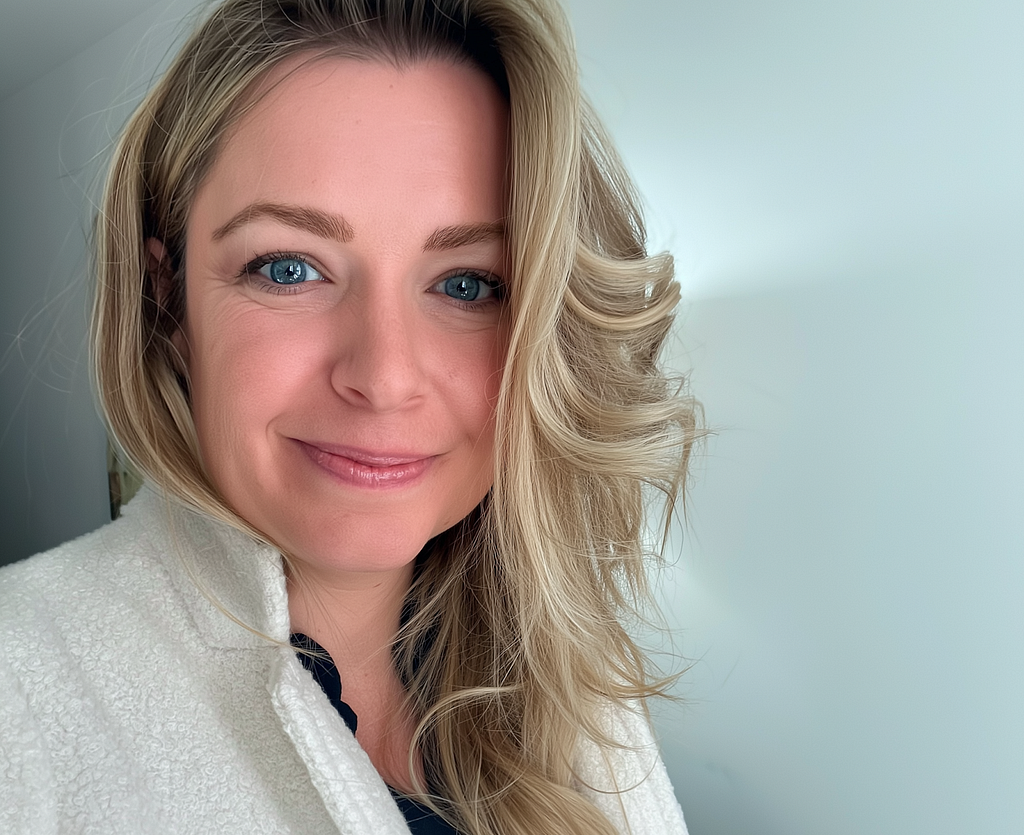
“Promise me something. Promise me that you’ll never take a job you think you’ll be good at. Take a job you think you can learn the most from.” … I took that to mean: don’t take a job you’ll be terrible at, obviously, because you’ll get fired, but take one that offers you room to grow. Explore it. See what you can get out of it. And I think in that moment, she gave me the courage to be curious. That piece of advice has been at the center of all my professional decisions since.”
I had the pleasure of talking with Sydney Steele. Sydney’s path into the entertainment industry didn’t begin with a dream of being on stage but rather with a deep fascination for everything happening behind it. Raised in South Florida, where her father was a tennis pro to celebrities and her maternal grandfather served as art director at The Palm Beach Post Office, Steele’s early years were steeped in both athletic discipline and a creative sensibility. What ultimately caught her imagination wasn’t the performance itself, but the complex, often invisible orchestration required to bring it to life.
That early spark turned into a deliberate pursuit. She attended both a performing arts middle and high school before enrolling at the University of North Carolina School of the Arts, where she majored in stage management, specifically within ballet. Under the instruction of former New York City Ballet principal Melissa Hayden, Steele absorbed not only the rigor of the art form but a guiding ethos: never take a job simply because you’re good at it; take one because it will stretch you. That advice became a compass point in a career defined by curiosity, risk-taking, and a commitment to collaborative creation.
Today, Steele is the founder and CEO of Bailey St. Entertainment, a New York-based production company known for immersive, large-scale experiences that bring together creative disciplines in unconventional ways. The company’s best-known project to date is Pixar Putt, a touring, 18-hole miniature golf course themed around Disney and Pixar films. With installations in cities across the U.S., including Chicago, Denver, Fort Lauderdale, Salt Lake City, and currently at Disneyland Resort’s Pixar Place Hotel in Anaheim, the attraction is one part entertainment, one part cultural connector. Designed to bring a slice of theme park magic to families who may not have access to a full Disney experience, Pixar Putt reflects Steele’s larger goal: to create joyful, inclusive events that leave space for both wonder and reflection.
Her body of work is as varied as it is expansive. Previous producing and management credits include Showstoppers, a benefit for the Costume Industry Coalition; Curtain Up in Times Square; Playbill’s Pride events; From Broadway with Love, a benefit concert for Parkland; and productions at the Hollywood Bowl. She has collaborated with commercial brands, activist organizations, and nonprofit institutions, often using entertainment as a means of community building and dialogue. In 2023, she was named to Who’s Who in America, and her work has been recognized by The New York Times with a Critic’s Pick.
Bailey St. Entertainment is named after a dormitory at her college, where artists of all backgrounds lived and worked in close proximity, sometimes harmoniously, sometimes with tension, but always in service of their craft. Steele says she wanted to recreate that environment in the professional world, not only in terms of creative output, but in how people are treated. “I wanted to build a space where people felt safe enough to take risks,” she says. “Where being curious wasn’t just allowed, but encouraged.”
Curiosity, in fact, is one of the core principles she brings to every project. In interviews, she frequently returns to the idea that learning never stops, whether it’s about new production technology or, unexpectedly, plumbing. She once recalled how a self-directed crash course in plumbing made her the only person able to solve a particularly unusual staging challenge: delivering milk from a faucet during a live theater performance. It’s emblematic of her approach: learn broadly, think laterally, and treat every problem as an opportunity for invention.
That approach also informs how she mentors others entering the field. Among the principles she shares with aspiring professionals are the importance of staying teachable, building teams that challenge and complement each other, and resisting the scarcity mindset that can lead to unhealthy competition. “There’s enough work to go around,” she says. “Art and entertainment aren’t finite.”
As a mother and business owner, Steele often speaks about the intersections between professional ambition and personal grounding. She sees no contradiction between leading a national entertainment company and raising a family. If anything, she draws inspiration from her dual roles, believing that empathy, time management, and improvisation, the hallmarks of parenting, are just as applicable in the boardroom or backstage.
Looking forward, Steele is expanding Bailey St. Entertainment’s reach into new immersive formats and continuing to develop events that aim not just to entertain, but to provoke dialogue. Though some projects remain under wraps, she speaks openly about a long-held ambition: to use movement-based performance as a way to give voice to underrepresented communities, particularly people with disabilities. In her vision, art becomes a bridge, allowing communication across language, ability, and culture, and opening the door to conversations that might otherwise remain stalled.
“If we can gather in the dark to watch a performance,” she says, “maybe we can learn how to treat each other better in the light.”
Though Steele’s work often centers on spectacle, her motivations are deeply rooted in purpose. Whether it’s a touring golf course built around animated films or a benefit concert responding to tragedy, her projects reflect a belief that entertainment can also be infrastructure: connecting people, cities, and ideas. It’s an approach that resists categorization, and perhaps that’s by design. In a career built on learning what others overlook, Steele remains less interested in the spotlight than in the mechanism that turns it on.
Yitzi: Sydney, it’s a delight and an honor to meet you. Before we dive in deep, our readers would love to learn about Sydney Steele’s origin story. Can you share with us the story of your childhood and how you grew up?
Sydney: Likewise, thank you so much for having me. I grew up in South Florida. My parents were very supportive and really allowed us to explore and be who we felt we wanted to be in the moment. They backed whatever wild endeavor we were into at the time.
To my poor dad’s heartbreak, he was (and still is) a tennis pro to the stars and celebrities in South Florida. I think he always hoped all of his children would become tennis players. But growing up there, the last thing you want to do on a Saturday morning in the ’90s, when it’s 98 degrees out, is play tennis. We’d much rather be inside watching cartoons.
He was kind enough to let us give up on that idea. My mom’s side of the family is fairly creative. Her dad was the art director for the Palm Beach Post Office, so there was always this innate exposure to the arts. I remember my parents taking me to Miami City Ballet’s production of Jewels when I was about eight or nine. I was completely fascinated.
Most young girls leave the ballet wanting to be a ballerina, to wear the beautiful tutus and all that. But I had a very different reaction. I remember sitting in the house at the Kravis Center, it’s a beautiful venue, and just looking around, wondering how it all came together. I knew there had to be more going on behind the scenes than what we were seeing. That fascinated me, the idea that there was this choreographed dance happening outside our view.
There had to be something deeply collaborative to make it all happen, and that really piqued my interest. I was fortunate to have opportunities to explore that. I went to a performing arts middle school and then a performing arts high school, where I could really start to understand how all the pieces fit together. It’s such a collaborative art form, and I think that early curiosity has really shaped my life.
I carry that curiosity with me everywhere I go. I truly believe you’re never done learning. Ever. I try my hand at all sorts of things, and fail at many of them. You should see my tomato plants right now. They’re a sad sight. But I wanted to see if I could grow them from seeds, just to figure it out. I encourage that same curiosity in my teammates and in my children. There’s something really valuable in that.
After middle and high school, I went to the North Carolina School of the Arts, where I majored in stage management. My primary focus, oddly enough, was in ballet stage management. I just loved the art form. I loved the formality of it, working with orchestras, the physicality involved. It’s very different from other types of performance art.
Around my junior or senior year in college, I was fortunate to train under some incredible artists. One of my mentors was Melissa Hayden, who had been a principal dancer with New York City Ballet. We used to joke that at one point, if you looked up “ballet” in the dictionary, her picture would be there. George Balanchine created many female roles specifically for her. She was not only a brilliant dancer and choreographer, but also known for being very stern.
Freshman year was when you chose your path, and I remember purposely requesting to be in the ballet studios and learn ballet stage management, mostly because I wanted to see if I could make it through those rehearsals without crying. She was famously tough, not afraid to say the hard things and really push you.
I was very meek at the time. The program was highly competitive. There were six of us in the major, and I remember during orientation they told us, “Look to your left, look to your right. Most of these students won’t be here by next year.” Your spot was never guaranteed. Excellence wasn’t just encouraged, it was expected. And if you didn’t meet that standard, you weren’t asked back. It was intimidating, to say the least.
But I requested to be in those ballet studios because I wanted to challenge myself. I knew I was a quiet person, and I wanted to see if I could survive that intensity.
A few years later, I was looking at internships with New York City Ballet, American Ballet Theatre, places I had worked really hard to get noticed by during college. And then, out of nowhere, a bus-and-truck musical theater tour came up. They were looking for a stage manager. I knew nothing about musical theater and definitely didn’t know how to tour.
I remember going to Melissa and saying, “I don’t know why I’m even considering this. I don’t know what I’m doing here. I should be pursuing these ballet internships. Nobody leaves New York City Ballet or American Ballet once they’re in. Why am I thinking about this?”
She gave me advice that has stayed with me ever since. She was in her 80s at the time, sitting in the studio, teachers could still smoke indoors then, smoking a cigarette at probably nine in the morning, and she said, “Promise me something. Promise me that you’ll never take a job you think you’ll be good at. Take a job you think you can learn the most from.”
I took that to mean: don’t take a job you’ll be terrible at, obviously, because you’ll get fired, but take one that offers you room to grow. Explore it. See what you can get out of it.
And I think in that moment, she gave me the courage to be curious. That piece of advice has been at the center of all my professional decisions since. I lead with curiosity. I chase the things that seem a little off the beaten path. Maybe they’re not the norm. Maybe no one else is doing them yet, or maybe it’s just the beginning, and that’s what excites me.
Yitzi: Beautiful. You have so many amazing things going on, so much incredible work. Tell us about the exciting new initiatives you’re working on now.
Sydney: Oh gosh. Some of them I can’t reveal just yet because they’re still in early-stage development, and there are NDAs and all that fun stuff. But to that point, I started my own company, and that was a big leap of faith. It was a chance to create the kind of collaborative environment I had always craved, one that recognizes that every single contributor matters.
Going back to those early days of sitting in the house watching a ballet take shape, I always knew there was a larger collaboration at play. I wanted to build a space where people felt safe enough to take risks, challenge themselves, and step out of their comfort zones. That was really important to me. I wanted to be surrounded not just by incredible artists, but by artists who were also brave enough to be curious.
So, we started Bailey Street Entertainment. The name is actually a nod to my college days. There was a dorm on Bailey Street where artists from all kinds of backgrounds came together to challenge one another and create the most impactful storytelling they could. It was beautiful, raw, and sometimes a little frightening, but in the best way. I didn’t want that energy to end with college. I wanted to bring it into the professional world.
At Bailey Street, we look for projects that challenge the norm. I love the magic of storytelling, especially storytelling without words. There are so many opportunities to create magic in every aspect of a production. Sometimes we’re brought on as production supervisors or show callers, roles that might seem smaller or more behind the scenes. But even then, there’s still a chance to create something special.
To me, the magic lies in how you make something feel effortless, seamless, and completely taken care of. That philosophy applies to everything we do, whether it’s a project we’re building from scratch, a concert we’re consulting on, or a role we’re playing as part of a larger team. We want people to walk away saying, “Wow, how did they do that? That looked so easy.” Even though, of course, it’s not.
There are plenty of long nights and moments of stress behind the scenes. But I have a saying, one that probably drives my team a little crazy, that every challenge is an opportunity for a creative solution. When someone comes to me and says, “I have a problem,” I always say, “No, this is exciting. Let’s talk about it. This is our chance to find a creative solution.”
That mindset is what works so well for Bailey Street. Everyone, from the storytellers and artisans to the designers and even the finance team, plays a critical role. Every contribution matters. And everyone is constantly being challenged to think creatively. We thrive in the chaos a little.
Yitzi: So, you’ve been blessed with a lot of success, and you must have seen a lot from your vantage point. Can you share, based on your experience, five things you think are essential to building a highly successful career in theater, Broadway, or live arts? What do people coming up in the industry need to make it?
Sydney:
- The first thing is being brave enough to be curious. That sounds easier said than done, especially for young professionals coming out of college. There’s often this pressure to be perfect, but I don’t think that makes you a true artist. Art is messy. Sometimes you get it right, sometimes you don’t. But if you’re not brave enough to step outside the box, you’re never going to create something new or exciting.
- Second, remain teachable. None of us know everything. As time goes on, you gain confidence in a certain skill set, but even that can surprise you and knock you back a bit. Being teachable means having the humility to say, “I could learn more in this area.” That’s been especially true for me as a business owner. I don’t have a business degree, I have a Bachelor of Fine Arts, so I’ve had to be really transparent about what I don’t know. And because of that, I’ve been very intentional about building a team that complements one another.
- Which leads me to the third point: find your people. Surround yourself with those who challenge you, who push your thinking, who inspire you to keep learning. That makes you a more well-rounded candidate, not just in entertainment but in life.
- Learn. I’m constantly learning about all sorts of things. In entertainment, sure, but also marketing trends, how the economy’s doing… even plumbing. And I say that because once, in an off-Broadway show in 2017 or 2018, the artist wanted to serve the audience milk from a faucet onstage, because the show took place in his kitchen. And, weirdly enough, I had just been reading about plumbing basics and was able to figure out how to make it work. So, you really never know what knowledge will come in handy.
- Fifth, support others. This is a small industry. I know people say that all the time, but it’s true. And competitiveness for the sake of being competitive isn’t productive. There’s this line Oprah says: “Surround yourself with people who root for your rise.” I love that because it’s true, you should want to see others succeed, and you should be their biggest cheerleader. Life is hard enough. It costs you nothing to be kind, and I find things are more fun and more productive when you’re supportive of your colleagues and friends, even if they’re technically your competitors. There are a few people out there doing very similar work to what I do, and I’m constantly (and genuinely) cheering them on. If someone lands a great acquisition or is working on a cool project, I’ll tell them how excited I am for them. And I mean it. Because there’s enough work to go around. Art and entertainment aren’t finite. And yet, I get where that competitiveness comes from. It’s rooted in fear, fear that if you’re too open or kind to someone else, especially a competitor, you’re giving something away. But that’s not true. Whether you’re an artist, a producer, or anyone in this industry, or really any industry, we have a responsibility to our craft and to our field. We need to help keep it going, to encourage it to grow. And the only way to do that is to support one another in making it happen.
Yitzi: So beautiful. This is our final aspirational question. Sydney, because of your amazing work and the platform that you’ve built, you’re a person of enormous influence. If you could spread an idea or inspire a movement that would bring the most good to the most people, what would that be?
Sydney: Oh gosh. This is something I’ve always dreamed of doing, and I really wish I could gather a group of people to do it with me. Deep down, I’ve always wanted to use the performing arts, not just as a platform, but as a medium, to allow difficult conversations to take place.
It’s somewhat in the realm of “art for change,” but maybe not in the traditional sense. It’s about expressing what we can through storytelling in ways that aren’t didactic or overly educational. I think the most powerful stories aren’t the ones that tell you what to think. The education shouldn’t be on the nose. Our job, first and foremost, is to entertain. But if, through that entertainment, you can open someone’s mind, or even just create a space where a conversation can begin, that’s where the impact is. That’s where the potential for unity and real, lasting change lives.
There’s this quote I love, and I wish I could remember who said it: “We gather in the dark so we know how to treat each other in the light.” I thought that was so incredibly powerful.
One dream I’ve had is to go to countries where people with different abilities don’t have the same access or visibility they might have here. I’d love to use dance as a form of expression, to help people move in the way that they can, to communicate through that movement. It would be a way of showing that communication isn’t always verbal. It’s not always about the spoken word. And even if someone moves differently, or lives in a different kind of body, that doesn’t mean they can’t express something profound.
It would be a way to start a conversation, to help shift perceptions, and to give voice, through art, to people who aren’t always seen or heard. I know I’m saying it in a somewhat muddled way, but the heart of it is this: using art to begin conversations that lead to lasting, positive change.
Yitzi: How can our readers continue to follow your work? How can they support you in any possible way?
Sydney: Some of our company updates can be found on our website, which is baileystentertainment.com . We’ve got a few concerts coming up. One of our current projects is a touring Pixar-themed mini golf set, which I absolutely love. It gives us the chance to bring a little Disney magic to places where families might not be able to afford a trip to one of the theme parks.
We never claim to be the parks, of course, but it’s still something special, a bit of magic right in your hometown. I love these kinds of projects because they connect people. They get families out, they let people engage with their favorite IPs in a tangible way, and they create memories. Even if just for a brief moment, it lets people leave their troubles at the door.
Yitzi: Sydney, it’s been a delight to meet you. Really wonderful talking to you. I wish you continued success and good health. And I hope we can do this again next year.
Sydney: Oh, likewise. Thank you so, so much. I really appreciate it.
Sydney Steele on Building Bailey St Entertainment, the Power of Curiosity, and Creating Magic Behin was originally published in Authority Magazine on Medium, where people are continuing the conversation by highlighting and responding to this story.