
Clayton Farris on ‘Weapons,’ Embracing Vulnerability and the Power of Cringe: “Everything You Want Is on the Other Side”
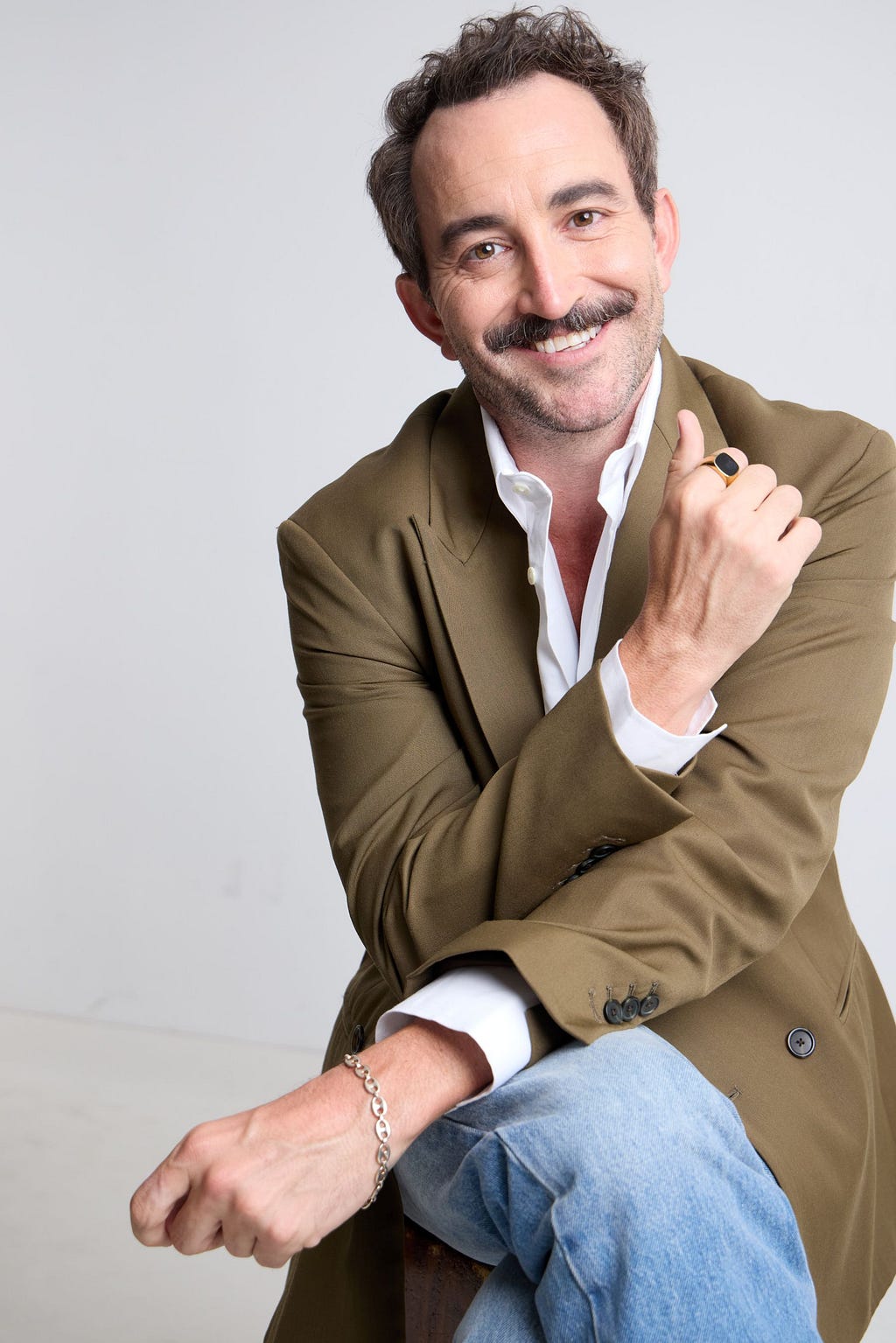
“Cringe is your friend. You know this idea of cringe, and how things can feel cringey, or putting yourself out there can be cringey, but everything you want is on the other side of cringe. Whether it’s asking someone for help, putting yourself in a vulnerable situation to say what you want, or holding up the camera and talking to it to try to build an audience, lean into the cringe.”
I had the pleasure of talking with Clayton Farris. For nearly two decades, Clayton has carved out a steadily evolving career in Hollywood, marked by a balance of emotional accessibility, comedic precision, and an ever-growing digital footprint. As he steps into a prominent role in Weapons, the upcoming Warner Bros. thriller from Barbarian director Zach Cregger, Farris finds himself at what may be the most visible juncture of his career so far. The film, slated for release on August 8, 2025, places him alongside an ensemble of high-profile names including Josh Brolin, Alden Ehrenreich, and Julia Garner.
Farris plays Terry, a role he describes as emotionally vulnerable and quietly integral. Without disclosing plot spoilers, he hints at the character’s importance in establishing the film’s emotional stakes. “We need the audience to really like Terry from the moment they meet him,” Farris says. “So I leaned into the open and loving parts of myself. I hope that comes through.”
Born and raised in Dallas, Texas, Farris grew up in a working-class family and was drawn to performance from a young age. He found early inspiration in theater, particularly during a formative summer spent with a community theater group in high school. “That’s when I found my people,” he says. “It wasn’t just about the acting, it was about that communal sense of creating something with others.”
He moved to Los Angeles as a young adult with the same wide-eyed determination many bring to the industry. Over time, he began to understand the more solitary, often transactional nature of film and television work, compared to the camaraderie of the stage. Still, he stayed committed, gradually building a career around bit parts and recurring roles on shows such as American Horror Story, Ratched, and The Morning Show. In 2024, he appeared in MaXXXine, the A24 horror film that continued Ti West’s slasher trilogy and further solidified Farris as a familiar face in genre circles.
Outside of traditional screen work, Farris has cultivated a separate but complementary identity as a creator on social media. What began as a skeptical foray into Vine at the urging of a friend evolved into a regular practice of writing and performing short-form comedy sketches. His dry, observational tone, frequently likened to a younger, more digitally native Larry David, has attracted millions of views and helped him connect with a broad, cross-generational audience. “Cringe is your friend,” Farris says. “Everything you want is on the other side of cringe.”
That embrace of vulnerability, both artistic and personal, has also guided his approach to career longevity. He credits his progress in recent years to a combination of deepened craft and pragmatic acceptance of the industry’s unpredictability. “There’s no way to predict your trajectory,” he says. “You just have to say yes to everything for as long as you can, and let the road take you where it goes.”
In Weapons, Farris found himself on set with actors whose work he had grown up admiring. He names Benedict Wong and Amy Madigan as particularly surreal scene partners. “When you walk onto a set like that, it’s easy to think, ‘I don’t belong here,’” he says. “But then you remember why you do this work, because it’s fun, because it’s collaborative, because it’s play.”
His next film, Driver’s Ed, directed by Bobby Farrelly, will premiere at the Toronto International Film Festival, marking another milestone in what has become a quietly expanding filmography. He’s also currently filming a still-undisclosed project and maintains a regular presence on TikTok and Instagram, where he continues to write, film, and share sketches that he produces himself.
Self-care, Farris notes, has become a critical part of sustaining both creativity and health. He’s practiced daily meditation for nearly a decade, maintains a sober lifestyle, and has become increasingly focused on nutrition and longevity. “I don’t think meditation makes your problems go away,” he says. “But it helps you manage the noise a little better.”
Despite the often disjointed nature of the modern entertainment industry, Farris continues to prioritize meaning and connection in his work. He views horror not just as a genre of scares, but as a form that enables emotional catharsis. In the case of Weapons, the story explores how a community processes grief after a devastating loss. “It’s about real-life fears, not just the scary stuff,” he says. “It’s about what it means to lose someone and still keep going.”
Asked what philosophy has helped him navigate the uncertainties of creative life, Farris offers a balance of humor and clarity. “Be kind to yourself,” he says. “Let yourself be awkward. Let yourself mess up. Just don’t let the fear of not being good enough keep you from doing the thing.”
As he moves into a new chapter with Weapons and beyond, Farris continues to embody the dual identity of actor and creator, a performer equally at home on studio sets and in front of a smartphone camera. He remains, as he puts it, “a deeply feeling person” who still believes that optimism has a place in a chaotic world. “You can focus on the bad or you can focus on the good,” he says. “They’re both there. But you have to choose.”
Yitzi: Clayton Farris, it’s an honor to meet you. Before we dive in deep, our readers would love to learn about your personal origin story. Can you share with us a story of your childhood and how you grew up, and the seeds for all that happened afterwards?
Clayton: I grew up in Dallas, Texas, in a lower-middle-class family. It was a very traditional upbringing. My parents are still married. Growing up where I did, I was one of those kids who was always trying to make people laugh, trying to entertain. I found that people really responded to that side of me, and I loved it. It started with my parents and then extended to just random people in my life.
I always enjoyed entertaining. I got into theater, and when I was in high school, I did my first play outside of school at a summer community theater. I was surrounded by all kinds of kids, different backgrounds, all really talented entertainers. That’s when I found my people and realized how important that sense of community was to me. I fell in love with the whole process of putting on a show, being pushed by your peers to get better at what you do, whether it was singing, dancing, acting, whatever it was.
I stuck with that. I think I got addicted early on to the feeling of being part of a family, coming together with a group to create something really cool. Later, when I moved to L.A. to pursue TV and film, it felt different. Theater is very communal, but TV and film, especially as an actor, can be more independent. You’re not always as connected to people.
But once I got older and moved out here, I really fell in love with the business side of it too, figuring out how to make it and navigate Hollywood. I also found an acting teacher and studio that I connected with deeply as an adult, which helped me double down on my passion for acting and understanding what it really means.
I’ve been in L.A. for over 15 years now, and in the past few years, I’ve been able to move up the ladder a bit as an actor and creator. I’m just thrilled.
Yitzi: You probably have some amazing stories from all the different parts of your successful career. Can you share with our readers one or two stories that most stand out in your mind from your professional life?
Clayton: I don’t know if you know this about me, but I’m also a creator. I make comedy content online. There was this app that came out called Vine, I don’t know if you remember it. It was a six-second video app. When it launched, my best friend Alana, who I was hanging out with a lot at the time, said, “We’ve got to get on this app and start making videos.” I was like, “I can’t do that, I’m an actor.” This was way before social media became what it is today. It was just the beginning of all that, and I was pretty hesitant.
Eventually, I gave in and said, “Okay, let’s make something together.” We started writing these short six-second comedy videos that had little arcs to them, and they really started taking off on Vine. That was the beginning of my social media following and my content creation journey. I’m really grateful to Alana for that moment because it pushed me to expand what it means to be a creative. Luckily, that shift lined up with where the industry was heading. Now, to be an actor, you really have to be more than just an actor. You have to be a creator, build your own following, make your own work, and create your own audience. I was lucky to have someone early on push me in that direction, so now that everything is moving toward the internet, I already have a base and a following.
Yitzi: That’s amazing. It’s been said that sometimes our mistakes can be our greatest teachers. Do you have a story about a funny mistake you made when you were first starting out, and the lesson you learned from it?
Clayton: Hmm. Let me think. I try to forget my mistakes, you know what I mean? But what comes to mind is this: to be an actor and really pursue it, you have to have this kind of blind optimism, because you’re up against so many things that are completely out of your control.
I think my biggest “mistake,” if you can call it that, was not listening to the no’s. I didn’t listen to people who told me I wasn’t good enough, or that it wasn’t possible, or that I should do something else. I just kept focusing on my passion and the belief that I could get good at it one day.
I don’t even know if this is directly answering your question, but it’s what came up for me. The cool thing about acting is that you can get better. Every mistake, every bad audition, every embarrassing moment on set, every awkward interaction with a casting director, they’re all part of the process. If you’re not going through those things, you’re not progressing. You have to go through those rough moments to get to a place where you start to feel more comfortable in this world.
Yitzi: Great. What’s been the most challenging project or role that you’ve taken on so far?
Clayton: I’d say something like Weapons, the movie I’m in right now. When you get called to bat in a bigger project, surrounded by stars and people at the top of their game, there’s a part of you that creeps in and thinks, “I don’t belong here. I’m not ready for this. They made a mistake.”
But it’s also fun to rise to the occasion. When you’re acting opposite people like Amy Madigan and Benedict Wong, people who’ve been in iconic films, including some of the Marvel movies I grew up watching, you just have to face those fears. The fear that you’re not good enough. And then you remind yourself that the thing you love about this work is the playfulness of it, the exchange between actors. Allowing yourself to fully have that, even in these bigger settings, that’s the thrill.
Yitzi: Amazing. Please tell us about the exciting new things you’re working on. Tell us about Weapons, tell us why we have to watch it, and anything else you have coming up.
Clayton: Yeah, I would say go see Weapons because it’s a special movie. It really reminds us why we go to theaters. It’s a communal experience. When I saw it at the premiere, which was actually the first time I saw it, the audience was screaming together, laughing together, covering their faces together. It was electric. And as I sat there watching it, I thought, “I can’t believe I’m in this movie.” I just felt so grateful.
Coming up, I’m in a movie called Driver’s Ed, directed by Bobby Farrelly. It was really cool to work with one of the Farrelly brothers. That film got into the Toronto International Film Festival, so it’ll be coming out soon. And I just booked something I’m really excited about. I’ve already started filming, and it’s going to be really cool, but I can’t talk about it just yet.
Yitzi: Can’t wait to hear about it. How would you compare and contrast your personal character, Clayton Farris, with the character you play in Weapons? How are you similar, how are you different?
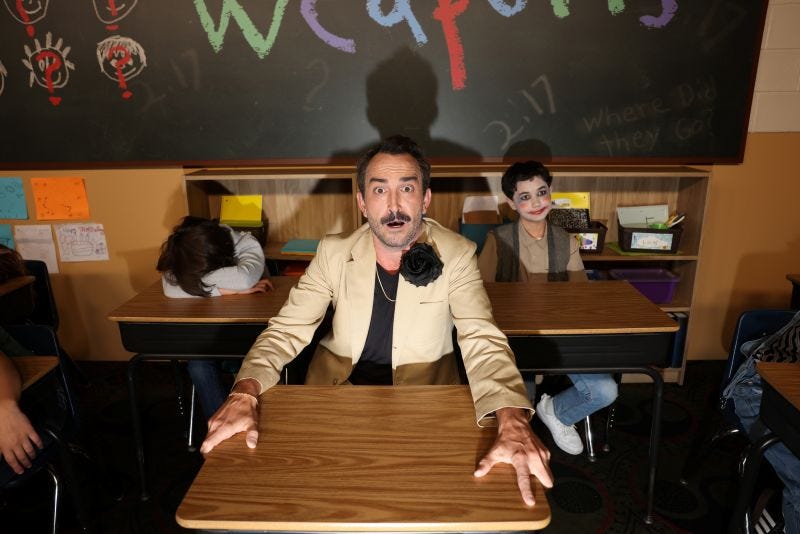
Clayton: I play a character named Terry, who really just wants to be there to support his partner. I think the purpose of my character is that we need the audience to really like Terry from the moment they meet him, because something might happen to him later on. So I leaned into that vulnerable side of myself, the part that’s open and genuinely loving toward others. I hope the audience sees that and connects with Terry because of it.
Yitzi: What is the takeaway you hope society takes from the themes and motifs of Weapons?
Clayton: Weapons is about a community dealing with a huge loss. Like with most horror, the themes run deep. It might seem like it’s about some wild or extreme event, but it’s really about our real-life fears. In this case, it’s the fear of losing people we love, and all the intense emotions that come with that, whether it’s through traditional grief or the kind of sudden, horrible losses we sometimes see in the world today.
The film looks into the horrors of loss and the impact it has on a community, and I think that’s something we can all relate to.

Yitzi: This is our signature question, the centerpiece of our interview. Clayton, you’ve been blessed with a lot of success. Looking back to when you first started, you must have learned a lot from your experiences. Can you share five things that you’ve learned now that would have been really nice to know when you first started?
Clayton: Oh my god. I’m like, let’s see… I should write a book. So, I’m going to talk about this specifically in relation to a creative career, as an actor or a creator.
- I think one would be that your trajectory is impossible to predict. There’s no way to understand how you’re going to get to where you want to be, or where you’re going. You just have to be open to the road going whichever way it can, and say yes to everything for as long as you can. That would be one.
- I’d also say, let the meaningful auditions and the times you’re on set that feel like bigger opportunities be the moments where you do something that surprises yourself. Don’t save your unique perspectives as an actor for your acting class. Bring those to the opportunities themselves, bring them to the auditions, bring them to the shoot.
- What else? I would say, cringe is your friend. You know this idea of cringe, and how things can feel cringey, or putting yourself out there can be cringey, but everything you want is on the other side of cringe. Whether it’s asking someone for help, putting yourself in a vulnerable situation to say what you want, or holding up the camera and talking to it to try to build an audience, lean into the cringe.
- Next, I’d tell myself it’s very expensive to live in Los Angeles, so save money.
- And finally, I’d say don’t be too hard on yourself during the journey. Acting is a lifelong journey and a lifelong blessing. Embrace it at every stage, and be kind to yourself. It can be hard sometimes to see yourself on camera all the time, so just be kind.
Yitzi: Amazing. You have the perfect title for your book: Everything You Want Is on the Other Side of Cringe.
Clayton: Yes. I love that. Or how about The Other Side of Cringe? I like that.
Yitzi: Can you share some of the self-care routines that you do to help your body, mind, and heart to thrive?
Clayton: For sure. I’m a big believer in meditation. I wake up every morning, and for almost 10 years now, I’ve meditated first thing. I don’t think it necessarily makes all your problems go away, but it puts you in a position where you can handle things coming at you much better. I try to get at least eight hours of sleep. I drink a lot of water. I’ve stopped drinking alcohol.
I eat very clean, try to stick to organic food, and I do a lot for my health overall. I take supplements that I feel really help me. Right now, my favorite supplements are colostrum, collagen, and a supplement called spermidine. It has an unfortunate name, but it’s from wheat germ. It aids your body in autophagy, helping you recycle cells more quickly, which is good for your health. It’s my favorite supplement at the moment.
Yitzi: This is our final aspirational question. Clayton, because of your amazing work and the platform that you’ve built, you’re a person of enormous influence. If you could put out an idea, spread an idea, or inspire a movement that would bring the most amount of good to the most amount of people, what would that be?
Clayton: I love your hard-hitting, philosophical questions. Thank you for saying that, because I actually feel like it’s true. I’m a deeply feeling person.
Something that always blows my mind and baffles me is the human condition. We live in a hard time, in a hard world, and I know that all humans really strive for good. We want the world to be good, and we want good things in it. The fact that, even though we see these horrors happen over and over again, we still, deep down, remain optimistic about each other and the future, that idea gives me a lot of hope and peace.
When you’re an optimistic person, like I think you might be too, people sometimes look at you like, “What are you doing?” And it’s like, what’s the alternative? You can focus on the good or focus on the bad. They’re both going to be there, but which one are you going to focus on?
Yitzi: Okay, amazing. Clayton, how can our readers continue to follow your work? How can they watch Weapons or any of your material?
Clayton: You can connect with me directly on Instagram, just @ClaytonFarris. My last name is spelled F-A-R-R-I-S. I’m also on TikTok @ClaytonFarrisForever. Weapons comes out August 8th.
Yitzi: Can’t wait to see it, and I wish you continued success, good health, and blessings. I hope we can do this again, Clayton.
Clayton: Thank you so much. It was a pleasure meeting you. I love your energy.
Yitzi: Thank you so much. I appreciate it.
Clayton Farris on ‘Weapons,’ Embracing Vulnerability and the Power of Cringe: “Everything You Want… was originally published in Authority Magazine on Medium, where people are continuing the conversation by highlighting and responding to this story.