
“There’s a Little Bit of Wonder Woman in All of Us”: Jessica Carter Altman on Ditching the Courtroom for the Stage, Embracing Imperfection, and Finding the Freedom to Fail
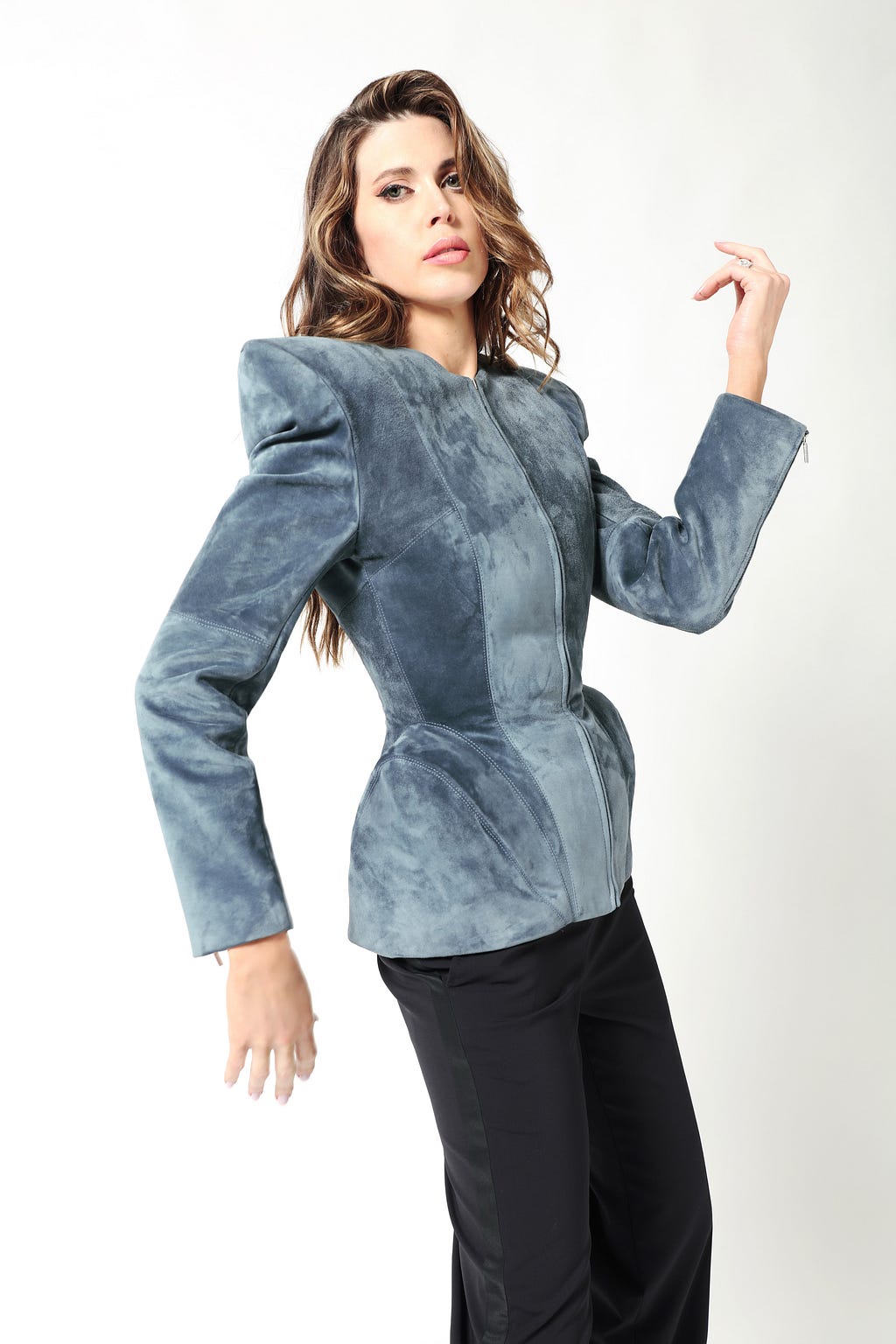
“I had this moment with my dad when we were walking in Central Park. I told him I didn’t want to be a lawyer — I wanted to be an artist. I don’t even think he was surprised. […] And my dad said something that really stuck with me. He told me it was okay if all I got out of the experience was that I tried and didn’t like it, or that I tried and it didn’t work out. He said, ‘That’s enough.’ You don’t have to try and succeed for it to be worthwhile.”
I had the pleasure of talking with Jessica Carter Altman. Jessica grew up just outside Washington, D.C., in Maryland, where Sunday brunches with extended family set a rhythm of closeness and tradition that would quietly shape her later work. Music entered her life early. She joined her first choir in the first grade, balancing rehearsals with afternoons on the basketball court or soccer field. “Most of my interests centered around being outside or being on stage,” she has said. “That still holds true today.”
Her childhood was spent at Holton-Arms, an all-girls school in Bethesda, Maryland, where her curiosity was encouraged and her voice began to find space. Though her mother worked in the entertainment industry, Altman initially dismissed music as an unrealistic dream. She pursued academics instead, majoring in psychology at the University of Michigan before heading to the school’s law program. By the time she graduated, she had a job lined up at a major firm in Washington D.C.
But somewhere in the middle of casebooks and courtroom preparation, the stage called back. She began performing during law school and rediscovered the pull of songwriting. A walk through Central Park with her father crystallized the decision. “I told him I didn’t want to be a lawyer — I wanted to be an artist,” she recalled. His response, granting her what she called “permission to fail,” became a turning point. She took the bar exam and spent three years as a litigation associate at Gibson Dunn & Crutcher, but her focus was increasingly elsewhere.
Altman’s entry into music was gradual but deliberate. She found a mentor in voice teacher Joan Lader in New York and began working with Nashville producer Jason Lehning. By 2017 she was recording her first EP, flying to Nashville on weekends while maintaining her full-time legal workload. “Balancing my job at the law firm with flying to Nashville on Friday nights to record vocals over the weekend was exhausting,” she said. That debut project forced her to shed perfectionism and embrace the imperfections that give music its character.
In the years since, Altman has developed into a songwriter whose work often circles around insecurity, self-perception, and the tension between outward polish and inner doubt. Tracks like “Fake It” explore imposter syndrome, while “Clumsy” leans into personal flaws with humor and honesty. Her single “Mirror Mirror” reflects on the distortions of self-image in an era of filters and digital illusions. Performed before its official release in Nashville, the song struck a chord with listeners. One audience member held up a sign describing the personal impact of the lyrics, a moment Altman has called one of the most meaningful of her career.
The road has become a second home. In 2024 she released her debut album Aftermath, a project that coincided with extensive touring. She joined Tyler Hilton and BBMAK on the road, opened for O-Town, and later reunited with Hilton for another stretch of shows. The touring life is demanding — she has described working on her laptop backstage during her law-firm years and recently recognized the same struggle in Hilton’s drummer, who balances gigs with a career in engineering — but Altman has embraced it fully. “It’s amazing how many people are juggling both worlds and trying to make that full-time switch,” she said. “I feel really grateful that I’ve been able to do that.”
Her work has attracted recognition from both music and fashion circles. People Magazine named her “One to Watch,” while outlets including Forbes, Parade, and Entertainment Tonight have covered her ascent. Her songs have been featured on Apple Music’s New in Singer-Songwriter and Breaking Singer-Songwriter playlists, as well as Pandora’s New Tunesmiths and Troubadours. She has appeared on The Tamron Hall Show, performed at iHeart’s Dunkin’ Music Lounge, and collaborated with Wheatus, known for “Teenage Dirtbag.”
In fashion, Altman has become a presence on red carpets and at runway shows, with appearances at Paris Couture Week for Jean Paul Gaultier, Vivienne Westwood, Schiaparelli, Stéphane Rolland, and Giorgio Armani Privé. She speaks about style not as a sideline but as another form of expression, a counterpart to the music.
Altman’s current slate of projects reflects both momentum and evolution. Her EP, featuring “Mirror Mirror” and “Trick of the Light,” is due soon, while an acoustic reinterpretation of Aftermath — inspired by stripped-down tour performances — is nearly finished. She is also in New York recording a new album with producer Jay Tooke, collaborating with writers like Sam Hollander, Hannah Huntley, Jason Lehning, Jeremy Lister, and Palmer Lee. “It’s definitely a bit of a departure from where I’ve been,” she said of the project. “But I think it’s a logical progression, a natural evolution.”
For Altman, the underlying message across her catalog is one of honesty and resilience. She writes about flaws without apology, aiming to shift perspective on what it means to be imperfect. “We don’t listen to music for perfection,” she has said. “We listen to feel something, to connect.” That philosophy has shaped both her writing and her live shows, where post-performance conversations with fans often resemble therapy sessions.
Away from music, she emphasizes grounding routines: long walks with her husband and their dog, sessions with vocal-focused bodywork therapists, and small indulgences in skincare or makeup. “Anything that makes me feel my best — whether that’s being outside, moving my body, or treating myself — those are the things that help me thrive.”
Asked what idea she would most like to spread with her platform, Altman doesn’t point to one cause but to a principle. “If I had to choose just one, I’d say start with kindness and understanding,” she said. “That’s a good baseline — to let people live their lives with dignity and respect.”
From law school choirs to international tours, Altman’s story has been shaped by both careful decisions and leaps of faith. Her work continues to bridge personal introspection with broader cultural conversations, offering listeners a reminder that vulnerability can be as powerful as polish.
Yitzi: Jessica, it’s so nice to meet you. Before we dive in deep, our readers would love to learn about your personal origin story. Can you share with us the story of your childhood, how you grew up, and the seeds of all the great things that have come since then?
Jessica: Sure. Wow, we’re really starting at the beginning. I grew up just outside of Washington, DC, in Maryland. I have an older brother, two parents, and from my perspective, it was a pretty normal childhood. We had Sunday family brunches with my grandparents, aunts, uncles, and all my cousins.
I went to Holton-Arms from third through twelfth grade, which is an all-girls school in Bethesda, Maryland. I joined my first choir in first grade and was always involved in sports and music. My parents really supported any interest I had, and most of those interests centered around being outside, playing basketball or soccer with my friends, or being on stage. That still holds true today.
Eventually, I left DC to go to college at the University of Michigan, where I majored in psychology. After undergrad, I took a year off to go backpacking around the world. Then I came back and went to law school, also at the University of Michigan. That’s actually where my professional music journey really began.
I had always told myself — despite the fact that my mom is in entertainment — that it was a silly dream to pursue. So I followed the academic route. But in law school, I started performing again and fell in love with it all over. At that point, I was trying to figure out how to incorporate it into my life, and I realized I couldn’t keep it as just a hobby.
Some people can do that — there are so many creative people who aren’t in creative industries, and they scratch that itch by playing in a band on the weekends or painting in their free time. But for me, that just wasn’t enough.
Yitzi: Amazing. So please tell us the next chapter. Tell us how you first broke into the music scene. Tell us about your first big breaks.
Jessica: Well, it started pretty small. I was performing in law school and really enjoying it, but I kept reminding myself that I was in law school and would eventually have to let it go. I had a job lined up at a law firm, but by the time I graduated, I was sure I wanted to make the switch. I just wasn’t sure how.
I had this moment with my dad when we were walking in Central Park. I told him I didn’t want to be a lawyer — I wanted to be an artist. I don’t even think he was surprised. In fact, I think he felt a little relieved. I was had just graduated, and I was getting ready to take the bar exam. I had this solid foundation to fall back on if the dream didn’t work out.
But that’s never how I looked at it. I went all in on music. There really wasn’t a fallback plan for me — it was this, or nothing. And my dad said something that really stuck with me. He told me it was okay if all I got out of the experience was that I tried and didn’t like it, or that I tried and it didn’t work out. He said, “That’s enough.” You don’t have to try and succeed for it to be worthwhile.
That kind of permission to fail was huge. I think a lot of people don’t go after what they want because they’re afraid of what others might think or say, and they’re afraid to not succeed and then have to come back. That permission took a lot of pressure off.
I ended up taking the bar exam in Washington, DC, and worked at a law firm there — Gibson Dunn & Crutcher — for about three years.
After taking the bar, I had some time off before starting at my firm. After a quick solo backpacking trip, I came back to try to make something happen for myself in music. This is when I met my voice teacher, Joan Lader, in New York and my producer, Jason Lehning, down in Nashville. I have been fortunate enough to still be working with both eight years later.
Yitzi: Incredible. You probably have some amazing stories from the different parts of your career and all the places you’ve been. Can you share with our readers one or two stories that stand out in your mind from your professional life — your favorite profession?
There were times early on when I was performing but still working full-time as a litigation associate. I had a fiduciary obligation to my clients and responsibilities to my law firm, so that always had to take priority. There were a lot of moments when I was backstage, still working. I think the worst was literally being on my computer trying to finish something, being told I was about to go on, performing, then coming back offstage and jumping right back on my computer to meet a deadline. It was stressful.
I was just on tour with Tyler Hilton, and one of his longtime drummers, Stephan Stanzione, also has a full-time job as an engineer. He’s an amazing musician and tours regularly, but I saw him fervently working on his laptop on the road — and I was like, ‘I get it. I’ve been there.‘
It’s amazing how many people are juggling both worlds and trying to find a way to make that full-time switch. I feel really grateful that I’ve been able to do that.
And another really cool moment was around my last single, “Mirror Mirror.” It’s a song about how easy it is, especially now, to get captivated by illusions — how you can edit or filter yourself online and then find reality a bit harsh in comparison. It’s about being your own worst critic.
I was performing the song in Nashville, and I don’t even think it had been released yet. In the middle of the set, a girl in the audience held up a poster. On the back of it, she had written how beautiful and meaningful the song was, especially for women. I got to meet her afterwards and talk with her about it.
That was a really special moment for me — to share something I had written in a very private space and see it resonate with someone before the song was even released. That kind of connection will always be the sweetest and most meaningful part of what I do.
Yitzi: It’s been said that sometimes our mistakes can be our greatest teachers. Do you have a story about a funny mistake that you made when you were first starting in music and the lesson that you learned from it?
Jessica: Oh my gosh, yeah. I definitely have lots of them. When I was first starting — well, this isn’t really a “first starting” story — but I had a really weird phase where I was constantly getting feedback on my microphone. My guitar player kept teasing me and called me the “feedback queen” because even if I wasn’t touching anything, I’d walk near the electronics and there would just be massive feedback. It was always really embarrassing for me, especially as someone trying to pretend I had more experience than I actually did. I kept thinking I was doing something really wrong.
But I learned pretty quickly that the best way to grow is to let go of your ego and be honest about your experience. If you don’t understand something, just ask. People are usually really open to helping and teaching you — at least that’s been my experience. So I’d say throughout this process, I’ve had a lot of great teachers. There hasn’t been a dramatic moment where I totally fell on my face, but I’ve definitely had mentors in the industry who’ve helped guide me along.
Yitzi: What’s been the most challenging project or role you’ve taken on so far?
Jessica: The most challenging project was probably my first EP. It was tough because I had never done it before. I had recorded songs before, but they weren’t mine — I was singing background vocals on other people’s stuff. So when I started working on my first EP while still working at my law firm, I had no idea what that process would actually look like. I thought we could knock it out in a couple of weeks, and they were like, “No, no, no, it’s way more involved than that.”
Balancing my job at the law firm with flying to Nashville on Friday nights to record vocals over the weekend was exhausting. I was also so obsessed with making everything perfect. I really felt like if it wasn’t flawless, people would listen and think, “Why is she doing this? She’s not very good.” That was just my own fear taking over.
But I’ve learned to let that go with each project. We don’t listen to music for perfection — we listen to feel something, to connect, to have fun. And a lot of the best music out there probably has “mistakes,” but those are what give it character. So yeah, that was a challenging project. Letting go of control, especially while wearing the dual hats of attorney and artist, was really difficult. I had a tight grip on my inner editor, and I needed to give my creative side more freedom.
Yitzi: So you have so much impressive work, Jessica. Can you tell us about the exciting new things you’re working on now? What can we expect in the near future?
Jessica: Thank you for asking that question because I have a lot of stuff I’m really excited to release. My last single was called Mirror Mirror, and that will be part of an EP with four songs on it. There will be another single released before the EP comes out called Trick of the Light, which I’m hoping to release in mid-October. I’m really excited about that project. I wrote it about a year ago, so I’ve been holding onto it for a while, and I’m thrilled to finally share it.
I got to work again with Jason Lehning on that EP. I also have an acoustic, Americana-style version of Aftermath, which was my debut album that came out in 2024. I’ve been performing acoustically a lot, so I thought it would be cool to create something that reflects the way I’ve been presenting the music on the road, which is pretty different from how the record sounds. This version is for the people who fell in love with the songs in that acoustic setting. That project is almost done too. We’re mixing everything now, just need to master it, and hopefully it’ll come out next year. The plan is to space things out a bit — release the EP first, then the acoustic album.
I’ve also been writing a lot over the past year, and I have a new album coming out next spring. I haven’t decided exactly how many tracks yet. We’re currently in the studio recording. I spent the last two weeks in New York working with Jay Tooke for the first time — he’s producing the whole album. I’ve also been collaborating with some new people. I wrote a lot with Sam Hollander, and I think we’ll have about four tracks from him on the album. I wrote with Hannah Huntley, and also with Jay himself. Then some of the usual suspects — there’s a song I wrote with Jason Lehning, and a couple with Palmer Lee, who I’ve been writing with for five or six years now.
I’m really excited about this album. It’s definitely a bit of a departure from where I’ve been, but I think it’s a natural evolution into a new form of creative expression. We’re in the middle of recording right now in New York, and it’s been really fun. It’s also my first time recording in New York, which has been great.
Yitzi: Okay. So if you could take all the music, all of your lyrics, all the melodies, put it into a blender and blend it up, what would be the overall message and vibe that comes out of that mixture?
Jessica: I realized recently that a lot of the stuff I write about — at least what I’ve written and put out into the world so far — has a lot to do with my own insecurities. I’ve got a song called “Fake It” that’s about imposter syndrome, and another called “Clumsy,” which is pretty self-explanatory. I like to write about what I’m actually experiencing and feeling. It’s about owning all the things that make us who we are and being proud of them, because they shape us.
So that’s really what I think the ultimate message is. I love talking to people after the show. Maybe it feels like a bit of a therapy session, or like a girlfriend talking to you saying, “Girl, it’s okay that you’re clumsy. I am too, it’s not a big deal. The right person will love you for it, not just tolerate it. They’ll make you feel great about it.”
I think that’s what I gravitate toward in my writing — identifying things about yourself that you might not love and putting a positive spin on them. We’re all kind of like that in our own way, and it’s beautiful when you just own it.
Yitzi: That’s powerful.So in a sense, you’re saying you can be a Wonder Woman by being human. (Laughs)
Jessica: Yeah. There’s a little bit of Wonder Woman in all of us. (Smiles)
Yitzi: Okay, so this is our signature question. You’ve been blessed with a lot of success. Looking back to when you first started in the music industry, can you share five things you’ve learned through your experience that would’ve been really nice to know at the beginning?
Jessica:
- Trust your instincts. Don’t doubt yourself so much.
- Surround yourself with people who are exceptional at what they do and are wonderful to be around. You spend a lot of time with those people, especially in studios and on tour, so you want them to be great company. But you also want them to be amazing at what they do because that will push you to be better.
- Don’t be afraid to be bold and make bold choices.
- It’s great to be inspired by other people, but always make sure you are, first and foremost, yourself. If you try to be like anyone else, you’ll always be second best.
- And finally, make sure you stay grounded. Keep the people who’ve always been there for you close, and bring them along on the journey. That’s what makes it all the more meaningful.
Yitzi: Can you share some of the self-care routines that you use to help your body, mind, and heart thrive?
Jessica: In the simplest ways, I love going for walks — especially now that it’s gotten a little cooler out. I go with my husband and our dog, or I’ll meet up with girlfriends. Just being outside is such a reset for me. It’s also where I tend to get my best ideas.
I genuinely love all things self-care. I’m a big proponent of bodywork, especially when I’m touring a lot or spending long hours in the studio. In New York, in particular, there are some amazing therapists who specifically work with vocalists. I love learning from them — how they open up your neck or jaw to help with vocal resonance and clarity. It’s something I really enjoy, and I’ll totally chat their ear off asking why they’re doing what they’re doing, just so I can understand it better.
I’ll admit, I’m a bit of a girly girl. I love skincare, and while I’m not wearing any makeup right now, I do enjoy playing around with it when I have the energy.
So overall, anything that makes me feel my best — whether that’s getting outside, being with people I love, moving my body, or treating myself to a massage or facial — those are the things that help me thrive.
Yitzi: This is our final aspirational question. Jessica, because of your great work and the platform you’ve built, you’re a person of enormous influence. If you could put out and spread an idea or inspire a movement that would bring the most good to the most people, what would that be?
Jessica: I mean, that’s the million-dollar question, isn’t it? For anyone who wants to help the world.
It’s a really difficult time right now, and there’s a lot of suffering happening. It can feel like whack-a-mole trying to figure out where to focus those efforts. Is it women’s rights? Reproductive rights? Education? Prison reform? Health care? Health care is a big one at the moment.
But overall, I would say all of the above. If I had to choose just one, I’d say start with kindness and understanding. That’s a good baseline — to let people live their lives with dignity and respect. That’s something everybody deserves.
Yitzi: So beautiful. Jessica, how can our readers purchase your music? How can they see you at a concert? How can they support your work in any way?
Jessica: I’m on almost all the social media platforms — Instagram, Facebook, TikTok, X (which I’m still not totally used to saying).
And then there’s my website. I put out a newsletter, and I’m starting a Substack that will be a little more intimate and go out monthly.
I’m also on any streaming platform where you listen to music. Hopefully, if I go on tour and anyone wants to come out and see me, I’d love to perform for them — and maybe even meet them afterwards and say hi.
Yitzi: Jessica, this has been so delightful. I wish you continued success, good health, and blessings. I hope one day we’ll meet in person, and I really hope we can do this again next year.
Jessica: Thank you so much for taking the time to chat. It’s the end of the day, and this was such a great way to wrap it up. So thank you.
“There’s a Little Bit of Wonder Woman in All of Us”: Jessica Carter Altman on Ditching the… was originally published in Authority Magazine on Medium, where people are continuing the conversation by highlighting and responding to this story.