Ryan Eder Of Laina Health On The Five Things You Need to Create a Highly Successful Medical Technology Company

…And fifth… don’t give up. It’s a long journey. I joke that early-stage companies shouldn’t even exist for as long as they do. It’s incredibly challenging. And I also joke that humans shouldn’t be managing companies at that stage for so long, because it feels like you’re running three or four companies in one. But if you can stay in it and push through, you end up in a great place. We’re in the best position we’ve ever been in, but year 20 is in 2026, so it’s been a journey…
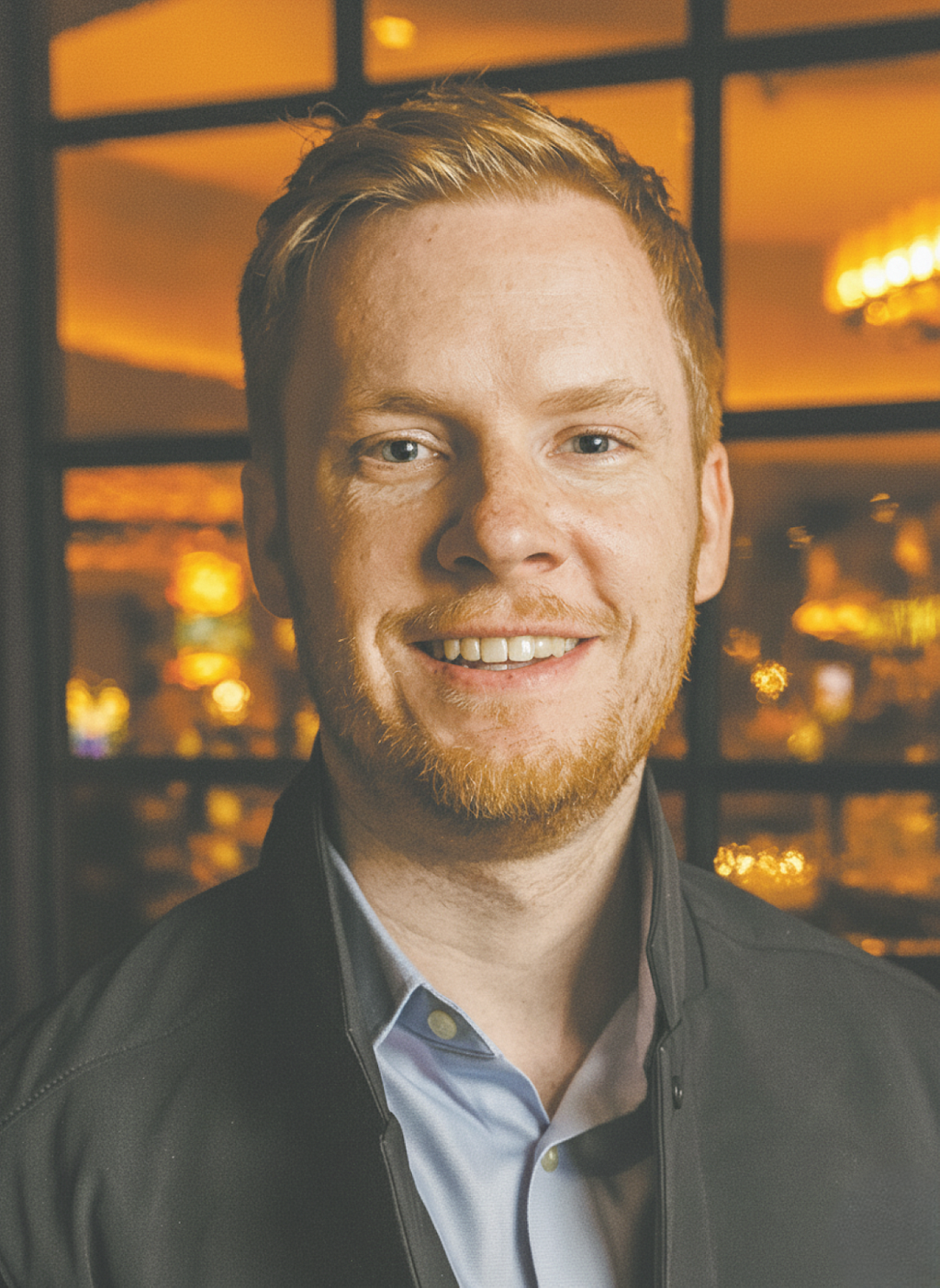
I had the pleasure of talking with Ryan Eder. Ryan grew up in Cincinnati, Ohio, the eldest of four brothers in a household where art and creativity took hold early. As a child, he loved to draw, a passion that eventually led him to study product and industrial design at the University of Cincinnati. It was there, during his senior year, that he witnessed something that would shape the next two decades of his life: a man in a wheelchair struggling to exercise. The moment inspired his thesis project, an accessible piece of fitness equipment designed to allow people of all abilities to work out.
That design soon gained international attention. In 2007, his prototype won Gold, Best in Show, and the People’s Choice Award at the International Design Excellence Awards, opening doors for him to develop the idea beyond the classroom. What followed was a long journey from hardware to health technology, ultimately leading to the creation of Laina Health, a virtual medical practice that blends physical therapy with artificial intelligence.
In the years after graduation, Eder balanced two worlds. By day, he worked at a Columbus design firm, creating products like golf clubs for Nike and medical equipment for companies such as Johnson & Johnson. By night, he refined his inclusive fitness concept. For nearly seven years, he bootstrapped the idea before raising his first venture capital in 2012. In 2018, after years of development, his company launched its first smart, accessible exercise machine, which was adopted by the Department of Veterans Affairs as well as clinics and nursing facilities.
Yet the feedback from those early deployments surprised him. “People liked the machine, but they liked the software even more,” he recalled. The insight shifted his focus. Rather than build more machines, Eder turned toward developing the software that powered them. With support from the Air Force, his team began retrofitting existing equipment with sensors and integrating their system across platforms.
The timing, however, collided with the pandemic. In early 2020, as health facilities shuttered, few had use for smart gym equipment. Luckily, Eder had already been working with Cincinnati Children’s Hospital to explore computer vision technology for rehabilitation. When COVID-19 hit, his company abandoned hardware altogether and doubled down on scalable computer vision tools that could run on any device.
That pivot soon connected the company to Google. For nearly two years, Eder’s team partnered with the tech giant to train computer vision models capable of accurately measuring physical therapy exercises. He even appeared in Google’s 2021 I/O conference, demonstrating the system from his office. These models became the foundation for what is now Laina Health, designed to support hybrid and remote care.
By 2024, the company had evolved into something far different from its original machine. Rather than supplying equipment to clinics, it had transformed into a digital medical practice. Patients now begin with a 45-minute evaluation with a licensed physical therapist, followed by a customized plan supported by Laina, a web-based AI assistant. Laina requires no downloads, passwords, or special hardware, just a device with a camera and internet connection.
During at-home sessions, Laina provides real-time feedback on form and tracks adherence and outcomes, sending the data back to the therapist for ongoing monitoring. Messaging features keep the patient and clinician connected between appointments. “Patients finish their PT in less time than it would take them just to drive to a clinic,” Eder said, arguing that convenience drives adherence and, ultimately, better results.
The model has proved effective. According to the company, patient engagement has doubled, and the cost of care has been cut in half compared to traditional delivery. In 2025, the firm rebranded from Include Health to Laina Health, reflecting the strength of the new model. Today it works with major health plans and providers across 33 states.
Still, Eder is cautious about the role of technology in healthcare. He draws a line between augmenting clinicians and replacing them. “On one end, you have traditional care that’s all face-to-face. On the other, you have companies trying to automate everything and remove the clinician from the equation. That’s the danger zone,” he said. His emphasis remains on what the industry calls the “therapeutic alliance”, the human bond between patient and provider.
Patients’ stories exemplify the importance of that approach. Eder recalled a woman in her 60s who confessed she didn’t know how to turn on her television but managed virtual physical therapy through Laina with ease. Veterans who had struggled with chronic pain for decades reported completing dozens of sessions at home, achieving outcomes they couldn’t reach with inconsistent clinic visits. For Eder, these examples reinforce his goal of “designing all the friction out of the experience.”
The path to this point has not been straightforward. From a 900-pound machine to a lightweight, web-based platform, Laina’s evolution reflects years of adaptation. Asked what it takes to build a medical technology company, Eder pointed to five lessons: a clear mission, flexibility to evolve, collaboration across disciplines, an understanding of healthcare economics, and persistence. “Don’t give up,” he said. “It’s incredibly challenging, but if you can stay in it and push through, you end up in a great place.”
Looking forward, he sees potential for Laina’s model to expand into areas like oncology or bariatrics, not by replacing existing providers, but by standardizing outcomes collection and extending access to dispersed populations. He is also watching developments in robotics and brain–computer interfaces with interest, though he stresses that any move toward automation must be carefully balanced with clinician oversight.
For Eder, the mission remains straightforward: expanding access to care. “Everyone deserves access to care,” he said. “The combination of technologies we have today can absolutely deliver that.”
Now based in Columbus, Eder continues to lead Laina Health as it scales. From his early drawings as a boy in Cincinnati to the national roll-out of an AI-powered clinical platform, his career reflects both persistence and adaptation. What began as a student project to help one man in a wheelchair has grown into a system serving thousands of patients across the country, an example, he hopes, of how design and technology can lower barriers and make healthcare more equitable.
Yitzi: Ryan Eder, it’s a delight and an honor to meet you. Thank you. Before we dive in deep, our readers would love to learn about your personal origin story. Can you share with us the story of your childhood, how you grew up, and the seeds for the great work that has come since then?
Ryan: Sure. I’m from Ohio, grew up in Cincinnati, and I live in Columbus now. I’m the oldest of four boys. When I was young, I always loved to draw and got into art at a very early age. I ended up going to design school at the University of Cincinnati for product and industrial design.
It was actually my senior thesis there that was inspired by seeing a man in a wheelchair struggle while exercising. I came up with a concept for an inclusive, accessible piece of fitness equipment that, about six months later, ended up winning Gold, Best in Show, and People’s Choice in the International Design Excellence Awards in 2007. That got a lot of eyes on the idea and created an opportunity to push it further.
I’ll stop there because that begins a 20-year journey to becoming Laina Health, where we are today. I’m happy to walk through that, but that was the nucleus of how it all got started.
Yitzi: It’s an amazing origin story. And we’d love to hear chapter two, to hear about the company you’ve built.
Ryan: Sure. After the awards, I got the opportunity to pursue the idea further. I was working full-time at a design firm in Columbus, Ohio, designing things like golf clubs for Nike and TaylorMade, and medical equipment for companies like J&J and Stryker. I moonlit the company for about seven years, then raised my first venture dollars in 2012 and started to develop the machine further.
At that time, it was just an accessible piece of fitness equipment. In 2015, we had the idea to make the machine smart and run software on it. We raised more money and ended up launching this smart, accessible machine in 2018. The VA was our first customer, but we also deployed it in physical therapy clinics, health systems, and skilled nursing facilities.
The immediate feedback was that people liked the machine, but they liked the software even more and wanted more things connected to it. It had taken a very long time and a lot of money to build that machine, and I promised myself I’d never build another one again after that experience. So I thought, instead of building new machines, maybe we could take the “brains” of our machine, our software, and retrofit other equipment with sensors to make them smart and integrate it all.
We developed that partly in collaboration with the Air Force and debuted it at a major physical therapy conference in February 2020, right before the world shut down. Once COVID hit, nobody cared about smart machines anymore if you couldn’t even get into a clinic.
Fortunately, in October 2019, we had already started a partnership with Cincinnati Children’s here in Ohio to get into computer vision technology. They had developed a system with tens of millions of dollars in NIH funding, a multi-million-dollar MoCap lab, and they wanted to commercialize it. I told them we could help with the software side, but if we wanted to scale, we had to move beyond the lab.
When COVID hit, we shut down the machine side of the business entirely and went all in on scaling computer vision. We continued working with the Air Force, who was the first to get the initial version in late 2020. We also partnered directly with Google for about two years to help train their computer vision models, making them accurate enough to measure physical therapy and scalable enough to run on any device. We were even featured in Google’s 2021 I/O conference, and there are videos of me in my office, back there, doing exercises to train the models.
This was when the world was still shut down, and we built these models to support what’s called remote therapeutic monitoring or hybrid care. When things started to open up, CMS introduced new reimbursement models that allowed for treating patients between visits. We launched with that in mind, and for about two years, we saw really great results with patients engaged on the platform. But we had a tough time getting the traditional PT industry to adapt, change management was hard. Physical therapists weren’t used to managing patients at home and in the clinic simultaneously. It was just a lot to juggle.
After a couple of years of pushing that model, we were getting frustrated. Some of our customers were too. They were involved in value-based arrangements, managing musculoskeletal costs for populations, like a Medicare Advantage plan or employer-based models. They came to us and said, “We can’t get traditional PT providers to change the way they deliver care. Would you consider using your technology to treat these patients directly?”
So we decided to give it a try. I didn’t build this with the intention of starting a virtual medical practice, my background is in product, but I got legal resources involved and we began testing this model. At the beginning of 2024, we went heads-down, exploring how appropriate it was for different cases, demographics, and where it might fall short. It went really well.
The care model we developed is a virtual medical practice that leverages technology to make care more accessible and affordable. We pair our clinicians with a web-based AI assistant named Laina. We weren’t originally called Laina, I can get into that later, but we operate as a medical model. Physicians refer patients directly to us, and we reach out via SMS with a scheduling link to meet their PT.
Every episode starts with a 45-minute evaluation with one of our physical therapists. Then we provide a personalized care plan, guided by Laina. Laina is entirely web-based. She runs on any device with a front-facing camera and browser, no sensors, no downloads, no passwords, and she’s HIPAA-compliant and a Class II registered device with the FDA. That was all possible because of the work we’d done on hybrid care and scalability.
Patients do their PT sessions in front of Laina. I can even show you what it looks like. She provides step-by-step guidance and real-time feedback. We measure adherence and outcomes, collect all that data, and send it back to the PT for ongoing monitoring. There’s also messaging built in.
What this really does is break the need for the patient and PT to be in the same room at the same time. It makes it far more convenient. I often joke that patients finish their PT in less time than it would take them just to get dressed and drive to a clinic. And when it’s more convenient, patients do it more. If they do it more, they usually get better outcomes. Laina measures all of that, functional outcomes and patient-reported outcomes, and gives it back to the PT.
The net result is that we’re able to cut the cost of care delivery in half while doubling patient engagement. We were able to prove that through 2024. We stayed pretty quiet during that time. Our original name was Include Health, but in 2025 we felt this new model had enough legs to warrant a rebrand. We debuted Laina in May of this year, published white papers showing what we accomplished in terms of outcomes, engagement, and cost.
Now we work with some of the largest health plans in the country, driving more access, better engagement, and lower costs in PT. So that’s the 20-year journey.
Yitzi: Do you see yourself in the future working on hardware and equipment again?
Ryan: No. Well, actually, that’s not entirely true. I’m pretty fascinated with robotics and the role they can play, especially with intelligent machines. I learned a lot during the equipment days, but I’m also really happy right now being fully focused on web-based software.
Yitzi: I love what you’re doing. Keeping the law of unintended consequences in mind, and shows like Black Mirror, can you think of any potential unintended consequences that could arise from this? Things we should be aware of or try to address ahead of time?
Ryan: It’s interesting because there’s a whole spectrum of companies out there delivering tech-enabled care, and I really do see it as a spectrum. On one end, you have traditional care that’s all face-to-face with no technology. On the other end, you have companies trying to automate everything and basically remove the clinician from the equation. That’s the danger zone, from my perspective.
When it comes to delivering physical therapy, first of all, you can’t legally provide PT unless it’s done by a licensed physical therapist. That’s a regulatory issue. But beyond that, humans heal best when they know there’s another human who understands their specific condition, is there to guide them, adjust their plan, and answer their questions.
In the industry, that’s called the “therapeutic alliance,” and we believe it’s absolutely critical. There have been plenty of studies showing that if you try to completely automate care, if patients are only interacting with bots and running through generic templates, it just doesn’t work.
Our goal is to strike the right balance. That’s the warning, in my opinion, where things can go too far.
Yitzi: You know that several states, like Illinois and Nevada, have banned AI therapists, which is different from what you’re doing, obviously. But how do you prevent that stigma from creeping into your work, even though it’s a very different model?
Ryan: Part of it’s in the messaging, and part of it’s in the way we operate. You don’t even meet Laina until you’ve had a 45-minute session with your dedicated physical therapist. That’s where you establish, “Okay, this is my PT.” And it’s not like the PT hands you off to Laina and disappears, you still see your PT once or twice a month, and you’re messaging with them the whole time.
That human connection is built in from the very beginning.
Even when we were developing the Laina brand, we were intentional about the visual design. We didn’t want it to look techy or have the bright neon colors you usually see in the AI world. We chose earth tones because this is about people at home, recovering and getting better. We try to weave that mindset through everything we do.
We’re very aware of not crossing into the territory of “this is just an AI bot.” That’s not what this is.
Yitzi: How far has this been deployed? Can you share stories of outcomes?
Ryan: Oh yeah, definitely. I can follow up with about 15 case studies we’ve gotten releases for. We’ve treated thousands of patients. We’re in 33 states right now. The youngest patient has been 12, the oldest has been 99. It’s been really fantastic to see. A lot of people assume that if something is a tech-enabled service and they’re not tech-savvy, they won’t be able to use it.
One of our first case studies was a woman in her mid-60s. She made this comment, like, “Ryan, I don’t know how to turn on my TV, but I was able to do virtual PT with you guys.” I thought, that’s perfect. My background is in design, so the goal was to design all the friction out of the experience.
When we were creating it, I said, look, I don’t want this to involve downloads. Every time my parents have to download something, they call me asking what their Apple ID and password is. That’s a friction point.
We have patients, veterans, for example, who have been dealing with pain for decades and just couldn’t make it to a clinic consistently. With this model, they were able to do 35 or 40 sessions, saw tremendous cost savings, and got better. Their pain was relieved.
There are countless stories, from chronic pain to postoperative recovery. At the end of the day, physical therapy is an amazing service, but it’s not the most accessible for patients. Clinic hours are limited. Where is it located? How many times are you supposed to go each week? Everyone has busy lives, and between scheduling conflicts, transportation issues, and other barriers, it just becomes difficult.
Statistically, two-thirds of physical therapy referrals go unfulfilled because of those barriers. The whole goal here is to leverage technology to remove those barriers while maintaining that personal connection with a PT and making care more accessible.
Yitzi: You’ve been blessed with a lot of success, and you must have learned a lot from your experience. Looking back to when you first started, can you share five things you need to create a highly successful medical technology company?
Ryan: Five things:
- It always starts with passion and a true north. What’s your mission? If you’re developing technology in healthcare, which is extremely challenging, you need to be deeply passionate about it, or the flame will burn out.
- Second, don’t let that passion blind you. We started with a 900-pound accessible machine, and now we’re a web-based, AI-assisted clinical practice. Our true north has always been accessibility, and that’s what allowed us to evolve, regardless of the form our product or service took.
- Third, I’d say collaboration. There are definite benefits to having industry insiders, but there are also limitations if you only have insiders. Bringing different disciplines together, clinical, design, engineering, regulatory, operations, all of those minds focused on the same problem is a huge advantage. That multidisciplinary approach is essential, especially in healthcare, but really for anything.
- Fourth, you have to understand the economics. The world runs on money. You need to know where it flows and how you fit into that system. You could have the best product in the world, but if it doesn’t generate revenue or save money, it’s going to be hard to break through.
- And fifth… don’t give up. It’s a long journey. I joke that early-stage companies shouldn’t even exist for as long as they do. It’s incredibly challenging. And I also joke that humans shouldn’t be managing companies at that stage for so long, because it feels like you’re running three or four companies in one. But if you can stay in it and push through, you end up in a great place. We’re in the best position we’ve ever been in, but year 20 is in 2026, so it’s been a journey.
Yitzi: So what do you think you need to lead this technology to widespread adoption?
Ryan: Honestly, right now, it’s awareness. Awareness of alternative care models, and awareness of tangible case studies showing how this benefits people. When you say “virtual PT,” a lot of people either think it’s just pure telehealth or just an AI bot. But when you show them how you can blend those worlds, and the real-world results you can get, from access to clinical outcomes to economic outcomes, our focus right now is simply sharing what this model can do so we can reach as many people as possible.
Yitzi: Have you thought of other applications for this hybrid model of human and AI in other fields or products?
Ryan: Yeah, it’s interesting because there are definitely areas where it can’t cross over into care delivery, whether that’s due to acuity levels, strict regulations, or other limitations. Physical therapy sits in a pretty unique spot in that sense.
But I think it’s also exciting because a lot of AI today is used just for administrative tasks, which are definitely a burden. Getting AI to move from back-office administration into actual care delivery is a huge step forward, as long as it can be done safely, under the supervision of a licensed clinician. In that way, it truly becomes an extension of the provider.
We’re also exploring tangential spaces where physical therapy is part of the care journey. For example, in oncology, or as a tool for outcomes collection. We work with health plans or large centers of excellence that have patients and providers spread across the country. It’s very hard to get standardized, centralized outcomes data from such a dispersed network.
So what Laina does is help solve that. We upload all these cases into Laina, and they’ll say, “Okay, for a total knee, I want to collect this measurement 14 days pre-op, and then at 30, 60, 90, 180, and 365 days post-op.” Laina auto-sends those with secure, tokenized links. Patients click the link, it opens on their own device, they complete the evidence-based surveys, do the functional tests, and we’re getting response rates in the mid-80s percentile, compared to email surveys, which were getting around 10%.
Now we’re working with device manufacturers, exploring how we can apply this in areas like bariatrics or oncology, and just using it as a tool to better understand how patients are progressing.
Yitzi: Have you seen the bleeding-edge applications of robotics, like companies such as Figure and Optimus? How far are we from AI actually controlling a robot and delivering care? Is that 10 years away, 20 years, or just a couple of years?
Ryan: It’s going to come in stages, and again, it depends on how much the clinician is involved. If you think about orthopedics, robotic surgeries have been around for decades. Those are robots performing surgery, but they’re still controlled by the surgeon. There are robots being developed across different areas of care, from imaging to other applications, where it’s too taxing for the technician or clinician to handle regularly.
The goal is to eventually make some of these processes remote, expanding access so the clinician doesn’t have to be physically present. Full autonomy will depend on what the robot is doing and the level of risk involved. Autonomous imaging, for instance, might carry less risk than autonomous surgery. So you’re going to see a natural, and necessary, progression, starting with robots assisting to relieve workforce strain and help clinicians see more patients, then moving to remote capabilities, and eventually some autonomy.
But I don’t see a future anytime soon where you walk into an OR and it’s just a robot doing surgery without any human oversight.
Yitzi: What are your thoughts on Neuralink, and do you think it could have applications in physical therapy?
Ryan: Certainly. It all fascinates me. I can’t say exactly where it’s headed, but the body and mind are completely connected. A lot of people feel physically limited when, in reality, it’s all coming from the brain and their perception of what they can or can’t do. If you’re able to overcome that, there’s real potential.
Take VR, for example. People can overcome limitations in their sensory systems, suddenly they’re reaching for butterflies in a virtual environment when they didn’t think they could do that in real life. If you take that concept and apply it to something like Neuralink, there’s a lot of potential in both input and output that could help on multiple levels. I’m fascinated by it, but we’ll see where it goes.
Yitzi: Speaking of VR, are you developing VR programs for physical therapy?
Ryan: I’m not doing VR. I guess you could argue what we’re doing is more AR, but the reason we’re not using VR comes down to distribution and scale. I want to treat patients in every corner of the world, using devices they already have.
Coming from a background where I was shipping 1,000-pound machines into clinics, I know how much easier it is to just send a secure, tokenized link. I’ve stayed away from VR because I don’t want a situation where a patient can’t participate simply because they don’t have a headset, or I have to ship one to them, which delays access to care. Things could get worse for them during that time. And it wouldn’t be as cost-effective because of all the hardware involved.
Until phones can deliver a full VR experience directly, we probably won’t get into that space.
Yitzi: Okay, this is our aspirational question. Ryan, because of your great work and the platform you’ve built, you’re a person of enormous influence. If you could put out and spread an idea or inspire a movement that would bring the most good to the most people, what would that be?
Ryan: This might sound obvious, but everyone deserves access to care. So for all the builders out there, whether it’s hardware, software, AI, or all of the above, there are so many people suffering simply because they don’t have access to the care they need. The combination of technologies we have today can absolutely deliver that. So please, develop those solutions so our loved ones can live as long and healthy as possible.
Yitzi: Ryan, how can our readers continue to follow your work? How can they sign up or register for your services? How can they support you in any way?
Ryan: Sure. Check us out at lainahealth.com. And of course, on LinkedIn, that’s where I do most of my posting. I don’t really hang out on the other platforms much. But I’m a collaborator, so if what we’re doing could be beneficial or additive in your world, please don’t hesitate to reach out.
Yitzi: Ryan, it’s been so amazing meeting you. It really is inspiring. You’re clearly brilliant, and I wish you continued success. I hope you’re going to change the world.
Ryan: I hope so. I appreciate you letting me share my story and the interest in it. We’ll just keep pushing.
Ryan Eder Of Laina Health On The Five Things You Need to Create a Highly Successful Medical… was originally published in Authority Magazine on Medium, where people are continuing the conversation by highlighting and responding to this story.