Tony Falco on Building the Internet’s Backbone, Scaling Hydrolix to $56M, and Why Empathy Is Tech’s Most Underrated Superpower
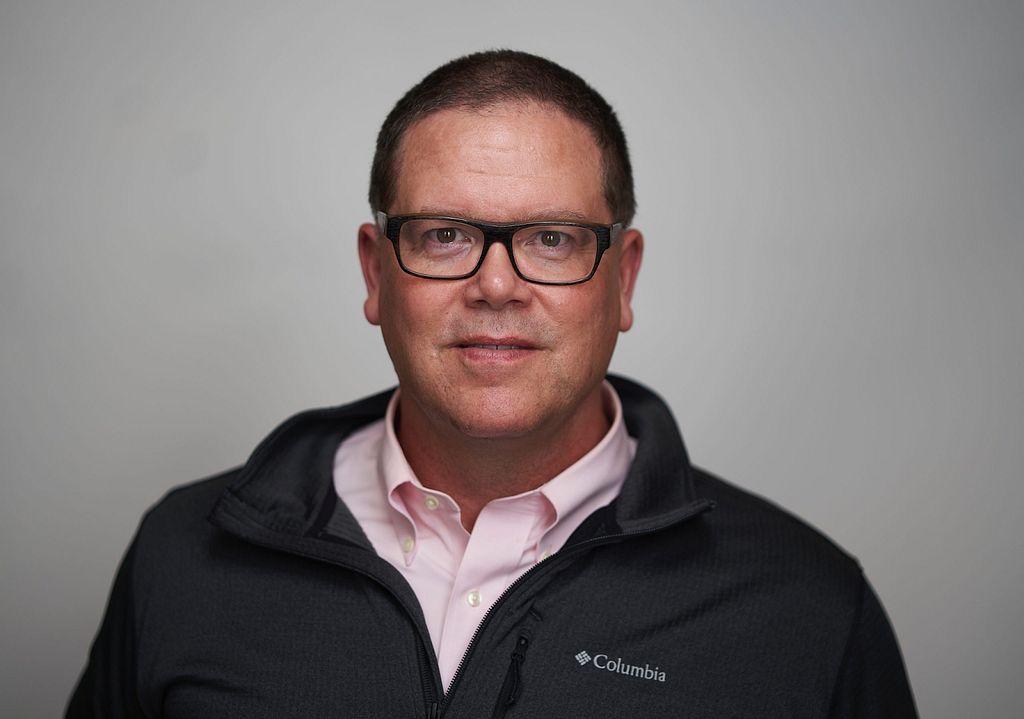
“With 10% growth, you have time to adjust. When you’re doing 100% year-over-year growth or 1000% total growth in 24 months, the growth outpaces the processes. In a situation like that, people’s character and culture are what really help you scale, because you won’t be able to keep up with the business processes. It comes down to people working collegially to solve the problems that pop up every day, all of which come from a good place: growth.”
I had the pleasure of talking with Tony Falco, COO at Hydrolix, a streaming data lake company and leader in real-time log analytics. The digital age has bred a new kind of pioneer. Among them stands Tony Falco, a man whose journey through the internet’s wild west and into its sophisticated future reads less like a tech executive’s resume and more like a rock-and-roll odyssey — a saga of innovation, high-stakes growth, and an unwavering belief in the human element. From the chaotic birth of the World Wide Web to the bleeding edge of AI and big data, Falco has been there, not just observing, but shaping the very infrastructure that underpins our connected lives.
Born into a Navy family, Falco’s childhood was a masterclass in adaptability. “My father was a Navy aviator, an enlisted aviator who, through hard work, was promoted to an officer,” Falco recalls, highlighting a powerful early role model. Constant relocation meant a relentless cycle of new beginnings, a skill that would prove invaluable. “We moved from place to place, so I loved throwing myself into new situations, getting into any town and making friends and a life for ourselves. That has served me well in the business world.” This early training in navigating uncharted territory set the stage for a career defined by embracing the unknown.
His academic path was a fascinating duality: programming and English. “It’s not as unusual as it used to be; programming was once much more of an engineering discipline,” he notes. Yet, for Falco, both disciplines spoke to a deeper analytical impulse. “Something appealed to me in both programming and literature around the analysis of intention and text. There’s something about composition, structure, and clarity.” This unique blend of logic and narrative would become a hallmark of his approach to the burgeoning internet.
His entry into the digital frontier was almost accidental, a testament to being in the right place at the right time with the right skillset. In 1993, while working at a D.C.-based Ralph Nader-founded nonprofit, he stumbled upon an opportunity. “They had lots of old Sun SPARC computers around because they were doing analytics for redlining and geospatial analytics, and they were also running web servers on them. I started putting up the websites for his organizations because nobody else wanted to.” From those humble beginnings, the internet exploded, and Falco was riding the wave. By 1997, he was supporting major brands with managed hosting, and in 1999, Akamai Technologies recruited him, none other than the founders Danny Lewin and Tom Leighton, to help build its go-to-market strategy. “From 1999 until after the IPO, I was embracing a vastly changing internet,” he says, painting a picture of a decade where the web transformed from simple HTML pages to a dynamic, globally cached behemoth.
This era at Akamai, where he served as VP of product management and technical services, saw revenues rocket from zero to $160 million annually, a baptism by fire that solidified his expertise in scaling and distributed systems. But the internet’s evolution continued, and Falco saw the next great challenge looming. “I was attracted to the core scaling problems that everybody faced: data.” Even with content delivery networks like Akamai, sluggish backends crippled growth. “If your backend was slow because you were using databases designed for college campuses and client-server models, you still couldn’t scale your business.”
This insight led him down a path focused on “highly scalable, distributed data infrastructure,” a journey that included founding one of the early NoSQL companies, Orchestrate, and later joining Silicon Valley Data Science as VP of product/innovation. This consulting firm, focused on machine learning and big data, was eventually acquired by Apple, becoming “a key part of their privacy and ad-serving group,” where, as Falco proudly states, “That team continues to do amazing work at Apple, fulfilling Apple’s promise of privacy.”
His current chapter brings him to Hydrolix, a company he knew through its founder, Marty Kagan, another Akamai alum. The growth at Hydrolix has been nothing short of meteoric. “Hydrolix has gone from four customers and $400,000 of revenue to, two years later, $56 million of revenue and 650 customers,” he exclaims. Such explosive expansion, he notes, “brings special challenges and thrills. You have to evolve… the growth outpaces the processes.” In these high-octane environments, Falco stresses, it’s the human element that truly scales: “People’s character and culture are what really help you scale because you’re not going to be able to keep ahead of the business processes.”
The Akamai connection runs deep at Hydrolix, not just through shared alumni but as a crucial partnership. “Akamai is our most important partner. We do a lot of reselling through them,” Falco explains, highlighting the full-circle nature of his career. “It’s amazing to go back and see the old faces that we worked with 25 years ago. It’s almost like a homecoming.”
Falco’s wisdom extends to the often-humorous side of high-stakes business. He recalls a memorable gaffe during a meeting with Lycos, an early Akamai customer. Distracted, he kept referring to “My Yahoo” instead of “My Lycos.” “The one thing you shouldn’t do is underscore that they’re doing a fast follow of their biggest competitor by calling their product by their competitor’s name,” he quips, admitting the lesson learned: “I really need to be present in the moment.”
For scaling companies, Falco champions clear communication and empowering leadership. “Silos develop fast,” he warns. His philosophy, gleaned from mentors like George Conrades and Tom Leighton, is about trust. “Great leaders set a clear top-level vision, empower people to pursue that vision the best way they can, and spend their time trying to stamp out silos.” He also rails against the common misconception that quality must drop with scale. “When you get to that 100th or 1,000th employee, the quality needs to go up,” he asserts. His strategy? “This maniacal focus on bringing somebody better than us onto the team with the next hire.”
Today, Hydrolix stands at the forefront of managing the internet’s colossal data footprint — the endless “log files” generated by every digital action. With data growth outpacing revenue for many companies, forcing them to “throw away data that might have valuable facts in it,” Hydrolix offers a platform “designed from the beginning to keep that data for years.” This foresight positions them uniquely for the AI era. “Now that we understand where the agentic workflows are coming into place, you can have an AI agent programmed to take an input, make an intelligent decision about it, and then take the next step in a workflow.” This translates into real-world impact, preventing problems before they hit users — a crucial service for clients like Fox and Paramount during massive live events like the Super Bowl and the Olympics. “Nobody wants to see customers on Twitter complaining about a bad viewing experience. That’s what we’re here to do.”
When it comes to AI and LLMs, Hydrolix takes an agnostic approach, empowering clients to “bring your own LLM.” “We don’t build our own LLMs right now; we know our place in the tech stack,” he clarifies, focusing on modular tools like anomaly detection and query assistants.
Beyond the zeroes and ones, Falco’s vision for the tech world is deeply humanistic. He speaks of ancient religions, kindness, and spreading joy. “When it comes to work, where we spend a lot of our time, I would encourage people to bring creativity, levity, humanity, and empathy.” It’s about changing the tenor, one corner at a time. “If I could change one corner of it, even just part of tech, it would be: start from a place of empathy, start from a place of understanding, and try to bring joy to the people you work with, even if it’s just a little humor.” For Falco, the greatest joy often lies in helping others “do the best work of their lives.” It’s a philosophy that has forged enduring connections. “I have people I worked with 25 years ago who still say they had some of their best experiences working with me.”
To follow Tony Falco’s impact is to follow the collective achievements of Hydrolix. “The best way to follow me is to follow the aggregate accomplishments of this team,” he states, emphasizing the collaborative spirit. And if you’re looking to engage with Hydrolix? He offers a playful challenge: “If people want to get in touch with Hydrolix, you’d better have a lot of data, because we solve that problem. So, bring your data.” Tony Falco, the seasoned architect of the digital backbone, continues to build not just systems but cultures, blending the precision of programming with the narrative power of human connection, all while riding the relentless current of technological evolution.
Yitzi: Tony, it’s a delight and an honor to meet you. Before we dive in, our readers would love to learn about your personal origin story. Can you share with us the story of your childhood — how you grew up — and the seeds for all the great things that have come since then?
Tony: That’s a lot to live up to. I grew up in a Navy family. My father was a Navy aviator, an enlisted aviator who, through hard work, was promoted to an officer. I had a great role model as a child. We moved from place to place, so I loved throwing myself into new situations, getting into any town, and making friends and a life for ourselves. That’s served me well in the business world.
In college, I studied programming and English. It’s not as unusual as it used to be; programming was once much more of an engineering discipline. But I did both, and something about the analysis of intention and text appealed to me in both programming and literature. There’s something about composition, structure, and clarity. I got started right as the internet was coming into focus. I was very fortunate to work at a nonprofit in Washington, D.C., one of the many that Ralph Nader founded. That provided me with an opportunity… they had lots of old Sun SPARC computers around because they were doing analytics for redlining and geospatial analytics, and they were also running web servers on them. I started putting up the websites for his organizations because no one else would.
Things moved so quickly that from putting out my first website in 1993, I was supporting major brands with managed hosting by 1997. Then, in 1999, I was hired by Akamai. Danny Lewin and Tom Leighton reached out to help them build their go-to-market. From 1999 until after the IPO, I was embracing a vastly changing internet. In 10 years, it changed from simple websites with just HTML to dynamic websites cached all over the world. It was a fascinating time.
From there, I was drawn to the core scaling problems everyone faced: data. You could cache all your content worldwide using a content delivery network like Akamai. Still, if your back end was slow because you were using databases designed for college campuses and client-server models, you still couldn’t scale your business. Since then, I’ve been focused on highly scalable, distributed data infrastructure. I founded one of the early NoSQL companies and worked with companies like Nike and Zebra Technologies via Silicon Valley Data Science, a data science consulting company. What’s interesting to your readers is that Apple acquired it and made it a key part of its privacy and ad-serving group. That team continues to do fantastic work at Apple, fulfilling Apple’s promise of privacy.
Then I knew Marty Kagan, the founder of Hydrolix, from my earlier days. And I’m here. In the time that I’ve been here, Hydrolix has gone from four customers and $400,000 of revenue to, two years later, $56 million of revenue and 650 customers. It has been tremendous growth and very exciting.
Yitzi: Unbelievable. In two years? That’s an incredible order of magnitude multiple.
Tony: It is indeed. As with Akamai, where we had similar growth, it brings special challenges and thrills. You have to evolve. With 10% growth, you have time to adjust. When you’re doing 100% year-over-year growth or 1000% total growth in 24 months, the growth outpaces the processes. In a situation like that, people’s character and culture are what really help you scale, because you won’t be able to keep up with the business processes. It comes down to people working collegially to solve the problems that pop up every day, all of which come from a good place: growth.
Yitzi: Is Akamai connected to Hydrolix? What’s the relationship?
Tony: It’s connected in two critical ways. First, Marty, myself, and several people on the team, probably 5% of the company, now, though it used to be a higher percentage, have all worked at Akamai at one point or another. Marty and I were there in 1999 and 2000. So we trace our origins to that early distributed data platform. But also, Akamai is our most important partner. We do a lot of reselling through them, and they are a tremendous source not just of customers and growth, but also of market clout. Our association with Akamai has helped us forge partnerships with other big brands. I don’t think any of us who were there in the early days thought we’d be working this closely with Akamai again, but there you have it. If you wait long enough, life will give you some delights. Many of the people who were there when we were there stayed with Akamai because of its culture. So you have people like Bobby Blumofe, Eric Nygard, and, of course, Tom Leighton, who is still there. It’s fantastic to go back and see the old faces that we worked with 25 years ago. It’s almost like a homecoming. It is a really gratifying feeling.
Yitzi: It’s been said that sometimes our mistakes can be our greatest teachers. Do you have a story about a humorous mistake you made and the lesson you learned from it?
Tony: Yes. I tend to think a lot, and sometimes I’m processing, so I’m a step behind and end up saying the wrong thing. I’ll give you a concrete example. Back in the day, Yahoo had a service called My Yahoo. It was personalization brought to you by Yahoo. Yahoo was an early, very influential partner of Akamai. Lycos, which was out in suburban Boston, was also a customer. I went with Tom Leighton to Lycos to talk about personalization for My Lycos. I was distracted, not in the moment, and I kept saying “My Yahoo” in a meeting with Lycos. The one thing you shouldn’t do is underscore that they’re doing a fast follow-up of their biggest competitor by calling their product by their competitor’s name.
Tom laughed about it; he was a bit embarrassed. The Lycos team thought it was funny the first couple of times because they saw how embarrassed I was. It taught me that I really need to be present in the moment. You can always think about the next thing you have to do, especially in a high-pressure situation, but that was a humorous version of the mistakes you make when you’re on autopilot.
Yitzi: You have a lot of experience helping scale companies from the early stage to major growth milestones. Based on your experience, can you share some of the key principles to help a company scale as you have done?
Tony: I’ll tell you what I’ve learned from great leaders like George Conrades, Tom Leighton, and Danny Lewin at Akamai, and from Marty, who has done a great job here: communication is key. Silos develop fast. Think about how your work happens. You have a set group of people you talk to every day, and you get into a pattern. What happens if that team triples over six months? Talking to 15 people on your team doesn’t scale. Then, all of a sudden, you don’t have time to talk to people in other groups, and silos develop.
So, a culture of clear communication and being able to start from “this is our mission” and let people organize how they want to execute that mission without needing day-to-day management is absolutely essential to scaling. If you are in leadership and you’re sitting on top of an organization that’s doubled in size, and you think the management style you used at 30 people is going to work at 60, or at 60 people is going to work at 100, you’re wrong. That’s where people get into trouble. It’s really about clear communication, trusting your next tier of leaders, and working hard to eliminate silos. We have people in Asia Pacific, India, EMEA, the UAE, North America, and South America. That could present challenges if improperly executed. In fact, it makes us stronger, but it takes discipline to communicate in a fully distributed team. Bringing it all back, what I’ve learned is that great leaders set a clear top-level vision, empower people to pursue that vision the best way they can, and spend their time trying to stamp out silos.

Yitzi: What are some of the common mistakes companies make when they try to scale?
Tony: The most common mistake is the belief that you cannot maintain quality once you reach a certain number of employees. That has always befuddled me. It’s when you reach the 100th or 1,000th employee that quality needs to go up. In fact, when you’ve reached that level, you’ve got a reason for the best people to work for you because you’ve shown success. Because you’re pressed to hire and time is wasting, people can convince themselves they should compromise on their hires.
One of the things I’m so proud of with the teams I’ve managed at Hydrolix is that I’ve been able to turn over hiring to them. I’m largely involved at the end, but we have this maniacal focus on bringing somebody better than us onto the team with the next hire. That is critical because you’re bringing in people who can solve problems the team couldn’t. If you make compromises, you might never solve key problems or have the key talent the team needs. It’s always been a wonder to see new hires amplify the abilities of the existing team because we focused on hiring for quality. That is easily the biggest thing for me. When companies say, “Well, now we’re at 100 people, we can’t get the same quality,” that’s just not true. You have to fight against that.
Yitzi: Tell us about the most exciting projects that Hydrolix is working on now.
Tony: Hydrolix kept its powder dry, so to speak, when it came to AI and LLMs. When people were rushing out with “AI-powered this” and sprinkling AI on their messaging, we were doing research. We wanted to see what matured and where to place our bets. One of our superpowers is that, unlike a lot of other storage solutions, everything you do on the internet generates a log file. Whether you visit a website, watch a video, or send an email, you create log files. When you access a server or other services that talk to each other, they generate log files. It’s all the facts about what’s taking place millisecond by millisecond on the internet. That’s an enormous amount of data.
That data has grown 30% year over year, such that, according to Gartner, companies that were spending $50,000 with Splunk in 2010 are now spending $10 million a year with Splunk, because the data growth has been so enormous. This has forced people to throw away data and to compromise. They can’t afford to keep all that data; their data growth is outstripping their revenue growth. So they’ve had to adopt what are called “best practices,” but are really just ways to throw away data that might contain valuable facts. Nobody thought five years ago that throwing away data about who visits your website after 30 days would cost much. But now, in the age of AI, where you can build models about user behavior, bot detection, and make far more nuanced product recommendations, that data seems more valuable.
What we offer is a platform designed from the beginning to retain that data for years. Now we have a leg up on AI because we can help our partners and customers build products that are much better trained. Now that we understand where the agentic workflows are being implemented, you can program an AI agent to take an input, make an intelligent decision, and then take the next step in a workflow. For example, you get an error from a service provider that people in Raleigh, North Carolina, are experiencing poor live streaming during one of your events. In the old days, you’d have to diagnose it, write an email, wait for a response, and so on, if you could even spot it. In our world, with more data, we are training AI to spot more nuanced problems before they become critical. We can then use agentic workflows to generate messages quickly so that the average operator — the person running the live event — is not fighting fires the entire time.
Fox uses us for the Super Bowl, ABC uses us for the Olympics, and Paramount uses us for the Super Bowl. We’ve done a bunch of Black Friday events. In all those cases, being able to prevent problems before they reach users allowed them to have smooth, well-reviewed events, unlike some live events that haven’t gone smoothly. Nobody wants to see customers on Twitter complaining about a bad viewing experience. That’s what we’re here to do at a large scale across all our customers. AI will only increase our ability to detect and remediate problems that didn’t exist before. And unlike other systems, we have the data to do it.
Yitzi: Do you have data centers? I know that a lot of data centers are being built because of the growth of AI. Is that part of your industry?
Tony: We don’t have data centers ourselves. We’re more of a software company, like Salesforce, Snowflake, or Slack. We’re the software that runs on top of infrastructure. We run on Akamai’s connected cloud, which is their fantastic new offering for cloud computing, analogous to AWS and Google Cloud Platform (GCP). We tend to run on the biggest “hyperscalers” or rather, the largest clouds. But we are also developing partnerships with some up-and-coming clouds. We use cloud data centers and points of presence, and we’ll partner wherever people need the software.
Yitzi: As you know, yesterday there was this huge AWS outage. I’m sure you’re familiar. Does your company prevent that, or would your company help prevent that?
Tony: That was more on the infrastructure, within Amazon’s data centers. Where we help in a situation like that, especially for the biggest properties running multiple CDNs, is identifying where they could route traffic onto another CDN if they had one or wanted to get one. We could help them make a better decision. A company like Amazon needs to build its own tools. They’re using us for some of their solutions, but at the core of their business, they’re operating at a scale we can only imagine. So I approach that answer with a lot of humility. What we can do, though, is give their customers better visibility into their options when something like that happens.
Yitzi: You mentioned being able to store information so that people can train data about their users. Do you work with LLMs? What exactly is your relationship with AI and LLMs?
Tony: With LLMs, our approach is “bring your own LLM.” Many companies have made a choice: they’re going to use either Anthropic or ChatGPT. They’ve decided on the models they’ll use. We build tools like anomaly detection and a query assistant. As we expand our agentic workflows, we’re building modular tools. If you have a contract, an economic relationship, and a preferred security relationship with a specific LLM, we will allow you to use that LLM. We don’t build our own LLMs right now; we know our place in the tech stack. We choose to be agnostic, flexible, and accommodating.
Now, sometimes people say, “Just give me the default,” and that’s fine. We value our relationship with AWS; Bedrock and some of their other technologies are quite interesting to us. Akamai is developing its own service that we’ll adopt. In specific cases, if we’re partnering with AWS and they want us to use Bedrock, we’ll use it. When we partner with Akamai and they want us to use their LLM service, we’ll use it and bundle it. But at the end of the day, our ultimate goal is to retain flexibility for our clients.
Yitzi: This is our final aspirational question. Tony, because of your amazing work and the platform you’ve built, you’re a person of great influence. If you could spread an idea or inspire a movement that would bring the most amount of good to the most amount of people, what would that be?
Tony: Gosh, I would never claim to be any of that, but there’s really nothing that doesn’t come from ancient religions that I would change, right? Being kind to others, spreading joy. But when it comes to work, where we spend a lot of our time, I encourage people to bring creativity, levity, humanity, and empathy. It changes the tenor. I would never try to have a movement that changed the entire world, but if I could change one corner of it, even just part of tech, it would be: start from a place of empathy, start from a place of understanding, and try to bring joy to the people you work with, even if it’s just a little humor.
Oftentimes, the greatest joy you can spread is by helping somebody else, whether it’s through charity or helping somebody do the best work of their lives. I have people I worked with 25 years ago who still say they had some of their best experiences working with me because it was the most important work they’d done and because they felt they were bringing their authentic selves to the company. That would likely start a movement. It could get some really good people to join us and work with Hydrolix. But it’s very kind of you to give me a chance even to mull a question like that. I should have gone for something bigger, like universal space travel with a basic income. But all I can think of is: be nice to people, show empathy, help them do their best work, and it’ll always come back to you.
Yitzi: Tony, how can our readers continue to follow your work? How can they get more involved with Hydrolix and support your work?
Tony: The way to support my work is to engage with the work that all the people on the teams do. We have great writers. We have Abby Ross, who helped arrange this call and is our awesome Head of Corporate Communications and Partner Marketing. We have Franz Knupfer, who’s our Director of Content. We have Marty Kagan, our Founder. The best way to follow me is to follow the aggregate accomplishments of this team. We’re always looking for talented people, customers, and meaningful engagement. If you’re on LinkedIn and you found any of this interesting, reach out to Hydrolix, leave a comment, and a real person engaged with the business will get back to you. But mostly, if people want to get in touch with Hydrolix, you’d better have a lot of data, because we solve that problem. So, bring your data.
Yitzi: Tony, it’s been a delight to meet you. I wish you continued success and good health, and I hope we can do this again next year.
Tony: Thank you for your kindness in your questions, and good luck with your endeavors. Take care.
Tony Falco on Building the Internet’s Backbone, Scaling Hydrolix to $56M, and Why Empathy Is Tech’s… was originally published in Authority Magazine on Medium, where people are continuing the conversation by highlighting and responding to this story.