Total Health: Actor and Martial Artist Noah Fleder On How We Can Optimize Our Mental, Physical, Emotional, & Spiritual Wellbeing
Always start with the basics. The very first and most important basic is the same whether you’re acting, doing martial arts, yoga, or meditation. And that is just understanding how to control your breath. With breath work you don’t need to know much past just the basics. Of course it goes more in depth, but just learn how to control your basic breathing, because there are two things that we absolutely must have as human beings, and that’s oxygen and water. If we’re able to control the intake of oxygen every day in just a meditative state, then being in control of our breath through all situations can open a wider world to control your anxiety, your mind, and everything.
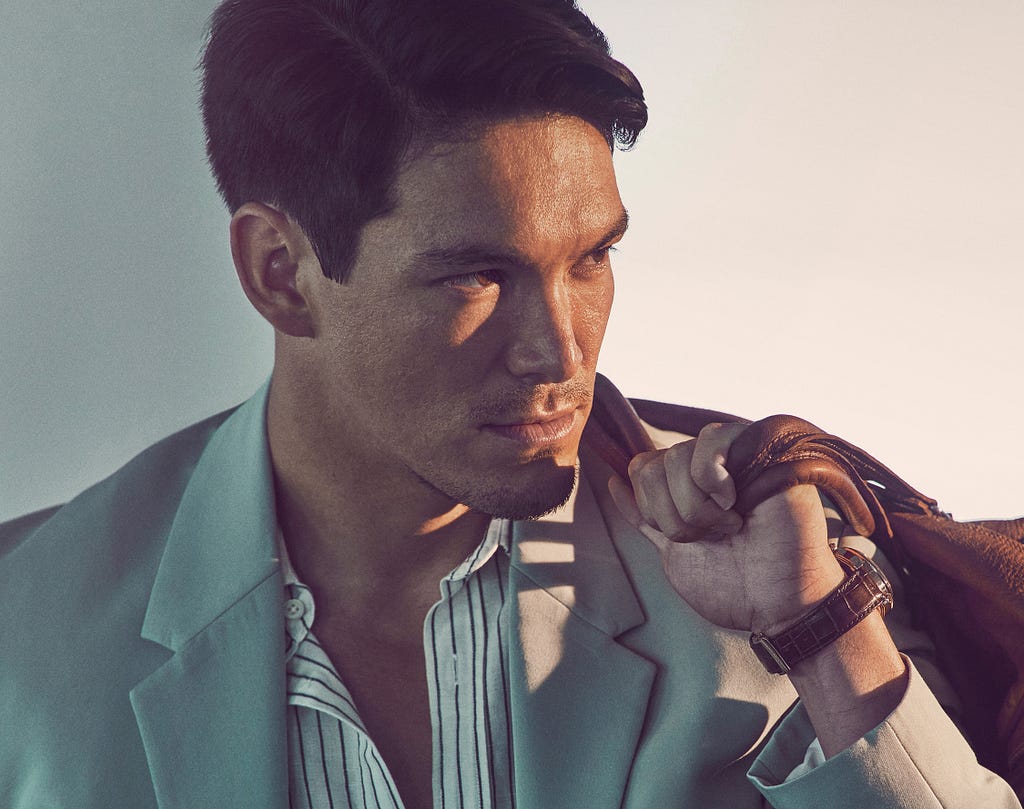
Often when we refer to wellness, we assume that we are talking about physical wellbeing. But one can be physically very healthy but still be unwell, emotionally or mentally. What are the steps we can take to cultivate optimal wellness in all areas of our life; to develop Mental, Physical, Emotional, & Spiritual Wellbeing? As a part of our series about “How We Can Cultivate Our Mental, Physical, Emotional, & Spiritual Wellbeing”, we had the pleasure of interviewing Noah Fleder. Noah is an actor with an extraordinary background in martial arts who recectly starred as Fang opposite Michael Jai White, La La Anthony, and Mike Epps in the action film Trouble Man (2025). Founder of the independent film company Osu Films, Noah brings authentic, high-level intensity to every role in film, stage, or in games, where he is the face of Kenshi in the newest installment of the iconic Mortal Kombat universe. As a 3rd degree blackbelt under the legendary Simon Rhee, Noah has trained over 20 different systems of martial arts which reflects his mission to fuse real martial arts with cinematic storytelling to inspire others to follow their dreams and develop their talent.
Thank you so much for joining us in this interview series! Before we dive into the main focus of our interview, our readers would love to “get to know you” a bit better. Can you tell us a bit about your childhood backstory?
Well, it’s quite interesting. I actually grew up hating martial arts, because my parents forced me to into it at four years old. But I was also a very rebellious kid — black stallion energy — if you told me to go right, I would immediately spring left. So at the beginning, martial arts really wasn’t about the physicality or fighting, it was about learning discipline, about learning to be able to fall in line, and to have a structure every day and maintain that structure. It wasn’t until my teenage years that I started to really enjoy it. So, I always credit my successes now to good parents and good teachers.
What or who inspired you to pursue your career? We’d love to hear the story.
First off, both of my parents. My mom was the enforcer in my family. She made everything happen. She made sure I got to every martial arts practice growing up. She said, “Noah, I don’t know what you want to do in this life, but whatever it is, dream as big as possible.” And so, a huge part of how I got to grow up was being a dreamer. I was allowed to dream where a lot of people are not.
My dad really wanted me to be a martial artist in the film industry. He had old connections and was an original student of Simon Reid, a very famous stuntman and coordinator who had a successful taekwondo and stunt school in Hollywood. He put me into the Army’s Reserve Officer’s Training Corps as a kid and I got a full ride scholarship to UCLA because of it. I got my Eagle Scout and was also in a junior navy program called Naval Cadets, because my dad wanted me to possibly become a Navy Seal. One of the junior military programs I completed at 15 was a very intense program led by Navy Seals and Marines on a base in San Luis Obispo. There were over 360 people that joined, but only 16 of us graduated. It was one of the hardest things I’ve ever had to do. But by being in an environment that forced me to face realities, and by putting me under constant pressure, I was able to find real answers of who I am and who I wanted to become. What I loved about the military exercises was the camaraderie. However, I didn’t want to join the military because if I was in a combat situation, I’d have to do something that might be against my morals or values, and I’d have to live with that for the rest of my life. I thought, there has to be a better way of living. So, it wasn’t until about 15 that I made a definitive decision on what I wanted to do. I’m pretty good with martial arts, maybe I can be better. And then I realized, I’ve got something very unique in the martial arts: When I speak, people listen. And I recognized that very young. Then, I discovered a Bruce Lee film and that was the moment where I thought: I don’t know what job he has, but whatever he’s doing, I want to do that. I found that resolve for myself through the harsh environments of the training, junior military programs, and discovering Bruce Lee through his films and books. I thought: This is the type of man I want to become one day. After that, I never looked back.
None of us can achieve success without some help along the way. Was there a particular person who you feel gave you the most help or encouragement to be who you are today? Can you share a story about that?
There are so many people that have helped me. The first person that comes to mind was one of my original instructors, Mike Wise. He has since passed away, but he was one of my first real martial arts instructors. While I had other instructors in the film industry that taught me the beauty of kicking or understanding how to make fight scenes beautiful on camera, Mike taught me that the value of martial artists was to be a good person, and that every culture, every ethnicity, and every religion across the world, understands two things: Love, and War. And he believes that martial arts is the practice of love and war. I also learned the value of money from him, the relationship that I should have with other students and teachers, and most importantly to be a student of life. Mike was a decorated instructor at the Inosanto Academy of Martial Arts, owned by Dan Inosanto who is one of three people that Bruce Lee trained to allow them to teach his martial arts directly. We had a lot of conversations about Sifu Bruce Lee’s philosophies as a martial artist and how it’s an art form of life. And then I started learning how that’s the same exact approach that actors have for acting.
Can you share the funniest or most interesting mistake that occurred to you in the course of your career? What lesson or take away did you learn from that?
I have a really good one. I was performing Liu Kang’s famous Wing Chun chain punches on camera on the set of Mortal Kombat One in the famous NetherRealm Studios, and I’m in my head thinking about how many legendary martial artists have performed here. So, I wanted to make sure that I showed up with 120% every day. But it got to the point where they were telling me, Your punches are breaking the frame rates that we can capture. We can’t get all your punches because they’re too fast. They had over 150 cameras in there but kept saying: The cameras can’t pick up the speed of your punches. We need you to slow them down so that way we can see them fluidly. I was so hyped up that I was doing something like four punches per second but the cameras were only able to smoothly show two per second, so it was too much of a blur to put it in game like that. Someone can block during a combo in game and disrupt it, so they have to show the actual beats and the breakdowns of each strike, and by going too fast the players wouldn’t even be able to see what was going on. I asked them if this was a normal problem with performers and Carlos Pesina, the action director said, “I think you are the fastest martial artist we’ve ever had in the studio.” and I said, “Holy f — -.”
Is there a particular book that made a significant impact on you? Can you share a story or explain why it resonated with you so much?
There are a few that come to mind right away. “The Book of Five Rings” by Miyamoto Musashi, one of the most famous legendary samurai that ever lived. Bruce Lee’s “Tao of Jeet Kune Do” shaped my entire teenage years into my career. And then there is another book that I grew up reading that I still pick up and reread from time to time called “The Eight Pillars of Greek Wisdom.” So, something from both western and eastern philosophy which I took a great interest in growing up. And fortunately, it blends beautifully with acting because it’s about psychology and the study of people. I think I read “The Eight Pillars of Greek Wisdom” when I was around fifteen and the first story I read was of Icarus, and how he would fly too close to the sun or too low to the ocean. His story is about finding balance and is still relevant to me today when I struggle balancing my life. It helps me remember not to go too extreme and fly too close to the Sun and get burned, or be lazy and fly too low and get dragged down. I’m always very ambitious and want to do it all, so I have to remember that sometimes the right place is slow down or take a rest.
Can you share your favorite “Life Lesson Quote”? Why does that resonate with you so much?
I don’t know if I’ll get it exact, but there’s a scene in Bruce Lee’s movie “Enter the Dragon” where he’s giving a speech to a student about their training, and they throw this very simple basic kick and he tells them, “No, it’s wrong. No, it’s wrong. No, it’s wrong.” And then he finally tells the student that he needs more emotional content and to try again. So as a teenager I felt like I understood every part of the movie but that. It took me years to understand, and by twenty I realized he was talking about intention. We need intention in our words; we need intention in our movement. We need intention in every scene and every step of how we live our lives. Now that I understand intention, in physicality and in speech, it’s very important. Having intention will separate you from others.
What are some of the most interesting or exciting projects you are working on now? How do you think that might help people?
I love helping people by giving them enjoyment. And if you’ve enjoyed “Trouble Man” with Michael Jai White and myself, he is currently writing the sequel and you’ll be seeing a lot more of me in that one.
OK, thank you for all of that. Let’s now shift to the core focus of our interview. In this interview series we’d like to discuss cultivating wellness habits in four areas of our lives: Mental wellness, Physical wellness, Emotional wellness, & Spiritual wellness. Let’s dive deeper into these together. Based on your research or experience, can you share with our readers three good habits that can lead to optimum mental wellness?
A lot of what martial arts teaches is what I enjoy the most about it. Martial arts doesn’t live in the past, it doesn’t live in the future, it’s the practice of the present. A lot of people get stuck in their past or only thinking of the future. So by meditating, even practicing martial arts forms, which is a physical meditative state, it can help us train our minds to stay in the present. That’s one of the favorite things I do for myself.
Do you have a specific type of meditation practice or Yoga practice that you have found helpful? We’d love to hear about it.
Always start with the basics. The very first and most important basic is the same whether you’re acting, doing martial arts, yoga, or meditation. And that is just understanding how to control your breath. With breath work you don’t need to know much past just the basics. Of course it goes more in depth, but just learn how to control your basic breathing, because there are two things that we absolutely must have as human beings, and that’s oxygen and water. If we’re able to control the intake of oxygen every day in just a meditative state, then being in control of our breath through all situations can open a wider world to control your anxiety, your mind, and everything.
Thank you for that. Can you share three good habits that can lead to optimum physical wellness? Please share a story or example for each.
I always say, stretch plenty, kick high and lift heavy. I think stretching is the most underutilized exercise that most people don’t value. Think about what Bruce Lee said to be like water, and the idea that water is flexible, it’s nimble, it’s shape-shifting to the environment, not just emotionally but physically, and being able to make sure that we’re flexible is such an underutilized aspect that can enhance our lives.
I think staying healthy might be the bare minimum. Ask yourself, how do you become the absolute best version of yourself possible? That’s what I want you to think about and start working towards.
My habits for my physical fitness derive from being an athlete. I’m always looking for optimal performance and always think: How do I be as flexible as possible? How do I be as powerful or as fast as possible? Taking care of your recovery is also extremely important. So, I am big on taking all the supplements necessary for body health and recovery along with a well-balanced and healthy diet. And finally, find a way to train every single day so that it becomes part of your life.
Do you have any particular thoughts about healthy eating? We all know that it’s important to eat more vegetables, eat less sugar, etc. But while we know it intellectually, it’s often difficult to put it into practice and make it a part of our daily habits. In your opinion what are the main blockages that prevent us from taking the information that we all know, and integrating it into our lives?
I think healthy eating just like anything else, it comes with discipline. I think a lot of people have been eating wrong for such a long time. It’s very normal for people to go to eat fast-food multiple times a week because it’s convenient. You can get your calories in, but it changes your gut nutrition and it changes the chemistry of your body and your taste buds as well. You can actually enjoy if you eat a salad too. If you have a salad every day for at least a week, you’re going to start to enjoy it and your body is going to feel much better. As athletes, we have the perspective that food is our fuel, the gasoline that we put in our tank. Now, don’t get me wrong, I absolutely love Chick-fil-A. But that’s a once a month or longer type of thing. I cannot let that be my daily habit otherwise I’m putting junk fuel into the engine. Would you put junk gas into a Ferrari? I want you to start thinking that your body is a Ferrari and give it the right gas and maintain it. If you do, you will be a Ferrari. If you build yourself as a sports car and think about performance, you’re going to be so much further along than most people are. Staying healthy is the minimum requirement, otherwise your performance will be sluggish. You’ll be slow. You won’t be explosive. You won’t be able to have the endurance to give you everything you want.
Can you share three good habits that can lead to optimum emotional wellness? Please share a story or example for each.
I’m very lucky that I have a like-minded group of students and friends. Having close friends to talk about how you feel is the most underrated thing you can do for yourself. If you don’t have that, I highly recommend having a therapist. You need someone you can bounce your feelings off of and talk about where you are at in life so you can reflect on what is going good, and what needs work. One of the most important questions that I always ask myself is, Why do I feel the way that I do? It’s so valuable to have a safe place to vent and be able to talk about anything with someone else. When you ask why to everything, hopefully you will be able to find the answer that helps you resolve what is bothering you.
And then separately, spending time alone is just as valuable as spending time with people you can talk with. Ask yourself Why am I sad? Why am I overly happy? These are important questions that lead to self-discovery of who you really are.
Do you have any particular thoughts about the power of smiling to improve emotional wellness? We’d love to hear it.
That’s such a great question. As you know, I grew up training so much. I’d show up to one of those difficult days and I’d always say I’m tired. I’m tired. And my dad would not slap me in a violent way, but like slap me and tell me Stop saying you’re tired. And I’m like, You’re making me train four hours a day and I’m 10 years old. I’m tired. And I didn’t understand why he kept saying not to say that I’m tired. And then he finally told me, Your brain is unbelievably powerful. It’s the strongest muscle in your body. When you say that, you’re not tapping into your full potential and whatever you say, you will become. And he taught this to me, because the Navy SEAL background that I was being trained into was about becoming drown proof. In SEAL training they have to do drills in pools of ice water and become drown proof. So, to combat the cold, my dad taught me that you need to trick your mind into thinking that you’re hot, and that it’s completely mental. There were times where I showed up on a film or game set with feeling like my life was falling apart, but I needed to be professional, and there are people that look up to me, and so if I just keep my mouth shut and smile, then everything would go well and I’d actually start to feel better and realize that things really aren’t so bad.
Finally, can you share some good habits that can lead to optimum spiritual wellness? Please share a story or example for each.
You need to incorporate three elements as a spiritual practice, the physical, mental, and the emotional. When you’re well balanced, it becomes a level of enlightenment, and you can handle anything in all different areas of your life.
For my spiritual practice, I also have a relationship with God. Some people do and some people don’t, but when I was young, the most important thing for me was about finding my life purpose. I don’t know why I was so compelled to, but I really appealed to my inner-self and to God to understand why I am on this planet. I couldn’t accept being born not to have to do anything. And I couldn’t stand the thought of not achieving or becoming something important and giving back what I learned to others. I also learned through asking God about myself and asking why, again and again. Why am I here? Finding what we call in Japanese philosophy as ikigai. Ikigai is a Japanese philosophy that teaches if you can find what you love, what you’re good at, what helps the community, and how to make money off of it, then you found your life purpose. I didn’t realize I was asking all those questions to myself at a very young age and I think that is an wonderful spiritual approach for how to live life.
Do you have any particular thoughts about how being “in nature” can help us to cultivate spiritual wellness?
I think people could use a lot more nature in their lives. It’s absolutely important to be able to disconnect from the modern world and get outside with fresh air. Be off of your phone and with just yourself or in good company and remind yourself where the Earth really came from, where it started. There’s something primal about it and there’s something re- energizing and I think if you have the opportunity to travel, even locally, you should do that. For myself, I’ve grown up traveling all corners of the world. Being out in nature in different parts of the world has been one of my favorite things to do as a martial artist. To train and film projects everywhere really re-energizes myself and my entire crew.
Ok, we are nearly done. You are a person of great influence. If you could inspire a movement that would bring the most amount of good for the greatest number of people, what would that be? You never know what your idea can trigger.
The one thing I want to say probably sounds bad, but I always have said that if everyone has been punched in the face once, the world would be a better place. Sometimes literally, and sometimes as a metaphor. What I mean by that is, you can tell which people didn’t have discipline growing up and have never faced real world consequences for their actions. And that’s one of the reasons that I think it’s really important for people to enroll into a martial arts practice, because very quickly it lets you know if you are right or you’re wrong — within seconds — and hopefully, in a good and healthy environment that will help you learn, Oh I shouldn’t do that again. It’ll help control the masculine or feminine energy within yourself.
We are very blessed that some of the biggest names in Business, VC funding, Sports, and Entertainment read this column. Is there a person in the world, or in the US, whom you would love to have a private breakfast or lunch with, and why? He or she might just see this, especially if we both tag them 🙂
I believe it’s extremely important to stay stubborn to your vision while also remaining an empty cup for people who are better at their job than you to teach you what they know. As a performer and as an artist, I know what I want to say and how, but when it comes to financing my own projects as an entrepreneur and pushing the envelope, I think it’s very important to make sure that I stay open minded, and I would love to learn from people that are more successful in this area than I am. There’s just a huge list of people that have gone out and chased their dreams, and a lot of them are unknown billionaires or multimillionaires that aren’t in the public spotlight but are extremely successful. I could absolutely learn so much from them. We have our own production company and I have my own projects which I would love help getting financed. So, I would be more than happy to sit down with someone accomplished and learn how to not just make a successful film, but to make a successful business and franchise of my projects.
However, I would just love to have lunch with Michael Jordan, Conor McGregor, and Steven Spielberg. But if there was a genie in a bottle, having Bruce Lee sit down with me for breakfast would be insane.
How can our readers further follow your work online?
The best way to follow me is on Instagram. I post pretty much daily. https://www.instagram.com/noah_fleder
Thank you for these really excellent insights, and we greatly appreciate the time you spent with this. We wish you continued success.
Total Health: Actor and Martial Artist Noah Fleder On How We Can Optimize Our Mental, Physical… was originally published in Authority Magazine on Medium, where people are continuing the conversation by highlighting and responding to this story.