
Tra’Renee Reflects on 35 Years in Media, Building a Legacy in Portland, and Her Mission to “Be the Light”

“I believe I’m put on this earth to be a light in the darkness. And if I can help other people find their light — if they don’t already have it or aren’t shining it as brightly as they can, or if they’re in places where their light is being dimmed — I want to help get them out of that.”
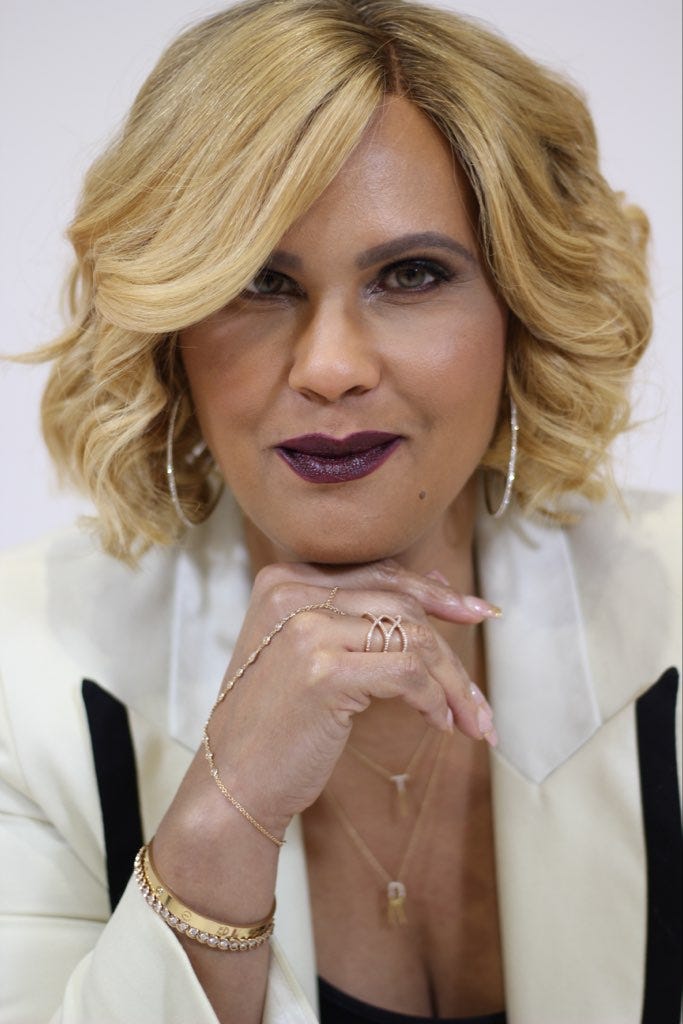
I had the pleasure of talking with Tra’Renee. Tra’Renee didn’t initially set out to become one of the most recognizable media figures in the Pacific Northwest. But over three decades later, the radio host, television producer, and community advocate has carved out a singular space in American media, blending sharp cultural insight with an enduring presence both on and off the air.
Known as “The Face and Voice of Portland,” Tra’Renee is the only African American woman in the Portland, Oregon metro region to have hosted and executive produced her own television show. She’s also the only Black radio host in greater Portland with the longest on-air tenure, a presence that spans over 30 years and some of the country’s biggest media markets, including Los Angeles, San Francisco, and New York.
In Portland, where she has lived for more than two decades, she’s a familiar voice on JAM’N 107.5 FM, hosting the top-rated midday slot on iHeartRadio weekdays from 10 a.m. to 2 p.m. She has become a staple of the city’s cultural and civic life, offering a rare combination of charisma, accessibility, and longevity in a region where media representation remains uneven.
Her current television series, Situations & Conversations with Tra’Renee, now in its fifth season, is a blend of lifestyle programming and community affairs, featuring guests ranging from former Portland Trail Blazers president Larry Miller to local drag legend Poison Waters. The series recently expanded to a full-year, 52-episode slate, now airing Sundays at noon on Portland’s CW (KRCW), as well as streaming on the KOIN+ app and multiple social platforms.
A native of San Francisco born in 1973, Tra’Renee’s early life was shaped by cultural contradictions and questions of identity. She attended Catholic schools despite not being Catholic and frequently found herself navigating assumptions about her racial background. “People would come up and ask, ‘What are you?’” she recalled in a recent interview. “And I’d say, ‘I’m Black.’ And they’d say, ‘No, you’re not.’” Her mother, a dark-skinned woman from Detroit, and her father, a light-skinned man from the South, provided a home life that didn’t align with the narratives others tried to impose.
Those experiences helped shape a career that would go on to center marginalized voices, amplify community issues, and offer both light-hearted and difficult conversations space to breathe. Tra’Renee earned a bachelor’s degree in political science and psychology from Loyola Marymount University and later pursued a Master of Social Work at USC. She became a licensed mental health professional, served in child welfare services, and worked as a therapist and domestic violence advocate before turning to media full time.
Her entry into radio was unplanned. A chance encounter at a Los Angeles nightclub with local radio personality Diana Steele led to an internship at 92.3 The Beat, one of the city’s most influential urban stations at the time. “I never left,” Tra’Renee said. From intern to street team to overnight host, she worked her way up while juggling social work during the day — a schedule so demanding that it eventually sent her to the hospital. “The doctor said, ‘You have to choose.’” A job offer from San Francisco’s KMEL arrived the same week, and with it, her decision to pivot fully into broadcasting.
Since then, her career has spanned market after market, each move marked by a steady rise and an expanding vision. In Portland, she hosted Afternoon Live on KATU-TV from 2016 to 2020, making history as the only African American woman to lead a television talk show in the state at the time. She transitioned into independent production soon after, founding Tra’Renee Media, where she now develops a range of media projects. Her production company is guided by what she calls the “Five E’s”: elevate, educate, empower, enlighten, and entertain — a framework rooted as much in her background in social work as in her media sensibilities. That mission has earned her an Emmy for Outstanding Program Host, a Telly Award for excellence in broadcasting, the PDX Hip Hop Week Trailblazer award, and IMPACT magazine’s Innovator award.
Despite her accolades and growing production portfolio, Tra’Renee remains deeply embedded in community work. She volunteers with youth programs like the Boys & Girls Clubs of Portland Metro and I Am Academy, and she regularly emcees events for nonprofits and local institutions.
Her advice to emerging media figures often returns to a mix of rigor and humility. “Listen more than you talk,” she says, citing her mental health background as essential to her interviewing approach. “If you want to connect — really connect — with an audience or another person, you have to actually hear them.”
Tra’Renee is candid about the costs and lessons learned in an industry that often blurs lines between personal and professional relationships. “Everybody’s not your friend,” she says. “Some people are in your life for a transaction, and that’s okay — as long as you know it.”
Now leaning further into executive producing, Tra’Renee is exploring documentary film, scripted television, and other unscripted content. “Radio may not be forever,” she acknowledges. “I’ve had a good run, but nothing lasts forever. I’m diversifying.”
For Tra’Renee, the through line has always been service — to audience, to community, and to self. “I believe I’m here to be a light in the darkness,” she says. “And if I can help someone else find their light, then I’ve done my job.”
She lives in Portland with her three daughters and their energetic goldendoodle, Dexter. Her work can be found at www.trarenee.com, and on social media at @TheRealTraRenee.
Yitzi: Tra’Renee, it’s a delight and an honor to meet you. Before we dive in deep, our readers would love to learn about your personal origin story. Can you share with us the story of your childhood, how you grew up, and the seeds for all that came afterward?
Tra’Renee: Oh boy. How much time you got? Thank you for having me. It’s lovely to meet you as well. I’m originally from San Francisco, California, born and raised. I was born in the year of hip hop, which really shaped a lot of who I am and how I see the world.
I was born to two loving parents who, for most of my life, I thought were married. It wasn’t until I was around 15 or 16 that I found out they had never legally been married. They’d been pretending the whole time — for me and my little brother. I’m really jumping all over the place here. You’re like a friend; I don’t normally tell people this part of the story. But anyway, I was born in San Francisco in 1973.
I went to Catholic school my entire life, even though I wasn’t Catholic. My parents decided the public school system wasn’t where they wanted me educated, so they chose private Catholic schools for me. And off I went.
They looked at me like, “Oh, here comes this whitewashed Black girl.” And I was like, what are you talking about? I really had some identity issues growing up. I had strangers constantly walking up to me, insisting I must be mixed. They’d ask, “What are you?” and I’d say, “I’m Black.” And they’d respond, “No, you’re not.” And I’d say, “Yeah, I am.” They couldn’t believe it.
I’d go home and talk to my mom, who’s a dark-skinned Black woman, and my dad, a light-skinned Black man from the South. My mom’s from Detroit, and they met in San Francisco. I’d tell her, “These people are saying I have to be white somewhere.” I was just confused because what I saw and knew in my family was different from what people outside were projecting onto me.
That confusion has definitely shaped who I am. Wow, this is therapeutic. I haven’t really thought about why I do what I do now through that lens before. Yitzi, you’re a genius.
I have three older half-siblings and a younger full brother. But my dad always raised us as if we were all full siblings. He never explained to me that my sisters had a different mom who lived just 20 minutes away. I always wondered where they went when they left our house. They’d come over, and then they’d leave, and I’d never visit their home. I guess I just assumed they disappeared. I was a really gullible, naive child. Thinking about it now, I realize how much that shaped who I am today too.
My brother and I basically grew up together, just the two of us at home. Unfortunately, both of our parents have passed away, so it’s just he and I now for that core family unit. But we’re all still connected with our older siblings. We hang out and stay in touch.
I had a pretty sheltered upbringing. I went through elementary and high school, then moved to Los Angeles for college. I went to Loyola Marymount University. My best friend and I literally drove off into the sunset together. It’s funny because now I have three kids of my own, and I’ve moved my older two into college myself. Back then, nobody moved us in. Our parents packed the car, and my bestie and I drove off. We checked ourselves into everything. The parents didn’t come until family weekend maybe a week or two later. Thinking about it now, these kids today have it good. Parents are flying and driving to move them in — me included. Our parents just filled up the gas tank and said, “Bye.” Different time, or maybe we were just mature and independent. I’m not sure.
When I went off to college, I was determined to be a lawyer. I grew up watching a lot of TV and movies, thanks to my mom. Music too, but movies and TV were the big influences. We always had cable, all the channels — HBO, Showtime, everything. We’d go to the movies constantly. So that influenced me a lot.
I watched shows like Matlock, and I was sure I was going to be an attorney. I got my undergrad degree in political science and psychology from Loyola Marymount. Then I tried to get into law school.
But I couldn’t get into law school to save my life. I’m terrible at standardized tests. The LSAT just destroyed me. I didn’t do well at all. So I had to pivot. I started asking myself, why did I want to be a lawyer in the first place? For me, it was always about helping people in crisis. That led me to USC’s School of Social Work to get my master’s degree.
At the same time, this may spill into another question, but one night I ended up at a nightclub I didn’t even want to be at. I was being a wing woman for my friend Tanya, who always wanted to go out. I went, but I looked miserable. It’s always written all over my face. I can’t hide my feelings — probably never going to win an Oscar.
The host of the club was a local radio personality named Diana Steele. She was on the hottest station in LA at the time — 92.3 The Beat. I didn’t believe it was her, because back then, with no social media, you only knew their voices. She tried to tell me who she was, and I was like, “Go away, lady. I’m not in the mood. You are not Diana Steele. Diana Steele is a Black woman. You’re a blond-haired, blue-eyed white lady. I’m not falling for it.”
But then she started talking more, and I realized — I’ll be damned, it was her.
We struck up a conversation and found out she had ties to the Bay Area. We hit it off, and she said, “You have a great voice. Ever thought about doing radio?” I said, “No.” She said, “Come up to the station. You might like it.” She gave me her business card — which tells you how long ago this was.
One weekend, I was bored at home and heard her on the radio. I decided to call. She picked up and invited me to come up. And Yitzi, I never left. I fell in love with radio immediately.
I started breaking the rules to stay. The only way in was as an intern, but I had already graduated. So I enrolled in a class at Santa Monica College, just so I could bring in that paperwork and qualify for college credit, which was required for the internship.
With Diana’s endorsement — because everyone wanted to be at that station — I got in. I didn’t care that it wasn’t tied to a journalism degree. I just wanted in the door. And I’ve hustled ever since. I’ve been in radio for over 35 years now.
I worked my way up — from intern to paid street team. I didn’t want to do promotions, but it was how you got all the free stuff. I was a broke college student, now in grad school. If I had to work the House of Blues while Tupac, Dr. Dre, and Snoop were performing, I was like, great, I get to go.
All this time, I was still doing social work. Eventually, I had to make a choice. I had made it onto the air, doing overnight shifts. But by day, I was working for the Los Angeles Department of Children and Family Services in the adoptions division.
I was burning the candle at both ends. I’d go home, nap, eat a little, then go to the station. After my shift, I’d shower and go straight to work. One day, I passed out. I didn’t feel anything different — just stood up to take a step and fell out. Luckily, my godmother was visiting. She rushed me to the hospital.
The doctor told me I had no electrolytes, I was completely depleted. When I explained my schedule, he said, “That’s insane. You can’t keep this up. You have to choose.”
In my early 20s mind, I was like, give me an IV, refill me, and I’ll go right back to it. But when I got home, my answering machine was blinking. It was a message from a radio station in San Francisco — KMEL, the heritage station — offering me a spot on the morning show.
I thought, if that’s not God trying to get my attention, I don’t know what is. I packed up, quit my social work job, and moved back to San Francisco. That’s when I went into radio full-time.
That was a lot, wasn’t it? Dang, that took 20 minutes. Sorry.
Yitzi: Tra’Renee, you’re an amazing storyteller. That’s an incredible story. Okay, next question. You probably have some amazing stories from your storied career. Could you share with our readers one or two that stand out most in your mind from your professional life?
Tra’Renee: Yes. One or two stories that stand out the most. This one also ties into a lesson I learned. When I was working in Los Angeles at The Beat, they sent me out to cover the red carpet for one of the Lethal Weapon movies. We used to get red carpet access for radio interviews, and since they knew how much I loved movies, they sent me.
Now, I knew Danny Glover because his nephew went to high school with me. His nephew went to Riordan, the boys’ Catholic school, so I was excited to see Mr. Glover. Then Mel Gibson came along. At that time — things have changed since — I was a huge fan of the Lethal Weapon series. I completely blanked. I couldn’t say a word. Me. Someone who talks for a living. I can talk to a wall, and I couldn’t speak. I was literally standing there like… frozen.
Mel Gibson looked at me and said, “Hello, are you okay?” And I just stood there. He was so nice about it. I just knew I was going to get fired. He said, “If I whisper, will that make you more comfortable?” and I was like… okay. He asked, “What’s your name?” and I still couldn’t say it. What was wrong with me?
Then Mr. Glover walked up. He didn’t quite remember my name, but he recognized me and said, “Hey!” And when I saw him, I finally said, “Hey, Mr. — ” and Mel Gibson goes, “Oh, you can speak!” I said, “I can!” And then I finally snapped out of it.
It’s funny now, but it wasn’t funny then. Still, it taught me that it’s okay to be human. It’s okay to mess up. You’re not going to be perfect all the time. You can try your best, but sometimes you’ll freeze or falter. Hopefully, someone will give you a little grace — like Mel Gibson did that day. Now, I’d have a lot more questions for him, but that’s a whole other story.
Another one? I actually fell asleep on the air. Live. This was during my overnight shift in San Francisco — not in LA. I had lost my job at KMEL. They had let go of the whole morning show after about two and a half years. It was abrupt, but I was lucky enough to land another on-air gig in the market.
But because I came from a hip hop station and this new one was more of a Quiet Storm, smooth R&B station, they were like, “Yeah, we like you, but we need to groom you. You’re very high-energy, and we’re more laid-back.” So they put me on from midnight to 6 a.m.
Come on now. Six hours in the middle of the night? I wasn’t used to that. I was used to being on from 6 to 10 a.m. And the music? Total sleepy time — smooth R&B. I was knocked out. I don’t even remember how I woke up. I think the phone was ringing, or maybe someone came into the studio. That must’ve been it. Someone woke me up and said, “Tra, you’re on the air. There’s dead air.”
And dead air is a huge no-no in radio. They told me it had been like that for 40 minutes. I was sure I was going to get fired again.
But I didn’t. They told me I clearly needed more rest and had to get my body in sync with the new schedule. Once again, grace was given. But I also learned you only get to make a mistake like that once. You better not do it again. You might get grace once, but after that, you’d better get your act together, fast. This is a business.
I was young during both of those incidents. You’d think I’d be falling asleep now with my perimenopausal self, but no — none of that’s happening.
So those are a couple of funny stories from my career. I can laugh about them now, but whew, they were not funny at the time.
Yitzi: Great, that’s amazing. You have so much impressive work, Tra’Renee. Can you tell us about the exciting things you’re working on now?
Tra’Renee: Yes! Okay, okay, okay. I’m very excited to be stepping into my executive producing era. Right now, I’m working on a documentary. I wish I could tell you more details, but for now, it’s still a secret. Once we’re ready to unveil this monumental project, I’ll let you know right away, Yitzi!
I’m so proud to be an executive producer on this project. And honestly, I’m loving being the boss. I don’t have to be in hair and makeup, I can just show up, sit in my chair, and get to work. It’s amazing. I get to use all of my connections to tell these important stories, and I’m super excited about it. We’re just in the early stages — just days away from completing our sizzle reel — and I truly believe this is going to be a major next chapter for me.
In addition to that, I’m still working on projects through my production company, Tra’Renee Media. We’ve got some TV projects in development, and Situations and Conversations with Tra’Renee is in its fifth season right now. I have no intention of slowing that down anytime soon. We’re full steam ahead over here.
I’ll be honest — radio, traditional broadcast radio, may or may not be the path forever. I’ve had, and still have, a long-standing, successful career in it, but I’m not naïve. Nothing lasts forever. So I’m diversifying my media portfolio, stepping more into executive producing, exploring documentaries, reading scripts for potential films. I’m genuinely excited about what’s next.
Yitzi: So this is the centerpiece of our interview. You’ve been blessed with a lot of success in so many fascinating fields — in radio, in mental health, and now in producing TV. Can you share five things you’ve learned that would have been really nice to know when you first started in entertainment?
Tra’Renee: I’ve been trying to think of five. I can give you a few, and then who knows what might come to me.
- One thing’s for sure: “No” is a full and complete sentence. I’ve had to learn over the years that I don’t have to explain every little reason why I don’t want to do something. That takes up too much time and energy. No can just be no. And that’s okay. What I found is, the more you try to explain yourself — especially in this business — the more someone’s going to try and counter it with why you should be doing it, or why this or that. If your gut is telling you no, then it’s no.
- That being said, number two: be prepared to say yes. I know it sounds crazy, considering what I just said, but hear me out. I wish someone had told me that sometimes your reluctance to do something is just fear, anxiety, or the unknown. You just don’t know. But guess what? Nobody knew. Nobody knew how to do anything until they started trying to do it. That’s how innovation happens. That’s how growth happens — inner growth, technological growth, community growth — any kind of growth you can think of starts with, “Okay, sure. Let’s see.”
- It’s okay to be human and mess up sometimes. That’s how people learn and grow. And if you can be okay with that, then you’re going to be okay. You’re going to be better than okay. You’re going to be growing and outpacing the people who are stuck not doing things, not trying, all because they don’t know how to do it yet. It’s like — nobody knew how to do that. We figure it out. If it’s in your heart, go for it. I feel like God put it there for a reason.
- Another one — what do I wish someone would’ve told me before? Oh, this one. Everybody’s not your friend. I really wish someone had told me that. Just because you get along or work together doesn’t mean that person is your friend. Friendship is a different category. It doesn’t mean that person can’t be your friend, but it doesn’t mean they are. And you need to be clear on the difference. Some people are just in transactional relationships. And there’s nothing wrong with that, as long as you know it’s transactional. As long as you’re okay with, “I do this, you do this, we’re good. If one of us stops, there’s a problem.” The problem comes when you start blurring the lines. Like, “Oh, they’ll be okay with that,” or you start taking people for granted in business just because you’re cool, you had cocktails, you hung out at the club. Especially in this industry — there’s a lot of hanging out, and everybody starts thinking, “That’s my boy, that’s my girl, that’s my people.” No. No, no, no, no, no. This is transactional. The minute you stop doing something they need or want you to do, that relationship is over. And you’ll be left in a corner rocking yourself, crying. So be very careful.
- This is something someone did tell me — and it still holds true today. My dad told me this, and then I heard it in a song by Sugarfree. I’m a big confirmations person, so if I hear something and then I hear it again, it feels like a sign. “If you stay ready, you don’t have to get ready.” You’ll be ready for whatever’s coming. Now, that doesn’t mean you won’t mess up or that you have to know everything. But if you stay ready for whatever might come, you’ll be prepared. That’s one of my life mottos. My kids say it all the time. I’ll say, “If you had…” and they go, “We know. Stayed ready, we would have been ready.” I’m like, “Mhm.”
Yitzi: If somebody came to you and said, “Tra’Renee, I’d love for you to be my mentor. I would also one day like to become successful in radio or in podcasting.” What advice would you give them to be successful? What would you say?
Tra’Renee: Listen more than you talk. If you want to have a genuine connection — not just with the person you’re talking to, but with your viewers, your listeners, your audience — you need to listen. People will tell you a lot if you’re willing to listen. And the only way to truly connect with someone or an audience is to actually know something about them.
It’s not enough — I hear this all the time — “I like to talk, so I can get into radio.” I mean, maybe. But you may not be very successful in radio, because you have to listen too. You’re hearing me talk all the time, but I’m doing a lot of listening behind the scenes. I’m engaging with listeners in the DMs, on the street, on the phone. People still call on the phone, old school. Can you believe that? They still call the phone lines. It’s wild.
But in all the ways you can connect with people, it’s not enough to just be a good talker. You have to learn how to listen. That would definitely be something I’d tell people. And you know what? I don’t think anybody ever told me that. So that is — you’re good, Yitzi, you’re good. Nobody told me that. That’s something I had to learn along the way.
And to be quite honest with you, I also have that background in mental health as a licensed therapist. Learning how to listen is a big one.
Yitzi: What’s your secret in making connections with really famous, high-profile people?
Tra’Renee: You know, I think about some of the really high-profile people I’ve spoken with, and the ones where it actually felt like there was some genuine synergy happening. For one, I think it’s eye contact. It goes beyond just looking at someone — I’m engaged in exactly what you’re saying to me.
Here’s the thing. When you’re on TV, you’ve got these cards with questions from your producers — things they want you to pull out during the interview. I rarely stick to them. It depends, but I usually just go where the conversation goes. I like to be right there in the moment with whoever I’m talking to. It could be a high-profile celebrity, or it could be a local nonprofit leader. What’s important to you becomes important to me.
I’ve seen people who clearly have their own agenda as an interviewer, and I’ve watched them miss real moments. Like, someone will say something meaningful, and the interviewer just glosses right over it because they’ve got their list and they’re sticking to it. And I get it — I’m not mad at that. I’ve had bosses say, “We need to get to this,” and we only have so much time. I understand.
But connection — the kind you’re asking about — that only happens when the other person feels like you’re genuinely engaged with them, right there in the moment. So if they suddenly start talking about their grandmother’s chocolate chip cookies and how that made them feel, I want to know. What was that like? Did you get the recipe? What happened to her? Are you still close? If that’s where they want to go, then that’s where we’re going.
And I do like the fact that I have a bit of a skill for somehow bringing it back around to something that may or may not be on the cue card. That’s the real trick — not only connecting with the person, but finding a way to circle back and connect with the point too, if that makes sense.

Yitzi: Amazing. This is our aspirational question. So Tra’Renee, because of your amazing work and the platform you’ve built, you are a person of enormous influence. If you could put out and spread an idea or inspire a movement that would bring the most good to the most people, what would that be?
Tra’Renee: It’s more of a theme than something concrete, but honestly, I believe I’m put on this earth to be a light in the darkness. And if I can help other people find their light — if they don’t already have it or aren’t shining it as brightly as they can, or if they’re in places where their light is being dimmed — I want to help get them out of that. I want you to get out of that and into the light, because I believe we’re all meant to shine light in the darkness. Hope and positivity.
Now, I’m not naive. I can be all about love and light, but I also have a stinger, so you’ve got to be careful with that one. However, that’s an interview for another time. Why are you trying to get me to talk about that now? I wasn’t supposed to get into that! Now I have to change my schedule. I need another hour to talk about this!
No, but seriously, I just believe we’re meant to let our light shine. And when there’s darkness, that’s where we’re supposed to be. We’re not supposed to just stay in a group surrounded by sunshine, while over there it’s cloudy and dreary and we’re just dancing in our little bask. No, we’re supposed to go over there and shine some light and sunshine and positivity too.
That’s the movement I would love to see: be the light in the darkness.
Yitzi: So beautiful. How can our readers continue to follow your work? How can they watch your latest documentary? How can they support your work in any way?
Tra’Renee: Well, the social platforms are always there. It’s @TheRealTraRenee — T-R-A-R-E-N-E-E — on almost everything: Instagram, Facebook, wherever. On YouTube, you can go to @SituationsAndConversationswithTraRenee and watch all five seasons of the show.
Of course, I have a website. It’s being revamped right now. I actually have a meeting tomorrow with my digital team, so we’re working on that. The site is trarenee.com.
And if you’re still into radio, you can always listen to me on the free iHeartRadio app on JAM’N 107.5 FM, Portland, middays. It’s Tra’Renee in the Midday from 10 a.m. to 2 p.m., Monday through Friday.
Yitzi: That’s amazing. Tra’Renee, you’re such a joy to talk to. It’s clear that you have a talent for conversation, connecting, and communicating. I wish you continued success. I hope we can stay in touch and do this again. I’m really looking forward to watching your star rise.
Tra’Renee: Thank you so much. I appreciate you taking the time and the interest in highlighting me. I’m honored, and I promise I’ll continue to be the light in the darkness.
Yitzi: So beautiful. Tra’Renee, thank you so much, and I hope we can do this again next year.
Tra’Renee Reflects on 35 Years in Media, Building a Legacy in Portland, and Her Mission to “Be the… was originally published in Authority Magazine on Medium, where people are continuing the conversation by highlighting and responding to this story.