
David Eagles Of Goodwill Industries International On Five Things You Need To Lead a Highly Successful Mission-Driven Organization
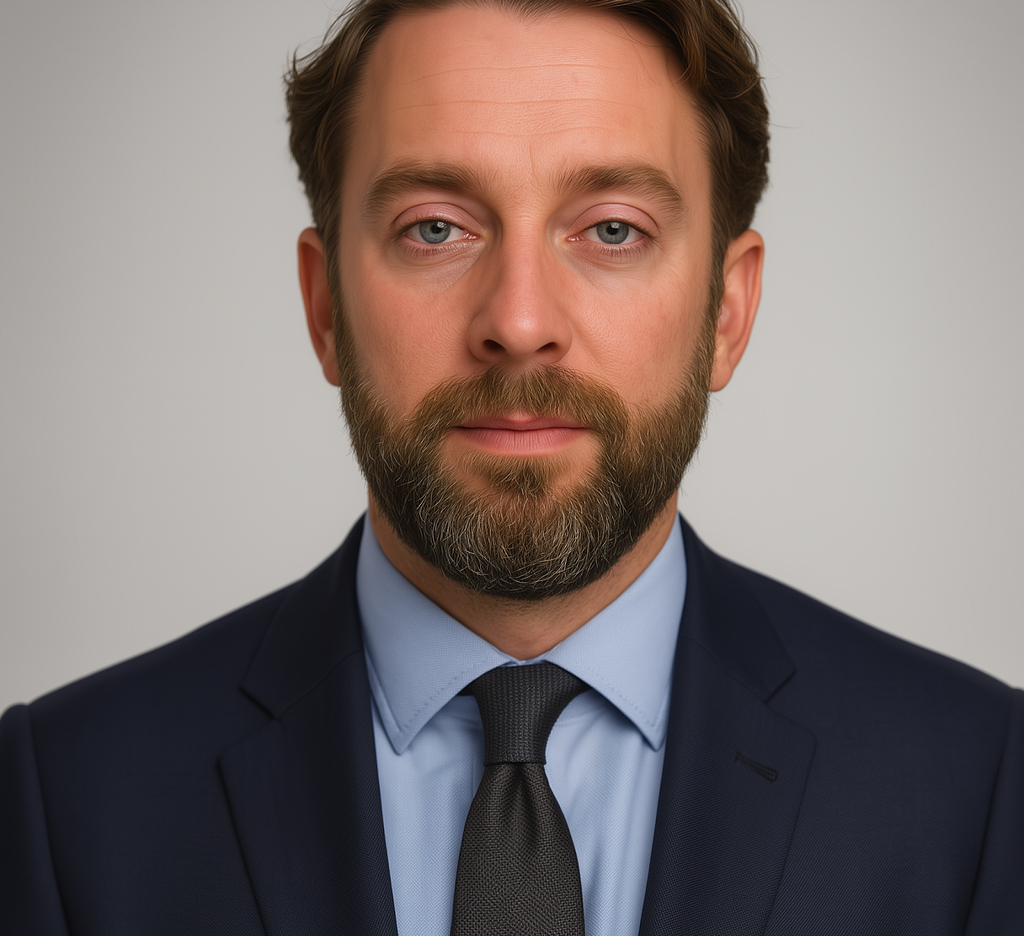
…What I think is so beautiful about what we do at Goodwill is that we don’t care who you are. We don’t care where you come from, who your parents are, or what job they had. We don’t care about the mistakes you’ve made, because we’ve all made them. What we care about is what you want for yourself and your future. So my offer would be this: if you’re struggling, if you want to do better, know that there’s help. There are people out there willing to work with you, to support you. We’re all in this together. And just reaching out, just asking for help, acknowledging that you need it, we’ve seen that change lives. That simple shift can change everything. A lot of people either don’t know they need help, or deep down, they’re not ready to ask for it. But when they take that step and reach out for a hand, there are people who will absolutely grab it. I see it every day. That’s how we drive success. That’s how we become the most vibrant economy in the world. And that’s how we’re going to lead into the next century…
I had the pleasure of talking with David Eagles, Chief Operating Officer of Goodwill Industries International. David Eagles has built his career at the intersection of business, government, and nonprofit service, often navigating the institutional spaces where systems lag behind mission and where structure can outpace purpose. In his current role, he oversees a sprawling network that spans 3,300 retail stores and 151 local organizations across North America, working to convert the resale economy into an engine for workforce development and upward mobility. For Eagles, Goodwill represents more than a secondhand retail brand, but proof that social infrastructure and business rigor and innovation can, when aligned, drive impact at scale.
Born and raised in Alabama, Eagles speaks often of his Southern roots and the foundational lessons of work and responsibility he carried into his career. “I was raised to believe that work is dignity and that community is responsibility,” he told me, reflecting on how that ethic formed the throughline of a career that has included high-level roles in federal government, Fortune 500 corporations, and mission-driven nonprofits. Married for 17 years and a father of two, he now lives in Washington, D.C., while leading operations for one of the largest nonprofits in North America, headquartered in nearby Rockville, Maryland.
Eagles joined Goodwill in 2019 after serving as Chief Operating Officer at the U.S. Department of Housing and Urban Development, where he led efforts to reform policy delivery and modernize core agency functions. Prior to his time in federal government, he held executive roles in the private sector at Waste Management Inc. and Oakleaf Global Holdings, and he directed the Center for Presidential Transition at the Partnership for Public Service. His résumé also includes strategic work at the U.S. Department of the Treasury, the Small Business Administration, and Booz Allen Hamilton.
What unites these varied experiences is a drive to re-engineer organizations for the future. Eagles has made a career of operating at the intersection of scale and systems, pushing institutions to anticipate disruption and transform how they deliver outcomes. At Goodwill, he is embedding a culture of data, performance, and innovation into an organization that bridges the worlds of retail and social impact. Today, he directs member support, data and analytics, strategy, learning and development, retail support, and innovation, building the capabilities that enable the Goodwill network to defend and grow its retail base, accelerate innovation, and expand mission impact.
Founded in 1902 in Boston, Goodwill was conceived as a local response to urban poverty and waste. Its founder, Rev. Edgar J. Helms, began collecting used goods from wealthier neighborhoods and employing people in need to refurbish them for resale. Over the past century, that simple premise has evolved into a national enterprise that today helps place nearly 400 people into jobs each day, and reached over 2.1 million individuals with employment and support services in 2024 alone. Goodwill generates more than $8 billion in annual revenue through its resale operations, with proceeds flowing directly back into its workforce development mission.
Under Eagles’ operational leadership, Goodwill has doubled down on this dual purpose, expanding job training offerings, modernizing store experiences, and investing in digital skills education. In partnership with Google, the organization launched the Goodwill Digital Career Accelerator, which offers certifications in fields like artificial intelligence, preparing workers for jobs that didn’t exist a decade ago. Eagles is a strong advocate for what he calls a “skills-first” hiring model, in which experience and training replace traditional academic credentials. In this view, access to sustainable employment is not only about opportunity, it’s an economic imperative.
That urgency is echoed in how Eagles describes today’s workforce climate. “We’re living through what you could call a three-alarm fire,” he said in our interview, citing growing social disconnection, a steep decline in upward mobility, and rapid disruptions to the labor market. For him, the model pioneered by Goodwill, converting donations into job placements and training services, offers not only a safety net, but a forward-looking solution. In 2023 alone, Goodwill received 120 million donations and recorded nearly 300 million transactions, an all-time high that reflects both rising consumer demand and deeper public investment in resale.
In a sector often slowed by bureaucracy, Eagles pushes for agility. “Partnership beats perfection,” he says, noting that the organization’s strength lies in its federated model, where 151 autonomous affiliates tailor programs to local needs while benefiting from national infrastructure. He’s candid about the complexities of coordinating across this structure but views the diversity as an advantage. A Goodwill in Baltimore may run solar installation training, while another in Southern California focuses on logistics certifications. Each is guided by a local board, yet all are tied to a shared mission: expanding economic opportunity through work.
Eagles holds a Master in Public Policy from Harvard University and a Bachelor’s degree in Finance from the University of Alabama. His accolades include the Federal 100 Award, recognition as a Presidential Leadership Scholar, and distinction as an Eagle Scout. His leadership style is grounded in systems thinking and measurable outcomes, but he is equally driven by human-level impact. “Scale is only real if it reaches people,” he says, pointing to data on job placements and support services as the true markers of success.
In recent years, Goodwill has seen a significant uptick in engagement from younger demographics, particularly Gen Z and millennials, as the stigma around secondhand shopping fades and resale becomes central to sustainability narratives. Eagles believes that trend offers both a cultural opening and a strategic one. By modernizing store experiences and expanding digital tools for donors and shoppers, Goodwill is positioning itself not just as a thrift chain, but as a platform for growth, innovation, and community impact.
Asked what message he would share with the broader public, Eagles returns to a simple but pressing call: “If you’re struggling and you want to do better, know that there’s help. There are people out there who will work with you. Just ask.”
He views that willingness to reach out, for help, for a job, for a chance, as the real starting point of transformation. The systems, programs, and infrastructure may be complex. But the first step, he insists, is always personal.
Yitzi: David Eagles, it’s a delight and an honor to meet you. Before we dive in deep, our readers would love to learn about your personal origin story. Can you share with us the story of your childhood, how you grew up, and the seeds for all the great things that have come since then?
David: I was born in Alabama, in the deep South. I was raised to believe that work is dignity and that community is responsibility. That’s kind of at my core, and I think that idea naturally leads into the Goodwill intersection.
I got married, I have two young kids, and I’ve built a career around driving transformation and scaling impact, whether that’s in government, the private sector, or the nonprofit world. What’s been consistent across all of those areas for me is turning large, complex organizations into much more effective, forward-looking enterprises.
That’s what I find so exciting about Goodwill. I see it as one of the best examples of where business and impact intersect. Every donation we receive can become a paycheck, a skill, or a second chance.
Yitzi: Can you tell us a bit about the story of how you got involved with Goodwill?
David: You know, what’s interesting is that ever since I was growing up, I’ve been looking for ways to make a difference, especially at scale. Coming from where I came from, I’ve always wanted to create impact, and really, my life’s work has been a journey to find opportunities where I could do that in a meaningful way.
I had worked in the private sector for large materials management organizations like Waste Management, now called WM. I also spent time in the federal government, specifically in social services, as the Chief Operating Officer at the U.S. Department of Housing and Urban Development.
I was looking for something that combined the discipline and focus on ROI that you find in the private sector with the impact and mission-driven work of large social service organizations. When you really think about it, and not to oversimplify, Goodwill is the best intersection I could find between those two.
We’re a massive collection organization, accepting donations from people and finding the best home and use for those items. We convert those into fuel and funding for our mission. And where we are today, being North America’s largest workforce provider, there’s a real opportunity to keep scaling that impact.
That’s what brought me to Goodwill, and that’s what makes this work so exciting.
Yitzi: So let’s talk about Goodwill. For our readers who may not fully know, can you tell us the story of Goodwill? When did it start, why did it start, and what is its mission?
David: Yeah, happy to. We’re coming up on our 125th anniversary. We were founded in 1902 in Boston, Massachusetts, with a very simple hypothesis: that we can recover value from waste and use people and their talents to do something meaningful with it.
Dr. Helms, our founder, was observing the tough conditions in Boston at the time. He looked around and asked, “What can I do to make a difference in society, and frankly, for the planet as well?” So he started collecting used goods and donations, going door to door, I believe even using horse and buggies back then. He worked with people who were looking for gainful employment, purpose, and skills, and helped them turn those used items into things that could be repurposed, reused, and put to better use. That’s really the root of our history.
Fast forward to today, and we’ve grown into an organization with a retail footprint of about 3,300 stores. Roughly 85% of the U.S. population lives within 10 miles of a Goodwill, so we’re deeply embedded in local communities. We generate nearly nine billion dollars in revenue annually, and we channel billions in margin directly into our social programs. That’s what makes our model so unique.
And just one more thing, if I may, where we sit today is really fascinating. The need for Goodwill’s services has never been greater. At the same time, the strength of our mission-funded resale model, those thrift stores you mentioned, has never been stronger. That’s exactly the kind of space I love to work in, where urgency meets possibility.
Every day, Goodwill helps nearly 400 people find a good job. In 2024 alone, more than 2.1 million individuals benefited from Goodwill’s mission-based employment and support services.
Yitzi: I think most of our readers may be familiar with the ability to buy second-hand clothing or other items at Goodwill, but what other services does Goodwill provide?
David: I think, in its simplest form, what makes us unique is that we’re a hyper-local nonprofit organization devoted to helping people thrive. We work with individuals who are looking to improve their livelihood and build a sustainable career so they can provide for themselves and their families.
We help them with job skills, provide the necessary training, and offer wraparound services like childcare, healthcare, and other support. Ultimately, we aim to get them placed into sustainable careers so they can be self-sufficient.
What’s interesting is that when you look at society today, we’re living through what you could call a three-alarm fire. We’re facing what may be the most disconnected society on record. Upward mobility is in steep decline, arguably more than at any time in modern history, and we’re seeing the fastest disruption of work that we’ve ever experienced.
These are the kinds of moments Goodwill is built for. We turn donations into jobs. We turn isolation into community. We turn thrift into opportunity. It’s about work, dignity, and mobility at scale.
I think we’re standing on the edge of a generational opportunity to rebuild Main Street America into something stronger, more connected, and more resilient than ever.
Yitzi: I love that term you used, “mobility at scale.” I think, to me, that’s a very profound concept. Can you elaborate more on how exactly you hope to scale upward mobility?
David: Yeah, happy to talk through that. And you’re right, we could spend all day diving into the background and data behind the issue, but it sounds like you’re more interested in how we actually solve it. So let’s focus on that.
First, we’re hyper-local with a strong national backbone. Our 3,300 stores help fund 600 mission centers and the largest workforce services network in the country. We place nearly 400 people into a good job every single day through Goodwill. And when you add it up, we serve more than two million people each year with various services, that’s about 6,000 people every day.
So in terms of infrastructure and reach, we’ve got the scale.
Second, we’re deeply focused on “skills-first” or employer-led pathways. The old model of hiring strictly based on college degrees is fading. We’re training people for real job vacancies and pairing that training with wraparound support, things like childcare, transportation, and coaching to help them succeed.
We’re also heavily invested in future-of-work partnerships. One great example is our collaboration with Google. Through the Goodwill Digital Career Accelerator, we’ve offered certifications in areas like AI Essentials and other in-demand digital skills. These are fast, stackable learning pathways that help people get job-ready quickly in fields that are growing.
Another key area is sustainability and innovation. Our circular resale model funds workforce development, and we’re seeing technology like AI improving many aspects of what we do, from operations to training and service delivery.
So when we talk about mobility at scale, we’re really talking about combining hyper-local delivery, national infrastructure, future-facing training, and innovation to help millions of people not just find jobs, but build sustainable, upwardly mobile careers.
Yitzi: Could you tell us a bit about the new initiatives you’re leading, new projects, or exciting developments you’d like to share with our readers?
David: I think what’s interesting, and we’ll see what your readers find most compelling, is that the opportunities on the resale side, which is where most donors and shoppers know us, have never been stronger.
Right now, we’re in the strongest resale market in history. Resale is growing five times faster than traditional retail. It’s actually the fastest-growing segment in all of retail today. Goodwill’s own resale business has grown more than 50% since pre-COVID, driven by very strong demand.
As you mentioned earlier, resale isn’t a niche anymore. It’s the future of retail. And what makes it unique for us is that it fuels local community jobs and impact at scale.
A few interesting facts in that space: resale and secondhand are growing at five times the pace of traditional retail. We’re also seeing new customer segments coming in, especially younger demographics, Gen Z and millennials are really driving this shift toward thrift.
We’re also seeing big changes on the regulatory front and in how brands and producers think about sustainability. For example, U.S. retailers process hundreds of billions of dollars in returns every year. There’s growing momentum around the question, “Where do all those goods go?” And what’s exciting is that if you’re a brand or a producer, your supply chain ends exactly where ours begins. That’s what we do, we take in products and find the best next use for them.
So there’s a lot of potential for growth. Last year, we received a record 120 million donations and had nearly 300 million individual transactions, both all-time highs for us. There’s a real demand flywheel happening. Consumers are getting smarter about thrift, they see it as a sustainable solution, and they know that with Goodwill, their purchases support real impact in their local community.
There are 151 separate Goodwill organizations. Just to give you a little more insight on that, that’s really what we mean when we say hyperlocal. Statistically, there’s a Goodwill within several miles of most people’s homes. So for example, you have Goodwill of the Chesapeake Bay as your local Goodwill. That’s one of the 151 organizations, and collectively they make up the 3,300 stores.
When we say hyperlocal, we mean it. Reach out to your local Goodwill, feel free to donate goods you no longer need, or if you’re looking for a new outfit or something for your home, shop there. That’s the best way to support. And each Goodwill has a variety of programs and job offerings.
When we talk about helping people find jobs, it goes way beyond just our stores. We have programs that help people become truck drivers for all kinds of companies. Lowe’s has funded a program that teaches construction skills. We even have clean tech training programs, people learn how to install EV charging stations and solar panels, and they go on to do those jobs. Every Goodwill is a little different depending on the needs of the community it serves.
Another exciting initiative, we’ve partnered with Google and Coursera to offer a free AI course to anyone who wants it. It’s called Google Essentials AI, and it’s available at no cost. I’ll send the link in the chat, but even you, Yitzi, can take the course if you’re interested.
We’re really excited about the momentum we’re seeing and where it can take us next.
Yitzi: Could you talk a little more about why you think the idea of thrifting and reusing items has become so popular now? And what could be done for this model to be embraced more by other retailers? What can you do to accelerate the movement?
David: Well, first of all, we’re excited about a lot of the changes we’ve seen. The ways to accelerate it, when I think back to the days of thrift and secondhand shopping, I go back to when I grew up. I remember, and everybody has stories like this, going with my parents in Northern Alabama, where I grew up, to shop secondhand on the weekends. Typically, these were dusty stores that weren’t well organized. You didn’t find curated products, but it was a treasure hunt, and that’s what drew us there.
All of the pricing was centered around community affordability. So many of those things are still the same at Goodwill. We are the affordable option. We think about our communities and their ability to access these items. At the same time, we’ve become a much cleaner and more modern experience. We’ve really become more innovative and progressive in how we think about the customer experience.
We’re trying to make donations as easy and frictionless as possible. We want to be clear with our donors that every donation makes a huge difference in their local community. It all stays local, and it helps our planet too, because these are items kept out of landfills. No one does a better job of finding the best and highest use for things than Goodwill.
What we’re seeing is a new wave of acceptance from younger groups. There are also price pressures out there, and many consumers are turning to Goodwill for affordable, high-quality goods that stay in our supply streams. All of these factors are driving the movement, and we see a real tailwind behind it.
Yitzi: So let’s get to the centerpiece of our interview. You’re helping to lead a very significant and important nonprofit organization. Based on your experience and your success, and the lessons you’ve learned along the way, can you share the five things you need to lead a highly successful mission-driven nonprofit?
David:
- I think number one, as I reflect on my career, is that systems matter as much as strategy. From government bureaucracies to Fortune 500 companies, I learned early on that you can’t just set bold goals, you have to re-engineer the system underneath to deliver on them. At Goodwill, for example, when you look at how we help people, we assess their needs quickly, put together customized plans, offer the right skills, and match them with employer partners. That takes a system to deliver. What’s beautiful about our model is that it’s built on stitching together best-in-class partners to provide services. That’s what I mean by re-engineering the system. It’s one thing to set bold goals, but if you want to scale from serving 2 million people a year to 10 million, you need systems that can carry that growth.
- Number two: scale is only real if it reaches people. It’s not enough to talk about millions of dollars or thousands of stores. The real measure for us is, did you get a job? Did you get a paycheck? Did you get a second chance after incarceration? Did our work touch your life in a meaningful way? We’re hyper-focused on outcome metrics because that’s what matters, impact at the human level.
- The third thing is about trying to see around corners and anticipate disruption. For us, that means being ahead of trends like AI, demographic shifts, and new competitors entering the resale space. It’s the difference between reacting to disruption and shaping the future of our market.
- Number four is that partnership beats perfection. In my career, I’ve worked on government transitions, presidential transitions, corporate turnarounds, and now Goodwill. The common thread has always been aligning unlikely partners quickly. Progress beats waiting for perfect. We’re a nearly $9 billion revenue organization made up of 151 autonomous local groups, and it would be easy to get bogged down in bureaucracy. But what I’m most proud of is that Goodwill is agile. We’re moving fast in a fast-moving market. We try, we learn, we scale. That’s how we operate.
- And finally, number five: work is dignity. I’ve touched on this a bit already, but every role I’ve had, from HUD to Goodwill, has taught me that putting people back to work is one of the most powerful forms of transformation. For families, for communities, even for nations. Work gives purpose, it gives a sense of belonging. That’s what we do at Goodwill. That’s all we do. At a time when you see record demand at food banks and historic highs in mental health challenges and social isolation, we’re starting to see momentum. On the other side, there’s record luxury spending, international travel, and so you’ve got this emerging barbell economy. I believe, at my core, that Goodwill is going to play a major role in addressing that imbalance. We’re already starting to see progress, and I feel really confident that we’ll be part of the solution, to get American, North American, and even global communities back to work.
Yitzi: This is our final aspirational question. David, because of your great work and the platform you’re leading, you’re a person of enormous influence. If you could put out and spread an idea or inspire a movement that would bring the most good to the most people, what would that be?
David: Oh boy, that’s a great question.
If there’s one thing I could spread, I’d say this is something we face every day. What I think is so beautiful about what we do at Goodwill is that we don’t care who you are. We don’t care where you come from, who your parents are, or what job they had. We don’t care about the mistakes you’ve made, because we’ve all made them. What we care about is what you want for yourself and your future.
So my offer would be this: if you’re struggling, if you want to do better, know that there’s help. There are people out there willing to work with you, to support you. We’re all in this together. And just reaching out, just asking for help, acknowledging that you need it, we’ve seen that change lives. That simple shift can change everything.
A lot of people either don’t know they need help, or deep down, they’re not ready to ask for it. But when they take that step and reach out for a hand, there are people who will absolutely grab it. I see it every day. That’s how we drive success. That’s how we become the most vibrant economy in the world. And that’s how we’re going to lead into the next century.
Yitzi: David, how can our readers continue to follow your work? How can they support the great work that Goodwill is doing? How can they support you and the organization in any possible way?
David: One is that we are a local organization. We are in your community. Reach out to your local Goodwill. Offer to help, offer to fund, donate. The donation stream is the lifeblood of our programs and services. So continue to donate, those goods make a real difference.
We are a nonprofit, local organization, and we intend to stay that way. That’s one way to help. And of course, I work for Goodwill Industries International, so feel free to follow our work through our social channels and stay connected there.
Yitzi: Okay, beautiful. I want to thank you for your time. It’s been really wonderful and inspirational. I’m excited to share the article with our readers. I wish you continued success, good health, and only the best.
David: Wonderful. Thanks for the time. It was great to meet you.
David Eagles Of Goodwill Industries International On Five Things You Need To Lead a Highly… was originally published in Authority Magazine on Medium, where people are continuing the conversation by highlighting and responding to this story.