Young Change Makers: Why & How Matthew Schneider Of Building Inc Is Helping To Change Our World
No One Is Keeping Score For You. Looking back on 2025, one of the most consequential lessons is that no one is keeping score for you. I assumed that progress, integrity, and effort would be visible and eventually recognized. In practice, outcomes mattered far more than process, and visibility followed who controlled the narrative, not who did the work. The mistake was believing that being right, early, or principled would compound on its own. As a CEO, you are effectively the historian of your company. If you do not frame milestones, decisions, and inflection points, they will either be misinterpreted or ignored. You should think of this as governance, not vanity.
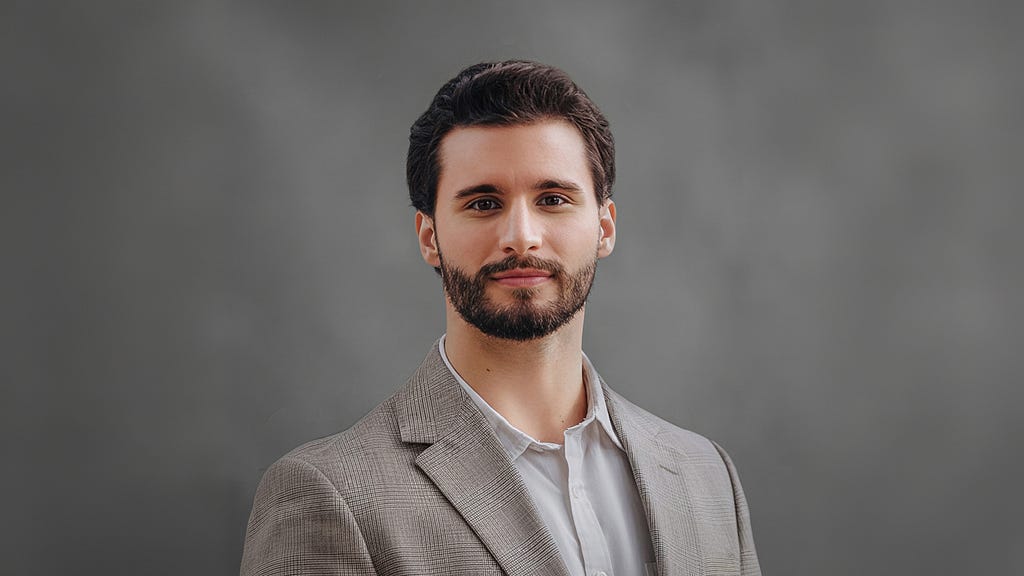
As part of my series about young people who are making an important social impact, I had the pleasure of interviewing Matthew Schneider. Matthew A. Schneider is President and CEO of Building, Inc. He is on the Board of Directors for FIBREE, where he contributes to global discussions on data standards and digital infrastructure for real estate. Through his work and public speaking, he advocates for a more transparent, auditable, and accountable built environment.
Thank you so much for joining us in this interview series! Before we dig in, our readers would like to get to know you a bit. Can you tell us a bit about how you grew up?
I was born in 2002, which makes me Gen Z. Although I grew up fast, especially toward the end of my teen years when I started working and became an entrepreneur, I’ve maintained a lot in common with my generation. Given the internet and globalization, it would be unreasonable to believe there isn’t some natural assimilation; we see the same news, look at the same posts on social media, and can talk with each other (made easy with translation tools). I mean that in the truest sense: I’ve befriended many Gen Zers from all corners of the globe, from places like Peru, Nigeria, Tunisia, Ireland, Germany, Iran, Kazakhstan, Vietnam, and China. Remarkably, despite geopolitical and socioeconomic differences, we share similar values, sometimes more so than my neighbors of a different generation. For the first time in 90 years (pre-WWII), the world we’ve received is arguably worse off than it was for our parents. Gen Z inherited the widest wealth gap, steepest affordability crisis, the climate crisis, multiple recessions, unsuccessful foreign invasions by the United States, weakening infrastructure, a waning job market, and the normalization of addictive behaviors. We’re beyond history just rhyming — it is repeating. The Five Good Emperors are gone, the Severan Dynasty is here, and the Crisis of the Third Century is around the corner unless we act fast.
Is there a particular book or organization that made a significant impact on you growing up? Can you share a story or explain why it resonated with you so much?
Reading about historical events and figures, whether they were part of a Robert Greene book, a history textbook, or a Wikipedia page, has had an incredible impact on how I view life. By reading the stories of other successful people, you realize nothing’s stopping you from doing the same thing. These stories become playbooks. You simply have to take the initiative. There is nothing superhuman or impossible in any of these tales. Sure, luck plays a role, but we all have our own advantages to leverage. If not, as Napoleon Bonaparte would remind us, then we must create our own.
How do you define “Making A Difference”? Can you explain what you mean or give an example?
From reading auto/biographies of historical figures, I realized that we are all playing a role in history, and every decision we make can be extraordinarily influential, even “historical” in the rhetorical sense. Of course, making a difference or having an impact can be as small as offering motivation to someone on a mellow day — they feel better and go home with a smile. But I understand systems, and that nothing exists in isolation. So perhaps that person, feeling rejuvenated, has a breakthrough at work and develops a new widget to help people injured in car accidents — just one of infinite possibilities. Now, scale that — could your studies, which fuel your career, lead you to inventing a new way to process freshwater, making it more widely accessible to underserved communities? How many lives are positively impacted, and what good could they grow up to do? It’s ambitious, but this is the level of scale I want people to aspire to. Be impassioned, even obsessed, over your ability to act — to not just impact people momentarily, but completely alter their lives and the communities they shape.
Ok super. Let’s now jump to the main part of our interview. You are currently leading an organization that aims to make a social impact. Can you tell us a bit about what you and your organization are trying to change in our world today?
The built environment, which includes everything from neighborhood homes and warehouses to city streets and solar farms, is a lot more fragile than many people realize. Tim Alvner once told me that much of the world is held together by “shoestring and bubblegum,” which is a tongue-in-cheek way of saying it’s barely holding together, and it’s stuck with me ever since. In the built environment, everything from design (like architects and engineers) to construction (the folks wearing hard hats on-site) is riddled with miscommunication, rework, and outcomes that don’t meet expectations. In particular, the amount of waste — whether material, pollution, or capital — is not only disappointing and costly, but has a detrimental effect on our communities and environment. Shockingly, the culprit here is not inadequate materials or inefficient manufacturing. I identified a different culprit that underpins everything from communication channels, software, blueprints, and government paperwork: data. When I saw how poorly data is handled, I started an organization that could offer a solution, and I’ve been working to change that ever since.
Can you tell us the backstory about what inspired you to originally feel passionate about this cause?
As I acquired firsthand experience in real estate, I became frustrated with its antiquity and stubbornness, so much of which seemed to exist for no good reason. As I dug deeper, I realized a lot of the problems that plagued the industry were not actually overlooked, but oftentimes intentional opportunities for arbitrage — they existed because someone could make money selling a fix. In fact, in the U.S., many industries spend billions of dollars lobbying against reform because there’s more money to be made in fragmented, incomplete solutions. This became evident when I started traveling and speaking around the world. I saw new forms of government, alternative urban planning, and different priorities. Safe, affordable, and fast public transit is a great example of this. It’s prominent in China, Japan, and the EU, to name a few, but struggles to exist in the United States — not because of terrain or funding, but because we’re heavily invested in road-based infrastructure, automobiles, auto insurance, gasoline and its taxes — the whole automotive-industrial complex. As a result, our transportation infrastructure is quite lazy and unreliable, with costly upkeep. I won’t stand for that. We need to throw out the propaganda and overhaul systems. We should demand change for our communities and country, regardless industry pushback. Our ancestors paid with blood. What’s a few more dollars toward building things correctly?
Many of us have ideas, dreams, and passions, but never manifest them. We don’t always get up and just do it. But you did. Was there an “Aha Moment” that made you decide that you were actually going to step up and do it? What was that final trigger?
Young voices in this space are rare. I seldom see advocates for better urban planning, built environment innovation, digital twins, or smart cities. This absence is terrifying. We need people who are going to fight for our infrastructure, for more transparency and better governance, and for innovation and sustainability. And where activism does exist, it often misses the mark. If I want reliable, renewable energy, I’m going to find practitioners in solar and help them receive financing for their solar farms. I will not throw paint on artwork in a museum. So the answer to the question is that I had no choice — if I want to see the world improve, then I will have to be the one to do it, and I must be hasty.
Many young people don’t know the steps to take to start a new organization. But you did. What are some of the things or steps you took to get your project started?
In early 2024, I was exiting one startup and taking the leap into my current company, which is quite different from the fields I initially studied when becoming an entrepreneur. In the beginning, I had to wrestle with the feeling of starting over. To get over this hump, I took a moment to shelve my ego and started asking questions. I found long-time industry practitioners and asked about industry bottlenecks and the solutions they sought. This gave me the foundation to begin deeper research. Once I had a complete picture of the landscape, I put together a plan: I outlined a potential solution, why it differed from incumbents, the potential challenges in rollout, and how I’d overcome them. In essence, I was being my own toughest critic to ensure I’d thought this through. Once I’d mapped everything out, I just needed other people to believe in it; I began messaging industry players for feedback and capital, and the response validated everything.
Can you share the most interesting story that happened to you since you began leading your company or organization?
I will never forget when a potential (now rejected) business partner told me that I wasn’t going to be taken seriously at the negotiation table. When I received this email, I was sitting in a hotel room in Dubai, United Arab Emirates, after networking at one of the industry’s most prominent events. Up to this point, I was solely responsible for communicating company deliverables, prospecting and closing, and drafting terms. In other words, I was calling the shots. Looking back, this was when I noted that my presence in the industry could not be dismissed. I needed to become omnipresent. This type of manipulation and patronization has never sat well with me — words of doubt push me to work harder. It’s also symbolic of how real estate tends to operate: the legacy players are very protective of their roles and responsibilities, and a newcomer — especially someone they deem inexperienced — can be very threatening. That evening, I remember looking in the mirror, straightening my tie, locking eyes with myself, and deciding that I would never again tolerate bullying from my would-be partners.
Can you share a story about the funniest mistake you made when you were first starting? Can you tell us what lesson or take away you learned from that?
There were many times I shouldn’t have taken myself so seriously. There’s a time and place to be strict and uptight, but at smaller events, casual interviews, or while hanging out with prospects, I should have relaxed my posture, cracked some jokes, and been more present in the moment. It’s easy to say but difficult to do, especially when, in the chaotic nature of a startup, things aren’t going well. The realization that things are a little less important than we make them out to be only comes with experience. And worrying visibly makes you appear less professional. More recently, even in high-stakes environments, I have been making an effort to be more calm, charismatic, and optimistic, even when circumstances don’t warrant it. Like anything, it takes practice.
None of us can be successful without some help along the way. Did you have mentors or cheerleaders who helped you to succeed? Can you tell us a story about their influence?
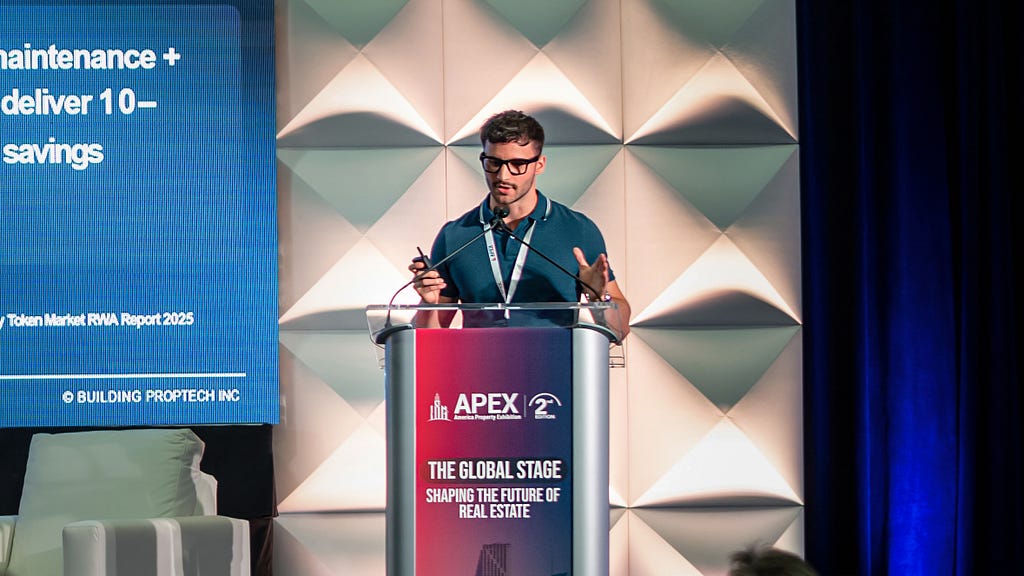
I owe so much to my early angel investors, but also to those who invested time. As part of our growth strategy, many of the stages I spoke on early in my career were covered by company funds, since I wasn’t receiving travel stipends from event organizers. Today, our company is globally recognized. But I developed my professional presence through these global engagements, where I learned how to communicate clearly and present myself effectively. In other words, while the events added to our pipeline and partner ecosystem, they also gave me confidence and a sense of purpose. None of this happens in isolation, it’s a team effort: my network supports my initiatives, but they do it because they know I execute. I’ve learned to command a room and help move the industry forward.
Without saying specific names, can you tell us a story about a particular individual who was impacted or helped by your cause?
I remember being in Dublin, Ireland, after giving a keynote about the true value of real estate data. There was a group of architects and engineers around me, asking clarifying questions about my concepts. They were impressed and emphasizing they’d apply these ideas. The next week, I was invited to a working group within one of the largest Building Information Modeling (BIM) professional networks in the world to find a way to put these concepts into action. We’ve been slowly piecing things together since. We believe this approach will encourage higher-quality work, more equitable distribution of wealth among tradespeople, more transparent ownership, and more resilient cities. Beyond this technical work, my advocacy has inspired many people, and I’m warmed by their stories. They often tell me that my mission-driven campaign to innovate in boring industries inspired them to think outside of the box and tackle foundational problems. I think people want to make a real impact; they just don’t know that they can.
Are there three things the community/society/politicians can do to help you address the root of the problem you are trying to solve?
Nothing will be accomplished without buy-in from practitioners, institutions, and politicians. I prefer a bottom-up approach: first, we need to help the folks working in the field — the “boots on the ground.” We must listen to their concerns, understand why they use certain methods, and then begin problem-solving. This is much better than a top-down approach that begins with regulation and ends with penalties. People first, then process. Next: institutions. They occupy a unique space between public and private sectors. They have substantial influence through their capital and talent. They will not enact policy, but they do not always need to. If we can design frameworks and standards that are practitioner-guided and academically designed (i.e., work in real life, not just a textbook), and if they’re effective, then adoption tends to come naturally. Finally, politicians must objectively, and not under capital influence, design guardrails and codify some of the standards if they are critical to societal function. Unfortunately, many of these conversations are not happening because they are overshadowed by other priorities, not understood, or not profitable.
Fantastic. Here is the main question of the interview. What are your “5 things I wish someone told me when I first started” and why? (Please share a story or example for each).
1. No One Is Keeping Score For You
Looking back on 2025, one of the most consequential lessons is that no one is keeping score for you. I assumed that progress, integrity, and effort would be visible and eventually recognized. In practice, outcomes mattered far more than process, and visibility followed who controlled the narrative, not who did the work. The mistake was believing that being right, early, or principled would compound on its own. As a CEO, you are effectively the historian of your company. If you do not frame milestones, decisions, and inflection points, they will either be misinterpreted or ignored. You should think of this as governance, not vanity.
2. Goodwill Is Not A Substitute For Contracts
Another hard lesson was that goodwill is not a substitute for contracts. Shared vision, past favors, and aligned incentives felt sufficient early on, but ambiguity inevitably surfaced — and was sometimes exploited. The mistake was treating early relationships as informal while the market treated them as binding. The role of the CEO is to eliminate interpretive risk. Clarity protects both sides. Writing things down earlier than feels polite, assuming memory will fail under stress, and designing agreements for the breakup rather than the honeymoon are not acts of distrust; they are acts of leadership.
3. Speed Is Not The Same As Momentum
I also learned that speed is not the same as momentum. It was easy to equate activity — meetings, travel, partnerships, announcements — with progress. Energy was high, but results weren’t compounding. The mistake was confusing motion with irreversible progress. Momentum only exists when effort converts into durable leverage: code, contracts, revenue, intellectual property, or distribution. The discipline is to distinguish signal work (meaningful) from surface-area work (just visible) and to ask, regularly, what exists now that did not exist before and cannot be undone.
4. I Would Remain The Bottleneck Far Longer Than Expected
A related realization was that I would remain the bottleneck far longer than expected. I believed that hiring capable people or bringing on advisors would quickly offload cognitive and operational burden. In reality, most decisions still flowed through me, and delegation without systems increased friction. The mistake was overestimating how fast context transfers and underestimating the cost of misalignment. Until incentives, language, and authority are tightly aligned, delegation creates drag rather than relief.
5. The CEO Role Is Psychologically Asymmetric
Finally, the CEO role is psychologically asymmetric. I expected stress to be proportional to responsibility and shared across the team. Instead, the reality was lonely, nonlinear, and largely invisible. The mistake was assuming emotional symmetry — believing others would feel risk the way I did. Structurally, the CEO absorbs uncertainty so the organization does not. This makes space to think, genuine advisors, and positive personal habits essential. Resilience must be a core competency, not a personality trait.
If you could tell other young people one thing about why they should consider making a positive impact on our environment or society, like you, what would you tell them?
Steve Jobs would tell you that the world has been put together by people who are no smarter than you. This is true, and I will expand on it: much of the world has been put together stupidly because it was profitable. Once you see this, you are willing to question everything, and you should. That said, you might find that an institution is actually quite reliable. We don’t have to throw out the baby with the bathwater. So, objectively face the world and determine what parts of it are broken, and respect what works. Humans are quite miraculous when you realize we’ve managed to survive while making everything up along the way. Sometimes I get a little awestruck when I see these mega-highways (although I dislike them) with thousands of cars obeying the yellow lines and making their way toward their destination. The fact that it “works” is quite impressive.
Is there a person in the world, or in the US with whom you would like to have a private breakfast or lunch with, and why? He or she might just see this, especially if we tag them. 🙂
Shoutout to Paul Doherty for the continued inspiration and great conversations. Let’s grab breakfast soon.
How can our readers follow you online?
You can find me on LinkedIn as Matthew A. Schneider, on Instagram as @realmattschneider or X (formerly Twitter) as @mattschneid3r
This was very meaningful, thank you so much. We wish you only continued success on your great work!
Young Change Makers: Why & How Matthew Schneider Of Building, Inc Is Helping To Change Our World was originally published in Authority Magazine on Medium, where people are continuing the conversation by highlighting and responding to this story.