“Your Superpower Is Choice”: Dr. Paula Fellingham Reflects on Music, Motherhood and Mobilizing Women Across 150 Countries
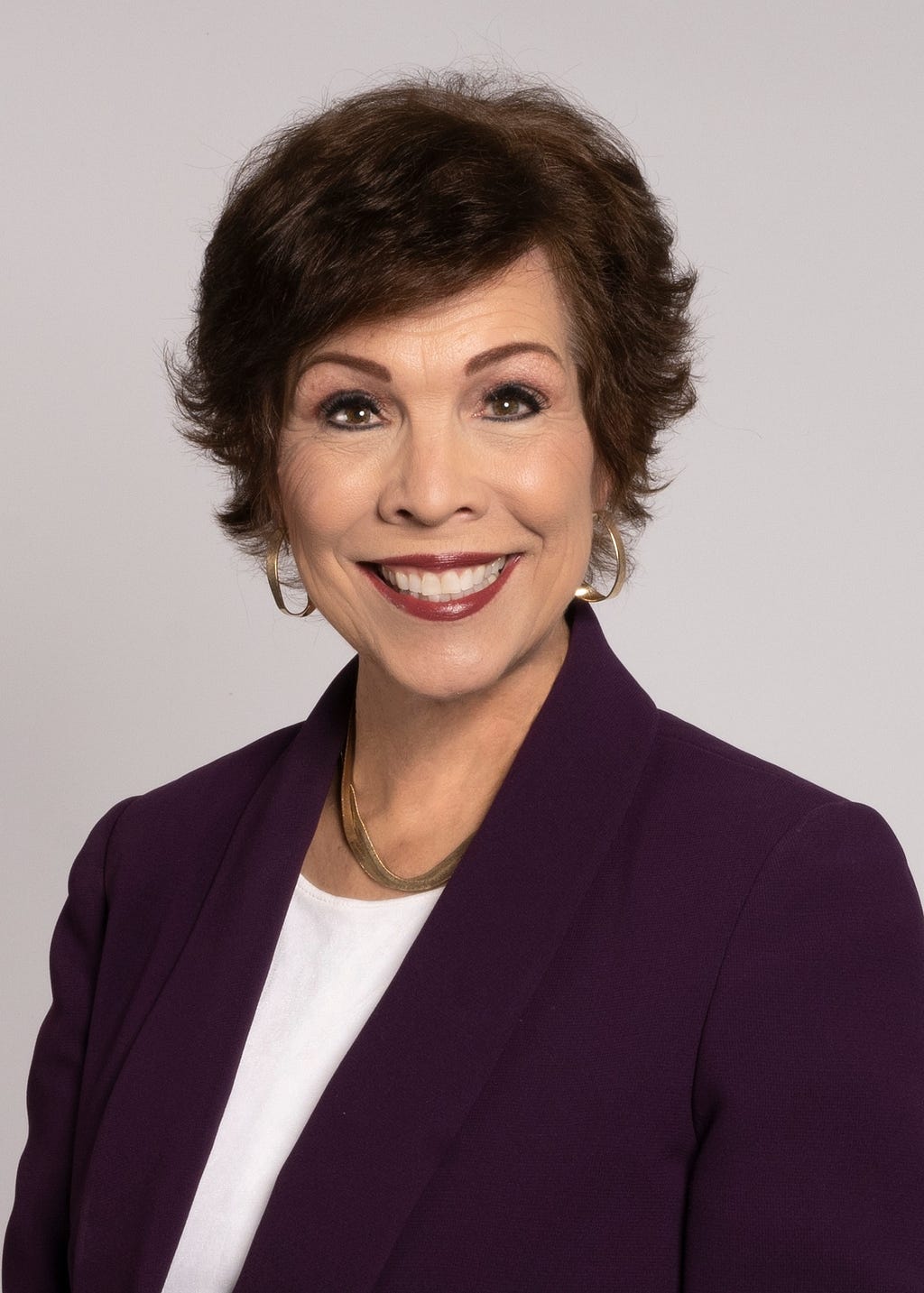
“Love yourself. Love your God, and love others. It’s all about love. And especially for women, don’t compare yourself. That’s what I call the disease of the three C’s: comparing, complaining, and criticizing. But if we had true self-esteem and genuine love for ourselves, we’d be able to love others so much better.”
I had the pleasure of talking with Dr. Paula Fellingham. Paula is a women’s leadership advocate, author and educator whose career has stretched from high school classrooms and festival stages to conference halls across more than 150 countries. Raised in Glendale, a suburb of Los Angeles, she describes a buoyant childhood shaped by a vivacious mother and a father who worked in radio alongside comedian Steve Allen. “I’d be driving on the freeway and see a billboard for my father’s show,” she recalled. The visibility of that world, and the expectation that came with it, formed an early lesson about public life and private purpose.
Fellingham studied music at Occidental College in Los Angeles, where she met the boy who would become her husband. They married at 22. Teaching followed for both of them, and then a move north to Sequim, on Washington’s Olympic Peninsula, where they raised eight children on what she calls a small “mini farm.” Music remained central. The family formed a country bluegrass group that toured for 12 summers, performing across 42 states, in Europe, and at the United Nations. At the peak, she says they logged “273 shows in our final summer,” a grind that included outdoor sets “on a flatbed truck” in heat and humidity. The years on the road, she says, showed her the country at eye level. “From performing across 42 states, I learned about the people of America. And people are good.”
At 50, Fellingham earned a doctorate in education and human relations, a credential that coincided with a turn toward global work focused on women and families. Her husband pursued a PhD and began a long tenure teaching statistics in Utah. She built a parallel path as an entrepreneur and speaker, organizing what she describes as hundreds of events worldwide and founding or co-founding several networks aimed at connecting women working on shared goals. She says the through line has been a belief in personal agency. “Your superpower is choice,” she writes in her book “Believe It, Become It,” a guide to aligning thoughts, words and actions. Another book, “Solutions for Families,” reflects her focus on parenting and relationships.
Her advocacy has often been framed around collaboration rather than competition. She cites the United Nations Sustainable Development Goals as a common agenda and argues that progress depends on linking local projects to measurable outcomes. She founded the Women’s Global Alliance to help groups “connect, collaborate, and measure progress,” and a related platform, the Global Prosperity and Peace Initiative, to invite practical steps at local, national and international levels. Much of her teaching centers on what she calls a five-part model of excellence for women: mind, body, emotions, money and relationships.
Travel has provided material for both encouragement and critique. In Bahrain, after a summit, women urged her to stay because they believed the United States was unsafe for children, a view shaped by news of mass shootings. The exchange mirrored warnings she had heard in the U.S. about traveling in the Middle East. “How can we ever have peace when there is so much misunderstanding,” she asked, adding that “we are far more alike than we are different.” In Uganda, she stood on a dirt mound and addressed hundreds of women who had walked for miles in heat to attend a gathering, an image she often recalls when contrasting the scarcity many live with and the isolation she says she sees in wealthier settings. The lesson she draws is blunt. “Life is not about what you accumulate. It is about serving others.”
Her public advice often returns to small, durable habits. She urges families to choose activities that build unhurried time together, drawing on years of rehearsals and road miles with her children. She argues for cultural literacy, encouraging households to hang a world map and learn geography and context before traveling. She urges those starting global projects to seek practical training in finance and to partner early with people in positions of authority who can shape policy. And she has become a proponent of virtual tools after years of travel, seeing in them a way to extend reach without constant flights.
Now in her seventies, Fellingham continues to plan large-scale gatherings and online programs under her Total Life Excellence banner while keeping her message spare. “Love yourself,” she says. “Love your God, and love others.” The appeal is not sentimental. For Fellingham, it is a standard to test against daily behavior, a call to trade comparison and criticism for connection. “We only get one turn,” she says. “So what are we doing with our turn on Earth, and how are we making life easier for others?”
Yitzi: Dr. Paula, it’s such an honor to meet you. Before we dive in deep, our readers would love to learn about Dr. Paula Fellingham’s personal origin story. Can you share with us the story of your childhood, how you grew up, and the seeds for all the amazing things that have come since then?
Dr. Paula: Oh my goodness, I love that question. Thank you. I grew up in Los Angeles, in a suburb called Glendale, and had a magnificent upbringing. My mother was like Mary Poppins. My father was actually a well-known radio artist, as they called them back in the day. He was a comedian and a singer. He and the old-time comedian Steve Allen had a show called Smile Time with Noble, Noble is my maiden name, and Allen. Then Steve was invited to start the first late-night show. He told the producer, “My partner and I love doing this,” but they said, “Well, it’s just for one guy. You’ll be interviewing celebrities behind a desk.”
My father continued being a radio artist throughout his life. It was magnificent. I had this wonderful upbringing where I’d be driving on the freeway and see a billboard for my father’s show. People would say, “Oh, you’re Wendell Noble’s daughter.” Then, when I got married, they’d ask, “How do you spell Fellingham?” So I shifted, but every part of my life, Yitzi, has been exciting.
My fifth book is called Believe It, Become It. I teach how to control your thoughts, words, and actions. I was blessed to learn about that early on, in my teens. Of course, you don’t always get it right, but I loved knowing the principles that help you tap into your superpower, which is choice. I talk about that in the book.
My mother, Mary Poppins, was like a servant, in a beautiful, glorified way. Back in the day, and I know some of your listeners and viewers will relate, it was the role of the woman to serve the husband in many ways. I saw that. Then I became part of the movement toward equality, even way back then. It was never to minimize what they did, they were simply doing what they saw their parents do. But now we’ve reached a time when so many women are blessed to be what I call “enlightened.” They’re learning more.
Just to deviate for a second into the global work I’ve done for decades now, there’s a rising and awakening of the women of the world that’s more fast-moving and far-reaching than anything else in history, Yitzi. I’ve been blessed to watch this unfold. I’m 76 years young, and I’ve seen this rapid acceleration. As women around the world become more educated, they go from survival mode to self-development, and then to the place we all want to be, selfless service.
Back to the Los Angeles days. I met my husband when we were 12, in the seventh grade. We got married ten years later, when we were 22, after graduating from a private fine arts college in L.A. called Occidental College. Barack Obama actually went there, which makes me smile because not many people knew about it until then-President Obama. It was a magnificent education. I’m a musician, and my undergraduate degree is in music.
Then, when I was 50, I got my doctorate in education and human relations. That came as part of my adventure. I don’t actually like the word journey, it sounds so hard. Life can be an adventure, and mine has been. Not without its bumps, of course, but we learn from our bumps.
After we graduated, I taught high school. My husband did too. Then we started our family. We didn’t want to raise the kids in Los Angeles, so we moved up to the Olympic Peninsula in Washington, a beautiful place called Sequim. It’s an Indian name. My husband continued teaching high school, and I kept having children, we have eight, and now 26 grandchildren.
I’ve heard all the jokes, like “Don’t you guys have a television?” But what I know is that these are life choices, and I honor everyone’s path. We lived on a little mini farm. I continued with my music, taught my kids and other children, and had choral groups. My kids got better and better at music, and eventually, we became a country bluegrass band.
We’d leave in May and come back in September, performing in 42 states, at the United Nations, and in Europe. We played ten instruments. Our show was highly choreographed, we were flying around the stage with a banjo, mandolin, keyboard, drums, bass, two fiddles, guitars. We had a blast. We did that for 12 years.
It was a huge part of my life. I’m not doing music anymore, which is strange sometimes. But everyone has different phases. One thing I really learned during that time, we performed 273 shows in our final summer. That’s five shows a day, six on the weekends, in Chicago at Six Flags. We had a couple of agents who booked us solid every summer.
From performing across 42 states over 12 years, I learned about the people of America. And people are good. Then I began traveling as a professional speaker and learned about the people of the world. The more I traveled and spoke, the more I fell in love with people. Because people, as you know, Yitzi, are inherently good. They want to do what’s right.
We all want the same things, to be appreciated, to be loved, to be safe. We all want peace. And right now, we are crying for peace around the world.
My husband had a midlife crisis and decided he wanted to teach at a university. So he got his PhD. We moved to Utah, and he’s been teaching statistics as a professor for 35 years now. He’s an academic. I’m an entrepreneur. We’re the same in all the major things in life, but he doesn’t have an entrepreneurial bone in his body, and I’m not an academic. Still, I’m a teacher in a different way.
I started teaching, putting on my own events. I’ve co-presented over 400 live events in 152 nations. I know this is my calling, my mission, to strengthen women and families worldwide. I’ve known that since I was in my 20s.
And when you know your mission, how can you not do it? You’re compelled to do it. I’ve worked with my family through the years, traveled with them sometimes, and sometimes not. But I love the people of the world, and I’m so thrilled with the opportunity I’ve had to be a global mentor for women.
Right now, Yitzi, my database of women is 234,700,000. I have 30 points of data on each one. You can go to drpaulaslist.com to learn how to use that list.
It’s exciting to know that I’ve never tried to be famous. You’ve probably never heard of me. And yet I’ve learned that when you’re truly engaged with something, as I am, and doing deep work across the world, there doesn’t need to be a desire to be known. I just want to serve.
Yitzi: That’s an amazing origin story, and you’re an amazing storyteller. You probably have some incredible stories from the work you’ve done around the world over your long career. Can you share with our readers one or two stories that most stand out in your mind from your professional life?
Dr. Paula: Oh, my goodness. That’s a wonderful question, thank you. One or two stories from almost 50 years…
One that comes to mind is something that just happened. If you’re okay with me talking about something recent, yesterday, in my state, Charlie Kirk was assassinated. Now, nothing I do is political or religious. I honor everyone’s beliefs, but violence is not partisan. We’re just so filled with sorrow here in this state because of what happened.
It reminded me of an experience I had in Bahrain. Bahrain is just across the water from Saudi Arabia, a Middle Eastern country. I was there putting on one of my Global Women’s Summits. I had started the Women of the Middle East Network (WOMEN) in Jerusalem, and during this summit in Bahrain, as we were wrapping up, some of the women came to me and said, “Dr. Paula, please don’t go back to the United States. They kill their children there.”
They were referring to what had happened at Sandy Hook in Connecticut, when those little kindergarteners were killed. That tragedy made headlines globally. People in other countries often only hear about the worst news, and what they see makes them believe that America is a violent place. And the truth is, Yitzi, so many people outside the U.S. know more about our politics and economy than many young people here do.
These dear women genuinely believed I was going back to a dangerous country. I said, “No, that was an isolated, terrible act. But America is a loving nation. We care about each other. We help people all over the world. We do so many good things.”
At the same time, before I left for Bahrain, people here were saying, “You’re going to Bahrain? Alone? You’ll be killed!” I always travel alone, at least on the airplane, but the moment I arrive, I’m surrounded by my wonderful women, my partners, my friends.
So how can we ever have peace on earth when there’s so much misunderstanding between people and cultures? That’s something I teach often, we are far more alike than we are different. I pointed that out just a few minutes ago, when I said we all want the same things. But there’s such a misconception, and that fear feeds disconnection.
Let me share another story, this one from Uganda. Uganda is one of the 55 nations in Africa. When people say, “I’m going to Africa,” I always ask, “Which nation?” because Africa is a continent with 55 very distinct countries. Two of the most misunderstood are Egypt and Morocco, many people don’t even realize they’re in Africa. I have so many stories from those two places as well.
But Uganda is special to me. I’ve been working with two brothers there, Gerald and Gilbert, for many years. Between the two of them, over 250,000 people have been taught or helped medically. Gerald teaches from my books, including Believe It, Become It, which focuses on self-mastery, and Solutions for Families, one of my four parenting books focused on strengthening marriages and families. He’s been doing this for five years.
His brother Gilbert, who we helped get his medical degree, an African medical degree, has been going village to village, even through COVID, offering medical aid and education. If you’ve been to Uganda or Kenya, you know how primitive many areas are.
One time when I was there, Gilbert had told the women of several villages that I was coming. Hundreds of women walked in the heat, 110 degrees Fahrenheit, many of them barefoot or wearing very crude sandals. Their feet are adapted to those conditions.
They came in droves. I stood on a mound and taught them, with a translator, because there are so many dialects. I was so moved. I often am, especially when I see the contrast between the way women live in places like Uganda or the Kibera slums in Nairobi, where a million people live in one square mile, and how we live here.
These women, who have so little, are filled with gratitude. They live differently, with very little, but they’re grateful for what they have. I, personally, live on a lake, on a golf course, surrounded by mountains. I am blessed beyond words. Yet over the past 20 years, I’ve seen so many American women living in 10,000-square-foot homes, with enough food, water, and people who love them, and they’re still committing suicide.
Yitzi, and don’t judge me for this, but I sometimes think, shame on us. Shame on us. These women have so much and could give so much. Life isn’t about what you accumulate. It’s about serving others, making their lives just a little easier. You don’t even have to give money, there are so many ways to serve.
Meanwhile, I see so many unhappy American women, and so many joyful women who live with almost nothing. But they have the most important things, community, love, support. They know how to have each other’s backs. Yes, they struggle, but they have the essentials.
Every time I travel, I’m struck by the difference. I return to America and see abundance, but a scarcity of belief and mindset. It hurts my heart. That’s why I do what I do, to reach women everywhere and encourage them.
I do want to share one lighthearted story, just to shift us out of the sadness for a moment. It’s funny, but meaningful.
I was in Nairobi, putting on another Global Women’s Summit. There were about 150 women in the room. I was the only Caucasian, very white compared to their beautiful, rich, black skin. We had spent the entire day together. I had taught from 9 to 5, and we’d had wonderful interaction.
At the end of the day, I said to them, “Oh, you beautiful women, you’re so close. I can feel your sisterhood. I want to be a sister like you.”
There was a silence. Then one of the obvious leaders in the group, a large, dignified African woman, stood up and said, “Dr. Paula, we can respect you. We can like you. We can love you. But you the wrong color.”
And we all laughed. They waited until I laughed, and then we were all laughing together.
To be able to speak honestly, without fear, without worrying, “Am I going to offend her?” or “Is he going to misunderstand me?”, that’s what heart-to-heart connection looks like. And women are naturally good at that. We’re nurturers.
These women felt safe enough to say, “You’re the wrong color to be our sister,” and to say it with love and humor. Wouldn’t it be wonderful, Yitzi, if we could all talk to each other like that?
If we didn’t worry about judgment, like, will someone judge me for saying I have eight children? Can we just honor each other’s paths and say, “I love you because you’re my sister. I love you because you’re my brother. We’re here on Earth at the same time.”
We only get one turn. So what are we doing with our turn on Earth? How are we making life easier for others? That’s the question that’s always in my heart.
Yitzi: I have other questions, but I wanted to go back to something you mentioned earlier. I’m very blessed, I have six daughters and a son. I know firsthand the benefits, the advantages, and the joy that comes with having a house full of children. From your vantage point and experience, can you articulate some of the joys and benefits of having a large family?
Dr. Paula: Oh, so many. I would invite everyone who’s listening or reading to consider the possibility of doing something with your family that bonds you. It could be everyone taking karate lessons together, hiking, being in theater, whatever it is, do it together.
One of the beautiful results, and one of the reasons I started our family band, was that it gave us thousands of hours rehearsing, traveling, and performing together. And it’s not all glitzy. Think about performing, you’ve got thousands of people up in the rodeo stands, you’re down on a flatbed truck, it’s 100 degrees with 100 percent humidity, and you’re singing your heart out under spotlights while moths are flying into your mouth. I say that just to be real, because when I mention performing, some people think it’s all bright lights and autographs. It’s not. And yet, it’s wonderful.
But that’s just one example of what we did together. What is your family doing to bond? Later, as they got older, my kids became such a strong support system for each other. All eight of my children live within about 30 minutes of me. Why? Because they want to be together. They’ve lived in different places, but they got jobs here so they could stay close.
That bonding time, there’s no substitute for unhurried time with your children. When you have many children, I just think it’s more fun. But I also know that some sweet, precious women aren’t able to have as many children as they’d like. So I say, bring in friends, bring in relatives. Do things together. Go places together.
When I see a family where everyone’s on their phones at a restaurant, it makes me want to cry. Really, put down your phones. This is together time. Make it a point to create those moments. And if you have just a few children, or even one, gather others together. There’s so much strength and joy in numbers.

Yitzi: You have so much impressive work. Can you share with our readers the exciting social impact initiatives you’ve been working on, and what you’re currently working on? We’d love to hear about it.
Dr. Paula: Oh, I would love to. Thank you so much.
The nonprofit I’d like to invite you to visit is womensglobalalliance.org It’s a nonprofit that brings women, and supportive men, together to create an alliance, because there is strength in numbers.
We’re working on the Sustainable Development Goals, also known as the SDGs. Some people are familiar with them, and some aren’t, so I’ll share a little background. In the year 2000, the United Nations brought together 195 nations who ratified and agreed on 15 Millennium Development Goals. These addressed the biggest challenges on the planet, things like clean water, gender equality, education for all.
They were supposed to achieve those goals by 2015, but they didn’t, not even close. So in 2015, they created a new set of goals called the Sustainable Development Goals. There are 17 of them, and that’s what I talk about in the Women’s Global Alliance.
What I’m saying is this: we can do better when we connect, collaborate, and measure progress. That’s what we’re doing. Women all over the world are working on these massive challenges, but often they’re doing it in isolation. So we’re creating an alliance that allows them to connect with each other, see what others are doing, collaborate to move faster, and then measure their progress. We also report back to the United Nations, because that’s the Achilles’ heel, many groups aren’t measuring or reporting progress.
For example, in gender equality (which is Goal #5), there has been a lot of progress, but there’s still more to be done. Goal #4 is education for all. Again, so many people are working on it, but not necessarily working together. That’s what the Women’s Global Alliance is all about.
Now, the mothership of that initiative is called the Global Prosperity and Peace Initiative. The website for that is prosperityandpeace.org. I want to invite you to watch the video there, it’s a beautiful invitation to humanity to take real action. Not just hold hands and sing “Kumbaya,” but to ask, what are we doing?
I love Nike’s motto, “Just do it,” but we have to ask, what is that it? This video and platform give people real suggestions on what they can do, locally, nationally, and internationally.
Those are the two main initiatives. Then, my personal brand is called Total Life Excellence. In about a month, I’ll be launching a beautiful program for women called Total Life Excellence for Women. It’s not about perfection, it’s about how to achieve a high level of excellence in every area of your life: mentally, physically, emotionally, socially, financially, and in all your relationships.
I don’t include the spiritual component in this particular program, even though I know it’s important to many people. I’ve found there’s more than enough to focus on within those five key areas.
That program will be available soon, and the site will be paulafellingham.com. Everything I do is already there, so feel free to visit anytime.
Yitzi: So this is our signature question, the centerpiece of our interview. Dr. Paula, you’ve been blessed with a lot of success, and you must have learned a lot from your experiences. Looking back from when you first started your social impact initiatives, can you share five things you’ve learned that would have been really nice to know at the beginning?
Dr. Paula:
- You know, Yitzi, that’s a great question. I’ve had successes in education, in connecting with women, in teaching, in loving, and in learning from others. And yet, I never knew how hard it would be financially. That was something I had to learn. It takes money to do global work, and that’s not something I enjoy. I don’t like asking people for money. It’s kind of my Achilles’ heel. If I could go back, I would have learned more about money and how to manage it effectively. I would have partnered with people who had that knowledge. I have the education, and even now, I have the relationships. I have a database of 234.7 million women. But I can’t even email my own database because, when money comes in, I give it to these wonderful people and all these nations that need support. If someone reading this feels moved to donate, I want them to know that this is a major part of what we do, something I didn’t anticipate when I first started. It’s still a challenge, because there’s so much need. Those of us who have been blessed with abundance can give in different ways. I can give my time and energy, and others can support financially.
- The second thing I’ve learned is that cultures are so different. Earlier in my life, I wish I’d taken more time to learn about different cultures. I didn’t know as much as I should have. Now, I tell everyone to get a map of the world and put it somewhere in your home, on a wall, in a hallway, even on the back of a bathroom door. Our young people need to learn that Africa has 55 nations. They need to know where Iceland is, where Greenland is, where Singapore is. We live in a global world, and we need to teach our youth about it. Americans, especially, often make cultural mistakes when they travel. There’s a misunderstanding and judgment from many around the world that Americans think we’re the best, or superior. If we knew more about cultures before visiting other countries, it would make a huge difference. I had to learn that on the job, but once I did, I made it a consistent practice.
- Another thing I would have done differently is to seek out people in decision-making positions sooner. I’ve spent most of my time teaching in middle- and lower-income communities. But real policy change comes from prime ministers, presidents, members of parliament, congresses, those in power. I would have connected with people of influence earlier. I started reaching out to global leaders more seriously in my 60s. I’m 76 now, and looking back, I wish I had started that outreach in my 30s, 40s, or 50s.
- Another lesson is the importance of using technology like you’re doing now. I’ve traveled all over the world, been on countless airplanes, and sacrificed a lot to do my global work. But I could have done so much more, sooner, using virtual tools. Zoom didn’t exist back then, of course, but even when it first became available, I was still traveling nonstop. I’m glad I did, but now I see the value of connecting globally without always being there in person.
- And I do want to let you know, we, meaning a whole alliance of women, are organizing the largest global women’s event in the world. I’m spearheading it, and it will be held in Bangalore, India, in the southwest part of the country. I’ve been there several times. There are 600 million women in India, and just so you know, India surpassed China in population this year. It’s incredibly exciting because we’ll be doing it both in person and online. I own internationalwomensday.org, and millions of women come to the site every year. I’ve been doing this work for decades, and I’m so thrilled we’re putting on this event on March 8, 2026.
So those are a few of the big lessons I’ve learned, and of course, there are many more. But those are some of the things I really wish I had known earlier.
Yitzi: This is our final aspirational question. Dr. Paula, because of your great work and the platform you’ve built, you’re a person of enormous influence. If you could spread one idea or inspire a movement that would bring the most good to the most people, what would that be?
Dr. Paula: Love yourself. Love your God, and love others. It’s all about love. The Beatles said it, “All you need is love.” Some of you know the song, some of you are too young, but the message still matters.
It’s important to love yourself, flaws and all, the things you think, “I wish I weren’t this way.” Just love yourself. I believe in God, and I honor everyone’s religion and beliefs. Some of my best friends believe in many gods, and that’s okay. I believe there’s a divine presence. And when you place your hand in His, or whatever that divine is for you, your life is blessed.
Then, love others. Love them with your whole heart. Don’t just say you love people, show it in your thoughts, your words, and your actions. Show that you don’t judge, criticize, or complain about others. And especially for women, don’t compare yourself. That’s what I call the disease of the three C’s, comparing, complaining, and criticizing. We’re so quick to look at what others have and wish it were ours. But if we had true self-esteem and genuine love for ourselves, we’d be able to love others so much better. And I know that to be true.
Yitzi: Dr. Paula, how can our readers continue to follow your work? How can they support your mission? How can they get involved?
Dr. Paula: I would love that, with my whole heart. I invite you to get involved in my work. Reach out to me, my email is paula@paulafellingham.com. Visit womensglobalalliance.org if that speaks to your heart, or go to prosperityandpeace.org. There are ways to donate, ways to get involved. Email me, I’m here, ready to serve and to welcome your help as we serve the world together. Thank you for asking, Yitzi. That’s very kind.
Yitzi: It’s my pleasure. Dr. Paula, it was such an honor to meet you. I wish you continued success, good health, and blessings. And I hope we can do this again next year.
Dr. Paula: Oh, let’s not wait a year. All right. God bless you. Thank you, Yitzi.
“Your Superpower Is Choice”: Dr Paula Fellingham Reflects on Music, Motherhood and Mobilizing Women was originally published in Authority Magazine on Medium, where people are continuing the conversation by highlighting and responding to this story.