Sam Teicher on Farming Coral to Save the Planet, Building a ‘Restoration Economy’ and Why His Dream Is to Go Out of Business
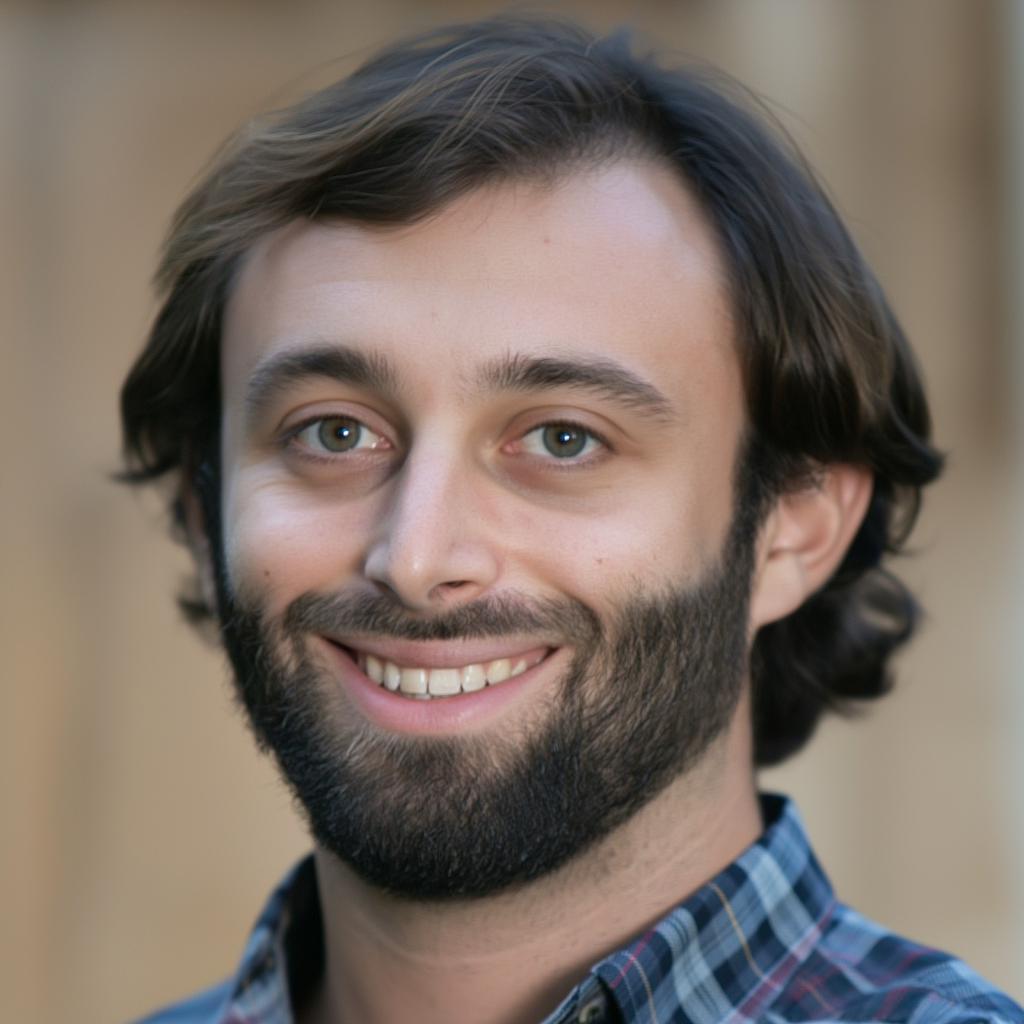
“My dream of dreams is that we’re put out of business because coral reefs are fine. Hopefully, it’ll showcase that this social entrepreneurship model can apply to other forms of ecosystem restoration… Maybe it’s Mangrove Vita or Seagrass Vita… If we can get more people on that team, I’ll be very, very proud and pleased.”
I had the pleasure of talking with Sam Teicher, and it’s not every day you meet a guy whose official title is “Chief Reef Officer.” He’s the co-founder of Coral Vita, a company that sounds like something out of a sci-fi novel: they farm coral on land to bring the planet’s dying reefs back from the brink. Teicher isn’t some slick Silicon Valley type chasing a green-washed unicorn. He’s the real deal, a man driven by a mission so profound it’s almost poetic.
He grew up, of all places, in Washington, D.C., an endangered species himself as a true district native. “It’s not the first place that comes to mind when you think about coral reefs,” he says with a laugh. But a childhood love for nature, forged in Rock Creek Park and the Shenandoah Mountains, was supercharged when he first saw a reef in Hawaii at six years old. The image stuck. While he didn’t grow up planning to be a “coral farmer,” he was always wired to fix things. His parents, who worked in fields like Middle East diplomacy, raised him on the Jewish principle of Tikkun Olam — the duty to repair the world. For his bar mitzvah, instead of the usual gifts, his parents gave him a scuba certification. “Not a traditional one,” he admits, “but it certainly put me on my path.”
That path took him through interests in education reform, diplomacy, and combating bigotry before he landed on climate change in college. He saw it as the master key, the issue impacting everything else. “If there’s not a stable climate, if people can’t feed their families or pay their bills, if their homes are underwater, that’s a national security issue as much as an economic prosperity issue,” he explains. After stints at the White House and working with island nations, he ended up at the Yale School of the Environment. It was there, on a back porch with his now co-founder, Gator Halpern, that the wild idea for Coral Vita was born. They wondered if a business, a for-profit enterprise, could solve a massive environmental challenge better than governments or NGOs. They secured a thousand-dollar grant from the school and got to work.
The problem they’re tackling is catastrophic. “Since the 1970s, we’ve lost half of the world’s coral reefs, and we’re currently on track to lose over 90% of what’s left by 2050,” Teicher states, the urgency clear in his voice. This isn’t just an ecological tragedy; it’s a socioeconomic one. A billion people depend on reefs for their livelihoods, and they power trillions of dollars in global economies. Losing them means losing everything from tourism and fisheries to coastal protection and potential life-saving medicines.
Coral Vita’s solution is very innovative. Instead of planting slow-growing coral gardens underwater, they built a state-of-the-art aquaculture farm on land in the Bahamas. Using a technique called microfragmenting, they harness a coral’s natural healing process to accelerate growth exponentially. “We can grow corals to the size of your hand and wrist or to a dinner plate in 6, 12, or 24 months instead of the 10, 50, or 100 years it might take in nature,” he says. In their high-tech tanks, they can give the corals the “spa treatment” to grow faster or take them “to the gym” by raising temperatures to stress-harden them, breeding more resilient super-corals ready for a warming world.
Their business model is also innovative. They sell “restoration as a service” to clients who depend on healthy reefs — hotels, governments, even insurance companies. Their farm doubles as an eco-tourism attraction, where visitors can adopt a coral and learn about the mission. They’ve even restored a “Corona beer reef” through a brand partnership. It’s capitalism harnessed for good, creating what Teicher calls a “restoration economy.”
When asked for his playbook, Teicher is refreshingly direct. He stresses the need for a great team (“I hire people who are a lot smarter than me”), the right kind of mission-aligned investors, and authentic leadership. “Pardon my French, but you don’t need to bullshit,” he advises. But perhaps his most important rule is to get in the game. “You miss 100% of the shots you don’t take,” he says, quoting Wayne Gretzky. “Put yourself out there… the worst you’re going to get is a ‘no,’ which is the same thing as not asking.”
Ultimately, Sam Teicher’s dream is to go out of business. “My dream of dreams is that we’re put out of business because coral reefs are fine,” he says. It’s a strange goal for an entrepreneur, but it perfectly captures his purpose. He isn’t just building a company; he’s trying to catalyze a movement, to prove that we can invest in the ecosystems that sustain us and create a better, more hopeful future in the process. He’s repairing the world, one coral at a time.
Yitzi: Sam Teicher, it’s a delight and an honor to meet you. Before we dive in deep, our readers would love to learn about your personal origin story. Can you share with us the story of your childhood, how you grew up, and the seeds for the amazing things that have come since then?
Sam: Of course. Thanks again for taking the time to speak with me and learn about my work and Coral Vita’s mission. I grew up in Washington, DC. Properly from DC; I’m one of those endangered species that grew up within the district. It’s not the first place that comes to mind when you think about coral reefs, but I’ve always had a lifelong love for nature — growing up going to Rock Creek Park, the Potomac River, and hiking in the Shenandoah Mountains nearby.
The first time I actually saw a coral reef, I was six years old out in Hawaii. That definitely stayed with me my whole life. I did not grow up thinking I was going to be a coral farmer. I was always drawn towards fixing problems. My parents raised me and my brother on the principle of Tikkun Olam. My bar mitzvah gift from my parents was actually scuba certification — not a traditional one, but it certainly put me on my path.
I went to the DC public schools and was interested in education reform. I lobbied the government with an interfaith coalition to get modernized athletic facilities for other DC public high schools. I did a college prep program for teammates on the football team and was involved in programs from high school through college and grad school that were combating bigotry, racism, and antisemitism.
I was also interested in diplomacy. My dad formerly worked on trying to make peace in the Middle East. He was on the National Security Council. It was not as successful as we all would have hoped for, but he certainly gave it the old college try. Together with my mom, they instilled this belief that there are problems out there and hopefully, I have the ability to try and help make things better.
I got to college, was interested in 19 different things, and ultimately chose to focus my studies on climate, both because I had this lifelong love for nature and also saw it as impacting all these different issues that matter to me. If there’s not a stable climate, if people can’t feed their families or pay their bills, if their homes are underwater, that’s a national security issue as much as an economic prosperity issue, an environmental issue, and a public health issue.
Ultimately, with an initial focus on government and NGOs, I worked in climate adaptation policy at the White House and for a coalition of island nation governments. I lived out in Mauritius in the Indian Ocean and helped set up the environmental branch of my friend’s NGO, Eli Africa. I ended up in grad school and had a wild idea on the back porch with my now co-founder, Gator: maybe a business could solve some big environmental challenges better than his field of academia or my backgrounds in government and NGOs. We coalesced around our shared love for coral reefs, got a thousand-dollar grant, and started a company together.
Yitzi: A thousand-dollar grant?
Sam: A thousand-dollar grant from school. We were getting our master’s at the Yale School of the Environment, and we took that thousand dollars for quite a ride.
Yitzi: Unbelievable. That’s a great return on investment. That’s amazing. Okay, so tell us the story of how Coral Vita started. What were you hoping to solve?
Sam: Coral reefs are dying all around the world, and it’s happening at a scale and a rate that is unprecedented. In the geological record, coral reefs have gone through some tough times, like many different things on the planet, but they’ve always found ways to hang on, evolve, survive, and thrive. The pace and scale of how quickly they are dying in front of our eyes has never really happened before.
Since the 1970s, we’ve lost half of the world’s coral reefs, and we’re currently on track to lose over 90% of what’s left by 2050. Within 80 years, the average human lifespan, we could see one of the world’s most incredible and inspiring ecosystems vanish. That’s a tragedy. It’s unconscionable; it’s infuriating.
It’s not just an ecological tragedy, though; it’s a socioeconomic catastrophe because this one ecosystem that takes up less than 1% of the seafloor sustains a quarter of all life in the ocean. The livelihoods of a billion people depend on coral reefs. They generate trillions of dollars a year by powering tourism economies, by acting like seawalls and protecting coastlines from erosion and storms, and by sustaining fisheries. There are medicines on the market today fighting cancer, arthritis, and viral infections that come from compounds found in coral reefs. If they die, we lose all that magic and that wonder, all that biodiversity, and we also have a serious problem on our hands. National economies, people’s homes, people’s lives — all on the line.
What we’re trying to do at Coral Vita is develop a new model for how we can restore coral reefs. I’ll be the first one to say, the best thing to do for reefs is to stop killing them. We need our leaders to solve for climate change, pollution, and overfishing — the things that are destroying coral reefs. At the same time, that’s clearly not happening, and definitely not happening effectively or rapidly enough. So we need to scale up adaptation solutions. The best analogy is just like we need to stop deforestation, we also know reforestation works.
Coral reef restoration has existed for several decades. There are amazing practitioners around the world doing the science and the NGO and community-based work. Having previously worked at an NGO and gotten a grant from the United Nations in Mauritius to do a small-scale traditional coral nursery, I’m incredibly grateful for that work; it had a good localized impact. But that model’s not going to cut it. There are only so many grants and donations out there. And with that approach tied to a low-tech, underwater coral gardening methodology, which is what I did in Mauritius, there are limits on species diversity, coral resiliency to threats like warming oceans, scalability, and funding. We won’t be able to make a drop in the ocean, frankly, of what we need to keep reefs alive for the future.
So, in grad school, my co-founder Gator and I were thinking about all that economic value that reefs provide. What if we could team up with scientists and incorporate methods to grow corals in months and years instead of decades and centuries, strengthen their resilience to threats like warming oceans, and use land-based coral farms — sort of aquaculture parks that are high-tech, scalable, and modular — that can grow vast amounts of corals? Then, we could get people to pay to restore reefs. Go to hotels, developers, governments, insurers — everyone who depends on those benefits — to pay to bring them back to life, while then developing other forms of revenue, which I can talk about more later. The goal is creating a sustainable economic model, basically catalyzing a restoration economy and showing that for-profit, for-nature, for-good companies can actually achieve the level of impact we need and want to see in the world. That’s how Coral Vita got started.
Yitzi: So cool. Who are your customers? Who are you selling the corals to?
Sam: There are a few different ways of thinking about it, tied to the three main pillars of the business: vertically integrated farms, licensing technology and expertise, and relocating corals.
Coastal development happens and it’s going to keep happening. In some cases, there are legal mechanisms to protect corals, but more often than not, there aren’t. Even if those didn’t exist, there are more and more optical reasons why people should not harm ecosystems. So if a pier is getting built, if dredging is taking place, or if a coastal hotel is getting developed and that could impact the health of the reefs, we can relocate corals out of those impact zones. Customers could be governments, dredging companies, cruise lines, port authorities — anyone in that space.
We have proprietary technology that we’ve developed that lets us, among other things, rapidly collect and analyze key data and manage staff, which basically lets us deliver better restoration outcomes at lower costs. We use that internally while also licensing that technology to other stakeholders in the coral restoration industry and perhaps beyond.
We also have this factory-style mentality for how we can grow corals in mass, and we can support other people’s projects to do that. The biggest coral farm in the world right now is actually under construction in Saudi Arabia by their equivalent of MIT, the King Abdullah University of Science and Technology. We got hired to help design that farm and then won a competitive bid to run the first phase of it. So it’s their facility, but we’re growing the corals and they’re using our tech.
Then, as opposed to running someone else’s farm, we have vertically integrated farms. We build and operate our own facilities where we sell restoration as a service to reef-dependent clients, like hotels, governments, insurance companies, and conservation financing mechanisms. Anyone who depends on the tourism, coastal protection, or fisheries benefits of reefs can hire us to restore those reefs. And while we grow those corals and work on those contracts, the farms are eco-tourism attractions. People pay to visit our farms like they’re coming to an aquarium, just like people will pay to go to a distillery or a brewery while they’re working on selling to restaurants and grocery stores. We get people paying to visit and learn about why reefs matter while we grow the corals.
We also do online campaigns. Individuals can adopt corals for birthdays, holidays, or special occasions, as can nature-positive brands. We’ve restored a Corona beer reef. Cariuma, which is a sustainably minded shoe company, did ocean-themed shoes, and funds from that went to protect corals. A streetwear company in the UK funded a restoration project. So people who are operationally, mission, or marketing-wise aligned with what they’re doing — whether they’re directly impacted by coral reefs or just believe in it — can fund real impact in the ocean.
Yitzi: Could you tell us a bit about the process? You mentioned it being like a nursery or a garden, but I’m sure it’s not exactly that. How exactly do you go about planting or restoring a coral?
Sam: It’s definitely unusual. It’s not the normal day job. The analogy that more people can visualize is that just as you could take a cutting from a tree or a flower and graft it, we can take cuttings from a living coral and then reattach them to the reefs.
What we do is, instead of setting up a garden out in the ocean, we set up a high-tech farm on land. We have a state-of-the-art aquaculture system with tanks — you can almost visualize bathtubs — where we’re pumping seawater through and growing the corals inside for six, 12, or 24 months before we go back out with underwater drills, cement mixtures, or a marine epoxy glue and plug those corals back in.
It’s not just a function of patting ourselves on the back and saying, “Great, we planted 10,000 or a million corals.” We also track, before and after, what the changes in fish populations were. At one of our restoration sites, there were two times as many fish after we did the restoration work. We track how many of those corals survived. Was it 36% at one site or 98% at another after three years? It’s about really being able to evaluate the impact.
Prior to the planting, we’re also using these open-source methods to grow the corals at a much more rapid rate than in nature. We’re actually harnessing a natural healing process from within the corals called microfragmenting. You take one piece of coral, cut it up into tiny little fragments, and put those fragments near each other. Those corals are genetic copies of one another, and they’ll fuse back into their neighbors. It’s kind of like scar tissue. So we cut up the corals, they fuse back together; we cut them up again, and they fuse back together. We can grow corals to the size of your hand and wrist or to a dinner plate in 6, 12, or 24 months instead of the 10, 50, or 100 years it might take in nature.
As we’re doing all that, we control the conditions in the tanks. We can give the corals the spa treatment or we can take them to the gym. We can make it the way they like it to grow faster or to reproduce — corals make babies. Or we can mimic projections for future ocean temperatures. We can raise the temperatures, bring them back down, stress-harden the corals, identify which ones are naturally more resilient, and cross-breed them together so that when we outplant them, they can better survive.
Hopefully, you’ll get the chance to see it in person by walking up to our farm in the Bahamas if you need an excuse to come down there. But that’s the basic process we’re using to grow and plant these corals to bring reefs back to life.
Yitzi: So amazing. So you plant it manually? People go down in scuba gear?
Sam: Scuba or snorkel, yes. There are people that are actually starting to develop underwater robots for planting corals. Maybe we’ll develop a coral cannon for spraying them out en masse. But typically, yes, we are going down with our teams and hand-planting the corals.
Yitzi: Let’s get to the centerpiece of our interview. You’ve been blessed with a lot of success, and you’re leading a mission-driven social impact business. Based on your experience, can you share five things that you need to create a highly successful, mission-driven business?
Sam: I like that question. Five things to create a successful mission-driven business. Alright, well, this is in no particular order.
- First, you need a great team. Obviously, from my co-founder Gator to the entry-level coral technicians in the Bahamas to the PhD scientists we have, you can’t do this on your own. I hire people who are a lot smarter than me. I think it’s really important to know what you’re good at and what you’re not good at and build a team of people around you. And hopefully, it’s not just about getting the work done, but having a good time while doing it. Particularly for social enterprises, it’s important to find ways to enjoy yourself and your team because often we’re taking on some of the more difficult, and often heartbreaking, wicked, and complex challenges that are out there. So, a good team to get the job done and a good team to be good while doing good.
- Second, you want to find the right kind of investors. Not every business or social enterprise should have venture capitalists. Maybe you can bootstrap it on your own. But it’s important to realize that taking money from someone is a marriage. You should be doing due diligence on them just like they’re doing due diligence on you. Make sure that you have the right people supporting you. If you can have super-rapid, hockey-stick-style financial growth while you generate great impact, power to you. But make sure that if that’s not the case, people know you need patient capital, mission-aligned capital, and strategic support.
- Third, be authentic, be genuine, and be inspiring. You might have a good business plan, you’ve got the marketing down, maybe you’re already generating sales and demonstrating impact — all that kind of stuff. But investors really want to know who you are. Why are you the person that’s going to make this happen, solve this problem, and realize this vision? I think that’s really important. Pardon my French, but you don’t need to bullshit and you shouldn’t, but you have to make sure people are thinking, “Wow, I want to talk more to Yitzi. I want to talk more to Sam. I want to support this person,” as much as the idea and the business.
- Fourth, you miss 100% of the shots you don’t take. Put yourself out there. Cold email, raise your hand at a conference and ask a question while introducing yourself. Most of the time, the worst you’re going to get is a “no,” which is the same thing as not asking. So, step up, put yourself in the arena, and you never know what kind of serendipity you can facilitate.
- Fifth, make sure that you are really integrating whatever community or communities are most impacted by the problem you’re trying to solve into your work. At Coral Vita, we have a huge community-based approach. Most of our staff in the Bahamas, for example, is Bahamian. The farms are not just coral production and education centers for local communities, but we’re also doing workforce development, ensuring that the people who benefit from these reefs also benefit from the work we’re doing. It’s not just the right thing to do; the projects are usually going to be more successful. Ensure that people, not just on your team but in your community, are centered in your work, and I think you’re going to find it a lot more fulfilling, easier, and just conscientiously the good and right thing to do.
Yitzi: This is our aspirational question. Sam, because of your amazing work and the platform that you’ve built, you’re a person of enormous influence. If you could put out an idea or inspire a movement that would bring the most amount of good to the most amount of people, what would that be?
Sam: It’s a tough question. I am hopeful through our work at Coral Vita. My dream of dreams is that we’re put out of business because coral reefs are fine. I would love for that to happen. So hopefully our work, harnessing capitalism for good and being for-profit for nature, will not just be a successful business, but as far as rippling impacts, hopefully it’ll show, “Wow, well, maybe instead of restoring these reefs, we should just stop killing them.”
Hopefully, it’ll get people of influence in government, industry, finance, and the media to actually do their job. Hopefully, it will also inspire more people to protect coral reefs. Hopefully, it’ll showcase that this social entrepreneurship model can apply to other forms of ecosystem restoration. It shouldn’t just be Coral Vita; it should be lots of other Coral Vitas. Maybe it’s Mangrove Vita or Seagrass Vita.
We also really try, through our work, to educate people and build capacity. Hopefully, we can catalyze a restoration economy where we’re investing in the ecosystems that sustain us all, and while doing so, creating good jobs in those communities, inspiring more people to innovate, problem-solve, and be stewards for the planet that takes care of us. Hopefully, we can really drive change and movement-building. Humanity relies on nature a lot more than nature relies on us, and if we can get more people on that team, I’ll be very, very proud and pleased.
Yitzi: This is what we call our matchmaker question, and it works a lot of times. We’re very blessed that prominent leaders in business, social impact, and entertainment read this column. Is there a person in the world, in the US, or in the Bahamas with whom you’d like to collaborate or sit down and have a power lunch with? We could tag them on social media and maybe connect you.
Sam: You put me on the spot here. There are a number of people that fit the bill there. If I had to choose one, I would actually say Barack Obama. He was the first sitting president, as far as we know, to snorkel on a coral reef. He grew up in Hawaii. He actually did a tremendous amount for the ocean as president and also supports a lot of social entrepreneurs and activists. Given not only that personal connection but the global nature of our business — there are 100 countries and territories with coral reefs, and we want to see large-scale land-based coral farms or our technology deployed in all of them — obviously, someone of that stature, I think a lot of people would answer his phone call.
We already have one pretty good ally in Prince William; we won his Earthshot Prize a few years ago. Having seen how much he has been able to open doors for us, that’s who I would call out. But there are also people in technology, artists, and musicians. I’d love for Beyoncé or Taylor Swift to help write a song for the ocean. But I’ll leave it there.
Yitzi: Well, Sam, it’s been a delight to meet you. I wish you continued success and good health and a wonderful new year. I hope we can do this again next year.
Sam: Thank you. Yes, and next time in the Bahamas.
Yitzi: I would love to. I would absolutely love it.
Sam Teicher on Farming Coral to Save the Planet, Building a ‘Restoration Economy’ and Why His Dream… was originally published in Authority Magazine on Medium, where people are continuing the conversation by highlighting and responding to this story.