…I believe in one thing above all else, which is why I added it to our core values: kindness. If everyone pays forward a small act of kindness, things will grow positively around you. The world would be just a little bit better. I do not necessarily believe in grand gestures; I think small steps matter most in the long run. My movement would be to inject a little bit of kindness into everything we do. It is the small steps, like a smile in the morning or serving someone a cup of coffee, that count every day…
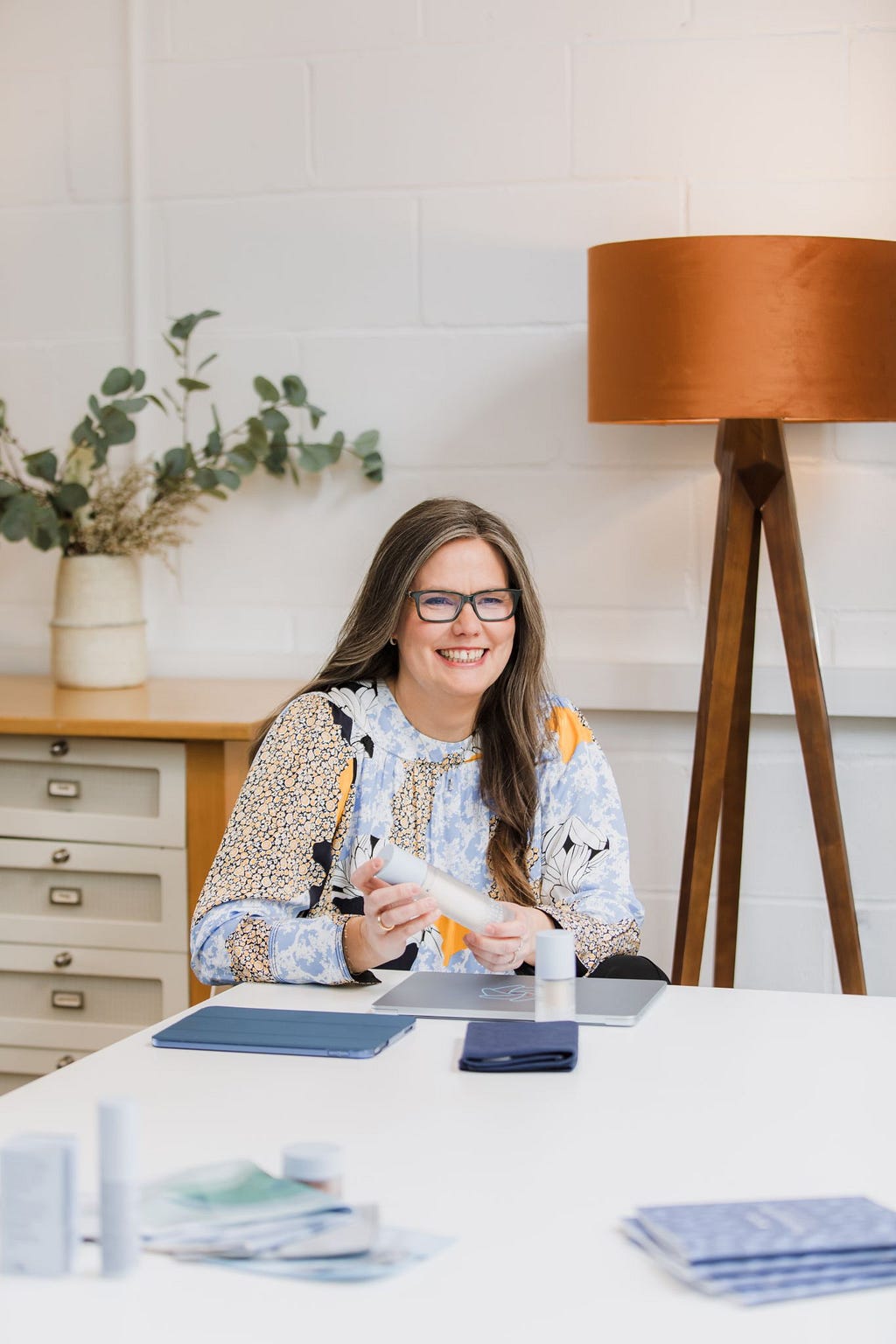
I had the pleasure of talking with Beate Hjeltnes. Beate is the CEO and Chairman of the Board of Norwex, a global company that has spent the last three decades trying to change how we clean our homes and our bodies. But if you sit down with her, you won’t hear the typical corporate jargon of a high-powered executive. Instead, she talks about remote mountain cabins, the quiet shores of Norwegian fjords, and the profound power of simply being kind. It is a leadership style born from the rugged landscapes of her youth, where nature dictates the pace of life and simplicity is the ultimate luxury.
Hjeltnes grew up in Norway, immersed in a culture that valued the outdoors above all else. She fondly remembers weekends spent at a rustic family cabin built by her father. “We had to walk one and a half kilometers to get there, carrying all of our stuff, and there was no electricity or water,” she recalls. “It was just my happy place.” That deep grounding in nature became the blueprint for her life and her family’s business. More than thirty years ago, her father, Bjørn Nicolaisen, started Norwex with a radical idea: that people could clean their homes without using a single harsh chemical. “If we went back 30 years, I am quite sure people around him thought he was crazy,” Hjeltnes says. “To even think that you can clean without chemicals was a very difficult story to tell back then.”
The concept relied entirely on high-quality microfiber and water. Hjeltnes describes their specific fiber as a marvel of engineering, noting that it is two hundred times thinner than a human hair. “When knitted into tiny loops, the fabric physically grabs dirt instead of just pushing it around.” To her, this method is the genuine definition of environmental responsibility. She pushes back against the modern trend of constantly buying new, supposedly green products that still require endless manufacturing and shipping. “I always remember by my desk that this microfiber is probably almost 30 years old, and it still works. To me, that is sustainability,” she notes. “You produce it once and reuse it again and again. That is the true picture of sustainability.”
Taking over a massive company from a founding parent is a notoriously tricky tightrope walk, often clouded by ego and complex family dynamics. Hjeltnes handled her rise to the top with characteristic Norwegian pragmatism and a heavy dose of stealth. Before joining the family fold, she cut her teeth elsewhere, working as an auditor at Ernst & Young and moving through various tech and finance roles to build her own reputation. When she finally stepped onto the Norwex board, she did not demand the spotlight. She just listened. By the time her father officially handed over the reins, the transition was a mere formality. “When we announced the change, I had actually already been leading the board for two years without anyone realizing it,” she reveals. “That prevented people from questioning if I was ready; I could simply say I had already been doing the job for two years.”
As she stepped into the light, Hjeltnes knew she could not just be a carbon copy of her father. She had to carve out her own path, and she did it by focusing heavily on workplace culture. In a corporate environment that often celebrates ruthlessness, she deliberately added a different kind of core value to the company: kindness. “I added kindness to our core values because I think kindness in a work environment is vital,” she says. “If you add a little bit of kindness to everything you are doing, everything around you starts to grow.” This empathetic mindset carried her through the company’s 2023 rebranding, a massive shift aimed at modernizing their global message. The change was necessary for survival, but it was deeply emotional for her family, who had grown up alongside the business. “My oldest daughter was so attached to that house logo being an important part of Norwex that she actually started crying when I informed her we were changing to a new logo,” Hjeltnes shares.
Her journey has not been without serious personal hurdles. Around eighteen years ago, a mysterious and severe autoimmune skin condition left her covered in visible scars and drastically altered her daily life. But rather than let it defeat her, she used the hardship as a catalyst to expand the company’s vision, launching a clean skincare line free of the harsh chemicals that aggravated her own condition. Through it all, her rock has been her husband, a former police officer who stepped back from his own career to become a stay-at-home dad to their three incredibly athletic children. “Having a strong core base at home with my husband and kids is essential,” she says, praising him for managing the chaos of their household so she can freely lead a global workforce.
Despite the massive scale of her influence today, Hjeltnes remains remarkably humble. Her self-care routine does not involve expensive retreats; it involves a quiet cup of coffee on her farm, looking out at the mountains. When asked what movement she would inspire if given the chance, she skips right past business growth and product sales to focus on human connection. “My movement would be to inject a little bit of kindness into everything we do,” she says. “It is the small steps, like a smile in the morning or serving someone a cup of coffee, that count every day.” For Beate Hjeltnes, true leadership is not just about what you can build in the boardroom but how you treat people in the quiet moments in between.
Yitzi: Beate, it is so nice to meet you. Before we dive deep and talk about your work, our readers would love to learn about your personal origin story. Can you share the story of your childhood, how you grew up, and the seeds for all the amazing work that has come since then?
Beate: Thank you. I grew up in Norway. I have lived here my whole life with my father, mother, and brother. My father started Norwex, and the inspiration came early on. He took us out into nature, to his happy places around the bonfire. As I grew up, we had this old cabin that my father helped build. It is up in the mountains. We had to walk one and a half kilometers to get there, carrying all of our stuff, and there was no electricity or water. It was just my happy place. I brought my husband and my kids there later on. There is something about these remote places where it is just quiet, you are outside, you can see far away, and it is up on a hill in the mountains. To me, that is luxury.
Yitzi: Tell us a bit about what Norwex does and how you came to be its leader.
Beate: Our main goal and mission is to reduce harmful chemicals in people’s everyday lives. This company was started more than 30 years ago by my father. Early on, he had the idea that cleaning without chemicals was possible. If we went back 30 years, I am quite sure people around him thought he was crazy. To even think that you can clean without chemicals was a very difficult story to tell back then. It started with his inspiration and belief in the quality of microfiber, producing and developing high-quality microfibers for more than 30 years. It is about reducing the amount of waste and chemicals we surround ourselves with. If you clean with only microfiber and water, you do not need to buy soap or plastic bottles. To me, that is sustainability. I always remember by my desk that this microfiber is probably almost 30 years old, and it still works. To me, that is sustainability. I truly believe that if we think a little bit more like our grandparents did and live a little closer to how they lived, we can make an impact. Instead of repeatedly shopping and rebuying, we should be able to reuse items again and again, taking waste and unnecessary spending out of the equation. It makes everything easier. That is my goal: to make life a little simpler, make things a little easier, and take clutter out. By doing that, you also reduce harmful chemicals and waste. That philosophy has followed through from the beginning and into other parts of everyday life, like our skincare and cleaning products, to really bring people on a journey of reducing harmful chemicals.
Yitzi: For those who may not be aware, how exactly is microfiber different than regular wool or cotton?
Beate: Microfiber depends on how it is produced and its overall quality, because there are different qualities of microfiber based on how thin and long the thread is. A microfiber has to be thinner than 1/6th of a human hair. Ours is 1/200th. I say that if you stretch out the thread of our microfiber, it goes from Oslo to Rome in Italy. When you put all of this together in small loops, it scrubs and picks up dirt instead of spreading it around. It grabs it. It is physical cleaning instead of using chemicals to clean, which is why it does not leave residue behind.
Yitzi: That is fascinating. Do you make clothes out of it as well?
Beate: We do not make clothes. We are purely into cleaning, towels, and personal care.
Yitzi: Oh, very interesting. Is there a reason why it is not used for clothing?
Beate: I do not know if any company out there has created pure microfiber for clothes, but it is particularly made to be able to scrub. The reason it works is that when you have it flat on a surface, it scrubs it clean. My recommendation would probably not be to use the microfiber we create for clothes. Whether or not someone else has done it, I do not know.
Yitzi: That is a good point. The way you describe it lasting 30 years, it feels like it could be the ultimate slow fashion.
Beate: It is. Of course, you can make softer versions of this. It would still be microfiber, but softer, so you probably could create clothes out of it because of its high quality and longevity.
Yitzi: How about towels? Do you make towels?
Beate: We do have towels because the water absorbency of microfiber is high. The way we make towels is slightly different than the cloths to avoid the exact scrubbing effect that I just discussed. We also use it for the face and body, so you can clean off your makeup with only microfiber. You can clean your body with only microfiber. This helps you avoid bringing more plastic soap bottles into the ecosystem. Cleaning your body with only microfiber and water is a bit of a journey for people to get used to.
Yitzi: Sure. Are these natural fibers or synthetic fibers?
Beate: They are synthetic fibers. Yes.
Yitzi: Got it. When you say the goal is to reduce chemicals, you are saying the idea is to make synthetic fibers in a way that uses the fewest chemicals. Am I understanding you correctly?
Beate: Yes. I view our obligation to the world as living more sustainably. That is my personal view. When I think of sustainability, I think of quality. Whatever you produce, there is a cost attached to production, shipment, and packaging. When you can reuse something, like my microfiber here that is somewhere between 25 and 30 years old, that is sustainability to me. You produce it once and reuse it again and again. That is the true picture of sustainability. This brings me back to the lifestyle of my grandparents; when they bought something, they bought for quality. They bought items meant to last. Even if you buy products with the most environmentally friendly ingredients, if they have to be reproduced and shipped repeatedly, there is still a significant cost to the environment.
Yitzi: That makes a lot of sense. Is it possible to make cotton or wool microfibers that could last a long time?
Beate: I personally use natural wool from Norway for my clothes and my kids’ clothes throughout the winter. It is natural and good. However, every textile has different benefits attached to it. The benefit of microfiber and polyester is the scrubbing impact. My wool clothing would quickly get destroyed if I started scrubbing the floor with it. Different materials have different quality levels depending on where and how you use them. I absolutely believe you should use natural materials for your body; that would be my recommendation.
Yitzi: You are making a very profound argument: if you are scrubbing, it is more sustainable to use a synthetic fiber because it will last longer. Even if cotton or wool is natural, you would have to replace it over and over again, which makes it less sustainable. Am I understanding you correctly?
Beate: That is correct. It is an interesting conversation. Years ago in Europe, we actually had to explain this when we started attending environmentally friendly events. Bringing something like synthetic microfiber into a green event was challenging, but people quickly understood the quality behind it. We invest in high-quality microfiber because we want it to last. Being sustainable with polyester required educating other companies. Once they realized how sustainable this approach was, they welcomed us in. This was probably 20 years ago or more.
Yitzi: That is fascinating. Are they biodegradable? If you throw them out, do they break down?
Beate: We have a recycling program in place. Normally, they last for a long time. You start by using them for normal cleaning. Year after year, as customers use them, they tend to move them around the home, and they usually end up being used in the garage.
Yitzi: Can you talk a bit about how you make it? You mentioned it is 1/200th the width of a human hair. How do you get the fiber so thin?
Beate: It is a very specific process that requires specialized knowledge. We have experts who know how to do this and how to knit it all together. The different knitting techniques create the various kinds of microfibers. By putting all of this together, we can support different areas, whether it is cleaning your kitchen, your floors, your windows, or your bathroom. Ultimately, it is the combination of the thin cloth, the dirt-grabbing loops, and the scrubbing impact that is uniquely knitted for its specific intended use.
Yitzi: Do the other products that you sell also incorporate microfiber, or are they completely unrelated?
Beate: It depends on how you look at it. We use microfiber to clean your face and body, and to take off makeup. We also offer skincare because I believe it is important to think about what you touch and breathe. I also personally consider what you eat and the whole wellness circle you are in, along with the impact harmful chemicals can have on your body. In that space, we provide a skincare line that feels luxurious while removing harmful chemicals.
Yitzi: Are there other low-chemical products that you are considering releasing or producing?
Beate: I am always thinking about new opportunities. I view this as an ongoing journey. I research areas where people are exposed to harmful chemicals and then see if we can develop a solution. My goal is to create solutions that make change easy. Many sustainable solutions out there are just too difficult for consumers to adopt. It is core to our product development that making a change should be possible for a busy family. With microfiber, we want people to save time, save money, and save the environment. A couple of years ago, there were many media stories about dry shampoo containing cancer-causing ingredients. We saw an opportunity there. Women were using a product that exposed them to potential harm, so we developed our own dry shampoo to give people a safer option. I do not want to force our products on anyone, but I do want to educate people about harmful chemicals and give them a healthier choice.
Yitzi: What percentage of the company’s revenue or focus is on the microfiber fabric versus clean beauty? What is the ratio?
Beate: I always say that our EnviroCloth is the bread and butter. It is our flagship product. It is the core where everything started, and everything grew out of that. As we moved into different parts of product development, everything maintained an attachment to it. You have microfiber for cleaning, and then you have towels for personal care, which naturally leads to personal care products. The entire portfolio is connected by that common thread, all under the umbrella of reducing harmful chemicals and waste.
Yitzi: Let us talk more about leadership. You have been blessed with a lot of success and must have learned a lot from your experiences. Can you share a story from your career and leadership journey that stands out in your mind?
Beate: Every time I get that question, I think of two things: taking over for my father, and our set of values. Taking over after a parent can be hard, and everyone tends to look at you as the daughter of the founder, not necessarily recognizing what you have achieved. I was very particular about how I took over to ensure it was successful. I wanted to make sure I had the right background, education, and experience. We planned it in great detail. I had worked side-by-side with him for years, but I also had a different career outside of Norwex. I helped him navigate challenges, and our educations and experiences were different. Behind the scenes, I had many conversations with him that were not necessarily visible to everyone. When I first stepped onto the Board of Directors, I intentionally listened a lot. I did not want to come in and just take over the room. I listened for quite a long time, and then slowly stepped up. The board got used to me being there as part of the family while I simultaneously demonstrated that I added value. I got to know people and built my reputation on knowledge instead of just being my father’s daughter. That helped me tremendously. Step by step, I took over more responsibilities until my dad decided to step down and give me the role of leading the board. When we announced the change, I had actually already been leading the board for two years without anyone realizing it. That prevented people from questioning if I was ready; I could simply say I had already been doing the job for two years.
The second part is my leadership style. I can never be my father, and I was very clear about that. I lead through building culture. I believe culture is everything. If you want to succeed, you need to surround yourself with the right people with the right skills, but you must really build the culture within the team. I added kindness to our core values because I think kindness in a work environment is vital. If you add a little bit of kindness to everything you are doing, everything around you starts to grow. What you give, you receive back, because you attract people who want to support you, grow the business, and be part of your team. That creates a work environment where it is nice to go to work every day. Ideas can fly across the room, and there is a high level of trust for discussions. That is where you get really creative and start thinking about the future. Furthermore, when you inevitably face difficult days — and every company has them — those are the people who step up and stand together with you.
Yitzi: In our last interview, you mentioned that when you changed your branding in 2023, your oldest daughter cried. Tell us that story.
Beate: My kids have grown up with Norwex. I always say that I do not completely know where Norwex ends and my family begins. It is incredibly interlinked. The house logo was our branding for a very long time as my kids grew up. When I took over, I believed that to take this company to the next generation and ensure our success for the next 30 years, I needed to renew myself and the company. Part of that involved updating our branding, which was much needed. However, my oldest daughter was so attached to that house logo being an important part of Norwex that she actually started crying when I informed her we were changing to a new logo. It reminded me just how deeply interlinked Norwex is with our family.
Yitzi: How would you compare and contrast your current branding and message with what it was before?
Beate: I have taken the history and brought it with me because I think it is important to preserve the core values of a brand as you renew it. My father believed that by reducing harmful chemicals, you improved quality of life. I kept that mission, but we realized that not everyone immediately understood the connection between reducing chemicals and improving life quality. It required education and conversation. I incorporated that into our new communication strategy. I modernized the brand for the next generation with a new logo. Over the years, as we added products to the portfolio, we grew from a small company in Norway to a global entity. Things grew quickly, and we had to pull everything together. Before the rebrand, it was a little chaotic. Now, we have unified our story nicely, clarifying who we are, where we come from, our core values, and our brand language.
Yitzi: This is our signature question, the centerpiece of our interview. Beate, you have been blessed with a lot of success and you lead a big company. Based on what you have learned, can you share five things needed to be the successful CEO of a global company?
Beate: Five things you need to know? I would say number one is communication. I read research looking at the value of a board’s decisions. It stated that if you have two genders in your boardroom, you increase the value of decisions by approximately 10%. If you add different cultures with different perspectives, you increase the value by 35%. To succeed in an environment like that, you must master communication. You need to understand that people come from different backgrounds. When I say something, it might mean something different to someone from America or another country. Navigating communication is vital when leading a global company; you have to assume people are coming from the best place, just from a different culture.
Second is belief in the mission. When I hire, I tell people that they can have the best skills, but if they do not believe in what I am trying to achieve, this is not the right company for them. I am very honest with recruitment agencies and executive candidates: if you do not believe in our mission of reducing harmful chemicals, do not waste your time here.
Third is culture. If you do not believe in the culture we are building, you will not fit into our C-suite. You cannot win without culture. I can win without perfect skills, but I cannot win without a strong culture. Culture is the glue in a leadership team. It is how you develop the people around you and empower them to grow. My goal is to ensure that everyone around me has better skills than I do.
Fourth is having the necessary leadership skills for your specific area. Whether you are the CFO or Chief Marketing Officer, you need expertise in that domain. However, that comes after believing in our mission, embracing our culture, and communicating effectively with the team.
For my fifth point, in a global organization, you need to genuinely enjoy working with diverse people who hold different opinions. This ties back into culture, but as a global company, we collaborate with people from all over the world, and embracing that diversity is essential.
Yitzi: There is a saying that the greatest university is adversity. What has hardship taught you that success never could?
Beate: I think you learn the most when things are hard. When you get through to the other side and feel accomplishment, it creates true happiness. I do not equate “hard” with negativity; hard is where you learn. I prefer to shift the word “failing” to “learning.” In developing our business over the years, we have certainly failed many times. The key is to view failure as a learning opportunity, quickly put it on the table, and move forward. That can be difficult. It is hard for a group to say, “I made a mistake, let’s solve it and move on.” A successful organization learns from its hardships and mistakes, and that is how you build a large company piece by piece.
Yitzi: Amazing. What part of your story do people rarely ask about, but you wish they would?
Beate: In leadership conversations, people rarely ask about the family support required to do this job. I want to elevate my husband for a second. Having a strong core base at home with my husband and kids is essential. We have been married for more than 20 years. He focused on his career while I stepped back, and now we are doing the reverse. My husband is a stay-at-home husband and has been for several years. He takes care of everything at home so I can focus on Norwex. When we have time off, we spend it together. He ensures the household runs smoothly and supports me in everything I do, including welcoming our consultants when they visit Norway. That foundation allows me to dedicate my time fully to Norwex, our consultants, and our consumers. For example, today I have been in meetings for 12 hours, and he is taking care of everything else. I truly appreciate that, and I never underestimate the value his support brings to Norwex.
Yitzi: Unbelievable. You are very blessed. On a personal level, can you share some of the self-care routines you do to help your body, mind, and heart thrive?
Beate: I believe in simplicity and removing clutter. That philosophy extends through our product development and everything Norwex does. If you switch to using microfiber and water, you can eliminate so much from your home, like endless bottles of soap. My self-care routine builds on a Norwegian philosophy. I start my morning with a cup of coffee and simply relax. When I am at my farmhouse, I take my coffee outside, look at the fjords and mountains, and center myself. Having those five quiet minutes in nature is a luxury to me. That is the core of how I take care of myself. In everything else, I try to simplify, reduce clutter, and buy less.
Yitzi: Unbelievable. You mentioned fjords, and I do not think we have them in the United States. Can you describe to our readers what they are and how beautiful they are?
Beate: The fjords are, in a way, the inspiration for our mission. I hope I can give a little piece of the fjords and that clean water back to people worldwide. My dream is that we never have to worry about harmful chemicals. When I am at my farmhouse, I can drink water directly out of the sink, or straight from the waterfalls in nature while hiking. We have steep mountains that drop directly into the fjords. There is something about that quiet nature that grounds you and makes you happy. I hear funny stories about “grounding” products people buy in America, but to me, grounding is simply taking off your shoes and walking in the grass. It is just being a part of nature.
Yitzi: This is our final question. Because of your amazing work and the platform you have built, it is not an exaggeration to say you are a person of enormous influence. If you could spread an idea or inspire a movement that would bring the most amount of good to the most amount of people, what would that be?
Beate: I believe in one thing above all else, which is why I added it to our core values: kindness. If everyone pays forward a small act of kindness, things will grow positively around you. The world would be just a little bit better. I do not necessarily believe in grand gestures; I think small steps matter most in the long run. My movement would be to inject a little bit of kindness into everything we do. It is the small steps, like a smile in the morning or serving someone a cup of coffee, that count every day.
Yitzi: That is beautiful. Beate, how can our readers continue to follow your work? How can they purchase Norwex products or support your work?
Beate: First, I consider it a win if people are simply willing to listen and be educated about the potential dangers of harmful chemicals, even if they do not buy Norwex. If I can share information that helps someone change their behavior and reduce waste, that is a victory. If people want to choose Norwex, they can visit Norwex.com to buy products, or connect with one of our consultants. My father realized 30 years ago that to get the best results from microfiber, people needed demonstration and education. You cannot easily do that in a grocery store. He needed consultants to educate people on both our mission and how to effectively use the products. I encourage people to support our community of consultants. Similar to the Tupperware model, we provide our consultants with a webpage, back-office tools, and training so they can run their own businesses. We look at them as true business partners. I am passionate about this industry because it offers everyone an equal opportunity to start a business, regardless of their background, and we support them as best as we can to help them succeed.
Yitzi: Amazing. Beate, it was so nice to meet you. I wish you continued success, good health, and blessings. I hope we can do this again next year.
Beate: Thank you. It was really nice to talk to you. Thank you so much. If you have any questions as you read through this, just connect with us. If you want to understand our daily motivation, I keep this information right beside me. I often read this to remind my team of our purpose when we go through hard days. A study analyzing cord blood from newborns found 287 different chemicals. We are talking about the cocktail impact of all these chemicals. Very few of them are individually researched, and even fewer are researched to understand their combined cocktail effect. When I think of that, it fuels my passion for reducing harmful chemicals, especially in areas where we lack comprehensive knowledge. Why take the risk? If I can help just one person change and tell that story, even if it does not involve Norwex, that is a huge win. I truly believe we need to start telling this story louder and clearer.
Beate Hjeltnes on Leading Norwex, Redefining Sustainability and Why Kindness Is Her Core Value was originally published in Authority Magazine on Medium, where people are continuing the conversation by highlighting and responding to this story.