
Alina Tamara, Kelsey Cooke, Isadora Leiva & Sophie Ablett on The Quiet Ones, Owning Your Path and Playing Unapologetic Women
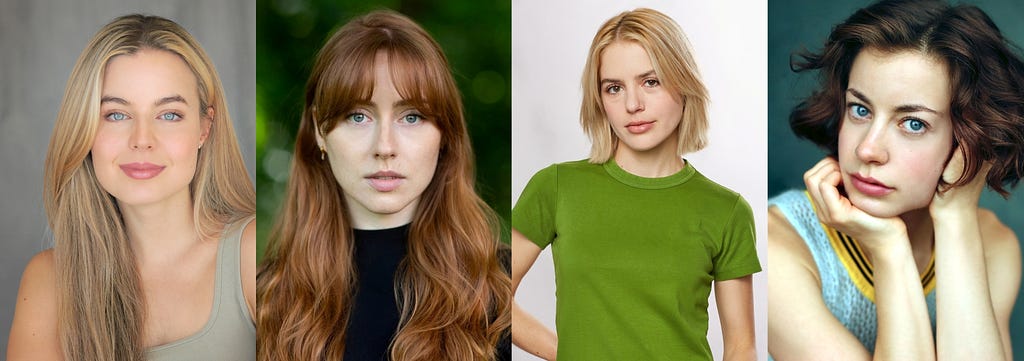
“When people tell you that you can’t do something, it doesn’t actually have anything to do with you. It has a lot more to do with them. When someone says you can’t get there, take a step back and really assess whether that person is living a life you’d want, or at least a life they seem happy in. If the answer is no, then their advice doesn’t mean anything to me.”
I had the pleasure of talking with Alina Tamara, Kelsey Cooke, Isadora Leiva, Sophie Ablett, stars of The Quiet Ones.
AAlina Tamara’s career, much like her life story, does not follow a conventional trajectory. A multilingual actress working across continents, she has found her footing in roles that demand physical grit, emotional complexity, and the kind of adaptability that cannot be taught in classrooms. With performances slated in the upcoming action drama Lotus and the period feature Devil in the Flesh, as well as her recent turn in the Apple TV and Prime Video release War Blade, Tamara is building a résumé that spans genre, language, and geography.
Born into a family steeped in academia, Tamara grew up surrounded by people with multiple degrees. Creativity was not discouraged, but it was not the obvious path either. “It was very much focused on school,” she recalls. “But I was very lucky that my mom wanted all of us to learn an instrument.” She chose the cello at age seven, a decision that opened the door to a lifelong relationship with artistic expression.
Her upbringing was marked by early independence. She left home at 15, relocating from her home country to Canada, where she attended high school, though she did not graduate there. That formative move launched a pattern of constant motion: Berlin, Moscow, Los Angeles, London. In each place, she brought along the one thing that remained constant, her need to create. “When you move around a lot, you do not have much stability,” she says. “Being creative became one of the few stable things I had, something I could always take with me.”
That ability to carry a creative identity across borders is reflected in her on-screen performances. In War Blade, she plays Saskia, a role that required her to spend weeks on set covered in dirt and fake blood, often isolated in the woods or navigating the eerie spaces of a World War II bunker. Far from resisting the discomfort, Tamara embraced it. “It felt really freeing,” she says. “I love that I was cast for something like that because I genuinely enjoy it.”
What draws her most are complex, layered characters. She is relentless about preparation, then she lets it go once the camera rolls. “My favorite part of acting is putting in the hours beforehand and then collaborating with other incredible creatives to bring the story to life,” she says. “I prepare a crazy amount so I can walk on set feeling completely free. Once I am there, I can drop the plans in my head, play, and build the story with everyone on set.”
In The Quiet Ones, an upcoming film exploring the blurred lines between personal agency, performance, and commodification, Tamara plays a character whose fitness focus and entrepreneurial drive spark debate. “I would not go about preaching fitness to people the way she does,” she says. “I do love talking about fitness because I care about health a lot, I just do not preach.”
Tamara’s instincts lean toward caution in matters of influence. Her experiences have taught her that advice is often colored by projection. “When people tell you that you cannot do something, it does not actually have anything to do with you,” she says. “It has a lot more to do with them.” She is wary of unsolicited opinions, particularly in a field where creative careers are publicly scrutinized.
Still, her focus is resolutely internal. “Your path is going to look different, and there is absolutely no point in comparing,” she says. That clarity has allowed her to pursue work across a wide range of environments, often immersing herself in settings that feel unpredictable. She describes her character in The Quiet Ones as someone who, like herself, thrives on risk and is willing to leap into the unknown if there is even a chance of discovery. “That curiosity, and pushing past fear because you sense there is an opportunity, that really resonates with me.”
Despite her growing visibility, Tamara resists being categorized. The ambiguity that surrounds her characters, many of whom have undefined cultural backgrounds or identities, is something she is drawn to. In The Quiet Ones, her character Fabienne was even written to speak twelve languages, a detail trimmed in the final cut, which added to that sense of mystery.
In an industry where artists are often encouraged to “brand” themselves, Tamara offers a different model, that of the actor as traveler, explorer, and shape-shifter. Her path may not have followed a straight line, but the places it has taken her, on-screen and off, suggest a career built less on predictability than on trust. Trust in her own instincts, and in the work itself.
When asked about goals or future aspirations, her answer is light-hearted but telling. “I really want to work with Kate Winslet,” she says. “From everything I have seen and heard, she seems hardworking, grounded, humble, and deeply talented.”
In a field that rewards visibility, Alina Tamara is not rushing to explain herself. She is more interested in taking chances, living the questions, and letting the roles speak louder than the résumé. Her advice for younger actors reflects that ethos. “Watch others, be proud of what they have done, cheer them on,” she says. “But do not compare yourself. Your path is your own.”
Kelsey Cooke’s trajectory into acting was shaped less by the overt pull of ambition than by a quiet, persistent interior world. Raised in the rural boroughs of Hertfordshire, England, she describes her early years as those of a reserved, imaginative child. A self-described “village kid,” she spent much of her childhood in nature, climbing trees and bouncing on trampolines with her older brother. But while the physical world bustled around her, she was often somewhere else, deep inside stories, shaped by books and, eventually, television and film.
It was this strong imaginative current that led her toward acting, although she kept the ambition private for years. “I didn’t tell anyone I wanted to be an actor until I was about 17,” she recalls. “It was this weird little secret because I was so shy and knew people would be really surprised.” For Cooke, coming out as an aspiring actor felt more daunting than coming out as queer. “It was more of a big deal to tell my parents I wanted to act than it was to come out,” she says with characteristic understatement.
After formally training at Guildford School of Acting, Cooke made her screen debut as Tara in The Sandman, Netflix’s adaptation of the Neil Gaiman comic series. She quickly began stacking up screen credits, carving out a space for herself in both lead and supporting roles across film and television. Awards recognition came early, Best Actress honors at the Manchester Film Festival for her performance as Fiona in Little Fantasies, and two more Best Actress awards for her work in Mr Mimoto, where she played Frankie.
Despite this early momentum, Cooke’s perspective on the industry is marked by a striking humility. When reflecting on a pivotal moment during the production of the World War II miniseries The Lost Women Spies, she recounts the director Justin Rickett asking her which camera angle she’d prefer to begin with: wide, mid, or close-up. “I was like… you’re asking me what I want?” she says. It was a moment that signaled to her that collaboration, not hierarchy, could define a production. “It felt like a fully shared creative effort,” she says. “That moment meant so much to me.”
Cooke’s most recent performance, as Charlotte in the film The Quiet Ones, has further solidified her growing reputation for nuanced, emotionally rooted portrayals. The film, which follows a group of women navigating the glamour and grit of a hyper-capitalist digital underworld, gave Cooke the space to explore the interplay between vulnerability and idolization. Her character enters the story disoriented by grief and dislocation, drawn into a chaotic new world by the magnetic force of another woman. For Cooke, Charlotte’s journey was intimately familiar.
“I think Charlotte starts off as a combination of an abandoned puppy and a naive, well-cared-for princess who’s just been tossed out,” she explains. “She’s super vulnerable, but also incredibly ignorant, because she’s never had to work for anything before.” What resonated most, though, was Charlotte’s wide-eyed admiration of the other women around her. “To be honest, I find myself doing that a lot,” Cooke admits. “That massive appreciation for other women, learning from them. I really connected with that.”
The film’s themes, particularly its commentary on the commodification of women’s bodies and the blurred boundaries between empowerment and exploitation — echo real-world tensions, especially for young creatives navigating an online-first economy. Cooke speaks about the project with a blend of seriousness and affection. “It tackles a lot of cool and relevant topics, but it’s all contained in this sparkly, neon, chaotic little frame,” she says. “In my head, it was always kind of an Alice in Wonderland thing. Charlotte tumbles down this rabbit hole and meets all these incredible characters.”
A standout memory from her early stage career reveals a different, lighter side to Cooke’s artistry. While performing in a stage adaptation of Let the Right One In, a climactic scene required fake blood to seep from every pore of her character’s body. The production rigged a pipe to run through her clothing and hair, ending in a small halo hidden in her hairline. But on one occasion, the pressure in the pump was too high, and instead of an eerie ooze, the blood shot straight into the air. “It was a full-on blood fountain,” she laughs.
That capacity to move between humor and emotional precision is part of what gives Cooke’s performances their texture. It also reflects her broader philosophy as a working actor. When asked what advice she would give her younger self, she names two guiding ideas: to stop trying to be other people and to embrace the unpredictability of the path. “Honestly, it’s usually the things you’re scared of in yourself, or the things you feel vulnerable about, that are actually your ‘special sauce,’” she says.
On social media, Cooke keeps things personal but professional, often posting about projects on Instagram (@KelseyCooke). She also shares episodes from her web series, which she describes as “silly and fun,” a balance to the weightier roles she often plays. When pressed about dream collaborators, she doesn’t hesitate: Sara Bareilles. “She’s my idol, the love of my life,” she jokes. “She could run me over with a truck, and I would thank her.”
It’s a fitting snapshot of who Kelsey Cooke seems to be both on and offscreen, sharp, grounded, wryly self-aware, and unafraid to lead with sincerity. While her characters might vary, her performances are consistently marked by a willingness to explore emotional depth without self-protection. For an actor who once hesitated to even admit the ambition, she now appears squarely, and confidently, in her element.
Born and raised in Miami Beach to Argentine parents deeply embedded in the visual arts, Isadora Leiva grew up in an environment that was equal parts creative and adult-centered. With a father working as a Latin American fine artist and a mother equally immersed in that world, Leiva’s childhood was largely spent at galleries and exhibitions, where she learned early to find her own imaginative footing. Often the only child at these events, she passed the time with bags of dolls her mother packed for her, developing a habit of storytelling that would later form the foundation of her career in acting.
“There was this choice,” she recalls, “either learn to hang out with adults and talk about art, or just be bored.” Instead, she chose to build fictional worlds with her toys and later with her friends, sharpening a narrative instinct that would prove formative. The transition to acting felt seamless. “I always loved storytelling,” she says. “So when I eventually studied theatre, it never felt like a big leap — it was already part of who I was.”
After graduating from Florida State University in 2017 with a BA in Theatre, Leiva moved through New York and back to Miami before ultimately settling in Los Angeles. Her on-screen work spans shorts, television, and feature films, with credits in Hotel Cocaine, Death of a Fool, and Pigskin, among others. Most recently, she appears as Brylee in The Quiet Ones, a genre-blending film that explores power, pleasure, and commodification through a female-led ensemble.
The role marked something of a turning point in Leiva’s screen presence. Often cast in more delicate, ingénue-type roles, she found in Brylee a character that allowed her to tap into something more unapologetic and sharp-edged. “She’s passionate and strong and kind of feisty,” Leiva says. “And even though we’re different in some ways, I really identified with her.”
The similarities aren’t entirely about temperament. Leiva recognizes in Brylee a familiar use of humor as a means of connection — a teasing, slightly aggressive tone that masks something more earnest. “It’s a way of bonding, a way of playing. And I think I do that too,” she says. “I toe that line between mean and funny, and people know I’m not actually being mean.”
That balance between play and precision carries into how she views her place on set. One formative — and deeply unsettling — experience during a student film early in her career left a lasting impact. A mismanaged physical scene resulted in an actor unexpectedly grabbing and throwing her downhill without any prior discussion or consent. The moment, which physically hurt and emotionally unsettled her, taught Leiva a difficult but essential lesson: she would need to be her own fiercest advocate.
“I screamed at him. And I don’t usually scream,” she recalls. “But I was angry. My boundaries had been crossed, and no one had warned me.” Afterward, she overheard crew members labeling her a diva. “But if that’s what setting boundaries gets you called, then fine. I’ll be the number one diva.” It’s a story she recounts with both humor and clarity, but the takeaway is serious: asserting agency on set isn’t optional. “You’ve got to protect yourself. If something feels wrong, speak up.”
That instinct to speak up extends to her broader views on the industry. Leiva is quick to point out that actors are often expected to be grateful for every opportunity, sometimes at the expense of their own safety or well-being. “But you’re the only one who can truly advocate for you,” she says. “It’s not just about creative choices. It’s about contracts, working conditions, physical safety. All of it matters.”
Her advice to younger actors is pragmatic: save money, be ready for the ups and downs, and don’t let rejection dictate your self-worth. “The work comes and goes. That’s just the nature of it. But your value isn’t tied to whether you book something or not.” She’s candid about the emotional volatility that can come with acting and stresses the importance of emotional separation between one’s art and one’s identity. “You’ve got to stay grounded. There are a million reasons you don’t get a role, and most of them have nothing to do with how good you are.”
Currently based in Los Angeles, Leiva remains active on the independent film circuit and continues to build a career that straddles both grit and grace. She’s also featured in It Needs Eyes, a film presently on the festival circuit, and maintains a modest but curated social media presence (@leivaisadora) where she highlights her professional work.
Asked who she’d most like to collaborate with, she names director Alfonso Cuarón, citing his richly imaginative visual language and world-building. “It all feels like toys, his creatures, his sets. I’d love to be one of those creatures.”
Though still early in her career, Leiva’s trajectory is marked by self-awareness, adaptability, and a quiet insistence on doing things her own way. “I’ll do whatever it takes to win,” she says, half-joking, “as long as it’s morally okay.” That qualifier is key. She’s clear-eyed about ambition but even clearer about boundaries. It’s a combination that’s rare — and increasingly necessary — in the world she’s chosen.
Sophie Ablett is a London-born actor whose work spans stage and screen, with roles that traverse periods, genres, and emotional landscapes. A graduate of L’École Internationale de Théâtre Jacques Lecoq in Paris, Ablett’s training roots her in physical theatre, but her career has evolved with a versatility that defies categorization. Whether portraying the lead in a West End production or inhabiting morally complex characters for television, she brings a studied intensity and curiosity to her work, qualities that, by her own account, have shaped not just her performances, but her approach to life.
Ablett made her West End debut playing the lead in The Railway Children, a role that introduced her to British audiences as a performer capable of holding the stage with restraint and nuance. From there, she moved into television, with credits that include Tell Me Everything (ITV), Doctor Who (BBC), and House of the Dragon (HBO). But she resists the idea of a linear trajectory or a single defining moment. Instead, she sees her path as one shaped by appetite — for experience, for characters, and for transformation. “I describe myself as creatively greedy,” she said in a recent interview. “I like to do everything.”
That wide-ranging appetite emerged early. Growing up in London in a family she describes as “normal, though quite niche”, her mother worked in the NHS, her father in patents, Ablett’s creative instincts weren’t part of a broader family tradition. Her siblings chose more conventional careers. As the middle child, she carved out a different lane. She danced, played football, and eventually dipped into music during the pandemic, briefly experimenting as a singer-songwriter. Her career, in a sense, reflects that restlessness and refusal to pick one thing.
Curiosity is the throughline. It’s a word she returns to often when speaking about acting, describing it as the core engine of her work. “It’s definitely a career for the curious,” she said. “You get to step into different worlds, learn from them. Whether it’s the world of social media creators, the future, or medieval times — you’re always absorbing something.” For Ablett, acting is less about performance than investigation. Her listening habits, ranging widely across podcast genres — mirror that tendency toward open-ended exploration.
That intellectual and emotional curiosity is evident in her portrayal of Danny in The Quiet Ones, a psychological thriller that premiered in 2025 and releases digitally in 2026. In the film, Danny emerges as both ringleader and antagonist — a self-made figure who moves through the story with poise, strategy, and emotional reserve. It’s a character worlds away from Ablett’s own personality, something she acknowledges. “Danny is somewhat the villain of the piece, so I’d hope I don’t present that way in real life,” she joked, while reflecting on the character’s emotional fortitude. “She doesn’t give energy to her haters. She makes conscious choices. That mindset was actually really powerful to step into.”
It wasn’t easy, she admits. Actors, especially early in their careers, often default to doubt and second-guessing. Stepping into a character like Danny — self-assured, unapologetic, unbothered — required a shift in posture. “It was nice to dip into that kind of resilience and strength,” she said. In real life, Ablett admits to apologizing too much and being more emotionally controlled than explosive. But acting, she believes, offers a kind of experiential learning. “You learn from the characters you play,” she said.
That tension, between control and emotionality, recurs in her reflections on the industry. Ablett is candid about the challenges actors face, particularly the psychological wear of a career built on auditioning and rejection. Still, she avoids cynicism. Instead, she advocates for small-scale celebration: recalling auditions that felt like breakthroughs, or moments where creative risks paid off. “It’s hard to get wins in this industry, so you have to build a structure that lets you celebrate those moments.”
She also speaks frankly about comparison, particularly in the age of curated digital lives and highly visible success stories. Rather than dismiss the impulse outright, she tries to reframe it. “It’s normal to feel jealous,” she said. “But we need a better word for it. You can aspire to be in someone’s position and still be happy for them.” Her version of success is self-defined: living in London, working regularly, and staying creatively engaged.
For now, Ablett continues to build a career that values range over repetition. She has several TV projects slated for release, and maintains a low-key online presence through her Instagram account, @Sophie__Ablett, where she posts selectively about upcoming work. She remains interested in performers who blur boundaries, citing Reese Witherspoon as a creative role model. Witherspoon’s evolution from actor to producer and tastemaker — building an empire that responds to the market while shaping it — represents a career path Ablett finds inspiring. “Her creative decisions are incredible,” she said. “She listens to what people are connecting with and turns that into content.”
That attentiveness — to story, to audience, and to herself — seems central to Ablett’s work. As an actor, she gravitates toward roles that require internal excavation as much as outward transformation. And while she may not share the bravado of some of her on-screen personas, her willingness to interrogate complexity is what makes her performances linger.
Yitzi: Alina, Kelsey, Isadora, and Sophie, it’s a delight and an honor to meet each of you. Before we dive in deep, our readers would love to learn about each of your respective origin stories. I’ll start with Alina. Alina, can you tell us the story of your childhood and how you grew up?
Alina Tamara: I grew up in quite an academic environment. Most of my family have multiple degrees, so it was very much focused on school. But I was very lucky that my mom wanted all of us to learn an instrument. I started playing the cello when I was seven, and from there, I really started to fall in love with being creative. Over the years, I picked up more and more creative outlets.
I left home quite young. I moved to Canada when I was 15 and had to go to high school there. From then on, I traveled a lot and lived in quite a few different places. I think when you move around a lot, you don’t have much stability or things you can really lean on, because your friends change and your family isn’t around. Being creative became one of the few stable things I had, something I could always take with me.
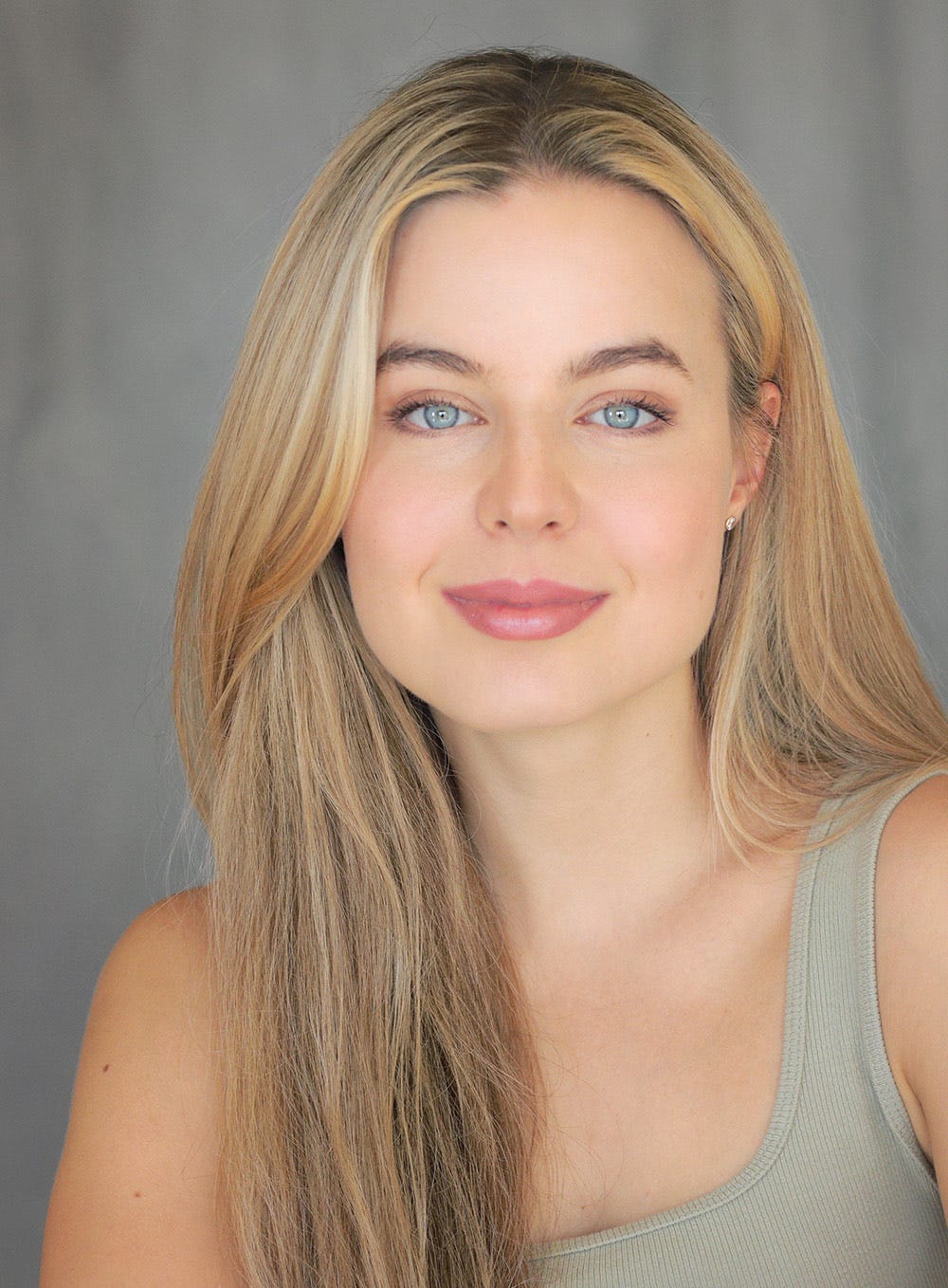
Kelsey Cooke: I grew up in Hertfordshire in the UK, a very rural borough just north of London. I was really just a little village kid. I have an older brother, so we spent a lot of time climbing trees, playing outside, and bouncing on the trampoline. It was a very active childhood.
I was quite a shy and insular child. I didn’t mind spending time on my own at all and was really into books. That carried through into secondary school. I always felt very creative and had a strong imagination, I lived in it a lot. But I didn’t tell anyone I wanted to be an actor until I was about 17. I kept it this weird little secret because I was so shy and knew people would be really surprised. There was a kind of embarrassment around admitting it.
I always say, because I’m queer, that it was more of a big deal to come out to my parents about wanting to be an actor than it was about being queer. They were super supportive though.
I had a nice little group of friends at school, but I was very quiet, led by my imagination, and really into growing up in nature, trees, woods, that kind of thing. Eventually, I admitted I wanted to act. I think it was always going to happen because of how much I lived in my imagination. And like Alina, I held on to TV and films as a source of comfort. At some point, I realized if I wanted to be part of that world, I was going to have to tell someone. So yeah, that was me.
Isadora Leiva: I was born and raised in Miami. My parents are Argentinian, and they both studied art. My dad is a fine artist, a Latin American fine artist, so a lot of my childhood revolved around going to art shows. I was an only child, so I either had to learn how to grow up around adults and get involved in the art community or not really have much fun, that was kind of the choice.
Because my parents were so involved in the arts, they encouraged me to be involved too, in whatever way I could. They never pressured me to pursue an art degree, but it still felt like the obvious path in some way, even if it wasn’t the exact same direction.
Since I was an only child and often bored at those events, my mom would pack me a little bag of toys and dolls. I loved playing with dolls, had a really active imagination, and loved storytelling. When my friends would join in, it was even better because we could make up stories together. Telling stories alone can get a bit lonely.
So for me, the transition into acting never felt like a huge leap. I think I always loved acting, playing stories, and being a storyteller. I studied theater in college, which is kind of the gateway drug to anything in the arts. Then I lived in New York for a bit, moved back to Miami, and now I’m officially in L.A. So that’s a little bit of my backstory.
Sophie Ablett: Hi. I grew up in London with my brother and sister and my parents, who both had very normal, though quite niche jobs that no one really understands. My mom worked in the NHS, and my dad was in patents. So a creative path wasn’t really the obvious choice, definitely not one my siblings took. I guess I’m the classic middle child.
As a kid, I danced, played football, I was just greedy. I describe myself now as creatively greedy, and I still am. I like to do everything. I even think back to COVID, when I had a brief stint as a singer-songwriter. I really just love doing it all.
I was always really curious, and that’s been a major driver for me. That curiosity makes a lot of sense in this career, because one of the gorgeous things about acting is getting to play different people and step into different worlds. You learn so much, whether it’s the world of social media creators, the future, medieval times, whatever it is.
It’s definitely a career for the curious. And that’s me. I’m endlessly curious about the world. Even the range of podcasts I listen to is proof of that. So yeah, that’s me.
Yitzi: Okay, beautiful. So this is our next question. Alina, you probably have some amazing stories from the different projects you’ve worked on, different sets you’ve been on. Can you share with us one or two stories that most stand out in your mind from your professional life? Give us a sense of what it’s like to walk in your shoes.
Alina Tamara: One that comes to mind is from a previous project I worked on with Nick. What really stood out was that for the entire shoot, which was about three weeks for me, I was completely covered in dirt and blood. I remember being so envious of people who got to wear mascara. I’d be like, “Oh my God, you get to wear mascara?” Meanwhile, I was just back in the blood and dirt again. It was a lot of that, being in the woods, just filthy for three weeks. And I absolutely loved it. It felt really freeing. I love that he cast me for something like that because I genuinely enjoy it. I was like, “Yes, this is my kind of role.”
We were also shooting in a World War II bunker, which was a really interesting set to work on. Very creepy though. I didn’t like being in any of the rooms alone because it felt like there were ghosts in the building. But yeah, that’s one of the stories that really sticks with me.
Kelsey Cooke: I think I have two that really stand out and have left a mark on me in my (still quite brief) career so far.
The first one might sound kind of tame, but I feel like maybe the other girls, or really, any actor I’ve told this to, have had the same reaction, like, “Ah, yes.” I worked on a miniseries called A Small Light, which was about real women in World War II who were sent into the field as spies. The men were getting caught so frequently at that point because suspicion was so high, so they started sending women instead.
Anyway, I turned up on my first day to shoot this really emotional scene. It was a recollection of one woman’s traumatic experience during the war, and I was super nervous. It was a big, heavy scene, and it was based on someone real. Everyone on set was lovely, really professional, and the energy was very respectful, we all knew we were handling something sensitive.
But what really struck me, and something I still think about to this day, was that when I stepped on set, the director pulled me aside and said, “Kelsey, we’re going to do a wide shot, a mid, and a close-up. Which would you prefer to start with?” And I was like… you’re asking me what I want? I’d never been on a set where the actor was given that kind of input. I was fully ready to spend an hour and a half bawling my eyes out, just doing whatever they needed in whatever order. But he asked me what I’d prefer.
I chose to start with the close-up because I felt really ready and thought it would be strongest early on. Then we worked outward from there. And that moment just meant so much to me. It was one of my favorite collaborations ever, because it felt like a fully shared creative effort, with everyone understanding and respecting each other’s roles. It might seem small, but it was huge for me, and I’ve held on to it since.
The second story is just a really fun one. Kind of like Alina’s, I was also very, very messy the whole time. I did a production of Let the Right One In, which is about a young vampire girl. There’s this moment in the script where the playwright gives no direction, he just writes that blood begins to seep from every pore of my character’s body. That’s it. Just, “Blood seeps from every pore.” And then basically leaves it up to the team to figure out how to make that happen onstage.
So, the way we did it: we rigged up a pipe connected to a pump of fake blood offstage. It ran up the back of my leg, inside my trousers, all the way up my back, through my hair, and ended in a little halo-like shape buried in my hair.
Then, at the big moment, the team backstage would start pumping blood through the pipe. It was supposed to seep out and drip down my head in this really eerie, dramatic way. But one night, they went a bit too hard on the pump. The pressure was too much, and instead of oozing, it just shot out of the top of my head like a full-on blood fountain.
So yeah, those are probably my two most memorable stories so far, one deeply meaningful, and one hilariously chaotic.
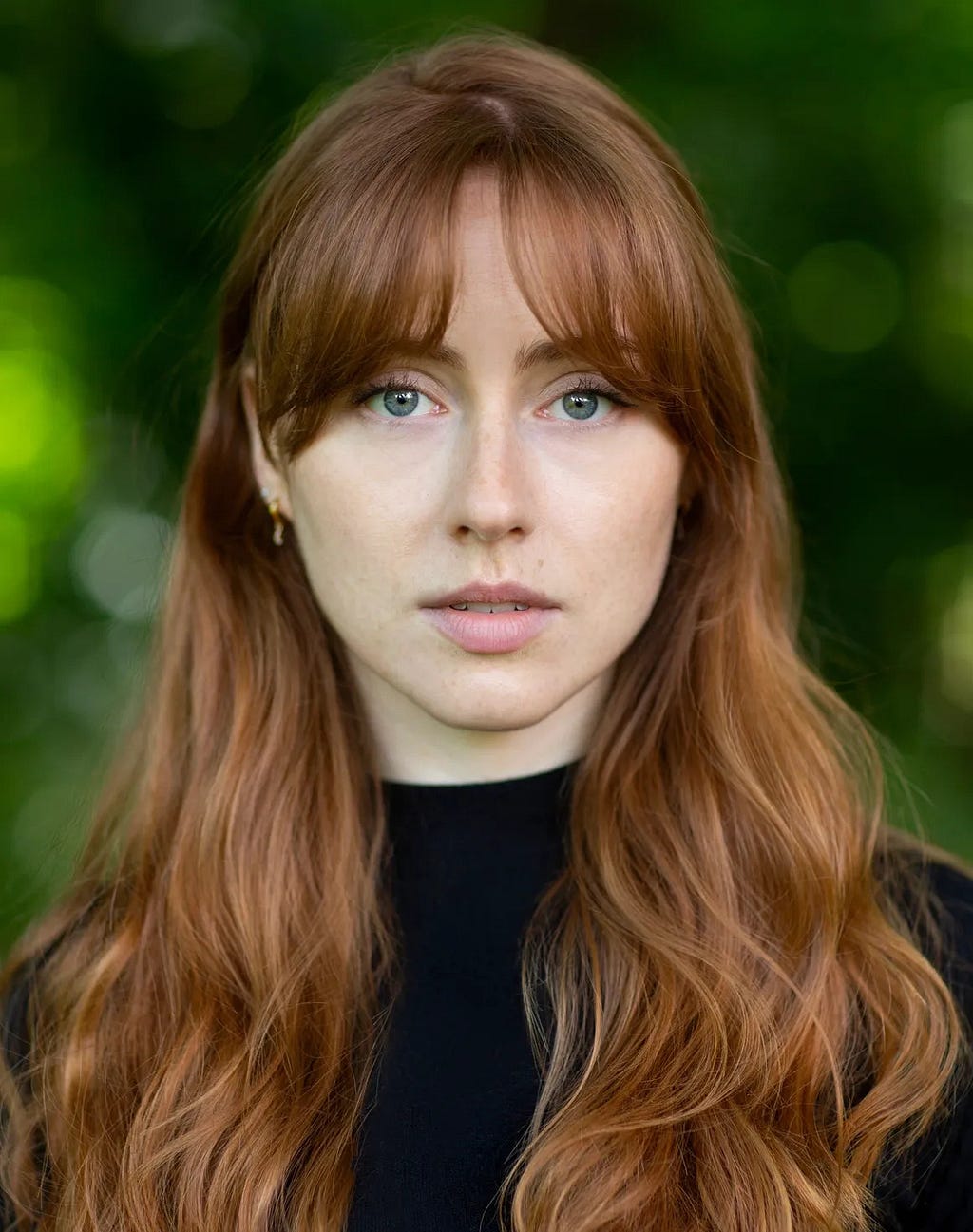
Isadora Leiva: Wait, that was so funny. I’m so sorry. And also, I wish directors would do that more often, ask. Because it could have gone another way. Like, I probably would’ve said, “Oh, wide first so I could grow into it,” but that’s really great. We need more directors like that. That’s dope.
Memorable moments on set… I have one that’s not very great, but I learned a lot from it. I went on a set, it was a student film, so I want to be more lenient since people are growing and there should be space for that, but I went on a set where, in the script, there was a fight scene between me and this other character who was playing my brother. It wasn’t really a fight scene. We just tussled, maybe rolled around in the dirt a bit. No actual fighting. But that was written in and supposed to happen.
I got there and realized we hadn’t had any rehearsals. I asked, “Do you think we could run it a couple of times with you? Like, what do you want to see?” The director said, “Oh yeah, you guys can do it while we’re shooting this scene.” I figured maybe there wasn’t enough time. So the other actor and I choreographed something ourselves and agreed on what we were going to do. My back was going to be going downhill, like, actual downhill, so we didn’t want to fall backwards. I could’ve kept rolling. So we aimed for a sideways fall. We rehearsed it and ran it like you would for a stage or film fight scene, at certain percentages.
When it was time to shoot, we showed it to the director. She said okay. Then, during the actual take, the actor playing the dad, who was supposed to verbally stop the fight with something like “No, stop!” or “Cut it out!”, suddenly decided to physically grab me and toss me downhill.
It hurt. He was a big guy, tall and solid, and it genuinely shocked me. I love when co-stars surprise you with something new in a scene, but I felt so upset because how could you not tell me you were going to physically grab me and throw me? I was literally up in the air, my feet weren’t even touching the ground, and he just tossed me.
Immediately, I lost it. And I’m not usually like that. I know in the movie I play kind of a b, , but in real life I’m not an aggressive person. I don’t like fights. I’m a peacekeeper. I talk a lot, sure, but I don’t like confrontation. This was the only time I’ve truly been a b, to someone right away. I screamed at him.
Everyone thought it was part of the scene. Then the director called cut, and I was still screaming at him, like, who does he think he is? I was mad. And after that, here’s the biggest lesson: the rest of the set? I’d turn a corner to walk into another room, and I could hear crew members talking about me. Saying I was a diva, that I was exaggerating. But it wasn’t their body. They weren’t the ones being tossed. They weren’t the ones who had their boundaries crossed. There had been no communication. And the actor never apologized. I’m still getting riled up, and this was years ago.
The biggest lesson I took from that is, I can set my boundaries. And if setting boundaries makes people think I’m a diva, then I’m the number one diva. I’m not afraid of that anymore. As an actor, it can be so scary to say what you need or assert boundaries, because you don’t want to be labeled difficult. But I’d rather be that than be a dishrag on set.
So yeah, that was a really memorable scene. They are all blacklisted. I have a little list. I’ll never work with any of them again. But yeah, that’s definitely memorable.
Sophie Ablett: Once this guy threw, no, that’s not my story. (Laughs)
Sorry, I’m still kind of overwhelmed by that story, but it’s also so interesting hearing how you’re framing it, like, “Oh, I was a bit of a b, ” or whatever. And I’m just thinking, no, forget that. That’s dangerous. That’s actually just assault. Let’s call it what it is. Anyway, conversation for another day.
Yeah, I think memorable moments for me are definitely on set. Right after we shot Quiet Ones, I went on to this TV series that was really memorable for me. They dyed my hair orange, which was a huge shift in personality, it just felt like a whole different version of me. The character was amazing. There’s this one scene where she sets fire to a car, which is obviously a really cool thing to do, something you’re never going to do in your regular life.
It was also a pretty intense shoot because we only had one car. Those things are expensive, so you’ve only got one take. I set fire to it, and there’s a little explosion that happens. My character’s in the middle of a crisis and is supposed to be really calm about it, so I had to walk away without reacting. I knew when the explosion was coming, and all I could think in my head was, “Don’t blink. Don’t blink. Don’t blink.” I was so focused.
And because it was such a big scene, everyone came out to watch, firefighters, the whole crew. It was a lot of pressure, but also just really cool. That’s definitely a scene I won’t forget. It looks great. Fire’s cool. There’s no other way to describe it.
I kind of flinched, but it worked, just because I was so tense and focused. It actually played well for the character since she’s really intense in that moment. We got the shot. It was fine.
Yitzi: Amazing. Now let’s come to the main part of our discussion. Each of you, tell us from your perspective, you’re all insiders, why do we have to watch Quiet Ones? Why is it a must-watch?
Kelsey Cooke: Totally, I’m down. It’s a wild ride. Soph, you said it perfectly the other day when we were chatting, it’s fun. It’s a fun film. It tackles a lot of cool things and some really relevant topics, but it’s all contained in this sparkly, neon, chaotic little frame.
Sophie Ablett: I would say it definitely makes you think. We were talking about that, the fact that it’s fun, but we got caught up in the themes, which are super interesting. All of us are really interested in how we commodify female bodies, and the way there’s this double standard: you’re expected to look pretty, but when you monetize that, you’re labeled negatively. It’s such a tricky, double-edged thing. We can get caught up in the psychology around that. That was especially big for Danny because she’s very business-minded about it. Her choice to enter that world is actually a shockingly logical response to the question: how do I make a lot of money as a young woman? We see that now with some of the stars on OnlyFans. It’s a really sensible way to make money, but it comes with the risk of serious social and moral judgment later on. What’s interesting is that the film includes all of that, but it doesn’t force it on you. It’s not preachy. It still presents this fun, glitzy, glamorous world in a way that feels alluring, and that’s part of why these women want to be in it. They’re also there to have a good time, to be free, to feel liberated. I think all of us probably connect with our characters in that way. The joy of being an actor, of doing this career, comes with a sense of freedom and flexibility. These are girls who are self-employed, living a good life, chasing pleasure and joy while also trying to make money. They’re trying to bring those things together, and obviously, it goes a bit wrong. But that’s part of the fun of the film too. These are fun, cool women.
Alina Tamara: Yeah, that’s what I think too, and as crazy as they are, they’re fun. It’s super rare to see that on TV, when people are just unapologetic like that. I love that we don’t over-explain why they’re doing what they’re doing. You get a little bit of a sense, but that’s not what the film is about. Each of them is very much themselves. They’ve created these specific characters and fully inhabit them, and I love that. Most people tend to be apologetic about who they are or what they want to do with their lives, but these women aren’t. They’re like, “This is what I’m going to do,” and that’s it.
Kelsey Cooke: It’s quite cool. In my head, it was always kind of an Alice in Wonderland-esque thing. Charlotte sort of tumbles down this rabbit hole and meets all these incredible characters, led by Danny. It becomes this fever dream, a chaotic take on a slice of the modern female experience in a weird way.
Isadora Leiva: Yeah, I think all these points are perfect. It’s really cool to watch a group of distinctly unique women who are power-hungry and willing to do whatever it takes to gain control.
Yitzi: Yeah. So let’s dive into that a bit. I’m going to ask you to tell us a bit about who your character is, and then how you’re similar to her in real life and how you’re different.
Alina Tamara: Well, obviously, I think me and my character are very different in our career paths and in our moral compass, I’d say. But I really connected to her multicultural background. There’s this sense that we don’t really know where she’s from, and I liked that ambiguity. She also talks about fitness a lot, which is a big theme for her. I do love fitness too, but I wouldn’t go about preaching it to people the way she does.
I love that she’s trying to get her message across, even if it’s in her own little messed-up way. I also connected to the idea of taking chances. I do that a lot in my own life. When they’re asked to join this house, the girls have no idea what they’re walking into. But she still goes for it. And I can relate to that mindset, just being like, “Okay, I’m going to go there and see what happens.” That curiosity, and pushing past fear because you sense there’s an opportunity, that really resonates with me.
Kelsey Cooke: Charlotte… I feel very fond of her. She starts the film absolutely riddled with grief, which is interesting because it’s actually not touched on too much. It’s sort of mentioned here and there, but it’s not a main driving part of her character externally in the film. For me though, it was a core starting place for her. She’s stripped bare of everything she found safety, family, and home in.
The one person in her family, her dad, who she, in my head and in discussions with Nick, had a good relationship with, is taken away from her. I imagine her as a combination of an abandoned puppy at the beginning, but also an incredibly naive and looked-after princess who’s just been tossed out. It’s those two things. She’s super vulnerable, but also incredibly ignorant, because she comes from a very well-to-do family and has never had to work for anything in her life up until this point.
She carries a lot of emotional baggage and is deeply damaged. You can see that just from the one scene with her sister at the beginning. Her vulnerability, her low self-esteem, and her sort of modeled panic lead to this adoration of the women around her, women who are so grounded in themselves and unapologetically who they are.
That’s something I really relate to with Charlotte: this wide-eyed admiration of other women. To be honest, I find myself doing that a lot. It’s something that can be both a blessing and a curse. When I was younger, it came from a place of vulnerability and low self-esteem, but as I get older, it’s more about this massive appreciation for women I see, and learning from them.
So that’s the deeper side of Charlotte I connect with. I’d hope I’m less impressionable now. When I was younger, I probably was quite easy to manipulate in that way. I think a lot of young people are, especially when you become infatuated with someone the way Charlotte does. She’s desperate for money, and Danny comes in as a hero, her superwoman, her savior. She’s sparkly and amazing and beautiful and magnetic, and she’s like, “I can get you tons of money.”
Of course Charlotte buys into that, especially given where she’s come from.
On a less deep level, I think I’m quite similar to Charlotte in her sense of humor. She has a very dry, almost “wink at the camera,” The Office-style sense of humor. She’s often like, “What is going on here? Am I the only one thinking we’re all going a bit crazy? No? Okay, I’ll just go with it then.” That kind of self-aware but still rolling-with-it humor feels very close to me. It was fun to play with because I got to bring parts of myself to that.
I know I’ve rambled a bit about her now, but those are the main similarities I feel we share. And hopefully, I’m not quite so easily manipulated. I would hope.
Isadora Leiva: Before I played Brylee, most of the film work I’d done involved playing naive, ingénue-type roles, young girls who were very soft-spoken. Brylee was the first character where I felt, even though we’re quite far apart morally, I really identified with her.
She’s passionate, strong, and feisty, and I think I’m leaning into more of my own feistiness. I don’t think I’m that much of a bitch but Brylee and I are similar in how we connect with people. I think I also use this almost teasing, slightly mean tone as a way to play and connect. It’s like I’m tiptoeing the line between mean and funny, where people go, “Oh, she’s just joking. This is how she bonds.”
The way Brylee treats Danny especially, being mean and aggressive, I think real me would also be competitive like that, but secretly fawning over Danny at the same time. I’m also similar to her in that I’ll do anything to win. I won’t go as far as she does, but I’ll go pretty far… morally okay far. And I’ll definitely be sour about it if I lose.
I think those are the main ways we’re similar.
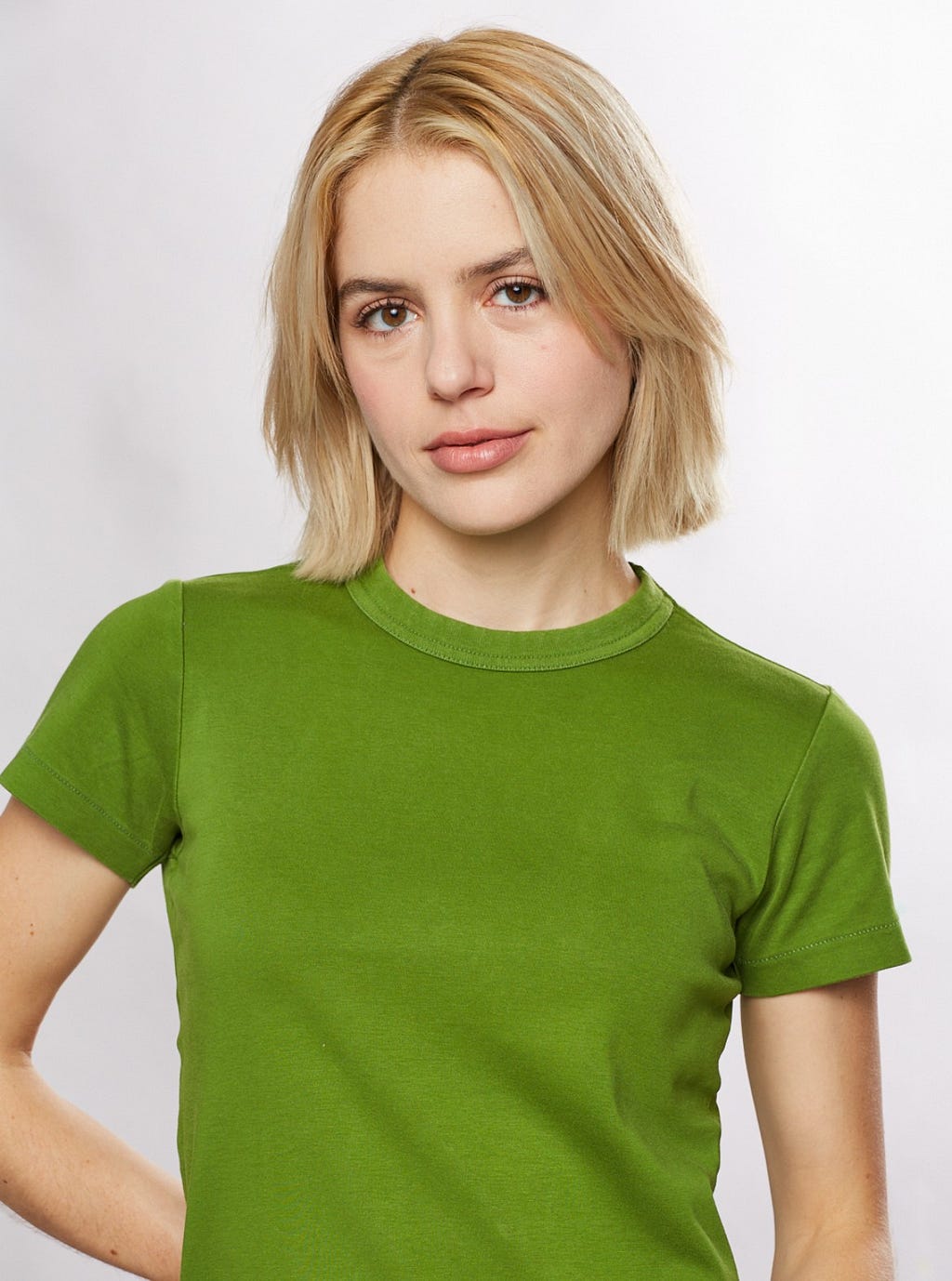
Sophie Ablett: I think we’re quite different. Or at least, I like to think we are. Danny is somewhat the villain of the piece, so I’d hope I don’t present that way in real life. But that’s part of why I loved the role, it was a real challenge to step into something so different.
We shot this a little while ago, and I do think you learn from the characters you play. Alina and Kelsey both mentioned that unapologetic attitude, and that was a huge part of Danny. It’s not something that comes naturally to me. I definitely apologize too much. I definitely give in to feelings of guilt or doubt, and Danny doesn’t do that at all. She’s so direct and clear about what she has time for and what she doesn’t. She doesn’t give energy to her haters, and she makes conscious choices about that. That mindset was actually really powerful to step into.
I found it difficult, though, especially being an actor where you’re constantly auditioning and questioning your life and performance choices. So walking in the shoes of someone that certain was hard, but also really refreshing. It was nice to dip into that kind of resilience and strength.
In terms of similarities, I think the biggest point of contact I had with Danny was her emotionality. She’s explosively emotional at times, but also has an incredible level of self-control. I can identify with that. I’m an emotional person, but I tend to be very controlled in how I express or release that.
It’s actually something I’m working on. I’d like to be a bit freer, less controlled. In the film, we see that contrast with the scenes where Danny plays out fantasies of violence, and then later completely loses control. For an emotional person, the goal isn’t to get to that kind of boiling point, but I can recognize those traits in myself, not that I would follow her path, of course. But I identify with parts of her, to a certain degree.
Yitzi: So this is our signature question, and then we’ll wrap up after that. Each of you have learned a ton from your experiences and you’ve been blessed with a lot of success. Looking back to when you first started acting, can each of you share two things you know now that would’ve been really helpful to know back then? Alina, do you want to start?
Alina Tamara: I think the biggest one for me is that when people tell you that you can’t do something, it doesn’t actually have anything to do with you. It has a lot more to do with them. When someone says you can’t get there, take a step back and really assess whether that person is living a life you’d want, or at least a life they seem happy in. If the answer is no, then their advice doesn’t mean anything to me.
That’s been really important, especially because I think in this industry, for some reason, people feel like they get a say. I’m saying this having been in it for quite some time. When it comes to acting, or anything in the arts that they think they “kind of” know, people can be harsh and overly opinionated. In other careers, people are sometimes less vocal because they don’t feel as informed. But with acting, I’ve heard “you won’t make it” more times than I can count, and usually from people I never even asked.
So, especially for young actors, protect yourself from that. Be very intentional about who you take advice from.
The second thing is, it doesn’t matter what other people’s paths look like. That’s not your path. Your path is going to look different, and there’s absolutely no point in comparing. Everyone is born into different circumstances, has different networks, and different things to work through to get where they’re going.
So watch others, be proud of what they’ve done, cheer them on. If they’ve achieved something, that’s amazing. But don’t compare yourself, because it will only make you feel bad, and that’s not what life is about. It’s actually a good thing that we all have different journeys. Just stay focused on your own path, and you’ll get there.
Kelsey Cooke: Firstly, that was beautiful, Alina, and I wholeheartedly agree with everything you said. Truly. And it’s a constant lesson, I have to keep reminding myself of those things all the time.
For me, the first thing I’d say, and it ties into not comparing yourself to others, is to stop trying to be other people. You can admire others, and I do, I see the good qualities in people so easily, but especially in a world where we’re constantly comparing ourselves on social media and only seeing the highlight reels, it’s so easy to fall into the trap of, “What are they doing that I’m not?” or “What’s their special thing, and can I replicate that?”
But no, their special thing is inherently theirs, and your special thing is inherently yours. And honestly, it’s usually the things you’re scared of in yourself, or the things you don’t like or feel vulnerable about, that are actually your “special sauce.”
So stop trying to morph into someone else or into what you think people want you to be. Lean into yourself more. That’s something I have to remind myself of every single day.
We’re conditioned not to do that. And it’s not just women, though I think women do get an intense version of it, it’s everyone. Society profits off telling us what we’re lacking and selling us the idea of who we “should” be. But truly, your core self is your power. Bring as much of that as you can into your work. You can’t replicate someone else, and they can’t replicate you. That’s what makes your work unique and organic.
The second thing I’d say, and I was also going to say this before Alina mentioned it, is that everyone’s path is completely different. Yours will be different from someone else’s, and theirs will be different from someone else’s too.
And I think when we’re younger, we kind of convince ourselves like, “Yeah, yeah, I know I can’t predict my path… but secretly, I do know how it’s going to go.” And it’s like, no, you really don’t. You can’t predict it at all.
So don’t fight it. Just ride the wave. Buckle up, strap in, and roll with it as much as you can. Don’t beat yourself up when it doesn’t go the way you imagined. That doesn’t mean it’s wrong. That’s just how your path is unfolding.
You’ve just got to keep putting one foot in front of the other.
Isadora Leiva: I think all of these are such great pieces of advice. If I could write myself a letter, those would be my top four, absolutely. I’ll add a fifth one: protect yourself and vouch for yourself. The best advocate for you is always going to be you. You know best what’s good for you, and that includes a lot of different things, like setting boundaries on set, like the moment I mentioned earlier, or when it comes to contracts and money. Don’t be afraid to speak up. In the best and worst way possible, no one cares about you more than you do. That can be both liberating and scary. But it’s important to be unafraid and say, “This is what I want.” Ask all the questions, especially when reading contracts, like, “What does this mean? Why is this here?” Yes, you have agents and managers who fight for you, but you also have to fight for yourself. Always, always, always be your own first advocate.
My second piece of advice would be, since I don’t want to repeat what you two said, because it was so good, I’d say this: since it’s a job that fluctuates a lot, save money. Invest in future goals. Always put aside a percentage for times when work slows down. It’s an ebb and flow kind of relationship with work and income. Knowing how to budget your life around your career will help during the times when you’re not working.
Oh, and one more thing, I feel like this will be short. Don’t tie your self-worth to whether or not you get a role. Your “no’s” are just as important as your “yeses.” They teach you things about the market, about what people are looking for. Maybe you’re not right for this role, but that doesn’t mean you won’t be perfect for the next one. There are so many reasons you might not get a part, and it’s not always because you did something wrong. It could be a million different things. So don’t base your self-love on whether you book a role or not. That’s something separate. It’s individual.
Sophie Ablett: It’s so great to go last on this question. Thank you, guys. I don’t know, I was thinking I was going to talk about resilience, financial and psychological, but we’ve already touched on that.
This might not be controversial, but it’s a bit of a counterpoint to what Alina and Kelsey mentioned. It’s super important not to compare yourself, but I also think it’s normal to feel jealous, and I think it’s okay to say that. You hear all the time, “Don’t feel jealous,” but it’s a feeling. I’m feeling it. Sometimes I think we just need a better word for it, because “jealousy” is so negatively charged, with resentment, envy, all that stuff. But it’s totally possible to aspire to be in the same position as someone and still be genuinely happy for them.
I have some ridiculously successful friends, and that’s amazing. I love them and where they’re at. And yes, I would also love to have some of the opportunities they have. That’s just true. So I’d encourage my younger self not to feel guilty about that. It’s okay, as long as you’re not letting it turn into bitterness or letting it consume you. It’s fine to say, “Man, I wish I was there.”
Another thing I’d say is to celebrate everything. Every success. And that really comes down to how you define success. Maybe it’s getting seen by a casting director you’ve never met before, or getting a recall, or reading for a part that’s totally outside your usual type. Those are all wins. It’s hard to get wins in this industry, so you have to build a structure that lets you celebrate those moments.
I sometimes describe it like crumbs, you live off the crumbs until you get a part, which is like a full loaf of bread. Then you can eat. But you need to find ways to tell yourself, “I’m doing well, I’m succeeding.”
And again, defining success is key. Someone could look at me from the outside, and as Alina said, people often feel entitled to judge our careers because actors live in the public eye, and they might say, “Well, you’re not on X, Y, or Z. You’re not on Netflix, so you’re not successful.” But I say, “I’m living in London and working as an actor. I’m successful.”

Yitzi: Each of you have such creative, unique, and articulate answers. I’m really grateful you shared all that. I have so many more questions, but I want to respect your time. So, how can our readers continue to follow your work? How can they support you in any way?
Alina Tamara: Yeah, I’m on social media. My handle is Alina Tamara underscore, because “Alina Tamara” was taken. One day I’ll buy that one, just kidding. For actors, you can check out our IMDb pages to see what’s happening there. Sometimes new productions will pop up. I don’t have a website anymore, but most of my stuff is on social media. I’ve got links there if anyone wants to watch my showreel. But before you cut us off, I do want to say I really want to meet Kate Winslet, so if you can make that happen, I’m down. Please tell her I love her. She’s my idol.
Kelsey Cooke: I love that, Alina. You’re like, “Here’s how you can help me.” I love that so much. Also, yeah, great choice, Kate Winslet is, wow. You can follow me on Instagram, @KelseyCooke. Thankfully, my name wasn’t taken. I post about current projects there. That’s my main platform for putting my acting work out, along with IMDb, but I personally share everything on Instagram. I have a web series, season one is done, so if anyone wants to check it out, it’s on my page. It’s fun, silly, and goofy. And that’s basically it. If we’re putting out a call for someone, mine would be Sara Bareilles. She’s a New Yorker, and she is my queen, my idol, my everything, the love of my life. She could run me over with a truck and I would thank her. So, Sara Bareilles, if you’re reading this, I love you.
Isadora Leiva: Our readers can definitely support us by streaming our movie. It comes out August 5 on major platforms, Amazon Prime, Apple TV, Fandango. I think there’s another one, but I can’t remember right now. Oh, and you can pre-save it on Apple TV. I’m on Instagram too. I try to keep it mostly work-focused. My handle is my name, but reversed: Leiva Isadora. I’m also doing press for another movie that’s currently on the festival circuit called It Needs Ice. So if you give that a watch, that’s dope.
If I could meet someone I really admire, it would be Alfonso Cuarón, the director behind a few incredible films like Pan’s Labyrinth, The Shape of Water, and Pinocchio. I just love how much imagination and detail he brings. It feels like toys, his creatures, the worlds he builds. I’d love to be one of those creatures.
Sophie Ablett: Thank you for covering The Quiet Ones and the streaming platforms, well done. Tick, tick, tick. Yeah, that’s a great way to support us. I’m on Instagram: @Sophie__Ablett. I can’t remember if the regular version was taken or if I just thought the underscores were cool and edgy, probably the latter. That’s my only social media. Like the others, I mostly post about work. I have a few TV shows coming out this year, TBA.
If I could meet someone, it would be Reese Witherspoon. She’s built this amazing path, going from actor to creator to empire builder. Her creative decisions are incredible. Her book club is brilliant, she listens to what people are connecting with and turns that into content. That sounds simple, but it really isn’t. She saw this gap and filled it with powerful female characters and narratives. I think she’s doing some really cool stuff.
Yitzi: It’s such a joy to meet each of you. I hope we can do this again next year, and I hope the movie is a smashing success. I’d love to stay in touch. If you have other colleagues with projects they want covered, please feel free to reach out to me. I’d be delighted to interview them.
Group: Thank you so much. This was great. Thank you so much. It was so nice to talk to you.
Alina Tamara, Kelsey Cooke, Isadora Leiva & Sophie Ablett on The Quiet Ones, Owning Your Path and… was originally published in Authority Magazine on Medium, where people are continuing the conversation by highlighting and responding to this story.