
Christina Pascucci on Crossing War Zones, Running for Senate While Pregnant, and Why She’s Not Done Yet
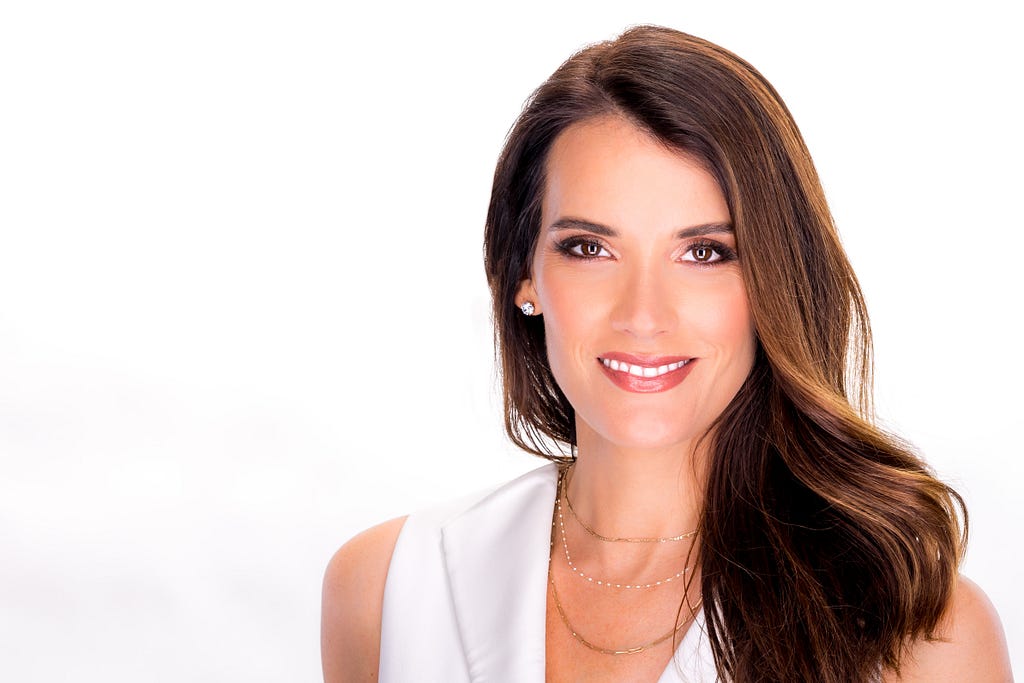
“Yes, I’m a licensed pilot. I started flying because it was my biggest fear, small planes and heights. Once I started, I realized it was this whole other world, and it became one of my greatest passions… Whenever I’m scared of something, I like to try it. What is fear anyway? I think fear is just the unknown. Once you come face to face with it and it becomes familiar, you realize you’re not afraid anymore.”
I had the pleasure of talking with Christina Pascucci. Christina has spent much of her adult life in front of a camera or inside a newsroom, but her work has often led her far outside of both. A television journalist by trade and public policy advocate by practice, she has reported from more than 100 countries, crossing deserts, oceans, and war zones in search of human stories with global stakes. For over a decade, she was a familiar face in Los Angeles broadcasting, first at KTLA and later at FOX 11, where her mix of long-form reporting and environmental coverage earned her industry recognition and a loyal viewership. In 2023, she stepped off the anchor desk and onto the campaign trail, joining a crowded race for California’s open U.S. Senate seat. Though her bid ended in the March 2024 primary, the move marked another pivot in a career shaped by curiosity, activism, and a willingness to enter difficult terrain.
Raised in the San Fernando Valley and Calabasas, Pascucci is the daughter of an immigrant mother and a father drawn west by the allure of the California dream. She credits both parents for instilling values of hard work and civic duty. Pascucci graduated from the University of Southern California in 2007, where she studied International Business, Spanish and broadcast journalism while cutting her teeth in USC’s student newsrooms. Her early career unfolded in the kind of small-town outlets that are often launching pads for bigger markets: Santa Monica Television, El Segundo Cable, Hawthorne City TV. She has recounted being stationed on medians covering tree plantings when, in one memorable case, then-Governor Arnold Schwarzenegger happened to walk into a Starbucks nearby, an impromptu interview that would be her first brush with statewide politics.
After stints in Reno, Nevada and Palm Springs, Pascucci joined KTLA in 2011, staying for more than 11 years. There, and later at FOX 11, she became known for an unusually international beat, bringing viewers along as she swam with sharks to expose illegal finning, embedded with medical teams in Ukraine during wartime, and chronicled the impacts of climate change in Antarctica and Palau. Her interview portfolio includes the Dalai Lama, whom she met twice, including during a trip to his home in Dharamshala. In 2020, the Los Angeles Press Club named her Television Journalist of the Year, citing her capacity to place audiences “there”, from icy terrains to active combat zones.
Beyond news reporting, Pascucci carved out a parallel path in public service. A licensed pilot, she served on the Los Angeles County Aviation Commission for seven years, including a term as chair. She has advocated for foster youth, worked on bipartisan legislation to address homelessness in California, and served as a Goodwill Ambassador to the Pacific island nation of Palau, a title awarded after her environmental reporting there. She has also worked with humanitarian organizations, including the Children of War Foundation, and says she sees service as a form of self-care, an extension of the same impulse that has shaped much of her professional life.
In 2023, after 15 years in journalism and amid what she described as growing frustration with political inertia, Pascucci announced a Democratic run for U.S. Senate. Her campaign launched in October, while she was five months pregnant. Framing herself as a moderate with a commitment to problem-solving and bipartisan dialogue, she emphasized policy literacy, reforming foster care, and broadening civic participation. She later cited exclusion from early televised debates despite significant polling numbers and a misprint on ballots by the Secretary of State as factors that impacted her campaign. Despite polling among the top six candidates in a field of 27, she did not advance past the March 2024 primary.
She returned to media shortly after, this time in a more opinion-driven role. Fox News has featured her as a panelist, and she continues to make public appearances and statements on issues ranging from child welfare to public safety. She also founded Atlas, a consultancy through which she advises clients across public service, philanthropy, and technology sectors on media strategy and global policy positioning. Her work often draws from a global network built during her years in journalism.
While Pascucci has operated in highly visible professions, she has repeatedly framed her motivations around the desire to drive impact, rather than notoriety. She has spoken about the ethical dilemmas of covering mass shootings, about declining to amplify the names or images of perpetrators, and about the importance of leading with empathy and discretion. That same sensibility, she says, informed her decision to run for office, and may yet inform another bid in the future.
She continues to be an advocate for fixing what she calls the “broken” foster care system, describing it as the mission that would most fulfill her sense of purpose. A mother of one, with a second child due soon, she splits her time between commentary, consulting, and family life. She has described flying, once her greatest fear, as one of her main passions and a metaphor for how she approaches life: confront fear directly, and transform it into something useful.
Though her Senate run did not result in a seat, Pascucci’s shift from journalist to candidate appears less like a departure than an extension of the same trajectory, one that has repeatedly crossed borders, both literal and institutional, in pursuit of stories and systems in need of change.
Yitzi: Christina, it’s so good to meet you again. Before we dive in deep, our readers would love to learn about your personal origin story. Can you share with us the story of your childhood, how you grew up, and the seeds for all that came afterward?
Christina: So good to be with you. You’ve been doing some amazing work. Oh my goodness. Okay, back to the beginning. I grew up in the San Fernando Valley, and most of my childhood was in Calabasas. I’m the daughter of an immigrant mother and a father who came to California chasing the California dream. They met here and have been the most incredible support system and example of what it means to be a good citizen, to be kind to people, to work hard, and to earn what you have. They taught me to always put my best foot forward in life because it goes by quickly.
I have two older sisters who I love dearly. They’re much older and from my mom’s previous relationship, so we have the same mom, different dads. One of my biggest inspirations is a family member who has gone through a lot of struggles. That really made me start questioning things early on. What if there were more resources for people who faced challenges? How might the trajectory of their lives change?
I’ve always had this insatiable curiosity. As a kid, I would watch Barbara Walters and loved asking “why.” I drove my mom nuts with all my questions, why are things this way? Why does that work like that? Those habits served me well when I decided I wanted to be a journalist.
I was the first person in my family to graduate from college. Initially, my dad encouraged me to study business because, as he said, anything you do in the world ties back to business, and it would always be useful. So I started there, then added Spanish, which has turned out to be my most useful degree. I also studied broadcast journalism at USC.
I’m so grateful for this city and region that raised me and for the role it played in shaping who I am today.
Yitzi: So, can you tell us the story of how you first broke into journalism?
Christina: I was hustling. Anything I could do, shoot, edit, interview anyone, take any opportunity, I went for it. I tried to seize the moment and really learn and absorb everything.
I think the big moment for me was when I was working for Santa Monica Television at the time, which I’m not even sure is still around. There were a lot of smaller cable stations back then, and I worked for several of them, El Segundo Television, Hawthorne City Cable, and then Santa Monica TV.
I remember standing on the median of what I think was Santa Monica Boulevard, some busy street. We were doing a tree planting story, and I was thinking, wow, I went to USC and spent all that money, and here I am standing in the middle of the street covering a tree planting.
All of a sudden, a motorcade pulls up, and I see Governor Schwarzenegger get out of the car and walk into the Starbucks right across the street. I yelled, “Governor! Governor!” His security stopped traffic, came over to the median, and just like that, my tree planting story turned into an exclusive interview with Governor Schwarzenegger about environmental policy, or whatever I asked him.
If you do the work, you never know where that hard work will lead you. What is it they say? Preparation meets opportunity? That definitely came to life that day. And that was the beginning of a long career.
I ended up going to Reno, Nevada, for my first official TV job at the ABC news affiliate there. I really paid my dues in Reno. They sent me to the top of the mountain to cover all the snow. The anchors would say, “Christina, what’s it like out there?” And I’d be thinking, how the heck do you think it is out here? It sucks. It’s cold. At least that’s what was going through my head.
And then I had another interesting assignment in Reno, I was sent to cover the brothel. The madam told me I’d do well there. It was one of those moments where I just had to look around and think, okay, this life is very interesting and always keeps me on my toes.
I also had some big stories in Reno. I uncovered critical information about one of the biggest commercial structure fires there, revealing that it was likely arson and that the water hydrants had been turned off intentionally. I covered a lot of politics too, which is probably where my desire to create change really started to take shape.
Then I went back to California. I was a TV anchor and reporter at the NBC affiliate in Palm Springs. I was there for a couple of years, and in 2011, I moved to KTLA. That kicked off a long career in Los Angeles that I’m so grateful for.
Yitzi: Unbelievable. I know we just touched the tip of the iceberg. You probably have some amazing stories from your career, probably way too many to cover in a day. But can you share one or two that really stand out in your mind from your professional life?
Christina: Oh, wow. I had about 15 years at KTLA and Fox Los Angeles combined. During that time, I went to over 110 countries and reported from many of them, including war zones like Ukraine and Armenia, just to name a couple.
Gosh, my mind almost explodes when I think of all the things that have happened. It’s so hard to pick one, because I’ve interviewed thousands of people. Some of my best days on the job were coming home after a long, exhausting day, but feeling fulfilled because I connected deeply with someone I interviewed about a really meaningful issue, like homelessness. We told stories that, in some way, enhanced their lives or helped them get the support they needed.
What comes to mind most immediately is probably Ukraine. When I was there covering the war, I was also helping lead a mission of doctors who were providing life-saving emergency heart surgeries for babies. In a 24-hour period, I might sleep two hours. The air raid sirens were going off constantly, warning of potential incoming missiles.
We were staying in a children’s hospital, and Russia had just bombed a children’s hospital on the other side of the country. A military target had been hit right near where we were staying. I would go out during the day to get stories and cover the war, then come back to the hospital and see these tiny babies, some just weeks old, who had just had open-heart surgery.
You could see the fragility of life everywhere. It was such an honor to be trusted by the people of Ukraine to tell their stories. And I want to give a shoutout to the Children of War Foundation, because they were the ones doing all the incredible humanitarian work.
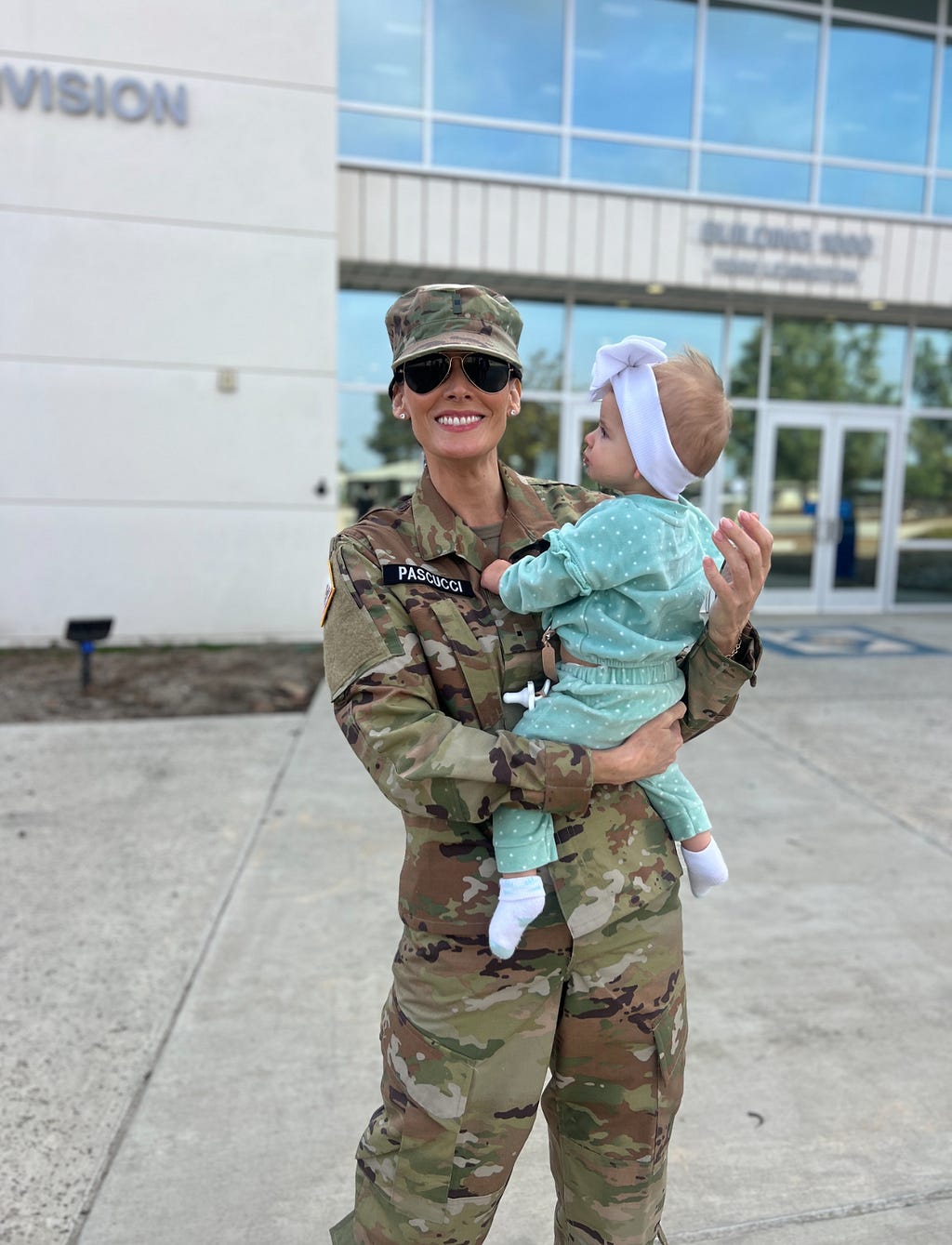
One more quick story. When the LA fires struck, I had just been sworn in as a Warrant Officer in the California State Guard and was immediately deployed, activated, as they call it, to respond to the fires. I had also just found out I was pregnant with our second child!
Yitzi: What has been the most challenging role or project that you’ve taken on?
Christina: Oh gosh. I wish I had these questions ahead of time so I could give you really good answers.
What pops into my head as being particularly difficult was the responsibility of how we cover the news. I’ve covered way too many mass shootings, and I had a breakdown one day because I just couldn’t bring myself to say the shooter’s name. I felt like we were contributing to the problem by giving attention to people who were doing these horrific things just to get their names out there.
I had a news report where I didn’t say the shooter’s name. I think I maybe said it once, and then I was like, I don’t need to say it again. You might say it once for the FBI or to help bring leads forward, if someone knew the shooter, for example, but after that, it just feels salacious to me.
And showing their picture? Screw that. Maybe, again, you can make an argument for showing it once, but even that felt like too much. They didn’t deserve that. The only pictures we should have been showing were of the victims and honoring their lives.
So, I think differences in opinion like that are very difficult to navigate. Ultimately, you want to make sure your journalism is helping, not inadvertently hurting people.
Yitzi: It’s been said that sometimes our mistakes can be our greatest teachers. Do you have a story about a funny mistake you made when you were first starting out and the lesson you learned from it?
Christina: Stories I can share that’ll be printed, let me think.
Earlier in my career in Reno, I used to be obsessive about writing the exact script and getting every single word perfect. I was just addicted to the idea of perfect communication. And while how you communicate is incredibly important in this role, I was focused on the wrong thing.
You know the essence of what you want to say, and ultimately, I started moving toward using bullet points instead. I’d follow those and speak from the heart. Over time, building that confidence in myself and my craft made all the difference.
When you try to stick to an exact script, you might fumble over the words, and it just comes off as inauthentic. Authenticity is the best thing you can offer. That comes from not being obsessed with getting every single word perfect. Of course, it has to be accurate, but it doesn’t need to be followed word for word, if that makes sense.

Yitzi: I read that you did an interview with the Dalai Lama. Can you tell us how that happened? Tell us the story.
Christina: Yeah, two of them actually. One of the best things someone can have in any job is a good manager who empowers them. A lot of times, people get caught up in the rat race, and the higher-ups don’t always tap into your strengths or encourage or mentor you. We all need that kind of support, and I was really lucky early on at KTLA to have it in one of my executive producers.
I remember seeing that the Dalai Lama’s personal emissary for peace was going to be in Anaheim, celebrating a school that had committed to one million acts of kindness. We cover so many tragic stories on the news, so I thought, why not highlight something really good and positive? I brought it to my boss, and thankfully, she said yes.
When I went there and met the Dalai Lama’s emissary, we connected on this really profound level. I felt like I saw his heart, and he saw mine. He could tell we were there for the right reasons. I don’t even think any other local stations were there when I was. He appreciated our coverage and the heart we put into it so much that when the Dalai Lama came to celebrate his birthday shortly after, we were given the local exclusive interview.
It was just me and the late Larry King, which was quite an honor. Apparently, the Dalai Lama saw that interview and loved the way we told the story. After that, we were invited to India to his palace. And when I say “palace,” it’s very humble, but it was still extraordinary.
That experience was a once-in-a-lifetime moment. I’ll never forget being in his office in Dharamshala. My cameraman was there miking up His Holiness, and his hands were shaking because he was so nervous. The Dalai Lama noticed, gave him this mischievous look, grabbed his own beard, shook it, and said, “When people take themselves too seriously, I like to lighten them up.”
Then he let out this incredible, infectious laugh, “ho ho ho ho”, and the whole room instantly felt lighter. Everyone was just so uplifted by that moment.
Before the trip, I had asked what gifts we should bring to thank him for hosting us, and all he wanted was cookies. He’s kind of like a big kid, it was really sweet.
Yitzi: Not too long ago, it popped across my news feed that Christina Pascucci was running for California Senate. And I was so happy for you. I was really rooting for you because I know you. So tell us, what inspired you? I’m sure it takes a lot of courage to do that. Tell us the story behind it.
Christina: Yeah, like I mentioned earlier, I was 15 years into media. I’d interviewed the same politicians over and over again, hearing the same things with no real change.
It was the summer before the U.S. Senate election, and I was interviewing someone who would later become one of my opponents. I knew he was the likely winner of the race, and I asked him a question about something deeply important to me, the people of Armenia, and what the U.S. Congress was doing to help them as they faced impending genocide. I asked specifically what he was doing for the people of Artsakh. His answer felt incredibly disingenuous, and I was really let down.
A few months later, I was five months pregnant, and all of this was weighing on me. I said, you know what, I’m going to run. I knew it was an uphill battle. I knew it would be a tough race. But the only thing crazier than running was not running and not even trying.
So I jumped in, and it turned out to be one of the most rewarding experiences of my life. To this day, I have no regrets. I built an incredible coalition and infrastructure, and when I run again someday, I won’t let those people down.
I believe we need leaders who truly understand the issues, who know how to ask the right questions, and who can take a broader view that goes beyond party lines. It’s not about which side of the aisle you’re on. It’s about putting people over politics, and that’s something I still stand by wholeheartedly.
Yitzi: I love that. And I love hearing that you still have the fire in you. I’m sure you learned a ton from running, a lot of lessons from the school of hard knocks. Can you share some of the insights you picked up along the way?
Christina: Yeah, there were so many incredible experiences. One of the things you have to do is what’s called “dialing for dollars,” which can be absolutely soul-crushing. The last thing I ever want to do is ask people for money, I just want to help people. But it’s part of the game, so you do it.
I had to call people from every phase of my life, elementary school classmates, people I met at Coachella, you name it. Honestly, it felt almost like experiencing my own funeral, in the best way. People would say things like, “I remember when you did this,” or “I’m supporting you because you stood up for that.” It was such a beautiful blessing to hear those things while I’m still alive.
It was also interesting to see who didn’t support me. I didn’t take it personally, but it was definitely eye-opening.
I learned the importance of having a solid team. I learned the value of forging your own path, because so many people in politics want to follow the same broken playbook, and that’s part of why we keep seeing the same dysfunction.
There were also some wild things that happened during my race that were completely out of my control. For example, the Secretary of State made a huge mistake that affected how I appeared on the ballot. I had an election attorney who told me he’d never seen anything like it in 30 years. The Secretary of State even admitted the error and acknowledged that it would hurt my race, but said nothing could be done because the ballots were already printed.
So I also learned about the fragility of our democracy.
Yitzi: You mentioned the dysfunction and the crazy politics. Do you have any insight into a few tweaks that could make it less tumultuous, less hard on our nerves?
Christina: I think there’s a lot that could be done. I always like to go to the root cause of issues, and I think a lot of people don’t even realize how government works. Bringing civics back into our classrooms so people understand and appreciate our democracy, vote, and participate in the process is key. Right now, the people who participate most fervently are the loudest voices in the room, but they don’t actually represent the majority of perspectives. Over time, that can become very dangerous.
Yitzi: So you’re saying the solution is really broader participation. You have all these people on the extremes who are the most active in the primaries, but a lot of people aren’t voting, and that brings out the extreme poles of either party. Am I understanding you correctly?
Christina: Yeah. I think we need to pay closer attention and participate more in our democracy. We also need to be mindful of supporting people who are really fighting the good fight. For example, when I threw my hat in the ring, if you think about what someone goes through when they run for office, they’re sacrificing their job, their family, their sanity. You want to find the good people who are taking that on and support them with everything you’ve got.
Then there’s the issue of the two-party system. It’s a duopoly. It’s almost like big business. I think money needs to be taken out of politics. There’s no reason my opponent should have had a $30 million arsenal of cash to manipulate voters. There was a lot of manipulation in that U.S. Senate race. Weird games were played, like propping up the Republican candidate so that another popular Democratic candidate would get pushed out. These kinds of strategies might be politically smart, I suppose, but it’s the American people who lose.
Yitzi: Were you targeted with negative ads?
Christina: No, I didn’t have any negative ads, but I did have the whole Secretary of State situation. I was also really disappointed to see how things were handled. I joined the race last, and out of 27 people running, I was one of only six polling, which is a big deal. Still, I was left out of the first debate without any explanation. They only chose the top four.
Meanwhile, for other races, like the LA County District Attorney or congressional races, they had 10 people on stage for the first debate. They gave no reason, no criteria for how candidates qualified, which is very unusual. I just saw things that were broken.

Yitzi: I read that you’re a pilot and that you chair the LA County Aviation Commission.
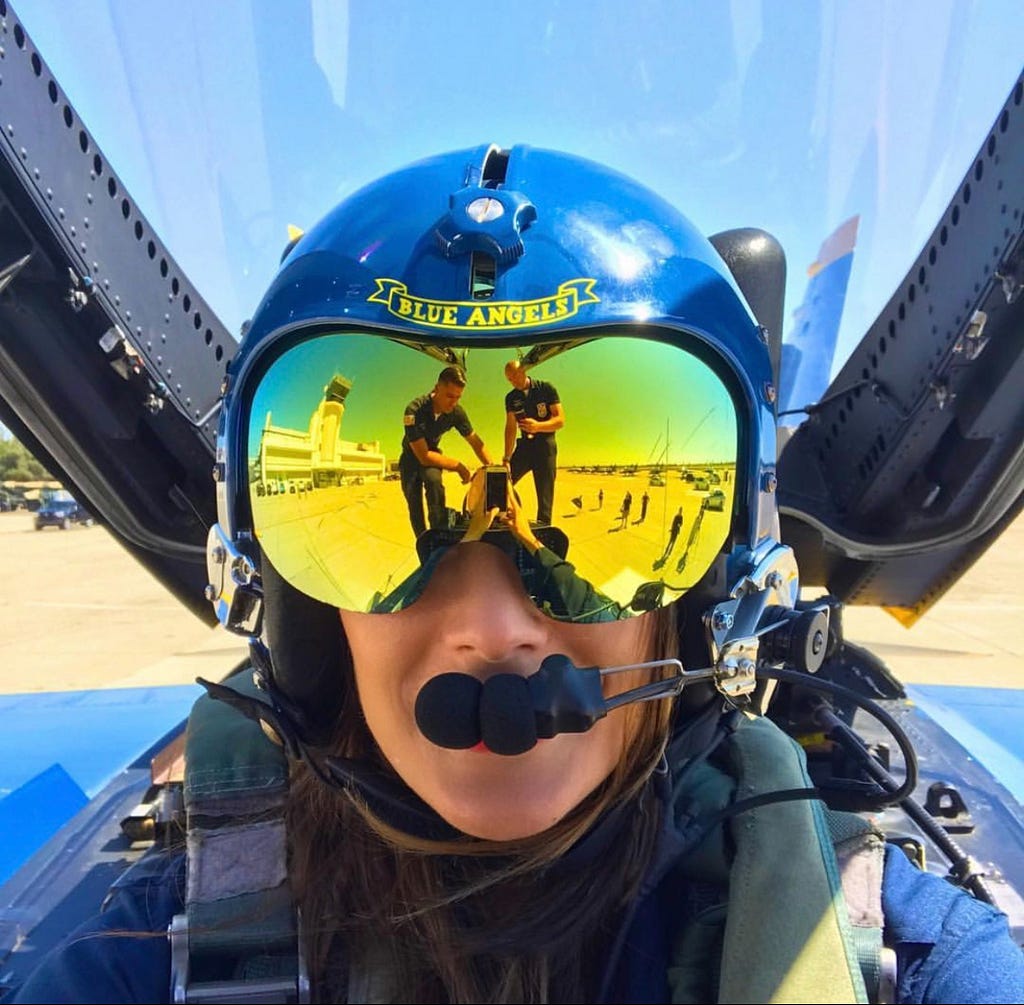
Christina: Yes, I’m a licensed pilot. I started flying because it was my biggest fear, small planes and heights. Once I started, I realized it was this whole other world, and it became one of my greatest passions.
I became a licensed pilot, and later joined the Los Angeles County Aviation Commission, where I served for about seven years until recently. That was an amazing experience. I helped oversee the five airports within LA County and advised the LA County Board of Supervisors on everything from airport infrastructure to how airports can better serve their communities. I also worked on encouraging kids to get involved in STEM. It was such a cool experience. Our airports are part of our future, and they’re under attack, so it felt like a really important role.
Yitzi: Unbelievable. So you’re saying you did that because it was your fear, and you did it just to overcome it?
Christina: Yeah. Whenever I’m scared of something, I like to try it.
Yitzi: That’s great. It sounds like you like doing the hard things, the super hard things.
Christina: Yeah. Well, what is fear anyway? I think fear is just the unknown. Once you come face to face with it and it becomes familiar, you realize you’re not afraid anymore.
Yitzi: I love that. Unbelievable. Tell us where you’re doing that. Tell us about Atlas, this unique consultancy you started.
Christina: Yeah, it’s really about bringing together all of my life experience toward one effort. I work with clients who inspire me, people who are making the world a better place in their own way, whether it’s in AI, education, public safety, philanthropy, or ending chronic disease in children.
I help them maximize their media presence and political influence. We also do global strategy. For example, if a client is trying to expand into foreign markets, I’ll meet with relevant government officials or make those connections. After traveling to so many places and interviewing heads of state and thousands of people, I’ve built a vast network I can tap into to help them maximize their impact and do good.
Until I run again, if and when that happens, this is my way of giving back.

Yitzi: Okay, this is our signature question. You’ve been blessed with a lot of success and have so many experiences behind you. For a young person considering public service, can you share five things you think are essential to succeed in politics, five things someone needs before considering running for office?
Christina:
- Know your why.
- Have conviction in your why.
- Be authentic.
- Do the work. Before I ran, I spent 15 years in journalism doing investigative pieces, and I was also deeply involved in philanthropy, testifying at the state capitol, connecting with different communities, being on the ground. So really, do the work.
- The only constant is change, and know that anything is possible.
Yitzi: You mentioned getting money out of politics, and you also talked about having to fundraise. How does that work? Imagine one of your biggest donors asks you for something once you’re in office, how do you navigate that?
Christina: If it’s something I believe in and support, then I’ll engage with it. If it’s not, I’ll say, “I’m sorry, I don’t believe in that. You supported me because you trust me to do the right thing, and I don’t believe that’s the right thing.”
There’s no amount of money that would change my values. I know some people might feel that way before they get into politics and then change, but for me, I’m not motivated by money. I’m motivated by impact and by being able to sleep at night. I’ve always had the conviction to stay true to myself, and I have.
Yitzi: Amazing. You’re almost about to have a baby, and you’re doing all these amazing, hair-raising things. Can you share some of the self-care routines you do to help your body, mind, and heart thrive? How do you really do it all?
Christina: I have a toddler at home and I’m about to give birth. What’s self-care? (Laughs)
I think it’s really important to schedule time to do nothing. As someone who’s spent my whole life overcommitting and double-booking, I’ve found it really important in my later years to schedule time for prayer, meditation, and reflection, because in that spaciousness, that’s where your creativity can really flow. Some of the most successful entrepreneurs of our time have said the same thing. I think Jeff Bezos schedules a block of time every day on his calendar for nothing. I believe that’s really important.
And then spending time with friends, making sure I’m nourishing my body. I’m very particular about trying to eat in a way that fights inflammation and helps me live a long life for my kids. And I think being of service is a form of self-care because it makes you feel fulfilled.
Yitzi: We’re almost done. This is what we call a matchmaker question, and sometimes it works. I know you know almost everybody, but maybe we could do this. We’re very blessed that prominent leaders in business, entertainment, and politics read this column. Maybe we could connect you. Is there a person in the world, or in the US, with whom you’d like to have a power lunch? Because maybe we could tag them on social media, maybe we could connect you.
Christina: There are so many people I would LOVE to lunch with, including many who are no longer with us, like my grandmother and our founding fathers. While there’s a long list of people I’d love to sit down with, one who immediately comes to mind is former US Ambassador to the United Nations, Samantha Power.
She also got her start as a journalist, worked from war zones, and has been a voice for the voiceless in so many ways, including her role as Administrator for USAID. I love foreign policy and dream of working with NATO and the UN, so she would be at the top of my list. I have so many questions to ask her.
Yitzi: Of course, of course. Final question. Christina, because of your great work, you’re a personal and immense influence. If you could put out an idea or inspire a movement that would bring the most good to the most people, what would that be?
Christina: My dream is to solve the crisis around foster care. If I could repair the broken foster care system and make sure that the tens of thousands of kids in LA County, and millions nationwide, have loving homes and a strong foundation to begin life with, then my time here and my purpose would be complete.
Yitzi: So beautiful. How can our readers continue to follow your work? How can they engage your services? How can they support you in any possible way?
Christina: Just check me out on social media. @ChristinaPascucci on Instagram.
Yitzi: Christina, it’s been so amazing connecting with you again. I wish you continued success, good health, and an easy childbirth. I hope we do this again next year when you’re being inaugurated.
Christina: Thank you. I really appreciate it. I appreciate the time and interest. Thank you so, so much. And keep me posted on how I can be helpful.
Christina Pascucci on Crossing War Zones, Running for Senate While Pregnant, and Why She’s Not Done… was originally published in Authority Magazine on Medium, where people are continuing the conversation by highlighting and responding to this story.