
“Growing up, a lot of the time there was no electricity. I couldn’t watch TV or play video games, so we spent hours outside, painting, and finding ways to be creative. I owe a lot of my creativity and way of thinking to that magical childhood.”
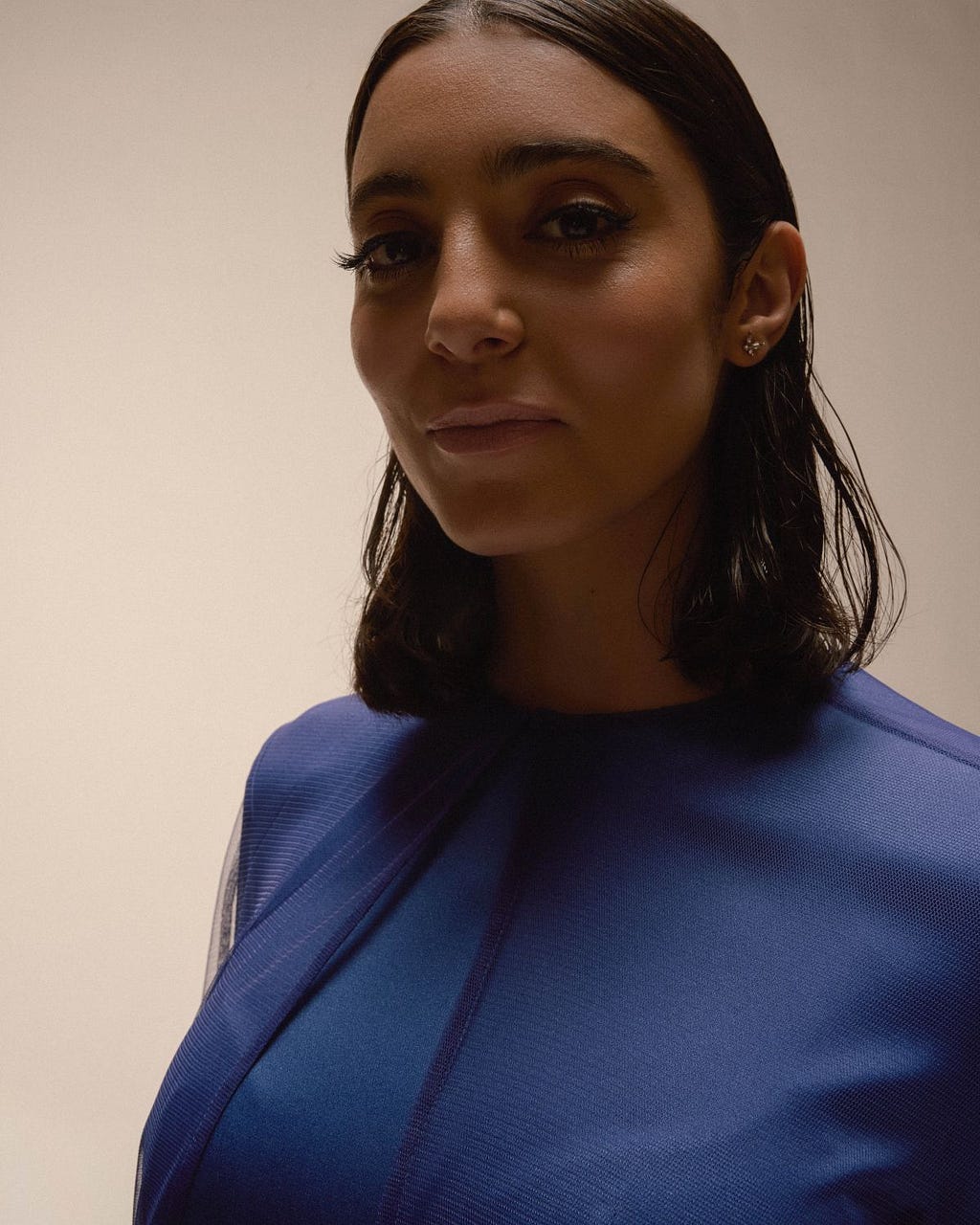
I had the pleasure of talking with Ananya. Born and raised in Zimbabwe, Ananya has carried the rhythms, colors, and contradictions of her homeland into her career as a London-based indie pop artist. Her music blends bright melodies with introspective lyrics, drawing on a childhood shaped by both freedom and constraint. “Growing up, a lot of the time there was no electricity,” she recalls. “I couldn’t watch TV or play video games, so we spent hours outside, painting, and finding ways to be creative.” That resourcefulness, she says, remains the foundation of her songwriting.
Ananya’s latest single, “Falling,” released July 25, captures the emotional tension of a “wrong time, wrong place” romance. Built around a hopeful, buoyant arrangement, the track pairs her sharp lyrical wit with a dance-floor pulse. “Even though it’s emotionally raw, the groove and upbeat production give it this strange contrast — like crying on the dance floor, but still dancing anyway,” she says. It’s a formula that fits her evolving sound: more upbeat and positive, even when born from confusion.
Music was a constant in her family home. Her mother’s oversized cabinet of CDs and tapes provided a rotating soundtrack of genres and eras. But it wasn’t until Ananya saw Taylor Swift’s “Teardrops on My Guitar” on YouTube that she picked up a guitar herself. Writing and singing became a daily practice, eventually leading to her debut EP, i woke up one night, which has surpassed a million streams and earned praise from outlets including GQ South Africa, MTV, Wonderland, and BBC. More recent releases have attracted attention from Rolling Stone Africa, iHeartRadio, and Earmilk.
In the early days, Ananya worked mostly alone, protective of her songs and the process that created them. Over time, she came to value collaboration with producers, songwriters, and engineers, citing an African proverb: “If you want to go fast, go alone. If you want to go far, go together.” This openness has expanded her sound while reinforcing her core message: honesty as a creative and personal compass.
That conviction carries over into her non-profit work. Ananya is the co-founder of The Nani Wellness Project, an initiative addressing Zimbabwe’s mental health crisis. Born from conversations with radio host Tony Friday during the pandemic, the project offers free virtual therapy through an app, aiming to dismantle stigma in a patriarchal society where mental health is rarely discussed. “Growing up, I don’t think I even heard the term until my mid-teens,” she says. “We wanted to break that boundary and normalize talking about it.”
Her dual commitment to music and mental wellness underscores a belief in expression as a healing tool. “Music has always been a best friend to me,” she says. For some, that means playing upbeat songs to lift a mood; for others, like Ananya, it means leaning into the emotions at hand. “Sometimes you just have to sit with your emotions, be honest with them, and let them pass.”
Living in London, far from her family, has deepened her appreciation for the Zimbabwean roots that surface in her songwriting. Tracks like Long Jump reflect on the distance between past and present, and the bittersweet realization that childhood is gone for good. “I think I’ll always be homesick,” she says. “Homesick is a constant in my life.”
Navigating the industry as an independent artist, she admits, is one of her biggest challenges. Building a social media presence — now an essential currency in music — remains a work in progress. She prefers to manage her own posts and captions, even if that means slower growth. Balancing authenticity with visibility is a constant negotiation.
Her career lessons are practical and personal. She advises young artists to stay true to their emotions, value friendship, practice gratitude, and celebrate small wins along the way. These principles, she says, help sustain both momentum and perspective in a competitive field. Self-care, too, is non-negotiable: walks with her dog Satchmo, meditation, journaling, and enough rest to recharge between projects.
Asked about her hopes for influence, Ananya emphasizes empathy. “You never really know what people are going through,” she says. “Be kind, and have grace when people can’t be kind.” It’s an approach she tries to practice daily, even if imperfectly.
Despite her growing list of accolades, she remains grounded in the belief that music is a tool for connection, not just career advancement. Her ambitions include future collaborations — today’s dream lunch companion is the American artist Role Model — and more releases that marry infectious production with unflinching honesty.
If “Falling” marks a shift toward brighter textures, it’s also a continuation of the arc she began in Zimbabwe: a commitment to telling her truth, whether it’s in the key of joy, heartbreak, or something in between. “Sometimes being honest is the path to healing,” she says. “Even if you don’t see it in the moment.”
Yitzi: Ananya, it’s so nice to meet you. Before we dive in deep, our readers would love to learn about your personal origin story. Can you share the story of your childhood, how you grew up, and then the seeds for all that came afterwards?
Ananya: Hi, great to meet you. Of course. I grew up in Zimbabwe, born and raised, and I believe I am incredibly fortunate to have had such a magical childhood. My home was always buzzing and loud. There was always so much going on. I have three siblings, so it was always chaotic. Growing up in Zimbabwe really gave me the privilege of freely being who I wanted to be, and the space to be as creative as I could be. A lot of the time, there was no electricity, for example. I would get home from school and not have much to do — couldn’t watch TV or play video games — so a lot of our time was spent outside, painting, or finding ways to be creative. I owe a lot of my creativity and way of thinking to that magical childhood.
Yitzi: Unbelievable. So, can you tell us the next chapter? Tell us the story of how you first got involved in entertainment and the music industry.
Ananya: Of course. Music was always playing in the home. My mom had this huge wooden cabinet — it still exists, to be honest — filled with CDs and tapes. Every Sunday was a different style, a different type of music, and we spent our days in the sunshine listening to it. Music was always lingering in the background, but it wasn’t until I watched Teardrops on My Guitar by Taylor Swift on YouTube that I picked up a guitar and started singing and writing. Since then, it’s been non-stop.
Yitzi: Amazing. You probably have some incredible stories from all the different projects you’ve been on and the places you’ve toured. Can you share with our readers one or two that most stand out in your mind from your professional life?
Ananya: That’s a great question. I think something that’s been more of a lesson than a single story is the gift of collaboration. At the beginning, it’s not always the easiest thing to embrace — at least it wasn’t for me. It’s so easy to become protective of your work and feel content with just you and your piano or guitar. That’s how it had always been for me. I was very hesitant about collaborating at first. But taking the step to work with producers, songwriters, vocal engineers, or anyone in the creative process has been such an eye-opener. The most beautiful things often come through collaboration. There’s an African proverb that says, “If you want to go fast, go alone. If you want to go far, go together.” It’s so true, and you only really understand it when you’ve been in that position. That’s definitely a token I carry with me everywhere.
Yitzi: Beautiful. It’s so amazing. It’s been said that sometimes our mistakes can be our greatest teachers. Do you have a story about a funny mistake you made when you were first starting in the music industry and the lesson you learned from it?
Ananya: Well, I can tell you about a mistake that’s still something I’m working through. For me, it’s the power of social media. I have a hard time with it sometimes. It’s not always easy to be candid online, and it can be draining to feel like you have to be present 24/7. You also have to remember that everyone is posting their highlight reel, and you don’t see what’s going on behind the scenes. That’s been both a challenge and, I think, a mistake. If I had been more on top of it, I know how important it is in the music industry to have a strong presence on social media. But I also want to keep it very me — posting myself, writing my own captions. That’s the way I want to do it. So yes, it’s been a mistake in my path, but it’s something I’m actively working on while trying to keep a healthy boundary between social media and my personal life.
Yitzi: You have so much impressive work, Ananya. Can you share with the readers the exciting new releases you have coming out?
Ananya: Thank you so much. I released “Falling” on July 25th. I first played this song on my piano during the pandemic on an Instagram Live with Glamour South Africa. At the time, it was unreleased, and since that day, people have been asking me about it. I’ll be at a wedding or a party, and people will come up to me and ask about this song. This year I realized it was about time I finished it and released it. It feels a little different from the music I’ve put out in the past — more upbeat and positive. Even though it was written from a place of confusion, the energy and outlook feel much brighter. I’m happy to be moving in that direction. From there, I’ve been working on more music, still writing, and I hope to have a couple more releases later this year.
Yitzi: Amazing. If you could take all of your music — all the melodies and lyrics — and put it together in a big bucket, blend it up, and see what comes out, what would be the message? What would be the vibe?
Ananya: These are great questions. I think the message would be to always communicate how you feel. That’s definitely helped me in my own life. And to not be afraid of wearing your heart on your sleeve. Sometimes being honest is the path to healing. Even if you don’t see it in the moment, just sitting with yourself and your thoughts is sometimes the best way forward.
Yitzi: It’s great, it’s amazing. You’re living in London now, but you were raised in Africa. Do you weave in some of your Zimbabwean roots into your music?
Ananya: In ways I can. For example, my song “Long Jump” is pretty much about my childhood. You get to an age where you realize childhood is so far away and it’s never coming back. That can feel daunting when you live alone and far from your family. But you also remember how special and valuable those days were — coming home to no electricity and playing in the sunshine with your siblings. I would do anything for a day like that now. So my emotions and gratitude for my childhood and home definitely weave their way into my music. I think I’ll always be homesick. Homesick is a constant in my life.
Yitzi: Wow. Is your family still in Zimbabwe?
Ananya: Yes.
Yitzi: Wow, unbelievable. So I read that you founded the Nani Wellness Project. Can you tell us a bit more about that?
Ananya: Of course. During the pandemic, I had my first radio interview with ZFM, one of Zimbabwe’s biggest stations. I was incredibly nervous — especially after they told me how many people were listening. That was probably their first mistake, because my voice was shaking and I was panicked. After the interview, I reached out to the host to say thank you, since Zimbabwe hadn’t been fully locked down yet. We met in person to catch up about the interview, and over time we became really good friends. He told me about a wonderful initiative he had created called Nani. We shared a lot about our own mental health journeys, and during COVID we leaned on each other for support.
We realized how many people back home in Zimbabwe didn’t have access to mental health care. Growing up, I don’t think I even heard the term until my mid-teens. So we started brainstorming ways to encourage people to speak up and be more vocal about mental health. Zimbabwe is a patriarchal society, so the topic isn’t always encouraged. Tony and I wanted to break that boundary and normalize talking about it. It ties into why I sometimes struggle with only showing the good side of life on social media — it doesn’t feel real to me.
From there, we worked on the technology and launched an app that provides free virtual therapy to Zimbabweans. At the moment, we’re still looking for volunteers and hope to release more podcasts and blog posts. It’s been a journey.
Yitzi: So special. Unbelievable. I recently interviewed somebody who created an AI therapist that’s helping many people. But I also saw that in Illinois, they actually banned AI therapy. What’s your opinion about the ability for AI to help with our mental wellness?
Ananya: To be honest, I don’t think I’m in a position to give a fully informed opinion. I don’t think I’m educated enough on the topic. I think if it’s been proven to be helpful and safe, then it would be a great world if more people had access to mental health care. It would just take a while to get to that point. I’m not sure.
Yitzi: Personally, I’m also conflicted about it. It’s probably better than nothing, but I’m not really sure what the downsides are. I just feel, viscerally, that human beings need human beings.
Ananya: That’s so true. Hopefully, one day we get to a stage where there is AI therapy, but we know it’s 100% reliable. Because then, like you said, it’s better than nothing.
Yitzi: You’re at this intersection of mental wellness and music. How would you articulate how music can allow us to optimize our mental wellness? How could music help us increase our self-worth, our inner strength, and our ability to improve our lives?
Ananya: I guess it depends on your relationship with music and how you feel when you listen to certain types of it. My vocal coach refuses to have me sing any bad words or bad songs, and I understand her, because it definitely affects your mood without you even realizing it. Music has always been a best friend to me. There are these jokes about how, when you’re sad, you shouldn’t play sad music, but in my life, I’ve needed to play sad music when I’m sad. Sometimes you just have to sit with your emotions, be honest with them, and let them pass. I have friends who will be crying, but then they put on the happiest song ever and that makes them feel better. So it really depends on your relationship with it, but there’s no denying that it’s the greatest tool.
Yitzi: Beautiful. What’s been the most challenging project or role that you’ve taken on?
Ananya: I think navigating the music industry as an independent artist is a challenge in itself. But I would say the most challenging thing is to always hang yourself up to dry. It’s difficult, but I think it’s an ongoing process to be realistic, to reflect on your actions, and to not be afraid of admitting when you’re wrong. That’s been a challenge and something I’m always striving toward.
Yitzi: Beautiful. So this is our signature question, the centerpiece of our interview. Ananya, you’ve been blessed with a lot of success, and you must have learned a lot from your experiences. Looking back to when you first started music, can you share five things that you’ve learned now that would have been really nice to know when you first started?
Ananya:
- I’ll start with something the younger me would definitely agree with, which is that Taylor Swift is still the best person ever to me. That’s for sure.
- I think one big one is to always stay true to your heart and your emotions. Sometimes I find it hard to create music that isn’t coming from an honest and genuine place. I’m practicing writing about other things, but I feel most comfortable and most myself when I’m creating from a place of truth. So, always be truthful to your emotions and your heart.
- Another one is to be a good friend. I rely so much on the people in my life, and I’m lucky to have grown up in a house full of women. The women in my life are everything to me and have shaped who I am. Being a good friend allows you to have incredible people around you.
- Then, practice gratitude. That’s been huge for me, especially after moving away from home and being far from my family and loved ones. Gratitude has gotten me through so much and is one of the most important things in my life.
- Finally, celebrate small wins and take things step-by-step. Without the small wins, you’ll never get to the big ones. Putting all the pressure on yourself for one huge win is tough, but if you celebrate the smaller ones along the way, it makes the journey so much better.
Yitzi: Can you share with our readers the self-care routines that you use to help your body, mind, and heart thrive?
Ananya: Of course. This is ongoing for me, and I’m always learning more about self-care and figuring out what works best. I’m very blessed to have a dog named Satchmo, and he’s changed my life in that aspect. Taking him for walks is a huge part of my self-care routine, and I know I’m lucky to have him. I also won’t deny that putting on a face mask makes me feel like I have everything under control, so that’s definitely something I do.
Getting enough sleep when you need it is another big one. I know it’s not always easy or even possible — there are days you have to keep waking up early and going to bed late — but when you can, skipping a party or sleeping in on a Sunday can make a big difference.
I’ve been practicing meditation recently, and it’s become a huge part of my self-care this year. And journaling — my journal goes everywhere with me and knows everything about me.
Yitzi: This is our aspirational question. Ananya, because of your great work and the platform you’ve built, you’re a person of enormous influence. If you could spread an idea or inspire a movement that would bring the most good to the most people, what would that be?
Ananya: I think something I try to remind myself of every day is that you never really know what people are going through. So, be kind, and have grace when people can’t be kind. I know that’s hard sometimes, but every time it happens to me, I try to pause and think, you don’t know their story. I don’t always get it right, but it’s something I work on. I think the world would be better if we all had a little more grace and consideration.
Yitzi: So beautiful. We’re almost done. This is our last question, what we call our matchmaker question, and sometimes it works. We’re very blessed that prominent leaders in entertainment and business read this column, so maybe we could connect you. Is there a person in the world, in the UK, or in the US with whom you’d like to have lunch or collaborate? We could tag them on social media and maybe make it happen.
Ananya: To be honest, I’d have a different answer for you every single day because there are so many incredible people. But at the moment, I’d love to sit down with Role Model, ask him about his life and career, and tell him how much I love his music. So today, it would be Role Model.
Yitzi: How can our readers continue to follow your work online?
Spotify- https://open.spotify.com/track/6SvH1ZkW2OonFvMkIPSM4Q
Song Link- https://ffm.to/fallingananya
instagram.com/ananyamakesmusic
Yitzi: So beautiful. Ananya, it’s been truly a joy to talk with you and to learn from you. I wish you continued success, blessings, and good health. I hope we can do this again next year.
Ananya: Thank you, Yitzi. It’s been such a wonderful interview. It hasn’t felt like the generic questions, like “What was Falling inspired by?” It’s been wonderful. Thank you so much for your time.
Yitzi: It’s my pleasure. I enjoyed it very much.
Ananya on ‘Falling,’ Zimbabwean Roots and Why Honesty Is Her Creative Compass was originally published in Authority Magazine on Medium, where people are continuing the conversation by highlighting and responding to this story.