
IW Group’s Telly Wong Talks Creative Evolution, AI-Driven Storytelling, and the Future of Advertising
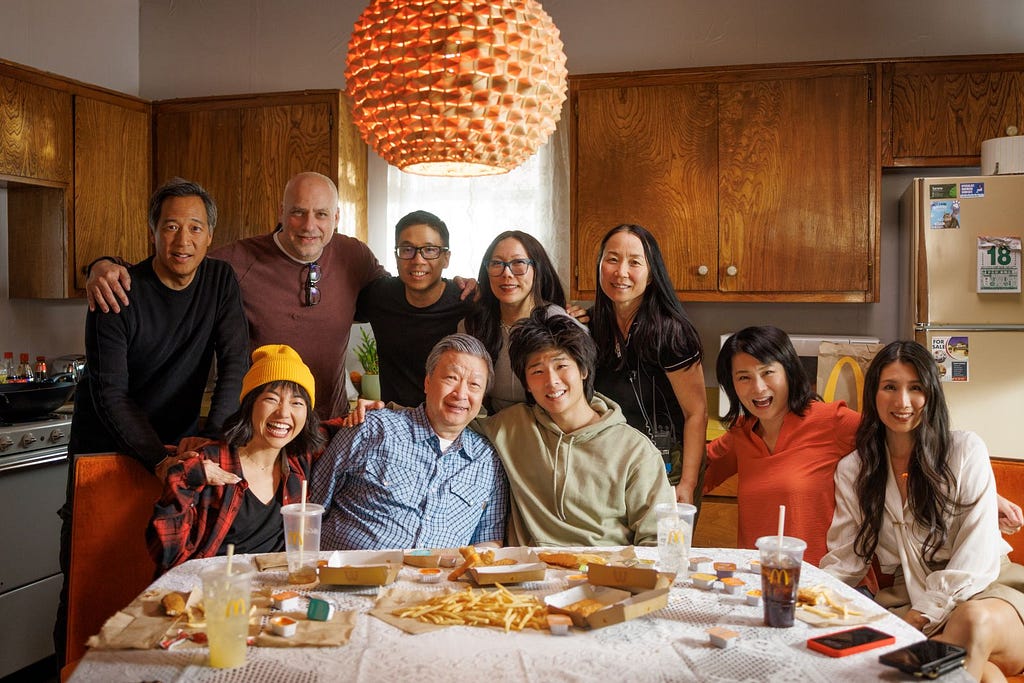
“Last year, we launched a campaign for McDonald’s as part of their Grandma McFlurry promotion called ‘Sweet Connections’. […] If you recorded a message in English and your grandmother spoke Chinese, Spanish, or another language, the tool would translate the message, clone your voice, and reanimate your face so the lip movements matched the new language. It looked and sounded like you were speaking your grandmother’s language.”
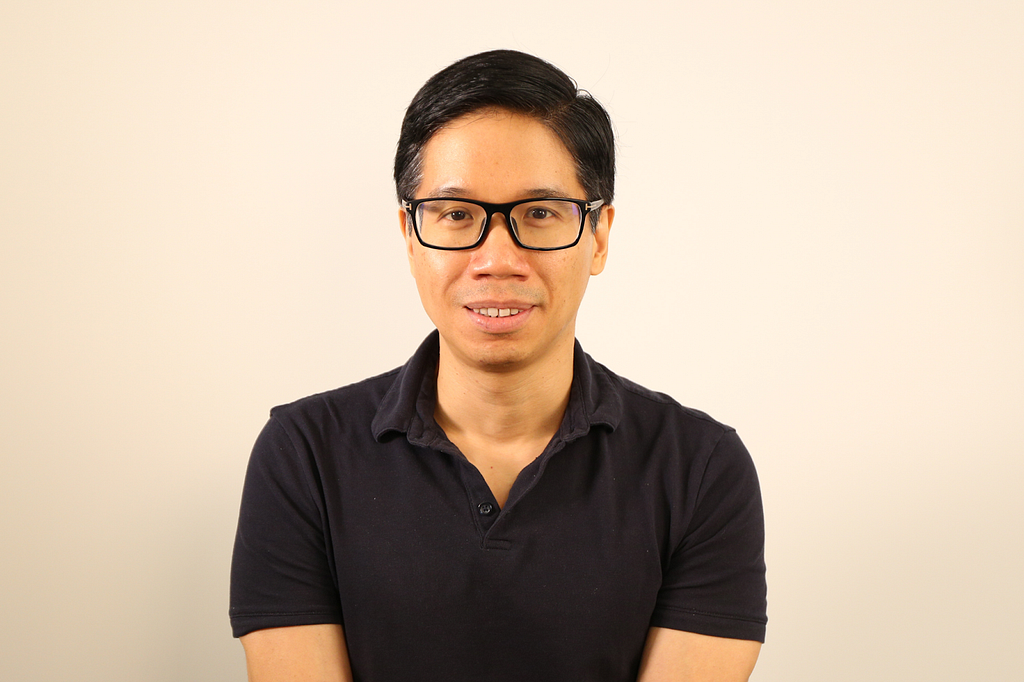
I had the pleasure of talking with Telly Wong. In an industry increasingly shaped by data, disruption, and cultural flux, Telly Wong’s rise to Chief Creative and Innovation Officer at IW Group reflects a broader recalibration happening within advertising: one that merges creative storytelling with emerging technologies while keeping cultural authenticity at its core.
Wong’s promotion, announced in July 2025, marks a defining moment for the multicultural agency headquartered in Los Angeles, which has long positioned itself at the intersection of brand strategy and community engagement. As CCIO, Wong is tasked with steering the agency’s creative vision across four U.S. offices and leading a newly formed innovation department focused on AI-led storytelling, tech-infused campaigns, and the development of original digital products. It’s a role that builds on his previous tenure as Chief Content Officer, and one that signals the agency’s intent to remain competitive as the boundaries between entertainment, marketing, and machine learning continue to blur.
For Wong, who has been with IW Group for more than 16 years, the position is less a culmination than an evolution. “Creativity and innovation are inextricably linked in this age of AI,” he said in a recent statement, framing his new responsibilities not as a pivot but as a progression, one that’s meant to reimagine how brands connect with audiences across cultural and technological lines.
Raised in New York City, first in Chinatown, then in the Brooklyn neighborhood of Gravesend, Wong studied writing at NYU with the initial aim of entering film and television. Early career detours led him instead into public relations and eventually into the world of advertising. Before joining IW Group, he served as a creative consultant at Jettone Films, the production company led by internationally renowned director Wong Kar Wai. That cinematic influence still echoes in Wong’s work today, which often blends emotional narrative with immersive formats.
At IW Group, he has led campaigns for high-profile clients including McDonald’s, Warner Bros., Disney, and Jack Daniel’s. His work has consistently emphasized the fusion of cultural insight and technological experimentation. In 2010, he launched the agency’s entertainment marketing division, which now works with nearly every major studio and streaming platform on major releases. More recently, he played a central role in executing McDonald’s first AI-led campaign in the U.S., a milestone that also marked one of the fast-food giant’s earliest forays into fully AI-generated video content.
The campaign, titled Sweet Connections, emerged from a simple but deeply personal insight: the linguistic and generational gaps that exist between many Asian American grandchildren and their elders. Wong, who described his own limited ability to communicate with his grandmother, helped develop an AI tool that allowed users to send translated, voice-cloned, and lip-synced video messages to loved ones in their native languages. The project stood out not only for its technological sophistication but also for its emotional resonance, offering a case study in how innovation can serve human connection rather than replace it.
That balance, between efficiency and empathy, between automation and authenticity, is a theme that recurs often in Wong’s reflections on the current state of his industry. “AI isn’t here to do your homework,” he said in a recent interview. “It’s here to help you think better, not think for you.” At IW Group, that belief has led to cautious but deliberate integration of AI tools across workflows, from brainstorming and production to campaign deployment. Platforms like Runway, Eleven Labs, and HeyGen are part of the agency’s toolkit, but human oversight remains central.
Wong’s philosophy of “innovation through culture” has garnered recognition from industry peers and institutions alike. He was named an Ad Age Web3 Trailblazer and received the Digital Communicator of the Year award from Social Shake-Up in 2023. His campaigns have been recognized by Adweek, PRWeek, and the Association of National Advertisers. And yet, he remains vocal about the potential downsides of AI’s rapid proliferation, particularly when it comes to misinformation, deepfakes, and the risk of eroding public trust.
That wariness doesn’t preclude optimism. During the pandemic, Wong led one of the agency’s most widely seen public service announcements, Wash the Hate, which aired nationally and addressed the surge in anti-Asian sentiment. Produced entirely during lockdown, the campaign leveraged celebrity participation and corporate support from clients like McDonald’s to drive awareness at a time of widespread fear and uncertainty. For Wong, the project affirmed a belief that marketing, often dismissed as transactional, can play a meaningful role in social dialogue.
Still, the pace of change is relentless, particularly in entertainment. As Hollywood, gaming, and music industries wrestle with AI’s encroachment into creative domains, Wong argues that embracing these tools is key to staying relevant. “We can’t just stick our fingers in our ears and ignore it,” he said. “You either find a way to work with it, or try to work without it, and good luck with that.”
Even as he explores generative video, audio synthesis, and AI translation, Wong is conscious of the human element embedded in all communication. Whether it’s mentoring his team to avoid early-career pitfalls or navigating the ethics of virtual likeness, he remains grounded in the practical and the personal. “Sometimes we just have to slow down and think about what we’re doing,” he said. “Creativity should serve people, not just platforms, not just clients, but actual people.”
At a time when many agencies are still figuring out how to integrate innovation without sacrificing soul, Wong’s career offers a blueprint: one where storytelling, technology, and cultural nuance are not in competition, but in conversation.
Yitzi: Telly Wong, it’s a delight and an honor to meet you. Before we dive in deep, our readers would love to learn about your origin story. Can you share with us a story of your childhood and how you grew up?
Telly: Same here. Thanks for having me. I was born and raised in New York, spent a couple of years in Chinatown, then moved to Brooklyn, to Gravesend. Bonus points to anyone not from New York who knows where Gravesend is. I grew up there, went to NYU, and studied writing. I wanted to do film and TV, but I ended up falling into the exciting world of public relations. One thing led to another, and I ended up in advertising, and here I am now.
Yitzi: Amazing. Tell us a bit about your career and what you do at IW.
Telly: IW is a creative marketing agency that’s focused primarily, though not entirely, on multicultural audiences. My role here as the creative officer is to develop campaigns and oversee our agency’s creative work. And now, in my new role as the innovation officer, I’m helping level everyone up on AI and finding ways to integrate it into our workflows and the work itself.
Yitzi: Amazing. You probably have some amazing stories from the different projects you’ve worked on and from the different places you’ve been. Can you share with our readers one or two stories that most stand out in your mind from your professional life?
Telly: During the early months of COVID, there were an alarming amount of violent attacks against Asian Americans. I felt our agency had the know-how and resources to help raise awareness about the issue, so I said, “Let’s put together a campaign.”
This was during lockdown, so we had to do everything virtually. We engaged some of our influencer and celebrity friends and remotely shot a PSA using their phones. We pushed that out, and it ended up airing nationally. McDonald’s, one of our clients, donated some of their ad inventory to support it. It was called Wash the Hate, and was the first PSA campaign to address that issue.
For me, that was very rewarding because it showed that, even though you’re working in marketing and doing the corporate thing, you can still give back to the community and make a difference.
On the flip side, prior to COVID, our agency focused a lot on experiential marketing. But obviously, during COVID, we couldn’t do events or engage with consumers in person. So we started exploring technology more: virtual reality, the early stages of AI, and began incorporating that into our work. That shift was really exciting and has been a game changer for us, inspiring us to integrate innovation more deeply into our campaigns.

Yitzi: It’s been said that sometimes our mistakes can be our greatest teachers. Do you have a story about a humorous mistake you made when you were first starting in advertising or marketing, and the lesson you learned from it?
Telly: There are way too many.
When I first started in the industry, I had no idea what I was doing. There was one time I was asked to quickly proof the copy for a big billboard which was in an Asian language I didn’t read nor speak, most likely because I was the only Asian person on the team. Unfortunately, the only expertise I had at my disposal was the early version of Google Translate. Long story short: the copy was off and caused a great deal of embarrassment for everyone involved. This instilled in me the critical importance of human oversight when using technology in our industry.
Yitzi: Can you tell us a story about one or two of the big campaigns you’ve done for clients? You already mentioned a great PSA. Could you share another success story or initiative you’ve run?
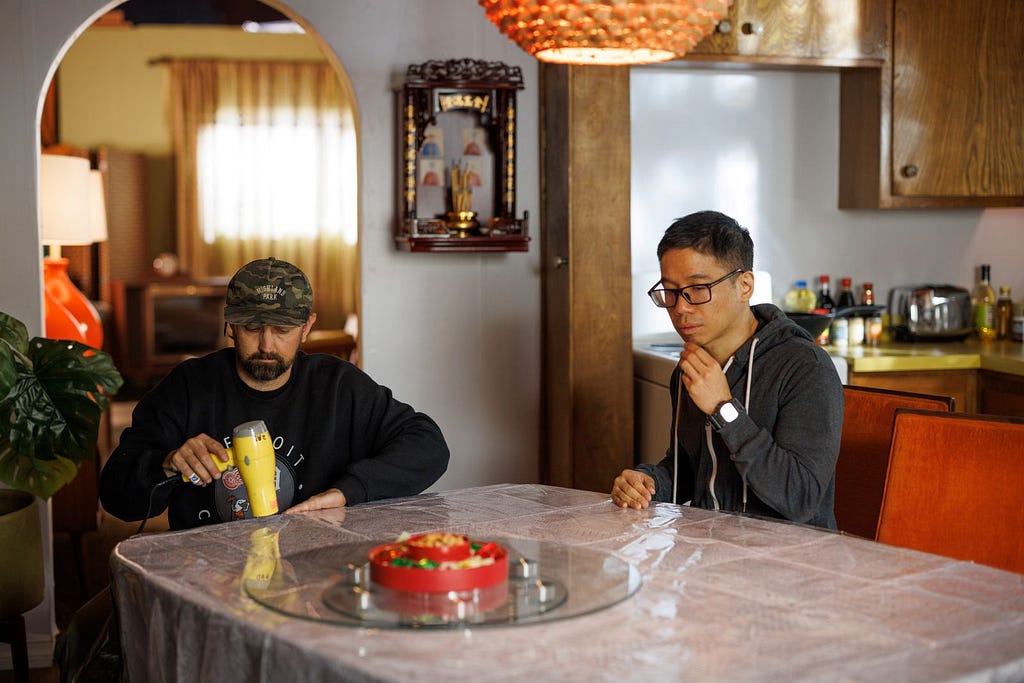
Telly: Last year, we launched a campaign for McDonald’s as part of their Grandma McFlurry promotion called “Sweet Connections”. We were tasked with creating a campaign targeting Asian Americans.
We started by asking, “What’s the relationship like between Asian grandparents and their grandchildren?” Speaking personally, my grandmother didn’t speak a word of English, and I spoke very little Chinese. I was never able to really communicate with her on a deeper level, which I greatly regretted as I got older. That insight led us to think about the language barrier that exists for many immigrant families, and how AI could help bridge that gap.
So we built a campaign around that idea. We created an AI-powered campaign site that let users send video messages to their grandmothers. If you recorded a message in English and your grandmother spoke Chinese, Spanish, or another language, the tool would translate the message, clone your voice, and reanimate your face so the lip movements matched the new language. It looked and sounded like you were speaking your grandmother’s language.
It was one of McDonald’s very first AI-driven campaigns in the U.S.
Yitzi: That’s great. Could you tell us a bit about the exciting new initiatives you and your company are working on? What should we be looking forward to?
Telly: Our goal is to become a culture-led, AI-driven agency, not just to stay competitive, but to take advantage of all the new opportunities AI offers. For a mid-sized agency like ours, AI is a great equalizer.
We’re in the midst of revamping how we approach our work, how we produce it, and how it shows up in the world. We’re tapping into AI tools to streamline processes, enhance ideation, and create work that lives on a much larger canvas. That’s the beauty of AI, it allows us to work smarter, expand our creative horizons, and do things that would’ve been completely cost-prohibitive just a few years ago.
Yitzi: Of course, there’s always the potential for unintended consequences. Are there any we should keep in mind when embracing AI in marketing or content generation?
Telly: Absolutely. Human oversight is essential at every step. A lot of it comes down to the honor system, and that’s where things can get tricky.
The last thing we want to do is type a prompt into an AI tool, get a response, and hand that directly to a client. That’s not the right way to work with AI. It should be a tool to brainstorm, refine ideas, and offer new perspectives, not a cheat.
We’ve seen examples where companies overly relied on AI without fact-checking or cross-referencing. They ended up putting out work that was either hallucinated by the AI or just flat-out wrong. That’s exactly what we want to avoid.
At our agency, we’re really focused on instilling the mindset that AI isn’t here to do your homework. It’s here to help you think better, not think for you.
Yitzi: Some people have a visceral rejection of AI, maybe it’s related to the uncanny valley, but they see it and instantly hate it. What can be done to overcome that?
Telly: That’s exactly why the way we approach AI is centered on using it as a tool to strengthen human connection. Take the Grandma McFlurry campaign I mentioned. It was all about using the technology to bring people closer together, not to separate them or act as a substitute for real connection.
It really depends on how the technology is used and the purpose behind it. For us, AI isn’t meant to replace the human aspect of our work. It’s about finding ways for the technology to help bring individuals and communities closer.
Yitzi: A lot of people in the entertainment industry, in Hollywood, in gaming, have been very vocal about being against AI, especially with concerns around job loss. But AI is here, and it’s not going away. What would you say to help ease their concerns?
Telly: This is the new normal. We can’t put the genie back in the bottle at this point. We have to figure out how to work with it and adapt.
You’re already seeing that shift. Some companies are trying to position themselves as the “Netflix of AI content,” which shows how fast the space is moving. But even with all that, we still need writers, we still need people to come up with ideas, to direct content, to shape and craft narratives.
At least right now, we’re not at the point where you can just prompt an AI to create a full film or TV show that’s worth watching from scratch. There’s still a big need, and opportunity, for creative people to step in and take AI-generated content to the next level.

Yitzi: When do you think we’ll start seeing completely AI-generated advertisements on television, or fully generated short films or even long-form films?
Telly: That’s already happening. I guess it depends on how well you can spot it. Especially on YouTube, when you look at those digital ads, the 15-second or six-second ones, some are clearly low-quality, like those deepfake product ads where they’re putting words in Elon Musk’s or Oprah Winfrey’s mouths. But others, especially from brands, are really well done. If you didn’t know, you wouldn’t know. So it’s already here. And we’ve been using CGI in ads, film, and content widely for how long now? It’s been more than 30 years already. Technology is a tool, and like any tool, it needs to be handled and used properly and responsibly.
Yitzi: Just for the sake of understanding the cost savings, how much could a company actually save by creating an AI-generated advertisement instead of building a real set and hiring actors, filmmakers, and so on?
Telly: It really depends on what you want to shoot, but generally speaking, you could save tens, if not hundreds, of thousands of dollars. There’s a prompt going viral right now where people can create a quick six-second ad using Veo 3. If you hired someone to make that same six-second video traditionally, with CGI, an agency, artists, and everything, it would cost around $100,000.
Yitzi: Any suggestions about how to combat or push against deepfakes? Because it’s going to happen, and eventually we’ll have really sophisticated deepfakes, and we won’t know the difference. For the time being, how can we verify that something’s real or fake?
Telly: It’s getting harder and harder. At the beginning, I was a big fan of it as just a fun gag to play around with, but now it’s getting to the point where it’s almost indiscernible and used for nefarious means. Fortunately, there are some tools out there that can verify whether a video has been altered with AI. But even those tools sometimes can’t always detect what’s real and what’s not. At this point, we need to educate ourselves to understand how to scrutinize content for deepfakery.
Yitzi: A lot of people are familiar with ChatGPT and some of the basic AI tools, but I imagine someone like you, working at an enterprise level, probably uses some niche tools. For another brand leader or advertising agency that’s considering doing this, what are the tools they need to learn, the more sophisticated AI tools required to create enterprise-level advertisements or marketing campaigns?
Telly: It’s the wild west right now. Everyone is on their own AI journey and working at their own pace. I always tell folks, start with ChatGPT because it’s the granddaddy of them all. Learn prompting, learn the basics, and from there, you can pretty much pick up any of the others. For us, we use several video generation platforms like Runway and Veo 3, and some audio generation platforms like Eleven Labs. There are also some great translation platforms like HeyGen. I always say it’s kind of like cooking. There’s no single AI solution at the moment that does everything, so you have to mix and match. The real skill doesn’t come from mastering just one, but from figuring out how they all work together.
Yitzi: That’s very smart. You mentioned audio. So, AI-generated music today is almost indiscernible from traditional music. What are your thoughts on the future of that? Because it feels like anyone can just make a really cool pop song, and then where’s the artist?
Telly: There was that whole controversy with the AI band a couple of weeks ago, Velvet Sundown. They’ve already gotten something like a million listeners on Spotify. I would’ve thought that was farther off, but it’s happening. If you go on some of these AI music generation platforms and see what people are publishing, there are many songs with hundreds of thousands of plays. It’s already here, and it’s starting to creep into the mainstream more and more. It’s just a matter of time before we’re listening to AI artists or AI versions of the artists we love — that’s the scary part.
Yitzi: I think, if I’m not mistaken, I think Spotify doesn’t allow AI music to be monetized, or I might be off on that…
Telly: Yeah, it was kind of fuzzy how that slipped through the cracks. But I’m sure they’ll figure out some solution, because it’s similar to the Netflix model. Why license other people’s content and pay royalties when you can literally create your own artists and fully own the songs and the IP? I’m not saying that’s the right thing to do, but that’s where things seem to be heading.
Yitzi: What would you say to creatives in general, to filmmakers, actors, musicians, songwriters, the whole gamut, who are worried about losing their jobs because AI can do it cheaply and instantly? What would you say to them?
Telly: I think the best approach is to lean in. Embrace it. Figure out how you can use it, master it, and let it enhance the work you’re already doing. We can’t just stick our fingers in our ears and ignore it. We either find a way to work with it or try to work without it, and good luck with that.
Yitzi: Are you wearing Meta’s AI glasses right now? Can you tell us about their AI functionality and how they help you?
Telly: I am. I mainly use them for their voice activated AI on demand feature. If I’m working on something and I have a question, I can just ask my glasses, like, “Hey, who’s this person?” or “Give me some info about that”, and I don’t have to open a new tab or do a search. They’re really practical.
I’m not a picture taker, but now when I go to an event and want to take pictures, I just click the little button on the side. I don’t have to take out my phone or go through that whole process.
The headphones are also a great feature. They don’t block out the sound around me when I’m walking around the city.
Yitzi: That’s awesome. And it takes video too? Do you ever get pushback from people saying they don’t want to be recorded?
Telly: Technically, a light goes on when you’re filming video, so people can tell you’re recording. But I get that it can still make some folks uncomfortable. I wear regular glasses most of the time so people don’t feel like they’re under surveillance every time they speak to me.
Yitzi: Fascinating. Is there a heads-up display on the glasses, or is it just audio?
Telly: No, you don’t see anything. Right now, it’s all audio. But we’re getting there, that’s the next step.
Yitzi: That’s great. So this is our signature question, Telly. You’ve been blessed with a lot of success and you’ve run some great campaigns. Can you share with our readers the five things you need to create a highly successful career in advertising and marketing?
Telly: I’m still trying to figure that one out.
- I think, first, you need good ideas, so certainly some semblance of creativity.
- A deep appreciation for strategy and research.
- Knowledge in production and an understanding of how things get made.
- Insight on what resonates with the public and creates an emotional response.
- A passion for innovation and culture.
Yitzi: Beautiful. This is our aspirational question, and we’re almost done. So Telly, because of your great work and the platform that you lead, you’re a person of enormous influence. If you could put out an idea or inspire a movement that would bring the most amount of good to the most amount of people, what would that be?
Telly: Oh Lord, what a big question. I think we need more compassion in the world. Everything is so fast-paced these days, and we’re kind of just stomping over each other. Sometimes we just have to slow down a bit and really understand the effects and consequences of our actions, no matter how big or small.
Let’s just take a time-out during the day and think about what we’re doing and if and how we’re contributing to society, our community, and our families.
If you can find a balance between that while also serving the interests of your bosses and clients, that’s a recipe for success and fulfillment.
Yitzi: That’s great. Well, Telly, it’s been an honor to meet you. I wish you continued success, good health, and blessings. I hope we can do this again next year, and we’d be delighted to do more stories with other people from your team.
Telly: Same here.
IW Group’s Telly Wong Talks Creative Evolution, AI-Driven Storytelling, and the Future of… was originally published in Authority Magazine on Medium, where people are continuing the conversation by highlighting and responding to this story.