
…Invest in your relationships. We all know how important they are. Relationships protect you from stress, they determine your success, and they give meaning to your success. Take a look at who’s in your life and really cultivate those relationships. Look at your “starting five,” because you become the average of the five people you spend the most time with. Make sure you’re surrounded by people who lift you up, who inspire you to grow, but also with whom you can deepen your connections. One simple tool I learned from Dr. Tal Ben-Shahar, who’s a major authority on mindset and happiness: when you meet someone, instead of asking, “How are you?” and getting the usual “I’m fine, thanks,” ask, “How are you really?” That one extra word, “really”, can prompt a deeper conversation and create a stronger bond. So be intentional about deepening relationships…
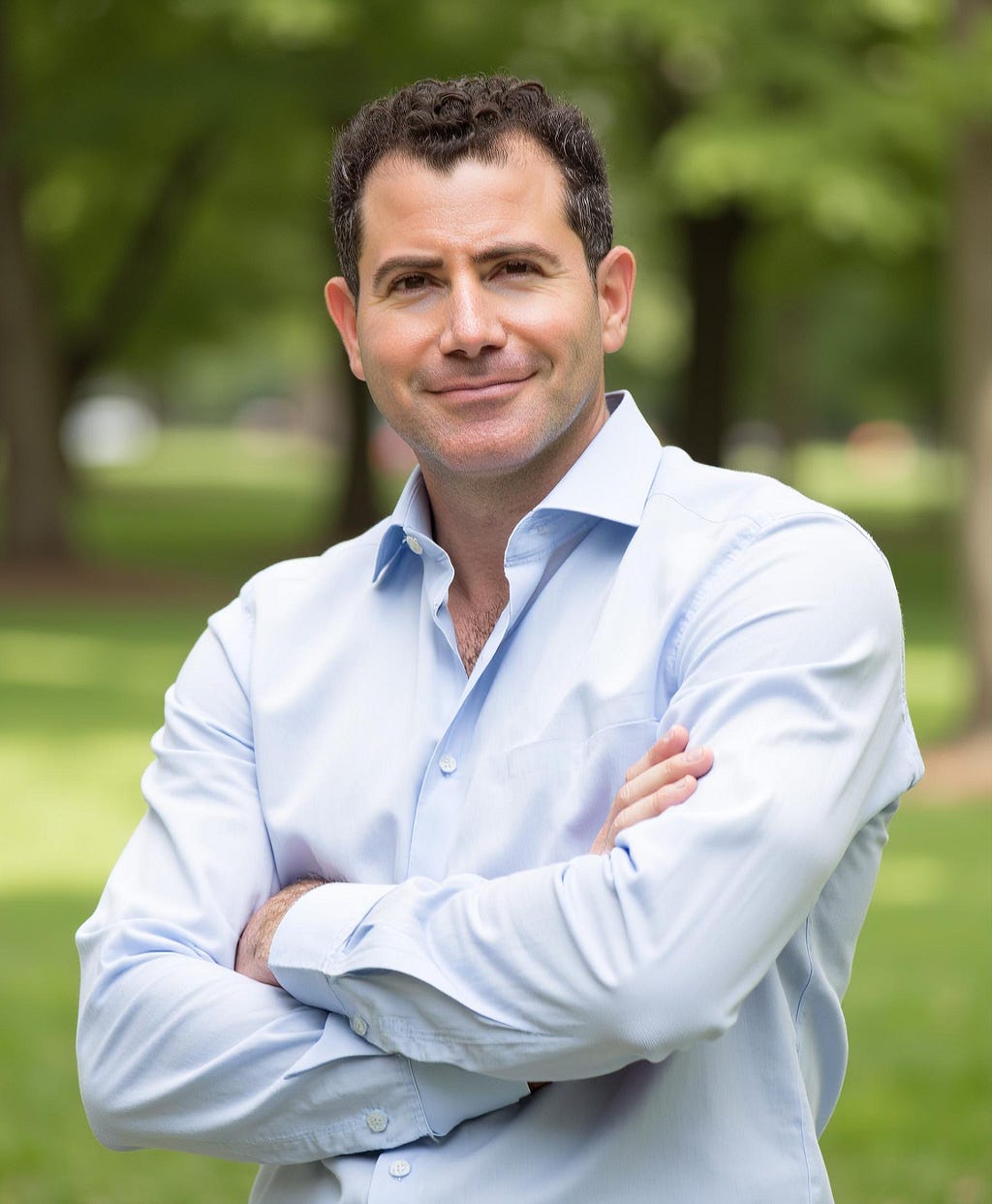
I had the pleasure of talking with Elan Divon. Born in Jerusalem and raised across continents, Elan’s life reads like a global itinerary, shaped early by the world of diplomacy and cultural immersion. The son of an Israeli diplomat, Divon spent his childhood moving between Israel, India, Sri Lanka, Ethiopia, Canada, and the U.K., absorbing a mosaic of traditions and perspectives. That nomadic upbringing seeded a lifelong fascination with culture, history, and the rituals that societies use to mark growth and passage.
His worldview changed dramatically in 1997, while on home leave from military service in Lebanon. A suicide bombing on Jerusalem’s Ben Yehuda Street nearly took his life. That near-death moment, he recalls, was the catalyst for a deeper search for meaning, a spiritual pivot point that would come to define his work. “It was a wake-up call,” Divon told me. “Coming to terms with your own mortality is the beginning of the spiritual adventure.”
That journey took him from political science courses in London to anthropology and religious studies at McGill, Brandeis, and ultimately Harvard. His academic interests coalesced around one central idea: how ancient wisdom, often buried in religious or cultural texts, can be translated into practical tools for modern life. The throughline in Divon’s career has been this fusion of spiritual inquiry and grounded application.
Today, Divon is best known as the author of The Initiation, a book that challenges the foundations of pop spirituality and questions the prevailing belief that success stems from a purely positive mindset. Drawing on 15 years of research, his own transformative experiences, and case studies of figures like Eckhart Tolle and Byron Katie, Divon argues that real transformation begins not in clarity, but in chaos. “Every major change agent,” he writes, “had to be dismembered to remember who they are. They had to undergo an initiation.”
That concept is more than metaphor. For Divon, initiation is a missing framework in modern life, especially for young adults navigating a world of disappearing rites of passage. In response, he launched Divon Academy in 2018, followed by ElevateU in the U.S., to provide young people with what he sees as essential but overlooked life skills: emotional intelligence, professional readiness, communication, and adaptability. His programs are now used at universities and colleges across the country, offering students credit-bearing courses that combine career prep with personal development.
In addition to his work in education, Divon has spent years in fundraising and philanthropy. He currently serves as director of fundraising at the Hebrew Day Academy in San Diego and previously held a leadership role at Canadian Friends of the Hebrew University, where he co-founded the Einstein Legacy Project. That initiative, which aimed to celebrate human potential, launched at NASDAQ and included the creation of the world’s first 3D-printed book, Genius: 100 Visions, featuring essays from Nobel laureates, global leaders, and cultural icons. A miniature version of the book was even printed aboard the International Space Station.
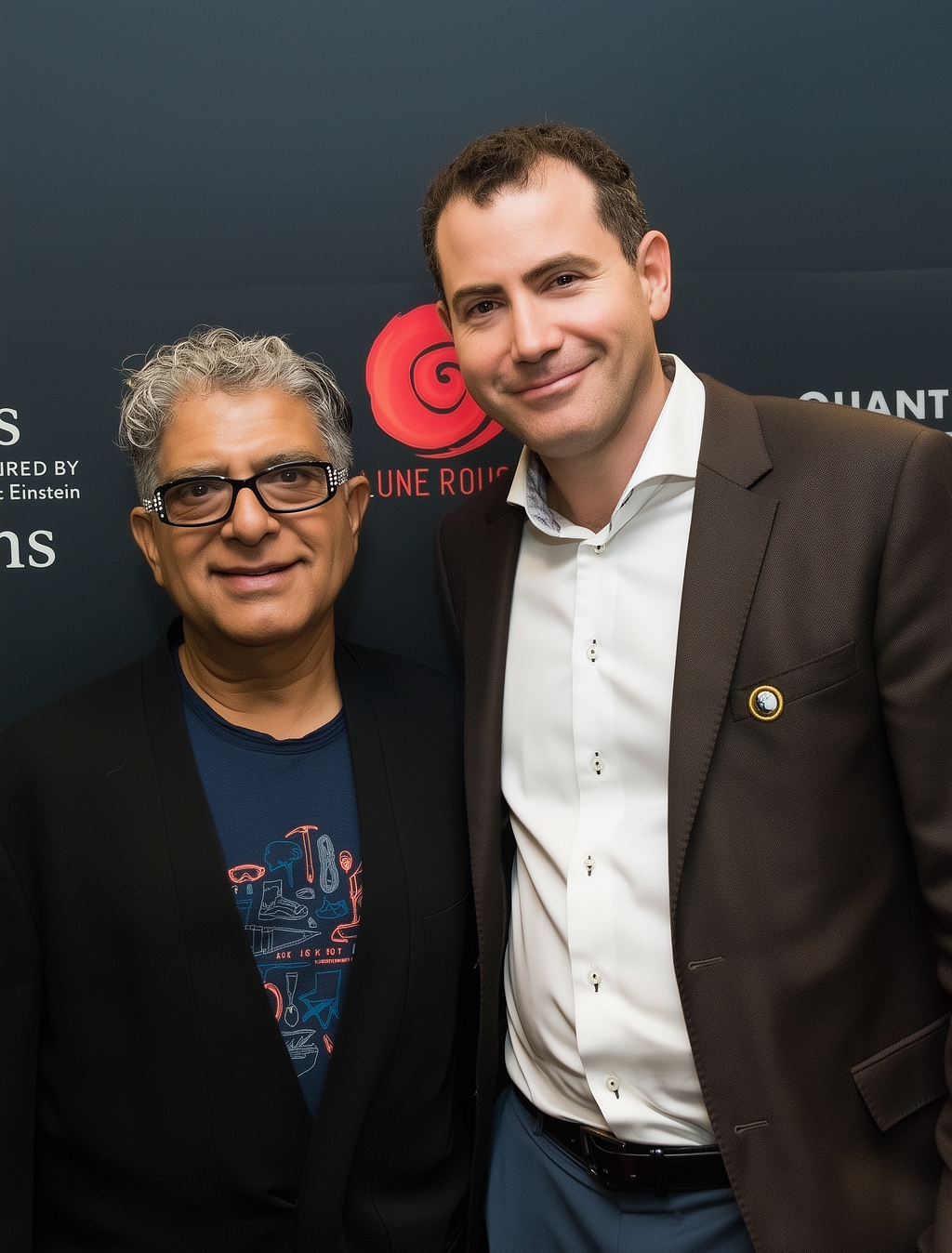
His educational and spiritual work has earned recognition from influential names across industries. Deepak Chopra praised The Initiation for offering a roadmap to spiritual growth, while E! Entertainment Television founder Larry Namer called it a “compelling road map” for those facing major life transitions. His lectures and trainings have been featured at Fortune 500 companies such as Nike, Intel, Uber, and Disney, as well as at community events, synagogues, and student gatherings.
Divon’s message is striking for its blend of ancient and contemporary. Drawing from sources as varied as the Torah, Proverbs, and modern psychology, he emphasizes the value of tradition not as dogma, but as a set of rituals designed to help people navigate uncertainty. In his view, disconnection, from screens, from noise, from constant performance, is as vital as connection to others, to movement, to gratitude, and to meaning. His book and programs outline specific tools, daily habits, group-based challenges, intentional reflection, that he believes can rebuild the skills modern culture has eroded.
Central to his philosophy is the belief that mental health struggles among youth are not simply personal, but systemic. The disappearance of structured rites of passage, the rise of social media, and the over-accommodation of discomfort have, in his view, left an entire generation underprepared for the realities of adulthood. While Divon doesn’t advocate a wholesale return to the past, he warns against discarding traditions that once offered grounding and community.
His perspective on gender dynamics and modern relationships also reflects that balance of modernity and reverence for structure. While affirming personal freedom and gender fluidity, Divon notes the psychological and relational strain created by cultural shifts in roles and expectations. He calls for greater clarity, mutual understanding, and recognition of both masculine and feminine energies, qualities he believes are being pushed out of alignment in today’s social landscape.
Through it all, Divon insists he is not promoting ideology, but rather offering a lens, a way to look at ancient systems not as relics, but as tools. His work, whether through public speaking, coaching, or writing, is focused on reframing ancient wisdom for modern growth. “All we really have is energy and time,” he says. “And the key is learning how to move that energy through space with purpose.”
Now based in California, Divon continues to write, speak, and coach while building what he calls The Initiation Collective, a global community designed to offer structure, support, and guidance for people navigating transitions in life, career, and identity. His aim is to provoke reflection, helping people orient themselves through rituals that have long outlasted the civilizations that birthed them.
For those interested in Divon’s work, The Initiation is available via Amazon in paperback and Kindle editions. More information, including coaching and speaking engagements, can be found at elandivon.com.
Yitzi: Elan Divon, it’s an honor to meet you. Before we dive in deep, our readers would love to learn about Elan Divon’s personal origin story. Can you share the story of your childhood, how you grew up, and then the seeds for all the great things that have come afterwards?
Elan: Thank you. It’s an honor and a pleasure to be with you. So, the origin story, I was born in Jerusalem, Israel. My father had just started his career as an Israeli diplomat. When I was about six months old, we moved to India. We lived in Bombay for four years, then Canada for two years, back to Israel, then Sri Lanka, back to Israel, then Ethiopia, and then back to Israel again. High school, then the army.
My formative years were really shaped by living in Israel and then immersing myself in all these other countries, primarily in Asia and Africa, Ethiopia as well, and Canada. That experience definitely played a big role in sparking my fascination and interest in other cultures. Growing up in so many different places exposed me to a wide variety of perspectives and ways of life.
Then came the army, which was a pivotal experience. I had a transformational moment during that time, a near brush with death. I was on home leave from active duty in Lebanon, on a lunch date, when a triple suicide bombing happened on Ben Yehuda Street in 1997. A series of bombs went off, and I was just very fortunate to survive. That experience really prompted me to search for purpose and meaning. It was a wake-up call.
There’s a saying that coming to terms with your own mortality is the beginning of the spiritual adventure. That was definitely true for me. After the army, I decided to study in London. My sister was already there, so I moved, worked full-time at the Israeli Embassy, and studied part-time. I initially thought I’d follow in my father’s footsteps and become a diplomat. I was studying political science, but I realized I was more fascinated by history, ancient wisdom, religion, anthropology, and sociology. That pull gradually led me in a different direction.
After London, I moved to New York, but eventually went back to school. I studied at McGill in Montreal, then earned a master’s in anthropology at Brandeis, followed by another master’s in comparative religion at Harvard. I found myself deeply drawn to ancient wisdom, religion, and the big existential questions. I realized that my purpose is to take that wisdom, unpack it, and translate it into messages and tools that can help people in the here and now.
That’s been the journey. Of course, professionally, there have been a lot of twists and turns. I’ve spent a lot of time in fundraising. In fact, right now I’m working as a director of fundraising for the Hebrew Day Academy in San Diego. That’s also been a passion of mine. As long as I strongly believe in something, especially education and Jewish education, I’m committed to supporting it.
But the writing, the speaking, the teaching, that all comes from my love of ancient wisdom.
Yitzi: Beautiful. So let’s talk about the next chapter. Tell us about this amazing movement that you’ve created. Tell us what you’re doing and your main message.
Elan: Wow. The movement I’m looking to create really started when I launched my own company in 2018. I realized that young people today, in particular, aren’t prepared for the world they’re entering. There used to be rites of passage that helped guide and prepare someone for adulthood. That’s what Bar Mitzvahs, Bat Mitzvahs, and other traditional ceremonies were meant to do.
But technology has come along and made many of these rites obsolete or redundant. They’re no longer preparing young people for what comes next after school or college. And that gap is leading to a whole host of issues, people not being ready for the workforce, lacking professional and soft skills, and struggling with mental health, communication, emotional intelligence, and social skills. It’s also about readiness and the ability to adapt in this rapidly changing world.
So, I started Divon Academy, and now here in the States, we’ve launched a sister company called ElevateU. We primarily work with universities, offering a course focused on life and career preparation. It’s designed to help students not only land jobs and become workforce-ready, but also to build essential life skills and focus on personal development. It’s really a combination of professional and personal growth. The course can be taken for credit at several partner universities, and we’re continuing to expand.
This idea is also the foundation of the book I wrote, which explores the concept of initiation. It asks: how do you initiate yourself into the next phase of life? I believe young people today are in one of the toughest positions when it comes to being prepared, not just for work, but for life. But really, this applies to anyone at a pivot point. Whether you’re retiring or transitioning to a new phase, the movement I’m building is about understanding and harnessing the wisdom of initiation.
I talk about this in the book, how to use challenging moments of transition and transformation to pivot and grow into the next stage of your life.
Yitzi: Can you articulate a few of the monumental challenges that young people face today that need to be addressed?
Elan: Yes, absolutely, there are so many. One of the biggest challenges is simply being ready for the workforce. Unfortunately, the education system today isn’t keeping up. I often use this metaphor: technology is moving at light speed, the workforce is moving at sound speed trying to catch up, and the education system is lagging far behind, like a Ford pickup truck trying to chase the two.
The way schools and universities are structured means that a student might be learning a technical skill as a freshman that’s already outdated by the time they graduate. So, they’re not being adequately prepared for today’s professional world.
Then, you’ve got the impact of growing up in a digital world. For today’s youth, screens are the native language. That’s the world they know. But what they haven’t had enough opportunity to develop, through no fault of their own, are communication skills, social skills, and emotional intelligence. These are the human capabilities that AI can’t automate, and they’re exactly what employers are desperate for. They’re also the foundation for success in life.
Let me give you a simple example: dating. In the past, if you wanted to meet someone, you had to go out, walk up to a stranger, introduce yourself, deal with the tension of that first interaction, maybe face rejection, and keep going. That required real communication skills and resilience. It forced you to step into discomfort, read social cues, and develop your personality.
Now? You just swipe and text. There’s no face-to-face challenge, no tension to work through. So when a relationship gets even slightly difficult, it’s easy to just say, “Next.” We’re losing the ability to build and sustain human relationships. That’s part of why people are getting married later, marriages are down, divorces are up. Not all of that is because of technology, of course, but a significant part of it comes from the erosion of those basic social and emotional skills.
Another challenge is stress. Things that used to be completely manageable are now triggering. I’ll share an example. I have a friend in Toronto, a very successful CEO, and a few years ago, her son was 16. Every weekend, she’d drop him off at his friend’s house to hang out. One winter, she noticed that instead of walking up to the door to knock, he’d stand outside in the freezing cold, texting.
It was snowing, minus ten degrees, wind howling, and he’s just standing there, texting. She finally asked him, “Why don’t you just knock?” He said, “I’m texting my friend to come open the door. I don’t want to see his parents or siblings. I want to avoid that awkwardness.”
Something that used to be a normal, everyday interaction, knocking on a friend’s door and saying hi, is now a source of stress. The threshold for stress is so much lower, and the tolerance is lower too. That’s part of why we’re seeing this epidemic of stress and anxiety. We’re not learning how to deal with even the most basic uncomfortable situations.
Even in university, which is supposed to stretch your thinking and challenge your comfort zone, we now have safe zones, trigger warnings, and speaker disinvitations if someone might be offended. But university is supposed to teach you how to negotiate tension and difficulty, how to deal with discomfort. That’s the point. Instead, campuses are being engineered like resorts, where no one should ever feel even the slightest bit of stress.
I spent almost a year working as a university chaplain, and it was incredibly eye-opening. The system is so careful not to let students experience any friction. But without that friction, you can’t build resilience.
Again, it’s not the fault of young people. It’s the systems they’re growing up in, the world we’ve engineered, that aren’t allowing them to develop the skills they need to thrive.
Yitzi: It’s unbelievable. You’ve articulated it so well. Do you think this problem is universal, or is it only a problem in the United States or Western countries? How widespread is this issue?
Elan: This is widespread across the board. It may be more pronounced in North America and Europe, but it’s happening everywhere, including Asia. Probably to a lesser extent in certain countries or areas where there’s less use of social media and technology, but in the big picture, it’s a universal issue.
I read a shocking statistic: more young people die today from suicide than from all wars, homicides, and natural disasters combined. We don’t talk about it much, but that’s a huge mental health issue. It shows there’s a real problem here.
I think the loneliness epidemic plays a major role. We’re human. There’s a reason why, in the story of Genesis, when God creates everything, He says, “It is good.” Then He creates man, no comment. But then He says, “It is not good for man to be alone,” so He creates Eve. The point, in my view, is that no matter how pious, perfected, or beautiful your soul is, you still need human connection to feel whole.
We’re lacking that today. We live in a world that’s hyperconnected but actually disconnected. Young people are really feeling that. It’s not the same. Studies show that if you’re having a bad day and you’re texting your best friend, it’s like you didn’t talk to anyone. But when you meet your best friend in person, your brain chemistry and biochemistry actually change.
We need that in-person connection, and we’re not getting it. That ties back to the mental health challenges young people, in particular, are experiencing.
Yitzi: Wow. So you’ve articulated the scale and scope of the problem, but let’s talk about some of your solutions. I see you’ve identified a few of the main issues, and one of them is our phones and social media. What can be done to mitigate the harm caused by them?
Elan: The answers are actually very simple, ancient, even. I always say, as we move into the future, we can’t really take anything with us from the past except human wisdom. In a Jewish context, that’s Torah. The rituals, the mitzvot, the wisdom, they’ve been around for thousands of years for a reason.
Take the Sabbath, for example. It’s about disconnecting. The answers are already there. It’s a no-brainer: disconnect. That’s one simple tool. But the tough part is developing routines, rituals, and habits. We are what we habitually do. Unless you make something part of your life, really integrate it into your identity and daily habits, it’s hard to just wake up one day and decide, “I’m going to stop using my phone.”
That’s why ancient wisdom is so pivotal. When we run our courses, we focus a lot on habit formation. We put people into groups of five, into teams, because social support makes a big difference. When you do something with others, it becomes easier to stick with it. They choose habits that support their mental, emotional, and physical well-being, and they commit to a 30- or 60-day challenge where they do it every day. That’s how it starts to become second nature.
There’s no magic solution. Everyone’s looking for a secret trick, but it’s really just about habits and rituals. When it comes to things like stress and tension, you have to step into it. The biggest mistake is creating a safe zone that allows people to run away from what they’re afraid of. You have to slowly tiptoe into it.
I used to be terrified of public speaking, and I knew it was something I’d have to do in my life. It was tough, excruciating at times, but I pushed myself. I took courses, joined Toastmasters, and just kept doing it until it became natural.
It’s simple psychology. You have to practice. And when it comes to stress and tension, you’ve got to lean into it. I always say, “Where you find your tension, you find your potential.” That tension is energy. It’s energy within you that needs to be released. You have to learn how to harness it, not by running away from it, but by running toward it, slowly, and figuring out how to deal with it.
There are all kinds of nuanced tools, but in the big picture, the ancients knew it well. They already had many of the answers.
Yitzi: It’s so profound what you said, that idea of the Sabbath addresses both problems in one swoop: pulling away from technology, building community, and creating a habit for positive behaviors. That was one example of ancient wisdom. Can you share other examples that could help address some of the maladies crippling our young people?
Elan: Let’s see. There are so many. If you read Proverbs, for example, and other ancient texts, they speak about things like controlling your speech, not being quick to anger, what we’d now call emotional intelligence. All of them touch on these themes in different ways.
At the end of the day, what we’re really dealing with is energy. All we have in life is energy and time. Time is our ability to move energy through space and use it in the best possible way. What we’re trying to teach people, what we’re all trying to do, really, is to master or at least better manage our energy: mental, physical, emotional, and spiritual. Because the only thing we can really do is focus that energy toward something greater, for the upliftment and betterment of all life.
Different ancient texts address this in different ways, but the underlying idea is the same. It’s about developing mastery over yourself so you can live with purpose and alignment. All of them, the rituals, the mitzvot, are about learning to regulate and control yourself in some way, whether it’s in partnership or individually. I was watching that Jewish Matchmaker show on Netflix yesterday, and it touched on this idea. Take shomer negiah, for example. That’s not for everyone, I’m Reform, but I understand the wisdom behind it. It’s about controlling physical urges and, in this case, getting to know someone beyond the physical to see if there’s a real connection before taking that next step.
What’s beautiful about religion is that it has all these built-in mechanisms to help you develop emotional, physical, and mental control, simply by practicing certain mitzvot, rituals, or habits. There’s profound wisdom behind it. People often dismiss it as old or outdated, but there’s a reason those practices exist.
Yitzi: I was just talking on Friday to a comedian, and she was saying how she feels like there’s a war between men and women. Women are at war with men, men are at war with women, and they’re afraid, afraid to meet each other there. Obviously, that’s inimical to the posterity of society. So I asked her, what could be done? And she said, “I don’t know.” From your perspective and your wisdom, what do you think could be done to bridge this great divide between men and women? Because men are afraid of women, and women are afraid of men.
Elan: Yeah, that’s a big issue. I think we need to go deeper and recognize that male and female, in a spiritual sense, are energies and qualities we all have within us. Male and female represent different characteristics, and while men traditionally carry more male energetic qualities, and women more female, neither is better. They’re both necessary. It’s like the Star of David, one triangle pointing up, one pointing down. Together, they create the whole. It’s the union of male and female that brings creation and vitality.
Today’s world, in many ways, is very masculine. The professional, economic, achievement-driven world is steeped in masculine energy. Women have been pushed to operate in that realm, especially as gender roles have become more fluid. So women are being called to access more masculine energy, and at the same time, men are often discouraged from expressing that same energy and are instead encouraged to be more feminine. I support everyone being who they truly are and expressing themselves authentically, but I think part of the problem is that society is pressuring each gender to be something they’re not, rather than accepting and embracing the natural differences between them.
That’s at the root of a lot of the confusion and disconnection. Esther Perel, the psychologist, she’s brilliant, talks about this. Today, we expect so much from a partner. Your partner is supposed to be your lover, best friend, business associate, confidant, co-parent, the list goes on. In the past, you had a village. Of course your partner was important, but there were other people in your community who helped fulfill different roles.
Now, there’s so much awareness and hyper-awareness, and everything is expected to be fluid, to the point where no one knows what it means to be anything anymore. The world is uncertain, and life is uncertain. That’s why we need structure and routine, to ground us in something stable. We need some kind of order to help us navigate the chaos. And when there’s no clarity around even the basic ideas of what it means to be a man or a woman, it creates disarray and confusion.
Yitzi: Amazing insight. So you’re saying part of this war comes from the fact that we’re afraid to embrace our respective masculine or feminine qualities because they’re like yin and yang, they work together when they’re expressed. But when we repress or suppress them, that creates conflict. Am I summarizing that correctly?
Elan: Yes, exactly. We know, for example, that the most dangerous demographic in the world is young men who are frustrated and angry, and we have a lot of them today.
I think the world right now tends to dismiss or even attack men for simply being men, and at the same time, women are being pushed to be more masculine because of how society is structured. So women are frustrated, and men are frustrated. On top of that, there’s a lot of socioeconomic pressure. Professor Scott Galloway talks about this, how today, women are ahead of men in many areas like education and economics. That’s shifted the dating landscape too. Women are now dating older because they’re looking for someone more established, more secure. Meanwhile, younger guys who are just starting out are being left behind. They’re not seen as viable partners, and that creates even more frustration.
There’s a lot going on. I’m not saying there’s a perfect system or that the past had it all figured out, but I do feel nostalgic sometimes. Things used to feel simpler. I grew up in a household where my dad worked and my mom, although she also had a job, was really the anchor of the home. That felt natural to me, and I loved it. She was the heart of the household.
Today, when you’re raising kids, you still need that kind of grounding presence. But now, women are often expected to hustle, work full time, manage a household, and raise kids. And then there’s tension because maybe the man isn’t doing enough. But he’s also working and expected to show up fully at home too.
The expectations today are huge. It’s a good thing to have choices, we should be able to create the life we want, but at the same time, raising a family requires a lot of give and take. It’s hard when both people are out there trying to compete, lead, climb the ladder, run a business. Families end up suffering, or at least they don’t get what previous generations may have taken for granted. It’s just tougher today for both men and women in that sense.
Yitzi: Just to play devil’s advocate, for those who would say, “Elan, you’re presenting a retrograde ideology, something we’ve moved past, that’s old-fashioned or illiberal,” how do you respond to that?
Elan: With the book, I don’t get too much into this stuff. But I do think today, yes, of course, we can all choose. We have to choose together as couples, how you want things to work. Everyone should have that freedom. Women, just like men, are out there leading, taking initiative, and doing amazing things in the world, as they should be.
I just think we need to be aware of the fact that it’s creating a lot more pressure and mental health issues as a result, and it doesn’t have to be that way. A lot of it is cultural expectation. Yes, you can be anything and go out and do anything, but just know that it comes at a cost.
Ultimately, when a child is born, it’s coming from a mother’s womb. There’s a natural connection to the mother. There’s something in the maternal-child relationship that a father simply can’t have, it’s a different kind of bond. With things like breastfeeding, for example, the mother will naturally need to be home more with the child. There are biological factors that come into play when you’re raising a family. These things put more pressure and stress on moms, and if she’s also juggling work or other outside responsibilities, it’s going to create even more stress.
Again, I’m all for people doing what feels right to them and pursuing their dreams and passions. I just think we need to be aware of the realities. Ultimately, it’s up to every person and their partner to figure out what works best for them.
I think tradition offers something comforting because it creates a bit of order in the chaos. I don’t know what the stats are, or whether it was even measured at the time, but we do know that marriages used to be more long-lasting. Now, you can argue that some of those people stayed in unhappy marriages, but if we’re just looking at the raw data, the family unit was stronger. Families stayed together longer, at least by that metric.
It’s difficult. We’re living in unprecedented times. We don’t know how things are going to evolve with technology. We just need to be aware. It’s a tough one. I’m not someone advocating that we go back to tradition entirely. I’m just saying there was a wisdom there. Be aware of it, and apply whatever parts of it can work for you in your life today.
Yitzi: This is our signature question. Elan, based on your experience and the ideas you developed in your book, can you share five things anyone can do to optimize their emotional and mental wellness?
Elan:
- The first and most important thing I would say is actually two opposite things. One is to disconnect, meditation, prayer, whatever works for you. Have a ritual that helps you step away from your busy, crazy, noisy mind. You know what’s interesting? The ancients, when they used to refer to the mind, pointed to their heart. The heart was considered the center of life. Today, our mind has taken over that role. But the mind is just a tool. It’s not where life lives. Life lives in the heart. We need to get back there. All of our human pastimes, sports, being with animals, spending time in nature, they’re all ways to get us out of our heads and into our hearts, into our feelings, into our soul or spirit. That’s why alcohol is called “spirits.” It frees up the mind and brings us back to spirit. So anything you can do to get yourself out of your head, exercise, meditation, going into nature, do it. That’s why the Sabbath exists. It’s meant to get us out of our heads.
- The second thing is the opposite: connecting to other people. Invest in your relationships. We all know how important they are. Relationships protect you from stress, they determine your success, and they give meaning to your success. Take a look at who’s in your life and really cultivate those relationships. Look at your “starting five,” because you become the average of the five people you spend the most time with. Make sure you’re surrounded by people who lift you up, who inspire you to grow, but also with whom you can deepen your connections. One simple tool I learned from Dr. Tal Ben-Shahar, who’s a major authority on mindset and happiness: when you meet someone, instead of asking, “How are you?” and getting the usual “I’m fine, thanks,” ask, “How are you really?” That one extra word, “really”, can prompt a deeper conversation and create a stronger bond. So be intentional about deepening relationships.
- Third is movement. We’ve got to move. There’s a reason why Jews are always on the move. There’s something about movement that frees the mind. It brings creativity and innovation. It’s essential. In today’s world, we’re so stationary, on our computers, laptops, screens all day. You’ve got to make time to move every day. It’s not just good for your body, it’s essential for your mental and emotional health too. So we’ve got: disconnection (like meditation), connection (relationships), and movement.
- The fourth is gratitude. It might sound cliché, but it’s incredibly powerful. In Judaism, we have daily prayers that cultivate gratitude. Once you understand the wisdom behind that, it’s just beautiful. Gratitude is the one emotion that can’t exist at the same time as fear, anger, resentment, or any other negative emotion. When you feel grateful, those other feelings lose their grip. There’s a simple ritual: every day, think of three new things you’re grateful for. They don’t have to be big, could be a string of green lights on the way to work, a smile from someone, an email, a call. Just scan your day and find three things. Even on bad days, that practice helps rewire your mind to look for the good. Gratitude is incredibly underrated, but I think it’s essential for emotional and spiritual well-being. No matter how hard life gets, focus on what you have, not what you lack.
- The fifth thing, which connects to gratitude in a way, is certainty. I think one of the most important spiritual lessons is cultivating certainty. If you’re religious, that might come more naturally, you believe in Hashem. But even if you’re not, cultivating a sense of certainty is essential. It’s the belief that no matter how chaotic or difficult things get, everything is working out for your highest good. That’s the core message of so many spiritual traditions. Think about Moses and the Hebrew slaves in the desert, no food, no water, no idea where they were going, yet they held onto the belief that they would reach the Promised Land. Moses believed it would happen, even though he didn’t get there himself. That story is really about having certainty in the face of uncertainty. And that’s the essence of a positive mindset. You don’t really know if you have a positive mindset until you can stay positive when your external conditions are negative. That requires deep trust, whether in the universe, in God, in life itself. It’s understanding that even when things seem bad, there’s a higher purpose. Like the story of Joseph, his brothers sold him into slavery, but he believed it was all part of a divine plan. They meant it for harm, but Hashem meant it for good. Sometimes we can’t see the purpose in the moment. But if you want to live a happy life, you have to believe the cards are stacked in your favor. That everything is unfolding exactly as it’s supposed to, even if it doesn’t make sense right now. That mindset helps you move with the ebb and flow of life. I’ve had many disappointments in my life, but over time I’ve learned to see those curveballs differently. They help you adapt, they soften resistance. When you trust that there’s a higher plan, you stop fighting reality. That’s the fifth thing: cultivate certainty.
Yitzi: Elan, you have a unique gift for explaining ancient ideas in such a coherent, contemporary, modern way, and I’m so impressed. It’s really amazing.
Elan: Thank you. Thank you so much.
Yitzi: So how can our readers purchase your book? How can they continue to follow your work and learn more? How can they support you in any possible way?
Elan: Thank you. The book is available on Amazon, so they can just go to amazon.com and search “Elan Divon, The Initiation,” and it’ll pop up. There’s a Kindle version and a hard copy available.
My website is elandivon.com. I’ve done a lot of coaching in the past and still take on a selective number of clients each year. If someone is interested in a combination of life coaching and professional coaching, I kind of blend it all together, that’s something I still do with a small group of individuals.
On the site, I haven’t yet fully launched it, but I’m hoping this can be the beginning: I want to create a bigger movement of people aligned with the ideas and principles in the book. The idea is to have weekly online meetings and discussions and to see where it goes from there.
If you’re a parent, an individual, a young professional, someone looking to better navigate this crazy world and make sense of it, I’m building something called the Initiation Collective. It’s a community that will come together weekly to discuss different issues, share perspectives, and build connection. You can sign up through the website by entering your email. Once we get enough people signed up, we’ll launch our first session.
Again, that’s elandivon.com.
And lastly, I also speak and work with companies and organizations. If you’re looking for someone to come in and speak about the topics we’ve discussed here, or anything related, I love doing that as well.
Yitzi: Elan, it’s truly been an honor to meet you. I wish you continued success, good health, and blessings. I hope to meet you in person one day, and I hope we can do this again next year.
Elan: Thank you so much for this opportunity to share, and for all the blessings.
Yitzi: It’s truly been my pleasure. It’s always a pleasure talking to a brother, and I look forward to meeting you.
Elan: Likewise. Me too, me too.
Author Elan Divon On Five Things Anyone Can Do to Optimize Their Emotional and Mental Wellness was originally published in Authority Magazine on Medium, where people are continuing the conversation by highlighting and responding to this story.