…Listening to your customers. I think that’s the biggest one. Larger companies sometimes take that for granted, but since we’re small, we really get to know our customers one-on-one. That personal connection helps a lot when it comes to building the right products…
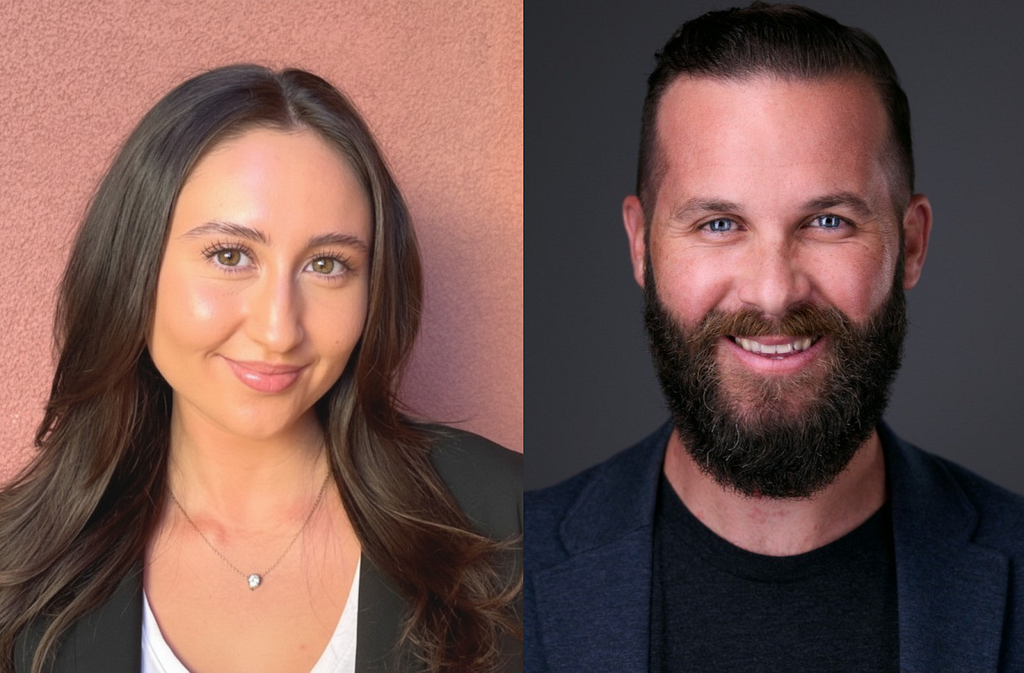
We had the pleasure of interviewing HARO’s Brett Farmiloe and Ana O’Neill.
Brett Farmiloe’s professional path began with a question that continues to define his work: how do people find meaning in what they do? In his early twenties, he left behind a conventional career in financial auditing, bought an RV, and hit the road with three friends to find answers. The result was Pursue the Passion, a cross-country project in career education that documented stories from people across the U.S. about how they found purpose in their work. What started as a website became a book and a speaking tour, with Farmiloe delivering over 100 talks from Alaska to Miami Beach.
The project marked the first of several attempts to bridge the gap between knowledge, career purpose, and media. After selling the Pursue the Passion website, Farmiloe turned his focus to entrepreneurship and launched Markitors, an SEO and digital marketing agency. Working initially from his daughter’s bedroom, he built the company from the ground up, with the website eventually ranking first in the U.S. for “digital marketing company.” The milestone marked his transition from freelancer to agency founder, growing the company to a 15-person team. Markitors earned recognition as a “Best Place to Work” before being acquired by a larger firm.
Following the acquisition, Farmiloe shifted once again, this time toward building a technology platform that would fuse elements from his past ventures into something new. The result was Featured.com, a Q&A-driven content marketplace connecting experts with publishers. Farmiloe describes it as a tool for creating high-quality media by matching professional insight with editorial need. At a time when AI-generated content has flooded digital channels, Featured instead emphasizes human experience and authenticity. The platform operates with a lean team of seven, serving over 1,000 publishers, including Forbes, Fast Company, and the American Marketing Association.
Designed around a product-led growth model with an accessible freemium entry point, Featured.com plays directly to Google’s increasingly explicit prioritization of content grounded in experience, expertise, authority, and trust. The platform’s structure, which invites experts to respond to editorial prompts and uses those responses to generate publishable content, reflects Farmiloe’s ongoing belief that real human voices matter, especially as automation accelerates across industries.
That philosophy underpinned his next major move. In April 2025, Farmiloe led the acquisition and revival of HARO (Help a Reporter Out), a once-prominent platform connecting journalists with expert sources. Under his leadership, HARO was re-engineered to emphasize quality, with new features like AI detection for pitches and manual source verification introduced to rebuild trust on both sides of the media equation. It remains free to use for both reporters and sources, preserving what Farmiloe describes as “the most organic way” for subject matter experts to share their knowledge with the world.
The son of Northern California, Farmiloe now lives in Scottsdale, Arizona, where he studied accounting at the University of Arizona’s Eller College of Management. He cites the region’s mix of affordability, energy, and family-oriented culture as key to his professional and personal stability. Outside of work, he’s a father of three, keeps backyard chickens, and once secured a month-long Hot Pockets sponsorship, eating the product for breakfast, lunch, and dinner as a way to bootstrap one of his early ventures. He hasn’t eaten one since.
Farmiloe’s career has not been without setbacks. He points to a failed venture as one of his more valuable experiences, citing the importance of understanding margins and market fit, two foundational elements, he says, that often determine whether a business can sustain itself. For him, failure and success function less as endpoints and more as feedback loops, shaping what comes next.
Across projects, a recurring theme emerges: the effort to create frameworks that elevate underutilized knowledge. From driving cross-country to interview working Americans, to building software that pairs experts with publishers, Farmiloe’s work revolves around identifying informational inefficiencies and offering new ways to close the gap. As AI reshapes the media ecosystem, his platforms have gravitated toward what automation can’t replicate, individual expertise, nuanced perspectives, and credibility earned over time.
Those values are visible not just in the tools Farmiloe builds but also in how he leads. “You need customers. You need a product. You need product-market fit. You need great people. And you need money,” he told me, when asked about what it takes to build a successful startup. “If you have all five of those things, then you have a very small chance at success.” It’s a characteristically dry summary, but behind it is a worldview that prizes iteration, thoughtful risk, and keeping things real.
He’s also no stranger to side projects, both playful and civic-minded. At one point, he explored reviving a national pillow-fighting championship. At another, he led local initiatives to boost neighborhood safety. These smaller efforts reflect the same principle as his larger ones: look for gaps in how people connect and communicate, then try to build something useful.
Asked what larger message he hopes to promote through his work, Farmiloe points to a simple but expansive idea: everyone is an expert in something. In a digital age dominated by AI-written content and algorithmic distribution, his platforms are designed to center the human element, something increasingly rare, and arguably, more important than ever.
Ana O’Neill is the Partnerships Manager for both HARO (Help a Reporter Out) and Featured.com, two of the internet’s longstanding platforms for connecting journalists with expert sources. In an industry shaped by shifting definitions of trust, credibility, and media access, O’Neill occupies a frontline role in safeguarding the integrity of the exchange. From hand-vetting incoming journalist requests to managing the daily flow of expert pitches, she operates at the junction of editorial standards and entrepreneurial scale, part gatekeeper, part facilitator, and part strategist.
A graduate of the University of Arizona, O’Neill earned both her undergraduate degree in marketing and global business and a subsequent master’s degree in marketing from the same institution. Her path into the media-tech space wasn’t plotted in advance, but it emerged through direct initiative. While still in graduate school, she attended a classroom talk by Brett Farmiloe, founder of Featured. Interested by the mission and momentum of the platform, she followed up after graduation to inquire about internship or summer work opportunities. That outreach led to her first professional role, and ultimately, a full-time position on the team.
Now, just over a year into that role, O’Neill manages a network of more than 100,000 contributors across both platforms. Each day, she oversees the production and distribution of HARO’s signature three-times-daily email blasts, tools that have become ubiquitous among publicists, thought leaders, and entrepreneurs hoping to be quoted or featured in the media. Behind those emails is a meticulous process: O’Neill manually reviews each journalist query submitted to the platform, confirming the authenticity of the sender through independent online research before the query ever reaches contributors.
That level of attention is designed to serve both sides of the media marketplace. For reporters, it means access to verified, qualified sources. For contributors, it offers protection against spam, misinformation, or the kind of high-volume pitch competition that dilutes meaningful participation. In a media landscape increasingly defined by automation, O’Neill’s role involves a human layer of curation, one that she believes is essential to preserving the value of connection.
“Especially in the era of AI,” she says, “what’s becoming truly special and increasingly valuable is authenticity. Being human. Being yourself.” It’s a refrain she returns to often, and one that informs her daily decisions across both platforms. At a time when credibility is constantly negotiated, between source and story, algorithm and editor, her work centers on reinforcing the human infrastructure behind digital exchange.
O’Neill’s responsibilities sit at the intersection of marketing, media literacy, and operations. Each day brings a new slate of journalist queries across industries, along with the challenge of matching them with a wide-ranging pool of experts. That kind of real-time responsiveness has taught her to embrace the pace and unpredictability of startup life. As she describes it, success often comes down to speed, flexibility, and a willingness to launch ideas before they’re fully formed, refining them through user feedback rather than internal perfectionism.
The experience has shaped her understanding of what it means to contribute meaningfully at an early stage company. While many new graduates might find themselves siloed or juniorized within larger firms, O’Neill has found herself pitching ideas directly to the CEO, seeing them tested and implemented within weeks. It’s a dynamic she credits with accelerating her learning curve, and one that she believes has given her a rare level of ownership early in her career.
Among the lessons she’s carried forward: the importance of adapting to quick turnarounds, accepting imperfection in early iterations, staying responsive to customers, and maintaining a clear awareness of competitors. Perhaps most importantly, she emphasizes the necessity of flexibility within teams, of being prepared for the reality that not every idea will work, and that constant change is part of the process.
As Featured refines its position in a field now crowded with competitors, the goal is no longer sheer volume. O’Neill and her colleagues have shifted toward emphasizing quality of match over quantity of response, delivering targeted, relevant media opportunities to contributors while protecting journalists from inbox fatigue. It’s a model rooted in what she describes as “looking out for both sides.”
For O’Neill, the work is also about democratizing access to media visibility. “Everyone has valuable knowledge to share,” she says. “Everyone is an expert in something.” Her role is to make that exchange possible, to ensure that the right expert finds the right opportunity, at the right time, through a process that can be trusted.
That mission remains ongoing. But whether she’s navigating the nuances of editorial credibility or helping steer product strategy behind the scenes, O’Neill is part of a new generation shaping the infrastructure of expert-driven media, one query at a time.
Yitzi: Brett and Ana, it’s an honor and a delight to meet you both. Before we dive in, our readers would love to learn about each of your personal origin stories. Can you share a story from your childhood, how you grew up, and the seeds for all this amazing work that came afterward?
Brett: Sure. I graduated from the University of Arizona and started out as a financial auditor. I wasn’t sure I wanted to stay in that field, so I bought an RV, recruited a couple of friends, and drove across the country interviewing people about their career paths. We documented their stories on a career education website. Eventually, we sold that website, I wrote a book about the experience, and then started a marketing agency. I ran that agency for 10 years, sold it, and started Featured. We’re about three and a half years into running Featured now. It’s a platform that connects sources with publishers to create Q&A content. We also recently acquired Help a Reporter Out (HARO) to further accelerate that mission. So, that’s 25 years in a nutshell.
Ana: For me, I don’t have as much experience as Brett, but I’m also a U of A alum. I went to the University of Arizona and studied marketing and global business. I got my master’s in marketing there as well, which is where I met Brett. He came to speak to one of our classes about Featured. After graduation, I reached out to him to see if he had any summer work or internship opportunities. He kindly brought me onto the team, and from there it turned into a full-time position. I’ve been here for about a year now, working with the team, and I’m really happy about it.
Yitzi: Unbelievable. Each of you probably has some amazing stories from your work. Brett, can you share one or two that really stand out in your mind from your professional life?
Brett: Yeah. I think getting a company acquired is one, and having a company fail is another. The failure, to shine some light on that, was a great learning experience. What really matters in business is your margins and your market. There’s usually a third “M” I mention, but I’m a little brain-dead right now, so let’s stick with margins and market. I think you need both successes and failures to figure out what’s next and to keep building toward something bigger.
Ana: Since this is my first job out of college, I’d say that, for me, a huge accomplishment has been working at a startup and seeing my ideas actually come to life. That’s not something I think I could’ve done this early in my career at a large company. I wouldn’t have been able to go to the CEO and say, “Hey Brett, I think we should do this,” and then have it implemented and brought to market. So for me, seeing that happen has been really great.
Yitzi: So let’s get to the centerpiece of our interview. Brett, tell us about the exciting new things we should know about HARO. How has it been reincarnated? How is it different from the old HARO? And why should our readers use HARO instead of the alternatives?
Brett: Sure. The big update is, HARO’s back. And that wasn’t always a given, we acquired and revived HARO in April of ’25, with the goal of bringing quality and trust back to the core of the platform. Over the last four months, we’ve implemented a number of changes to reinforce that, including AI detection on every pitch, source verification, and other tools that are helping accelerate the connection between journalists and sources.
As for why someone should use it, I’d say it’s the largest expert quote platform out there, with the most sources. And from a business model standpoint, it’s free for both sides. It’s free for journalists and free for sources, which makes it the most organic way to connect and get featured in the media.
Ana: Ditto. I think the business model really allows us to make sure we’re only letting in helpful sources. If there’s any sign of bad behavior or bad actors, we can remove them from the platform to keep it valuable for reporters. And since we’re a small team and it’s an email-based platform, I personally hand-review every query that comes in. There’s a close eye on what’s being submitted. I manually look up each journalist across the internet to verify them, so everything is completely legit for the sources using the platform.
Yitzi: I started using HARO in 2017. Sometimes I’d create a source request and get as many as 400 pitches for a single topic. Nowadays, with all the different platforms out there, nothing ever gets close to 400 anymore. Do you think that HARO will one day be at that level again?
Brett: I’d say it’s probably not the most ideal experience for sources to be one of 400. Instead, what we’re aiming for as a platform is to use AI to match sources with relevant media opportunities and be just as protective of their time as we are of the journalists’ time. Sure, it’s great to have a high quantity of diverse sources to choose from, but it’s more important to choose from a high quality of sources. That’s where our focus is.
Ana: Yeah, I agree with what Brett said. We want to look out for our sources too, no one wants to be one out of 400. And from the journalist side, we’ve also heard they don’t want to sort through that many responses either. We’ve added some filtering so people can avoid getting overwhelmed, and we’re doing a lot to limit how many pitches go out and reduce the number of unhelpful ones.
Yitzi: This is our signature question. Each of you has been blessed with a lot of success. Brett, can you tell us five things you need to create a highly successful startup?
Brett: Sure.
- You need customers.
- You need a product.
- You need product-market fit.
- You need great people.
- And you need money.
If you have all five of those things, then you have a very small chance at success.
Yitzi: Ana, do you have five things you’ve learned now that would’ve been really helpful to know when you first started?
Ana:
- One thing would be getting used to quick turnarounds. I don’t know if this is specific to our startup, but I’ve noticed our team is always innovating, always launching something new. It’s kind of cool to know that every week there’s something fresh coming out.
- Another thing is being comfortable launching something that might be half-baked, and then refining it based on customer feedback. That mindset has really helped.
- Third, who you work with is so important. You have to be flexible, because things change all the time. Something you thought would be amazing might not work out, so you need to be adaptable in any scenario.
- Fourth, always innovating and staying aware of what others in the space are doing.
- And lastly, listening to your customers. I think that’s the biggest one. Larger companies sometimes take that for granted, but since we’re small, we really get to know our customers one-on-one. That personal connection helps a lot when it comes to building the right products.
Yitzi: Okay, this is our final aspirational question. Brett and Ana, because of the platform you’ve built and your great work, you’re people with enormous influence. If you could put out and spread an idea or inspire a movement that would bring the most good to the most people, what would that be?
Brett: It’s really at the core of where HARO was founded, which is the belief that everyone is an expert at something. Everyone has valuable knowledge to share. What’s special about HARO is that three times a day, every day, people have the opportunity to share that expertise in a meaningful way. So if there’s one idea we’d want to spread universally, it’s that your knowledge is valuable and worth sharing. You should subscribe to a service like HARO as a platform to voice that.
Ana: I’d say, kind of building on what Brett said, my message would be: be you and be real. Especially in the era of AI, where it can write for you, automate for you, what’s becoming truly special and increasingly valuable is authenticity. Being human. Being yourself. It’s something we sometimes take for granted, but I think that’s what the world really needs: more real humans.
Yitzi: Amazing. How can our readers get more involved? For those who aren’t familiar, how can they sign up for HARO?
Brett: They can just go to helpareporter.com, enter their email address, and they’ll start receiving three HARO emails a day, morning, afternoon, and evening.
Yitzi: Unbelievable. Thank you for the great interview!
HARO’s Brett Farmiloe & Ana O’Neill on Five Things You Need to Create a Highly Successful Startup was originally published in Authority Magazine on Medium, where people are continuing the conversation by highlighting and responding to this story.