Regina Bain on Preserving Louis Armstrong’s Legacy, Leading Through Joy, and Why Everyone Should Make Art
“Louis Armstrong is a founding figure of jazz. He’s America’s first Black popular music icon. He was born in New Orleans, lived for 30 years on this block, and traveled to 65 countries. He has a story to tell, and he told it himself by being his own archivist… What an example to learn from. What a legacy to dig into. And it’s a legacy that will be lost if we don’t take the time to preserve it, to listen to it, and to share it with others. This is American history.”
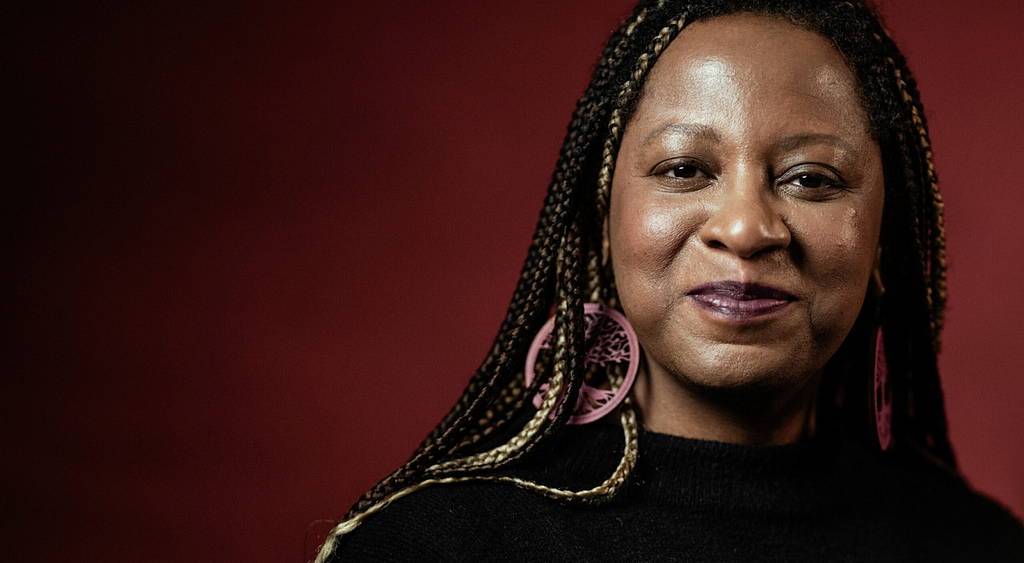
I had the pleasure of talking with Regina Bain. Regina, Executive Director of the Louis Armstrong House Museum in Queens, New York, has built a life around the intersection of art, education, and community. A former actor and nonprofit leader, she now stewards one of the most culturally significant archives in American music, anchoring a legacy that spans jazz history, racial identity, and Black artistry. Since taking the helm in 2020, Bain has worked to reintroduce the world to Louis Armstrong, not only as a towering musical figure, but as a neighbor, and a meticulous chronicler of his own life.
A native of Florida, Bain grew up in a household shaped by both constraint and possibility. Her mother, Francina Bain, a single parent and physical education teacher, juggled multiple jobs to support her daughter’s education. “My single mother was amazing, and made things happen for me with three jobs,” Bain has said. That upbringing, infused with both pragmatism and creativity, helped instill an early appreciation for art as a vehicle for understanding one’s place in the world.
Bain’s own academic path led her to Yale University, where she earned a B.A. in African-American Studies and Theater. She later completed her MFA at the Yale School of Drama. Her decision to apply to Yale came, at first, on a dare. She got in, and went, with the support of her mother. At Yale, she was deeply influenced by literature like Toni Morrison’s Song of Solomon, which helped shape her commitment to cultural identity and storytelling. For years after graduation, Bain toured the country as a professionally trained actor before pivoting toward education and nonprofit leadership, ultimately spending 17 years with the Posse Foundation, a national college access and leadership development organization, where she served as Associate Vice President.
In August 2020, amid the upheaval of the COVID-19 pandemic, Bain assumed her current role at the Louis Armstrong House Museum. The museum, based in the modest brick home Armstrong shared with his wife Lucille, now includes the Louis Armstrong Center, a $26 million, state-of-the-art facility that houses a 60,000-piece archive, a performance space, and a venue for community engagement. At a time when many arts organizations were fighting for survival, Bain joined a cohort of New York City cultural leaders who convened daily to share resources and support. She continues to co-facilitate those gatherings.
For Bain, the Armstrong archive is not only a repository of musical history, but also a living testament to a man who helped shape American sound. “Louis Armstrong is a founding figure of jazz. He’s America’s first Black popular music icon,” she says. “And he was his own archivist.” The collection includes recordings of Armstrong and his wife talking in their living room, his handwritten letters, and personal artifacts like the typewriter he used to communicate with fans and friends alike. These intimate glimpses into Armstrong’s life are central to Bain’s vision: that this legacy should feel both personal and public, historical and immediate.
Under her leadership, the museum has expanded its programming to include free trumpet lessons for local children, artist residencies, and live performances in its 75-seat jazz venue. The Armstrong Now series invites contemporary artists, including names like Esperanza Spalding and Jason Moran, to create new work in dialogue with the archive. Bain helped bring this program to the Newport Jazz Festival and continues to grow its national profile.
One of Bain’s most memorable encounters in the role involved a local resident named Patrick, who returned to the museum in a suit to honor his late mentor and neighbor on what would have been her 100th birthday. Another involved James Blake, a man who once lived next door to the Armstrongs and recalled eating cake in their backyard as a child. These stories helped inspire The Corona Collections, a series of oral histories that document the memories of longtime neighborhood residents who knew Louis and Lucille Armstrong firsthand.
While she operates from a national platform, accepting the National Medal for Museum and Library Service in Washington, D.C., or representing the museum in cultural forums as far away as Ghana and Bahrain, Bain’s work is rooted firmly in the hyperlocal. She sees the museum not just as a tribute to Armstrong’s greatness, but as a catalyst for youth engagement, creative expression, and intergenerational dialogue.
Bain brings to her role an artist’s sensibility and an educator’s patience. She’s equally comfortable discussing jazz phrasing and rhythmic innovation as she is talking about infrastructure and leadership strategy. Asked what it takes to run a successful nonprofit, she emphasizes the need for a clear mission, a skilled team, a supportive community, endurance, and levity. “If you don’t know how to laugh, you’re going to cry,” she says.
Living in Brooklyn, Bain can often be found at community arts spaces like BAM, BRIC, or the Billie Holiday Theatre. She attends outdoor dance parties at Fort Greene Park and continues to support organizations like Urban Bush Women and local anti-racism initiatives. Her life, she says, is animated by prayer, though not always in a religious sense. “It can simply be about being still, listening to something outside of yourself and having a conversation with it.”
Asked what movement she’d like to inspire, Bain answers without hesitation: one that encourages everyone to create art. Not just to consume it, but to participate in it. “That doesn’t mean you need to be a professional,” she says. “But the act of opening yourself up to an idea or to another human being as you dance, as you create music together, as you paint, that act is essential to what it means to be human.”
At the heart of her work is the belief that Louis Armstrong’s legacy isn’t just about where American music has been, it’s about where it can go. And for Bain, that journey is communal, courageous, and deeply rooted in joy.
Yitzi: Regina Bain, it’s an honor to meet you. Before we dive in deep, our readers would love to learn about Regina Bain’s personal origin story.
Regina: My personal origin story begins in Florida. My mother, Francina Bain, was a single mom, a physical education teacher, and eventually became an elementary school principal. Education was really important to her and to our family, and I’m so thankful to her, for how she birthed me, how she raised me. She’s an artist herself. I don’t know that she would describe herself that way, but she approaches life with a sense of artistry. I’m grateful that she gave me that vision for the world, and for how to be within it with a sense of history and art.
That’s where I’m from. I went on to study Theater and African-American Studies at Yale University. I got my MFA at the Yale School of Drama. I acted in and around New York, and around the nation, for a while. Then I started working with an education nonprofit, a college access and leadership program called the Posse Foundation. I was there for 17 years.
When I looked around and asked myself, “What’s next?” I knew I wanted to bring together art and education. To me, that’s what the Louis Armstrong House Museum is, so it was a perfect fit for what I was looking for. I’ve been here since 2020.
Yitzi: Amazing. Could you tell us the next chapter, how you got that position and how it started?
Regina: Yes. In 2020, during the pandemic, I had already started thinking about my next step. Then I began the interview process, and in August of 2020, I got the role.
Even before I got the job, I knew I was going to need support. It was a difficult time to be in the arts, and I was moving from education to museums, art, and culture. So I started looking around, asking, “Where can I find support?”
There was a group of leaders called Culture at 3:00. During the pandemic, arts and culture leaders in New York would meet at 3:00 to collaborate and share resources. I started attending those meetings even before I officially took the role, because I knew I needed help. And it was perfect. It continues to be perfect. That group still meets, and now I help co-facilitate those meetings. That was the beginning, and I’m really thankful for that community of leaders.
Yitzi: You probably have some incredible stories from your time as a leader at the Louis Armstrong House Museum. Could you share one or two that really stand out in your mind?
Regina: There are many. I’ll talk about one involving a young man named Patrick. He came down the block, 107th Street in Corona, Queens, wearing a full suit. He was dressed to the nines. I didn’t know him personally, but someone introduced him and said, “This is Patrick. He lived on the block. He was an intern here when he was a young teenager. He’s back today because Selma Heraldo, who lived next door to the Armstrongs, was one of his mentors. Today would have been her 100th birthday.”
She’s passed, but he came back in that suit to honor her and what she meant to him, as well as what the museum meant to him as a teenager growing up on that block. That moment really stood out. It spoke to the power of community, the power of mentorship, and what this institution has meant, and must continue to mean, to the neighborhood. That made a huge impact on me.
For a second story, I’ll talk about a concert we had as part of a program called Armstrong Now. We host artists in residence who do research in the archives and create new works. Esperanza Spalding has been one, and Lisa LaTouche, a tap dancer, has been another.
We held a public concert, and a gentleman named James Blake attended. At one point, we were dancing together, and I asked him to share his story. He told us he used to live next door to the Armstrongs when he was a child, in the space that’s now our garden. He brought an archival photo of his old house and shared memories of hearing Louis Armstrong play in the backyard and getting cakes from him.
That conversation helped us dream up something called the Corona Collections, a series of oral histories. We’ve interviewed 15 people from the neighborhood who knew Louis and Lucille Armstrong and could share intimate stories of who they were offstage, and what they meant to this community.
Those two moments really stand out to me.
Yitzi: Let’s talk more about the Louis Armstrong House Museum. What is the gap you think the museum is coming to address and fill?
Regina: The opportunity here is that Louis Armstrong is a founding figure of jazz. He’s America’s first Black popular music icon. He was born in New Orleans, lived for 30 years on this block, and traveled to 65 countries. He has a story to tell, and he told it himself by being his own archivist.
What an example to learn from. What a legacy to dig into. And it’s a legacy that will be lost if we don’t take the time to preserve it, to listen to it, and to share it with others. This is American history.
I love the opportunity to preserve it, to share it, to help it thrive, and to help it live within people who can take it and make it their own. The artists we work with create something new by engaging with this legacy. That’s what I love, the chance to ensure we don’t forget, and that we use what’s ours, this rich American history, to build into the future.
Yitzi: What are some of the main lessons or takeaways you’re hoping visitors leave with, or even people who are just learning about the legacy of Louis Armstrong?
Regina: I love that this is a house museum. When people come to visit, they’re coming over to our house, their house, Louis and Lucille’s. No one has lived in the Armstrong House since the Armstrongs. All of the furnishings, the paintings, are their own.
It’s a unique opportunity to see where a megastar felt at home, and to feel that sense of home for yourself. You get to learn their stories while listening to the actual voices of the people who lived there.
We have a 60,000-piece archive, the largest of any jazz musician. Part of that archive includes audio tapes of Louis and Lucille sitting in their living room, talking about music, current events, their relationship, even arguing with one another. And our visitors can listen to those tapes in the very room where they were recorded.
That’s an amazing gift. I hope people walk away with that experience of being welcomed into a home.
Yitzi: What are some lessons or anecdotes you hope young people, especially those who may not have been exposed to Louis Armstrong, take from this?
Regina: We had some Armstrong Now artists in rehearsal in our jazz room. It’s a 75-seat jazz club where we host concerts, but it also serves as a rehearsal space. We invited young people from the Summer Youth Employment Program to sit in on a rehearsal.
These were quiet young people. They didn’t say much in the moment, but they weren’t on their phones, they were listening. After the rehearsal, when we stepped outside and I was talking with them, I asked, “What’s one word that describes how you were feeling?”
One very quiet young man said he felt “in awe” of the experience of watching musicians create together in real time. He said it was transformational. That word, “transformational”, came from him.
That’s what I hope young people take away. And it’s important to note, this was through the Summer Youth Employment Program. Being a musician is one path, of course, but so is having my job. Or being the facilities manager who ensures this building runs. There are so many different roles young people can take on as they help create transformational experiences for others. That’s the kind of takeaway I hope they leave with.
Yitzi: That’s great. I know this is hard to project, but if Louis Armstrong were alive today, what do you think he would feel about the state of our country, the state of our culture?
Regina: I think he’d say, “Man, them cats are wildin’.”
He would probably have something very short and to the point, but deeply insightful, something that makes people reflect on who we are as human beings. He had a way of capturing both the challenges and the joy of the moment.
One of his most well-known songs is “What a Wonderful World,” and there’s a lesser-known preamble to it. In the 60s or 70s, he said something like, “Young people ask me, how can you sing this song, ‘What a Wonderful World,’ when there are all these wars and so much strife going on?” And he responded, “I think it is, it can be, a wonderful world. It’s just a matter of what we make of it.”
That was part of his life philosophy. He acknowledged the challenges, but he chose joy. So I think today, he’d say something that speaks to the difficulty of the moment, but also encourages all of us to keep choosing joy.
Yitzi: For those who may not fully appreciate the following fact, can you articulate how Louis Armstrong’s work influenced and changed the music landscape, how it led to and shaped rock and roll and pop music as we know it today?
Regina: There’s a musician we interviewed, and we asked him to define jazz. Part of his response was that Louis Armstrong is the progenitor of the sounds we have today. All popular music, in some way, came through Louis Armstrong, his phrasing, his timing.
When he was coming up in the 1900s, everything was played on the beat in a very specific way. You weren’t really allowed to move in and around the beat. But as both a vocalist and an instrumentalist, what he did with timing and rhythm was unheard of. He introduced that to the world.
He was also an early adopter of technology. What he was doing was recorded and then traveled across the country and the world on these newfangled things called records. That’s one of the reasons the sound of jazz was able to spread globally. He started all of that.
And then there’s the trumpet specifically. The way he could hit those high notes, the way Billie Holiday talked about phrasing her voice and her vocal style after the way Louis Armstrong played the trumpet, making it sound like a voice, that’s significant. There are so many instrumentalists and vocalists who still try to do that today. And Louis Armstrong was at the beginning of all of it.
Yitzi: Many artists today, musicians, voice artists, and other creatives, are concerned about the rise of AI and how it cheapens art. They feel it’s not leaving enough space for human-generated work. What’s your opinion on that? How does Louis Armstrong’s legacy speak to the importance of preserving human-created music and art?
Regina: First of all, he loves good music. And I say that in the present tense. Good music has to come from a certain kind of listening, a certain honoring, and it’s important that we, as humans, create that together.
At the same time, he was an early adopter of technology. So, I don’t know exactly how he would have brought those two things together, but I do know he would be looking for the truth in whatever was produced. Whatever it is, it has to be true. However you define that, he would need to feel it, and we would need to feel it. It has to be true.
So I think that would be his approach. Whatever it is, it has to be good, and it has to be true.
Yitzi: Do you think “true” means it resonates with the human heart? That it comes from a real, human place?
Regina: I think true means true. You know it when you know it. That’s what art is. (Laughs)
Yitzi: I love it. Beautiful. This is our signature question. You’ve touched on this before, but we’re going to frame it a little differently. You’ve been very successful and blessed with a lot of achievements. Based on your experience, can you share five things you need to successfully lead a nonprofit organization? Five things you believe are essential to being a successful nonprofit leader.
Regina:
- I think you need a mission that moves people,
- a team that believes in that mission and has the skills to execute it,
- a community that supports that mission and has a passion to share it with others,
- levity,
- and endurance.
Yitzi: Can you elaborate a little on levity? What do you mean by that?
Regina: If you don’t know how to laugh, you’re going to cry. And sure, you can do that too, but you’ll get stuck there. You must have levity. It’s hard being a nonprofit leader. It’s hard being a human in this world. And you have to carry some lightness with you.
Levity gives you the ability to pivot and maneuver. If you get stuck in, “This is something I wasn’t anticipating, and it has the potential to really hurt,” which we all do at times, then you won’t be able to move your mission forward. You won’t be able to pivot in the ways you need to, or be fully present with the human beings in front of you.
You have to have levity to do all of that. You have to have levity to live. And you have to live well in order to run a nonprofit.
Yitzi: Love that. We’re almost done. On a more personal note, can you share some of the self-care routines that help your body, mind, and heart thrive?
Regina: Lord, I wish I had more of them. I wish I were a model of this behavior, but I’m not. I will say that more and more, I’ve been thoughtful about prayer. And prayer looks different for different people. It can happen within the context of organized religion, but I also think prayer can simply be about being still, listening to something outside of yourself and having a conversation with it. That type of stillness, listening, and response is really important for self-care.
Yitzi: Okay, this is our final aspirational question. Regina, because of your great work and the platform you’ve built, you’re a person of enormous influence. If you could put out and spread an idea or inspire a movement that would bring the most good to the most people, what would that be?
Regina: Yitzi. Good lord. All right, I’m going to think on this.
What’s coming to me is how important it is to engage in art, not just as a consumer, but as a creator. That doesn’t mean you need to be a professional, but the act of opening yourself up to an idea or to another human being as you dance, as you create music together, as you paint, that act is essential to what it means to be human.
So create. Be an artist. Attend to others who are being artists. But you have to do it yourself, even in the quiet of your home, in order to help all of us be better humans and have a better society. Create art.
Yitzi: Unbelievable, Regina. How can our readers continue to follow your work? How can they visit the Louis Armstrong House Museum? How can they support your work in any possible way?
Regina: Visit louisarmstronghouse.org and explore everything we offer there. You’ll find events, concerts, trumpet lessons for kids, and much more. Definitely come tour the house itself. It’s a landmark home and the crown jewel of what we do.
You can dig deep into the archives, most of which are digitized, and read stories from them. You can learn more about Louis Armstrong, listen to some music, listen to jazz, and just listen. And of course, if you’d like to become a member, we would love to have you as a member of the Louis Armstrong House Museum.
Yitzi: Regina, it’s been so delightful to meet you. I wish you continued success, blessings, and good health. I hope we can do this again next year, well before another five years.
Regina: Likewise. Thank you.
Regina Bain on Preserving Louis Armstrong’s Legacy, Leading Through Joy, and Why Everyone Should… was originally published in Authority Magazine on Medium, where people are continuing the conversation by highlighting and responding to this story.