
Suleika Jaouad Of ‘Blood Cancer United’ On Illness, Identity and Living Each Day as if it Were Your First
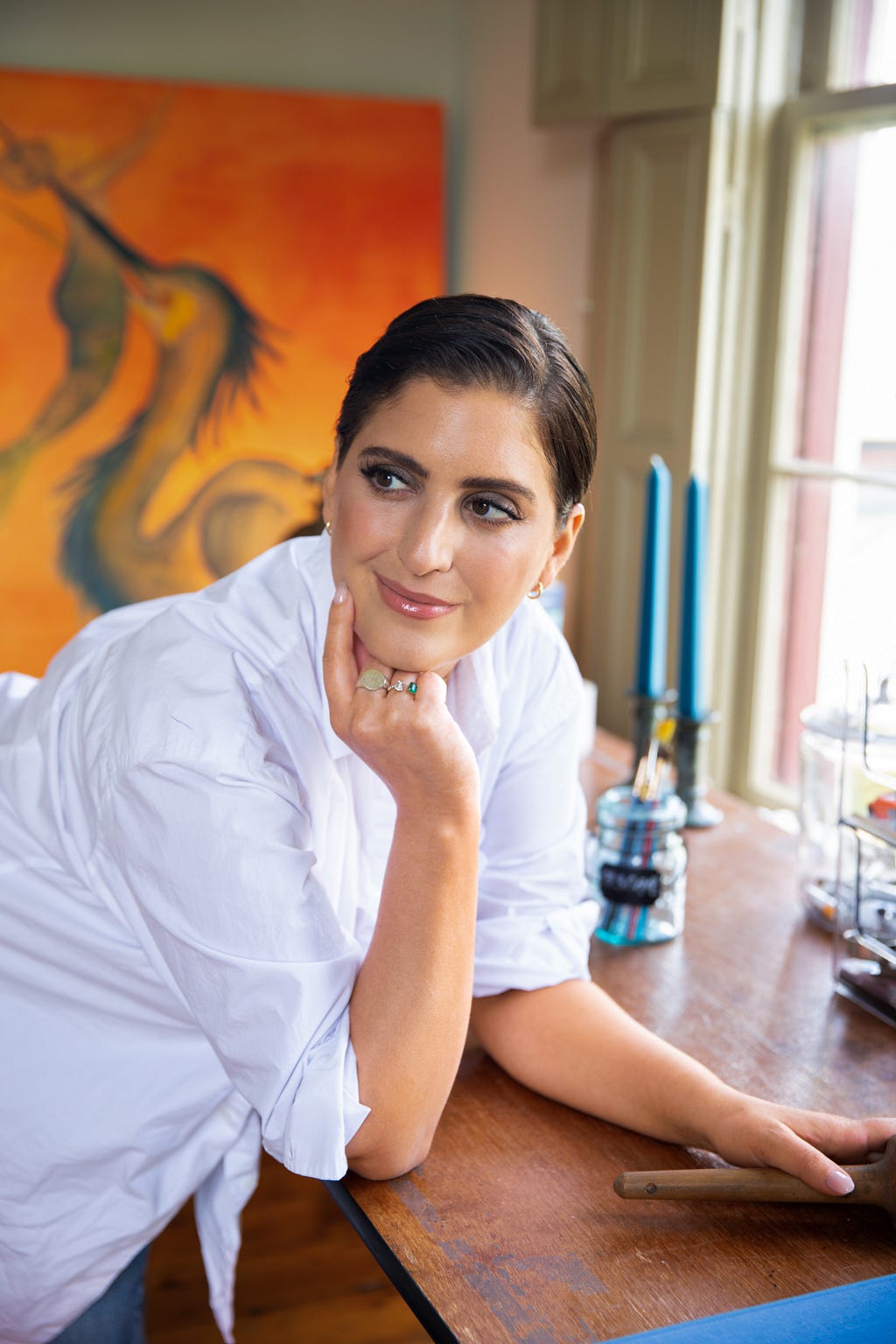
“The advice I kept getting was to live every day as if it’s my last. As well-intentioned as that advice may be, it always filled me with anxiety, a sense of pressure to make the most out of every family dinner, to make the most out of every day. And that is just spiritually exhausting. So, I’ve had to shift to a gentler mindset: living every day as if it’s my first. When I do that… that fear of uncertainty shifts into a sense of curiosity and mystery about the not-yet-known.”
I had the pleasure of talking with Suleika Jaouad. Suleika was 22 years old and mapping out the early contours of a career in international journalism when she received a diagnosis that abruptly redrew the boundaries of her life. What began as persistent fatigue and vague symptoms was eventually identified as a rare and aggressive form of leukemia. The sudden shift, from planning graduate school to navigating life-threatening illness, marked the beginning of a 15-year odyssey that would span two bone marrow transplants, a relapse after nearly a decade in remission, and a third diagnosis before the age of 35.
Born to a Tunisian father and Swiss mother, Jaouad grew up as a first-generation American in a home where artistic expression was not simply encouraged, but foundational. Raised in Saratoga Springs, New York, she was immersed in music, literature, and visual arts. She credits this early exposure to the arts with shaping her sense of identity, even as she considered more conventional career paths in law or foreign correspondence during her undergraduate years at Princeton.
Those ambitions were interrupted when her life narrowed to hospital corridors and chemotherapy cycles. But the diagnosis also created an unexpected kind of clarity. Faced with mortality, Jaouad began writing from her hospital bed, contributing a series of columns to The New York Times under the title Life, Interrupted. The essays captured the physical toll of cancer but also the existential reshaping that occurs when the future becomes uncertain. The column resonated widely and later became the basis of her bestselling memoir, Between Two Kingdoms, which detailed her experience navigating both the clinical world of illness and the fragile return to “normal” life post-treatment.
Jaouad’s story gained further visibility through the 2023 Netflix documentary American Symphony, which chronicled her relationship with her husband, Grammy-winning musician Jon Batiste, during a period when both were experiencing artistic breakthroughs and personal turmoil. The film juxtaposed Batiste’s rapid rise in the music world with Jaouad’s return to treatment, offering an intimate portrait of love and resilience in the face of uncertainty.
Her most recent book, The Book of Alchemy, builds on this theme of transformation. Framed as a guided journal, the book offers prompts and reflections for readers coping with illness, grief, or major life transitions. It emerged during a period when Jaouad was again undergoing treatment for leukemia, this time while on the road promoting her memoir. Writing, she says, remains a tool for survival as much as self-expression.
In parallel with her literary work, Jaouad has become a prominent voice in patient advocacy, particularly through her long-standing involvement with the organization now known as Blood Cancer United. Formerly the Leukemia and Lymphoma Society, the group has rebranded to reflect the more than 100 distinct diagnoses that fall under the umbrella of blood cancer. Jaouad, who initially battled a form of myelodysplastic syndrome before it progressed to leukemia, views this broader recognition as an important shift in how cancer patients are seen and supported.
Her advocacy work with Blood Cancer United includes testimony before lawmakers in Washington, D.C., and support for legislation aimed at improving access to treatment and lowering prescription drug costs. She frequently emphasizes that cancer is not merely a biological crisis, but often a financial, emotional, and familial one as well. Her own experience exemplifies the importance of viewing patients holistically, not only as recipients of medical care but as individuals trying to preserve their sense of self through illness.
Throughout her journey, Jaouad has resisted the language of battle and victory that often surrounds narratives of cancer. “To say someone ‘lost their battle’ with cancer implies a kind of failure,” she said in our interview. “But there’s no losing in being human and doing your best to live through something hard.” Instead, she favors framing illness as an ongoing process, neither beginning nor ending cleanly, and encourages a vocabulary that makes space for complexity and ambivalence.
This outlook has also informed her approach to uncertainty. Confronted with yet another recurrence of leukemia shortly before her 34th birthday, Jaouad initially bristled at the common advice to “live each day as if it’s your last.” That mindset, she said, felt exhausting rather than liberating. Eventually, she landed on a more sustainable philosophy: to live each day as if it were her first. With that shift came an openness to curiosity and wonder, a way of approaching life not from fear, but from the desire to remain engaged, however limited or uncertain the horizon may be.
In her public appearances and interviews, Jaouad is often asked how she remains so composed while navigating such profound challenges. Her answer tends to circle back to community. Whether through a close-knit circle of caregivers and loved ones or through the larger networks of patients, advocates, and readers who’ve followed her work, Jaouad sees connection as the true backbone of endurance.
Her presence, on the page, in person, or onscreen, speaks not only to survival but to what it means to live a life of meaning under radically altered terms. Her story is not one of triumph over illness, but of making a life within and alongside it. Through writing, advocacy, and reflection, Suleika Jaouad has emerged as a voice for those navigating the liminal spaces between health and sickness, certainty and unknowing. It is a position she never asked for, but one she has used to illuminate paths for others walking similar ground.
Yitzi: Suleika, it’s a delight and an honor to meet you. Before we dive in, our readers would love to learn about your origin story, your personal origin story. Could you share with us the story of your childhood, how you grew up, and the seeds for other great things that came afterwards?
Suleika: Absolutely. My father’s from Tunisia, my mom is from Switzerland, and I’m a first-generation American. I was very lucky to grow up in a house where the arts were prioritized above everything, and we were encouraged to pursue any creative curiosity we had. That led me on a path, like a lot of young people, to figuring out how to find a place within my creative work.
By the time I graduated from college, I had sort of set my sights on something a little more practical. I was thinking about law school and toying with the idea of being a foreign correspondent. But all of that came to a halt when I was diagnosed with leukemia at 22.
Like a lot of people, until you confront your mortality firsthand, there’s this sense that you have endless time, time to figure out who you are and what you want to do with your life. But with that diagnosis came a strange sense of clarity about what really mattered to me and who I wanted to spend my days with.
So, kind of counterintuitively, despite being so sick, I felt a sense of freedom to pursue some of those early dreams of writing that I’d had as a child. That led me to writing the column in the New York Times called Life Interrupted and to getting involved with Blood Cancer United. I’ve had the privilege of being part of the Blood Cancer United family since that diagnosis, getting to go to Capitol Hill and take part in various advocacy initiatives. It’s really an honor for me to get to celebrate this new chapter with them today.
Yitzi: You probably have some amazing stories from the great work that you’re doing. Can you share with our readers one or two stories that stand out in your mind from this initiative and your work with Blood Cancer United?
Suleika: I think like a lot of people, I felt completely unprepared for my diagnosis. Youth and health are supposed to go hand in hand, and it felt like a breach of contract with the natural order of things. But if I could travel back in time and give advice to that younger, newly diagnosed self, it would be that blood cancer is not just an affliction of the body, it affects every aspect of your life.
The challenge, beyond navigating the diagnosis and treatment, is also about figuring out how to live a full life. I don’t think I was fully prepared for that part. One thing I really appreciate about Blood Cancer United is that they’re not just focused on you as a patient, but on you as a whole human being. The goal isn’t just to cure cancer, it’s to live a good life, a meaningful life, beyond diagnosis.
Yitzi: The word “blood cancer” resonates a million times more than the word “leukemia.” Was there an intentionality behind the choice of that term?
Suleika: I was originally diagnosed with myelodysplastic syndrome, which is a bone marrow disease that eventually becomes blood cancer. While we often talk about leukemia and lymphoma, there are actually more than a hundred blood cancers. That’s why I was especially moved to learn that the Leukemia and Lymphoma Society (Blood Cancer United) is entering this new chapter with a name that makes space for all of those diagnoses and the people affected by them.
Yitzi: Can you talk about the initiatives that Blood Cancer United is leading?
Suleika: I’ve had the honor of joining them as a spokesperson in this new era. One of the things I love about Blood Cancer United is that they’re not just focused on research, they’re also deeply involved in advocacy initiatives, like the one I mentioned earlier when I was in my early 20s. We went to Capitol Hill to advocate for lowering prescription drug prices.
But beyond advocacy, they offer so many resources and supportive services to patients and their families who are navigating the day-to-day realities of living with cancer. For so many patients in America, cancer isn’t just a health crisis. It can also become a financial crisis, a mental health crisis, and a family crisis.
It’s a cliché to say it takes a village, but it really does, and you learn that very quickly when you’re sick. And it’s not just a village of loved ones, but also social workers, nurses, doctors, and the many advocates under the Blood Cancer United umbrella who are on the front lines pushing for better treatments and better access to those treatments. There are so many geographic and financial barriers to accessing the care that already exists.
Yitzi: Beautiful. So, this is our centerpiece or signature question. Can you share five things that you want everyone to know about blood cancer?
Suleika:
- Okay, first thing: there are over 100 different types of blood cancers, including leukemia and lymphoma. I think when we talk about cancer, we often treat it like it’s a singular disease. In reality, within each specific diagnosis, there’s a whole subset of complexities.
- The second thing I’d say is that there are so many free resources available to you if you or someone you love is newly diagnosed. As alone as you might feel when you hear those three words, “you have cancer”, you are not alone. There are many people like myself who have walked that path and who may still be living with their illness, as I am. There are support groups and many hardworking people out there who are here to ease that journey.
- The third thing I would say is that no matter how smart or fierce you are, or how wonderful your medical team might be, you need to be your own advocate. And beyond that, having a caregiver who can advocate for you when you’re not well enough to care for yourself is essential.
- The fourth thing is that cancer care requires a village. It’s not just about the patient and the doctor, it’s about building a support system. That includes emotional support, logistical support, financial assistance, and so much more.
- And the fifth thing is that we often talk about health like it’s a binary, you’re either sick or well, healthy or unhealthy. But as we live longer and survive diseases that might have killed our grandparents or even our parents, many of us exist somewhere in the in-between. Allowing for language that makes space for that messiness is really important to me. I’ve stopped using phrases like “battling cancer.” Too often, we see obituaries that say someone “lost their battle with cancer,” and to me, there’s no losing in this disease. It’s all part of the spectrum of being a human being. So instead, I’ve chosen to say that I’m living through this disease.
Yitzi: That’s a brilliant point I never actually stopped to consider, but I can see how that term can be almost blaming to people who have cancer.
You mentioned that you’re still living with the disease, how are you feeling, and how are you managing it?
Suleika: Thank you. After almost a decade in remission, I learned three years ago that the leukemia was back. And almost exactly a year ago, I found out it had returned a third time.
I’ve gotten to witness firsthand the tremendous progress that’s been made, thanks to organizations like Blood Cancer United. The first time I was diagnosed, it took a year of really challenging clinical trials just to get into enough of a remission to qualify for a bone marrow transplant. This time around, there was a new drug I was able to access that got me into remission in one month and on my way to a second life-saving bone marrow transplant.
There are a lot of patients like myself who are sick or who’ve had a recurrence, and we have to put our faith in the science and in the good people who are offering resources and advocating on our behalf, with the hope that new treatments and new cures are on the horizon.

Yitzi: I hope, I pray, and I wish for you a complete and swift recovery. Thank you. You have a remarkable presence, and I would never imagine that you’re still in the midst of it.
So, this is our final question. Suleika, because of your amazing work and the platform you’ve built, you’re a person of enormous influence. If you could put out an idea, spread an idea, or inspire a movement that would bring the most good to the most people, what would that be?
Suleika: I was speaking about this earlier this morning. When I got this most recent diagnosis, I was really struggling with the uncertainty. How do you make plans a few months out when you don’t know if you’re going to live long enough to exist in that future?
The advice I kept getting was to live every day as if it’s my last. As well-intentioned as that advice may be, it always filled me with anxiety, a sense of pressure to make the most out of every family dinner, to make the most out of every day. And that is just spiritually exhausting.
So, I’ve had to shift to a gentler mindset: living every day as if it’s my first. When I do that, when I wake up with that sense of curiosity and wonder and playfulness that a little kid might, that fear of uncertainty shifts into a sense of curiosity and mystery about the not-yet-known.
Yitzi: I’ve interviewed a lot of people, and I’ve honestly never heard someone say such profound things. That is such a brilliant, profound insight, and I’m grateful to you.
Suleika: Wow. Thank you. Thank you so much.
Yitzi: How can our readers continue to support your work and follow what you’re doing?
Suleika: They can support me by checking out Blood Cancer United and the incredible resources they have available. I believe they even created a custom link: bloodcancerunited.org/suleika.
Yitzi: Suleika, thank you so much for your time. I wish you continued success, good health, and blessings, and I look forward to doing this again with you next year.
Suleika: Thank you so much. You as well. Thank you.
Yitzi: Thank you. Have a beautiful day.
Suleika Jaouad Of ‘Blood Cancer United’ On Illness, Identity and Living Each Day as if it Were Your… was originally published in Authority Magazine on Medium, where people are continuing the conversation by highlighting and responding to this story.